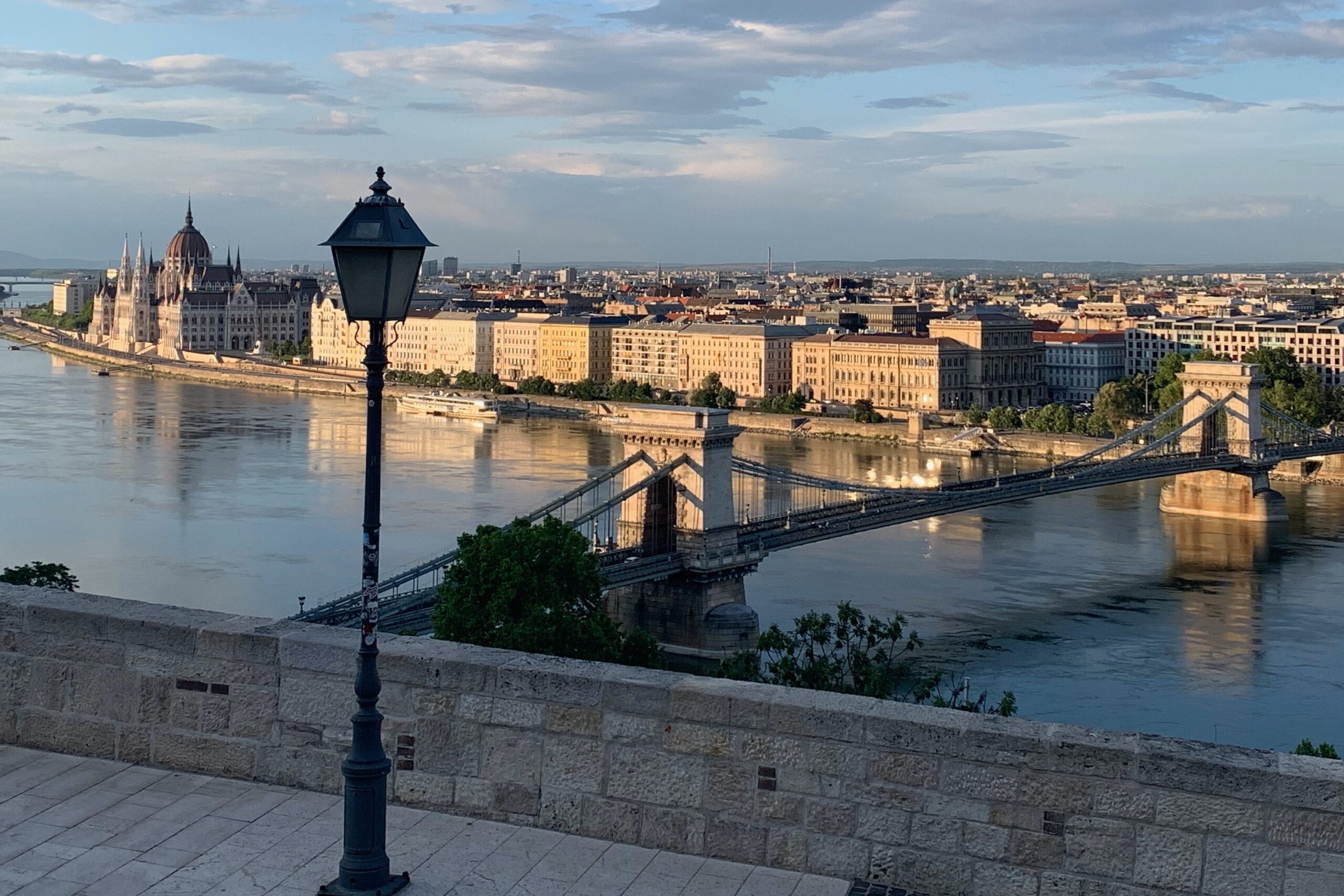
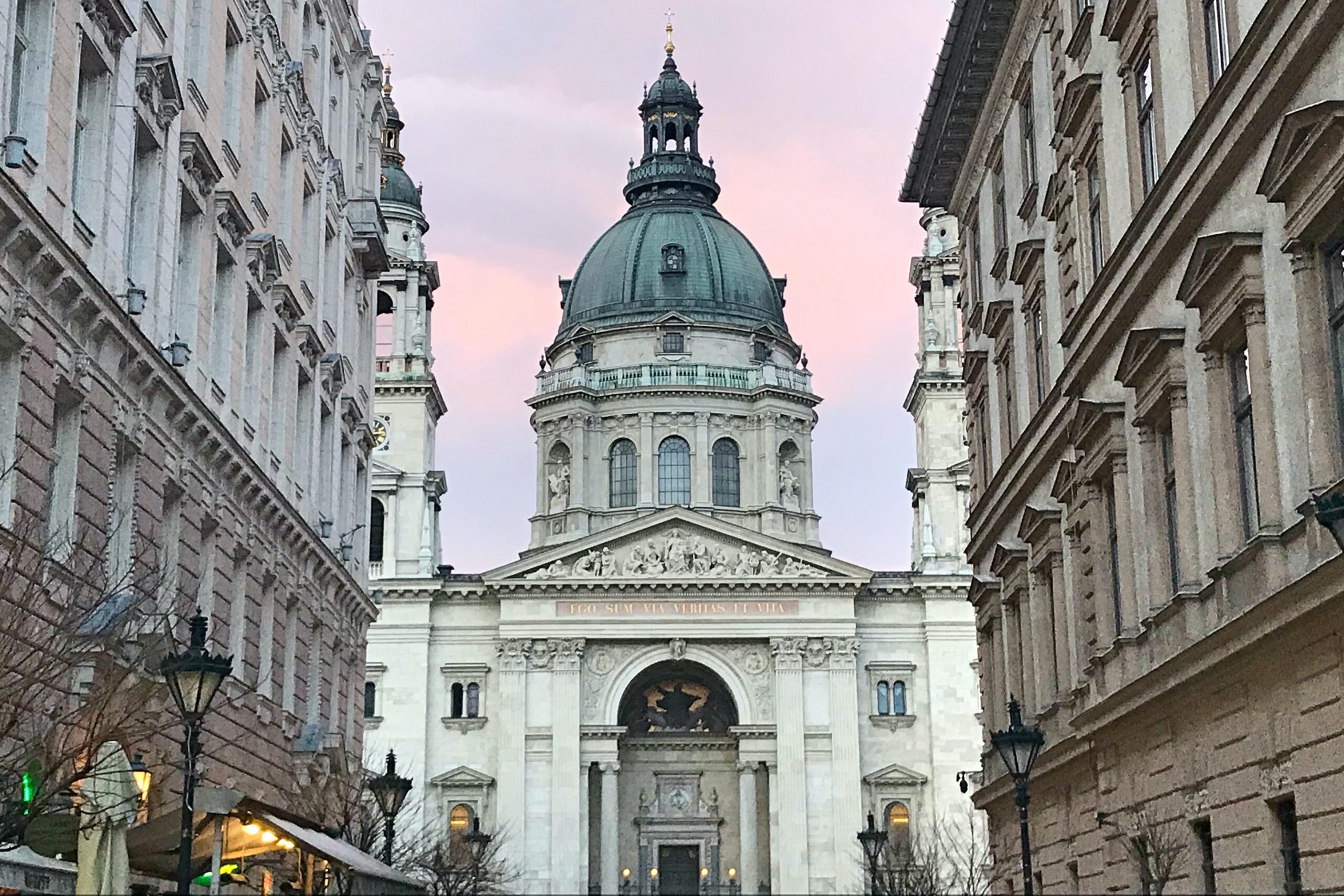
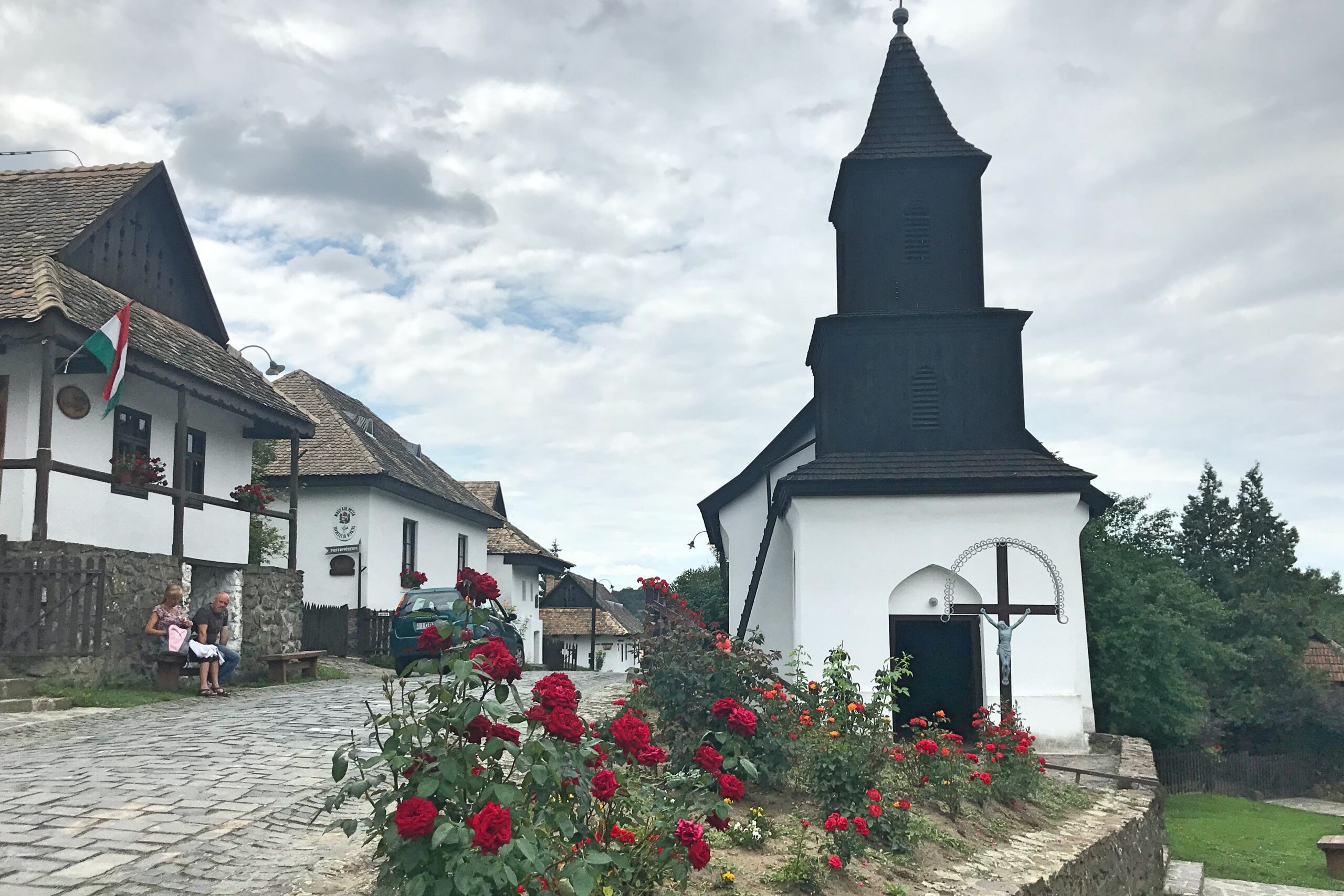
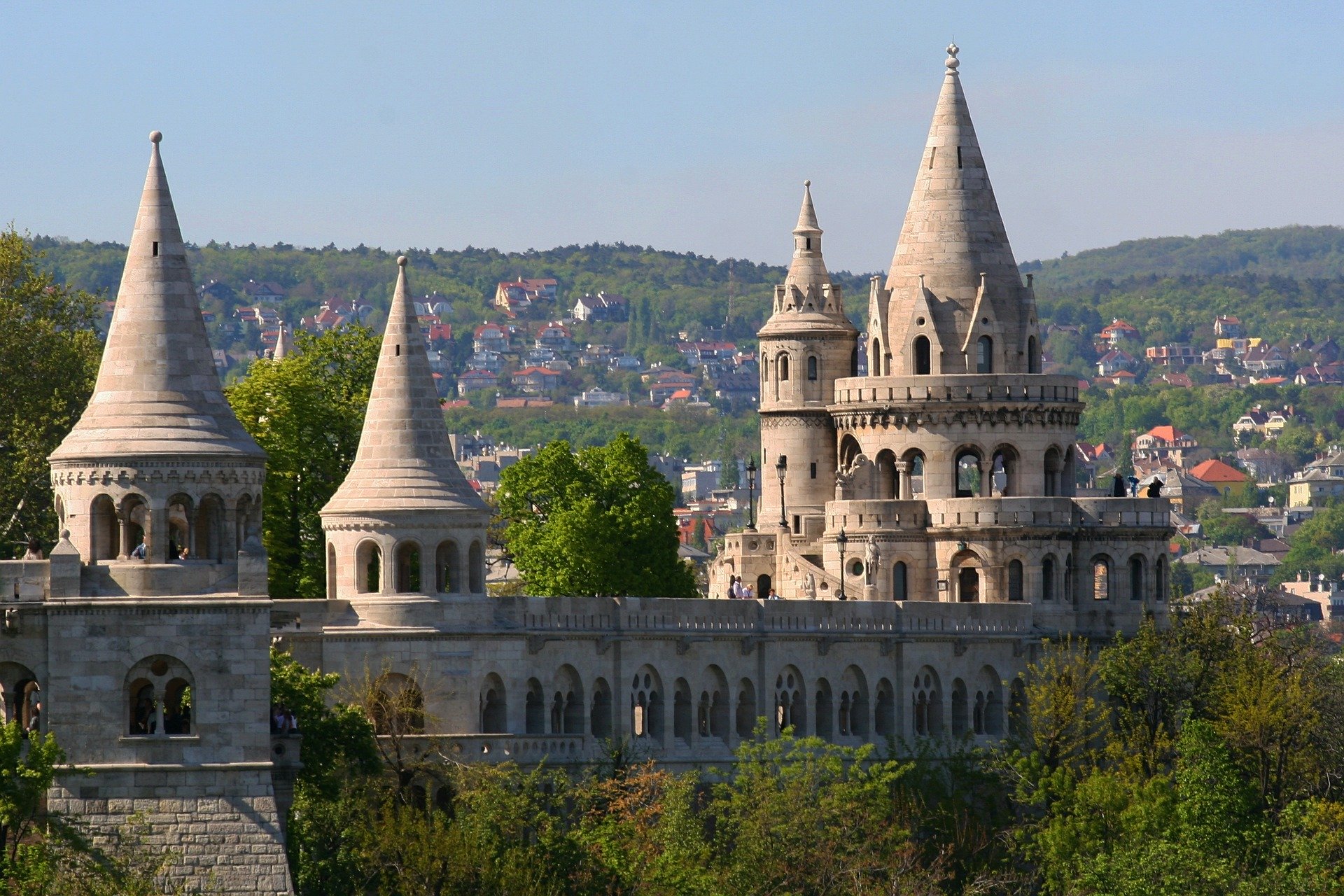
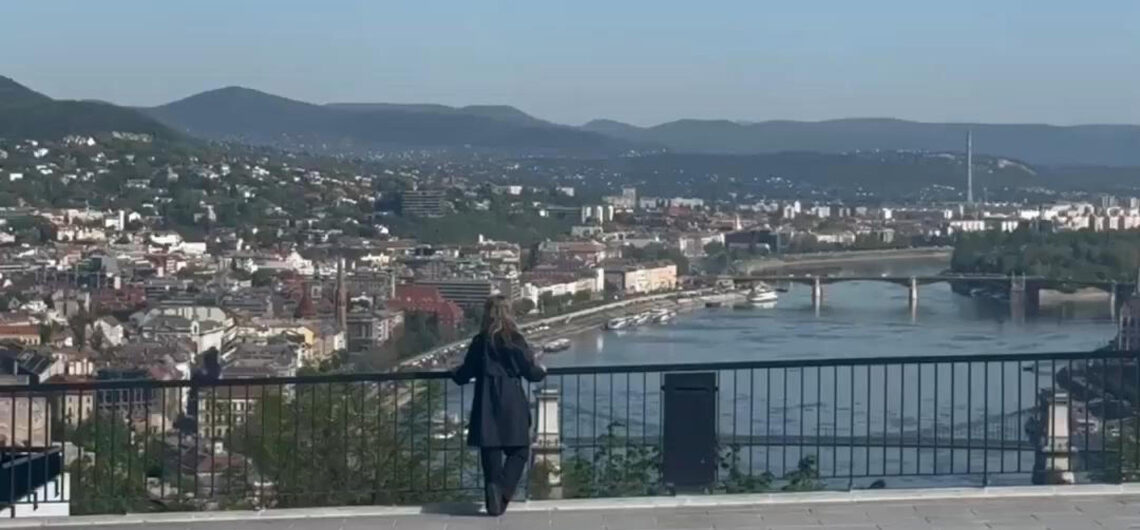
Welcome — I’m Julia, a licensed private tour guide born and raised in Budapest. I offer personalised private walking tours in English and French for travellers who wish to experience Budapest in a relaxed, meaningful, and authentic way. My goal is to help you discover not only the city’s most important landmarks, but also the hidden details, local stories, and everyday atmosphere that make Budapest truly special. Whether this is your first visit or a long-awaited return, this blog is here to help you plan your stay with confidence and inspiration. Planning Your Visit to Budapest If you are preparing for your trip, these practical tips will help you feel comfortable from the moment you arrive. → Essential Travel Tips for Visiting Budapest Money, transportation, safety, tipping culture, and useful local advice before your visit. Experience Budapest Like a Local Private guiding offers a flexible and personal way to explore Budapest — without crowds, fixed schedules, or rushing from one attraction to another. → Why Choose a Private Tour in Budapest? Learn how personalised tours work and what makes discovering the city with a local guide such a memorable experience. Discover Budapest Through Local Insights Here on the blog you’ll find inspiration for your stay, including: • hidden viewpoints and peaceful walks • café culture and culinary discoveries • neighbourhood stories • transportation tips • authentic local experiences Browse the latest articles or explore by category to start planning your perfect Budapest visit. Private Tours in Budapest If you would like to explore Budapest through a personalised experience tailored entirely to your interests, I would be delighted to guide you. → Explore Private Tours & Custom Experiences I hope to welcome you soon in beautiful Budapest.
Welcome — I’m Julia, a licensed private tour guide born and raised in Budapest. I offer personalised private walking tours in English and French for travellers who wish to experience Budapest in a relaxed, meaningful, and authentic way. My goal is to help you discover not only the city’s most important landmarks, but also the hidden details, local stories, and everyday atmosphere that make Budapest truly special.
Whether this is your first visit or a long-awaited return, this blog is here to help you plan your stay with confidence and inspiration.
Planning Your Visit to Budapest
If you are preparing for your trip, these practical tips will help you feel comfortable from the moment you arrive.
Private guiding offers a flexible and personal way to explore Budapest — without crowds, fixed schedules, or rushing from one attraction to another.
→ Why Choose a Private Tour in Budapest?
Learn how personalised tours work and what makes discovering the city with a local guide such a memorable experience.
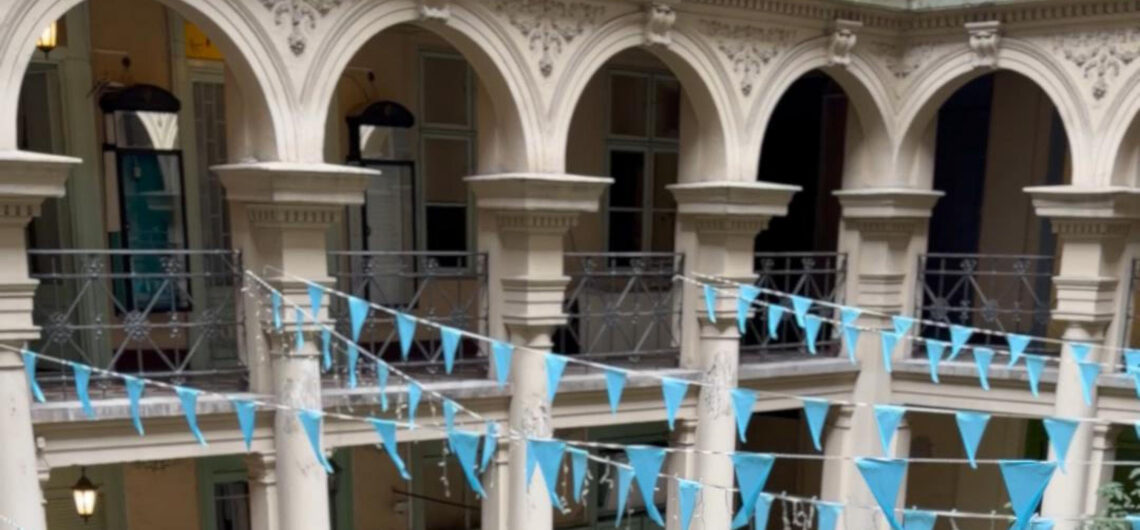
Some of the most memorable places in Budapest aren't marked by grand entrances or famous landmarks. In fact, you could walk past them dozens of times without ever realising what lies behind an ordinary gateway. If you're looking for a hidden courtyard Budapest visitors often miss, one of my favourite discoveries is Paloma Art Space, just a short walk from Váci Street and Ferenciek tere. Step inside and you'll discover a colourful collection of independent studios where talented Hungarian designers create handmade jewellery, ceramics, fashion, leather goods and artwork in a peaceful setting far removed from the city's busy streets. It's exactly the kind of place I love sharing with my guests because it reveals a different side of Budapest—creative, authentic and wonderfully unexpected. A Hidden Courtyard Full of Creativity At first glance, there's nothing particularly remarkable about the entrance. But once you walk into the courtyard, the atmosphere changes completely. Historic buildings surround a charming open courtyard where small studios invite visitors to browse unique handmade creations. Unlike large souvenir shops, Paloma Art Space is home to independent Hungarian artists and designers, many of whom are happy to chat about their work, inspiration and creative process. Whether you're looking for a meaningful souvenir or simply enjoy discovering local craftsmanship, this hidden courtyard offers a refreshing alternative to the city's busy shopping streets. Why Visit Paloma Art Space? One of the things I appreciate most about Paloma Art Space is that it feels genuinely local. Rather than international brands or mass-produced souvenirs, you'll find carefully crafted pieces made by people who are passionate about their work. Even if shopping isn't on your itinerary, the courtyard itself is worth visiting. Colourful shopfronts, historic architecture and a relaxed atmosphere make it one of those hidden places in Budapest where it's easy to
Some of the most memorable places in Budapest aren’t marked by grand entrances or famous landmarks. In fact, you could walk past them dozens of times without ever realising what lies behind an ordinary gateway. If you’re looking for a hidden courtyard Budapest visitors often miss, one of my favourite discoveries is Paloma Art Space, just a short walk from Váci Street and Ferenciek tere. Step inside and you’ll discover a colourful collection of independent studios where talented Hungarian designers create handmade jewellery, ceramics, fashion, leather goods and artwork in a peaceful setting far removed from the city’s busy streets.
It’s exactly the kind of place I love sharing with my guests because it reveals a different side of Budapest—creative, authentic and wonderfully unexpected.
A Hidden Courtyard Full of Creativity
At first glance, there’s nothing particularly remarkable about the entrance. But once you walk into the courtyard, the atmosphere changes completely.
Historic buildings surround a charming open courtyard where small studios invite visitors to browse unique handmade creations. Unlike large souvenir shops, Paloma Art Space is home to independent Hungarian artists and designers, many of whom are happy to chat about their work, inspiration and creative process.
Whether you’re looking for a meaningful souvenir or simply enjoy discovering local craftsmanship, this hidden courtyard offers a refreshing alternative to the city’s busy shopping streets.
Why Visit Paloma Art Space?
One of the things I appreciate most about Paloma Art Space is that it feels genuinely local. Rather than international brands or mass-produced souvenirs, you’ll find carefully crafted pieces made by people who are passionate about their work.
Even if shopping isn’t on your itinerary, the courtyard itself is worth visiting. Colourful shopfronts, historic architecture and a relaxed atmosphere make it one of those hidden places in Budapest where it’s easy to slow down for a few minutes and simply enjoy the surroundings.
One of My Favourite Hidden Places in Budapest
Whenever time allows, I enjoy bringing guests here during my private tours. It’s a wonderful surprise, especially for visitors who think they’ve already seen everything Budapest has to offer.
I love watching people’s reactions as they step into the courtyard. Moments earlier, they were walking through one of the city’s busiest areas. Suddenly, they’re surrounded by local creativity, colourful studios and a peaceful atmosphere that feels like a secret shared only with those willing to wander a little further.
For me, this is what Budapest is all about. Beyond the famous landmarks and panoramic viewpoints, the city is full of small discoveries waiting behind ordinary doors and hidden courtyards.
Practical Information
Location: Just a few minutes from Ferenciek tere and Váci Street.
Entrance: Free.
What you’ll find: Independent Hungarian designers, handmade jewellery, ceramics, fashion, leather goods, artwork and creative gifts.
Good to know: Opening hours vary between individual studios, so it’s always worth checking before your visit.
Discover the Budapest Beyond the Obvious
If you’re looking for hidden gems in Budapest, Paloma Art Space deserves a place on your itinerary. It’s proof that some of the city’s most memorable experiences aren’t found in guidebooks—they’re discovered by stepping through an ordinary gateway and allowing yourself to explore.
Most visitors come to Buda Castle for the famous landmarks, but the hidden gardens in Buda Castle reveal a completely different side of the district. Every day, thousands of people walk its cobbled streets, admire the views, and never notice the peaceful corners tucked away behind historic walls. But hidden behind historic walls and tucked away in quiet courtyards are a few peaceful corners that many visitors never discover. If you're looking for a different side of the Castle District, here are three secret gardens worth seeking out. 1. Hidden Castle Garden – For History Lovers Just a short walk from the main tourist routes, this small garden feels like a forgotten piece of old Buda. Surrounded by historic buildings and quiet pathways, it's the kind of place where you can pause for a moment and imagine what life might have looked like centuries ago. While most visitors head straight for Fisherman's Bastion, this peaceful corner offers something different: silence, shade, and a glimpse into the district's layered history. It's not a major attraction, and that's exactly why it's special. 2. Alabárdos Café Garden – For a Quiet Escape Finding a peaceful café in the Castle District, especially near Matthias Church can be surprisingly difficult, especially during the busy summer months. Hidden behind historic walls, the garden of Alabárdos Café offers a welcome break from the crowds. With its elegant surroundings, mature trees, and relaxed atmosphere, it's the perfect place to slow down with a coffee or a glass of wine and a book. You don't need to be in a hurry here. In fact, that's the whole point. 3. Koller Gallery Garden – For Art Lovers One of Budapest's oldest private galleries is also home to one of the Castle District's most charming hidden gardens. The small sculpture garden
Most visitors come to Buda Castle for the famous landmarks, but the hidden gardens in Buda Castle reveal a completely different side of the district. Every day, thousands of people walk its cobbled streets, admire the views, and never notice the peaceful corners tucked away behind historic walls.
But hidden behind historic walls and tucked away in quiet courtyards are a few peaceful corners that many visitors never discover. If you’re looking for a different side of the Castle District, here are three secret gardens worth seeking out.
1. Hidden Castle Garden – For History Lovers
Just a short walk from the main tourist routes, this small garden feels like a forgotten piece of old Buda.
Surrounded by historic buildings and quiet pathways, it’s the kind of place where you can pause for a moment and imagine what life might have looked like centuries ago. While most visitors head straight for Fisherman’s Bastion, this peaceful corner offers something different: silence, shade, and a glimpse into the district’s layered history.
It’s not a major attraction, and that’s exactly why it’s special.
2. Alabárdos Café Garden – For a Quiet Escape
Finding a peaceful café in the Castle District, especially near Matthias Church can be surprisingly difficult, especially during the busy summer months.
Hidden behind historic walls, the garden of Alabárdos Café offers a welcome break from the crowds. With its elegant surroundings, mature trees, and relaxed atmosphere, it’s the perfect place to slow down with a coffee or a glass of wine and a book.
You don’t need to be in a hurry here. In fact, that’s the whole point.
3. Koller Gallery Garden – For Art Lovers
One of Budapest’s oldest private galleries is also home to one of the Castle District’s most charming hidden gardens.
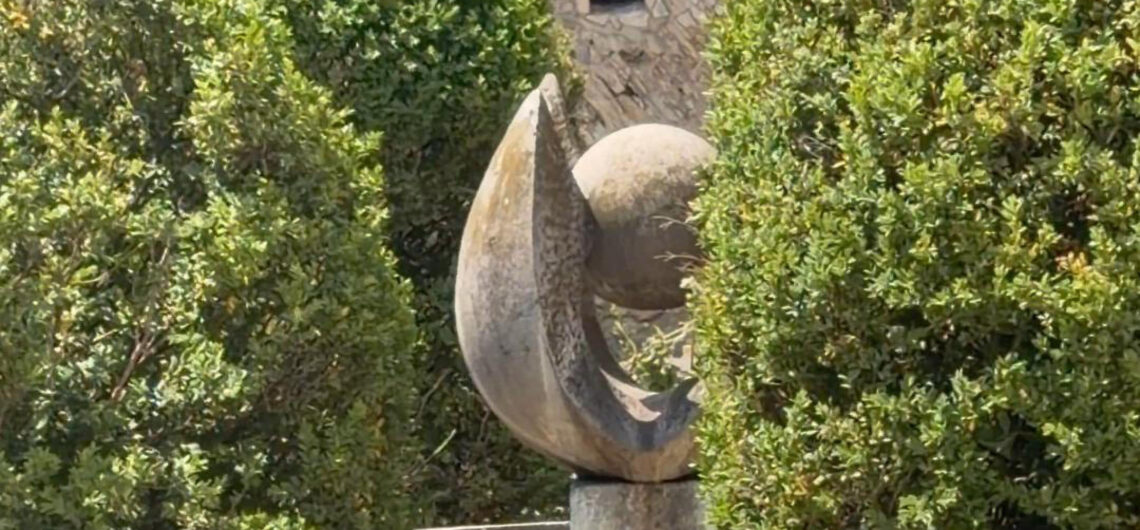
The small sculpture garden behind Koller Gallery combines art, greenery, and beautiful views over the rooftops of Buda. It’s peaceful, intimate, and often surprisingly quiet despite its central location.
Even if you’re not planning to visit the gallery itself, the garden is worth discovering.
A Different Side of Buda Castle
The Castle District will always be famous for its panoramic views, historic churches, and grand architecture. But sometimes the most memorable places are the ones hidden just around the corner.
The next time you visit Buda Castle, leave the main streets behind for a few minutes. You might discover a secret garden of your own. These hidden gardens in Buda Castle offer a peaceful escape from the crowds and a chance to experience a quieter, more personal side of Budapest.
You've Probably Never Seen This Side of Buda Castle
Every year on the 10th of June, architecture lovers around the world celebrate International Art Nouveau Day. It's a wonderful opportunity to discover Budapest Art Nouveau, one of the city's most beautiful and fascinating architectural treasures. For me, however, Art Nouveau is much more than a single day on the calendar. It is one of the reasons I fell in love with Budapest. Some people visit Budapest for the Parliament, others for the thermal baths or the famous cafés. While I love all of those, I have always been fascinated by the city's Art Nouveau treasures. The colours, the flowing lines, the stained glass, the symbolism hidden in every detail – they transform ordinary buildings into works of art. More importantly, they invite us to slow down and look closer. What Is Art Nouveau? Art Nouveau emerged across Europe around the turn of the 20th century as a reaction against the rigid styles that had dominated architecture and design for centuries. Instead of straight lines and strict symmetry, Art Nouveau embraced nature. Flowers, leaves, peacocks, butterflies, vines, and flowing curves became the defining elements of a new artistic language. Architects, artists, and craftsmen wanted beauty to be part of everyday life, not something reserved for museums. In Budapest, this movement found a particularly unique expression. The Hungarian Secession While Art Nouveau appeared across Europe under different names, Hungary developed its own distinctive version known as the Secession style. Hungarian architects combined the international Art Nouveau movement with local traditions, folk art motifs, and innovative materials. Colourful Zsolnay ceramics, floral decorations inspired by Hungarian embroidery, and rich symbolism became hallmarks of the style. The result is something that feels both international and unmistakably Hungarian. When visitors explore Budapest, they often recognise the grand buildings. What they don't always realise is that
Every year on the 10th of June, architecture lovers around the world celebrate International Art Nouveau Day. It’s a wonderful opportunity to discover Budapest Art Nouveau, one of the city’s most beautiful and fascinating architectural treasures.
For me, however, Art Nouveau is much more than a single day on the calendar. It is one of the reasons I fell in love with Budapest.
Some people visit Budapest for the Parliament, others for the thermal baths or the famous cafés. While I love all of those, I have always been fascinated by the city’s Art Nouveau treasures. The colours, the flowing lines, the stained glass, the symbolism hidden in every detail – they transform ordinary buildings into works of art.
More importantly, they invite us to slow down and look closer.
What Is Art Nouveau?
Art Nouveau emerged across Europe around the turn of the 20th century as a reaction against the rigid styles that had dominated architecture and design for centuries.
Instead of straight lines and strict symmetry, Art Nouveau embraced nature.
Flowers, leaves, peacocks, butterflies, vines, and flowing curves became the defining elements of a new artistic language. Architects, artists, and craftsmen wanted beauty to be part of everyday life, not something reserved for museums. In Budapest, this movement found a particularly unique expression.
The Hungarian Secession
While Art Nouveau appeared across Europe under different names, Hungary developed its own distinctive version known as the Secession style.
Hungarian architects combined the international Art Nouveau movement with local traditions, folk art motifs, and innovative materials. Colourful Zsolnay ceramics, floral decorations inspired by Hungarian embroidery, and rich symbolism became hallmarks of the style.
The result is something that feels both international and unmistakably Hungarian.
When visitors explore Budapest, they often recognise the grand buildings. What they don’t always realise is that some of the city’s most beautiful stories are hidden in the details.
The Details Most Visitors Miss
One of the things I enjoy most as a guide is watching people discover Art Nouveau for the first time.
At first, they notice the building. Then they notice the details.
A flower carved into stone.
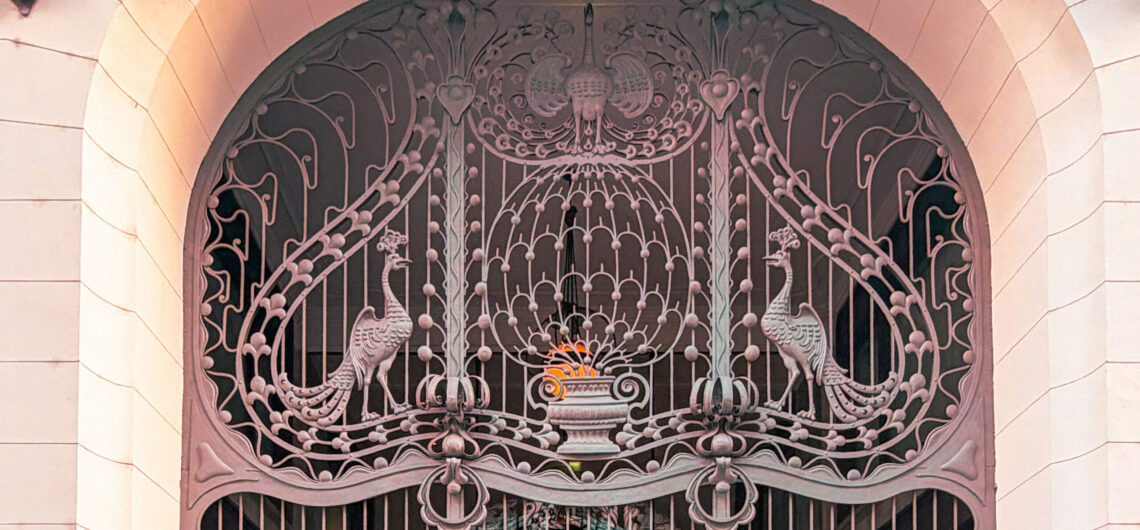
A peacock decorating an entrance gate.
A stained-glass window glowing in the afternoon light.
A wrought-iron balcony that resembles a living plant.
Once you start looking, you begin to see these details everywhere. Art Nouveau rewards curiosity. The more closely you look, the more you discover.
Many visitors walk past these treasures without ever noticing them, which makes finding them feel even more special.
My Favourite Art Nouveau Places in Budapest
Over the years, I’ve collected a long list of favourite Art Nouveau locations in Budapest. Some are famous, while others remain hidden gems.
One of the most intimate Art Nouveau experiences in Budapest. The former home and workshop of stained-glass master Róth Miksa offers a fascinating glimpse into the craftsmanship behind many of the city’s most beautiful decorative elements.
Bedő House
Former home to the Hungarian Art Nouveau Museum, this remarkable building showcases elegant floral motifs, decorative balconies, and beautiful architectural details both inside and out.
Párisi Udvar
Many visitors admire this spectacular building without realising how many decorative details cover its façade. Looking up reveals a fascinating combination of Art Nouveau, Gothic Revival, and Moorish influences.
Gresham Palace
Perhaps Budapest’s most famous Art Nouveau building, the former apartment palace features beautiful ironwork, mosaics, stained glass, and the famous peacock motifs that have become symbols of Hungarian Art Nouveau.
A hidden treasure for anyone interested in decorative arts. The villa offers beautifully preserved interiors and an excellent introduction to the artistic world of the period.
One of Budapest’s lesser-known Art Nouveau masterpieces. Its ongoing restoration highlights the importance of preserving these architectural treasures for future generations.
Why International Art Nouveau Day Matters
International Art Nouveau Day is celebrated every year on the 10th of June, encouraging people to discover and appreciate this extraordinary artistic movement. For me, it serves as a reminder that beauty is often found in the smallest details.
In a world that moves increasingly fast, Art Nouveau encourages us to pause, observe, and appreciate craftsmanship. It reminds us that architecture can be practical and beautiful at the same time.
Perhaps that is why I never grow tired of exploring Budapest’s Art Nouveau buildings. No matter how many times I walk past them, I always notice something new.
Budapest Rewards Curiosity
More than a century after these buildings were created, they continue to inspire visitors from around the world.
Their flowers still bloom in stone.
Their stained glass still catches the sunlight.
Their peacocks still watch over busy city streets.
And their stories are still waiting to be discovered.
If you’re planning a visit to Budapest, I encourage you to look beyond the famous landmarks and take a closer look at the details. You might be surprised by what you find.
Because in Budapest, curiosity is almost always rewarded.
If you only have one day in Budapest, it’s tempting to try to see everything. But Budapest is not a city you should rush. Instead of ticking off landmarks, the best way to experience the city is to slow down, enjoy the atmosphere, and focus on a few key areas. Here’s a realistic way to spend one perfect day in Budapest. 1. Start Your Day in Buda Begin your day on the Buda side of the city, where things feel calmer and more relaxed. Walk through the Castle District, enjoy the historic streets, and take in the first views over the Danube. Early morning is the perfect time to be here, before the crowds arrive. 2. Cross the Danube to Pest After exploring Buda, make your way across the river. Whether you walk across the Chain Bridge or take a tram along the Danube, this is one of the most scenic parts of the day. On the Pest side, you’ll find some of Budapest’s most iconic landmarks, including the Hungarian Parliament Building. 3. Take a Coffee Break Budapest has a wonderful café culture, and taking a break is part of the experience. Instead of rushing from one attraction to the next, stop for a coffee and a pastry. It’s the perfect way to slow down and enjoy the atmosphere of the city. 4. Explore at Your Own Pace In the afternoon, continue exploring at a comfortable pace. You might wander through the Jewish Quarter, discover small streets, or simply enjoy walking along the Danube promenade. This is where Budapest really comes to life — in the unexpected details. 5. End the Day with a Sunset Finish your day with a sunset view. Whether you stay by the river or head up to a quieter viewpoint, this is one of the
If you only have one day in Budapest, it’s tempting to try to see everything. But Budapest is not a city you should rush.
Instead of ticking off landmarks, the best way to experience the city is to slow down, enjoy the atmosphere, and focus on a few key areas. Here’s a realistic way to spend one perfect day in Budapest.
1. Start Your Day in Buda
Begin your day on the Buda side of the city, where things feel calmer and more relaxed.
Walk through the Castle District, enjoy the historic streets, and take in the first views over the Danube. Early morning is the perfect time to be here, before the crowds arrive.
2. Cross the Danube to Pest
After exploring Buda, make your way across the river. Whether you walk across the Chain Bridge or take a tram along the Danube, this is one of the most scenic parts of the day.
On the Pest side, you’ll find some of Budapest’s most iconic landmarks, including the Hungarian Parliament Building.
3. Take a Coffee Break
Budapest has a wonderful café culture, and taking a break is part of the experience.
Instead of rushing from one attraction to the next, stop for a coffee and a pastry. It’s the perfect way to slow down and enjoy the atmosphere of the city.
4. Explore at Your Own Pace
In the afternoon, continue exploring at a comfortable pace.
You might wander through the Jewish Quarter, discover small streets, or simply enjoy walking along the Danube promenade. This is where Budapest really comes to life — in the unexpected details.
5. End the Day with a Sunset
Finish your day with a sunset view.
Whether you stay by the river or head up to a quieter viewpoint, this is one of the most memorable moments in Budapest. As the city lights come on, the atmosphere becomes truly magical. For the best views, you might choose a rooftop bar for a relaxed atmosphere, admire the glow of the Hungarian Parliament Building from the riverbank, or head up to the Citadel or the Buda Castle District for a panoramic perspective over the city.
If you’d like to make the most of your time in Budapest without the stress of planning, a private tour can help you experience the city in a more personal and flexible way — at your own pace, and tailored to your interests.
One Day in Budapest - A Realistic Way to Experience the City
There are places in Budapest that impress you… and then there are places that make you pause. The Budapest State Opera House experience is firmly in the second category. I’ve walked through its grand foyer countless times with my guests, pointing out details, telling stories, watching their reactions as they look up—because everyone does. You simply can’t help it. The gold, the frescoes, the chandeliers… it’s overwhelming in the best possible way. But every now and then, I like to return not as a guide—but as a guest. And that’s when the magic truly begins. A Building Designed to Impress The Hungarian State Opera House opened in 1884, during one of Budapest’s most ambitious and elegant periods. Designed by the famous Hungarian architect Miklós Ybl, it was built to rival the great opera houses of Vienna and Paris—and many would say, it succeeded. From the outside, it’s already impressive. But the real experience begins the moment you step inside. Marble columns, sweeping staircases, and ceilings painted with mythological scenes set the tone immediately. And then, of course, there’s the auditorium—rich red velvet, gold balconies, and one of the most beautiful chandeliers in the city. It’s the kind of place where even before the performance starts, you already feel like you’re part of something special. More Than Just a Performance One of my favourite moments is just before the curtain rises. There’s a quiet energy in the room. People settle into their seats, the orchestra tunes, conversations soften. It’s a shared anticipation—and even if you don’t come to the opera regularly, you feel it instantly. And then, for a few hours, the outside world disappears. A Different Perspective: From a Private Box This time, I had the chance to watch from a private box—and I have to say, it changes everything.
There are places in Budapest that impress you… and then there are places that make you pause. The Budapest State Opera House experience is firmly in the second category.
I’ve walked through its grand foyer countless times with my guests, pointing out details, telling stories, watching their reactions as they look up—because everyone does. You simply can’t help it. The gold, the frescoes, the chandeliers… it’s overwhelming in the best possible way.
But every now and then, I like to return not as a guide—but as a guest. And that’s when the magic truly begins.
A Building Designed to Impress
The Hungarian State Opera House opened in 1884, during one of Budapest’s most ambitious and elegant periods. Designed by the famous Hungarian architect Miklós Ybl, it was built to rival the great opera houses of Vienna and Paris—and many would say, it succeeded.
From the outside, it’s already impressive. But the real experience begins the moment you step inside. Marble columns, sweeping staircases, and ceilings painted with mythological scenes set the tone immediately. And then, of course, there’s the auditorium—rich red velvet, gold balconies, and one of the most beautiful chandeliers in the city.
It’s the kind of place where even before the performance starts, you already feel like you’re part of something special.
More Than Just a Performance
One of my favourite moments is just before the curtain rises.
There’s a quiet energy in the room. People settle into their seats, the orchestra tunes, conversations soften. It’s a shared anticipation—and even if you don’t come to the opera regularly, you feel it instantly.
And then, for a few hours, the outside world disappears.
A Different Perspective: From a Private Box
This time, I had the chance to watch from a private box—and I have to say, it changes everything.
Opening the door and seeing the auditorium from that angle feels almost like stepping into another era. It’s more intimate, more theatrical. You’re not just watching the performance—you’re part of the scene itself.
Moments like this are a reminder of how these spaces were originally designed: not just for music, but for experience, for atmosphere, for a certain kind of elegance that still lingers today.
A Stop on My Tours
Even if you don’t attend a performance, the Opera House is still absolutely worth visiting.
I often include the main foyer in my private walking or driving tours of Budapest. It’s one of those places that adds a layer of cultural depth to the city—something beyond the usual sights.
It’s also a perfect way to understand Budapest’s golden age, when the city was growing rapidly and wanted to show the world just how sophisticated it had become.
Budapest: A City of Music
The Opera House is just one part of Budapest’s rich musical life.
Another favourite of mine is the Liszt Academy of Music—an equally stunning building, but with a very different atmosphere. While the Opera House feels grand and theatrical, the Academy is more intimate and deeply connected to Hungary’s musical heritage.
If you enjoy live music, I always recommend checking what’s on during your stay. Whether it’s opera, classical concerts, or even smaller performances, Budapest offers something special year-round.
Is It Worth It?
Absolutely. Even if you’re not a regular opera-goer, this is about more than the performance. It’s about stepping into a space where architecture, history, and culture come together in a way that feels both grand and personal at the same time. If you’re looking for a truly memorable cultural highlight, a Budapest Opera House experience is something I always recommend.
And honestly, it’s one of those evenings you’ll remember long after your trip.
A Little Tip
If you’re visiting Budapest and considering an evening at the Opera House, I’m always happy to help you choose the right performance—or include the building as part of a private tour.
Because sometimes, the best way to experience a place… is to understand the story behind it.
You’d Never Expect This… Budapest Opera House Experience
Philosophers Garden Budapest is one of those places you almost miss — but once you find it, you don’t forget it. Beautiful Budapest is full of grand landmarks — but some of its most memorable places are the quiet ones. The ones you almost miss. The Philosophers' Garden is one of them. Tucked away on the slopes of Gellért Hill, this peaceful spot is part of my personal “Secret Gardens of Budapest”series — places where the city slows down, and something unexpected happens. If you’ve already discovered the charm of Mansfeld Péter Park or the serenity of Gül Baba's Tomb, this is another one to add to your list. A Circle of Ideas At the heart of the garden stands a quiet circle of statues — representing great spiritual and philosophical figures from different cultures. You’ll recognize names like: Buddha Jesus Abraham Laozi Akhenaten They face each other, as if in conversation. The message is simple, but powerful: different paths, shared values. It’s not a place that overwhelms you — it’s one that gently invites you to pause. Each statue represents a different path — different beliefs, different traditions — yet they meet here in quiet harmony. It’s a gentle reminder that, beyond our differences, there is something deeply shared in the human search for meaning, peace, and understanding. And somehow, in this small garden above the city, you can feel exactly that. A View Without the Crowds Just beyond the statues, the trees open up — and suddenly, Budapest unfolds below you. The Hungarian Parliament Building, the Danube, the bridges… All there. But without the crowds you’ll find at the Citadella. And that changes everything. Part of a Perfect Gellért Hill Walk One of the best things about the Philosophers’ Garden is how easily it fits into a walk
Philosophers Garden Budapest is one of those places you almost miss — but once you find it, you don’t forget it.
Beautiful Budapest is full of grand landmarks — but some of its most memorable places are the quiet ones. The ones you almost miss. The Philosophers’ Garden is one of them.
Tucked away on the slopes of Gellért Hill, this peaceful spot is part of my personal “Secret Gardens of Budapest”series — places where the city slows down, and something unexpected happens.
If you’ve already discovered the charm of Mansfeld Péter Park or the serenity of Gül Baba’s Tomb, this is another one to add to your list.
A Circle of Ideas
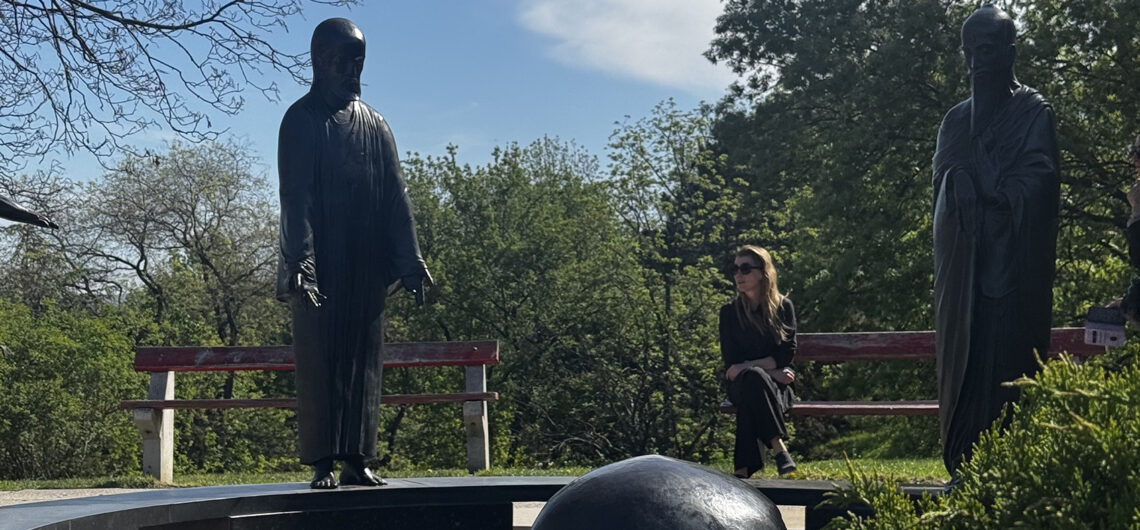
At the heart of the garden stands a quiet circle of statues — representing great spiritual and philosophical figures from different cultures.
You’ll recognize names like:
Buddha
Jesus
Abraham
Laozi
Akhenaten
They face each other, as if in conversation. The message is simple, but powerful: different paths, shared values. It’s not a place that overwhelms you — it’s one that gently invites you to pause.
Each statue represents a different path — different beliefs, different traditions — yet they meet here in quiet harmony. It’s a gentle reminder that, beyond our differences, there is something deeply shared in the human search for meaning, peace, and understanding.
And somehow, in this small garden above the city, you can feel exactly that.
A View Without the Crowds
Just beyond the statues, the trees open up — and suddenly, Budapest unfolds below you. The Hungarian Parliament Building, the Danube, the bridges… All there.
But without the crowds you’ll find at the Citadella. And that changes everything.
Part of a Perfect Gellért Hill Walk
One of the best things about the Philosophers’ Garden is how easily it fits into a walk around the beautiful Gellért Hill of Budapest.
If you’re planning your route, I recommend pairing this with my posts about the Citadel and the Liberty Statue — together, they create a beautiful, varied walk through one of Budapest’s most iconic hills.
Why Philosophers’ Garden Stays With You
There’s something special about places like this. They’re not the biggest sights. They’re not the most famous. But they’re the ones people remember later.
As a private guide, I often include spots like this in my tours — because they show a different side of Budapest. A quieter, more personal one.
Budapest isn’t just about what you see. It’s about the places where you stop, breathe, and feel the city. The Philosophers’ Garden is one of those places. And if you’d like to discover more hidden corners like this — I’d be happy to show you.
If you’re looking for romantic viewpoints in Budapest, there are a few special places that combine views, atmosphere, and storytelling in a unique way. Budapest is full of grand landmarks — but some of its most beautiful stories are hidden in plain sight. This post is the first in a new series where I’ll share romantic statues across the city — the ones that tell stories, offer a special atmosphere, and often come with a view you won’t forget. And there’s no better place to start than with the symbolic couple of the city itself: the Buda & Pest Statue. A love story in stone At first glance, it’s just a sculpture. But look a little closer. The two figures represent Buda and Pest — the historic halves of the city, united in 1873. One is calm and grounded, the other lively and full of energy. They face each other across the Danube. Close… but not quite together. It’s easy to imagine them as lovers — always connected, yet separated by the river that defines Budapest. A hidden gem with one of the best views What makes this spot truly special is not just the story — it’s the setting. This spot is part of my favourite walks around Gellért Hill, an area full of hidden paths, quiet viewpoints, and some of the most beautiful panoramas in Budapest. If you enjoy discovering places like this, you might want to explore more of my Gellért Hill stories. From here, you get a beautiful view over the Royal Palace and the historic Buda Castle District, with the Danube flowing below and the city centre of Pest stretching out on the other side. It’s a quieter perspective — less about the postcard-perfect Parliament view, and more about feeling the layout and rhythm of
If you’re looking for romantic viewpoints in Budapest, there are a few special places that combine views, atmosphere, and storytelling in a unique way. Budapest is full of grand landmarks — but some of its most beautiful stories are hidden in plain sight.
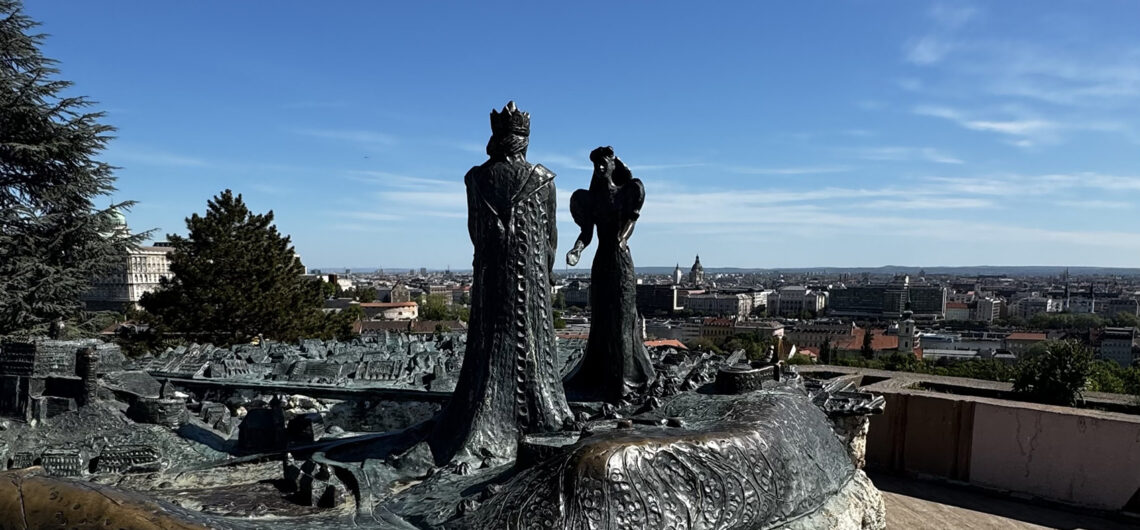
This post is the first in a new series where I’ll share romantic statues across the city — the ones that tell stories, offer a special atmosphere, and often come with a view you won’t forget. And there’s no better place to start than with the symbolic couple of the city itself: the Buda & Pest Statue.
A love story in stone
At first glance, it’s just a sculpture. But look a little closer.
The two figures represent Buda and Pest — the historic halves of the city, united in 1873. One is calm and grounded, the other lively and full of energy. They face each other across the Danube. Close… but not quite together.
It’s easy to imagine them as lovers — always connected, yet separated by the river that defines Budapest.
A hidden gem with one of the best views
What makes this spot truly special is not just the story — it’s the setting.
This spot is part of my favourite walks around Gellért Hill, an area full of hidden paths, quiet viewpoints, and some of the most beautiful panoramas in Budapest. If you enjoy discovering places like this, you might want to explore more of my Gellért Hill stories.
From here, you get a beautiful view over the Royal Palace and the historic Buda Castle District, with the Danube flowing below and the city centre of Pest stretching out on the other side. It’s a quieter perspective — less about the postcard-perfect Parliament view, and more about feeling the layout and rhythm of the city.
This is exactly the kind of place I love including in my tours — a mix of storytelling, atmosphere, and a viewpoint that feels personal.
Why I include spots like this in my tours
Budapest is not just about ticking off landmarks. It’s about discovering places that make you feel something — a view, a story, a quiet moment above the city. This is one of those romantic viewpoints in Budapest that feels more personal. It is a quiet place where the city slowly unfolds in front of you.
That’s why my tours are always customized:
some guests want iconic highlights
others want hidden corners
most want a bit of both
And places like the Buda & Pest statue are where those elements come together beautifully.
Continue exploring Budapest’s romantic side
This is just the beginning. In the next posts of this series, I’ll share more romantic statues and hidden stories — perfect for walks, photos, or simply seeing Budapest from a different perspective.
Final note
If you’re planning a visit and would like to explore places like this — beyond the usual highlights — I’d be happy to design a walk that fits your interests perfectly. Because in Budapest, the most memorable moments are often the ones you don’t find on a map.
Still looking for the best views in Budapest? You’ll probably hear about rooftop bars, river cruises, or the Fisherman’s Bastion—but if you want a truly panoramic view of the city, there’s one place that stands above the rest: Gellért Hill. Rising high above the Danube on the Buda side, this viewpoint offers one of the most iconic vistas in the Hungarian capital—and it’s not just beautiful, it’s also part of a UNESCO World Heritage Site. Why Gellért Hill Has the Best Views in Budapest From the top, Budapest unfolds in front of you. You’ll see: The majestic Hungarian Parliament Building The Danube cutting through the city The elegant Chain Bridge and other historic bridges Both Buda and Pest in one sweeping panorama What makes this view special is its scale—you’re not just looking at one landmark, but the entire city layout, exactly where history and geography meet. A UNESCO-Protected Panorama The view from Gellért Hill is part of the “Budapest, including the Banks of the Danube, the Buda Castle Quarter and Andrássy Avenue” UNESCO listing. That means what you’re looking at isn’t just pretty—it’s considered globally significant. Few cities in the world offer a panorama where: A historic river divides two distinct city halves Architectural styles span centuries And the overall composition remains so beautifully intact How to Get to Gellért Hill Getting to the top is easier than it looks—but there is a bit of a climb. Here are your main options: From Liberty Bridge 15–20 minute walk uphill Includes stairs Slightly more scenic, a bit more effort From Elizabeth Bridge 15–20 minute walk Fewer stairs, but still uphill A more gradual climb By bus (Bus 27) Short ride uphill About a 10-minute walk from the stop Best option if you want to save energy Tip: Wear comfortable shoes—the
Still looking for the best views in Budapest? You’ll probably hear about rooftop bars, river cruises, or the Fisherman’s Bastion—but if you want a truly panoramic view of the city, there’s one place that stands above the rest: Gellért Hill.
Rising high above the Danube on the Buda side, this viewpoint offers one of the most iconic vistas in the Hungarian capital—and it’s not just beautiful, it’s also part of a UNESCO World Heritage Site.
Why Gellért Hill Has the Best Views in Budapest
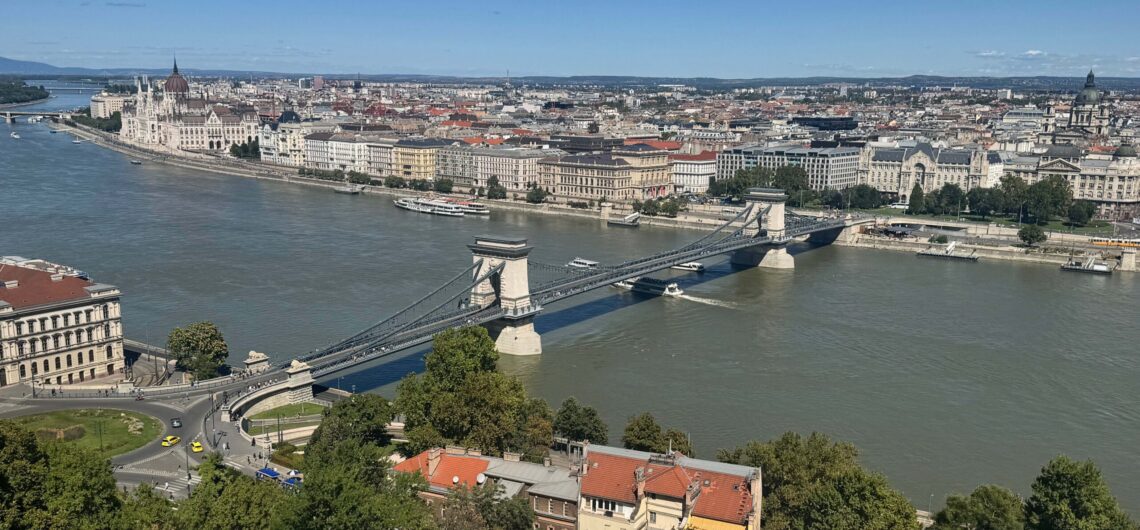
From the top, Budapest unfolds in front of you. You’ll see:
The majestic Hungarian Parliament Building
The Danube cutting through the city
The elegant Chain Bridge and other historic bridges
Both Buda and Pest in one sweeping panorama
What makes this view special is its scale—you’re not just looking at one landmark, but the entire city layout, exactly where history and geography meet.
A UNESCO-Protected Panorama
The view from Gellért Hill is part of the “Budapest, including the Banks of the Danube, the Buda Castle Quarter and Andrássy Avenue” UNESCO listing.
That means what you’re looking at isn’t just pretty—it’s considered globally significant. Few cities in the world offer a panorama where:
A historic river divides two distinct city halves
Architectural styles span centuries
And the overall composition remains so beautifully intact
How to Get to Gellért Hill
Getting to the top is easier than it looks—but there is a bit of a climb. Here are your main options:
From Liberty Bridge
15–20 minute walk uphill
Includes stairs
Slightly more scenic, a bit more effort
From Elizabeth Bridge
15–20 minute walk
Fewer stairs, but still uphill
A more gradual climb
By bus (Bus 27)
Short ride uphill
About a 10-minute walk from the stop
Best option if you want to save energy
Tip: Wear comfortable shoes—the paths can be uneven in places.
Visiting Gellért Hill as Part of a Tour
Gellért Hill is a stop I almost always include when I design a custom itinerary—especially for first-time visitors.
It’s one of the few places where, within minutes, you can truly understand Budapest: the layout of the city, the Danube, and the relationship between Buda and Pest.
Because it’s easily accessible by car, it works perfectly as a short stop during a driving tour, or as part of a tailor-made experience. Even a brief visit here can add a lot of context to the rest of your time in the city.
What Is the Citadel?
At the top of Gellért Hill, you’ll find the Citadel, a fortress built in the 19th century.
Today, most visitors come here not for the history—but for the viewpoints surrounding it, which offer some of the best photo opportunities in Budapest.
Is Gellért Hill Worth It?
Absolutely.
Yes, there’s a short uphill walk. Yes, it can get a bit busy.
But standing above the Danube, with the entire city spread out below you, you’ll understand why this view is protected—and why it’s one of the most unforgettable experiences in Budapest.
Final Tip
If you’re already on Gellért Hill, don’t rush back down.
Whether you’re interested in iconic views, hidden corners, or the stories behind the city, I design each tour around your interests and pace—so you can see Budapest in a way that truly feels your own.
Feel free to get in touch to start planning your experience.
There are moments in Hungary when you feel like time slows down. Not in the grand, obvious places—but in the quiet ones. In workshops where hands have been repeating the same movements for generations. In patterns that have been printed again and again, unchanged for centuries. This is where you find kékfestés—Hungarian blue dyeing. A Craft Passed Down Through Generations Kékfestés is not just a technique. It’s a family tradition. For centuries, workshops across Hungary were run by families who guarded their knowledge carefully. The patterns, the tools, even the recipes for the resist paste were often passed down from parent to child—sometimes for five or six generations. In a world where everything moves fast, this kind of continuity feels almost unbelievable. And yet, it still exists. The Human Side Behind the Patterns When you look at these deep blue fabrics, it’s easy to focus on the beauty—the delicate white motifs, the rich indigo shades. But what makes them truly special is what you don’t immediately see. Each pattern is applied by hand using carved wooden blocks, each piece is dipped, dried, and treated with care, each imperfection tells you: this was made by a person, not a machine. It’s slow. It’s precise. And it’s deeply human. A UNESCO-Protected Tradition In 2018, kékfestés was officially recognised by UNESCO as part of the Intangible Cultural Heritage of Humanity. This recognition is not just about preserving a technique—it’s about protecting a way of life. Because crafts like this don’t survive on efficiency. They survive on dedication, identity, and community. My Visit to the Kékfestő Múzeum Recently, I visited the blue dyeing museum in the charming town of Pápa—and it felt like stepping into another century. What makes this place so special is that it’s not just a museum. It’s a perfectly preserved
There are moments in Hungary when you feel like time slows down. Not in the grand, obvious places—but in the quiet ones. In workshops where hands have been repeating the same movements for generations. In patterns that have been printed again and again, unchanged for centuries.
This is where you find kékfestés—Hungarian blue dyeing.
A Craft Passed Down Through Generations
Kékfestés is not just a technique. It’s a family tradition. For centuries, workshops across Hungary were run by families who guarded their knowledge carefully. The patterns, the tools, even the recipes for the resist paste were often passed down from parent to child—sometimes for five or six generations.
In a world where everything moves fast, this kind of continuity feels almost unbelievable. And yet, it still exists.
The Human Side Behind the Patterns
When you look at these deep blue fabrics, it’s easy to focus on the beauty—the delicate white motifs, the rich indigo shades. But what makes them truly special is what you don’t immediately see.
Each pattern is applied by hand using carved wooden blocks, each piece is dipped, dried, and treated with care, each imperfection tells you: this was made by a person, not a machine.
It’s slow. It’s precise. And it’s deeply human.
A UNESCO-Protected Tradition
In 2018, kékfestés was officially recognised by UNESCO as part of the Intangible Cultural Heritage of Humanity. This recognition is not just about preserving a technique—it’s about protecting a way of life.
Because crafts like this don’t survive on efficiency. They survive on dedication, identity, and community.
My Visit to the Kékfestő Múzeum
Recently, I visited the blue dyeing museum in the charming town of Pápa—and it felt like stepping into another century. What makes this place so special is that it’s not just a museum. It’s a perfectly preserved workshop.
The vats are still there. The tools are still in place. The fabrics still hang as if someone had just left the room.
You don’t just learn about the craft—you feel it.
Why Experiences Like This Matter
When people visit Hungary, they often focus on the big highlights—Budapest, the Parliament, the famous sights. But the real stories of a country often live elsewhere.
In small towns, local traditions and crafts like “kékfestés”.
These are the experiences I love sharing during my tours—moments that connect you not just to a place, but to its people and its history.
Curious to Explore Something Like This?
What I love most about my work is that no two tours are ever the same. This visit to Pápa and the blue dyeing workshop actually came from a traveller’s request—they were curious about local crafts and wanted to discover something beyond the usual sights. And that’s how we ended up here, surrounded by centuries-old traditions and deep indigo patterns.
If you’d like to explore Hungary in a more personal way, you can book one of my general tours directly on my website. Or… simply tell me what you’re curious about.
Whether it’s hidden gardens, local cafés, history, or traditional crafts like kékfestés, I’m always happy to create something tailored just for you.
A Tradition That Lives On
Kékfestés is not just something to admire in a museum. It’s still alive—quietly, patiently, carried forward by those who choose to continue it. And maybe that’s what makes it so special.
Not just that it survived… but that it still matters.
There is something magical about spring in Budapest. After months of grey skies and chilly mornings, the city begins to wake up. The terraces slowly fill with conversation, the parks turn green again, and warm breezes drift through the streets carrying the promise of brighter days ahead. And then, almost suddenly, the cherry blossoms arrive. For a few short but unforgettable days each year, delicate pink blossoms bloom across Budapest, transforming quiet corners of the city into scenes that feel almost dreamlike. One of the most beautiful places to experience this is in the Buda Castle District, where soft petals frame historic streets and centuries-old buildings in shades of springtime pink. But this year, spring feels a little different. Perhaps it is the sunshine, perhaps it is the blossoms, or perhaps it is the feeling that something new is in the air—not just in nature, but in the city itself. Budapest seems to be stepping into spring with a little more energy, a little more joy, and a quiet sense of optimism for the season ahead. Cherry blossoms have long symbolized renewal, hope, and the beauty of fleeting moments. And somehow, this year, they feel especially fitting. There is laughter in the air, music drifting from open windows, and the unmistakable sense that Budapest is welcoming not only a new season, but perhaps a new chapter as well. Why Spring Is One of the Best Times to Visit Budapest If you are planning to visit Budapest, spring may be the perfect season. The weather is mild, the city is colourful, and locals seem to spend every possible moment outdoors enjoying the sunshine after the long winter months. Café terraces overflow onto the sidewalks, flowers bloom in the parks, and the golden evening light makes the city even more photogenic than
There is something magical about spring in Budapest.
After months of grey skies and chilly mornings, the city begins to wake up. The terraces slowly fill with conversation, the parks turn green again, and warm breezes drift through the streets carrying the promise of brighter days ahead.
And then, almost suddenly, the cherry blossoms arrive.
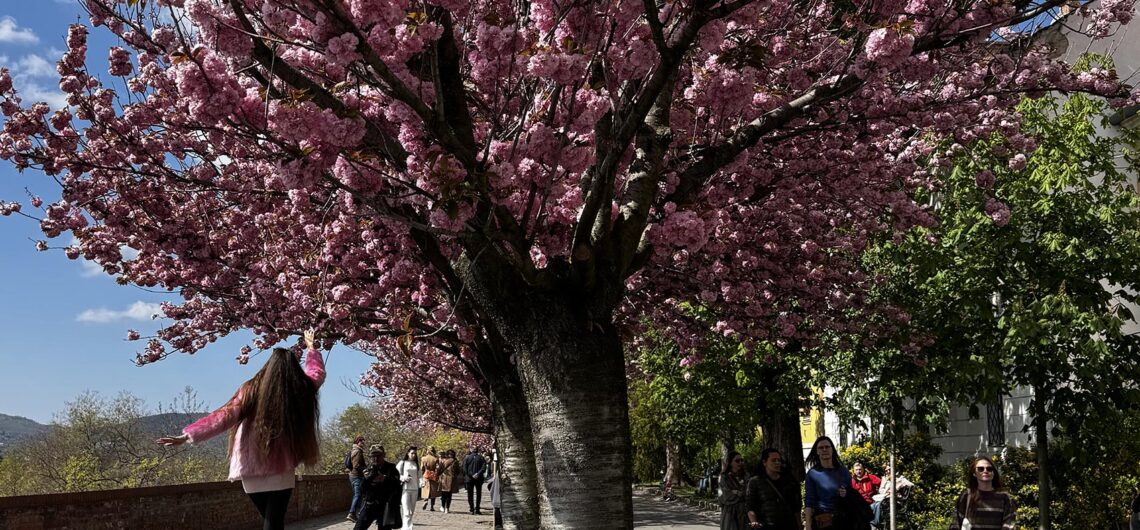
For a few short but unforgettable days each year, delicate pink blossoms bloom across Budapest, transforming quiet corners of the city into scenes that feel almost dreamlike. One of the most beautiful places to experience this is in the Buda Castle District, where soft petals frame historic streets and centuries-old buildings in shades of springtime pink.
But this year, spring feels a little different.
Perhaps it is the sunshine, perhaps it is the blossoms, or perhaps it is the feeling that something new is in the air—not just in nature, but in the city itself. Budapest seems to be stepping into spring with a little more energy, a little more joy, and a quiet sense of optimism for the season ahead.
Cherry blossoms have long symbolized renewal, hope, and the beauty of fleeting moments. And somehow, this year, they feel especially fitting.
There is laughter in the air, music drifting from open windows, and the unmistakable sense that Budapest is welcoming not only a new season, but perhaps a new chapter as well.
Why Spring Is One of the Best Times to Visit Budapest
If you are planning to visit Budapest, spring may be the perfect season.
The weather is mild, the city is colourful, and locals seem to spend every possible moment outdoors enjoying the sunshine after the long winter months. Café terraces overflow onto the sidewalks, flowers bloom in the parks, and the golden evening light makes the city even more photogenic than usual.
One of my favourite places to admire cherry blossoms in Budapest is the Buda Castle District. The contrast of soft pink petals against the grand historic buildings creates one of the most romantic spring scenes in the city.
If you enjoy hidden viewpoints and peaceful walks, you might also love visiting Gül Baba’s tomb, one of Budapest’s secret gardens with stunning Parliament views.
Experience Budapest in Bloom
Spring is one of my favorite seasons for private tours because Budapest simply feels happier. The streets are lively, the weather is comfortable, and the whole city seems to glow with fresh energy.
If you would like to discover Budapest’s hidden corners, local stories, and beautiful spring atmosphere with a local guide, explore my private Budapest tours.