Snow has a way of transforming Budapest, Budapest in winter feels noticeably different. The familiar streets grow quieter, footsteps slow down, and the city reveals a softer, more intimate side. Winter in Budapest isn’t about rushing between sights — it’s about atmosphere, details, and moments that invite you to pause.

If you’re wondering whether Budapest is worth visiting in winter, the answer is a gentle but confident yes.

A Slower Side of Beautiful Budapest in Winter

When snow falls, Budapest feels more personal. Locals linger a little longer in cafés, parks feel almost private, and even the busiest areas take on a calm rhythm. This is when the city rewards those who enjoy slow travel — walking, observing, and letting places unfold naturally.

Winter light softens the architecture, and familiar landmarks feel less crowded and more contemplative. It’s a season for wandering without a strict plan, following quiet streets instead of highlights lists.

Walking Through a Snowy City

Budapest is a city made for walking, and winter emphasises this beautifully. Snow-covered paths along the Danube, peaceful parks, and residential streets offer some of the most memorable walks of the year.

Exploring on foot allows you to notice small details — the sound of trams in the snow, steam rising from café windows, and the contrast between warm interiors and the cold outside. These moments are often missed during busier seasons.

If you enjoy discovering cities at a relaxed pace, winter walks are an ideal way to experience Budapest. You can find more ideas and inspiration on my Budapest walking tours page, where I share different ways to explore the city beyond the obvious routes.

Winter Landmarks Without the Crowds

Some of Budapest’s most iconic sights feel especially atmospheric in winter. Snow highlights the lines of historic buildings, bridges feel more dramatic against a pale sky, and viewpoints offer crisp, clear perspectives.

  • The Hungarian Parliament and its surroundings in winter
  • Budapest’s bridges and how they connect the city’s two sides
  • Scenic riverside walks along the Danube

These places take on a quieter, more reflective character when the city slows down.

Winter is also an ideal time to explore Budapest’s museums, especially smaller, less crowded places that reward curiosity and attention to detail. If you enjoy discovering hidden cultural gems, you may like my visit to the Róth Miksa Memorial House, a beautifully preserved Art Nouveau museum that offers a quiet and inspiring indoor experience.

Warm Pauses Inside

One of the joys of Budapest in winter is the rhythm between outside and inside. After a walk in the cold, stepping into a café feels especially comforting. Foggy windows, warm drinks, and unhurried conversations are all part of the winter experience.

This balance — between exploration and rest — is what makes winter travel here so rewarding. It’s not about seeing everything, but about feeling connected to the city.

Is Winter the Right Time to Visit Budapest?

Winter is perfect for travellers who:

  • Prefer fewer crowds
  • Enjoy slow, mindful travel
  • Love photography and atmosphere
  • Want a more local, authentic experience

While days are shorter and colder, the city’s charm is unmistakable. Budapest doesn’t hibernate — it simply changes pace.

Discover Budapest at Your Own Rhythm

Whether you’re visiting for the first time or returning to see the city from a new perspective, winter offers a unique opportunity to connect with Budapest on a deeper level.

If you’d like help planning a personalised experience or exploring the city through thoughtful walks, feel free to visit my Contact page. I’m always happy to help you discover Beautiful Budapest — one moment at a time.

Budapest in winter

Today we celebrate the Budapest 152nd birthday. On November 17, 1873, three historic towns — Buda, Pest, and Óbuda — united to form one magnificent city: Budapest. I can’t help but reflect on why this place continues to capture my heart — and the hearts of travellers from all over the world.

It’s incredible to think how much history, resilience, and beauty fit into these 152 years. Budapest isn’t just Hungary’s capital — it’s a city that tells stories at every turn, from its majestic bridges to its cozy cafés.

A City of Timeless Beauty

If you’re looking for things to do in Budapest, you don’t have to go far. Start with the Hungarian Parliament, one of Europe’s most stunning government buildings, glowing golden at night on the banks of the Danube. Cross over the Chain Bridge, admire the Fisherman’s Bastion at sunrise, and don’t miss a ride on Tram 2, often called one of the most scenic tram routes in the world.

Whether you explore Buda Castle Hill for history or Andrássy Avenue for architecture, every view tells a story. So you will explore a mix of grandeur, resilience, and unmistakable charm. Need more ideas? Let me know!

Everyday Magic – Happy Birthday Beautiful Budapest!

What makes Budapest truly special is how easily beauty blends into everyday life.
You can enjoy a lazy morning at one of the city’s historic cafés, stroll along the Danube promenade, or simply watch the lights shimmer across the water as evening falls.
Even locals (like me!) still stop to take in the view — because it never gets old.

💙 My Beautiful Budapest

As a private tour guide in Budapest, I’ve had the joy of seeing visitors fall in love with the city — whether it’s their first visit or a long-awaited return. Each tour I lead feels like a love letter to this place: to its stories, flavours, and hidden corners that you won’t find in guidebooks.

Budapest is endlessly inspiring. It’s a city that makes you slow down, look up, and appreciate the details. Like the curve of a bridge, the scent of coffee, the sound of trams rolling by.

Here’s to the Next 152 Years – Happy Birthday Beautiful Budapest!

Budapest has lived through revolutions, rebuildings, and countless transformations. Yet, she always rises more beautiful, more vibrant, more alive.
So today, I raise my glass (of Tokaji, of course!) to 152 years of history, culture, and beauty.

Happy Birthday, Beautiful Budapest — and thank you for continuing to inspire all who walk your streets. 💫

If you walk along the Danube in Pest, the area around the Hungarian Parliament is filled with symbols of Hungarian identity — and one of the most striking is the equestrian statue of Count Gyula Andrássy. This sculpture is part of my ongoing Statues of Budapest series, where I introduce both famous monuments and smaller details that add meaning to the city’s streetscape.

Where is the Count Gyula Andrássy statue?

The statue stands at the Hungarian Parliament building, in one of the most important public spaces in Budapest. Even if you’re only passing by for photos of the Parliament, it’s worth stopping for a minute: monuments here are carefully chosen, and Andrássy’s presence tells a very specific story about Hungary’s 19th-century political turning point.

Who was Count Gyula Andrássy?

Count Gyula Andrássy (1823–1890) was one of Hungary’s most influential politicians and statesmen. He played a key role in the events that led to the Austro–Hungarian Compromise of 1867, a major political agreement that created the Austro–Hungarian Monarchy. For visitors, this is where a statue becomes more than decoration: it highlights a moment when Hungary’s modern political structure took shape — and why this part of Budapest is so dense with national symbolism.

Why an equestrian statue?

Equestrian statues traditionally represent leadership, authority, and statehood. In Budapest, this visual language matters: statues around the Parliament are designed to communicate political continuity and historical legitimacy. Whether you love history or you simply enjoy reading the city through its monuments, Andrássy’s statue is a good example of how Budapest “speaks” in stone and bronze.

A quick tip for your visit

When you’re photographing the Parliament, try including the statue in the foreground for a stronger composition — it adds context and scale, and immediately signals that you’re not just capturing a building, but a piece of Hungarian history.

Explore more: If you enjoy noticing details like this, you might like my collection of Statues of Budapest, featuring famous monuments and hidden gems across Buda and Pest.

Equestrian statue of Count Gyula Andrássy at the Hungarian Parliament in Budapest

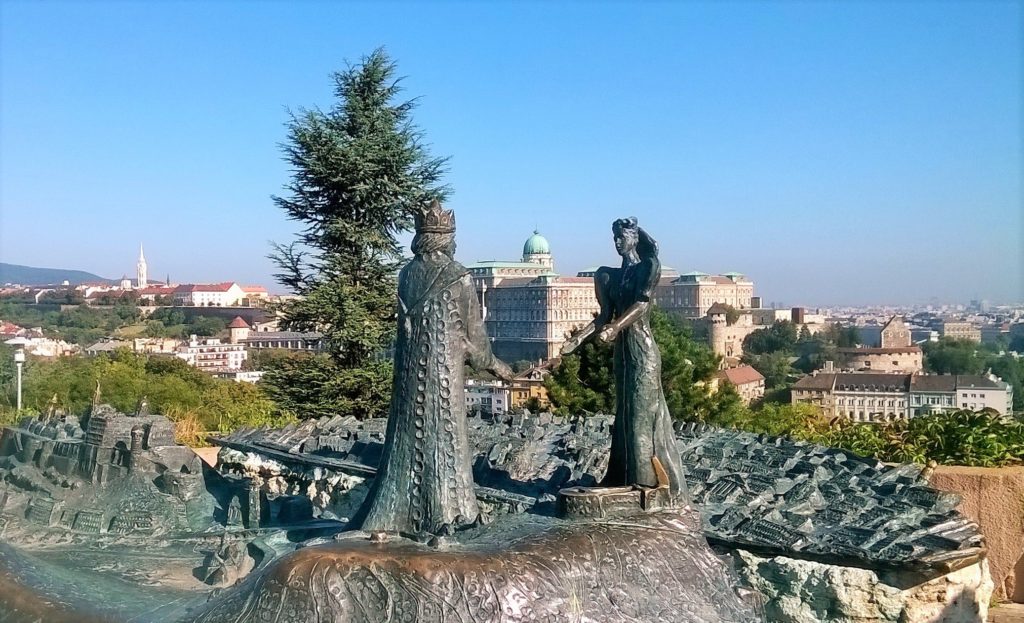
High above the Danube, on Gellért Hill, stands one of Budapest’s most poetic and quietly emotional statues: Prince Buda and Princess Pest. Unlike grand monuments celebrating power or victory, this sculpture tells a story of distance, longing, and separation.

This statue is part of my ongoing Statues of Budapest series, which explores how the city expresses its history and identity through symbolism rather than spectacle.

A love divided by the river

Prince Buda and Princess Pest represent the two historic halves of the city, once separated by the Danube River. In the statue, they face each other — close enough to see one another, yet permanently apart.

The story is often interpreted as a sad love tale, but it also reflects Budapest’s geography and history: two cities growing side by side, divided by water until their unification in the 19th century.

Where can you find the statue?

The sculpture is located on Gellért Hill, near the Garden of Philosophy, a peaceful and contemplative area overlooking the city. The setting adds to the statue’s emotional tone — quiet, reflective, and slightly removed from the bustle below.

Many visitors walk past without realizing the meaning behind the figures, yet once you know the story, it’s difficult to see them as anything other than symbols of the city itself.

Why this statue matters

Prince Buda and Princess Pest are not historical figures, but they express something deeply real: Budapest’s identity as a city shaped by division, connection, and eventual unity.

It’s a reminder that some of the city’s most meaningful statues are not the most famous ones — but those that quietly echo its soul.

Explore more: This statue is part of my Statues of Budapest collection, featuring famous monuments and hidden gems across Buda and Pest.

Prince Buda and Princess Pest statue on Gellért Hill overlooking the Danube in Budapest


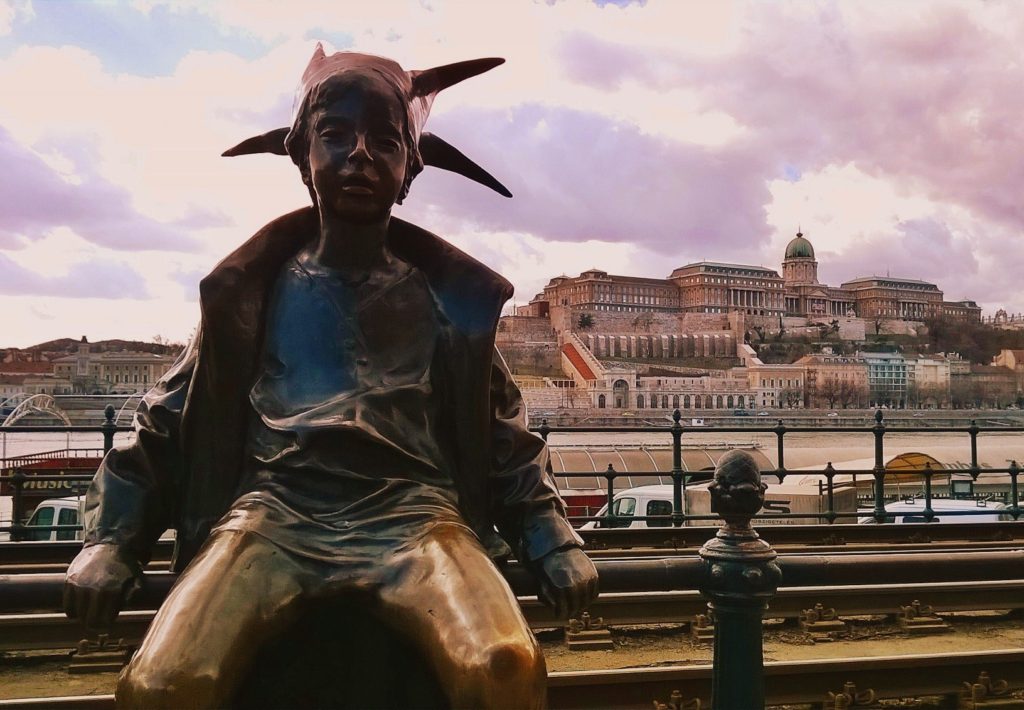
Another statue with a quiet kind of magic, the Little Princess is one of Budapest’s most beloved and photographed sculptures. Perched gracefully on the railings of the Danube Promenade, she watches the river flow past with a dreamy, childlike calm.

Created in 1989 by Hungarian sculptor László Marton, the bronze figure depicts a young girl wearing a playful paper crown and a simple robe. The statue was inspired by the artist’s own daughter, captured in a moment of childhood imagination as she played dress-up at home.

With her knees bent and her expression lost somewhere between curiosity and wonder, the Little Princess feels both intimate and universal — a small figure with an outsized emotional presence.

A small statue with a powerful setting

Despite her modest size, the Little Princess sits in one of Budapest’s most iconic locations. Behind her rise the Danube, Buda Castle, and the city’s elegant skyline, creating a contrast that makes her feel even more special.

People passing along the promenade often stop instinctively — to take a photo, to sit beside her, or simply to pause for a moment. She has a way of slowing the city down.

A local tradition: make a wish

According to local tradition, rubbing the Little Princess’s knees brings good luck. Those who believe in her magic say the key is to make a wish with a truly childlike heart.

Whether you believe in wishes or not, the ritual itself is part of the statue’s charm — a small act of hope in the middle of a busy city.

Why the Little Princess matters

The Little Princess is more than a photo opportunity. She’s a gentle reminder of imagination, innocence, and the importance of holding on to wonder, even as we grow older.

Among Budapest’s grand monuments and historic statues, she offers something rare: a quiet, heartfelt moment for anyone who chooses to notice her.

You’ll find the Little Princess near the Danube, close to the Marriott Hotel, sitting patiently on the railing — ready to listen.

Explore more: The Little Princess is part of my ongoing Statues of Budapest series, featuring both famous monuments and easily missed gems across the city.

The Little Princess statue sitting on the railing of the Danube Promenade in Budapest


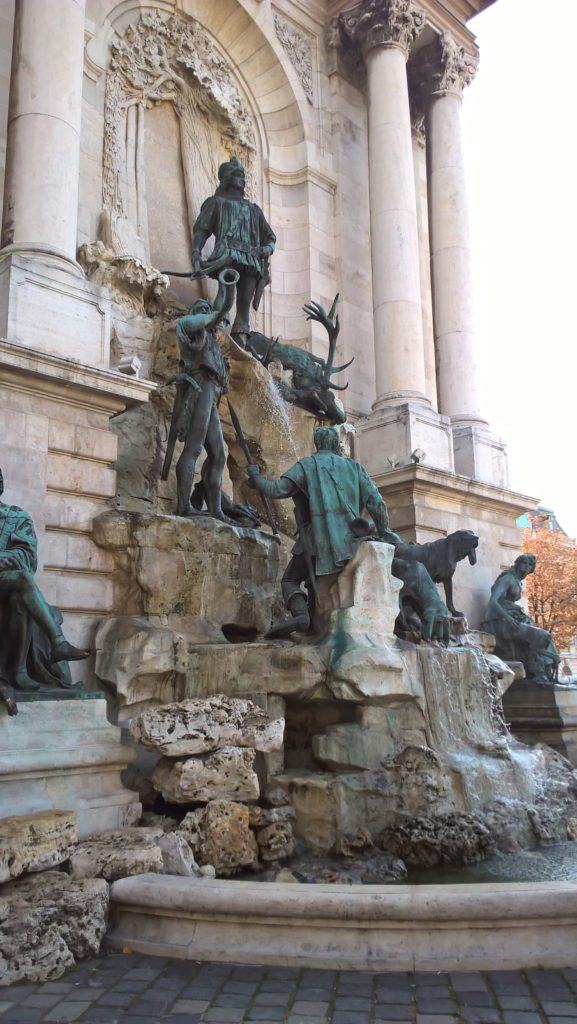
One of the most impressive statues in Budapest is the King Matthias Fountain, located in the Royal Palace of the Buda Castle District. Monumental, theatrical, and rich in symbolism, it portrays King Matthias — Hungary’s great Renaissance ruler — in a moment of triumph and drama.

This fountain is part of my ongoing Statues of Budapest series, which explores how monuments tell stories far beyond what first meets the eye.

A king on the hunt

At the centre of the composition stands King Matthias, depicted during a hunt. It is a traditional symbol of royal power, leadership, and control over nature. Surrounded by courtiers and hunting dogs, the scene feels almost cinematic, carved in stone against the walls of the palace.

The statue reflects how Matthias wished to be remembered: strong, charismatic, and unquestionably king.

A hidden love story

Look more closely, and the fountain reveals a second narrative. At the lower level of the composition stands a young woman, often identified as Ilonka, a figure from Hungarian folklore. According to legend, she fell in love with the king without knowing his true identity.

This quiet, almost melancholic detail adds emotional depth to the monument. It transforms the fountain from a celebration of power into a layered story of love. It’s about longing, and human vulnerability — a reminder that even great kings were not untouched by romance.

Where history and storytelling meet

Set within the Buda Castle complex, the Matthias Fountain is impossible to ignore, yet many visitors miss its deeper meaning. It perfectly represents how Budapest uses public art to combine history, legend, and national identity in a single visual narrative.

If you’d like to uncover more stories like this — including the legends behind the statues and the lives of the people they depict — this fountain is one of the highlights I often discuss on my Buda Castle walk, where history becomes personal and alive.

Explore more: King Matthias is featured in my broader Statues of Budapest collection, showcasing the city’s most meaningful monuments and hidden details.

The Matthias Fountain depicting King Matthias at the Royal Palace in Buda Castle, Budapest


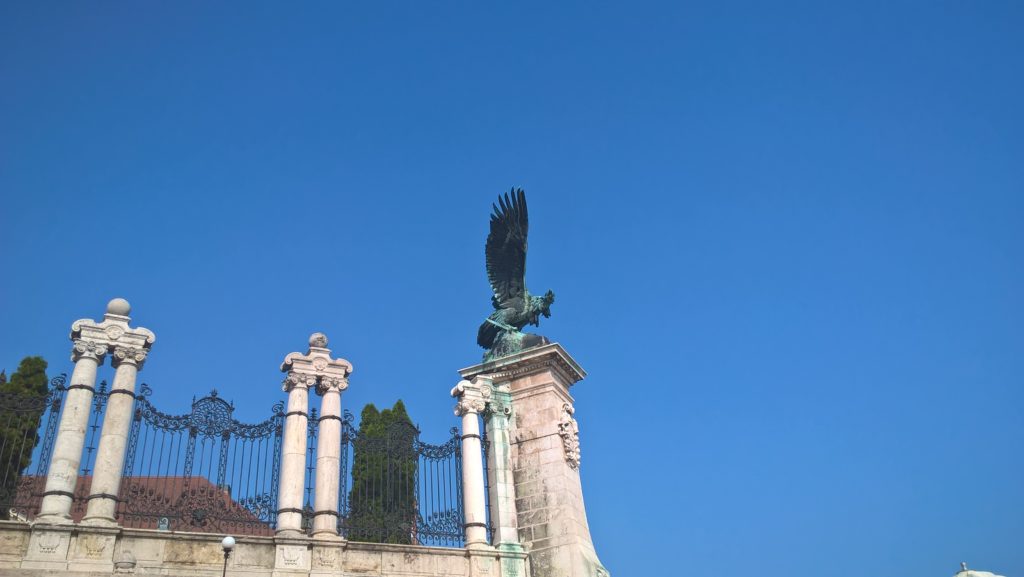
Few statues in Budapest carry as much symbolic weight as the Turul bird statue. More than a decorative monument, the Turul is one of Hungary’s most important national symbols, deeply rooted in legend, origin stories, and identity.

This statue is part of my ongoing Statues of Budapest series, which explores how public sculptures reflect the layers of history and mythology that shape the city.

The legend of the Turul

According to Hungarian tradition, the Turul — a powerful, mythical falcon — guided the ancestors of the Hungarians to the Carpathian Basin in 896, the year associated with the founding of the Hungarian homeland.

Because of this legend, the Turul represents origin, protection, strength, and destiny. It appears frequently in Hungarian art, literature, and monuments, always carrying a meaning that goes far beyond its physical form.

Where can you see the Turul statue?

One of the best-known Turul statues in Budapest stands at the upper station of the Buda Castle Funicular, near the entrance to the Castle District. With its wings spread wide above the city, the bird overlooks the Danube and Pest — a fitting position for a symbol meant to watch over the nation.

Many visitors pass beneath it on their way into Buda Castle without realizing its significance, yet once you know the story, the statue becomes impossible to ignore.

Why the Turul still matters

The Turul bird is not tied to a single historical figure or event. Instead, it represents continuity — the connection between myth, history, and modern Hungary.

Standing beneath it, you’re reminded that Budapest is not only a city of architecture and monuments, but also a place shaped by stories passed down for more than a thousand years.

Explore more: The Turul bird is featured in my Statues of Budapest collection, where famous monuments and symbolic figures reveal the deeper identity of the city.

Turul bird statue at the upper station of the Buda Castle Funicular in Budapest


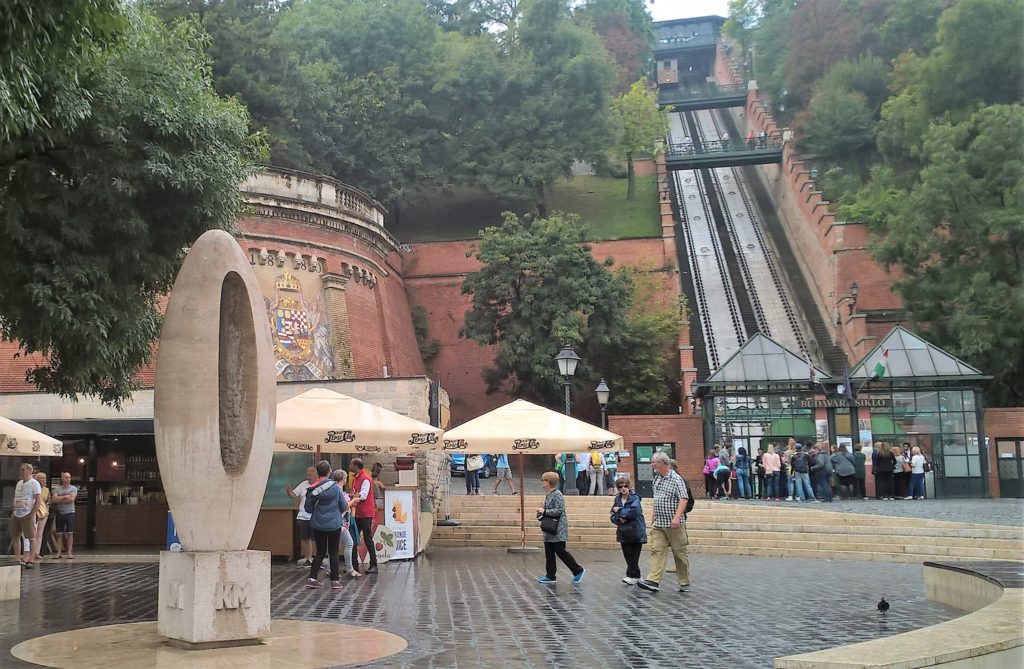
At first glance, the 0 km Stone is easy to miss. Modest in size and quietly placed near one of Budapest’s busiest areas, it doesn’t compete for attention — yet symbolically, it represents the very center of the country.

This monument is part of my ongoing Statues of Budapest series, which explores how meaning in this city is often hidden in plain sight.

What does the 0 km Stone represent?

The 0 km Stone marks the point from which all road distances in Hungary are officially measured. Every kilometer sign pointing toward Budapest begins here, making this small monument a geographic and symbolic reference point for the entire country.

It is less about spectacle and more about orientation — a reminder of how Budapest has long functioned as Hungary’s political, cultural, and infrastructural heart.

Where can you find it?

The statue is located on the Buda side of the Széchenyi Chain Bridge, close to the Buda Castle Funicular. Thousands of people pass by daily on their way to the Castle District, often without realizing the significance of the stone beneath their feet.

Once you know what it represents, it becomes one of those details you can never quite ignore again.

Why the 0 km Stone matters

Unlike statues that commemorate people or events, the 0 km Stone symbolizes connection and movement. It quietly links every town, village, and road back to Budapest — and by extension, to one another.

It’s a simple monument, but one that reflects how geography, history, and everyday life intersect in the city.

Explore more: The 0 km Stone is featured in my Statues of Budapest collection, where famous monuments and easily overlooked details reveal the deeper structure of the city.

The 0 km Stone near the Chain Bridge on the Buda side of Budapest


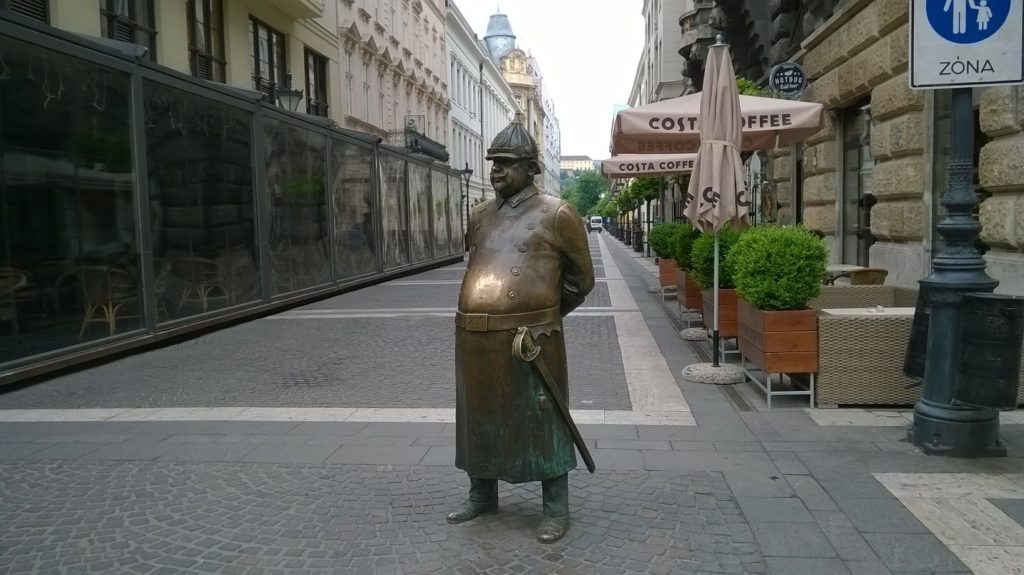
Nestled just a stone’s throw from St. Stephen’s Basilica on Zrínyi Street, the whimsical Fat Policeman statue—affectionately known as Uncle Karl—stands guard over the cobblestones of the bustling city centre of Budapest. Cast in bronze by sculptor Illyés András and unveiled in 2008, he’s dressed in a nostalgic early‑20th‑century uniform complete with a jaunty helmet and a twirly moustache. His rotund, friendly figure instantly catches the eye, and true to local superstition, his belly has become gloriously polished from the countless tourists who rub it for good luck and loosing weight—and perhaps the gift of guilt-free indulgence in Hungarian cuisine.

This monument is part of my ongoing Statues of Budapest series, which explores how meaning in this city is often hidden in plain sight.

Those seeking romance often reach up to stroke his moustache, a gesture believed to bring good fortune in love. Over the years, his well-worn features have become a testament to thousands of hopeful wishes.

Though officially titled the “Guardian of Order,” the statue’s more playful nickname speaks to its charm and the warm-hearted humor woven into Budapest’s cultural tapestry. Anecdotal measurements suggest he stands about 1.7 m tall—just over five and a half feet—making him approachable and almost lifelike in scale. He’s become a selfie magnet and a lighthearted must-see for visitors wanting to balance architectural grandeur with a bit of street‑art whimsy

By blending nostalgia, folklore, and everyday joy, the Fat Policeman encapsulates the spirit of Budapest: historical depth with a side of light-heartedness. Whether you’re capturing him in a snapshot, giving his belly a good rub, or simply pausing to admire his cheery posture, Uncle Karl offers a delightful pause in the rhythm of urban exploration—and perhaps a sprinkle of good fortune to boot.

Explore more: The 0 km Stone is featured in my Statues of Budapest collection, where famous monuments and easily overlooked details reveal the deeper structure of the city.

The Fat Policeman statue in Budapest, a playful bronze street sculpture


Among Budapest’s lesser-known statues, the monument to Julianus and Gerhardus stands out not for its size, but for the remarkable story it represents.

This sculpture is part of my ongoing Statues of Budapest series, which looks beyond famous monuments to uncover the ideas and journeys that shaped Hungarian identity.

Who were Julianus and Gerhardus?

Julianus and Gerhardus were Hungarian Dominican monks who, in the 13th century, set out on an extraordinary journey eastward. Their mission was to find Magna Hungaria — the ancestral territories where Hungarians were believed to have lived before beginning their long migration toward Europe.

Travelling thousands of kilometers, they reached regions near the Ural Mountains, documenting encounters with people believed to be related to the early Hungarians. At a time when travel was slow, dangerous, and uncertain, their journey was an astonishing feat of endurance and curiosity.

Why does this statue matter?

Unlike statues commemorating kings or battles, this monument celebrates knowledge, exploration, and cultural memory. Julianus and Gerhardus represent a desire to understand origins — to look backward in order to understand the present.

Their story reminds us that Hungarian history is not confined to the Carpathian Basin alone, but stretches far beyond it, across continents and centuries.

A quiet monument with a wide horizon

This statue is easy to overlook, yet it commemorates one of the most ambitious intellectual journeys of medieval Hungary. It invites reflection rather than admiration — and rewards those who pause to read its story.

In a city filled with grand architecture and dramatic monuments, Julianus and Gerhardus quietly point our attention outward, toward distant lands and deep historical roots.

Explore more: Julianus and Gerhardus are part of my Statues of Budapest collection, featuring famous monuments and overlooked sculptures that reveal the city’s layered identity.

Statue of Julianus and Gerhardus, medieval Hungarian monks, in Budapest