The Hungarian “Székelykáposzta” is a great dish combining sauerkraut and pork stew, a nice meal to warm your body and soul on a cool day.

Drain 2.2 pound sauerkraut in a colander, rinse it gently under cold water and let it sit in the colander for a few minutes. Put half of the cabbage in a large saucepan, put in 1.3 pound diced pork rib and cover with the other half of the cabbage. Add 4 bay leafs and water to cover it and cook gently for 2 hours on low.

Heat 5.25 oz lard in a large saucepan on medium heat. Toss in 2 large chopped onions, cook them with a pinch of salt until they soften up. Remove saucepan from heat, stir in 3 teaspoon paprika powder with the onions until they’re fully coated. Put the saucepan back on the heat, turn it up to medium-high, and add 1.3 pound diced pork shoulder or leg. Cook until all the meat has browned. Once the meat is browned, add 1 tablespoon paprika paste or cream, 1 large chopped tomato and 1 diced bell pepper. Pour in water until it covers the meat, bring it up to a simmer, then reduce heat to low and cook slightly uncovered stirring occasionally for about 90 minutes.

Pour the pork stew in the cabbage stew, cook on medium low for 15 minutes, stirring occasionally.

Heat 1 tablespoon lard in a small saucepan on medium high. Add 2 tablespoon flour, stir until it’s browned, add 1 teaspoon paprika powder. Add 1 cup cold water, mix it and add the flour mixture to the cabbage. Add half of the sour cream, bring it up to a simmer.

You can serve the cabbage dish with the other half of the sour cream.

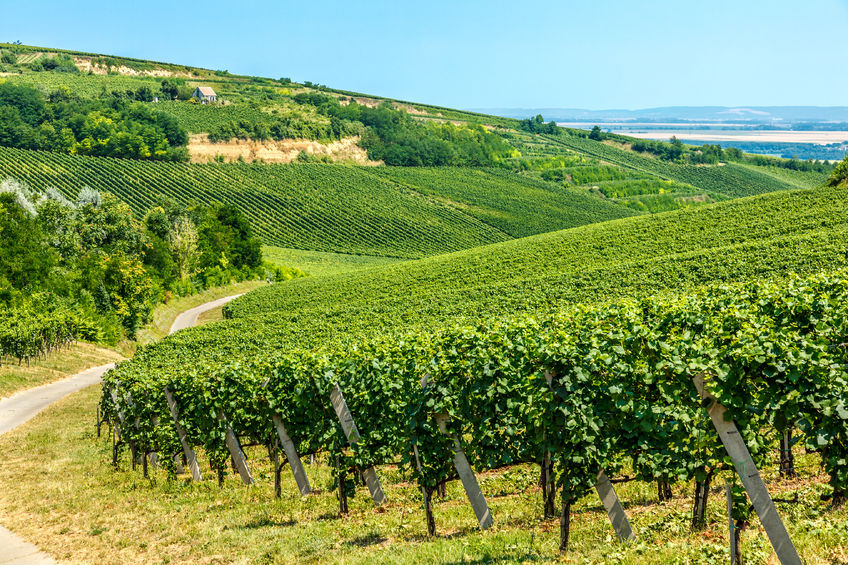
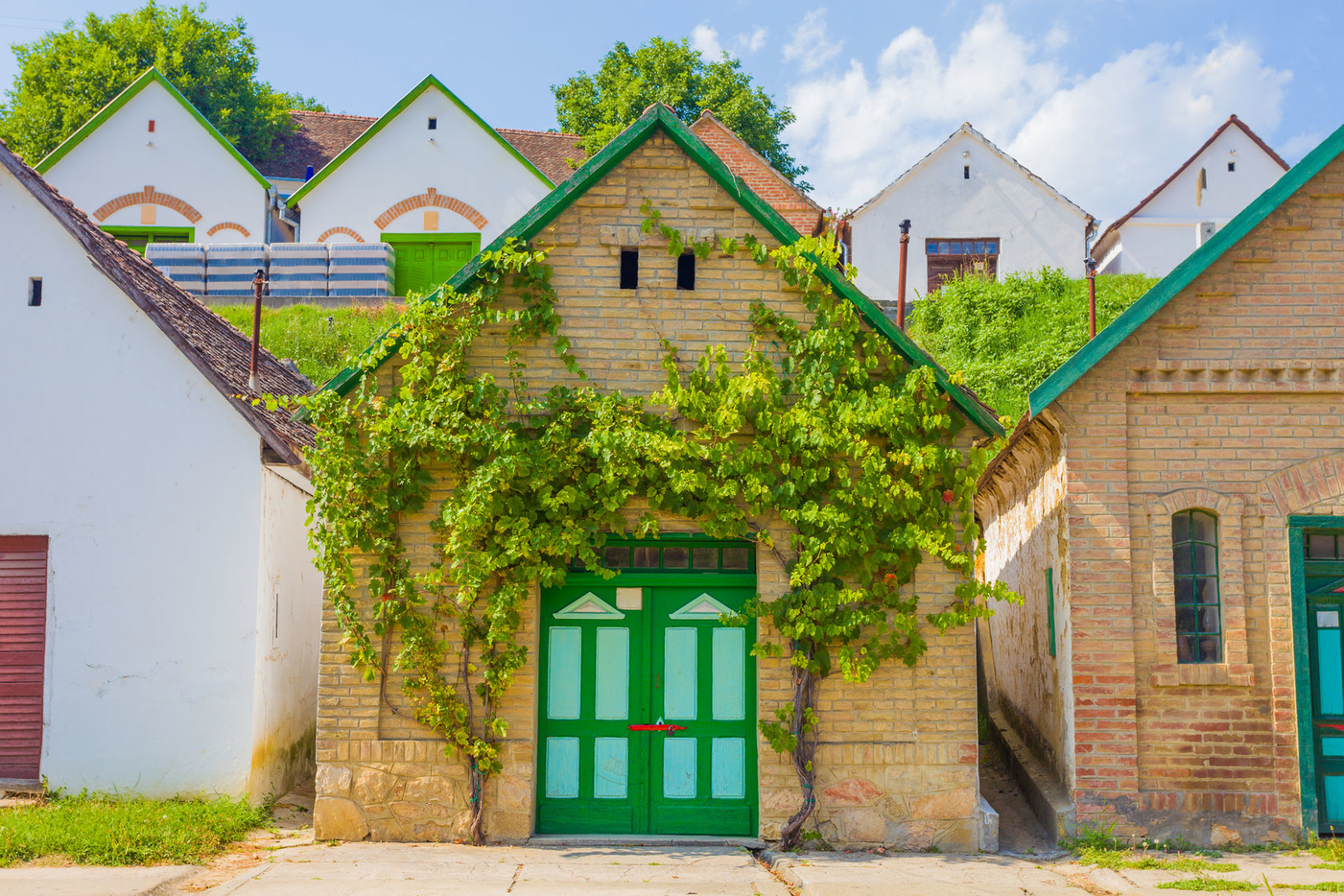
Often considered the most beautiful wine region in Hungary, the Villány Wine Region is famous for its high-quality red and rosé wines, scenic vineyard-covered hills, and outstanding wineries. Located in southern Hungary, Villány is the country’s leading destination for wine tourism and a perfect addition to a Pécs and Villány day tour.

Hungary’s Premier Red Wine Destination

At the heart of the region lies the Villány Wine Trail (Villányi Borút), the first official wine route in Hungary, created to showcase local producers, cellars, and traditions.

If you’d like to explore this region in depth, the Pécs and Villány Tour by Car offers an ideal combination of culture, history, and wine.

Climate and Geography: Ideal Conditions for Wine

The Villány wine region covers approximately 1,800 hectares and enjoys a sub-Mediterranean climate, unusual in Hungary. Summers are hot, winters are mild, and the area benefits from abundant sunshine throughout the year.

The southernmost mountain range of Hungary shelters the vineyards from cool northern winds, creating optimal conditions for ripening grapes — especially red varieties.

A Wine Region with Ancient Roots

Archaeological excavations show that the Romans cultivated grapes here over 2,000 years ago. Hungarian winemaking in the area likely began as early as the 11th century, around the 1060s.

Villány experienced its first golden age in the early 19th century, following the arrival of German settlers. They introduced advanced agricultural techniques and new grape varieties, including Kékoportó, which remains one of the region’s signature grapes today.

From Nationalization to Modern Excellence

During the second half of the 20th century, Villány’s vineyards were nationalized. Large-scale, quantity-focused production left a visible legacy: wide vine rows and low-density plantations designed for heavy machinery.

Today, these contrast clearly with privately owned vineyards, where quality-driven, small-scale production dominates. The revival of craftsmanship and terroir-focused winemaking has played a key role in Villány’s international success.

Villány Grape Varieties and Wines

The Villány wine region is best known for its structured reds, but also produces elegant whites. Key grape varieties include:

  • Kékoportó

  • Kékfrankos

  • Cabernet Sauvignon

  • Hárslevelű

  • Italian Riesling

  • Leányka

Award-Winning Winemakers

Villány winemakers are among the most successful in Hungary, frequently earning top honors at national and international wine competitions. Local producers and cellars have received the titles “Wine Producer of the Year” and “Wine Cellar of the Year” on multiple occasions — clear proof of the region’s prestige.

Visiting Villány on a Private Tour

Villány pairs beautifully with a visit to Pécs, one of Hungary’s most atmospheric historic cities. Together, they create a perfect wine, culture, and gastronomy experience in southern Hungary.

The Pécs and Villány wine tour is ideal for travelers interested in:

  • Hungarian wines and winemaking traditions

  • Scenic countryside and vineyard landscapes

  • Boutique wineries and cellar visits
 

The most known Hungarian dish is probably the Goulash soup, it’s served with fresh white bread and is a real treat. Find below the recipe, and let me know if you need recommendations about where you can get the best Goulash in Budapest or in Hungary.

In a large soup pot over medium heat saute 2, finely chopped onions in 2 tablespoons lard (or vegetable oil), stirring frequently until lightly browned, don’t let them brown. Add salt and 2 tablespoons of paprika (you can avoid getting the paprika burnt by adding the paprika while the pot is not over heat, stirring it for a few seconds).

Turn the heat high and add beef cubes (2,2 pounds beef chuck roast, tenderloin or sirloin, chopped into 1 inch * 1 inch cubes), stir for 3 minutes until the meat is seared on all sides. Let the meat simmer in its own juice while adding ½ teaspoon caraway seeds, some salt, ground black pepper and 1 bay leaf, pour enough water to cover the content of the pan and let it simmer on low heat, until the meat is almost tender (1,5 – 2 hours), add water if necessary to keep it 1 inch above the level of the meat.

Add 1 bunch parsley, 1 tablespoon tomato paste and vegetables (peeled and cut into ½ inch pieces): 4 carrots, 2 parsley roots, 4 medium potatoes. Add 2 or 3 cups of water (or beef broth) to keep a soup consistency. Add salt if desired. Reduce heat, cover and simmer for 30-40 minutes until the meat is tender.

Serve with freshly made spatzle/spatzel.

Don’t forget to check out the Spring and Easter Fair on Vörösmarty square, it’s open until the end of April. You can buy local, artisanal handicraft products, pottery, ceramics, jewellry and leather products. There are workshops and concerts every weekend.

Also, you can taste the most fantastic treats of the Hungarian cuisine, traditional Easter dishes as ham and knuckle, and great cakes, including of course the festive  chimney cake. Enjoy!


Every year, Hungary’s Cake of the Country is officially announced: a “birthday cake” created to reflect both traditional flavours and modern creativity.

In Hungary, the 20th of August is more than a national holiday. It marks the founding of the Hungarian state by Saint Stephen — and it’s also the day when the country celebrates its love of pastry in a very special way.

A Sweet National Tradition

The Cake of the Country is selected by a professional jury of master confectioners. Each year, pastry chefs from across Hungary are invited to submit creations that:

  • reinterpret classic Hungarian tastes

  • use high-quality, often regional ingredients

  • connect symbolically to the national holiday

The result is not just a dessert, but a snapshot of how Hungarian pastry culture evolves over time.

Cake of the Country 2016: Green Gold of Őrség

In 2016, the winning cake was called Green Gold of Őrség — a name inspired by both colour and region.

Created in a small pastry shop in Salgótarján, the cake subtly echoed the red, white, and green of the Hungarian flag, while highlighting one of the region’s most characteristic ingredients: pumpkin seed oil.

The cake’s layers combined:

  • pumpkin seed oil and almond flour sponge

  • white chocolate ganache

  • crunchy pumpkin seed praline

  • raspberry jelly

  • pumpkin seed jelly

The result was rich yet balanced, with nutty depth softened by fruit and chocolate — a modern composition rooted in local flavors.

Tasting the Cake of the Country in a Historic Setting

One of the joys of this tradition is that the Cake of the Country doesn’t remain a concept — it’s meant to be tasted.

In 2016, I had the pleasure of trying Green Gold of Őrség with my guests at Ruszwurm Confectionery (closed in 2025), one of Budapest’s oldest cake shops, tucked away near Matthias Church in the Buda Castle District.

Enjoying a contemporary award-winning cake in such a historic café perfectly captures what Hungarian pastry culture does best: blending past and present on the same plate.

Why These Cakes Matter

The Cake of the Country is not about trends or spectacle. It’s about:

  • craftsmanship

  • regional identity

  • and the quiet pride Hungarians take in their culinary traditions

Each year’s cake becomes part of a larger story — one that connects national history, local ingredients, and everyday pleasures.

Hungarian cakes and cafés are often part of the stories I share on my Budapest Foodie Tours, especially when exploring historic neighbourhoods like the Buda Castle District. If you enjoy discovering a city through its sweets, traditions, and everyday rituals, I’d be happy to show you some of Budapest’s most characterful cafés — past and present.

Slice of the Green Gold of Őrség cake, the 2016 Cake of the Country, featuring layered Hungarian pastry and pumpkin seed flavours

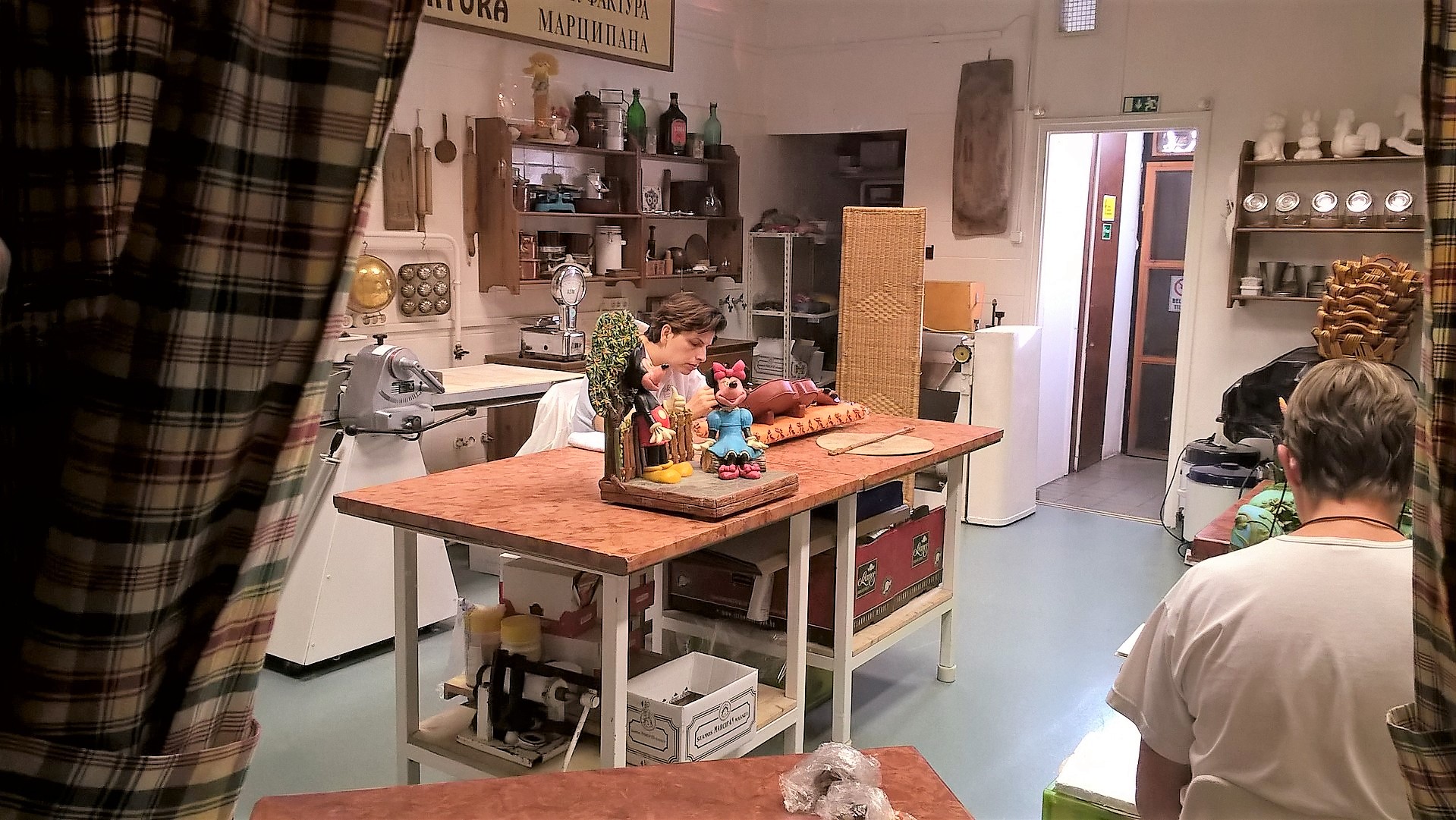
Hungarians have a well-known sweet tooth, and among the many beloved treats, marzipan holds a special place. This smooth almond paste appears not only in cakes and pastries, but also in something far more unexpected: tiny — and sometimes life-size — works of art. In Hungary, marzipan is not just something you eat. It’s something you admire.

When Michael Jackson Meets the Hungarian Parliament

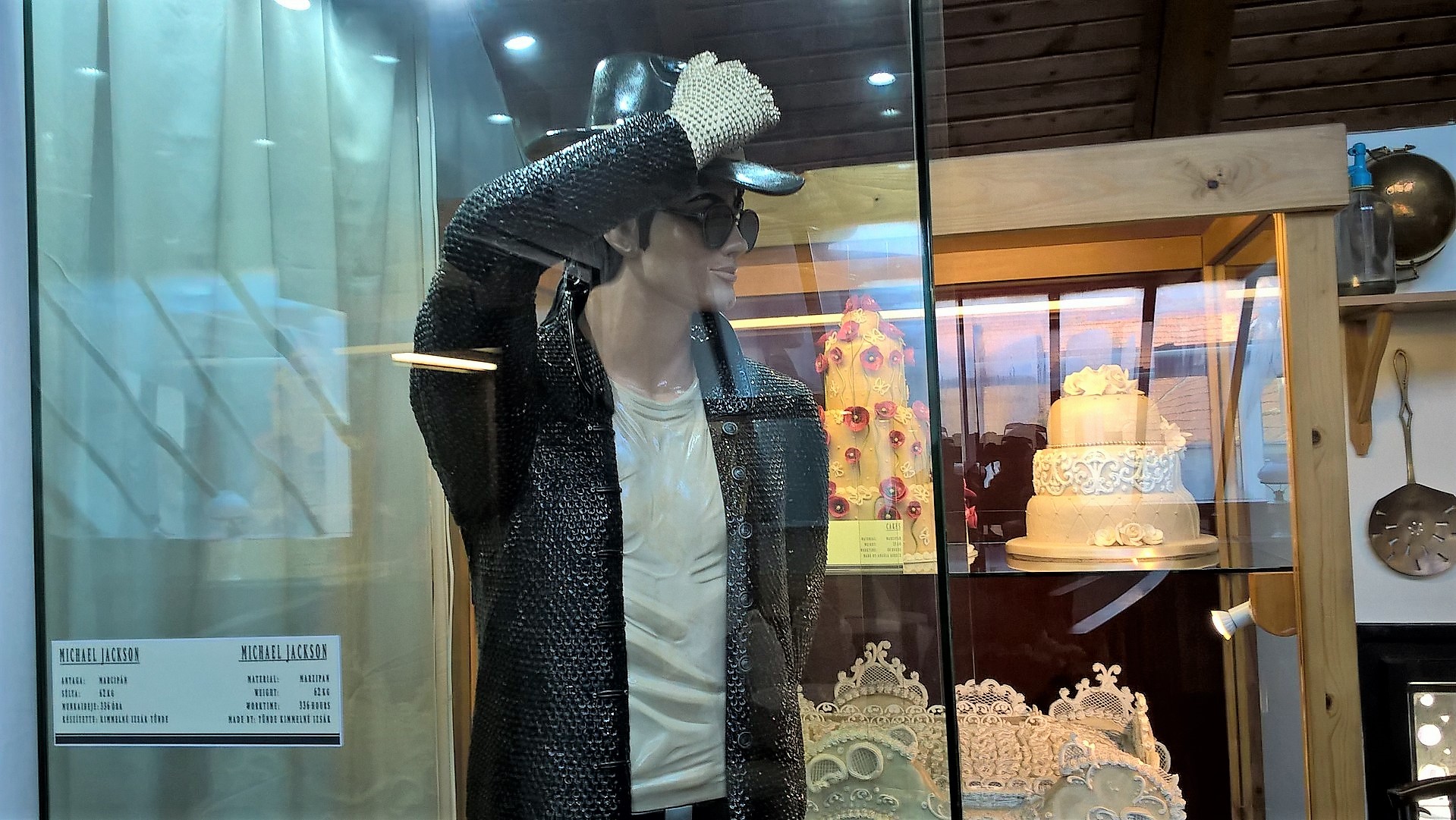
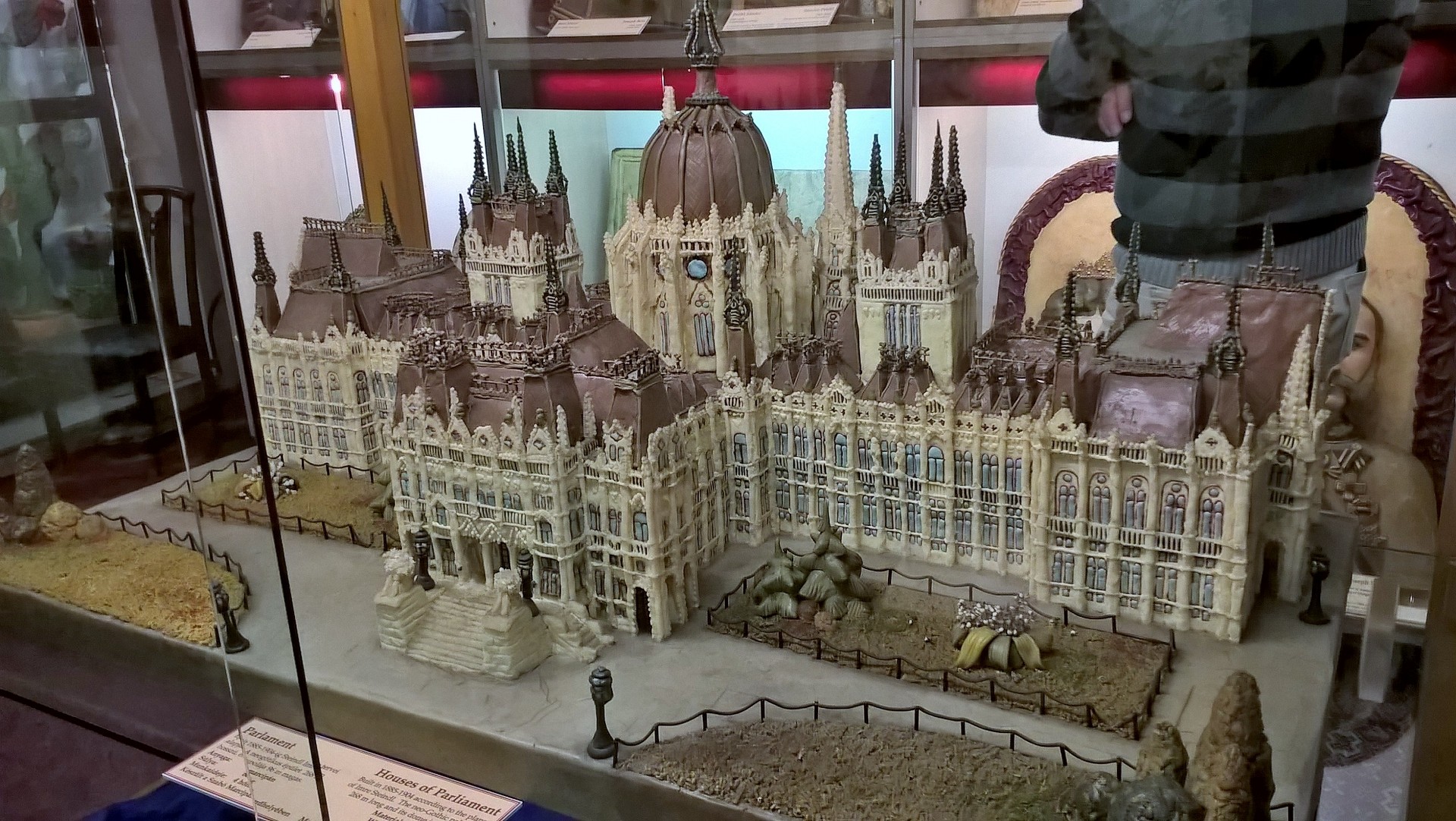
So, what do Michael Jackson and the Hungarian Parliament building have in common? In Szentendre, the answer is simple: they can both be made of marzipan.

The Szentendre Marzipan Museum is one of the most unusual — and sweetest — museums in Hungary. Located in the heart of Szentendre, it displays dozens of marzipan sculptures ranging from famous Hungarian historical figures to international celebrities and iconic buildings.

Some of the figures are small and intricate, others surprisingly large — all made with astonishing detail and patience.

More Than a Museum: A Working Atelier

What makes the Szentendre Marzipan Museum especially engaging is that it’s not just a static exhibition. Visitors can also peek into the atelier, where new marzipan figures are still being created by hand.

Watching the process gives a new appreciation for the craft behind these playful sculptures — and for the amount of time and skill required to turn sugar and almonds into recognizable faces, buildings, and scenes.

A Small Museum with Big Personality

The Marzipan Museum is not large, but that’s part of its charm. It fits perfectly into a relaxed stroll through Szentendre, adding a lighthearted and slightly quirky stop between galleries, cafés, and cobblestoned streets.

And of course, no visit is complete without stepping into the small shop at the end, where you can buy beautifully made marzipan sweets — far too pretty to eat… at least at first.

The Marzipan Museum is one of those small surprises I’m always happy to include when showing guests around Szentendre. It’s also a delightful stop on my Danube Bend  and Szentendre tours, especially for travellers who enjoy local traditions with a playful twist.

If you’d like to explore Szentendre — from its art scene to its sweetest corners — feel free to get in touch, and we can shape a day that suits your interests and pace.