Philosophers Garden Budapest is one of those places you almost miss — but once you find it, you don’t forget it. Beautiful Budapest is full of grand landmarks — but some of its most memorable places are the quiet ones. The ones you almost miss. The Philosophers' Garden is one of them. Tucked away on the slopes of Gellért Hill, this peaceful spot is part of my personal “Secret Gardens of Budapest”series — places where the city slows down, and something unexpected happens. If you’ve already discovered the charm of Mansfeld Péter Park or the serenity of Gül Baba's Tomb, this is another one to add to your list. A Circle of Ideas At the heart of the garden stands a quiet circle of statues — representing great spiritual and philosophical figures from different cultures. You’ll recognize names like: Buddha Jesus Abraham Laozi Akhenaten They face each other, as if in conversation. The message is simple, but powerful: different paths, shared values. It’s not a place that overwhelms you — it’s one that gently invites you to pause. Each statue represents a different path — different beliefs, different traditions — yet they meet here in quiet harmony. It’s a gentle reminder that, beyond our differences, there is something deeply shared in the human search for meaning, peace, and understanding. And somehow, in this small garden above the city, you can feel exactly that. A View Without the Crowds Just beyond the statues, the trees open up — and suddenly, Budapest unfolds below you. The Hungarian Parliament Building, the Danube, the bridges… All there. But without the crowds you’ll find at the Citadella. And that changes everything. Part of a Perfect Gellért Hill Walk One of the best things about the Philosophers’ Garden is how easily it fits into a walk
Philosophers Garden Budapest is one of those places you almost miss — but once you find it, you don’t forget it.
Beautiful Budapest is full of grand landmarks — but some of its most memorable places are the quiet ones. The ones you almost miss. The Philosophers’ Garden is one of them.
Tucked away on the slopes of Gellért Hill, this peaceful spot is part of my personal “Secret Gardens of Budapest”series — places where the city slows down, and something unexpected happens.
If you’ve already discovered the charm of Mansfeld Péter Park or the serenity of Gül Baba’s Tomb, this is another one to add to your list.
A Circle of Ideas
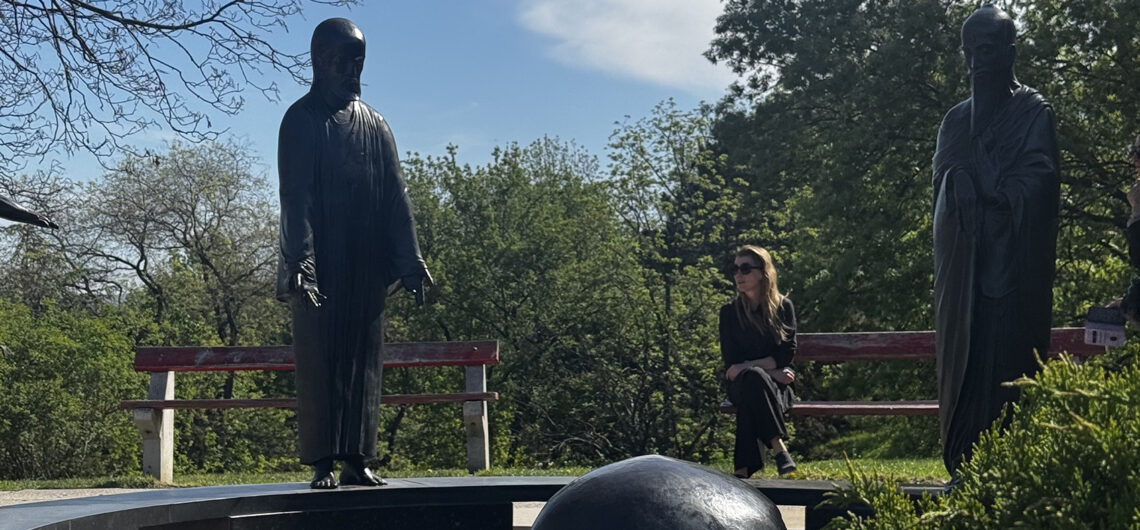
At the heart of the garden stands a quiet circle of statues — representing great spiritual and philosophical figures from different cultures.
You’ll recognize names like:
Buddha
Jesus
Abraham
Laozi
Akhenaten
They face each other, as if in conversation. The message is simple, but powerful: different paths, shared values. It’s not a place that overwhelms you — it’s one that gently invites you to pause.
Each statue represents a different path — different beliefs, different traditions — yet they meet here in quiet harmony. It’s a gentle reminder that, beyond our differences, there is something deeply shared in the human search for meaning, peace, and understanding.
And somehow, in this small garden above the city, you can feel exactly that.
A View Without the Crowds
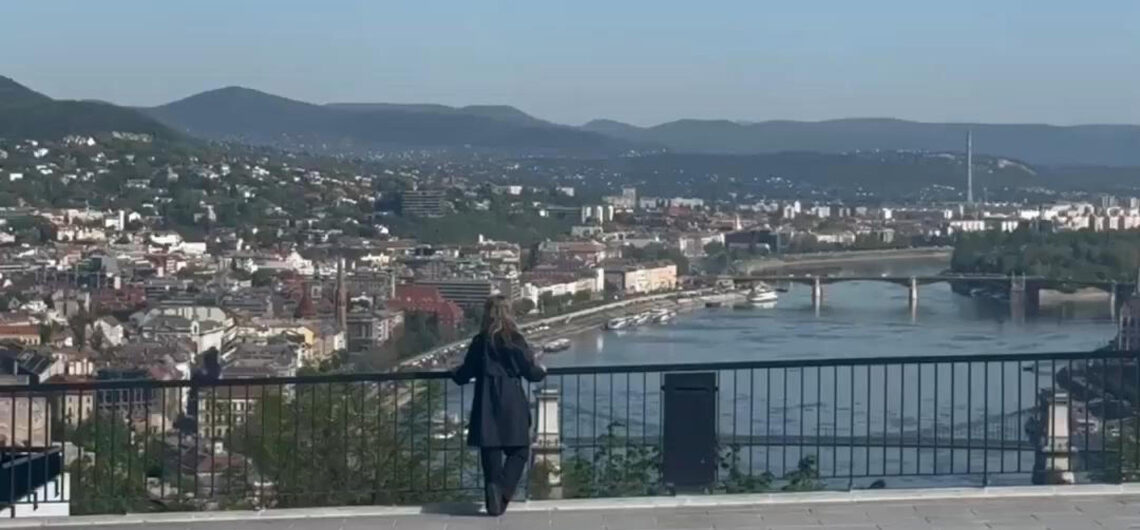
Just beyond the statues, the trees open up — and suddenly, Budapest unfolds below you. The Hungarian Parliament Building, the Danube, the bridges… All there.
But without the crowds you’ll find at the Citadella. And that changes everything.
Part of a Perfect Gellért Hill Walk
One of the best things about the Philosophers’ Garden is how easily it fits into a walk around the beautiful Gellért Hill of Budapest.
If you’re planning your route, I recommend pairing this with my posts about the Citadel and the Liberty Statue — together, they create a beautiful, varied walk through one of Budapest’s most iconic hills.
Why Philosophers’ Garden Stays With You
There’s something special about places like this. They’re not the biggest sights. They’re not the most famous. But they’re the ones people remember later.
As a private guide, I often include spots like this in my tours — because they show a different side of Budapest. A quieter, more personal one.
Budapest isn’t just about what you see. It’s about the places where you stop, breathe, and feel the city. The Philosophers’ Garden is one of those places. And if you’d like to discover more hidden corners like this — I’d be happy to show you.
If you’re looking for romantic viewpoints in Budapest, there are a few special places that combine views, atmosphere, and storytelling in a unique way. Budapest is full of grand landmarks — but some of its most beautiful stories are hidden in plain sight. This post is the first in a new series where I’ll share romantic statues across the city — the ones that tell stories, offer a special atmosphere, and often come with a view you won’t forget. And there’s no better place to start than with the symbolic couple of the city itself: the Buda & Pest Statue. A love story in stone At first glance, it’s just a sculpture. But look a little closer. The two figures represent Buda and Pest — the historic halves of the city, united in 1873. One is calm and grounded, the other lively and full of energy. They face each other across the Danube. Close… but not quite together. It’s easy to imagine them as lovers — always connected, yet separated by the river that defines Budapest. A hidden gem with one of the best views What makes this spot truly special is not just the story — it’s the setting. This spot is part of my favourite walks around Gellért Hill, an area full of hidden paths, quiet viewpoints, and some of the most beautiful panoramas in Budapest. If you enjoy discovering places like this, you might want to explore more of my Gellért Hill stories. From here, you get a beautiful view over the Royal Palace and the historic Buda Castle District, with the Danube flowing below and the city centre of Pest stretching out on the other side. It’s a quieter perspective — less about the postcard-perfect Parliament view, and more about feeling the layout and rhythm of
If you’re looking for romantic viewpoints in Budapest, there are a few special places that combine views, atmosphere, and storytelling in a unique way. Budapest is full of grand landmarks — but some of its most beautiful stories are hidden in plain sight.
This post is the first in a new series where I’ll share romantic statues across the city — the ones that tell stories, offer a special atmosphere, and often come with a view you won’t forget. And there’s no better place to start than with the symbolic couple of the city itself: the Buda & Pest Statue.
A love story in stone
At first glance, it’s just a sculpture. But look a little closer.
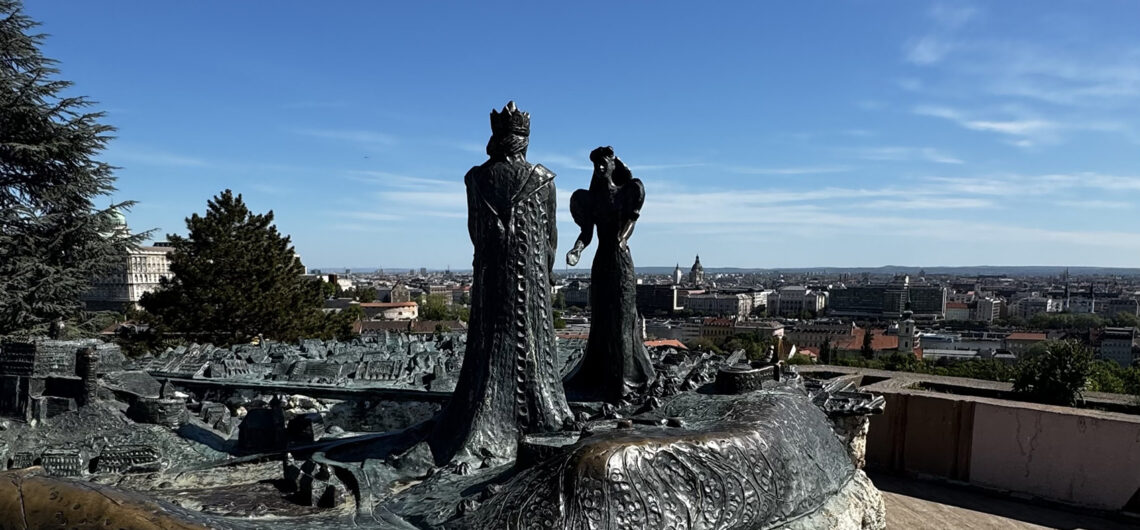
The two figures represent Buda and Pest — the historic halves of the city, united in 1873. One is calm and grounded, the other lively and full of energy. They face each other across the Danube. Close… but not quite together.
It’s easy to imagine them as lovers — always connected, yet separated by the river that defines Budapest.
A hidden gem with one of the best views
What makes this spot truly special is not just the story — it’s the setting.
This spot is part of my favourite walks around Gellért Hill, an area full of hidden paths, quiet viewpoints, and some of the most beautiful panoramas in Budapest. If you enjoy discovering places like this, you might want to explore more of my Gellért Hill stories.
From here, you get a beautiful view over the Royal Palace and the historic Buda Castle District, with the Danube flowing below and the city centre of Pest stretching out on the other side. It’s a quieter perspective — less about the postcard-perfect Parliament view, and more about feeling the layout and rhythm of the city.
This is exactly the kind of place I love including in my tours — a mix of storytelling, atmosphere, and a viewpoint that feels personal.
Why I include spots like this in my tours
Budapest is not just about ticking off landmarks. It’s about discovering places that make you feel something — a view, a story, a quiet moment above the city. This is one of those romantic viewpoints in Budapest that feels more personal. It is a quiet place where the city slowly unfolds in front of you.
That’s why my tours are always customized:
some guests want iconic highlights
others want hidden corners
most want a bit of both
And places like the Buda & Pest statue are where those elements come together beautifully.
Continue exploring Budapest’s romantic side
This is just the beginning. In the next posts of this series, I’ll share more romantic statues and hidden stories — perfect for walks, photos, or simply seeing Budapest from a different perspective.
Final note
If you’re planning a visit and would like to explore places like this — beyond the usual highlights — I’d be happy to design a walk that fits your interests perfectly. Because in Budapest, the most memorable moments are often the ones you don’t find on a map.
Still looking for the best views in Budapest? You’ll probably hear about rooftop bars, river cruises, or the Fisherman’s Bastion—but if you want a truly panoramic view of the city, there’s one place that stands above the rest: Gellért Hill. Rising high above the Danube on the Buda side, this viewpoint offers one of the most iconic vistas in the Hungarian capital—and it’s not just beautiful, it’s also part of a UNESCO World Heritage Site. Why Gellért Hill Has the Best Views in Budapest From the top, Budapest unfolds in front of you. You’ll see: The majestic Hungarian Parliament Building The Danube cutting through the city The elegant Chain Bridge and other historic bridges Both Buda and Pest in one sweeping panorama What makes this view special is its scale—you’re not just looking at one landmark, but the entire city layout, exactly where history and geography meet. A UNESCO-Protected Panorama The view from Gellért Hill is part of the “Budapest, including the Banks of the Danube, the Buda Castle Quarter and Andrássy Avenue” UNESCO listing. That means what you’re looking at isn’t just pretty—it’s considered globally significant. Few cities in the world offer a panorama where: A historic river divides two distinct city halves Architectural styles span centuries And the overall composition remains so beautifully intact How to Get to Gellért Hill Getting to the top is easier than it looks—but there is a bit of a climb. Here are your main options: From Liberty Bridge 15–20 minute walk uphill Includes stairs Slightly more scenic, a bit more effort From Elizabeth Bridge 15–20 minute walk Fewer stairs, but still uphill A more gradual climb By bus (Bus 27) Short ride uphill About a 10-minute walk from the stop Best option if you want to save energy Tip: Wear comfortable shoes—the
Still looking for the best views in Budapest? You’ll probably hear about rooftop bars, river cruises, or the Fisherman’s Bastion—but if you want a truly panoramic view of the city, there’s one place that stands above the rest: Gellért Hill.
Rising high above the Danube on the Buda side, this viewpoint offers one of the most iconic vistas in the Hungarian capital—and it’s not just beautiful, it’s also part of a UNESCO World Heritage Site.
Why Gellért Hill Has the Best Views in Budapest
From the top, Budapest unfolds in front of you. You’ll see:
The majestic Hungarian Parliament Building
The Danube cutting through the city
The elegant Chain Bridge and other historic bridges
Both Buda and Pest in one sweeping panorama
What makes this view special is its scale—you’re not just looking at one landmark, but the entire city layout, exactly where history and geography meet.
A UNESCO-Protected Panorama
The view from Gellért Hill is part of the “Budapest, including the Banks of the Danube, the Buda Castle Quarter and Andrássy Avenue” UNESCO listing.
That means what you’re looking at isn’t just pretty—it’s considered globally significant. Few cities in the world offer a panorama where:
A historic river divides two distinct city halves
Architectural styles span centuries
And the overall composition remains so beautifully intact
How to Get to Gellért Hill
Getting to the top is easier than it looks—but there is a bit of a climb. Here are your main options:
From Liberty Bridge
15–20 minute walk uphill
Includes stairs
Slightly more scenic, a bit more effort
From Elizabeth Bridge
15–20 minute walk
Fewer stairs, but still uphill
A more gradual climb
By bus (Bus 27)
Short ride uphill
About a 10-minute walk from the stop
Best option if you want to save energy
Tip: Wear comfortable shoes—the paths can be uneven in places.
Visiting Gellért Hill as Part of a Tour
Gellért Hill is a stop I almost always include when I design a custom itinerary—especially for first-time visitors.
It’s one of the few places where, within minutes, you can truly understand Budapest: the layout of the city, the Danube, and the relationship between Buda and Pest.
Because it’s easily accessible by car, it works perfectly as a short stop during a driving tour, or as part of a tailor-made experience. Even a brief visit here can add a lot of context to the rest of your time in the city.
What Is the Citadel?
At the top of Gellért Hill, you’ll find the Citadel, a fortress built in the 19th century.
Today, most visitors come here not for the history—but for the viewpoints surrounding it, which offer some of the best photo opportunities in Budapest.
Is Gellért Hill Worth It?
Absolutely.
Yes, there’s a short uphill walk. Yes, it can get a bit busy.
But standing above the Danube, with the entire city spread out below you, you’ll understand why this view is protected—and why it’s one of the most unforgettable experiences in Budapest.
Final Tip
If you’re already on Gellért Hill, don’t rush back down.
Whether you’re interested in iconic views, hidden corners, or the stories behind the city, I design each tour around your interests and pace—so you can see Budapest in a way that truly feels your own.
Feel free to get in touch to start planning your experience.
Few buildings define Budapest as instantly as Matthias Church. Rising above the Buda Castle District with its colourful tiled roof and fairy-tale silhouette, it is one of the most photographed landmarks in the Hungarian capital. And yet, many visitors admire it from a distance without discovering what makes it truly remarkable. Taking a closer look reveals centuries of history, architectural details often missed at first glance, and one of the most rewarding cultural experiences in Budapest. A Church Shaped by Centuries of History Matthias Church stands on a site where places of worship have existed since the 13th century. Over time, the building has witnessed royal ceremonies, coronations, Ottoman occupation, and major reconstructions that shaped its present appearance. Despite its medieval origins, much of what visitors see today comes from a careful 19th-century restoration led by architect Frigyes Schulek, who created the distinctive Neo-Gothic character while preserving earlier historical elements. This layered history is part of its charm — Matthias Church reflects the many chapters of Budapest itself rather than belonging to a single era. Look Closer: Details Many Visitors Miss From afar, the church almost feels unreal, but its beauty truly appears in the details. The colourful roof, covered with decorative Zsolnay tiles, changes character depending on the light and weather throughout the day. Walking around the building reveals carved stone figures, patterned surfaces, and unexpected viewpoints that many visitors miss when remaining near the main square. Even a slow walk around the church can feel like discovering a different monument from every angle. Step Inside Matthias Church While the exterior alone is impressive, stepping inside offers a completely different experience. From the outside, Matthias Church appears bright, colourful, and almost newly restored. The interior, however, reveals an unexpected contrast — darker, more atmospheric, and deeply historic. Medieval architectural
Few buildings define Budapest as instantly as Matthias Church. Rising above the Buda Castle District with its colourful tiled roof and fairy-tale silhouette, it is one of the most photographed landmarks in the Hungarian capital.
And yet, many visitors admire it from a distance without discovering what makes it truly remarkable.
Taking a closer look reveals centuries of history, architectural details often missed at first glance, and one of the most rewarding cultural experiences in Budapest.
A Church Shaped by Centuries of History
Matthias Church stands on a site where places of worship have existed since the 13th century. Over time, the building has witnessed royal ceremonies, coronations, Ottoman occupation, and major reconstructions that shaped its present appearance.
Despite its medieval origins, much of what visitors see today comes from a careful 19th-century restoration led by architect Frigyes Schulek, who created the distinctive Neo-Gothic character while preserving earlier historical elements.
This layered history is part of its charm — Matthias Church reflects the many chapters of Budapest itself rather than belonging to a single era.
Look Closer: Details Many Visitors Miss
From afar, the church almost feels unreal, but its beauty truly appears in the details.
The colourful roof, covered with decorative Zsolnay tiles, changes character depending on the light and weather throughout the day. Walking around the building reveals carved stone figures, patterned surfaces, and unexpected viewpoints that many visitors miss when remaining near the main square.
Even a slow walk around the church can feel like discovering a different monument from every angle.
Step Inside Matthias Church
While the exterior alone is impressive, stepping inside offers a completely different experience.
From the outside, Matthias Church appears bright, colourful, and almost newly restored. The interior, however, reveals an unexpected contrast — darker, more atmospheric, and deeply historic. Medieval architectural elements blend with decorative patterns influenced by the Ottoman period, reminding visitors of the many eras the building has lived through.
Standing inside, Hungarian history feels almost tangible. The richly decorated walls, painted motifs inspired by medieval designs, and filtered light from stained glass windows create a calm and contemplative atmosphere — a striking change from the lively square just outside.
Even visitors with limited time often find that a short visit inside adds depth to their understanding of Budapest’s past and cultural heritage.
Climb the Tower for One of Budapest’s Best Views
While most visitors admire Matthias Church from the square below, one of its most memorable experiences lies above the rooftops.
The tower visit offers a completely different perspective of Budapest — and remains surprisingly overlooked. Reaching the top requires climbing a series of narrow stairs, but the ascent itself becomes part of the experience. On the way up, visitors can see the church bells up close, offering a rare glimpse into the inner workings of this historic landmark.
From the very top, panoramic views open over the Buda Castle District, the Danube, and the Pest side of the city, including the Hungarian Parliament. The climb also reveals one of the church’s most remarkable features from a completely new angle: the magnificent Zsolnay roof tiles, fully visible only from above, creating a true bird’s-eye view of the building’s intricate patterns and colours.
Unlike larger viewpoints, the experience feels intimate and immersive, allowing you to see Budapest from within one of its most historic monuments rather than simply looking at it from afar.
For visitors willing to take the climb, the tower provides one of the most unique viewpoints in Budapest — and often becomes an unexpected highlight of a visit to Matthias Church.
Visiting Tips for Matthias Church
If you’re planning to visit Matthias Church, a few practical tips can make the experience much more enjoyable:
Visit early in the morning or later in the afternoon to avoid peak crowds in the Buda Castle District.
Check opening hours carefully. The church interior may be closed on Saturday afternoons due to weddings, and it is closed on Sunday mornings during church services.
Walk around the entire building, not just the main entrance area — some of the most beautiful architectural details appear on the quieter sides.
Don’t miss the interior gallery. From here, you gain a stunning elevated view over the church’s richly decorated interior. The gallery also includes a small exhibition dedicated to Hungarian coronations, reflecting the church’s important role as a coronation church in the 19th and 20th centuries.
Climb the tower if you can. Although there are stairs to climb, the panoramic views make it truly worth the effort.
Combine your visit with Fisherman’s Bastion, located directly beside the church, for iconic views over the Danube and the Hungarian Parliament.
Comfortable shoes are recommended, as the surrounding streets are historic cobblestones.
Beyond the Postcard View
Budapest’s most famous landmarks often reveal their beauty slowly. Matthias Church is a perfect example — instantly recognisable, yet far richer when experienced with curiosity and time.
Looking beyond the postcard view transforms a quick photo stop into a meaningful moment in the Buda Castle District.
When I guide visitors through Budapest, I often encourage them to pause here a little longer. Taking time to notice the details, stepping inside the church, or climbing the tower often turns this famous landmark into a personal highlight of the visit.
Because sometimes, truly knowing a city begins with looking closer.
Matthias Church Budapest: Look Closer at This Icon