A Timeless Hungarian Craft: Discover Blue Dyeing
- Destinations, Reviews
- beautiful Budapest, cultural travel europe, Hidden Gems Hungary, Hungarian blue dyeing, Hungarian culture, Hungary Travel, indigo dyeing, kekfestes, Pápa Hungary, textile art, things to do in Hungary, traditional crafts, Unesco Heritage
There are moments in Hungary when you feel like time slows down. Not in the grand, obvious places—but in the quiet ones. In workshops where hands have been repeating the same movements for generations. In patterns that have been printed again and again, unchanged for centuries.
This is where you find kékfestés—Hungarian blue dyeing.
A Craft Passed Down Through Generations
Kékfestés is not just a technique. It’s a family tradition. For centuries, workshops across Hungary were run by families who guarded their knowledge carefully. The patterns, the tools, even the recipes for the resist paste were often passed down from parent to child—sometimes for five or six generations.
In a world where everything moves fast, this kind of continuity feels almost unbelievable. And yet, it still exists.
The Human Side Behind the Patterns
When you look at these deep blue fabrics, it’s easy to focus on the beauty—the delicate white motifs, the rich indigo shades. But what makes them truly special is what you don’t immediately see.
Each pattern is applied by hand using carved wooden blocks, each piece is dipped, dried, and treated with care, each imperfection tells you: this was made by a person, not a machine.
It’s slow. It’s precise. And it’s deeply human.
A UNESCO-Protected Tradition
In 2018, kékfestés was officially recognised by UNESCO as part of the Intangible Cultural Heritage of Humanity. This recognition is not just about preserving a technique—it’s about protecting a way of life.
Because crafts like this don’t survive on efficiency. They survive on dedication, identity, and community.
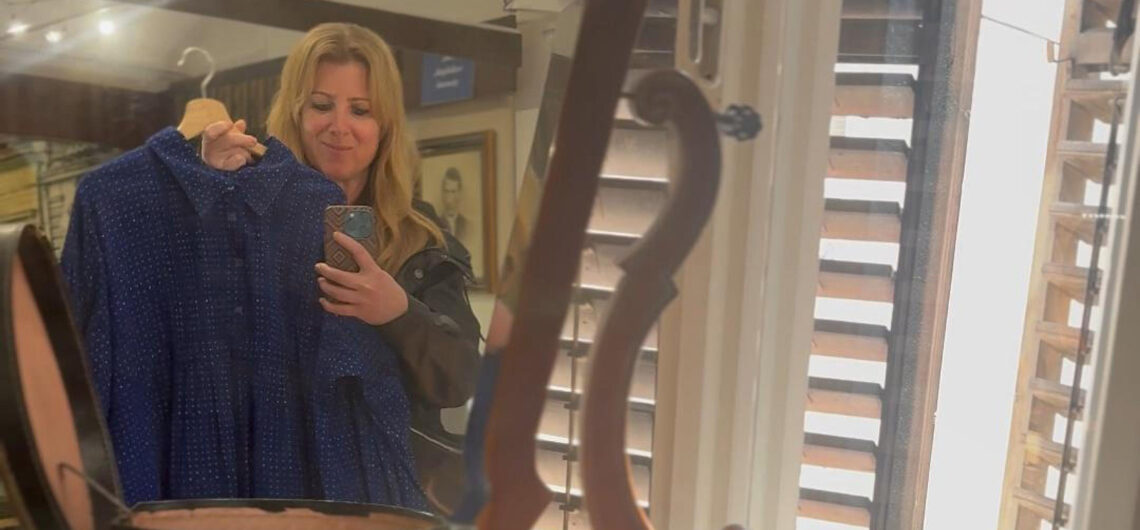
My Visit to the Kékfestő Múzeum
The vats are still there.
The tools are still in place.
The fabrics still hang as if someone had just left the room.
You don’t just learn about the craft—you feel it.
Why Experiences Like This Matter
When people visit Hungary, they often focus on the big highlights—Budapest, the Parliament, the famous sights. But the real stories of a country often live elsewhere.
In small towns, local traditions and crafts like “kékfestés”.
These are the experiences I love sharing during my tours—moments that connect you not just to a place, but to its people and its history.
Curious to Explore Something Like This?
What I love most about my work is that no two tours are ever the same. This visit to Pápa and the blue dyeing workshop actually came from a traveller’s request—they were curious about local crafts and wanted to discover something beyond the usual sights. And that’s how we ended up here, surrounded by centuries-old traditions and deep indigo patterns.
If you’d like to explore Hungary in a more personal way, you can book one of my general tours directly on my website. Or… simply tell me what you’re curious about.
Whether it’s hidden gardens, local cafés, history, or traditional crafts like kékfestés, I’m always happy to create something tailored just for you.
A Tradition That Lives On
Kékfestés is not just something to admire in a museum. It’s still alive—quietly, patiently, carried forward by those who choose to continue it. And maybe that’s what makes it so special.
Not just that it survived… but that it still matters.