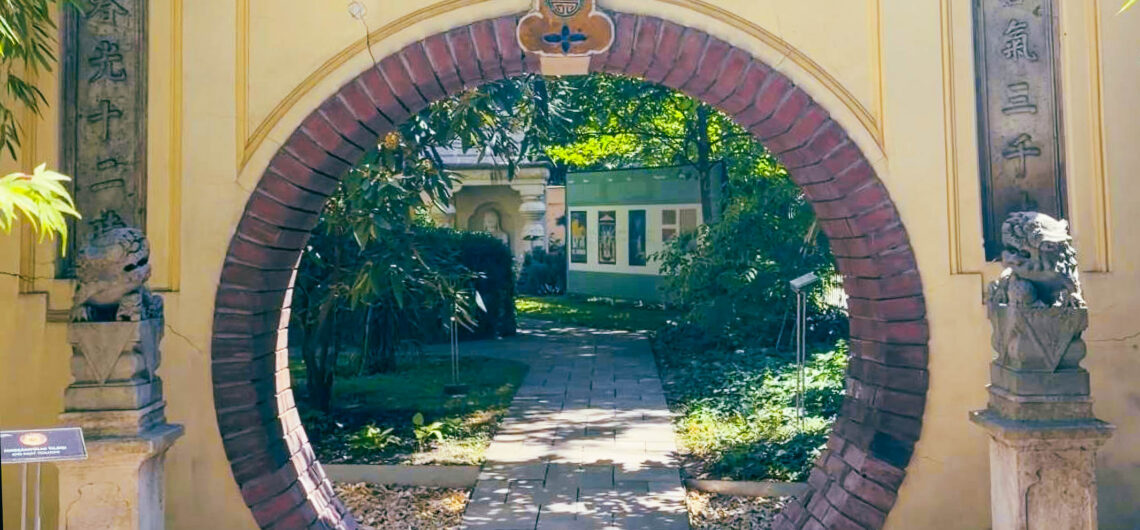
When most people think of a hidden garden Budapest has to offer, they imagine a quiet corner somewhere far from the city centre. Yet one of Budapest’s most peaceful green spaces is hiding just a few steps from elegant Andrássy Avenue, behind the walls of the Hopp Ferenc Museum of Asiatic Arts.

Pass through its distinctive moon gate and the noise of the boulevard seems to disappear. Instead, you’ll find winding paths, exotic plants, stone sculptures and a tranquil atmosphere that feels worlds away from the bustling city outside.

A Different Side of Budapest

Budapest is famous for its grand architecture, thermal baths and lively cafés, but some of its greatest treasures are the places that many visitors simply walk past.

The garden of the Hopp Ferenc Museum is one of those rare places that rewards curiosity. Hidden behind an elegant villa, it invites visitors to slow down and discover a quieter side of the city.

Whether you’re exploring Andrássy Avenue, visiting Heroes’ Square or spending time in nearby City Park, this peaceful garden is an easy detour that feels like stepping into another world.

Who Was Ferenc Hopp?

Ferenc Hopp (1833–1919) was a Hungarian traveller, collector and philanthropist who dedicated much of his life to exploring Asia. During his extensive journeys, he collected thousands of works of art and everyday objects from countries including Japan, China, India and Southeast Asia.

In his will, he donated both his remarkable collection and his villa to the Hungarian state. Today, they form the Hopp Ferenc Museum of Asiatic Arts. It’s one of Europe’s oldest museums devoted entirely to Asian art and culture.

The garden surrounding the villa reflects the same spirit of curiosity and cultural appreciation that inspired Hopp throughout his travels.

A Hidden Garden in Budapest Full of Eastern Inspiration

Although relatively small, every corner of the garden offers something worth noticing.

Traditional stone lanterns, Buddhist-inspired sculptures, carved architectural elements and carefully chosen plants create an atmosphere unlike anywhere else in Budapest. The circular moon gate is perhaps its most recognisable feature, framing the garden like the opening scene of a story waiting to unfold.

Depending on the season, bamboo, flowering shrubs and mature trees provide shade and colour, making the garden feel intimate despite its central location.

It isn’t designed as a formal botanical garden. Instead, it feels personal—a peaceful extension of the museum itself.

When to Visit

The garden is particularly beautiful in late spring and summer, when the greenery is at its fullest, but it remains a lovely place to pause throughout the year.

If you’re planning to visit the museum, allow a little extra time to wander through the garden before or after exploring the exhibitions. Even if you’re simply walking along Andrássy Avenue, it’s one of Budapest’s most rewarding hidden stops.

Good to Know

At the moment, the Hopp Ferenc Museum is temporarily closed for renovation, but there’s good news for anyone exploring Budapest: the museum garden remains open to visitors and can be visited free of charge.

That means you can still step through the iconic moon gate, enjoy the peaceful atmosphere and admire the Asian-inspired sculptures and lush greenery, even while the museum itself is being restored. If you’re looking for a quiet escape from the busy streets of central Budapest, this hidden garden is well worth a short detour.

Discover Budapest Beyond the Famous Landmarks

This hidden garden is a reminder that some of Budapest’s most memorable places aren’t the ones that appear on every postcard.

If you enjoy discovering hidden gardens, quiet courtyards and lesser-known corners of the city, you’ll find many more waiting to be explored. One of my favourite examples is the collection of hidden gardens in Buda Castle, where historic courtyards and peaceful green spaces reveal another side of Budapest’s rich past.

Many of these hidden gems are included in my private Budapest tours, where we combine the city’s famous landmarks with the quieter places that make visitors fall in love with Budapest.

Every traveller discovers a different Budapest. If you’d like to explore the city’s famous landmarks as well as its hidden gems, I’d love to help you create a private tour designed around your interests, pace and curiosity. Get in touch, and let’s plan your perfect Budapest experience.
This Secret Garden Is Hiding in Budapest

Budapest is blue—not just because of the Danube, but also because of its skies, thermal waters and beautiful Art Nouveau details. After more than a decade of guiding visitors through the city, I’ve realised that this colour quietly connects many of Budapest’s most memorable places.

When visitors describe Budapest, they often talk about its grand architecture, historic cafés or magnificent views over the Danube. But after spending more than a decade guiding travellers through the city, I’ve noticed something much quieter.

Budapest has a colour.

And that colour is blue.

Once you begin looking for it, you’ll find it almost everywhere. Not because someone planned it that way, but because nature, history and architecture have quietly combined to give the city its own distinctive palette.

The Danube: Budapest’s Blue Heart

The first place you’ll notice it is, of course, the Danube.

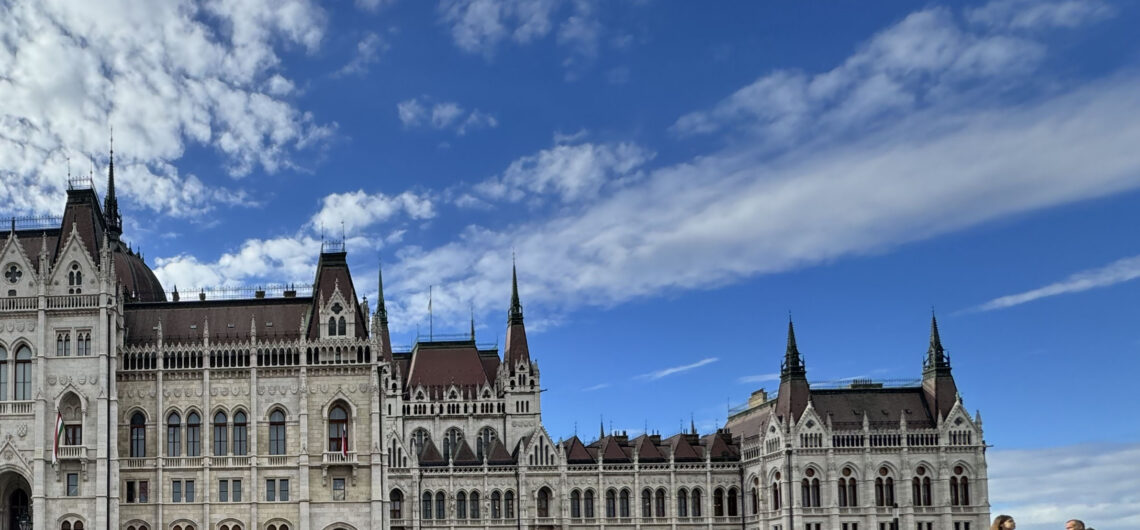
Flowing between Buda and Pest, the river has shaped the city’s history for centuries. Whether you’re standing on the Chain Bridge, enjoying the view from the Buda Castle District or watching the Parliament reflected in the water, the river provides a constant ribbon of blue running through Budapest.

It’s one of the reasons so many of my private Budapest tours include several viewpoints overlooking the Danube—the perspective changes throughout the day, but the river always remains the city’s defining feature.

Looking Up

Most visitors spend their time looking straight ahead.

Try looking up instead.

Many of Budapest’s beautiful Art Nouveau buildings are decorated with colourful ceramic tiles produced by the famous Zsolnay factory. Soft turquoise, cobalt and deep blue details appear on rooftops, façades and decorative ornaments, rewarding those who slow down and pay attention.

If you enjoy discovering these architectural details, you might also like my article about Budapest’s hidden Art Nouveau treasures.

The Colour of Water

Blue appears again in Budapest’s famous thermal baths.

Whether it’s the outdoor pools beneath the summer sky or the elegant indoor baths reflecting through historic windows, water has always been part of Budapest’s identity. It isn’t just a place to relax—it tells the story of a city built on more than one hundred thermal springs.

Every bath has its own atmosphere, but they all share the same connection between history and water.

Hidden Details

Sometimes the most memorable discoveries are also the smallest.

Blue mosaic tiles, ceramic decorations, painted doorways and unexpected architectural details appear throughout the city. They’re easy to miss if you’re rushing from one famous attraction to another, but they add another layer to Budapest’s character.

They’re also a reminder that the best way to explore the city is slowly.

Experience Budapest Beyond the Landmarks

One of my favourite parts of being a private tour guide is helping visitors notice the details they might otherwise walk straight past.

Whether it’s a hidden courtyard, an Art Nouveau façade or simply the changing colours of the Danube, these small discoveries often become the memories people talk about long after returning home.

If you’d like to experience Budapest at a relaxed pace and discover both its famous landmarks and its hidden stories, I’d be delighted to welcome you on one of my private Budapest tours.

Sometimes, all it takes is looking at the city a little differently.

And perhaps you’ll start seeing Budapest in blue too.

Budapest is blue

There is something magical about spring in Budapest.

After months of grey skies and chilly mornings, the city begins to wake up. The terraces slowly fill with conversation, the parks turn green again, and warm breezes drift through the streets carrying the promise of brighter days ahead.

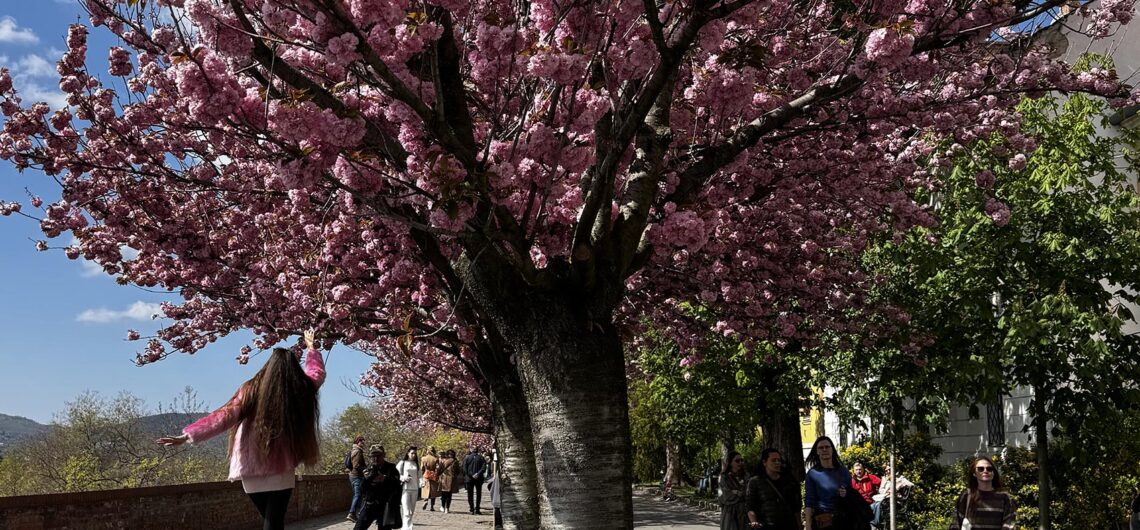
And then, almost suddenly, the cherry blossoms arrive.

For a few short but unforgettable days each year, delicate pink blossoms bloom across Budapest, transforming quiet corners of the city into scenes that feel almost dreamlike. One of the most beautiful places to experience this is in the Buda Castle District, where soft petals frame historic streets and centuries-old buildings in shades of springtime pink.

But this year, spring feels a little different.

Perhaps it is the sunshine, perhaps it is the blossoms, or perhaps it is the feeling that something new is in the air—not just in nature, but in the city itself. Budapest seems to be stepping into spring with a little more energy, a little more joy, and a quiet sense of optimism for the season ahead.

Cherry blossoms have long symbolized renewal, hope, and the beauty of fleeting moments. And somehow, this year, they feel especially fitting.

There is laughter in the air, music drifting from open windows, and the unmistakable sense that Budapest is welcoming not only a new season, but perhaps a new chapter as well.

Why Spring Is One of the Best Times to Visit Budapest

If you are planning to visit Budapest, spring may be the perfect season.

The weather is mild, the city is colourful, and locals seem to spend every possible moment outdoors enjoying the sunshine after the long winter months. Café terraces overflow onto the sidewalks, flowers bloom in the parks, and the golden evening light makes the city even more photogenic than usual.

If you want to experience Budapest at its most vibrant, spring is when the city truly shines.

Where to See Cherry Blossoms in Budapest

One of my favourite places to admire cherry blossoms in Budapest is the Buda Castle District. The contrast of soft pink petals against the grand historic buildings creates one of the most romantic spring scenes in the city.

If you enjoy hidden viewpoints and peaceful walks, you might also love visiting Gül Baba’s tomb, one of Budapest’s secret gardens with stunning Parliament views.

Experience Budapest in Bloom

Spring is one of my favorite seasons for private tours because Budapest simply feels happier. The streets are lively, the weather is comfortable, and the whole city seems to glow with fresh energy.

If you would like to discover Budapest’s hidden corners, local stories, and beautiful spring atmosphere with a local guide, explore my private Budapest tours.

And if you are looking for the perfect coffee stop after your spring walk, don’t miss my guide to Budapest Coffeehouses.

Because in Budapest, spring is not just a season. It is a feeling.

And when the cherry blossoms bloom, the warm winds return, and the city fills with hope again, Budapest somehow feels more beautiful than ever.

Budapest in Bloom: Cherry Blossom Season at Buda Castle

When people ask me about my favourite museums in Budapest, Hospital in the Rock is always at the top of my list—even though it isn’t one of the big, famous institutions you see everywhere. It’s a place hidden deep under Buda Castle, carved into the natural cave system, where history feels raw, honest, and very real.

Hospital in the Rock is one of the most authentic museums in Budapest. Not because it’s pretty (it isn’t). Not because you can take great photos (you can’t). But because the stories here are told with a kind of honesty you rarely find: factual, emotional, unembellished. It’s a place where the past speaks for itself.

Hospital in the Rock: A Museum That Doesn’t Try to Impress—It Simply Tells the Truth

Walking through the entrance hall, you might wonder what’s so special about this place. But once your tour guide leads you underground, you’ll understand immediately.

During World War II and the 1956 revolution, this was a real emergency hospital—small, overcrowded, and constantly in use during the siege of Budapest. Later, during the Cold War, it was expanded into a nuclear fallout shelter, prepared for a future no one wanted to imagine.

There’s nothing staged here. No over‑the‑top dramatics. Just preserved rooms, original equipment, wax figures that quietly show what life looked like in those moments, and stories told with care.

And honestly? That’s why I love it.

The Tour Guides Make All the Difference

Every visit is guided, and the team here is exceptional. They know the museum inside out—not just the facts, but the human side of the story. They speak with warmth, precision, and respect for the people who lived and worked here.

I’ve been many times now, and every guide brings something slightly different: a personal interpretation, a surprising anecdote, or a detail I had never noticed. This museum isn’t just about looking. It’s about listening.

A Powerful Reminder of How the Past Shapes the Present

Hospital in the Rock is emotional—not in a dramatic way, but in a deeply human one. You walk through the old wards and operating rooms, see how people worked under impossible conditions, and suddenly history doesn’t feel distant anymore.

And that’s why I think this place matters today. You learn so much from the past—about resilience, humanity, conflict, and cooperation—that it becomes easier to understand the present… and even imagine the future with more clarity.

A Great Visit in Any Season

One practical advantage that I always mention to my guests: the museum is underground, with a constant temperature around 15–18°C.

That means:

  • perfect for rainy days,
  • perfect for winter,
  • perfect for Budapest’s very hot summers.

Whatever the weather is doing outside, Hospital in the Rock is a comfortable—and fascinating—escape.

Practical Information for Planning Your Visit

Tickets & Pricing

Hospital in the Rock has two different pricing structures: a standard tour ticket and a donation-based ticket. I always recommend choosing the donation option if you can—it supports preservation work, educational programs, and ongoing historical research.

How to buy tickets:

  • Tickets can be purchased at the machines right by the entrance.
  • Card payment only.
  • During high season, tours fill up quickly, so it’s highly recommended to book in advance.

Location: Beneath Buda Castle (entrance at Lovas utca 4/C)
Tours: Guided only, usually every hour (English available + audioguides)
Photography: Not allowed inside the tunnels
Duration: About 60 minutes
Type: History, WWII, Cold War, medical history, underground Budapest

It’s an especially great stop if you’re already exploring Buda Castle, I’m happy to start or finish a tour here, so that you have time to explore.

Why You Shouldn’t Miss It

If you’re looking for a museum that leaves a lasting impression, something outside the usual tourist circuit, Hospital in the Rock is for you. It’s educational, emotional, authentic—and one of the most meaningful places you can visit in Budapest.

For me, it’s a reminder that history isn’t just something in books. It happened here, underground, where you can still feel its echo.

Add Hospital in the Rock to Your Budapest Tour

If you’d like to explore Hospital in the Rock as part of a guided experience, I’d be delighted to include it in your itinerary. It’s a fantastic addition to both my Buda Castle Walking Tour and my Communist Budapest Tour, offering powerful context and a deeper understanding of the city’s past. If you’re interested, just let me know when booking and I’ll tailor the tour to include this unforgettable visit.

Hospital in the Rock is one of Budapest’s most dramatic museums

I am thrilled to share some exciting news with you: I have received the Tripadvisor Travelers’ Choice Award 2025!

This recognition places my tours among the top 10% of attractions worldwide, and I couldn’t be more grateful. What makes this award so special is that it is based entirely on the reviews and ratings left by you — my wonderful guests.

What the Tripadvisor Travelers’ Choice 2025 Award Means

Every year, Tripadvisor celebrates businesses that consistently deliver amazing experiences to travellers around the globe. Only the top 10% of tours, activities, and attractions receive this award, making it a true honour.

For me, this recognition isn’t just about numbers or rankings. It’s about the memories we’ve created together: wandering the streets of Budapest, discovering hidden gardens, tasting local food and wine, or traveling further afield to places like Eger.

Words from My Guests on Tripadvisor

Your kind words mean the world to me. Here are just a few that truly touched my heart:

“This was the most personal, moving experience ever.”

“Her passion for the Jewish culture shines through.”

“Our day trip to Eger with Julia was the highlight of our European vacation.”

Each review reflects something I care deeply about — creating personal, meaningful experiences, sharing my knowledge of Budapest’s Jewish heritage, and helping you discover the beauty of Hungary beyond the capital.

Looking Ahead

Receiving this award gives me even more motivation. So I’ll continue sharing my love for Budapest with travellers from around the world.

As many of you know, I’ll begin taking bookings for 2026 in January. If you are planning a trip to Hungary, I would be honoured to show you my city and its surroundings through a private, customized tour.

From the Heart

This award truly belongs to all of you who have joined my tours, shared your stories, and trusted me to be part of your journey. Thank you for making this possible. 💙

I can’t wait to welcome you to Budapest!

Thank You 💙 Tripadvisor Travelers’ Choice 2025 | Budapest Private Tours

If you’re searching for unique selfie spots in Budapest, you’ve come to the right place. Of course, the city is famous for its postcard-perfect views of the Parliament, Chain Bridge, and Fisherman’s Bastion — but if you’re looking for something different, modern, and a little unexpected, this guide is for you.

Here are six selfie spots that bring out the city’s creative side, from colourful murals to futuristic architecture.

Jewish Quarter Murals – Colourful & Playful

The old Jewish Quarter is full of life — not only in its cafés and ruin bars but also on its walls. Many buildings are decorated with large murals that change from time to time, making each photo unique. They’re bold, vibrant, and the perfect backdrop if you want a splash of colour in your Budapest memories.

Pro tip: Explore Kazinczy Street and its side streets for the best mural finds.

House of Music – Organic & Flowing

Set in City Park, the House of Music is one of Budapest’s newest and most impressive buildings. Its wavy, perforated roof looks like it grew out of the trees, blending architecture with nature. A dream location if you’re looking for something modern yet organic.

Pro tip: Visit during the golden hour — the light through the trees adds a magical touch.

Filatorigát Graffitis – Urban & Creative

By the suburban railway station at Filatorigát, you’ll find Budapest’s biggest open-air graffiti wall. It’s raw, ever-changing, and bursting with creativity. The perfect spot if you’re into street art or want a truly urban background.

Pro tip: Check it out on weekends when local artists often add new works.

Bálna (“The Whale”) – Geometric & Edgy

This glass-and-steel building on the Danube is impossible to miss. Its sharp angles and striking design make it one of the most eye-catching modern landmarks in Budapest. Geometric, edgy, and bold — ideal for a dramatic selfie.

Pro tip: Step inside for unique angles and reflections.

Hajógyári Sziget – Industrial & Raw

Best known as the site of the Sziget Festival, this island also has some quirky industrial corners. Old structures, pipes, and urban details provide a cool contrast to the city’s historic architecture. Perfect if you want something unusual and gritty.

Pro tip: Pair your visit with a walk along the Danube or a picnic in the park areas of the island.

MÜPA – Palace of Arts – Futuristic & Elegant

MÜPA is one of Budapest’s main cultural hubs, and its building is just as impressive as the performances inside. With its glass walls and striking lines, it’s a futuristic and elegant selfie spot that works day and night.

Pro tip: Visit in the evening when the building is beautifully lit.

Final Thoughts about Unique Selfie Spots in Budapest

Budapest is more than its classic sights. These modern, colourful, and sometimes quirky locations are perfect if you want your photos to stand out. Whether you’re drawn to colourful murals, organic architecture, urban graffiti, edgy glass buildings, raw industrial corners, or futuristic elegance, there’s a selfie spot waiting for you.

Want to discover even more hidden and unique selfie spots in Budapest? Follow me on Instagram, and book a private tour with me — I’ll show you the best photo backdrops and authentic local experiences in the city. Contact me here to plan your tour!

Budapest is magical at any time of day, but after sunset, the city transforms into something truly unforgettable, that is Budapest at night for you. The golden domes and bridges light up, the Danube sparkles with reflections, and the streets come alive with locals and visitors enjoying food, drinks, and vibrant nightlife. Whether you’re looking for romance, culture, or just a good time, Budapest at night has it all.

Why Budapest at Night is Special

  • Golden Danube Reflections – Both riverbanks are part of a UNESCO World Heritage site, and at night the view becomes pure magic.

  • Fairy-tale Landmarks – The Parliament glows like a palace, the Chain Bridge twinkles, and Fisherman’s Bastion looks straight out of a storybook.

  • Lively Atmosphere – Cafés, ruin pubs, and wine bars buzz with energy late into the night.

  • Safe & Walkable – The historic center is compact and safe, making it perfect for evening strolls.

Top Experiences After Dark

1. The Parliament & Chain Bridge Lit Up

The most iconic postcard view of Budapest. From either side of the Danube, the glowing Parliament and illuminated Chain Bridge create a breathtaking panorama.

2. Evening Walk or Danube River Cruise

A stroll along the Danube Promenade is always a treat, but for the ultimate night experience, hop on a Danube Legend river cruise. You’ll float past the Parliament, Buda Castle, and the bridges shimmering in gold.

3. Ruin Pubs & Wine Bars in the Jewish Quarter

Budapest is famous for its ruin pubs—quirky bars built inside abandoned buildings and courtyards. For a more refined evening, try a Hungarian wine tasting at Doblo Wine Bar, my favourite in the Jewish Quarter.

4. Gellért Hill & the Citadel Views

For those who don’t mind a short climb, the reward is one of the most spectacular panoramic views of Budapest by night. The entire city glitters at your feet.

5. Night Trams & Metros (Bonus Tip)

Budapest’s public transport is not just practical—it’s scenic, too. Tram 2 along the Danube is often called one of the world’s most beautiful tram rides, and it’s especially magical after dark.

Practical Tips for Enjoying Budapest at Night

  • Best Time for Photos: Start at blue hour (just after sunset) for the perfect golden glow, then stay as the city lights come on.

  • Safety: Central Budapest is generally very safe, even at night. Just keep an eye on your belongings in crowded bars.

  • Photography: Bring a tripod or use a steady surface for night shots.

  • What to Wear: Even in summer, evenings by the Danube can be breezy, so a light jacket is handy.

Final Thoughts

Budapest truly shines after dark. Whether you’re sipping wine in the Jewish Quarter, cruising the Danube, or watching the Parliament sparkle from Fisherman’s Bastion, the city offers a unique and unforgettable nighttime experience. Reach out if you have questions or would like to learn more about Budapest or private tours!

So next time you’re here, don’t call it a night too early—that’s when Budapest is just getting started.

There’s something truly magical about Budapest that never fades, no matter how many times I walk its streets. From the golden light of sunrise over the Danube to the glow of Parliament at night, every hour brings a new kind of beauty. I love capturing these moments—quiet alleys, bustling markets, soft reflections on the river—each one telling a part of the city’s story.

Taking photos and videos here isn’t just about visuals; it’s about emotion, rhythm, and the atmosphere of everyday life. With every shot, I try to preserve the feeling of being here: the laughter from a café, the hush in a church, the buzz of trams gliding by. Creating this video is my way of sharing that energy, that intimacy, that wonder. Budapest always gives me something new to fall in love with—and I hope you feel a bit of that in every frame.