Some places just feel right for certain cakes — and this is one of them. Rákóczi túrós at Anna Café is a perfect example of how a classic Hungarian cake and a timeless Budapest café belong together.

A classic Hungarian cake in a timeless Budapest café

Rákóczi túrós is one of the most beloved traditional Hungarian desserts, and for good reason. It’s balanced rather than sweet, familiar rather than showy, and deeply connected to Hungarian café culture. A soft pastry base, creamy túró filling, a thin layer of apricot jam, and that light, slightly crisp meringue on top — every layer has its role.

This is the kind of cake Hungarians order instinctively, without reading the menu twice.

The cake: a Hungarian classic

Rákóczi túrós isn’t about reinvention.
It’s about getting the proportions right.

When it’s well made, the filling is creamy but not heavy, the jam adds just enough brightness, and the meringue gives a gentle contrast in texture. It’s a cake that invites you to slow down — ideally with a coffee, a proper plate, and time to enjoy it without rushing.

It’s no coincidence that this dessert belongs in a classic café setting.

The café: Anna Café in Budapest

That’s exactly why Anna Café feels like such a natural match.

Anna Café is one of those places that fits effortlessly into Budapest’s historic café tradition. Elegant interiors, high ceilings, and a calm, welcoming atmosphere make it an easy choice whether you’re stopping for cake, coffee, or a longer break in the city.

The location by St. Stephen’s Basilica is a favourite of mine — central, beautiful, and ideal for a quiet café moment in the middle of the city.

More than one café, more than one mood

One of the things I love about Anna Café is that it isn’t just one place — it’s a small collection of cafés, each with its own rhythm.

In summer, I often choose the Anna Café near the Central Market Hall, where sitting outside feels relaxed and local, especially after a walk through the market or along the Danube.

In the evening, the Anna Café on Váci Street has a completely different energy. The lights, the movement of the street, and the option to switch from coffee to a glass of wine make it a lovely place to end the day.

Different locations, different moods — but the same sense of quiet elegance.

A café moment as part of the Budapest food experience

Exploring Budapest through food isn’t only about restaurants or markets — it’s also about slowing down in a local café. On my Budapest foodie tours, I always encourage visitors to experience both sides of the city’s culinary culture: hearty Hungarian dishes and the quieter pleasure of coffee and cake. A stop at a classic café, whether for Rákóczi túrós or another traditional dessert, is often what turns a good food experience into a truly memorable one.

Why this combination works

Some Budapest cafés are perfect for trends. Others are perfect for traditions.

Rákóczi túrós and Anna Café belong together because neither is trying to be more than it is. They represent the kind of Budapest café experience that has lasted for decades: well-made classics, comfortable surroundings, and moments that don’t need explaining.

Rákóczi túrós, the way I love it — at Anna Café.

Part of my Budapest Cafés series, where classic cakes, beautiful interiors, and timeless café moments come together.

Rákóczi túrós at Anna Café | Classic Hungarian Cake in Budapest

Today we celebrate the Budapest 152nd birthday. On November 17, 1873, three historic towns — Buda, Pest, and Óbuda — united to form one magnificent city: Budapest. I can’t help but reflect on why this place continues to capture my heart — and the hearts of travellers from all over the world.

It’s incredible to think how much history, resilience, and beauty fit into these 152 years. Budapest isn’t just Hungary’s capital — it’s a city that tells stories at every turn, from its majestic bridges to its cozy cafés.

A City of Timeless Beauty

If you’re looking for things to do in Budapest, you don’t have to go far. Start with the Hungarian Parliament, one of Europe’s most stunning government buildings, glowing golden at night on the banks of the Danube. Cross over the Chain Bridge, admire the Fisherman’s Bastion at sunrise, and don’t miss a ride on Tram 2, often called one of the most scenic tram routes in the world.

Whether you explore Buda Castle Hill for history or Andrássy Avenue for architecture, every view tells a story. So you will explore a mix of grandeur, resilience, and unmistakable charm. Need more ideas? Let me know!

Everyday Magic – Happy Birthday Beautiful Budapest!

What makes Budapest truly special is how easily beauty blends into everyday life.
You can enjoy a lazy morning at one of the city’s historic cafés, stroll along the Danube promenade, or simply watch the lights shimmer across the water as evening falls.
Even locals (like me!) still stop to take in the view — because it never gets old.

💙 My Beautiful Budapest

As a private tour guide in Budapest, I’ve had the joy of seeing visitors fall in love with the city — whether it’s their first visit or a long-awaited return. Each tour I lead feels like a love letter to this place: to its stories, flavours, and hidden corners that you won’t find in guidebooks.

Budapest is endlessly inspiring. It’s a city that makes you slow down, look up, and appreciate the details. Like the curve of a bridge, the scent of coffee, the sound of trams rolling by.

Here’s to the Next 152 Years – Happy Birthday Beautiful Budapest!

Budapest has lived through revolutions, rebuildings, and countless transformations. Yet, she always rises more beautiful, more vibrant, more alive.
So today, I raise my glass (of Tokaji, of course!) to 152 years of history, culture, and beauty.

Happy Birthday, Beautiful Budapest — and thank you for continuing to inspire all who walk your streets. 💫

The golden age of Budapest’s famous coffeehouses was at the end of the 19th and the beginning of the 20th century. Today, we are witnessing a true renaissance of coffeehouse culture — and Budapest remains one of Europe’s most exciting cities for coffee and cake lovers.

Hungarians love their coffee, and visitors quickly fall in love with our historic cafés too. I wrote more about this passion in my main article, We Love Our Coffee – And Our Coffeehouses, Too, where I explore why cafés have always played such an important role in Budapest life.

On my Budapest Foodie Tour, we always try to visit different coffeehouses, giving travelers the chance to taste excellent Hungarian coffee and traditional cakes while learning about the stories behind these beautiful places.

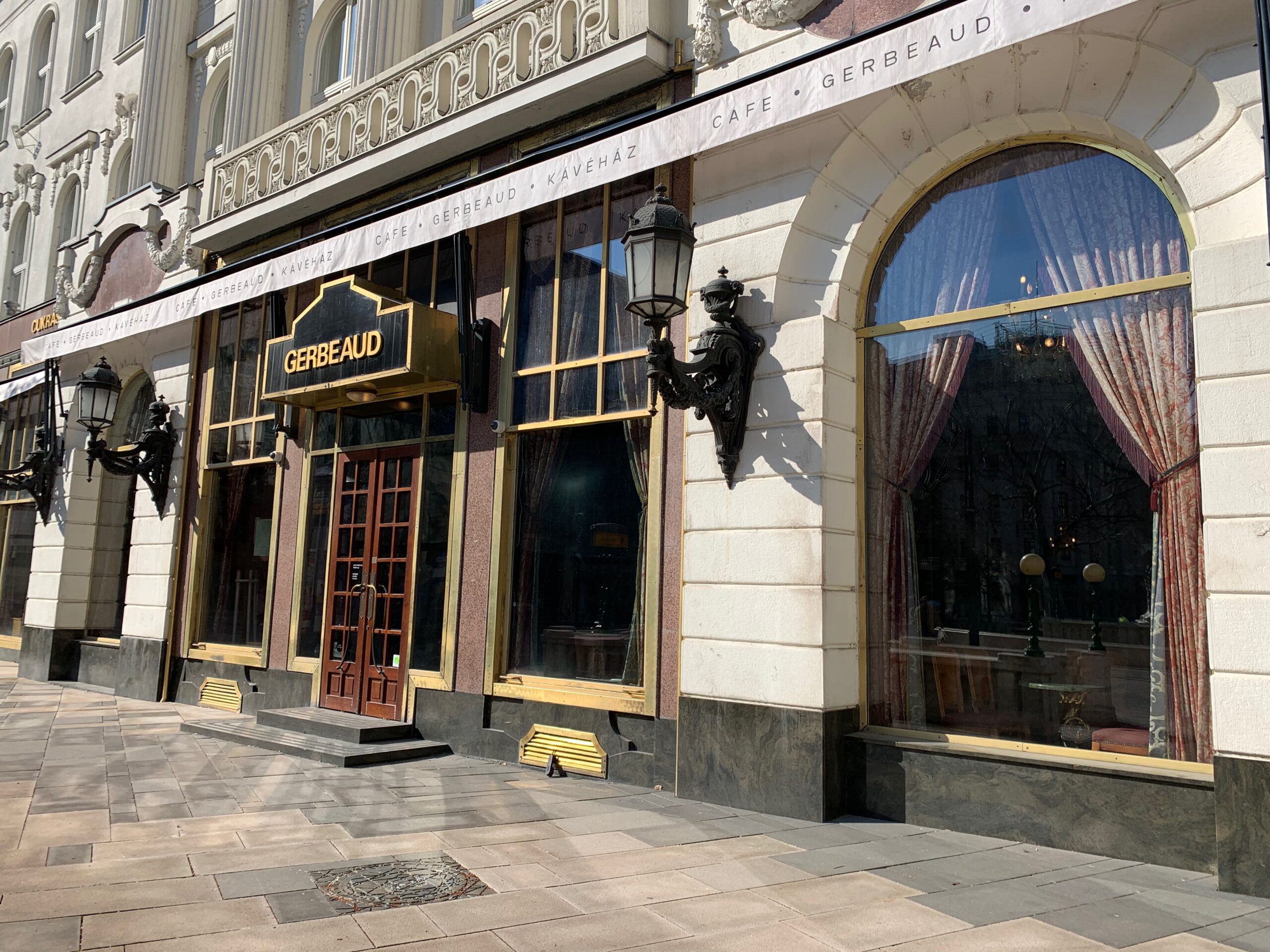
Among all Budapest cafés, Gerbeaud Café is probably the most famous — and with good reason. Although I have already written about Central Café and the Book Café, Gerbeaud truly deserves to be introduced first, as it has been a symbol of elegance and quality for over a century.

The Men Behind the Budapest Gerbeaud Café

The story of the café is closely linked to Emile Gerbeaud, a talented French bonbonnier who was invited to Budapest by Henrik Kugler, the owner of a very popular cake shop and coffeehouse on Vörösmarty Square. Emile Gerbeaud’s creativity transformed the business: he developed an exceptional range of bonbons that were produced and sold in the millions every year. When he eventually took over the café, the Gerbeaud name became a highly respected trademark — not only in Budapest, but throughout Europe.

At the end of the 19th and beginning of the 20th century, Gerbeaud was known as the ladies’ coffeehouse. Young women visited the café hoping to meet a wealthy and suitable husband. Even today, charming urban legends circulate about secret signs a lady could give if she was open to romance. These little stories add to the unique atmosphere of the place and are some of my favorite details to share on foodie tours.

Today, Gerbeaud Café is one of the most iconic historic cafés in Budapest, famous for its refined interior, elegant service, and outstanding selection of Hungarian cakes. Located on Vörösmarty Square, it is an ideal stop for anyone interested in classic coffeehouse culture and sweet Hungarian specialties.

Visiting the Café on a Food Tour

If you would like to experience Gerbeaud — and other historic cafés — in context, you might enjoy joining one of my Budapest Foodie Tours, where coffee, cake, history, and local stories come together in a relaxed and authentic way.


The golden age of Budapest’s famous coffeehouses was at the end of the 19th and the beginning of the 20th century. Today, we are once again experiencing a true renaissance of coffeehouse culture — and Budapest remains a wonderful city for anyone who enjoys coffee, cake, and history.

Hungarians have always loved their coffee, and visitors quickly discover that cafés here are much more than simple places to drink an espresso. I wrote more about this deep-rooted tradition in my main key article, We Love Our Coffee – And Our Coffeehouses, Too, where I explore why coffeehouses have played such an important role in Budapest life for generations.

On my Budapest Foodie Tour, we always try to include different cafés, so travelers can taste excellent Hungarian coffee and cakes while learning about the fascinating stories behind these historic places.

Central Café Budapest

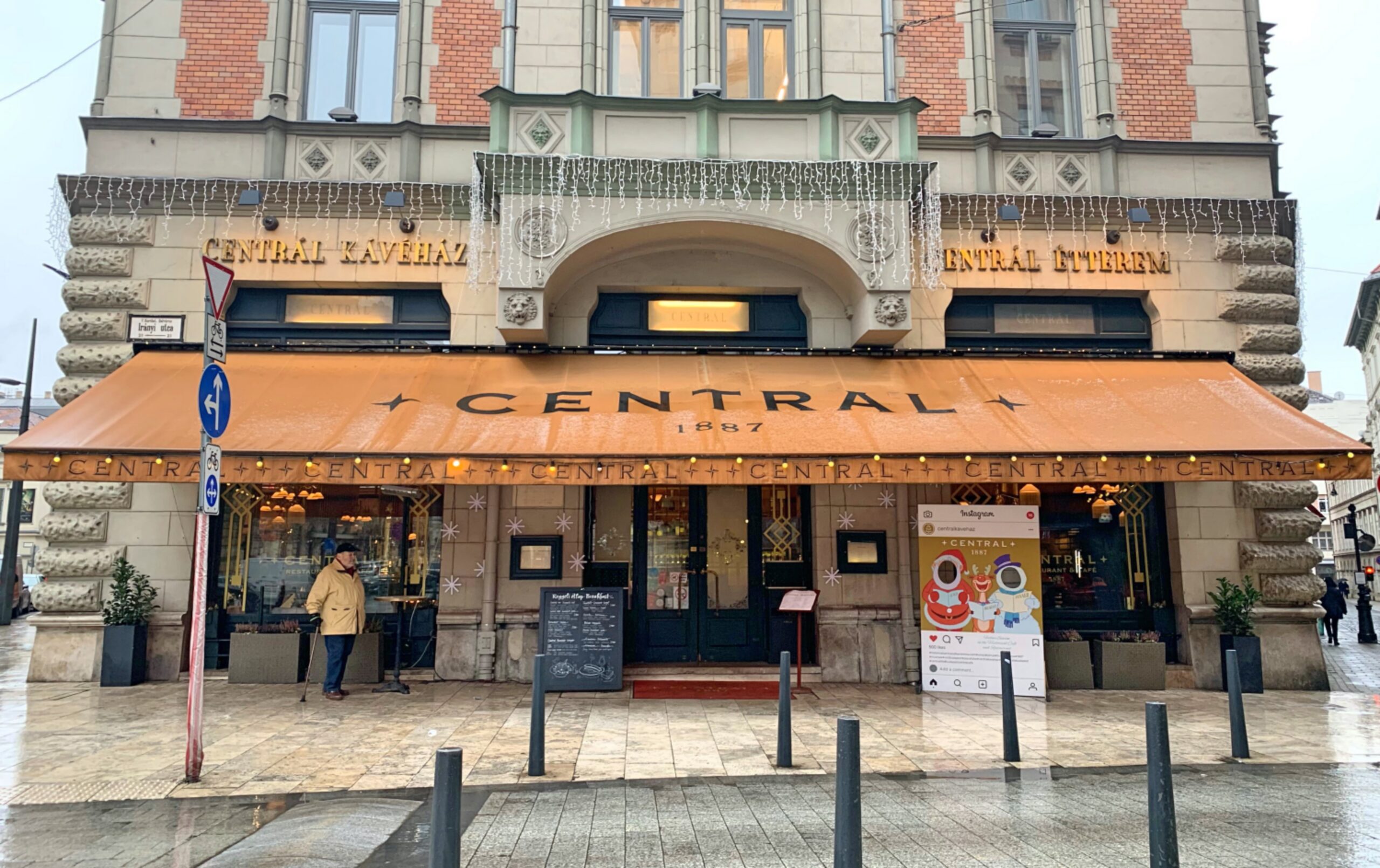
Central Café is located in the heart of downtown Pest, close to the Elizabeth Bridge, and was once considered the coffeehouse of writers and journalists. At the turn of the 19th and 20th centuries, the surrounding neighbourhood was filled with newspaper offices and editorial rooms, making Central a natural meeting point for intellectuals.

Writers spent long days — and often nights — in the café, writing articles, debating politics and economics, and exchanging the latest gossip. One of the most famous local legends tells the story of a writer who treated Central as his second home, keeping personal belongings there, including a bathrobe and his medicine.

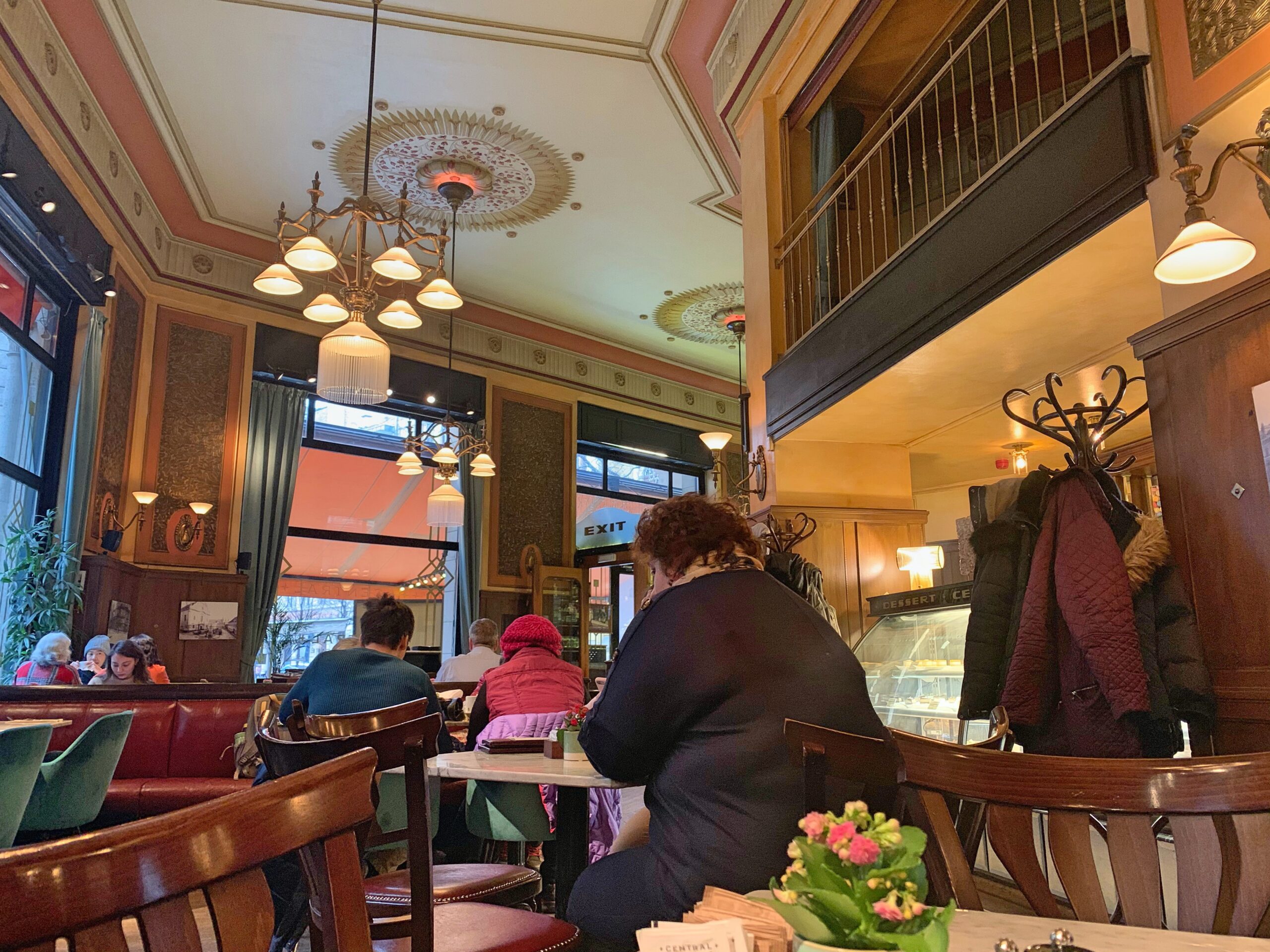
Today, Central Café remains one of the best historic cafés in Budapest for those interested in literary history and classic coffeehouse atmosphere. When you visit, there is one thing you absolutely should not miss: Rákóczi Túrós, a traditional Hungarian cake made with cottage cheese and topped with a light meringue. It pairs beautifully with an espresso or cappuccino and is always one of my favourite recommendations on foodie tours.

Exploring Budapest Cafés on a Food Tour

If you would like to experience Central Café — along with other historic coffeehouses — in a wider context, you might enjoy joining one of my Budapest Foodie Tours, where coffee, cakes, and local stories come together in a relaxed and authentic way.


The golden age of Budapest’s famous coffeehouses was at the end of the 19th and the beginning of the 20th century. Today, we are once again seeing a renaissance of coffeehouse culture — and Budapest remains a city where cafés are deeply connected to everyday life, culture, and history.

Hungarians have always loved their coffee, but cafés here have traditionally been much more than places to drink it. I explore this unique relationship in more detail in my main article, We Love Our Coffee – And Our Coffeehouses, Too, which looks at why coffeehouses have played such an important role in Budapest for generations.

On my Budapest Foodie Tour, we usually visit different historic cafés, giving travelers the chance to enjoy Hungarian coffee and cakes while discovering the stories behind these iconic places.

About the Book Café Budapest

Book Café has always been one of the most special and memorable café spaces in Budapest. Hidden inside a 20th-century department store on Andrássy Avenue, it surprised visitors with a breathtaking historic interior — high ceilings, ornate frescoes, and a grand atmosphere that felt more like a palace than a café.

Sitting in Book Café was an experience in itself. It was the kind of place where you could easily forget time, surrounded by books, elegant architecture, and the quiet hum of conversation. For many visitors, it was one of the most unexpected highlights of Budapest’s café scene.

Unfortunately, both the building and the café are currently closed, and at the moment there is no confirmed reopening date. Although it cannot be visited right now, Book Café remains one of the most talked-about historic café interiors in Budapest and an important part of the city’s coffeehouse heritage.

I sincerely hope that this beautiful space will reopen in the future. Until then, Book Café lives on in memories — and in stories I love to share when talking about Budapest’s rich and ever-evolving coffeehouse culture.

For many visitors, Hungarian food comes with a single, vivid image: red, hearty, and fiery hot.
There’s some truth in that — but it’s only a small part of the story.

Hungarian cuisine is deeply shaped by history, geography, and everyday life, and once you look beyond stereotypes, it reveals an unexpectedly rich and varied food culture.

Paprika: More Than Just Heat

Paprika is, without question, the defining spice of Hungarian cooking. Sweet, smoked, mild, or hot, it brings colour and depth rather than just heat — and it’s used with far more nuance than most people expect.

Interestingly, this essential ingredient only became central to Hungarian cuisine after the Ottoman period. What began as an imported spice gradually turned into a national symbol, shaping flavors that today feel inseparable from Hungarian identity.

A Cuisine Best Discovered Bite by Bite

Eating Hungarian isn’t about one iconic dish — it’s about many small, memorable tastes.

When visiting Hungary, some of the most authentic food experiences happen in everyday places:

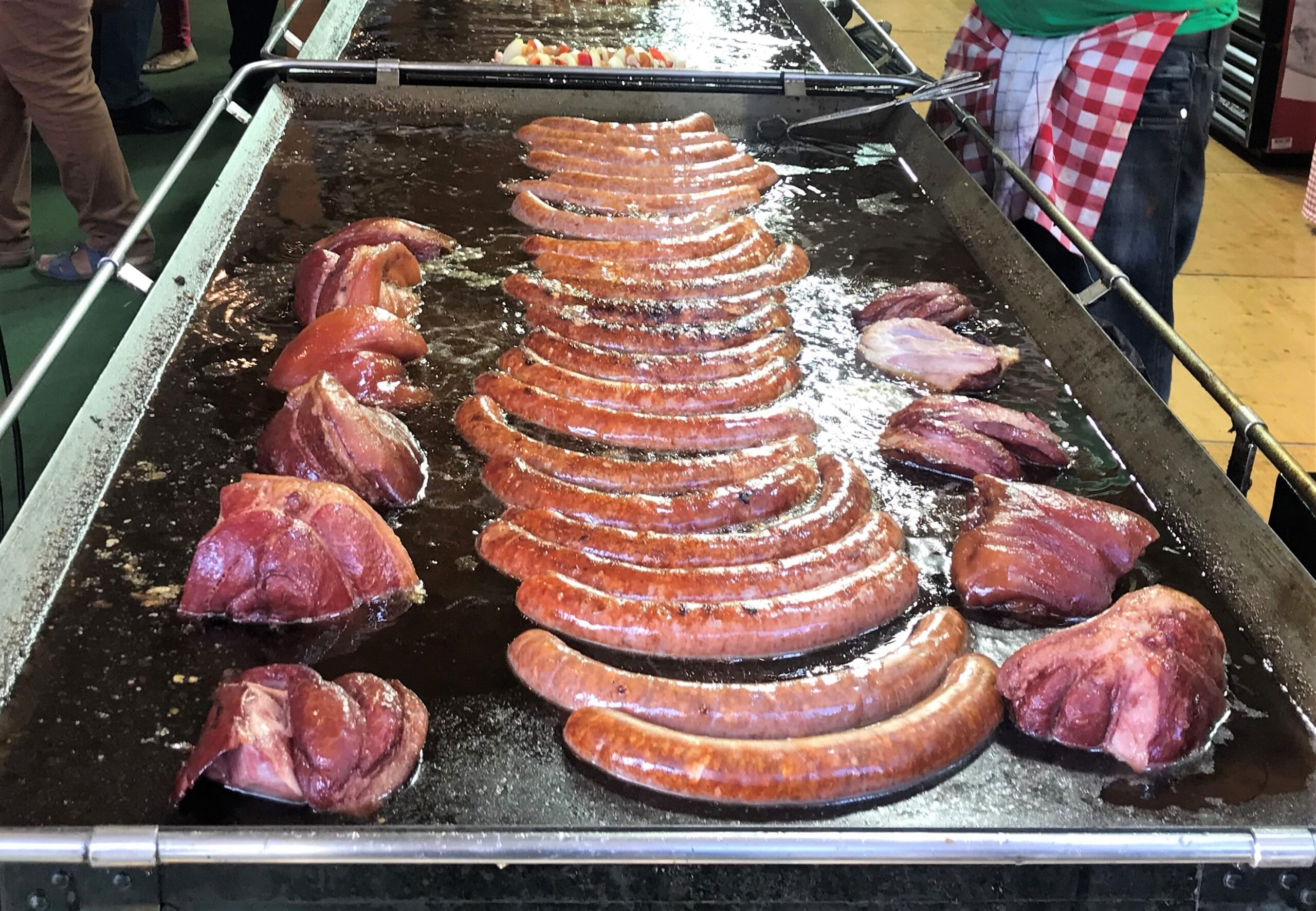
  • Butcher shops, where fresh sausages and simple hot dogs are enjoyed standing at the counter

  • Traditional cafés, some over a century old, where cakes and pastries are as important as conversation

  • Bakeries, filled with the smell of warm dough early in the morning

  • Open-air cooking, where goulash simmers slowly in a cauldron over an open fire

  • Street food favorites, like lángos — golden, deep-fried, and endlessly customizable

  • Sweet stops, from artisan ice cream to handcrafted chocolate and strudel

  • Pickled vegetables, which balance rich dishes with acidity and crunch

Each bite reflects a mix of rural traditions, urban habits, and seasonal rhythms.

Eating Also Means Drinking

There’s an old Hungarian saying: those who eat must also drink — and food here is rarely separated from wine.

Hungary’s wine culture is as old as its cuisine, with styles ranging from light and refreshing to deep and complex. Sharing food without a glass of wine nearby would feel incomplete, whether at a festive table or a simple neighbourhood spot.

Why Hungarian Food Is Best Experienced with Context

What makes Hungarian cuisine truly memorable isn’t just flavour — it’s the stories behind the dishes, the traditions, and the places where locals actually eat.

Understanding why something is cooked a certain way, when it’s traditionally eaten, and how it fits into daily life transforms food from something you consume into something you experience.

If you’re curious to explore Hungarian food beyond the obvious dishes, I always enjoy introducing guests to local flavours during my Budapest Foodie Tour.

It’s not about rushing from one stop to the next, but about tasting, understanding, and enjoying Hungarian cuisine in a relaxed, authentic way. If that sounds like your kind of experience, feel free to get in touch — I’d be happy to help you discover Budapest through its food.