When people ask me about my favourite museums in Budapest, Hospital in the Rock is always at the top of my list—even though it isn’t one of the big, famous institutions you see everywhere. It’s a place hidden deep under Buda Castle, carved into the natural cave system, where history feels raw, honest, and very real.

Hospital in the Rock is one of the most authentic museums in Budapest. Not because it’s pretty (it isn’t). Not because you can take great photos (you can’t). But because the stories here are told with a kind of honesty you rarely find: factual, emotional, unembellished. It’s a place where the past speaks for itself.

Hospital in the Rock: A Museum That Doesn’t Try to Impress—It Simply Tells the Truth

Walking through the entrance hall, you might wonder what’s so special about this place. But once your tour guide leads you underground, you’ll understand immediately.

During World War II and the 1956 revolution, this was a real emergency hospital—small, overcrowded, and constantly in use during the siege of Budapest. Later, during the Cold War, it was expanded into a nuclear fallout shelter, prepared for a future no one wanted to imagine.

There’s nothing staged here. No over‑the‑top dramatics. Just preserved rooms, original equipment, wax figures that quietly show what life looked like in those moments, and stories told with care.

And honestly? That’s why I love it.

The Tour Guides Make All the Difference

Every visit is guided, and the team here is exceptional. They know the museum inside out—not just the facts, but the human side of the story. They speak with warmth, precision, and respect for the people who lived and worked here.

I’ve been many times now, and every guide brings something slightly different: a personal interpretation, a surprising anecdote, or a detail I had never noticed. This museum isn’t just about looking. It’s about listening.

A Powerful Reminder of How the Past Shapes the Present

Hospital in the Rock is emotional—not in a dramatic way, but in a deeply human one. You walk through the old wards and operating rooms, see how people worked under impossible conditions, and suddenly history doesn’t feel distant anymore.

And that’s why I think this place matters today. You learn so much from the past—about resilience, humanity, conflict, and cooperation—that it becomes easier to understand the present… and even imagine the future with more clarity.

A Great Visit in Any Season

One practical advantage that I always mention to my guests: the museum is underground, with a constant temperature around 15–18°C.

That means:

  • perfect for rainy days,
  • perfect for winter,
  • perfect for Budapest’s very hot summers.

Whatever the weather is doing outside, Hospital in the Rock is a comfortable—and fascinating—escape.

Practical Information for Planning Your Visit

Tickets & Pricing

Hospital in the Rock has two different pricing structures: a standard tour ticket and a donation-based ticket. I always recommend choosing the donation option if you can—it supports preservation work, educational programs, and ongoing historical research.

How to buy tickets:

  • Tickets can be purchased at the machines right by the entrance.
  • Card payment only.
  • During high season, tours fill up quickly, so it’s highly recommended to book in advance.

Location: Beneath Buda Castle (entrance at Lovas utca 4/C)
Tours: Guided only, usually every hour (English available + audioguides)
Photography: Not allowed inside the tunnels
Duration: About 60 minutes
Type: History, WWII, Cold War, medical history, underground Budapest

It’s an especially great stop if you’re already exploring Buda Castle, I’m happy to start or finish a tour here, so that you have time to explore.

Why You Shouldn’t Miss It

If you’re looking for a museum that leaves a lasting impression, something outside the usual tourist circuit, Hospital in the Rock is for you. It’s educational, emotional, authentic—and one of the most meaningful places you can visit in Budapest.

For me, it’s a reminder that history isn’t just something in books. It happened here, underground, where you can still feel its echo.

Add Hospital in the Rock to Your Budapest Tour

If you’d like to explore Hospital in the Rock as part of a guided experience, I’d be delighted to include it in your itinerary. It’s a fantastic addition to both my Buda Castle Walking Tour and my Communist Budapest Tour, offering powerful context and a deeper understanding of the city’s past. If you’re interested, just let me know when booking and I’ll tailor the tour to include this unforgettable visit.

Here are my best Szechenyi Baths tips from a local guide to help you skip the lines, relax like a local, and make the most of your visit. If you’ve seen photos of people relaxing in steaming blue pools surrounded by grand yellow buildings — that’s Széchenyi Baths, Budapest’s most iconic thermal spa. But while everyone visits for the beauty, locals know the real secret is in how you visit.

Here are my best insider tips to make your experience smooth, relaxing, and truly local.

If you’d like to learn more about Budapest’s famous bath culture and its healing traditions, join my Budapest Baths Walking Tour for an in-depth experience — we’ll explore the history, architecture, and everyday rituals that make these places so special.

1. Go Early or Late for the Best Atmosphere

The baths open early, and that’s when the magic happens. If you arrive before 9 AM, you’ll share the steaming pools with just a handful of locals, chatting quietly as the morning mist rises. Evening is another wonderful time — warm water, golden lights, and a slower pace.

Pro tip: Early morning and sunset are perfect for photos — and you’ll avoid the crowds.

2. Buy a Fast Track Ticket Online – the best one of the Szechenyi baths tips

Lines at Széchenyi can get long, especially on weekends and holidays. The easiest way to skip the queue is to book a Fast Track ticket, available for morning or afternoon sessions.

Fast Track tickets are available here (official site).
You’ll enter through the Kós Károly sétány entrance, reserved for fast-track guests, and head straight inside without waiting.

Pro tip: Choose the morning slot for the quietest, most photogenic experience.

3. Use the Right Entrance of Szechenyi baths

Széchenyi is huge, with multiple entrances, and choosing the right one can save you time and confusion. Many first-time visitors feel overwhelmed by the size of the complex and the ticket options, but with a few simple Szechenyi Baths tips, you can skip the stress and relax like a local.

  • On-the-spot tickets:
    Use the side entrance near the Széchenyi Fürdő metro station (M1 line).
    This is where you can buy tickets directly at the counter.

  • Online tickets (standard):
    Enter via the main gate on Állatkerti körút (the grand yellow façade facing the CIRCUS).

  • Fast Track tickets:
    Use the special entrance on Kós Károly sétány — it’s usually quieter and has its own check-in area.

💡 Pro tip: Save a photo of your entrance gate on your phone — it’s easy to mix them up!

4. Bring the Essentials

Pack like a local:

  • Flip-flops or waterproof sandals (required)

  • Your own towel (rentals can be slow and pricey)

  • A plastic bag or dry pouch for valuables

Lockers are available, but if you’re visiting as a couple, read on…

5. Men’s and Women’s Lockers Are Separate

That’s right — the locker areas are divided by gender.
So if you’re visiting with a partner and want to change together, choose a Cabin Ticket instead.
Cabins are small private changing rooms and can be used by couples or families.

💡 Pro tip: Cabins are also handy if you’re bringing cameras or valuables you don’t want to leave in a locker.

6. Respect the Local Culture

For many Budapesters, Széchenyi isn’t just a tourist attraction — it’s part of daily life.
Locals come to heal, relax, and meditate, often under doctor’s recommendation.
So keep voices low, avoid filming strangers, and embrace the calm rhythm of the baths.

🙏 Think of it as a shared temple of water — not a pool party.

7. Stay Warm Between Pools

If you visit in winter, don’t worry — the outdoor pools are around 38°C (100°F), even when the air is freezing!
But bring a robe or quick-dry towel to wrap up between dips.

8. Visit All Year Round

Whether you’re visiting in winter or summer, these Szechenyi Baths tips will help you plan smarter, save time, and truly enjoy the healing atmosphere that makes Budapest’s spa culture world-famous. Széchenyi is open every day of the year, and each season has its charm:

  • Winter: Steam, snow, and serenity

  • Spring: Blossoms in City Park nearby

  • Summer: Lively, colourful, full of laughter

  • Autumn: Warm water and golden leaves

✨ My Local Summary

If you plan it right — early morning, a Fast Track ticket, the correct entrance, a cabin, towel, and a little respect for the locals — you’ll discover why Széchenyi Baths are more than just beautiful architecture.
They’re a living piece of Budapest’s soul. Let me know if you have questions or if you’d like to include the visit of a local bathhouse in your Budapest tour with me.

Rubik’s Cube starts with a jumble of colours — tiny squares twisting over Budapest’s skyline until, suddenly, order appears from chaos. Just like Budapest itself — structured yet endlessly creative — the Rubik’s Cube is a perfect symbol of Hungarian innovation and imagination, a colourful symbol of Hungarian ingenuity.

Invented right here in the Hungarian capital, this colourful cube became one of the most recognized objects in the world. A design so simple it fits in your palm, yet so brilliant it’s captivated minds for half a century.

The Birth of the Rubik’s Cube in Budapest

In 1974, Hungarian architect and professor Ernő Rubik created the first version of the Cube at the Budapest University of Technology. He originally called it the Bűvös Kocka, or Magic Cube. Rubik designed it as a teaching tool to help his students visualize three-dimensional movement. But soon, his puzzle took on a life of its own.

By 1980, after being licensed internationally, it had become a worldwide sensation. Millions of people were twisting, turning, and testing their patience trying to align the cube’s six colourful faces. From a quiet classroom in Budapest to living rooms and classrooms across the globe — the Cube became Hungary’s gift to the world.

The Numbers That Stun

Behind those six colours lies a universe of possibilities. The Rubik’s Cube is one of the most mathematically fascinating objects ever invented — and the stats are mind-blowing:

  • 43,252,003,274,489,856,000 possible configurations — that’s 43 quintillion different ways to mix it up.

  • Only one correct solution.

  • The fastest recorded human solve: 3.13 seconds (by Max Park, 2023).

  • More than 450 million cubes sold worldwide, making it the best-selling toy of all time.

  • The largest cube mosaic ever: 85,794 cubes, set in China in 2019.

  • The youngest official solver: just 8 years old.

  • The average number of moves to solve any scrambled cube: 20 or fewer, known as “God’s Number.”

Whether you’re a puzzle lover, mathematician, or simply curious traveller exploring Budapest, these numbers are a testament to Hungarian creativity at its best.

Hungarian Creativity on Display

Hungary has given the world more than goulash and thermal baths — it’s a country of inventors and dreamers. The Rubik’s Cube joins a long list of Hungarian inventions, from the ballpoint pen and holography to vitamin C and the safety match. You can still explore this legacy in Budapest today:

  • The Hungarian Museum of Science, Technology and Transport has featured Rubik’s Cube exhibits.

  • There’s also a small Rubik’s Cube Museum for die-hard fans and collectors.

And perhaps it’s no surprise that the Cube feels at home here. The city itself is a visual puzzle — Art Nouveau façades, tile patterns, and geometric bridges reflecting perfectly in the Danube’s blue surface.

“From architecture to invention, Budapest is full of patterns waiting to be solved.”

The Final Twist

Next time you see the Danube sparkle or a Cube twist into place, remember — both are symbols of balance and brilliance born in Budapest. Solving a Rubik’s Cube isn’t just about logic and patience. It’s about connecting with a story that began in a creative Hungarian mind and still inspires millions around the world.

So if you’re planning your next trip to Budapest, take a moment to celebrate one of its brightest ideas — one colourful twist at a time.

Budapest changes its rhythm in autumn. The summer crowds fade, the air turns crisp, and the city glows under a soft golden light that makes every familiar view feel new again. October is a time of quiet magic here — a season of colour, calm, and light.

The City in Gold – Autumn in Budapest

Everywhere you look, Budapest shines.
The Hungarian Parliament reflects in the Danube like liquid gold. At Fisherman’s Bastion, the morning sun catches the stone arches, lighting up the city below. The Chain Bridge is framed by amber trees, and trams roll past the riverbank, carrying locals wrapped in scarves and visitors soaking in the warmth of the season.

It’s the perfect time to slow down, wander, and let the city reveal itself in its warmest colors.

Iconic Views and Hidden Corners of Budapest

Autumn adds a cinematic touch to Budapest’s best-known landmarks — Buda Castle, Heroes’ Square, Gellért Hill, and the grand boulevards of Pest all look their most romantic beneath a golden canopy.

But some of the city’s quietest corners become just as beautiful:

  • the tree-lined paths of Margaret Island,

  • the courtyards of Buda’s Castle District,

  • the winding alleys near Gül Baba’s Tomb,

  • and the hidden cafés where time seems to slow down.

Everywhere, the light softens — and with it, the pace of life.

Autumn – The Perfect Season for Exploring

Autumn in Budapest is comfortable and relaxed. The days are sunny, the evenings cool, and the city feels peaceful again after summer’s buzz. It’s a wonderful time to experience both the famous highlights and the small, authentic details that make Budapest so special.

🍂 If you’re visiting this season, I’d love to design a private walking tour just for you.
My fully customisable Budapest tours can focus on the city’s autumn highlights, from iconic sights glowing in afternoon light to hidden gardens and cozy cafés.

Whether you’d like the Grand Budapest Walk, a Jewish Quarter Tour, or a Foodie Experience filled with local flavours, I can tailor every detail to your interests, pace, and style.
Let’s make your autumn day in Budapest unforgettable.

See the City Differently

Every season in Budapest has its beauty, but autumn is when the city truly feels like a painting — golden, calm, and full of light. If you’ve only seen Budapest in summer, come back when the leaves turn and the city slows down. You’ll discover a whole new side to it — peaceful, poetic, and absolutely beautiful. 💛

High above the Danube, tucked away in the quiet streets of Rózsadomb, lies one of Budapest’s most peaceful treasures: Gül Baba’s Tomb. It’s a place most visitors never find — a secret garden filled with roses, history, and calm.

A Hidden Piece of History

The story of Gül Baba’s Tomb stretches back to the 16th century, when the Ottoman Empire ruled Buda.
Gül Baba, a dervish and poet-warrior whose name means “Father of Roses,” was buried here after the Turkish conquest. For centuries the site served as a Muslim burial place, then later became a Jesuit monastery, and even, for a time, the home of a Hungarian architect.

Each chapter added new layers, just like the petals of the roses that still bloom here today.

From the Past to the Present

After years of neglect, the tomb and its gardens were fully restored in 2018, transforming the hilltop into a serene public space. Now visitors can stroll through terraced rose gardens, admire the simple octagonal mausoleum, and enjoy a stunning panoramic view over Pest.

Despite being so close to the city center, it feels miles away from the bustle — a place where you can still hear birds and footsteps instead of traffic.

Why You Should Visit

  • Roses everywhere: fitting for the resting place of the “Father of Roses.”

  • Cultural layers: Ottoman, Christian, and Hungarian heritage intertwined.

  • Beautiful views: especially at sunset, when the domes glow golden.

  • Peace and reflection: perfect for a quiet break during your Budapest explorations.

Whether you come for the history or just to breathe in the scent of roses, Gül Baba’s Tomb offers a side of Budapest that many miss — soft, spiritual, and timeless.

Visiting Info

Address: Mecset utca 14, II district, Budapest
Opening hours: Tuesday to Sunday 9 a.m. – 6 p.m. (check seasonal updates)
Admission: free
How to get there: Take Tram 4 or 6 to Margit híd budai hídfő, then a short, steep walk uphill through leafy streets.

If you’re exploring the city with me, Gül Baba’s Tomb can be a beautiful stop on a custom-designed itinerary — a gentle moment of calm and history that pairs perfectly with a cultural walk through Buda.

Whether you come for the history or just to breathe in the scent of roses, Gül Baba’s Tomb offers a side of Budapest that many miss. Vibes are soft, spiritual, and timeless.

A Peaceful Farewell

Whenever I visit, I’m reminded that Budapest isn’t only about grand buildings and lively cafés. It’s also about quiet corners like this one.
If you ever need a moment to slow down, follow the scent of roses up Rózsadomb. You’ll find a poet’s resting place — and perhaps a little bit of peace for yourself, too. 💛

Budapest is often called the City of Spas, and with good reason — the city sits on a network of natural hot springs that have been enjoyed since Roman times. Among all the baths, none are quite as legendary as Gellért Baths. With their stunning Art Nouveau architecture, turquoise pools, and steamy atmosphere, they’ve been a favourite of locals and travellers alike for more than a century. If you’re looking for updates on the Gellért Baths renovation, here’s everything you need to know.

Sadly, this Budapest icon is about to close for a while. Starting October 1st, 2025, Gellért Baths will shut their doors for a major 3-year renovation.

Gellért Baths: A Jewel of Art Nouveau

The Gellért Baths first opened in 1918 as part of the famous Gellért Hotel. The design is a masterpiece of Art Nouveau: elegant columns, colorful mosaics, stained glass windows, and a grand central pool that looks more like a cathedral of water than a spa.

Over the decades, the baths have become a symbol of Budapest itself — a place where locals go to relax, heal, and socialise, and where visitors from all over the world come to experience something uniquely Hungarian.

Why the Renovation?

After more than 100 years of almost continuous use, the Gellért Baths are in need of some love. The upcoming renovation will restore the building’s historic beauty while also updating the facilities to meet modern standards.

It’s never easy to say goodbye, even temporarily, but this pause will ensure that future generations can continue to enjoy the magic of Gellért.

My Last Visit

Knowing the closure was coming, I decided to take one last dip. Stepping into the grand central hall, with its soaring columns and sparkling turquoise water, felt more emotional than I expected. The air was thick with steam, the light streaming in through the stained glass, and the water just as soothing as always.

Floating there, I thought about how many people have swum in this very pool since 1918. It felt like being part of history.

One Last Chance

If you’re in Budapest right now, there’s still one final opportunity: Gellért Baths will be open until September 30th, 2025. Don’t miss your chance to enjoy a last soak in this historic treasure before it closes until 2028.

Farewell for Now

It will be strange not to have Gellért Baths as part of Budapest’s daily life for the next three years. But I’m excited to see how the renovation will bring new life to this beloved spa.

Until then, Budapest still has plenty of other baths to enjoy — from the grand Széchenyi Baths to the atmospheric Rudas Baths. But for me, nothing compares to Gellért.

💙 Have you ever been to Gellért Baths? Will you miss it during its renovation?

If you’re searching for unique selfie spots in Budapest, you’ve come to the right place. Of course, the city is famous for its postcard-perfect views of the Parliament, Chain Bridge, and Fisherman’s Bastion — but if you’re looking for something different, modern, and a little unexpected, this guide is for you.

Here are six selfie spots that bring out the city’s creative side, from colourful murals to futuristic architecture.

Jewish Quarter Murals – Colourful & Playful

The old Jewish Quarter is full of life — not only in its cafés and ruin bars but also on its walls. Many buildings are decorated with large murals that change from time to time, making each photo unique. They’re bold, vibrant, and the perfect backdrop if you want a splash of colour in your Budapest memories.

Pro tip: Explore Kazinczy Street and its side streets for the best mural finds.

House of Music – Organic & Flowing

Set in City Park, the House of Music is one of Budapest’s newest and most impressive buildings. Its wavy, perforated roof looks like it grew out of the trees, blending architecture with nature. A dream location if you’re looking for something modern yet organic.

Pro tip: Visit during the golden hour — the light through the trees adds a magical touch.

Filatorigát Graffitis – Urban & Creative

By the suburban railway station at Filatorigát, you’ll find Budapest’s biggest open-air graffiti wall. It’s raw, ever-changing, and bursting with creativity. The perfect spot if you’re into street art or want a truly urban background.

Pro tip: Check it out on weekends when local artists often add new works.

Bálna (“The Whale”) – Geometric & Edgy

This glass-and-steel building on the Danube is impossible to miss. Its sharp angles and striking design make it one of the most eye-catching modern landmarks in Budapest. Geometric, edgy, and bold — ideal for a dramatic selfie.

Pro tip: Step inside for unique angles and reflections.

Hajógyári Sziget – Industrial & Raw

Best known as the site of the Sziget Festival, this island also has some quirky industrial corners. Old structures, pipes, and urban details provide a cool contrast to the city’s historic architecture. Perfect if you want something unusual and gritty.

Pro tip: Pair your visit with a walk along the Danube or a picnic in the park areas of the island.

MÜPA – Palace of Arts – Futuristic & Elegant

MÜPA is one of Budapest’s main cultural hubs, and its building is just as impressive as the performances inside. With its glass walls and striking lines, it’s a futuristic and elegant selfie spot that works day and night.

Pro tip: Visit in the evening when the building is beautifully lit.

Final Thoughts about Unique Selfie Spots in Budapest

Budapest is more than its classic sights. These modern, colourful, and sometimes quirky locations are perfect if you want your photos to stand out. Whether you’re drawn to colourful murals, organic architecture, urban graffiti, edgy glass buildings, raw industrial corners, or futuristic elegance, there’s a selfie spot waiting for you.

Want to discover even more hidden and unique selfie spots in Budapest? Follow me on Instagram, and book a private tour with me — I’ll show you the best photo backdrops and authentic local experiences in the city. Contact me here to plan your tour!

If you’re planning a trip and looking for the best photo spots in Budapest, you’ll quickly realize that most guides send you straight to Fisherman’s Bastion. While it’s beautiful, there are so many other iconic locations where you can capture unforgettable pictures. Budapest is one of the most photogenic cities in Europe, I can help you exploring some of the best Budapest spots.

Whether you’re a professional photographer, a casual Instagrammer, or just looking for great selfies, here are 7 classic photo spots in Budapest that go beyond the usual tourist clichés.

1. Parliament from Trianon Monument – Dramatic Backdrop

The Hungarian Parliament is the most recognizable landmark in Budapest. From the Trianon Monument on the Buda side, you’ll get a dramatic view across the Danube — ideal for wide shots and portraits.
Best time to visit: late afternoon for golden light.

2. Vajdahunyad Castle – Fairy-Tale Vibes

Located inside City Park, Vajdahunyad Castle looks straight out of a storybook. Its towers and courtyards provide romantic settings for photos in every season.
Best time to visit: autumn foliage or winter with the ice rink.

3. Philosopher’s Garden – Peaceful with a Panoramic View

On Gellért Hill, Philosopher’s Garden offers both tranquility and sweeping views of Budapest. With statues symbolizing famous thinkers, it’s a thoughtful and unique photo location.
Best time to visit: early morning for soft light and fewer people.

4. National Gallery Dome – Grand & Elevated Perspective

For one of the best panoramic views of Budapest, climb the dome of the Hungarian National Gallery in Buda Castle. It’s an elevated perspective that photographers love.
Note: Dome access is seasonal and ticketed.

5. Margaret Bridge (Middle) – Romantic Riverside Shot

The midpoint of Margaret Bridge offers incredible angles of Parliament, the Chain Bridge, and the Castle District. It’s one of the most romantic riverside spots for pictures.
Best time to visit: sunset for magical light over the Danube.

6. Gül Baba’s Tomb – Rose-Covered and Serene

A hidden gem in Budapest, Gül Baba’s Tomb is surrounded by rose gardens and history. It’s the northernmost Islamic pilgrimage site, and a peaceful place for unique photos.
Best time to visit: late spring or early summer for blooming roses.

7. Cave Church & Liberty Bridge – Spiritual + Edgy Contrast

The Cave Church inside Gellért Hill offers a mysterious and spiritual backdrop. Just outside, Liberty Bridge provides a colorful, urban edge — a great combination for creative photos.
Pro tip: Photograph both the church entrance and the bridge for variety.

Final Thoughts

These classic photo spots in Budapest prove that the city offers much more than Fisherman’s Bastion. From dramatic river views to hidden gardens, each location has its own unique mood. These are just a few of my favorite spots — join one of my private tours to explore more, or get in touch for personalized recommendations.

💡 Save this list for your trip and discover your favorite angles of Budapest. Don’t forget: sometimes the best photo is just around the corner!


How many Budapest bridges can fit into 30 seconds? More than you’d think! The Danube divides the city into Buda and Pest, and its bridges each carry their own personality: historic, modern, romantic, or simply practical. Whether you’re chasing the perfect Parliament view, a quiet sunset, or even an emperor’s silver nail, there’s a bridge waiting to share its secret.

Chain Bridge

“Budapest’s bridge has a twin”
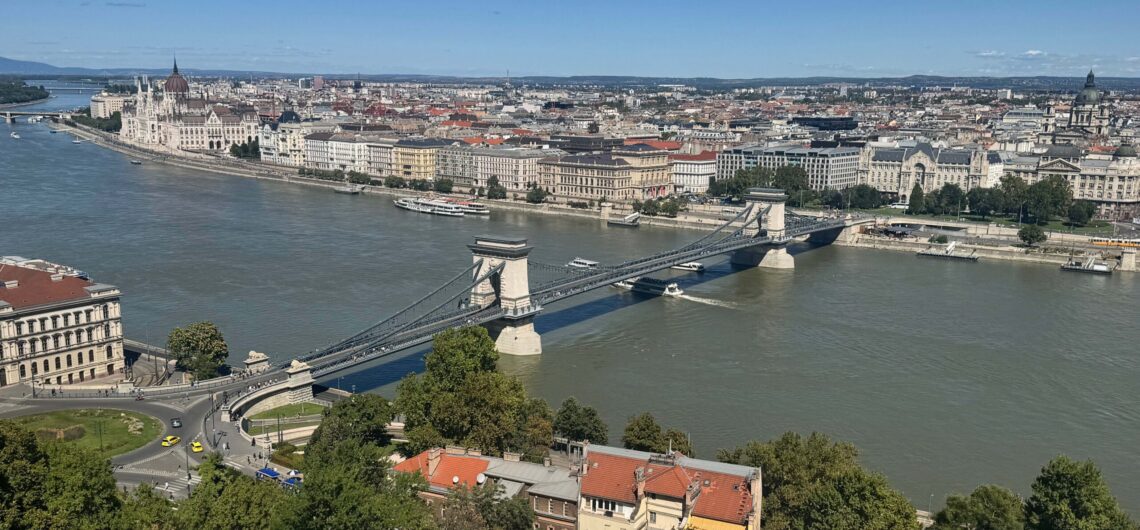
The Chain Bridge was the first permanent crossing of the Danube, opened in 1849. But did you know it has a smaller twin in Marlow, England? Both were designed by William Tierney Clark, with the Marlow Bridge crossing the River Thames. Stroll across it and you’ll feel like you’ve stepped into a miniature Budapest, a little echo of the Danube in the English countryside. I’m happy to cross this beautiful bridge with you when you book a walking tour with me.

Liberty Bridge

“An emperor’s silver nail”
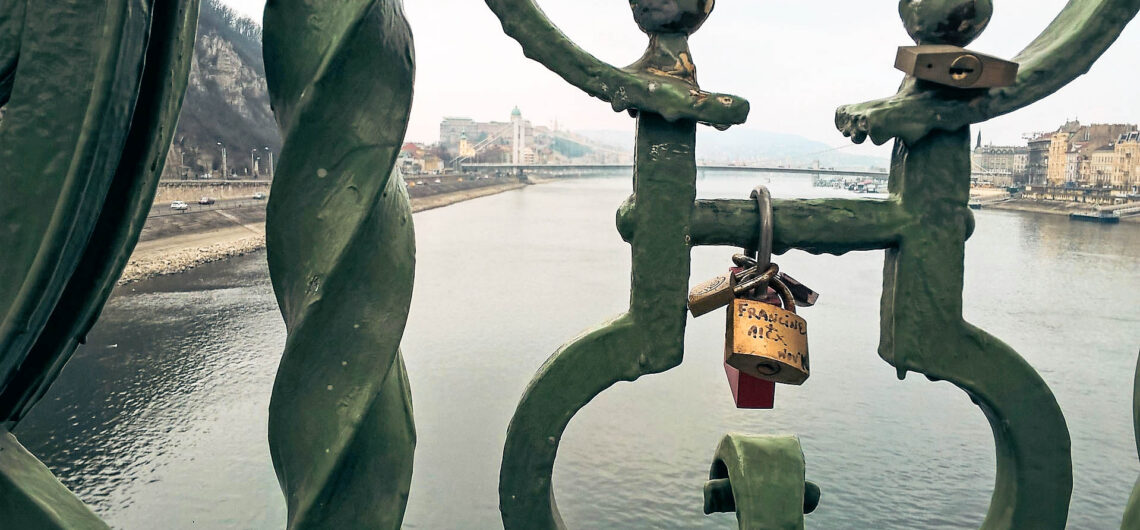
When Liberty Bridge was inaugurated in 1896, Emperor Franz Joseph himself hammered in the last, and only silver, nail. That ceremonial gesture gave the green bridge a unique story among its siblings. Today it’s beloved by locals and students, sometimes even closed for open-air picnics. And, it still carries the emperor’s mark in its foundation. We usually stop for a few minutes to admire the bridge from the Pest side of the river when we go to the Great Market during a Foodie Tour. Also, this is my all time favourite of all Budapest bridges.

Margaret Bridge

“A princess on an island”
Margaret Bridge doesn’t just connect Buda and Pest — it also bends gracefully toward Margaret Island. The island itself was once home to a royal convent, where young Princess Margaret, daughter of King Béla IV, was sent to live. Choosing the island meant giving up courtly life forever, but her presence left a story of sacrifice and faith woven into the bridge’s path. I love taking travellers to the Margaret bridge and island on a customised tour.

Elizabeth Bridge

“Modern white frame of Gellért”
The original Elizabeth Bridge, named after Queen Sisi, was destroyed during World War II. What stands today is a sleek, modern suspension bridge — its white lines perfectly framing Gellért Hill and the Citadel behind it. It’s the only one of the Budapest bridges that was not rebuilt to the original style. It’s a striking contrast to the ornate Budapest bridges nearby, and a favourite spot for photographers chasing symmetry. Want to learn more about the bridge and the story of Gellért? I’m happy to include those in any Budapest driving tour.

Petőfi Bridge

“The Danube’s lost blue bridge”
Before World War II, the bridge that stood here gleamed in a bold shade of blue — a flash of colour across the Danube. After its destruction, the rebuilt Petőfi Bridge was painted grey, practical but subdued. It does its job, but sometimes I wonder how different Budapest’s skyline would feel today if that vibrant blue had survived.

Rákóczi Bridge

“Budapest’s bold red pylons”
The newest bridge across the central Danube, Rákóczi is defined by its industrial steel and striking red pylons. It may not carry centuries of history, but it connects the city to its growing cultural quarter — the National Theatre and Palace of Arts — showing how Budapest keeps building its future across the river.


From twins in England to emperors’ nails, princesses, and lost colors, Budapest’s bridges are full of stories that go far beyond stone and steel. Next time you’re here, don’t just admire them from a tram window — walk across. Each crossing is a chance to step into the city’s history, one story at a time.

Budapest is magical at any time of day, but after sunset, the city transforms into something truly unforgettable, that is Budapest at night for you. The golden domes and bridges light up, the Danube sparkles with reflections, and the streets come alive with locals and visitors enjoying food, drinks, and vibrant nightlife. Whether you’re looking for romance, culture, or just a good time, Budapest at night has it all.

Why Budapest at Night is Special

  • Golden Danube Reflections – Both riverbanks are part of a UNESCO World Heritage site, and at night the view becomes pure magic.

  • Fairy-tale Landmarks – The Parliament glows like a palace, the Chain Bridge twinkles, and Fisherman’s Bastion looks straight out of a storybook.

  • Lively Atmosphere – Cafés, ruin pubs, and wine bars buzz with energy late into the night.

  • Safe & Walkable – The historic center is compact and safe, making it perfect for evening strolls.

Top Experiences After Dark

1. The Parliament & Chain Bridge Lit Up

The most iconic postcard view of Budapest. From either side of the Danube, the glowing Parliament and illuminated Chain Bridge create a breathtaking panorama.

2. Evening Walk or Danube River Cruise

A stroll along the Danube Promenade is always a treat, but for the ultimate night experience, hop on a Danube Legend river cruise. You’ll float past the Parliament, Buda Castle, and the bridges shimmering in gold.

3. Ruin Pubs & Wine Bars in the Jewish Quarter

Budapest is famous for its ruin pubs—quirky bars built inside abandoned buildings and courtyards. For a more refined evening, try a Hungarian wine tasting at Doblo Wine Bar, my favourite in the Jewish Quarter.

4. Gellért Hill & the Citadel Views

For those who don’t mind a short climb, the reward is one of the most spectacular panoramic views of Budapest by night. The entire city glitters at your feet.

5. Night Trams & Metros (Bonus Tip)

Budapest’s public transport is not just practical—it’s scenic, too. Tram 2 along the Danube is often called one of the world’s most beautiful tram rides, and it’s especially magical after dark.

Practical Tips for Enjoying Budapest at Night

  • Best Time for Photos: Start at blue hour (just after sunset) for the perfect golden glow, then stay as the city lights come on.

  • Safety: Central Budapest is generally very safe, even at night. Just keep an eye on your belongings in crowded bars.

  • Photography: Bring a tripod or use a steady surface for night shots.

  • What to Wear: Even in summer, evenings by the Danube can be breezy, so a light jacket is handy.

Final Thoughts

Budapest truly shines after dark. Whether you’re sipping wine in the Jewish Quarter, cruising the Danube, or watching the Parliament sparkle from Fisherman’s Bastion, the city offers a unique and unforgettable nighttime experience. Reach out if you have questions or would like to learn more about Budapest or private tours!

So next time you’re here, don’t call it a night too early—that’s when Budapest is just getting started.