Most visitors come to Buda Castle for the famous landmarks, but the hidden gardens in Buda Castle reveal a completely different side of the district. Every day, thousands of people walk its cobbled streets, admire the views, and never notice the peaceful corners tucked away behind historic walls. But hidden behind historic walls and tucked away in quiet courtyards are a few peaceful corners that many visitors never discover. If you're looking for a different side of the Castle District, here are three secret gardens worth seeking out. 1. Hidden Castle Garden – For History Lovers Just a short walk from the main tourist routes, this small garden feels like a forgotten piece of old Buda. Surrounded by historic buildings and quiet pathways, it's the kind of place where you can pause for a moment and imagine what life might have looked like centuries ago. While most visitors head straight for Fisherman's Bastion, this peaceful corner offers something different: silence, shade, and a glimpse into the district's layered history. It's not a major attraction, and that's exactly why it's special. 2. Alabárdos Café Garden – For a Quiet Escape Finding a peaceful café in the Castle District, especially near Matthias Church can be surprisingly difficult, especially during the busy summer months. Hidden behind historic walls, the garden of Alabárdos Café offers a welcome break from the crowds. With its elegant surroundings, mature trees, and relaxed atmosphere, it's the perfect place to slow down with a coffee or a glass of wine and a book. You don't need to be in a hurry here. In fact, that's the whole point. 3. Koller Gallery Garden – For Art Lovers One of Budapest's oldest private galleries is also home to one of the Castle District's most charming hidden gardens. The small sculpture garden
Most visitors come to Buda Castle for the famous landmarks, but the hidden gardens in Buda Castle reveal a completely different side of the district. Every day, thousands of people walk its cobbled streets, admire the views, and never notice the peaceful corners tucked away behind historic walls.
But hidden behind historic walls and tucked away in quiet courtyards are a few peaceful corners that many visitors never discover. If you’re looking for a different side of the Castle District, here are three secret gardens worth seeking out.
1. Hidden Castle Garden – For History Lovers
Just a short walk from the main tourist routes, this small garden feels like a forgotten piece of old Buda.
Surrounded by historic buildings and quiet pathways, it’s the kind of place where you can pause for a moment and imagine what life might have looked like centuries ago. While most visitors head straight for Fisherman’s Bastion, this peaceful corner offers something different: silence, shade, and a glimpse into the district’s layered history.
It’s not a major attraction, and that’s exactly why it’s special.
2. Alabárdos Café Garden – For a Quiet Escape
Finding a peaceful café in the Castle District, especially near Matthias Church can be surprisingly difficult, especially during the busy summer months.
Hidden behind historic walls, the garden of Alabárdos Café offers a welcome break from the crowds. With its elegant surroundings, mature trees, and relaxed atmosphere, it’s the perfect place to slow down with a coffee or a glass of wine and a book.
You don’t need to be in a hurry here. In fact, that’s the whole point.
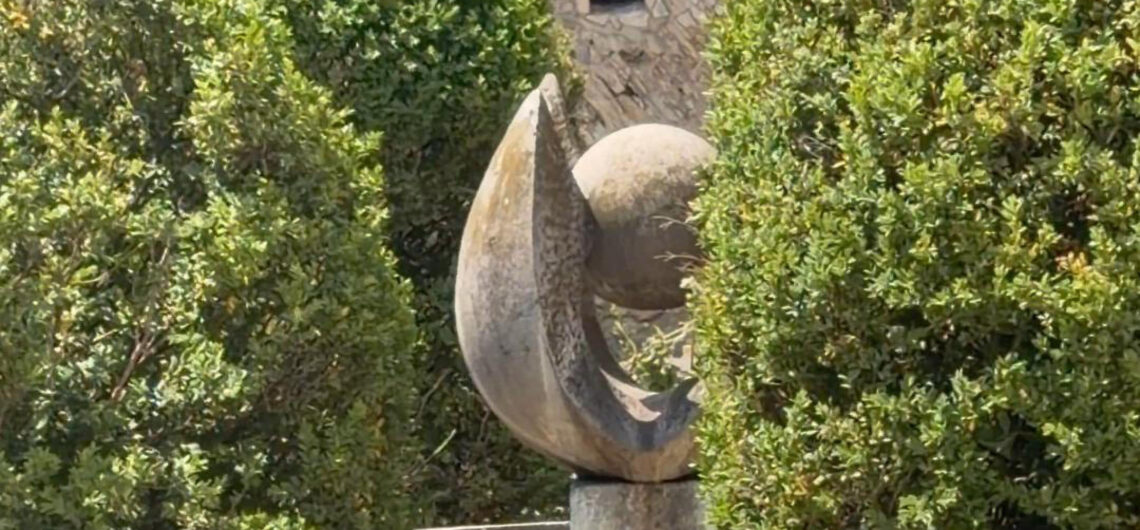
3. Koller Gallery Garden – For Art Lovers
One of Budapest’s oldest private galleries is also home to one of the Castle District’s most charming hidden gardens.
The small sculpture garden behind Koller Gallery combines art, greenery, and beautiful views over the rooftops of Buda. It’s peaceful, intimate, and often surprisingly quiet despite its central location.
Even if you’re not planning to visit the gallery itself, the garden is worth discovering.
A Different Side of Buda Castle
The Castle District will always be famous for its panoramic views, historic churches, and grand architecture. But sometimes the most memorable places are the ones hidden just around the corner.
The next time you visit Buda Castle, leave the main streets behind for a few minutes. You might discover a secret garden of your own. These hidden gardens in Buda Castle offer a peaceful escape from the crowds and a chance to experience a quieter, more personal side of Budapest.
Budapest’s hidden gardens each have their own character. While the peaceful corners of Buda Castle are steeped in history, the garden of the Hopp Ferenc Museum on the Pest side transports visitors into a world inspired by Asian art and culture. Together, they reveal just how many tranquil escapes are waiting to be discovered beyond the city’s famous landmarks.
You've Probably Never Seen This Side of Buda Castle
Budapest Art Nouveau is one of the city's great architectural treasures — and one of the reasons I fell in love with Budapest. Some people visit the city for Parliament, others for the thermal baths or famous cafés. While I love all of those, I've always been fascinated by Budapest's Art Nouveau buildings: the colours, flowing lines, stained glass and symbolism hidden in seemingly ordinary details. More importantly, they invite us to slow down and look closer. Every year on 10 June, International Art Nouveau Day celebrates this extraordinary artistic movement around the world. But in Budapest, you can discover its legacy every day simply by knowing where — and how — to look. What Is Art Nouveau? Art Nouveau emerged across Europe around the turn of the 20th century as a reaction against the rigid styles that had dominated architecture and design for centuries. Instead of straight lines and strict symmetry, Art Nouveau embraced nature. Flowers, leaves, peacocks, butterflies, vines, and flowing curves became the defining elements of a new artistic language. Architects, artists, and craftsmen wanted beauty to be part of everyday life, not something reserved for museums. In Budapest, this movement found a particularly unique expression. The Hungarian Secession In Hungary, Art Nouveau is generally known as Szecesszió, or Secession. Some Hungarian architects went further, developing a particularly distinctive national expression that combined international Art Nouveau ideas with Hungarian folk motifs, Eastern influences and innovative materials. Colourful Zsolnay ceramics, floral decorations inspired by Hungarian embroidery, and rich symbolism became hallmarks of the style. The result is something that feels both international and unmistakably Hungarian. When visitors explore Budapest, they often recognise the grand buildings. What they don't always realise is that some of the city's most beautiful stories are hidden in the details. The Details Most Visitors
Budapest Art Nouveau is one of the city’s great architectural treasures — and one of the reasons I fell in love with Budapest.
Some people visit the city for Parliament, others for the thermal baths or famous cafés. While I love all of those, I’ve always been fascinated by Budapest’s Art Nouveau buildings: the colours, flowing lines, stained glass and symbolism hidden in seemingly ordinary details.
More importantly, they invite us to slow down and look closer.
Every year on 10 June, International Art Nouveau Day celebrates this extraordinary artistic movement around the world. But in Budapest, you can discover its legacy every day simply by knowing where — and how — to look.
What Is Art Nouveau?
Art Nouveau emerged across Europe around the turn of the 20th century as a reaction against the rigid styles that had dominated architecture and design for centuries.
Instead of straight lines and strict symmetry, Art Nouveau embraced nature.
Flowers, leaves, peacocks, butterflies, vines, and flowing curves became the defining elements of a new artistic language. Architects, artists, and craftsmen wanted beauty to be part of everyday life, not something reserved for museums. In Budapest, this movement found a particularly unique expression.
The Hungarian Secession
In Hungary, Art Nouveau is generally known as Szecesszió, or Secession. Some Hungarian architects went further, developing a particularly distinctive national expression that combined international Art Nouveau ideas with Hungarian folk motifs, Eastern influences and innovative materials.
Colourful Zsolnay ceramics, floral decorations inspired by Hungarian embroidery, and rich symbolism became hallmarks of the style.
The result is something that feels both international and unmistakably Hungarian.
When visitors explore Budapest, they often recognise the grand buildings. What they don’t always realise is that some of the city’s most beautiful stories are hidden in the details.
The Details Most Visitors Miss
One of the things I enjoy most as a guide is watching people discover Art Nouveau for the first time.
At first, they notice the building. Then they notice the details.
A flower carved into stone.
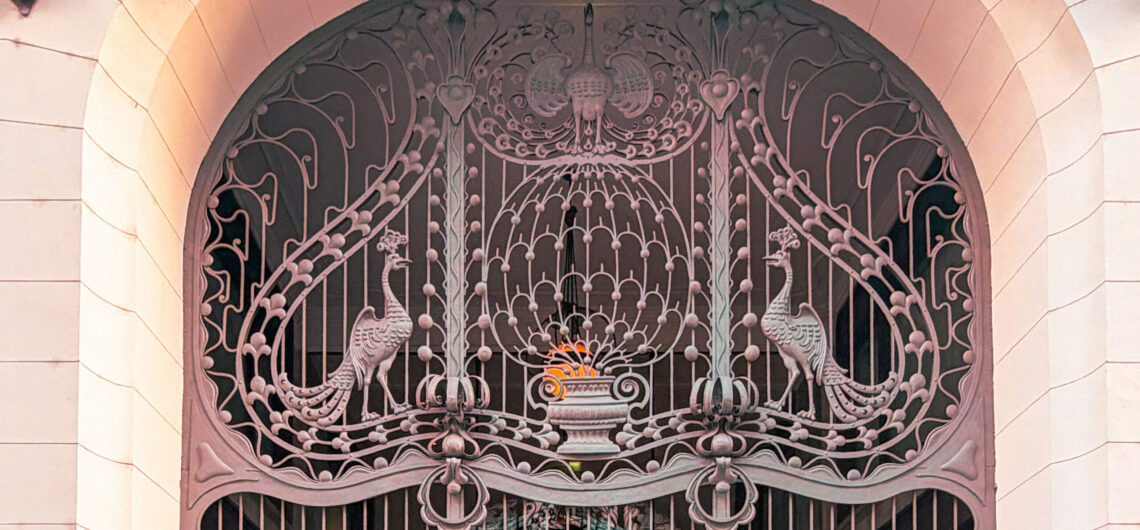
A peacock decorating an entrance gate.
A stained-glass window glowing in the afternoon light.
A wrought-iron balcony that resembles a living plant.
Once you start looking, you begin to see these details everywhere. Art Nouveau rewards curiosity. The more closely you look, the more you discover.
Many visitors walk past these treasures without ever noticing them, which makes finding them feel even more special. These are exactly the kinds of details I love pointing out on my tours, because once someone notices the first one, they usually start spotting them everywhere.
My Favourite Art Nouveau Places in Budapest
Over the years, I’ve collected a long list of favourite Art Nouveau locations in Budapest. Some are famous, while others remain hidden gems.
One of the most intimate Art Nouveau experiences in Budapest. The former home and workshop of stained-glass master Róth Miksa offers a fascinating glimpse into the craftsmanship behind many of the city’s most beautiful decorative elements.
Bedő House
One of Budapest’s most distinctive Art Nouveau buildings, with elegant floral motifs, decorative balconies and wonderfully intricate details that reward a closer look.
Párisi Udvar
Many visitors admire this spectacular building without realising how many decorative details cover its façade. Looking up reveals a fascinating combination of Art Nouveau, Gothic Revival, and Moorish influences.
Gresham Palace
Perhaps Budapest’s most famous Art Nouveau building, the former apartment palace features beautiful ironwork, mosaics, stained glass, and the famous peacock motifs that have become symbols of Hungarian Art Nouveau.
A hidden treasure for anyone interested in decorative arts. The villa offers beautifully preserved interiors and an excellent introduction to the artistic world of the period.
One of Budapest’s lesser-known Art Nouveau masterpieces. Its ongoing restoration highlights the importance of preserving these architectural treasures for future generations.
Explore Budapest Art Nouveau With Me
If these buildings and details fascinate you as much as they fascinate me, my Budapest Art Nouveau private walking tour is a wonderful way to discover them in context.
Rather than simply moving from one beautiful façade to another, we’ll look at the ideas, symbols, materials and personalities behind Hungarian Art Nouveau — and at the smaller details that are so easy to walk past without noticing.
The tour is private and fully customisable, so we can shape the route around the aspects of Art Nouveau, architecture and design that interest you most.
Budapest Rewards Curiosity
More than a century after these buildings were created, they continue to inspire visitors from around the world.
Their flowers still bloom in stone.
Their stained glass still catches the sunlight.
Their peacocks still watch over busy city streets.
And their stories are still waiting to be discovered.
If you’re planning a visit to Budapest, I encourage you to look beyond the famous landmarks and take a closer look at the details. You might be surprised by what you find.
Because in Budapest, curiosity is almost always rewarded.
Every year on the 15th of March, Hungary commemorates one of the most important moments in its history: the beginning of the Revolution of 1848. It is a day when Hungarian flags appear across Budapest, red-white-green cockades are pinned to jackets, and the city remembers the courage of those who demanded freedom. But this national holiday is not only about remembering a historical event. It is about remembering a moment when words, ideas, and determination changed the course of a nation’s history. The Day the Revolution Began The events of the 15th of March, 1848 began in Pest with a group of young intellectuals known as the March Youth. Among them was the poet Sándor Petőfi, whose passionate poem Nemzeti Dal (National Song) became the voice of the revolution. Standing before a growing crowd, Petőfi recited the poem beginning with the powerful words: "Talpra magyar, hí a haza!""Rise up, Hungarians, the homeland calls!" The poem captured the spirit of the moment. Inspired by revolutionary movements spreading across Europe in 1848, the crowd demanded political reform and national independence. Their demands were summarized in a document known as the Twelve Points, which called for: freedom of the press equality before the law a Hungarian government independent from Vienna civil rights and national sovereignty the end of feudal privileges Remarkably, the revolution in Pest began without violence. Printing presses produced copies of the Twelve Points without censorship, crowds gathered peacefully, and political prisoners were freed. For a brief moment, it seemed that a new chapter of Hungarian history had begun. The Hungarian Flag and the Cockade One of the most recognizable symbols of the revolution was the red-white-green tricolour, the Hungarian national flag. These colours had appeared earlier in Hungarian history, but during the revolution they became a powerful symbol of unity
Every year on the 15th of March, Hungary commemorates one of the most important moments in its history: the beginning of the Revolution of 1848.
It is a day when Hungarian flags appear across Budapest, red-white-green cockades are pinned to jackets, and the city remembers the courage of those who demanded freedom.
But this national holiday is not only about remembering a historical event. It is about remembering a moment when words, ideas, and determination changed the course of a nation’s history.
The Day the Revolution Began
The events of the 15th of March, 1848 began in Pest with a group of young intellectuals known as the March Youth. Among them was the poet Sándor Petőfi, whose passionate poem Nemzeti Dal (National Song) became the voice of the revolution.
Standing before a growing crowd, Petőfi recited the poem beginning with the powerful words:
“Talpra magyar, hí a haza!” “Rise up, Hungarians, the homeland calls!”
The poem captured the spirit of the moment. Inspired by revolutionary movements spreading across Europe in 1848, the crowd demanded political reform and national independence. Their demands were summarized in a document known as the Twelve Points, which called for:
freedom of the press
equality before the law
a Hungarian government independent from Vienna
civil rights and national sovereignty
the end of feudal privileges
Remarkably, the revolution in Pest began without violence. Printing presses produced copies of the Twelve Points without censorship, crowds gathered peacefully, and political prisoners were freed.
For a brief moment, it seemed that a new chapter of Hungarian history had begun.
The Hungarian Flag and the Cockade
One of the most recognizable symbols of the revolution was the red-white-green tricolour, the Hungarian national flag.
These colours had appeared earlier in Hungarian history, but during the revolution they became a powerful symbol of unity and national identity.
Even today, on March 15, many Hungarians wear a cockade made from these colours — a small circular ribbon pinned to clothing. This tradition connects modern Hungary with the revolutionaries of 1848 who wore the same symbol of patriotism.
Walking through Budapest on this day, you see flags hanging from historic buildings, bridges, and balconies across the city.
The red, white, and green colours remind people not only of the past, but also of the enduring importance of freedom. The three colours of the Hungarian flag tell a story of their own: red symbolises the blood and passion of those who fought for freedom, white represents honesty and integrity, and green reflects hope for the nation’s future.
The Revolution and Its Legacy
Although the revolution eventually led to a war with the Habsburg Empire and was ultimately suppressed in 1849, its ideals continued to shape Hungarian identity.
Many of the political and social reforms demanded in 1848 eventually became reality. More importantly, the revolution became a lasting symbol of the Hungarian desire for independence and self-determination.
Hungarian history includes several moments when people stood up for freedom.
One of the most powerful examples was the 1956 uprising against Soviet rule, another event that deeply shaped modern Budapest and the national memory.
Understanding these moments helps visitors see Budapest not only as a beautiful city, but also as a place where history was lived with extraordinary courage.
Experiencing the 15th of March in Budapest
If you happen to visit Budapest around the 15th of March, you will see a very special atmosphere in the city.
Public squares host commemorations, historic locations connected to the revolution are visited by locals, and Hungarian flags appear everywhere. The holiday is both festive and reflective — a quiet but powerful reminder of the ideals that shaped the country.
For visitors interested in the deeper layers of Hungarian history, these stories often come alive when walking through the city itself. Many of the historic streets connected to Budapest’s past — including areas like the Jewish Quarter — reveal how layers of history shaped the city we see today.
Many of the places connected to Hungary’s struggles for freedom can still be seen today — from the streets where the revolution began to the monuments remembering later events such as the 1956 uprising. Fortunately, many of these historic sites are easy to reach thanks to Budapest’s excellent public transportation system, which makes exploring the city simple for visitors.
Why This History Matters Today
One of the most moving aspects of the 15th of March is that the revolution was not only fought with weapons.
It was fought with poetry, ideas, and courage. The words spoken in the streets of Pest in 1848 continue to echo through Hungarian history, reminding people that freedom often begins with the courage to imagine a different future.
Every Hungarian flag displayed on this day carries that message forward. Whenever I walk through Budapest on the 15th of March, I can’t help wondering what the young revolutionaries of 1848 would expect from us today. Reading the Twelve Points, it is striking how timeless their message remains. The ideals of freedom, equality before the law, and responsible government still resonate deeply, reminding us that the spirit of 1848 continues to challenge and inspire every generation.
Budapest is a city where history is not only remembered — it is lived in its streets, squares, and stories. If you would like to explore these layers of history while discovering the city with a local guide, I would be delighted to show you around on one of my private tours.
March 15 Budapest 🇭🇺 Nemzeti Menet | Hungary’s National Day
Today we celebrate the Budapest 152nd birthday. On November 17, 1873, three historic towns — Buda, Pest, and Óbuda — united to form one magnificent city: Budapest. I can’t help but reflect on why this place continues to capture my heart — and the hearts of travellers from all over the world. It’s incredible to think how much history, resilience, and beauty fit into these 152 years. Budapest isn’t just Hungary’s capital — it’s a city that tells stories at every turn, from its majestic bridges to its cozy cafés. A City of Timeless Beauty If you’re looking for things to do in Budapest, you don’t have to go far. Start with the Hungarian Parliament, one of Europe’s most stunning government buildings, glowing golden at night on the banks of the Danube. Cross over the Chain Bridge, admire the Fisherman’s Bastion at sunrise, and don’t miss a ride on Tram 2, often called one of the most scenic tram routes in the world. Whether you explore Buda Castle Hill for history or Andrássy Avenue for architecture, every view tells a story. So you will explore a mix of grandeur, resilience, and unmistakable charm. Need more ideas? Let me know! Everyday Magic - Happy Birthday Beautiful Budapest! What makes Budapest truly special is how easily beauty blends into everyday life.You can enjoy a lazy morning at one of the city’s historic cafés, stroll along the Danube promenade, or simply watch the lights shimmer across the water as evening falls.Even locals (like me!) still stop to take in the view — because it never gets old. 💙 My Beautiful Budapest As a private tour guide in Budapest, I’ve had the joy of seeing visitors fall in love with the city — whether it’s their first visit or a long-awaited return. Each tour
Today we celebrate the Budapest 152nd birthday. OnNovember 17, 1873, three historic towns — Buda, Pest, and Óbuda — united to form one magnificent city: Budapest. I can’t help but reflect on why this place continues to capture my heart — and the hearts of travellers from all over the world.
It’s incredible to think how much history, resilience, and beauty fit into these 152 years. Budapest isn’t just Hungary’s capital — it’s a city that tells stories at every turn, from its majestic bridges to its cozy cafés.
A City of Timeless Beauty
If you’re looking for things to do in Budapest, you don’t have to go far. Start with the Hungarian Parliament, one of Europe’s most stunning government buildings, glowing golden at night on the banks of the Danube. Cross over the Chain Bridge, admire the Fisherman’s Bastion at sunrise, and don’t miss a ride on Tram 2, often called one of the most scenic tram routes in the world.
Whether you explore Buda Castle Hill for history or Andrássy Avenue for architecture, every view tells a story. So you will explore a mix of grandeur, resilience, and unmistakable charm. Need more ideas? Let me know!
What makes Budapest truly special is how easily beauty blends into everyday life. You can enjoy a lazy morning at one of the city’s historic cafés, stroll along the Danube promenade, or simply watch the lights shimmer across the water as evening falls. Even locals (like me!) still stop to take in the view — because it never gets old.
💙 My Beautiful Budapest
As a private tour guide in Budapest, I’ve had the joy of seeing visitors fall in love with the city — whether it’s their first visit or a long-awaited return. Each tour I lead feels like a love letter to this place: to its stories, flavours, and hidden corners that you won’t find in guidebooks.
Budapest is endlessly inspiring. It’s a city that makes you slow down, look up, and appreciate the details. Like the curve of a bridge, the scent of coffee, the sound of trams rolling by.
Here’s to the Next 152 Years – Happy Birthday Beautiful Budapest!
Budapest has lived through revolutions, rebuildings, and countless transformations. Yet, she always rises more beautiful, more vibrant, more alive. So today, I raise my glass (of Tokaji, of course!) to 152 years of history, culture, and beauty.
Happy Birthday, Beautiful Budapest — and thank you for continuing to inspire all who walk your streets. 💫
Most visitors cross it. Few know its story. The Chain Bridge isn’t just a beautiful structure connecting Buda and Pest — it’s the bridge that changed Hungary. Before it existed, winter ice and ferry delays separated the two sides of the Danube. One tragic moment turned that inconvenience into a bold vision: to build a permanent connection that would unite a city — and a nation. It all started with a funeral In 1820, Count István Széchenyi — one of Hungary’s greatest reformers — missed his father’s funeral. The ferry couldn’t cross the river due to bad weather, and there was no bridge to take him from Pest to Buda. Heartbroken and frustrated, he made a promise: Hungary would have a bridge that connected both sides year-round. That promise became the Széchenyi Chain Bridge. Building the Chain Bridge Budapest: A Marvel of Engineering When construction began in the 1830s, the Chain Bridge was one of the most ambitious civil engineering projects in Europe. It was designed by English engineer William Tierney Clark and built by Adam Clark, a Scottish engineer (and namesake of Clark Ádám tér on the Buda side). It officially opened in 1849 and became the first permanent bridge across the Danube in Hungary. Its suspension design was cutting-edge at the time — and symbolised progress, unity, and independence. Chain Bridge Budapest: The Lion Legend & Missing Tongues Four massive stone lions guard the entrances of the bridge. There’s a popular urban legend that the sculptor, János Marschalkó, forgot to carve tongues on them — and, in his shame, jumped into the Danube. The truth? The lions do have tongues. They're just not visible unless you look very closely from above. This myth has survived for generations — and it’s one of the stories I love sharing on
Most visitors cross it. Few know its story.
The Chain Bridge isn’t just a beautiful structure connecting Buda and Pest — it’s the bridge that changed Hungary. Before it existed, winter ice and ferry delays separated the two sides of the Danube. One tragic moment turned that inconvenience into a bold vision: to build a permanent connection that would unite a city — and a nation.
It all started with a funeral
In 1820, Count István Széchenyi — one of Hungary’s greatest reformers — missed his father’s funeral. The ferry couldn’t cross the river due to bad weather, and there was no bridge to take him from Pest to Buda. Heartbroken and frustrated, he made a promise: Hungary would have a bridge that connected both sides year-round. That promise became the Széchenyi Chain Bridge.
Building the Chain Bridge Budapest: A Marvel of Engineering
When construction began in the 1830s, the Chain Bridge was one of the most ambitious civil engineering projects in Europe. It was designed by English engineer William Tierney Clark and built by Adam Clark, a Scottish engineer (and namesake of Clark Ádám tér on the Buda side).
It officially opened in 1849 and became the first permanent bridge across the Danube in Hungary. Its suspension design was cutting-edge at the time — and symbolised progress, unity, and independence.
Chain Bridge Budapest: The Lion Legend & Missing Tongues
Four massive stone lions guard the entrances of the bridge. There’s a popular urban legend that the sculptor, János Marschalkó, forgot to carve tongues on them — and, in his shame, jumped into the Danube.
The truth? The lions do have tongues. They’re just not visible unless you look very closely from above.
This myth has survived for generations — and it’s one of the stories I love sharing on my tours. Budapest has a knack for hiding the truth in plain sight.
How the Chain Bridge Budapest Survived War and Reborn
In 1945, during World War II, retreating German troops destroyed the bridge along with all others in Budapest. Only the stone pillars remained. But just like the city itself, the bridge rose again. It was carefully reconstructed and reopened in 1949 — exactly 100 years after its original inauguration.
From your private tour guide
Whenever I guide a walking tour across the Chain Bridge, I pause in the middle and encourage my guests to look both ways. Behind us, Buda Castle rises like a fortress. Ahead, Parliament glows on the Pest side. This bridge isn’t just a route — it’s a symbol of resilience. Of connection. Of Budapest’s unbreakable spirit.
Local tip
Visit just before sunset to catch the golden glow on the river and buildings. And after dark, the bridge is beautifully lit — a perfect, romantic walk for couples or a quiet pause for solo travelers.
Want to explore it with me?
I include the Chain Bridge in many of my private walking tours— and always tailor the experience to your pace, interests, and curiosity. If you’d like to hear more stories like this in person, I’d love to show you the real Budapest.
I’m excited to share the videos I created recently to promote my Budapest private tours, designed to offer a deeper, more personal connection to this amazing city. Through breathtaking shots of landmarks, the videos highlight what makes Budapest an unforgettable destination. One video takes viewers on a captivating walk through Buda Castle, where I highlight not only the stunning views over the city but also the fascinating history that makes this UNESCO World Heritage site so special. Another video delves into Communist-era Budapest, offering a unique perspective on the city’s past, exploring key sites from that era and giving insights into the lives of locals during that time. I also created a video focusing on Szentendre, a charming town just outside Budapest, where visitors can experience its cobblestone streets, colourful buildings, and vibrant art scene. There is more, and there will be more in the near future :) For those looking for a more customized experience, the Budapest private tour video emphasizes the flexibility and exclusivity of a tailored itinerary, ensuring that every guest’s interests are met. Each video captures the essence of Budapest, from its stunning architecture to its rich history and culture. I’ve carefully crafted these videos to give potential travellers a taste of what they can expect, showcasing how personal and enriching these tours can be. Ultimately, my goal is to inspire travellers to explore Budapest like never before, with an intimate and tailored journey through its most iconic and hidden gems. Don't hesitate to contact me for more details!
I’m excited to share the videos I created recently to promote my Budapest private tours, designed to offer a deeper, more personal connection to this amazing city. Through breathtaking shots of landmarks, the videos highlight what makes Budapest an unforgettable destination.
One video takes viewers on a captivating walk through Buda Castle, where I highlight not only the stunning views over the city but also the fascinating history that makes this UNESCO World Heritage site so special. Another video delves into Communist-era Budapest, offering a unique perspective on the city’s past, exploring key sites from that era and giving insights into the lives of locals during that time. I also created a video focusing on Szentendre, a charming town just outside Budapest, where visitors can experience its cobblestone streets, colourful buildings, and vibrant art scene. There is more, and there will be more in the near future 🙂
For those looking for a more customized experience, the Budapest private tour video emphasizes the flexibility and exclusivity of a tailored itinerary, ensuring that every guest’s interests are met. Each video captures the essence of Budapest, from its stunning architecture to its rich history and culture. I’ve carefully crafted these videos to give potential travellers a taste of what they can expect, showcasing how personal and enriching these tours can be. Ultimately, my goal is to inspire travellers to explore Budapest like never before, with an intimate and tailored journey through its most iconic and hidden gems. Don’t hesitate to contact me for more details!
My travellers often ask me to recommend some great museums to visit during their stay in Budapest. I’ve put together a list of the museums that I like and that I think would be a great addition to your Budapest experience. I've just updated the list, so that you can have the most amazing cultural Budapest experience. A carefully selected list of Budapest museums for history, art, photography, and music lovers — recommended by a licensed local tour guide History lovers Hungarian National Museum – all about Hungarian history from the ancient times to nowadays. the most significant item on display is the coronation robe of the Hungarian kings from 1000. The interior of the museum is just magnificent. Hospital in the Rock – a museum in the cave system of the Buda Castle District that served as an underground hospital during WW2. Amazing stories from the war and a very detailed presentation. Budapest History Museum – dedicated to the history of the Buda Castle complex and Budapest. You can visit the old parts of the castle as well as the newly renovated royal halls. Memento Park – although it’s located outside the city centre, it’s worth a visit. The cemetery of the old statues of the communist era puts on display Hungarian history in the second half of the 20th century. Glass House – former Swiss consul Carl Lutz saved the life of thousands of Hungarian Jews during WW2. The museum is dedicated to his amazing work and to all people who found peace and safety in the Glass House of Budapest. Art lovers Fine Art Museum – hundreds of thousands of pieces from all the different periods of European fine arts. Plan to spend a couple of hours to see them all. National Gallery – an amazing collection
My travellers often ask me to recommend some great museums to visit during their stay in Budapest. I’ve put together a list of the museums that I like and that I think would be a great addition to your Budapest experience. I’ve just updated the list, so that you can have the most amazing cultural Budapest experience.
A carefully selected list of Budapest museums for history, art, photography, and music lovers — recommended by a licensed local tour guide
History lovers
Hungarian National Museum – all about Hungarian history from the ancient times to nowadays. the most significant item on display is the coronation robe of the Hungarian kings from 1000. The interior of the museum is just magnificent.
Hospital in the Rock – a museum in the cave system of the Buda Castle District that served as an underground hospital during WW2. Amazing stories from the war and a very detailed presentation.
Budapest History Museum – dedicated to the history of the Buda Castle complex and Budapest. You can visit the old parts of the castle as well as the newly renovated royal halls.
Memento Park– although it’s located outside the city centre, it’s worth a visit. The cemetery of the old statues of the communist era puts on display Hungarian history in the second half of the 20th century.
Glass House – former Swiss consul Carl Lutz saved the life of thousands of Hungarian Jews during WW2. The museum is dedicated to his amazing work and to all people who found peace and safety in the Glass House of Budapest.
Art lovers
Fine Art Museum – hundreds of thousands of pieces from all the different periods of European fine arts. Plan to spend a couple of hours to see them all.
National Gallery – an amazing collection of Hungarian art form the Middle Ages to nowadays. The museum is located in the Royal Palace of Buda and offers magnificent views over the city.
Ludwig Museum – the contemporary art museum started from a private collection and is expanding dynamically year by year. You can admire art from the late 1960’s to present time.
Ráth György villa – the Art Nouveau fans (myself included) will love this exhibition near the City Park. It’s the home of György Ráth, former director of the Museum of Applied Arts with very unique interiors, furniture and art from the late 19th and early 20th century.
Kiscelli Museum – showcasing the cultural history of Budapest from the 18th century to nowadays. It’s located a little further from the city centre, but it’s worth the extra time.
Photography lovers
Robert Capa Contemporary Photography Center – located in the Art Nouveau Ernst House in Nagymező utca is named after Robert Capa, the first photo journalist of the world with his war reportage on the Spanish Civil War, WWII, China, and Vietnam.
Mai Manó Ház – the Hungarian House of Photographers with temporary exhibitions showcasing the works of some of the greatest Hungarian photographers from the 21th and 21st century.
Music lovers
Liszt Museum – the little museum is located in the home of composer and piano virtuoso Franz Liszt, and actually, you’ll feel like you’re visiting him personally. Most of the items are original and belonged to Franz Liszt.
House of Hungarian Music – one of Budapest’s newest and most exciting cultural institutions, located in City Park. The museum presents Hungarian and international music history in a highly interactive way, with immersive exhibitions, listening stations, and contemporary architecture designed by Japanese architect Sou Fujimoto. Even visitors who don’t usually go to music museums find this place engaging and memorable.
Don’t forget that most of the Budapest museums are closed on Mondays, always check the opening hours before your visit! Feel free to get in touch with me for further details and more information or if you feel like that there is something else you’d like to add to this list. Many of these museums can be easily combined with a custom Budapest walking tour — don’t hesitate to get in touch if you’d like a personalised itinerary built around your interests.
If you walk along the Danube in Pest, the area around the Hungarian Parliament is filled with symbols of Hungarian identity — and one of the most striking is the equestrian statue of Count Gyula Andrássy. This sculpture is part of my ongoing Statues of Budapest series, where I introduce both famous monuments and smaller details that add meaning to the city’s streetscape. Where is the Count Gyula Andrássy statue? The statue stands at the Hungarian Parliament building, in one of the most important public spaces in Budapest. Even if you’re only passing by for photos of the Parliament, it’s worth stopping for a minute: monuments here are carefully chosen, and Andrássy’s presence tells a very specific story about Hungary’s 19th-century political turning point. Who was Count Gyula Andrássy? Count Gyula Andrássy (1823–1890) was one of Hungary’s most influential politicians and statesmen. He played a key role in the events that led to the Austro–Hungarian Compromise of 1867, a major political agreement that created the Austro–Hungarian Monarchy. For visitors, this is where a statue becomes more than decoration: it highlights a moment when Hungary’s modern political structure took shape — and why this part of Budapest is so dense with national symbolism. Why an equestrian statue? Equestrian statues traditionally represent leadership, authority, and statehood. In Budapest, this visual language matters: statues around the Parliament are designed to communicate political continuity and historical legitimacy. Whether you love history or you simply enjoy reading the city through its monuments, Andrássy’s statue is a good example of how Budapest “speaks” in stone and bronze. A quick tip for your visit When you’re photographing the Parliament, try including the statue in the foreground for a stronger composition — it adds context and scale, and immediately signals that you’re not just capturing a building, but
If you walk along the Danube in Pest, the area around the Hungarian Parliament is filled with symbols of Hungarian identity — and one of the most striking is the equestrian statue of Count Gyula Andrássy. This sculpture is part of my ongoing Statues of Budapest series, where I introduce both famous monuments and smaller details that add meaning to the city’s streetscape.
Where is the Count Gyula Andrássy statue?
The statue stands at the Hungarian Parliament building, in one of the most important public spaces in Budapest. Even if you’re only passing by for photos of the Parliament, it’s worth stopping for a minute: monuments here are carefully chosen, and Andrássy’s presence tells a very specific story about Hungary’s 19th-century political turning point.
Who was Count Gyula Andrássy?
Count Gyula Andrássy (1823–1890) was one of Hungary’s most influential politicians and statesmen. He played a key role in the events that led to the Austro–Hungarian Compromise of 1867, a major political agreement that created the Austro–Hungarian Monarchy. For visitors, this is where a statue becomes more than decoration: it highlights a moment when Hungary’s modern political structure took shape — and why this part of Budapest is so dense with national symbolism.
Why an equestrian statue?
Equestrian statues traditionally represent leadership, authority, and statehood. In Budapest, this visual language matters: statues around the Parliament are designed to communicate political continuity and historical legitimacy. Whether you love history or you simply enjoy reading the city through its monuments, Andrássy’s statue is a good example of how Budapest “speaks” in stone and bronze.
A quick tip for your visit
When you’re photographing the Parliament, try including the statue in the foreground for a stronger composition — it adds context and scale, and immediately signals that you’re not just capturing a building, but a piece of Hungarian history.
Explore more: If you enjoy noticing details like this, you might like my collection of Statues of Budapest, featuring famous monuments and hidden gems across Buda and Pest.
Equestrian statue of Count Gyula Andrássy at the Hungarian Parliament in Budapest
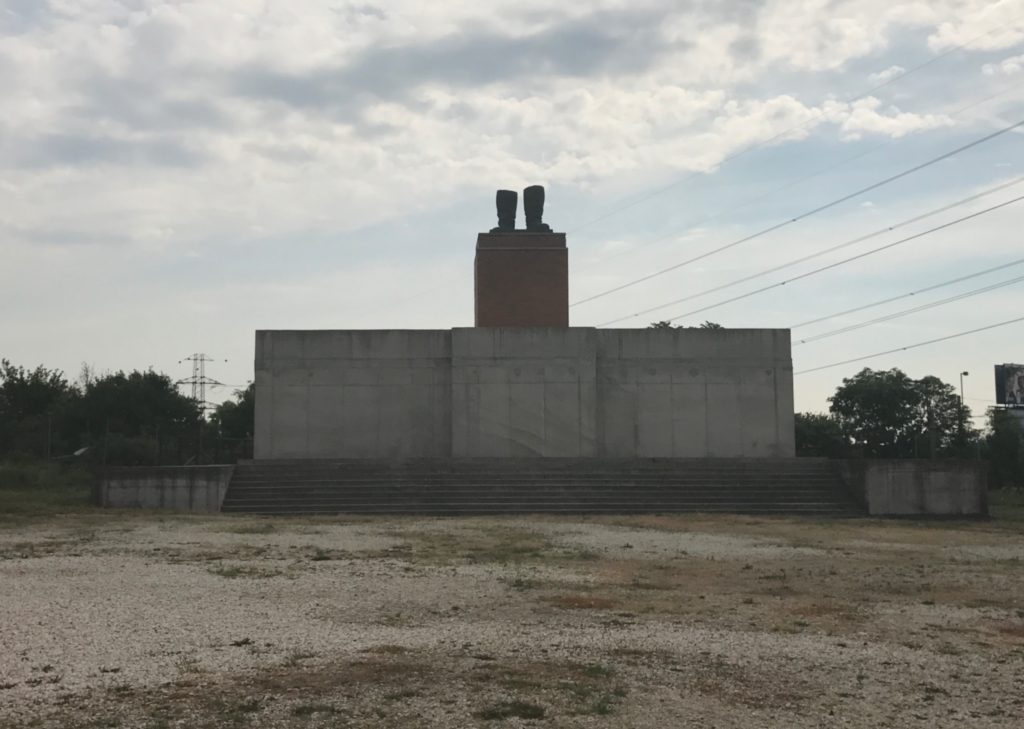
Among Budapest’s statues, few are as striking — or as symbolic — as Stalin’s Boots. What remains today is not a full monument, but a fragment, and that absence is exactly what gives it its power. This statue is part of my ongoing Statues of Budapest series, which explores how monuments reflect the city’s history, memory, and identity. The original Stalin statue In 1951, a giant statue of Joseph Stalin, approximately eight meters high, was erected in Budapest to commemorate his 70th birthday. The monument was intended as a display of loyalty and political obedience during Hungary’s communist era. Towering over its surroundings, the statue was meant to project authority and permanence. What happened in 1956? During the Hungarian Revolution of 1956, protesters tore down the Stalin statue as a powerful act of resistance. The figure itself was destroyed — but the boots remained standing. This image quickly became iconic: the ruler was gone, but the empty boots were left behind, symbolizing the collapse of imposed power and the rejection of dictatorship. Where can you see Stalin’s Boots today? A replica of Stalin’s Boots can be seen today at the entrance of Memento Park in Buda. The park is dedicated to monuments from Hungary’s socialist period, preserving them as historical documents rather than political symbols. Seeing the boots outside their original context helps visitors understand how Hungary chose to remember — rather than erase — this chapter of its past. Why Stalin’s Boots still matter Unlike traditional statues that glorify individuals, Stalin’s Boots represent absence, resistance, and memory. They tell the story of 1956 without words and remain one of Budapest’s most powerful visual reminders of the communist period. Explore more: Stalin’s Boots are part of my broader Statues of Budapest collection, featuring monuments that reveal the city’s layered and
Among Budapest’s statues, few are as striking — or as symbolic — as Stalin’s Boots. What remains today is not a full monument, but a fragment, and that absence is exactly what gives it its power.
This statue is part of my ongoing Statues of Budapest series, which explores how monuments reflect the city’s history, memory, and identity.
The original Stalin statue
In 1951, a giant statue of Joseph Stalin, approximately eight meters high, was erected in Budapest to commemorate his 70th birthday. The monument was intended as a display of loyalty and political obedience during Hungary’s communist era.
Towering over its surroundings, the statue was meant to project authority and permanence.
What happened in 1956?
During the Hungarian Revolution of 1956, protesters tore down the Stalin statue as a powerful act of resistance. The figure itself was destroyed — but the boots remained standing.
This image quickly became iconic: the ruler was gone, but the empty boots were left behind, symbolizing the collapse of imposed power and the rejection of dictatorship.
Where can you see Stalin’s Boots today?
A replica of Stalin’s Boots can be seen today at the entrance of Memento Park in Buda. The park is dedicated to monuments from Hungary’s socialist period, preserving them as historical documents rather than political symbols.
Seeing the boots outside their original context helps visitors understand how Hungary chose to remember — rather than erase — this chapter of its past.
Why Stalin’s Boots still matter
Unlike traditional statues that glorify individuals, Stalin’s Boots represent absence, resistance, and memory. They tell the story of 1956 without words and remain one of Budapest’s most powerful visual reminders of the communist period.
Explore more: Stalin’s Boots are part of my broader Statues of Budapest collection, featuring monuments that reveal the city’s layered and often complex history.
Stalin’s Boots in Budapest – A Symbol of the 1956 Revolution
One of the most impressive statues in Budapest is the King Matthias Fountain, located in the Royal Palace of the Buda Castle District. Monumental, theatrical, and rich in symbolism, it portrays King Matthias — Hungary’s great Renaissance ruler — in a moment of triumph and drama. This fountain is part of my ongoing Statues of Budapest series, which explores how monuments tell stories far beyond what first meets the eye. A king on the hunt At the centre of the composition stands King Matthias, depicted during a hunt. It is a traditional symbol of royal power, leadership, and control over nature. Surrounded by courtiers and hunting dogs, the scene feels almost cinematic, carved in stone against the walls of the palace. The statue reflects how Matthias wished to be remembered: strong, charismatic, and unquestionably king. A hidden love story Look more closely, and the fountain reveals a second narrative. At the lower level of the composition stands a young woman, often identified as Ilonka, a figure from Hungarian folklore. According to legend, she fell in love with the king without knowing his true identity. This quiet, almost melancholic detail adds emotional depth to the monument. It transforms the fountain from a celebration of power into a layered story of love. It's about longing, and human vulnerability — a reminder that even great kings were not untouched by romance. Where history and storytelling meet Set within the Buda Castle complex, the Matthias Fountain is impossible to ignore, yet many visitors miss its deeper meaning. It perfectly represents how Budapest uses public art to combine history, legend, and national identity in a single visual narrative. If you’d like to uncover more stories like this — including the legends behind the statues and the lives of the people they depict — this fountain
One of the most impressive statues in Budapest is the King Matthias Fountain, located in the Royal Palace of the Buda Castle District. Monumental, theatrical, and rich in symbolism, it portrays King Matthias — Hungary’s great Renaissance ruler — in a moment of triumph and drama.
This fountain is part of my ongoing Statues of Budapest series, which explores how monuments tell stories far beyond what first meets the eye.
A king on the hunt
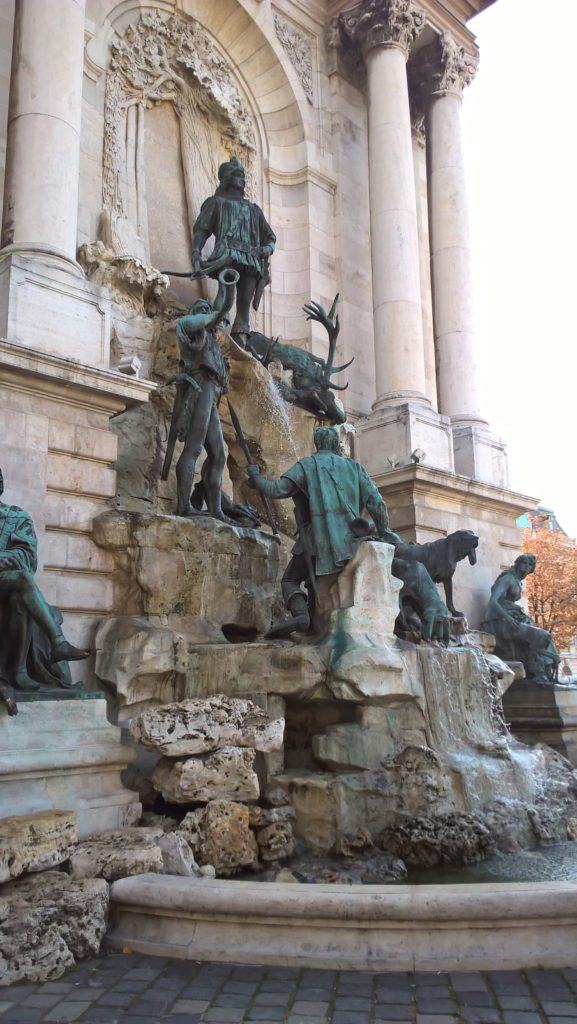
At the centre of the composition stands King Matthias, depicted during a hunt. It is a traditional symbol of royal power, leadership, and control over nature. Surrounded by courtiers and hunting dogs, the scene feels almost cinematic, carved in stone against the walls of the palace.
The statue reflects how Matthias wished to be remembered: strong, charismatic, and unquestionably king.
A hidden love story
Look more closely, and the fountain reveals a second narrative. At the lower level of the composition stands a young woman, often identified as Ilonka, a figure from Hungarian folklore. According to legend, she fell in love with the king without knowing his true identity.
This quiet, almost melancholic detail adds emotional depth to the monument. It transforms the fountain from a celebration of power into a layered story of love. It’s about longing, and human vulnerability — a reminder that even great kings were not untouched by romance.
Where history and storytelling meet
Set within the Buda Castle complex, the Matthias Fountain is impossible to ignore, yet many visitors miss its deeper meaning. It perfectly represents how Budapest uses public art to combine history, legend, and national identity in a single visual narrative.
If you’d like to uncover more stories like this — including the legends behind the statues and the lives of the people they depict — this fountain is one of the highlights I often discuss on my Buda Castle walk, where history becomes personal and alive.
Explore more: King Matthias is featured in my broader Statues of Budapest collection, showcasing the city’s most meaningful monuments and hidden details.
The Matthias Fountain depicting King Matthias at the Royal Palace in Buda Castle, Budapest