Few buildings define Budapest as instantly as Matthias Church. Rising above the Buda Castle District with its colourful tiled roof and fairy-tale silhouette, it is one of the most photographed landmarks in the Hungarian capital.

And yet, many visitors admire it from a distance without discovering what makes it truly remarkable.

Taking a closer look reveals centuries of history, architectural details often missed at first glance, and one of the most rewarding cultural experiences in Budapest.

A Church Shaped by Centuries of History

Matthias Church stands on a site where places of worship have existed since the 13th century. Over time, the building has witnessed royal ceremonies, coronations, Ottoman occupation, and major reconstructions that shaped its present appearance.

Despite its medieval origins, much of what visitors see today comes from a careful 19th-century restoration led by architect Frigyes Schulek, who created the distinctive Neo-Gothic character while preserving earlier historical elements.

This layered history is part of its charm — Matthias Church reflects the many chapters of Budapest itself rather than belonging to a single era.

Look Closer: Details Many Visitors Miss

From afar, the church almost feels unreal, but its beauty truly appears in the details.

The colourful roof, covered with decorative Zsolnay tiles, changes character depending on the light and weather throughout the day. Walking around the building reveals carved stone figures, patterned surfaces, and unexpected viewpoints that many visitors miss when remaining near the main square.

Even a slow walk around the church can feel like discovering a different monument from every angle.

Step Inside Matthias Church

While the exterior alone is impressive, stepping inside offers a completely different experience.

From the outside, Matthias Church appears bright, colourful, and almost newly restored. The interior, however, reveals an unexpected contrast — darker, more atmospheric, and deeply historic. Medieval architectural elements blend with decorative patterns influenced by the Ottoman period, reminding visitors of the many eras the building has lived through.

Standing inside, Hungarian history feels almost tangible. The richly decorated walls, painted motifs inspired by medieval designs, and filtered light from stained glass windows create a calm and contemplative atmosphere — a striking change from the lively square just outside.

Even visitors with limited time often find that a short visit inside adds depth to their understanding of Budapest’s past and cultural heritage.

Climb the Tower for One of Budapest’s Best Views

While most visitors admire Matthias Church from the square below, one of its most memorable experiences lies above the rooftops.

The tower visit offers a completely different perspective of Budapest — and remains surprisingly overlooked. Reaching the top requires climbing a series of narrow stairs, but the ascent itself becomes part of the experience. On the way up, visitors can see the church bells up close, offering a rare glimpse into the inner workings of this historic landmark.

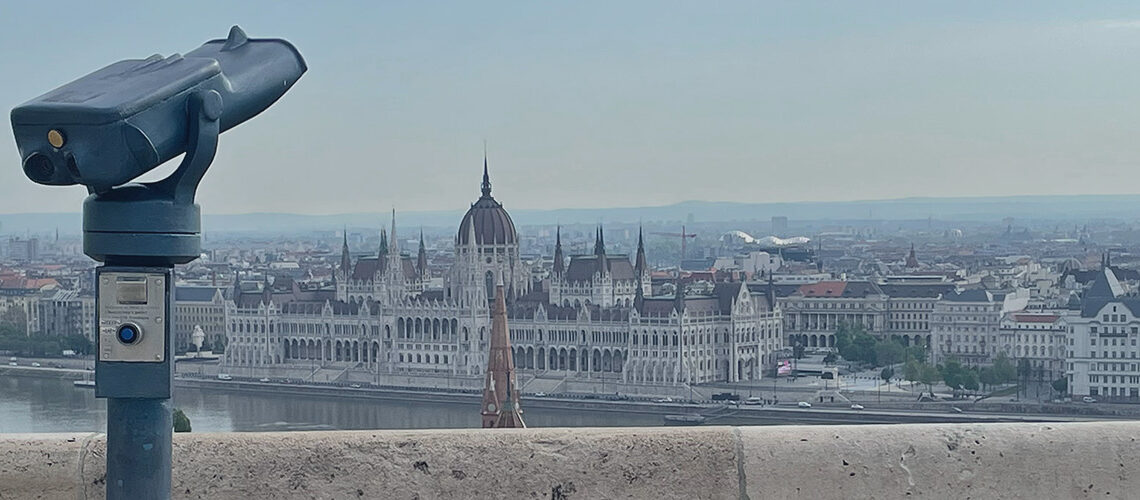
From the very top, panoramic views open over the Buda Castle District, the Danube, and the Pest side of the city, including the Hungarian Parliament. The climb also reveals one of the church’s most remarkable features from a completely new angle: the magnificent Zsolnay roof tiles, fully visible only from above, creating a true bird’s-eye view of the building’s intricate patterns and colours.

Unlike larger viewpoints, the experience feels intimate and immersive, allowing you to see Budapest from within one of its most historic monuments rather than simply looking at it from afar.

For visitors willing to take the climb, the tower provides one of the most unique viewpoints in Budapest — and often becomes an unexpected highlight of a visit to Matthias Church.

Visiting Tips for Matthias Church

If you’re planning to visit Matthias Church, a few practical tips can make the experience much more enjoyable:

  • Visit early in the morning or later in the afternoon to avoid peak crowds in the Buda Castle District.

  • Check opening hours carefully. The church interior may be closed on Saturday afternoons due to weddings, and it is closed on Sunday mornings during church services.

  • Walk around the entire building, not just the main entrance area — some of the most beautiful architectural details appear on the quieter sides.

  • Don’t miss the interior gallery. From here, you gain a stunning elevated view over the church’s richly decorated interior. The gallery also includes a small exhibition dedicated to Hungarian coronations, reflecting the church’s important role as a coronation church in the 19th and 20th centuries.
  • Climb the tower if you can. Although there are stairs to climb, the panoramic views make it truly worth the effort.

  • Combine your visit with Fisherman’s Bastion, located directly beside the church, for iconic views over the Danube and the Hungarian Parliament.

  • Comfortable shoes are recommended, as the surrounding streets are historic cobblestones.

Beyond the Postcard View

Budapest’s most famous landmarks often reveal their beauty slowly. Matthias Church is a perfect example — instantly recognisable, yet far richer when experienced with curiosity and time.

Looking beyond the postcard view transforms a quick photo stop into a meaningful moment in the Buda Castle District.

If you’re planning your first visit to the city, you can also find Matthias Church featured in my guide to Budapest’s must-see sights.

A Local Perspective

When I guide visitors through Budapest, I often encourage them to pause here a little longer. Taking time to notice the details, stepping inside the church, or climbing the tower often turns this famous landmark into a personal highlight of the visit.

Because sometimes, truly knowing a city begins with looking closer.

Matthias Church Budapest: Look Closer at This Icon

Budapest is world-famous for its grand architecture and historic cafés, but some of its most beautiful Art Nouveau treasures are much more intimate. Tucked away on a quiet street in the 7th district, the Róth Miksa Memorial House is one of those rare places that feels like a personal discovery rather than a tourist attraction.

This small museum offers a different way of experiencing Budapest: through colour, light, and craftsmanship — the very elements that define the city’s Art Nouveau heritage.

Who was Róth Miksa?

Róth Miksa was one of Hungary’s most important masters of stained glass and mosaic art at the turn of the 19th and 20th centuries. His works can still be admired across Budapest, decorating churches, public buildings, and elegant private interiors.

What makes this museum especially meaningful is that it was once his home and workshop. Visiting it feels less like walking through an exhibition and more like stepping into the personal world of an artist whose creations quietly shaped the city’s visual identity.

Many of the themes and techniques you see here reappear throughout Budapest — once you notice them, you start spotting Art Nouveau details everywhere.

What makes this museum so special?

The Róth Miksa Memorial House is small, but rich in atmosphere. Original stained glass windows fill the rooms with soft, colourful light, while mosaics and decorative details reveal the incredible level of craftsmanship behind each piece.

Unlike larger museums, this is a calm and immersive experience. You’re not rushing from room to room — instead, you’re invited to slow down and really observe. It’s one of those places where even visitors who don’t usually enjoy museums find themselves lingering.

If you’re interested in Art Nouveau architecture, design, or photography, this museum offers endless inspiration in a very compact space.

Why I recommend it as a local guide

As a Budapest-based guide, I often look for places that help visitors understand the city’s layers, not just see its highlights. This museum does exactly that.

It’s:

  • ideal on a cold, rainy, or winter day

  • perfect for travellers who appreciate beauty without crowds

  • easy to combine with a café stop or a relaxed walk

  • a wonderful introduction to Budapest’s Art Nouveau world

A visit usually takes 30–45 minutes, but what you learn here adds depth to everything you see afterwards — especially when exploring other Art Nouveau buildings around the city.

This is why stops like this naturally fit into my Art Nouveau-focused walks. That’s where details, stories, and connections bring the architecture to life.

Practical tips for visiting

  • Location: District VII, close to the city centre

  • Visit length: Around 30–45 minutes

  • Best for: Art Nouveau lovers, photographers, couples, curious travellers

  • Good to know: The museum is small and intimate with limited opening hours — part of its charm

If you enjoy discovering places that feel authentic rather than crowded, this museum is a wonderful addition to your Budapest itinerary.

Seeing Budapest through Art Nouveau details

The Róth Miksa Memorial House is proof that some of Budapest’s most memorable experiences happen behind unassuming doors. It’s quiet, refined, and deeply connected to the city’s artistic heritage.

For visitors who want more than just the main sights, exploring Budapest through its Art Nouveau details offers a completely different perspective on the city. Stained glass, mosaics, façades, and hidden interiors reveal a quieter, more refined side of Budapest.

If this way of discovering Budapest speaks to you, feel free to explore my guided walks or get in touch — I’m always happy to help you experience the city beyond the obvious.

Sometimes, the most beautiful stories in Budapest are told through glass, light, and quiet craftsmanship.

Róth Miksa Memorial House – A Hidden Art Nouveau Gem in Budapest

As a Budapest private tour guide, I spend my days sharing streets, stories, cafés, and viewpoints with visitors from all over the world. And while I’ve guided tours for years, this past season felt especially reflective. Slower. More intentional.

Every year, Budapest shows me something new — not because the city changes, but because the people walking through it do.

As the year comes to an end, I wanted to pause and share a few thoughts — not a checklist of highlights, but the moments and lessons that stayed with me, and how they’re shaping the way I’m preparing for 2026.

What Surprised Me This Year

I was reminded, again and again, that people don’t fall in love with Budapest because of facts.

They fall in love with:

  • a quiet park they didn’t expect

  • a café that felt like “their place”

  • a story that suddenly made history personal

  • the feeling of not being rushed

Some of the most meaningful moments happened far away from the famous landmarks. A slow walk in Buda. A spontaneous coffee stop. A question that turned into a long conversation.

It surprised me how often guests told me at the end of a tour:

“This felt like walking with a local friend.”

That, more than anything, stayed with me.

What I Refined as a Private Budapest Tour Guide

This year helped me clarify what kind of guiding matters most to me.

I learned that:

  • Slower is better — fewer places, deeper experiences

  • Customisation beats itineraries — every guest brings a different curiosity

  • Listening is as important as storytelling

Budapest has so many layers. You can’t rush it or reduce it to a highlights reel. The more space I leave for questions, pauses, and personal interests, the more meaningful the experience becomes — for my guests and for me.

Private guiding isn’t about efficiency.
It’s about connection.

What I’m Letting Go Of

I’m gently letting go of the idea that a “good tour” needs to include everything.

  • Not every walk needs to be packed.
  • Not every story needs to be told at once.
  • Not every moment needs an explanation.

Sometimes the city speaks for itself — and my role is simply to create the space for that to happen.

What Excites Me About 2026

Looking ahead, I’m feeling excited and inspired.

In 2026, I want to focus even more on:

  • hidden gardens, quiet streets, and local favourites

  • thoughtful walks through history, especially for returning visitors

  • helping guests feel confident, not overwhelmed, in Budapest

I’m also preparing behind the scenes to open bookings for 2026 in January, with updated details and carefully refined experiences — shaped by everything this past year has taught me.

Until Then…

Budapest is a city you can visit many times and still discover something new — and guiding here continues to teach me just as much as it teaches my guests.

If Budapest is on your list for the coming year, I’d love to share it with you — at the right pace, in your own way.

Until then, thank you for following along, reading, and walking this city with me, even from afar.

See you in Budapest — soon.

A Year as a Budapest Private Tour Guide | Looking Ahead to 2026

There are places in Budapest that I love to recommend to visitors — and then there are places I personally return to again and again. Rudas Baths is one of my weekly rituals, a sanctuary where history, wellbeing, and pure tranquillity blend into the perfect winter escape.

What I love most about Rudas Baths is its harmony of tradition and modern comfort: the quiet, atmospheric Turkish section where centuries of bathing culture surround you, and the bright, rejuvenating wellness area where you can unwind in warm thermal pools or gaze at the Danube from the rooftop jacuzzi.

As the Christmas season approaches and the city becomes a whirl of markets, lights, and celebrations, Rudas Baths becomes my favourite place to warm up and slow down — a gift I give myself every week, and one I absolutely recommend gifting to yourself too.

General Information About Rudas Baths

Rudas Baths is open every day, including holidays, from 6:00 AM to 8:00 PM. Cash desks close one hour before closing, and the pools must be vacated 20 minutes prior.

Turkish Bath Gender Days

The historic Turkish Bath section follows a traditional schedule on weekdays:

  • Men-only: Wednesday (full day) Monday, Thursday, Friday (morning hours, usually until 10:45 AM)

  • Women-only: Tuesday (full day)

  • Co-ed sessions: Every day from 11:00 AM to 8:00 PM, plus all weekend long

During the holiday period (19 Dec – 6 Jan), the Turkish Bath is co-ed all day — a great bonus if you want to visit with your partner or friends.

Christmas & New Year Opening Hours

  • December 24: 6:00 – 13:00

  • December 25–26: 10:00 – 20:00

  • December 31: 6:00 – 18:00 (plus late-night bathing 21:00 – 3:00)

  • January 1: 10:00 – 20:00

Perfect for relaxing between Christmas shopping, festive meals, and exploring Budapest’s winter lights.

The Magic of the Turkish Bath

The heart of Rudas Baths is the 16th-century Ottoman dome, one of the most atmospheric historic bath halls in Budapest. An octagonal pool sits beneath coloured glass skylights that cast soft, warm light through the steam — a scene that hasn’t changed much in centuries.

The thermal water here is rich in minerals, known for its soothing effect on muscles and joints. Whether I go early in the morning when the hall is peaceful and quiet, or in the afternoon when sunlight filters through the dome, the feeling is always the same: grounding, calming, and deeply restorative.

Wellness, Thermal Pools & Rooftop Views

Beyond the historic part, Rudas Baths has a modern wellness wing with warm pools at different temperatures, whirlpools, a large swimming pool, and a rooftop jacuzzi with panoramic Danube views.

It’s one of the best ways to experience winter in Budapest — sitting in hot water, looking out over the river and the hills while cold air swirls around you.

Saunas & Steam Rooms — The Best in Budapest

If you love sauna culture, Rudas Baths is unmatched in the city. The sauna world here is extensive, beautifully maintained, and simply one of the best in Budapest.

Finnish Saunas

High-heat, dry saunas perfect for deep relaxation and detox.

Aroma & Light Therapy Rooms

Gentler heat with calming scents or colours for mental relaxation.

Steam Rooms

These are truly outstanding — hot, thick steam with eucalyptus or herbal infusions. Ideal for clearing the mind and skin, especially in winter.

Cold Plunge Pools

A refreshing contrast after heat therapy, great for circulation.

Infrared Sauna

A soothing option that warms the body from within.

I often spend an entire hour just rotating between sauna, steam, plunge, rest, repeat — it’s the kind of ritual that makes you feel brand new. We also include the baths in the Budapest Baths tour. Let me know if you are interested in learning more about Budapest bath culture.

Tips for Visiting Rudas Baths

  • Arrive early to enjoy quieter hours.

  • Bring flip-flops and a towel — mandatory in most areas.

  • Visit the Turkish Bath at least once for the full historic experience.

  • Book ahead around Christmas week; it’s one of the most popular times of year.

Why Rudas Baths Makes the Perfect Pre-Christmas Gift

Between the festive markets, mulled wine, city lights, and the holiday rush, taking an hour or two to slow down becomes the greatest luxury. Whether you’re a visitor or a local, Rudas Baths offers the perfect balance of wellness, history, and winter warmth.

It’s the kind of gift we rarely give ourselves — and the one we appreciate the most.


Rudas Baths Budapest: The Perfect Winter Escape

Avoid the most common tourist mistakes with these local Budapest metro tips — from ticket validation to which tram has the best view.

Budapest’s metro system is not only a fast and affordable way to get around — it’s a piece of European history. But if you’re new to the city, navigating the underground can be trickier than it seems. These Budapest metro tips will help you use the system confidently, avoid fines, and even enjoy the ride like a local.

As a local tour guide and frequent metro rider, I’ve put together this quick guide to help you use the Budapest metro like a pro — no stress, no fines, and no getting lost.

One of the most important Budapest metro tips? Always Validate Your Ticket

Always validate your paper ticket before boarding — even if you’ve already purchased it. Use the small orange (or sometimes red) machines near the escalators or on the platform.

If you don’t? You could be fined on the spot by one of Budapest’s famously stealthy ticket inspectors. Fine can be as much as 60 EUR, so it really is not worth the risk.

Local tip: If you use a 24-hour, 72-hour, or weekly travel pass, you don’t need to validate it — just keep it with you.

The Escalators Are No Joke

Some metro lines — especially the red M2 and blue M3 — have long, fast-moving escalators that can surprise you. They move at high speed and descend steeply, especially in deeper stations like Kossuth Lajos tér or Nyugati pályaudvar.

Hold the handrail, stand on the right, and enjoy the ride. It’s almost like a mini rollercoaster!

Take a Ride on the Historic Yellow M1 Line

Budapest’s yellow M1 line, known as the Millennium Underground, is the first underground railway in continental Europe. It runs just under Andrássy Avenue and connects Heroes’ Square to Vörösmarty tér.

With its tiled stations, wooden interior panels, and charming old-world feel, riding the M1 is like stepping back in time.

Don’t miss: Opera Station — it’s the most photogenic stop on the line!

Skip the Metro for a Scenic Tram Ride

While the metro is efficient, sometimes you’re better off above ground — especially for sightseeing.

My favorite? Tram 2, which glides along the Danube on the Pest side and offers unforgettable views of Parliament, Buda Castle, and the Chain Bridge. It’s like a moving postcard!

Best route: Jászai Mari tér to Fővám tér
Best time: Golden hour or just after sunset

Get a Travel Pass

If you plan to use public transport more than a few times a day, a 24-hour, 72-hour, or 7-day BKK pass is a much better deal than buying single tickets.

These passes cover all metros, trams, buses, and even the suburban HÉV trains within city limits.

You can buy passes at:

Bonus Local Budapest Metro Tips

  • Download the BudapestGO app for real-time transit updates in English.

  • Metro runs approx. 4:30 AM to 12:30 PM.

  • Stand on the right side of escalators; the left is for walking.

  • No food or loud calls on metro cars — it’s considered impolite.

  • Some older stations don’t have elevators — plan ahead if you need one.

Want to Explore Budapest Like a Local?

I include these kinds of travel tips — and many more! — on my private walking tours of Budapest. Whether it’s your first time or your fifth, I’ll help you discover the city beyond the guidebooks.

Check out my custom tour options here

Save this post for your trip or share it with someone planning to visit Budapest. And if you’ve had your own metro misadventure, let me know in the comments — I’ve heard some good ones!


Most visitors cross it. Few know its story.

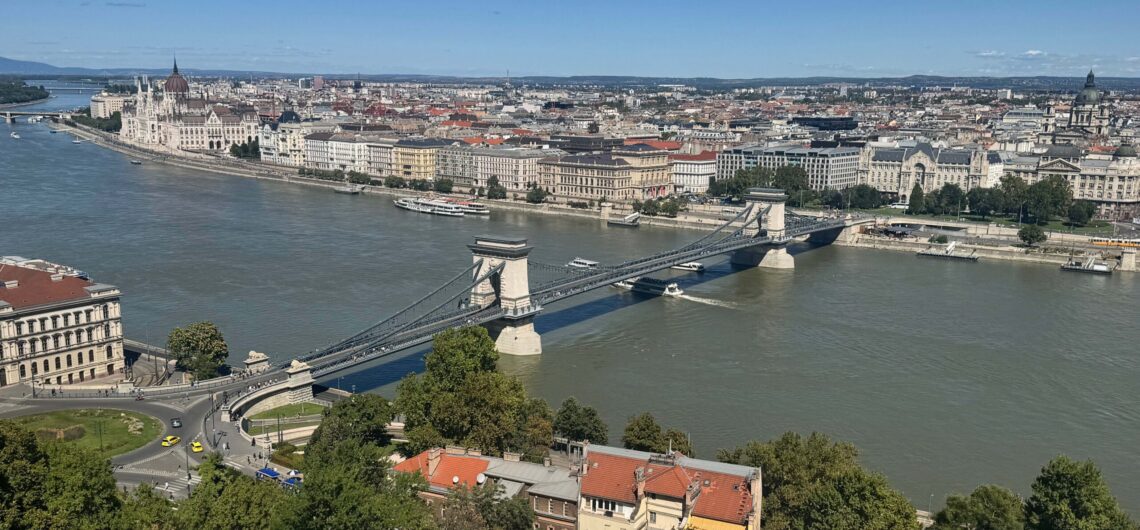
The Chain Bridge isn’t just a beautiful structure connecting Buda and Pest — it’s the bridge that changed Hungary. Before it existed, winter ice and ferry delays separated the two sides of the Danube. One tragic moment turned that inconvenience into a bold vision: to build a permanent connection that would unite a city — and a nation.

It all started with a funeral

In 1820, Count István Széchenyi — one of Hungary’s greatest reformers — missed his father’s funeral. The ferry couldn’t cross the river due to bad weather, and there was no bridge to take him from Pest to Buda. Heartbroken and frustrated, he made a promise: Hungary would have a bridge that connected both sides year-round. That promise became the Széchenyi Chain Bridge.

Building the Chain Bridge Budapest: A Marvel of Engineering

When construction began in the 1830s, the Chain Bridge was one of the most ambitious civil engineering projects in Europe. It was designed by English engineer William Tierney Clark and built by Adam Clark, a Scottish engineer (and namesake of Clark Ádám tér on the Buda side).

It officially opened in 1849 and became the first permanent bridge across the Danube in Hungary. Its suspension design was cutting-edge at the time — and symbolised progress, unity, and independence.

Chain Bridge Budapest: The Lion Legend & Missing Tongues

Four massive stone lions guard the entrances of the bridge. There’s a popular urban legend that the sculptor, János Marschalkó, forgot to carve tongues on them — and, in his shame, jumped into the Danube.

The truth? The lions do have tongues. They’re just not visible unless you look very closely from above.

This myth has survived for generations — and it’s one of the stories I love sharing on my tours. Budapest has a knack for hiding the truth in plain sight.

How the Chain Bridge Budapest Survived War and Reborn

In 1945, during World War II, retreating German troops destroyed the bridge along with all others in Budapest. Only the stone pillars remained. But just like the city itself, the bridge rose again. It was carefully reconstructed and reopened in 1949 — exactly 100 years after its original inauguration.

From your private tour guide

Whenever I guide a walking tour across the Chain Bridge, I pause in the middle and encourage my guests to look both ways. Behind us, Buda Castle rises like a fortress. Ahead, Parliament glows on the Pest side. This bridge isn’t just a route — it’s a symbol of resilience. Of connection. Of Budapest’s unbreakable spirit.

Local tip

Visit just before sunset to catch the golden glow on the river and buildings. And after dark, the bridge is beautifully lit — a perfect, romantic walk for couples or a quiet pause for solo travelers.

Want to explore it with me?

I include the Chain Bridge in many of my private walking tours — and always tailor the experience to your pace, interests, and curiosity. If you’d like to hear more stories like this in person, I’d love to show you the real Budapest.

  • Book a private tour with me here
  • Have questions? Reach out to me directly — I’m happy to help you plan the perfect Budapest experience.
  • And if you enjoyed this post, keep reading my blog for more hidden stories, local tips, and unforgettable sights in Budapest.

Welcome — I’m Julia, a licensed private tour guide born and raised in Budapest. I offer personalised private walking tours in English and French for travellers who wish to experience Budapest in a relaxed, meaningful, and authentic way. My goal is to help you discover not only the city’s most important landmarks, but also the hidden details, local stories, and everyday atmosphere that make Budapest truly special.

Whether this is your first visit or a long-awaited return, this blog is here to help you plan your stay with confidence and inspiration.

Planning Your Visit to Budapest

If you are preparing for your trip, these practical tips will help you feel comfortable from the moment you arrive.

Essential Travel Tips for Visiting Budapest
Money, transportation, safety, tipping culture, and useful local advice before your visit.

Experience Budapest Like a Local

Private guiding offers a flexible and personal way to explore Budapest — without crowds, fixed schedules, or rushing from one attraction to another.

Why Choose a Private Tour in Budapest?
Learn how personalised tours work and what makes discovering the city with a local guide such a memorable experience.

Discover Budapest Through Local Insights

Here on the blog you’ll find inspiration for your stay, including:

• hidden viewpoints and peaceful walks
• café culture and culinary discoveries
• neighbourhood stories
• transportation tips
• authentic local experiences

Browse the latest articles or explore by category to start planning your perfect Budapest visit.

Private Tours in Budapest

If you would like to explore Budapest through a personalised experience tailored entirely to your interests, I would be delighted to guide you.

Explore Private Tours & Custom Experiences

I hope to welcome you soon in beautiful Budapest.

BUDAPEST CITY TOURS BY CAR
BUDAPEST WALKING TOURS
FOOD & WINE EXPERIENCES
HUNGARY DAY TRIPS
HUNGARY DAY TRIPS
SHORE EXCURSION
SHORE EXCURSION
SPECIAL INTEREST TOURS
THE FAMILY RESEARCH
THE FAMILY RESEARCH