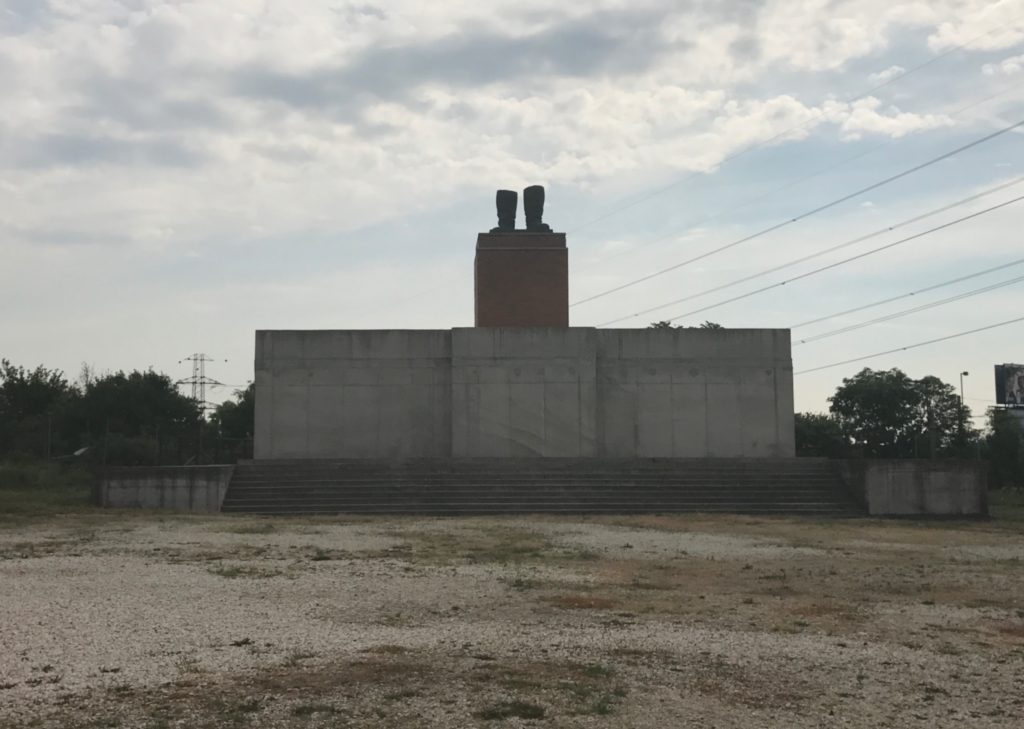
Among Budapest’s statues, few are as striking — or as symbolic — as Stalin’s Boots. What remains today is not a full monument, but a fragment, and that absence is exactly what gives it its power. This statue is part of my ongoing Statues of Budapest series, which explores how monuments reflect the city’s history, memory, and identity. The original Stalin statue In 1951, a giant statue of Joseph Stalin, approximately eight meters high, was erected in Budapest to commemorate his 70th birthday. The monument was intended as a display of loyalty and political obedience during Hungary’s communist era. Towering over its surroundings, the statue was meant to project authority and permanence. What happened in 1956? During the Hungarian Revolution of 1956, protesters tore down the Stalin statue as a powerful act of resistance. The figure itself was destroyed — but the boots remained standing. This image quickly became iconic: the ruler was gone, but the empty boots were left behind, symbolizing the collapse of imposed power and the rejection of dictatorship. Where can you see Stalin’s Boots today? A replica of Stalin’s Boots can be seen today at the entrance of Memento Park in Buda. The park is dedicated to monuments from Hungary’s socialist period, preserving them as historical documents rather than political symbols. Seeing the boots outside their original context helps visitors understand how Hungary chose to remember — rather than erase — this chapter of its past. Why Stalin’s Boots still matter Unlike traditional statues that glorify individuals, Stalin’s Boots represent absence, resistance, and memory. They tell the story of 1956 without words and remain one of Budapest’s most powerful visual reminders of the communist period. Explore more: Stalin’s Boots are part of my broader Statues of Budapest collection, featuring monuments that reveal the city’s layered and
Among Budapest’s statues, few are as striking — or as symbolic — as Stalin’s Boots. What remains today is not a full monument, but a fragment, and that absence is exactly what gives it its power.
This statue is part of my ongoing Statues of Budapest series, which explores how monuments reflect the city’s history, memory, and identity.
The original Stalin statue
In 1951, a giant statue of Joseph Stalin, approximately eight meters high, was erected in Budapest to commemorate his 70th birthday. The monument was intended as a display of loyalty and political obedience during Hungary’s communist era.
Towering over its surroundings, the statue was meant to project authority and permanence.
What happened in 1956?
During the Hungarian Revolution of 1956, protesters tore down the Stalin statue as a powerful act of resistance. The figure itself was destroyed — but the boots remained standing.
This image quickly became iconic: the ruler was gone, but the empty boots were left behind, symbolizing the collapse of imposed power and the rejection of dictatorship.
Where can you see Stalin’s Boots today?
A replica of Stalin’s Boots can be seen today at the entrance of Memento Park in Buda. The park is dedicated to monuments from Hungary’s socialist period, preserving them as historical documents rather than political symbols.
Seeing the boots outside their original context helps visitors understand how Hungary chose to remember — rather than erase — this chapter of its past.
Why Stalin’s Boots still matter
Unlike traditional statues that glorify individuals, Stalin’s Boots represent absence, resistance, and memory. They tell the story of 1956 without words and remain one of Budapest’s most powerful visual reminders of the communist period.
Explore more: Stalin’s Boots are part of my broader Statues of Budapest collection, featuring monuments that reveal the city’s layered and often complex history.
Stalin’s Boots in Budapest – A Symbol of the 1956 Revolution
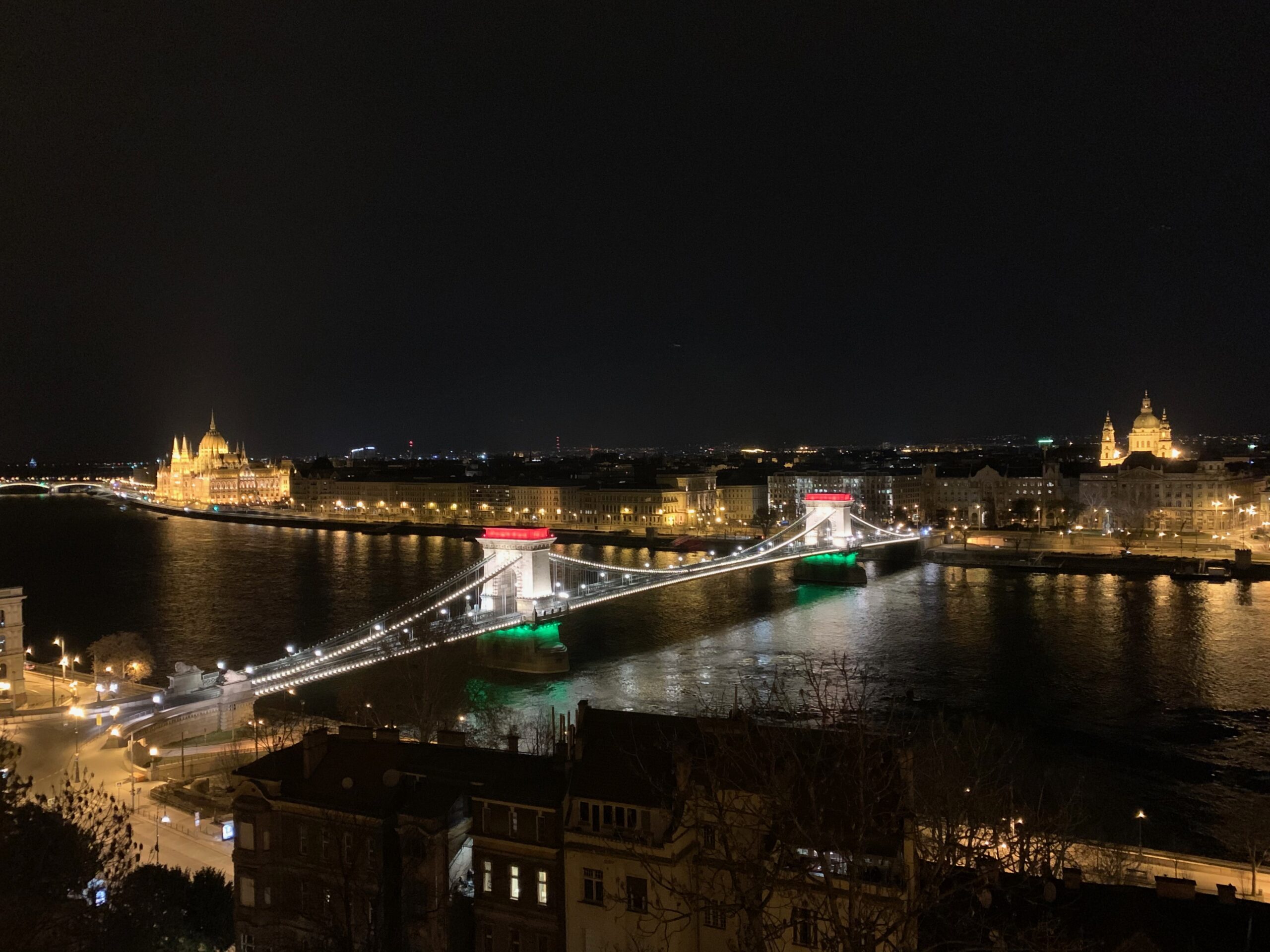
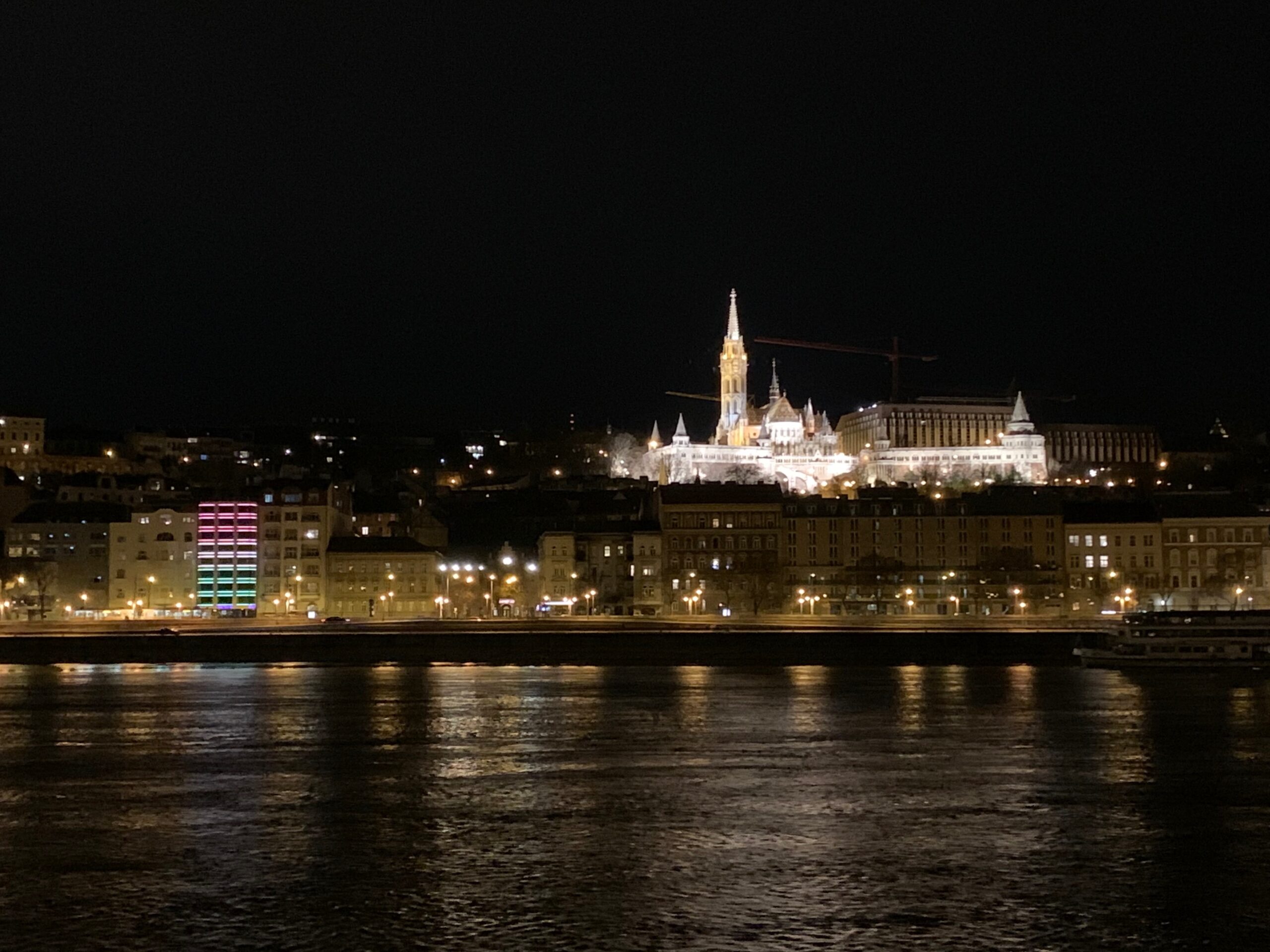
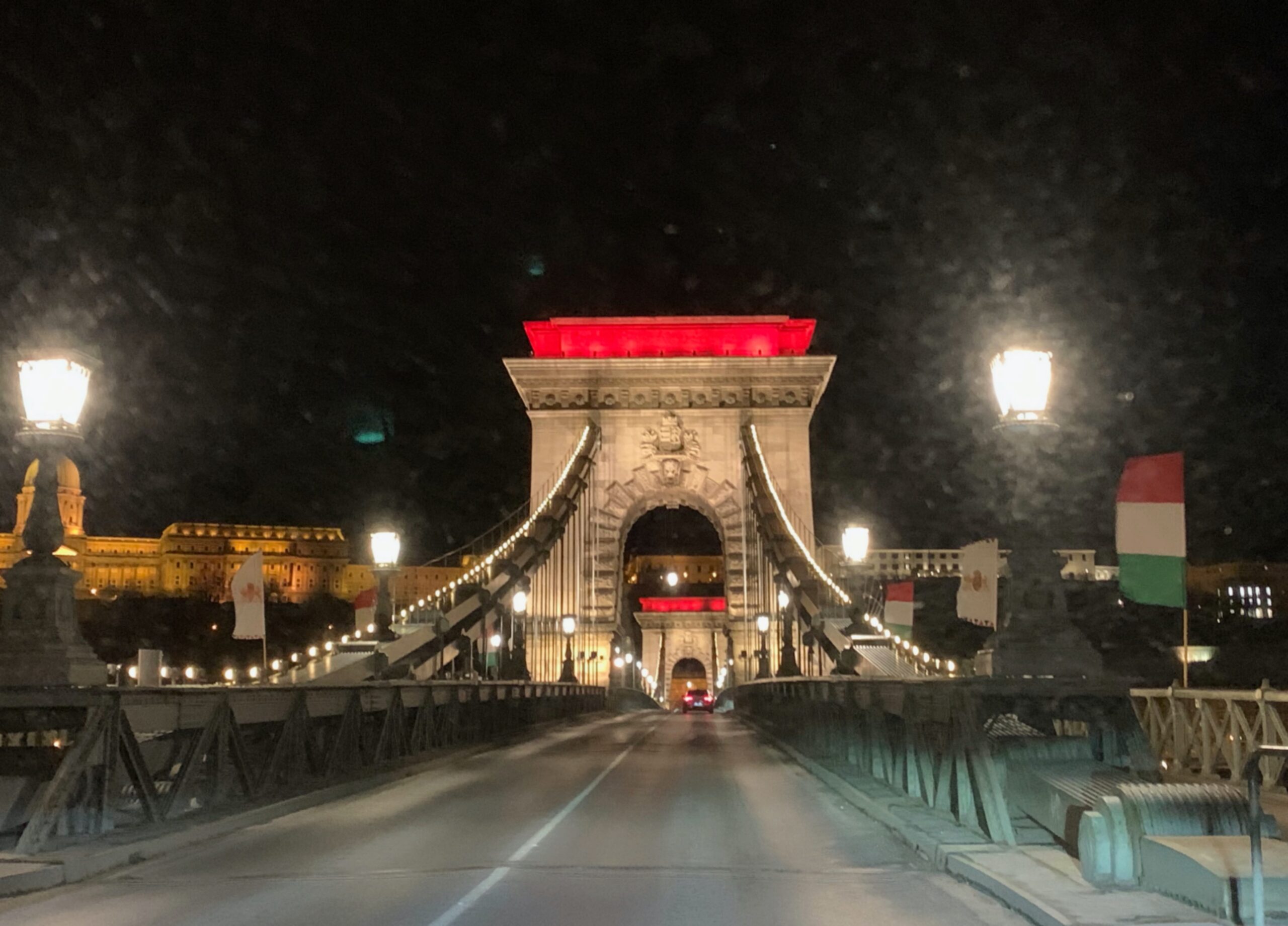
Today is a national holiday in Hungary, we celebrate the outbreak of the revolution of 1848-1849. Today we celebrate our national independence, the freedom of speech, the freedom of press and we remember the heroism and the courage of the young Hungarians who became united to confront and fight the oppressors. I hope that the spirit of the revolution lives on in the Hungarian soul and we never give up fighting for the values our ancestors had been fighting for 173 years ago.
Today is a national holiday in Hungary, we celebrate the outbreak of the revolution of 1848-1849.
Today we celebrate our national independence, the freedom of speech, the freedom of press and we remember the heroism and the courage of the young Hungarians who became united to confront and fight the oppressors.
I hope that the spirit of the revolution lives on in the Hungarian soul and we never give up fighting for the values our ancestors had been fighting for 173 years ago.
Editor and Graphic Design: Bence Kiss; Directors of Photography: Tamás Botos, Máté Kőrösi, Zsófia Szász; Colorist: Balázs Budai; Sound engineer: Péter Terner; Production assistant: Veronika Kiss; FPV drone: Cinewhoop Hungary; Translation: Anna Klaniczay
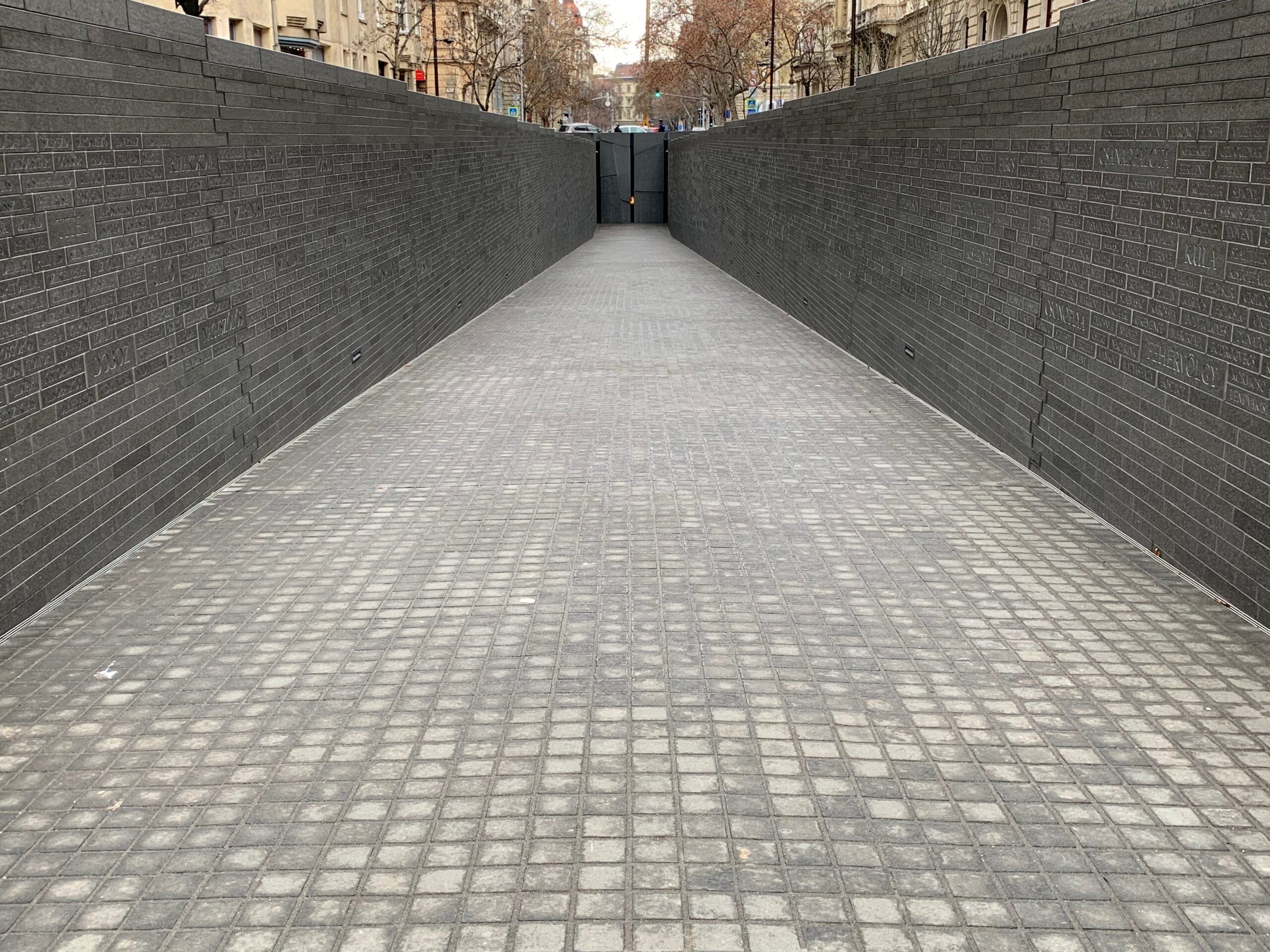
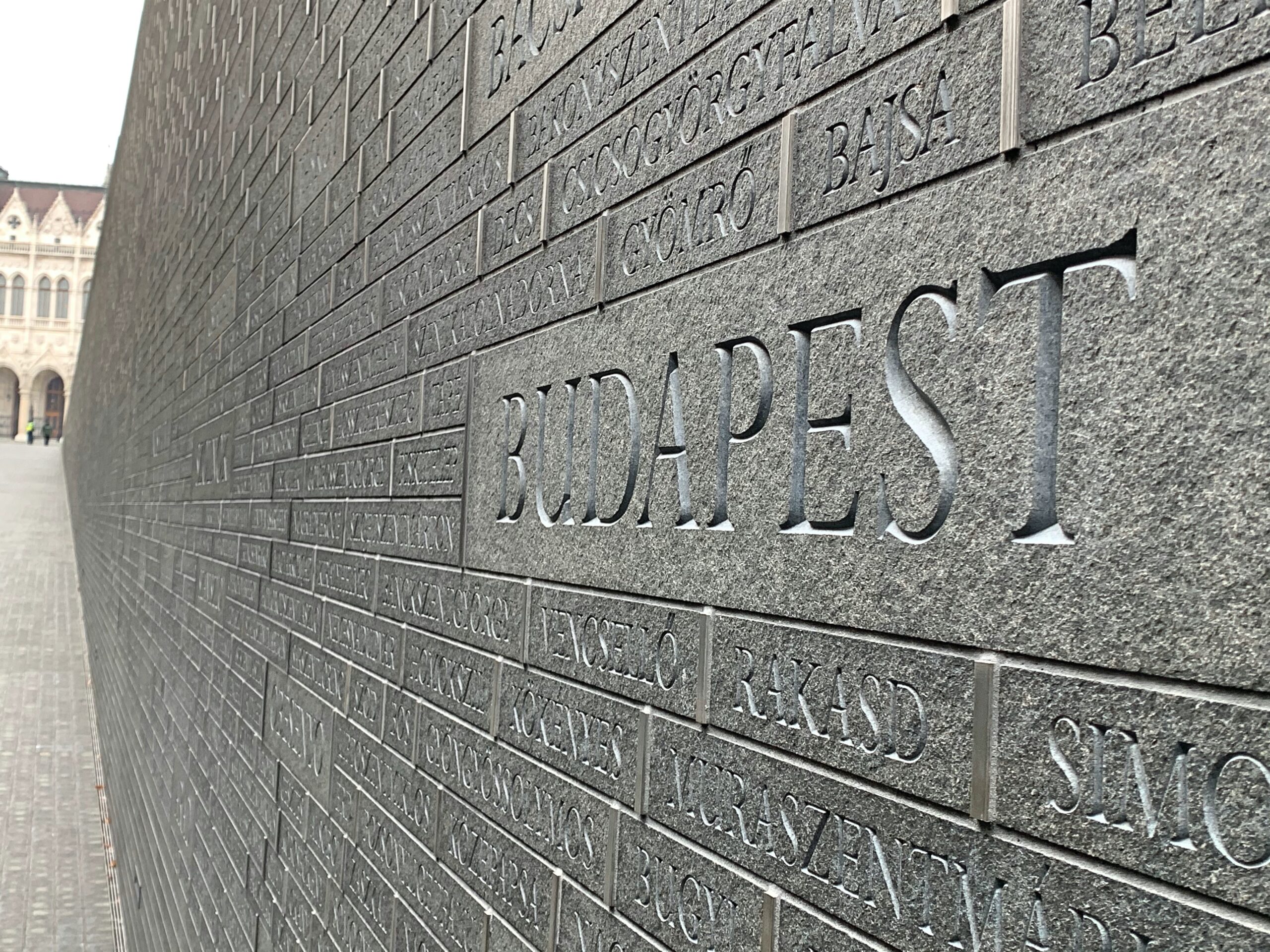
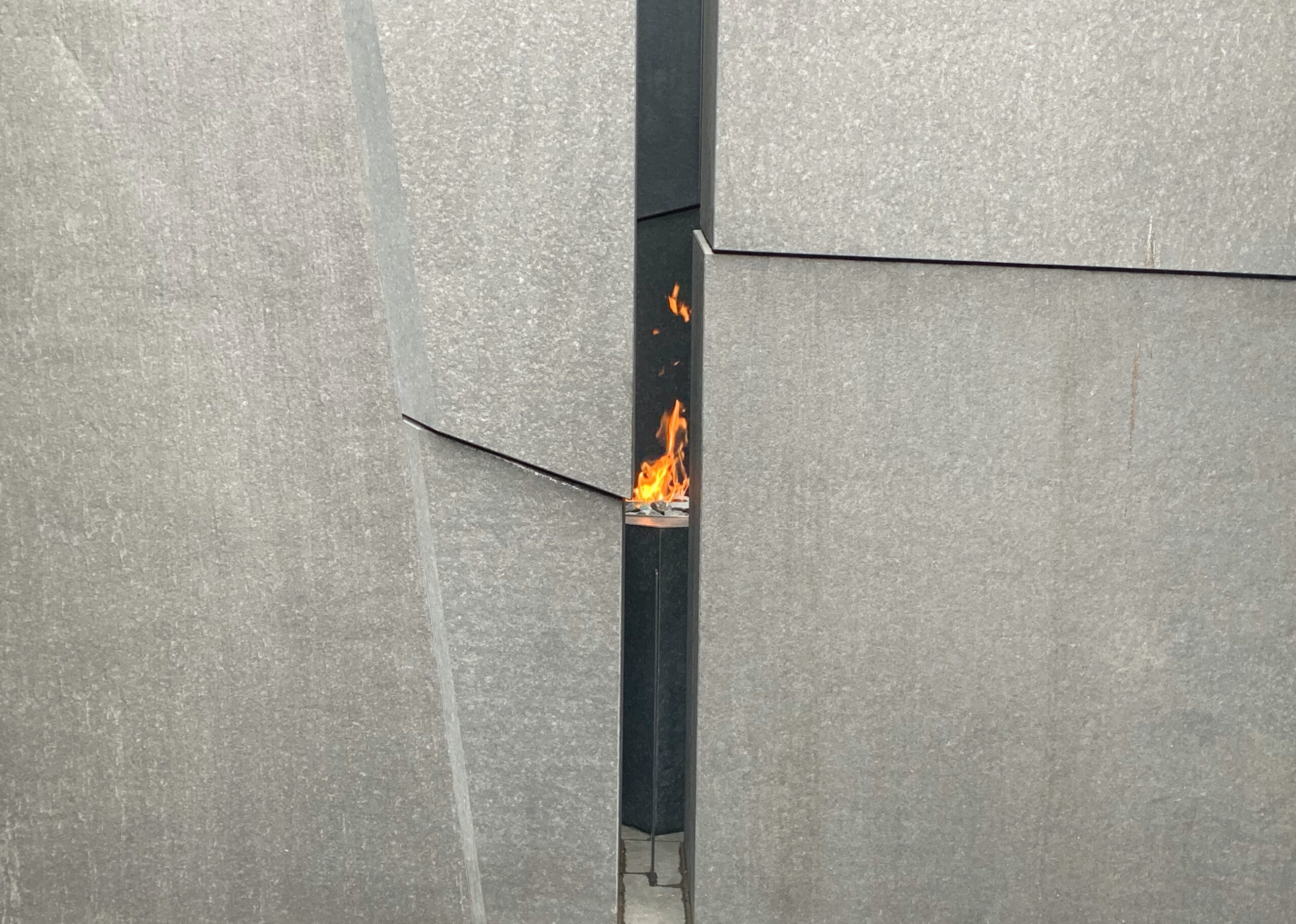
Trianon Memorial Budapest - a delicate subject I’m happy to discuss privately The Trianon Memorial of Budapest (also known as the Memorial of National Unity or Solidarity / Nemzeti Összetartozás Emlékhelye) was inaugurated in 2020 to mark the 100th anniversary of the treaty signed at the Grand Trianon Palace in Versailles on June 4, 1920. I’ve hesitated to write about it because it’s deeply personal for many—and it often comes up on my Communist Budapest private walking tours. This post shares my perspective and invites respectful conversation in a private tour setting. Quick context: What the Treaty of Trianon meant for Hungary After World War I, Hungary lost about two-thirds of its pre-war territory and a significant portion of its ethnic Hungarian population found themselves outside the new borders. From the early 1920s, Hungarian politics frequently pursued revision of the settlement—one of several factors that later aligned the country with the wrong side in World War II. Whether the treaty was “fair” is still passionately debated today; what’s clear is the enduring emotional impact. Where it is and what you’ll see You’ll find the memorial on Kossuth Lajos Square, directly across from the Hungarian Parliament. The design is dark and somber: a roughly 100-meter descending passage with the names of thousands of Hungarian towns and villages that were once part of the country, engraved into metal panels. It’s intentionally austere and heavy—a place of mourning rather than celebration. My take (with respect for all viewpoints) What I value: The comprehensive roll call of place-names makes history tangible. It’s powerful to recognize communities by name rather than abstract numbers. What I struggle with: The design ends in a dead end. As a guide and as a Hungarian, I believe our history is a continuum—we carry loss, but we also move forward.
Trianon Memorial Budapest – a delicate subject I’m happy to discuss privately
The Trianon Memorial of Budapest (also known as the Memorial of National Unity or Solidarity / Nemzeti Összetartozás Emlékhelye) was inaugurated in 2020 to mark the 100th anniversary of the treaty signed at the Grand Trianon Palace in Versailles on June 4, 1920. I’ve hesitated to write about it because it’s deeply personal for many—and it often comes up on my Communist Budapest private walking tours. This post shares my perspective and invites respectful conversation in a private tour setting.
Quick context: What the Treaty of Trianon meant for Hungary
After World War I, Hungary lost about two-thirds of its pre-war territory and a significant portion of its ethnic Hungarian population found themselves outside the new borders. From the early 1920s, Hungarian politics frequently pursued revision of the settlement—one of several factors that later aligned the country with the wrong side in World War II. Whether the treaty was “fair” is still passionately debated today; what’s clear is the enduring emotional impact.
Where it is and what you’ll see
You’ll find the memorial on Kossuth Lajos Square, directly across from the Hungarian Parliament. The design is dark and somber: a roughly 100-meter descending passage with the names of thousands of Hungarian towns and villages that were once part of the country, engraved into metal panels. It’s intentionally austere and heavy—a place of mourning rather than celebration.
My take (with respect for all viewpoints)
What I value: The comprehensive roll call of place-names makes history tangible. It’s powerful to recognize communities by name rather than abstract numbers.
What I struggle with: The design ends in a dead end. As a guide and as a Hungarian, I believe our history is a continuum—we carry loss, but we also move forward. I miss a visual cue of continuity or hope. Our story did not end in 1920.
I share this not to settle the debate, but to explain why the memorial can feel emotionally closed to some visitors while profoundly validating to others.
Practical visiting tips
Location: Kossuth Lajos tér (M2 metro: Kossuth Lajos tér)
Cost: Free, open air
When to go: Early morning or at dusk for quieter reflection and softer light
Accessibility: The passage is gently sloped but still below street level; take care in wet weather
Want to unpack this topic with context and care?
This subject is complex and sensitive. On my private Communist Budapest walking tour, we create space for thoughtful questions about Trianon, interwar politics, memory culture, and how these narratives shaped the communist period and everyday life. If you’d like a respectful, nuanced discussion tailored to your interests, I’m happy to guide it.
Book a private tour
Send me your preferred date and interests, and I’ll suggest an itinerary starting from Kossuth Lajos Square or your hotel.
FAQs
Is the Trianon Memorial political? It’s a site of memory, and like many memorials, it’s read through different political and personal lenses. That’s part of why it’s controversial.
Why “Trianon” if it happened in Versailles? The treaty defining Hungary’s new borders was signed in the Grand Trianon Palace, part of the Versailles complex—hence “Treaty of Trianon.”
Is it suitable for children? Yes, with context. The design and subject matter are somber; older children often engage well with the historical discussion.
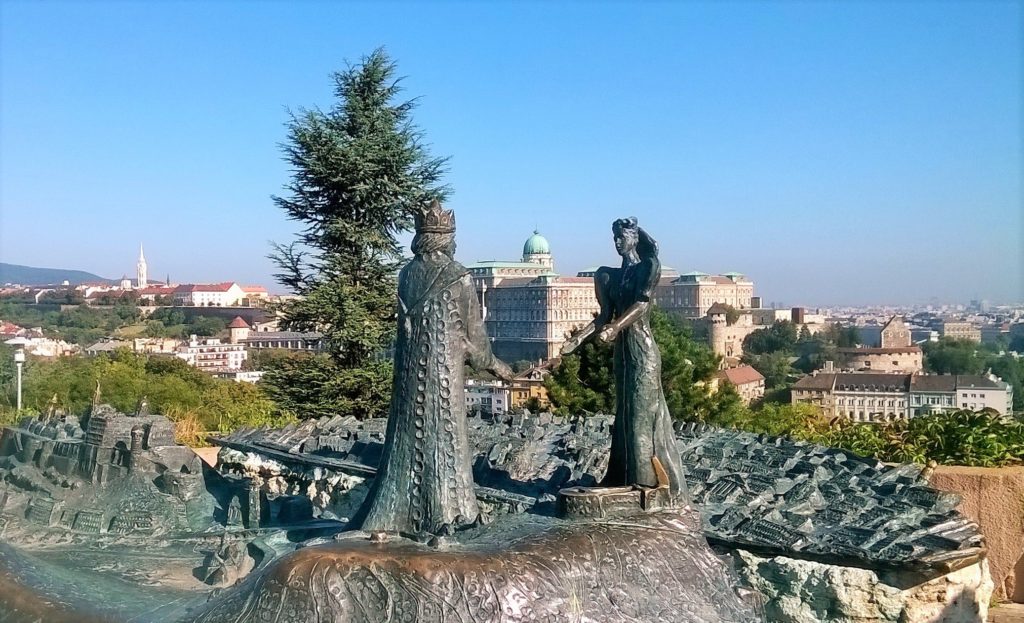
High above the Danube, on Gellért Hill, stands one of Budapest’s most poetic and quietly emotional statues: Prince Buda and Princess Pest. Unlike grand monuments celebrating power or victory, this sculpture tells a story of distance, longing, and separation. This statue is part of my ongoing Statues of Budapest series, which explores how the city expresses its history and identity through symbolism rather than spectacle. A love divided by the river Prince Buda and Princess Pest represent the two historic halves of the city, once separated by the Danube River. In the statue, they face each other — close enough to see one another, yet permanently apart. The story is often interpreted as a sad love tale, but it also reflects Budapest’s geography and history: two cities growing side by side, divided by water until their unification in the 19th century. Where can you find the statue? The sculpture is located on Gellért Hill, near the Garden of Philosophy, a peaceful and contemplative area overlooking the city. The setting adds to the statue’s emotional tone — quiet, reflective, and slightly removed from the bustle below. Many visitors walk past without realizing the meaning behind the figures, yet once you know the story, it’s difficult to see them as anything other than symbols of the city itself. Why this statue matters Prince Buda and Princess Pest are not historical figures, but they express something deeply real: Budapest’s identity as a city shaped by division, connection, and eventual unity. It’s a reminder that some of the city’s most meaningful statues are not the most famous ones — but those that quietly echo its soul. Explore more: This statue is part of my Statues of Budapest collection, featuring famous monuments and hidden gems across Buda and Pest.
High above the Danube, on Gellért Hill, stands one of Budapest’s most poetic and quietly emotional statues: Prince Buda and Princess Pest. Unlike grand monuments celebrating power or victory, this sculpture tells a story of distance, longing, and separation.
This statue is part of my ongoing Statues of Budapest series, which explores how the city expresses its history and identity through symbolism rather than spectacle.
A love divided by the river
Prince Buda and Princess Pest represent the two historic halves of the city, once separated by the Danube River. In the statue, they face each other — close enough to see one another, yet permanently apart.
The story is often interpreted as a sad love tale, but it also reflects Budapest’s geography and history: two cities growing side by side, divided by water until their unification in the 19th century.
Where can you find the statue?
The sculpture is located on Gellért Hill, near the Garden of Philosophy, a peaceful and contemplative area overlooking the city. The setting adds to the statue’s emotional tone — quiet, reflective, and slightly removed from the bustle below.
Many visitors walk past without realizing the meaning behind the figures, yet once you know the story, it’s difficult to see them as anything other than symbols of the city itself.
Why this statue matters
Prince Buda and Princess Pest are not historical figures, but they express something deeply real: Budapest’s identity as a city shaped by division, connection, and eventual unity.
It’s a reminder that some of the city’s most meaningful statues are not the most famous ones — but those that quietly echo its soul.
Explore more: This statue is part of my Statues of Budapest collection, featuring famous monuments and hidden gems across Buda and Pest.
Prince Buda and Princess Pest statue on Gellért Hill overlooking the Danube in Budapest
On the very last day of the year after the very last virtual tour of the year I’m wishing you a very happy new year from my Beautiful Budapest. I hope all your dreams come true in 2021! #budapest #beautifulbudapest#tourguide #travelguide #virtualtour#happynewyear #BUEK#boldogujevet #2021
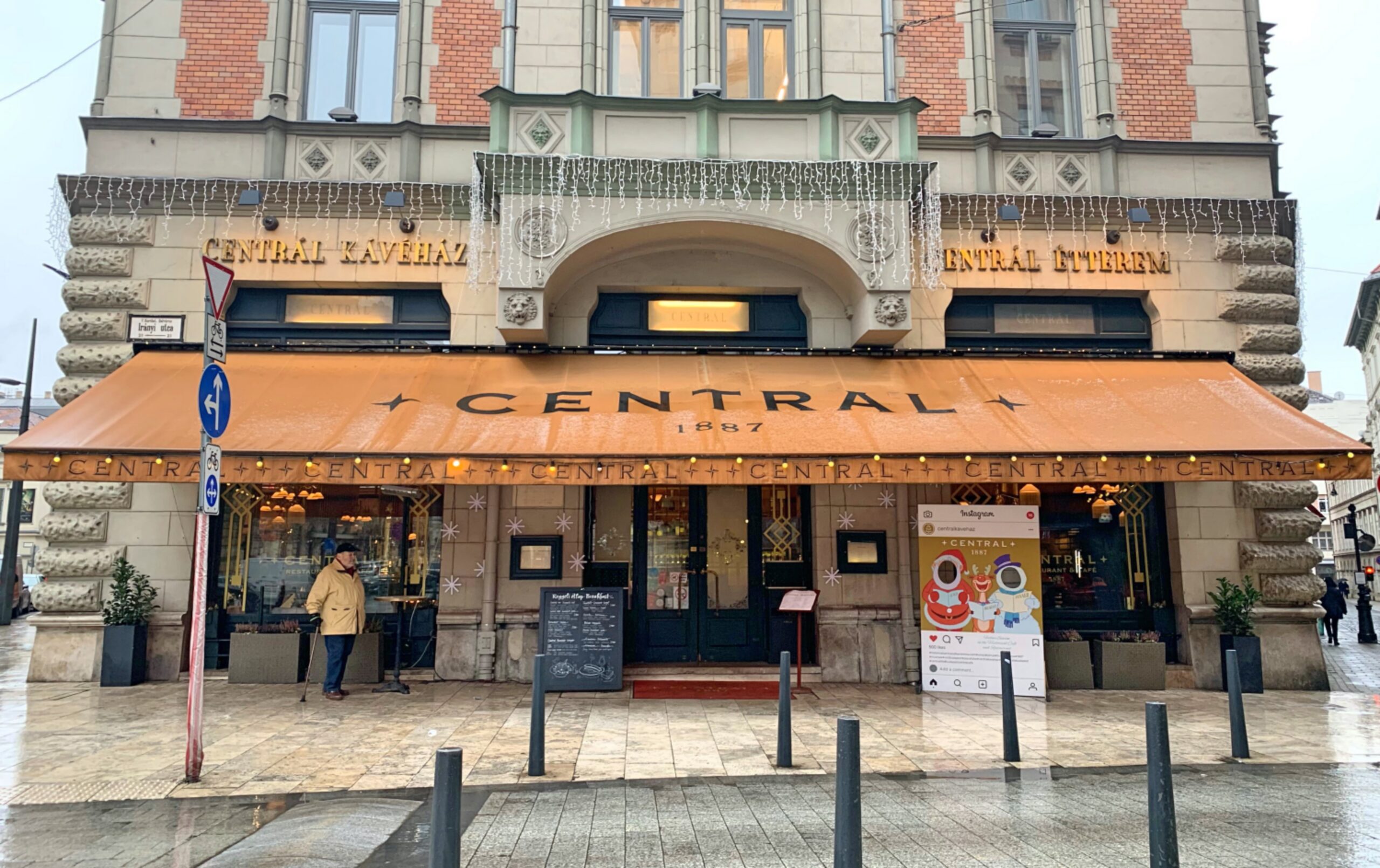
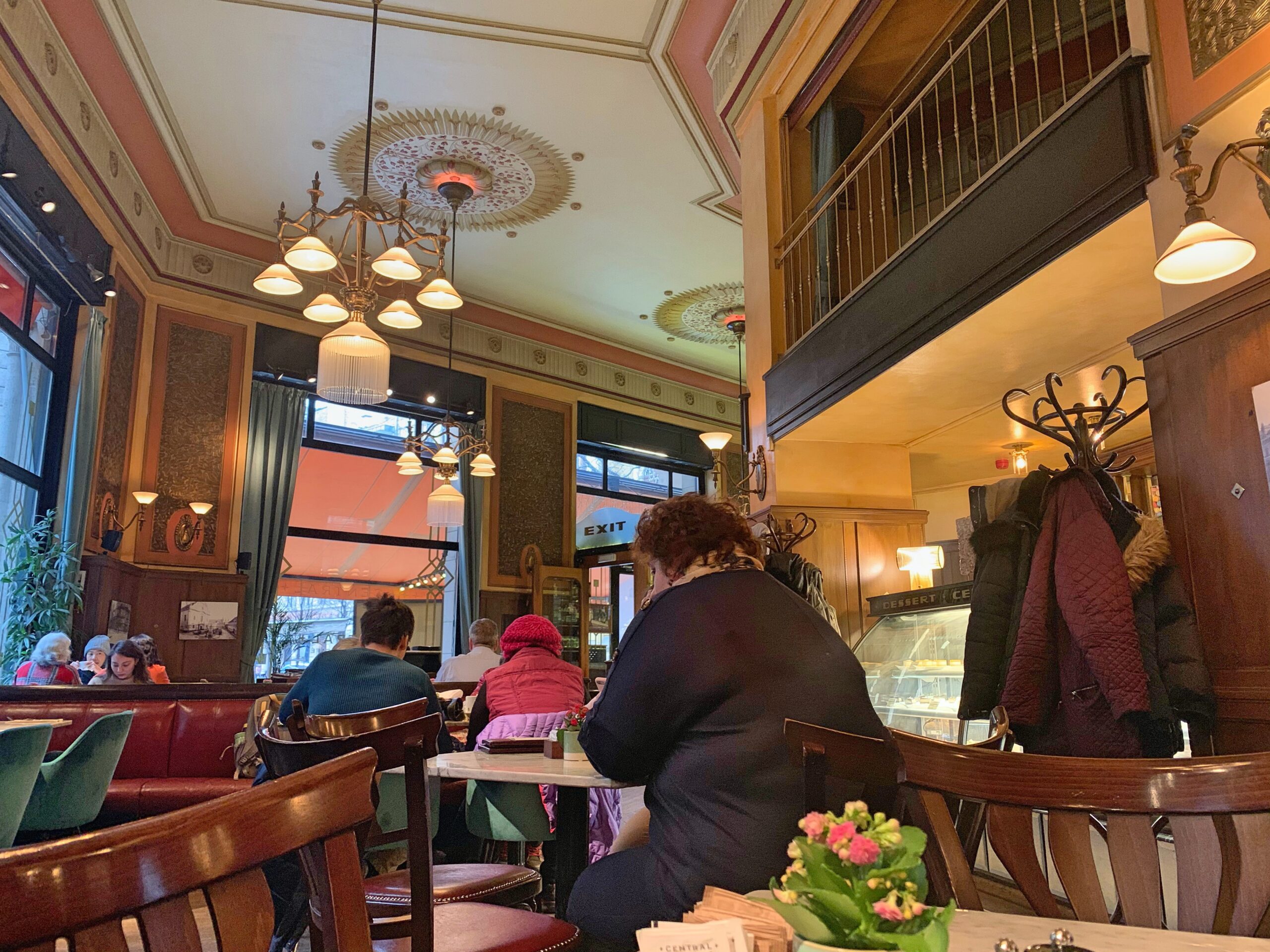
The golden age of Budapest’s famous coffeehouses was at the end of the 19th and the beginning of the 20th century. Today, we are once again experiencing a true renaissance of coffeehouse culture — and Budapest remains a wonderful city for anyone who enjoys coffee, cake, and history. Hungarians have always loved their coffee, and visitors quickly discover that cafés here are much more than simple places to drink an espresso. I wrote more about this deep-rooted tradition in my main key article, We Love Our Coffee – And Our Coffeehouses, Too, where I explore why coffeehouses have played such an important role in Budapest life for generations. On my Budapest Foodie Tour, we always try to include different cafés, so travelers can taste excellent Hungarian coffee and cakes while learning about the fascinating stories behind these historic places. Central Café Budapest Central Café is located in the heart of downtown Pest, close to the Elizabeth Bridge, and was once considered the coffeehouse of writers and journalists. At the turn of the 19th and 20th centuries, the surrounding neighbourhood was filled with newspaper offices and editorial rooms, making Central a natural meeting point for intellectuals. Writers spent long days — and often nights — in the café, writing articles, debating politics and economics, and exchanging the latest gossip. One of the most famous local legends tells the story of a writer who treated Central as his second home, keeping personal belongings there, including a bathrobe and his medicine. Today, Central Café remains one of the best historic cafés in Budapest for those interested in literary history and classic coffeehouse atmosphere. When you visit, there is one thing you absolutely should not miss: Rákóczi Túrós, a traditional Hungarian cake made with cottage cheese and topped with a light meringue. It pairs
The golden age of Budapest’s famous coffeehouses was at the end of the 19th and the beginning of the 20th century. Today, we are once again experiencing a true renaissance of coffeehouse culture — and Budapest remains a wonderful city for anyone who enjoys coffee, cake, and history.
Hungarians have always loved their coffee, and visitors quickly discover that cafés here are much more than simple places to drink an espresso. I wrote more about this deep-rooted tradition in my main key article, We Love Our Coffee – And Our Coffeehouses, Too, where I explore why coffeehouses have played such an important role in Budapest life for generations.
On my Budapest Foodie Tour, we always try to include different cafés, so travelers can taste excellent Hungarian coffee and cakes while learning about the fascinating stories behind these historic places.
Central Café Budapest
Central Café is located in the heart of downtown Pest, close to the Elizabeth Bridge, and was once considered the coffeehouse of writers and journalists. At the turn of the 19th and 20th centuries, the surrounding neighbourhood was filled with newspaper offices and editorial rooms, making Central a natural meeting point for intellectuals.
Writers spent long days — and often nights — in the café, writing articles, debating politics and economics, and exchanging the latest gossip. One of the most famous local legends tells the story of a writer who treated Central as his second home, keeping personal belongings there, including a bathrobe and his medicine.
Today, Central Café remains one of the best historic cafés in Budapest for those interested in literary history and classic coffeehouse atmosphere. When you visit, there is one thing you absolutely should not miss: Rákóczi Túrós, a traditional Hungarian cake made with cottage cheese and topped with a light meringue. It pairs beautifully with an espresso or cappuccino and is always one of my favourite recommendations on foodie tours.
Exploring Budapest Cafés on a Food Tour
If you would like to experience Central Café — along with other historic coffeehouses — in a wider context, you might enjoy joining one of my Budapest Foodie Tours, where coffee, cakes, and local stories come together in a relaxed and authentic way.
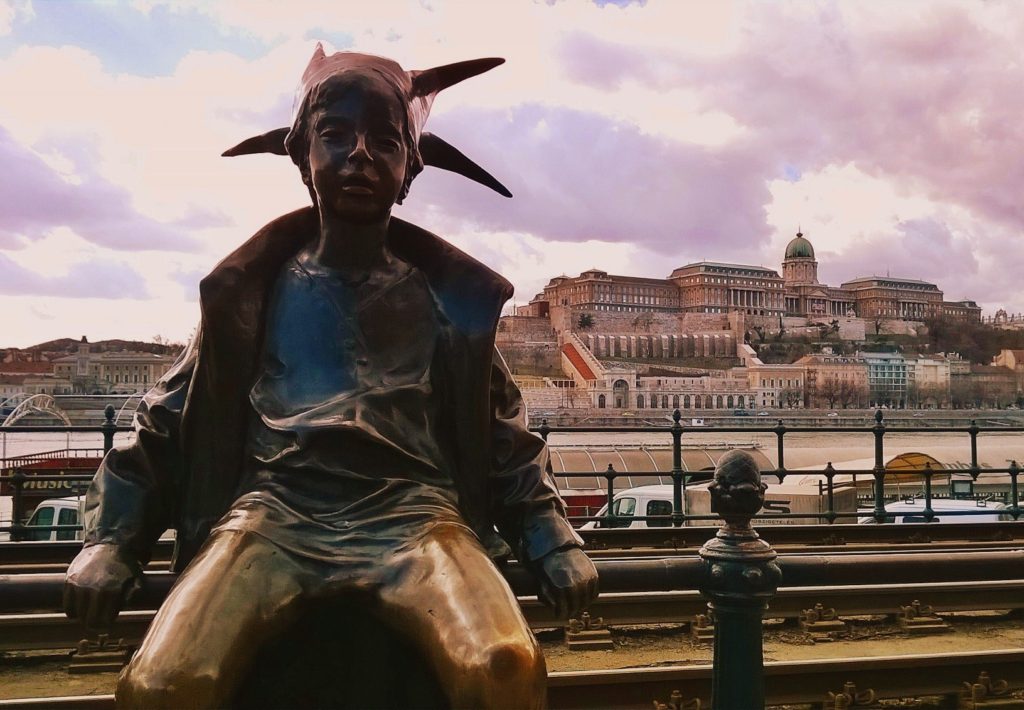
Another statue with a quiet kind of magic, the Little Princess is one of Budapest’s most beloved and photographed sculptures. Perched gracefully on the railings of the Danube Promenade, she watches the river flow past with a dreamy, childlike calm. Created in 1989 by Hungarian sculptor László Marton, the bronze figure depicts a young girl wearing a playful paper crown and a simple robe. The statue was inspired by the artist’s own daughter, captured in a moment of childhood imagination as she played dress-up at home. With her knees bent and her expression lost somewhere between curiosity and wonder, the Little Princess feels both intimate and universal — a small figure with an outsized emotional presence. A small statue with a powerful setting Despite her modest size, the Little Princess sits in one of Budapest’s most iconic locations. Behind her rise the Danube, Buda Castle, and the city’s elegant skyline, creating a contrast that makes her feel even more special. People passing along the promenade often stop instinctively — to take a photo, to sit beside her, or simply to pause for a moment. She has a way of slowing the city down. A local tradition: make a wish According to local tradition, rubbing the Little Princess’s knees brings good luck. Those who believe in her magic say the key is to make a wish with a truly childlike heart. Whether you believe in wishes or not, the ritual itself is part of the statue’s charm — a small act of hope in the middle of a busy city. Why the Little Princess matters The Little Princess is more than a photo opportunity. She’s a gentle reminder of imagination, innocence, and the importance of holding on to wonder, even as we grow older. Among Budapest’s grand monuments and historic statues,
Another statue with a quiet kind of magic, the Little Princess is one of Budapest’s most beloved and photographed sculptures. Perched gracefully on the railings of the Danube Promenade, she watches the river flow past with a dreamy, childlike calm.
Created in 1989 by Hungarian sculptor László Marton, the bronze figure depicts a young girl wearing a playful paper crown and a simple robe. The statue was inspired by the artist’s own daughter, captured in a moment of childhood imagination as she played dress-up at home.
With her knees bent and her expression lost somewhere between curiosity and wonder, the Little Princess feels both intimate and universal — a small figure with an outsized emotional presence.
A small statue with a powerful setting
Despite her modest size, the Little Princess sits in one of Budapest’s most iconic locations. Behind her rise the Danube, Buda Castle, and the city’s elegant skyline, creating a contrast that makes her feel even more special.
People passing along the promenade often stop instinctively — to take a photo, to sit beside her, or simply to pause for a moment. She has a way of slowing the city down.
A local tradition: make a wish
According to local tradition, rubbing the Little Princess’s knees brings good luck. Those who believe in her magic say the key is to make a wish with a truly childlike heart.
Whether you believe in wishes or not, the ritual itself is part of the statue’s charm — a small act of hope in the middle of a busy city.
Why the Little Princess matters
The Little Princess is more than a photo opportunity. She’s a gentle reminder of imagination, innocence, and the importance of holding on to wonder, even as we grow older.
Among Budapest’s grand monuments and historic statues, she offers something rare: a quiet, heartfelt moment for anyone who chooses to notice her.
You’ll find the Little Princess near the Danube, close to the Marriott Hotel, sitting patiently on the railing — ready to listen.
Explore more: The Little Princess is part of my ongoing Statues of Budapest series, featuring both famous monuments and easily missed gems across the city.
The Little Princess statue sitting on the railing of the Danube Promenade in Budapest
In the early 20th century fuel and lighting gas used in Hungary was manufactured from coal and because of the increasing consumption there was a need for modern, high capacity gas plants. The location of the gas plants was crucial, as they needed road, rail and waterway connection. The Óbuda Gas Works was inaugurated in 1914, it was the most advanced gas factory of the country producing 250 thousand cubic meters of gas every day. In the 1970's natural gas became more accessible and cheaper and Budapest switched to natural gas. The Óbuda gas works was decommissioned in 1984. The factory with its great colours and shapes might remind you of an abandoned castle with its four towers, they originally housed the turbines, control rooms and water towers. What I personally love about the place is that because of the generosity of the original owners of the factory, residential buildings had also been built for the employees, so that they could live close to their workplace. Two locations were created, a villa neighbourhood for managers and a more simple housing estate for the workers. Walking around the early 20th century buildings is like a real time travel.
In the early 20th century fuel and lighting gas used in Hungary was manufactured from coal and because of the increasing consumption there was a need for modern, high capacity gas plants. The location of the gas plants was crucial, as they needed road, rail and waterway connection. The Óbuda Gas Works was inaugurated in 1914, it was the most advanced gas factory of the country producing 250 thousand cubic meters of gas every day. In the 1970’s natural gas became more accessible and cheaper and Budapest switched to natural gas. The Óbuda gas works was decommissioned in 1984.
The factory with its great colours and shapes might remind you of an abandoned castle with its four towers, they originally housed the turbines, control rooms and water towers.
What I personally love about the place is that because of the generosity of the original owners of the factory, residential buildings had also been built for the employees, so that they could live close to their workplace. Two locations were created, a villa neighbourhood for managers and a more simple housing estate for the workers. Walking around the early 20th century buildings is like a real time travel.