The golden age of Budapest’s famous coffeehouses was at the end of the 19th and the beginning of the 20th century. Today, we are witnessing a true renaissance of coffeehouse culture — and Budapest remains one of Europe’s most exciting cities for coffee and cake lovers.
Hungarians love their coffee, and visitors quickly fall in love with our historic cafés too. I wrote more about this passion in my main article, We Love Our Coffee – And Our Coffeehouses, Too, where I explore why cafés have always played such an important role in Budapest life.
On my Budapest Foodie Tour, we always try to visit different coffeehouses, giving travelers the chance to taste excellent Hungarian coffee and traditional cakes while learning about the stories behind these beautiful places.
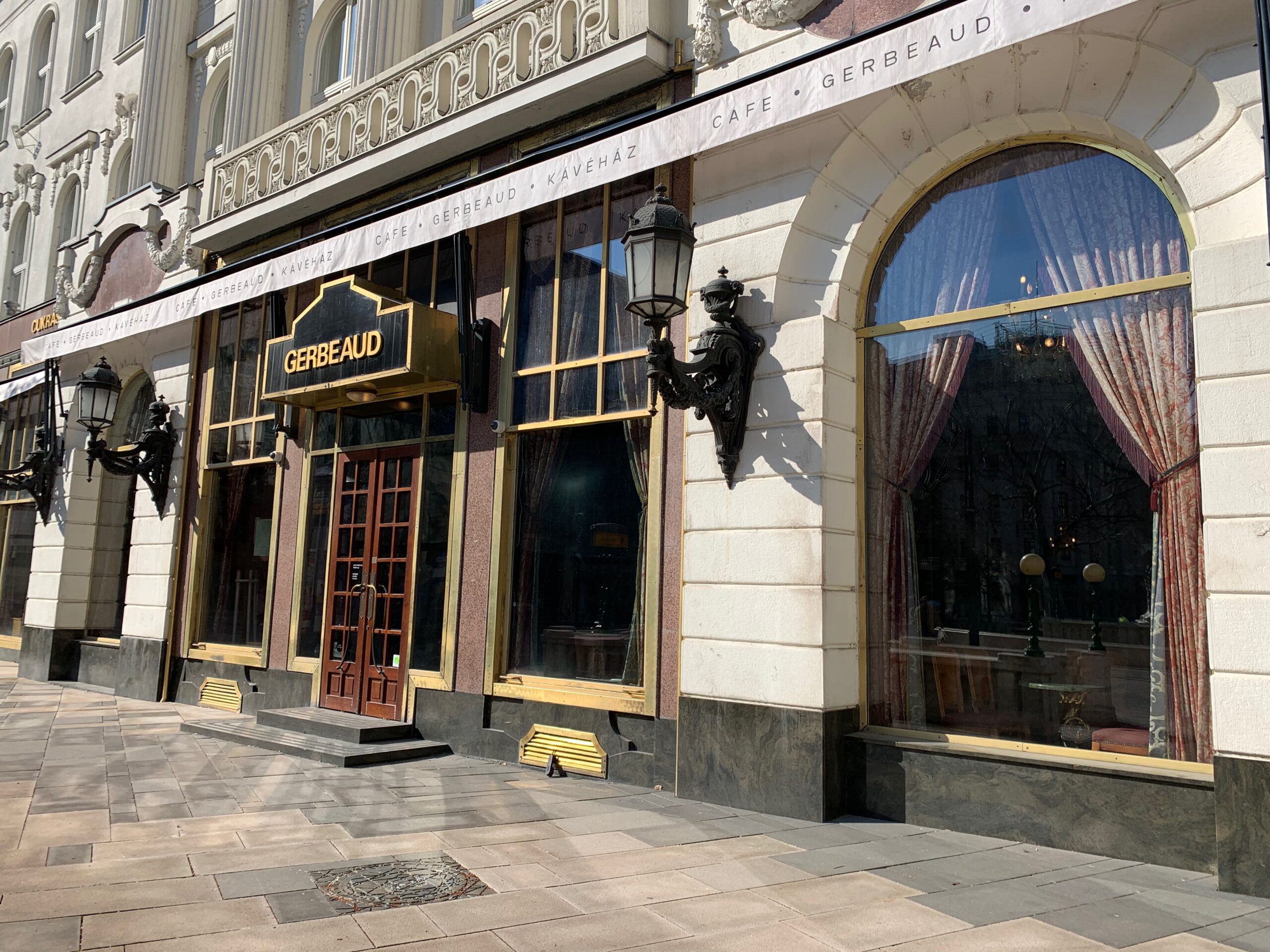
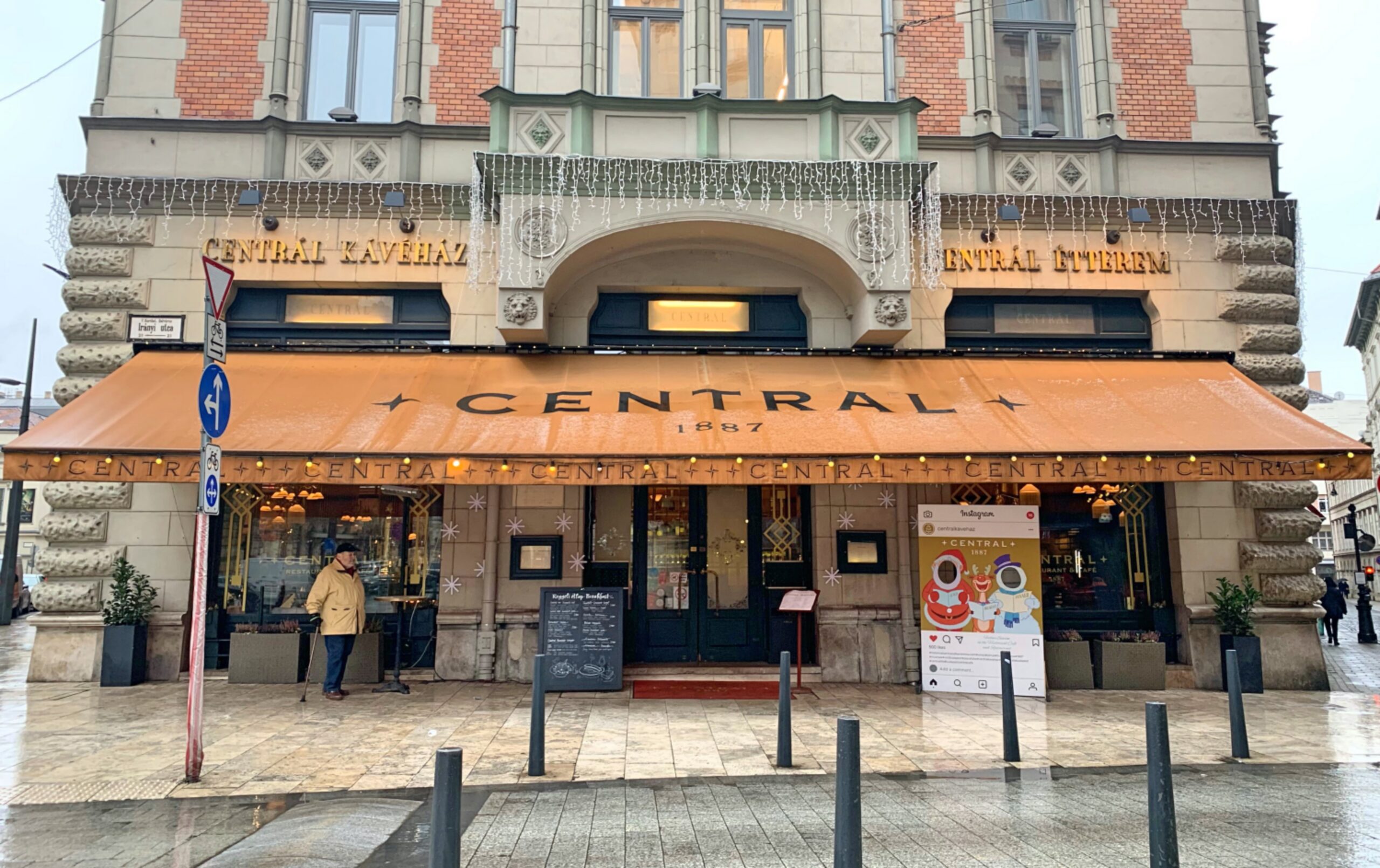
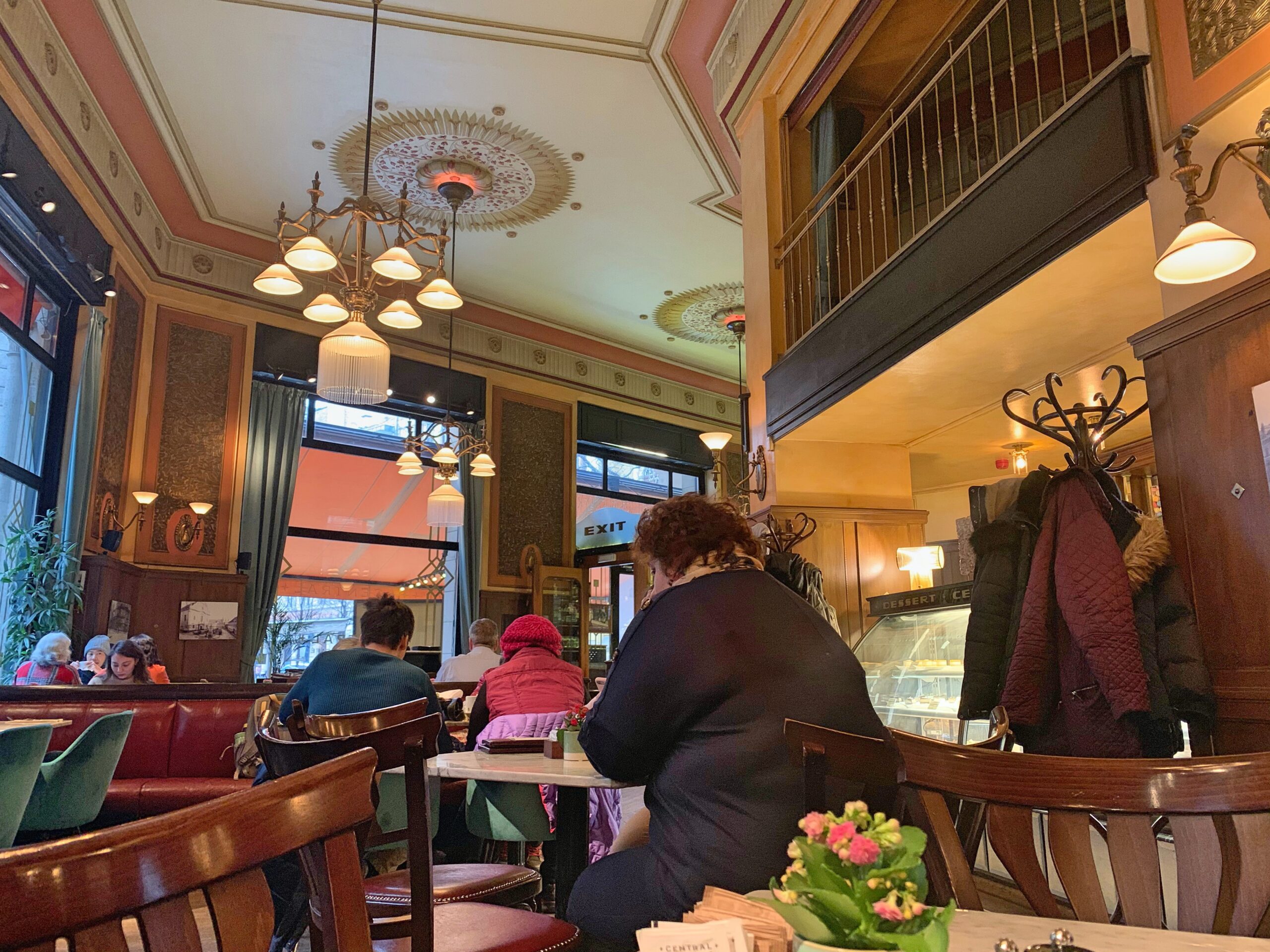
Among all Budapest cafés, Gerbeaud Café is probably the most famous — and with good reason. Although I have already written about Central Café and the Book Café, Gerbeaud truly deserves to be introduced first, as it has been a symbol of elegance and quality for over a century.
The Men Behind the Budapest Gerbeaud Café
The story of the café is closely linked to Emile Gerbeaud, a talented French bonbonnier who was invited to Budapest by Henrik Kugler, the owner of a very popular cake shop and coffeehouse on Vörösmarty Square. Emile Gerbeaud’s creativity transformed the business: he developed an exceptional range of bonbons that were produced and sold in the millions every year. When he eventually took over the café, the Gerbeaud name became a highly respected trademark — not only in Budapest, but throughout Europe.
At the end of the 19th and beginning of the 20th century, Gerbeaud was known as the ladies’ coffeehouse. Young women visited the café hoping to meet a wealthy and suitable husband. Even today, charming urban legends circulate about secret signs a lady could give if she was open to romance. These little stories add to the unique atmosphere of the place and are some of my favorite details to share on foodie tours.
Today, Gerbeaud Café is one of the most iconic historic cafés in Budapest, famous for its refined interior, elegant service, and outstanding selection of Hungarian cakes. Located on Vörösmarty Square, it is an ideal stop for anyone interested in classic coffeehouse culture and sweet Hungarian specialties.
Visiting the Café on a Food Tour
If you would like to experience Gerbeaud — and other historic cafés — in context, you might enjoy joining one of my Budapest Foodie Tours, where coffee, cake, history, and local stories come together in a relaxed and authentic way.