Hungarian Kids’ Favourite: the Dobos Cake

As a kid growing up in Budapest, I truly believed the Dobos cake (Dobos torta) was named after drummers—because that glossy caramel top is so crunchy, you could literally drum on it. Dobos means “drummer” in Hungarian, and in my world, it made perfect sense.

Little did I know at the time that József C. Dobos, the master confectioner and inventor of this iconic cake, simply lent his name to one of Hungary’s most famous pastries. His creation debuted in 1885, at the National Exhibition in Budapest, won over Emperor Franz Joseph I and Empress Elisabeth, and quickly became a symbol of elegance and innovation in confectionery.

What Makes the Dobos Cake So Special

In 1884, Dobos set out to create a cake that would last longer than most pastries, in a time before refrigeration. He layered six thin sponge cakes with rich chocolate buttercream, coated the sides with nuts, and crowned it with a shiny caramel crust. That hard top wasn’t just decorative—it sealed in freshness and made long‑distance shipping possible.

The final product was minimalistic yet elegant—a departure from the lacy pastries of the era. The unusual combination of sponge, buttercream, and caramel earned the cake a permanent place in European culinary history. In 1906, Dobos generously released the recipe to the local pastry guild, ensuring its legacy for generations.

Why Our Childhood Misbelief Was Perfect

That crunchy caramel top was so distinct, even adults joked that it looked—and sounded—like a drum. Tapping it with a finger gave a crisp, satisfying crack. I’ve heard many fellow locals say they once thought Dobos literally meant “drummer cake.” That childhood myth made every bite feel a bit like play, and I still smile thinking of those memories.

My Favourite Spot: Művész Kávéház

When I want to relive that sugary nostalgia, I head to Művész Kávéház, located on Andrássy Avenue—Budapest’s elegant boulevard, lined with neo‑Renaissance mansions and steeped in café culture. Founded in 1898, Művész was a beloved haunt for artists and intellectuals, and its interiors still reflect that bohemian grandeur.

There, the Dobos is served exactly as tradition intended: crisp caramel, tender sponge, rich buttercream—and you’re invited to tap it gently before diving in. The ambiance, the history, the taste—it’s one of those perfect moments I love creating with guests on my foodie tours of Budapest.

Why I Share This Story on My Tours

Whenever I bring guests to Művész not just for a cake, but for the story behind it:

  • The infamous childhood myth everyone laughed at.

  • The real history of József Dobos and the cake’s European fame.

  • The sensory experience: tap the caramel, taste the layers, feel its place in Budapest’s café legacy.

It’s these layered stories—much like the layers of the cake—that make Budapest feel alive and personal for visitors.

Final Thoughts

So next time you see a slice of Dobos cake glistening under café lights, you don’t just eat it—you drum it. It’s a small gesture that connects childhood wonder, historic pride, and Budapest’s irresistible sweetness. Also, have a look at my tours or reach out if you have questions!

Tag someone you’d tap it with… and keep the tradition going.

The golden age of Budapest’s famous coffeehouses was at the end of the 19th and the beginning of the 20th century. Today, we are witnessing a true renaissance of coffeehouse culture — and Budapest remains one of Europe’s most exciting cities for coffee and cake lovers.

Hungarians love their coffee, and visitors quickly fall in love with our historic cafés too. I wrote more about this passion in my main article, We Love Our Coffee – And Our Coffeehouses, Too, where I explore why cafés have always played such an important role in Budapest life.

On my Budapest Foodie Tour, we always try to visit different coffeehouses, giving travelers the chance to taste excellent Hungarian coffee and traditional cakes while learning about the stories behind these beautiful places.

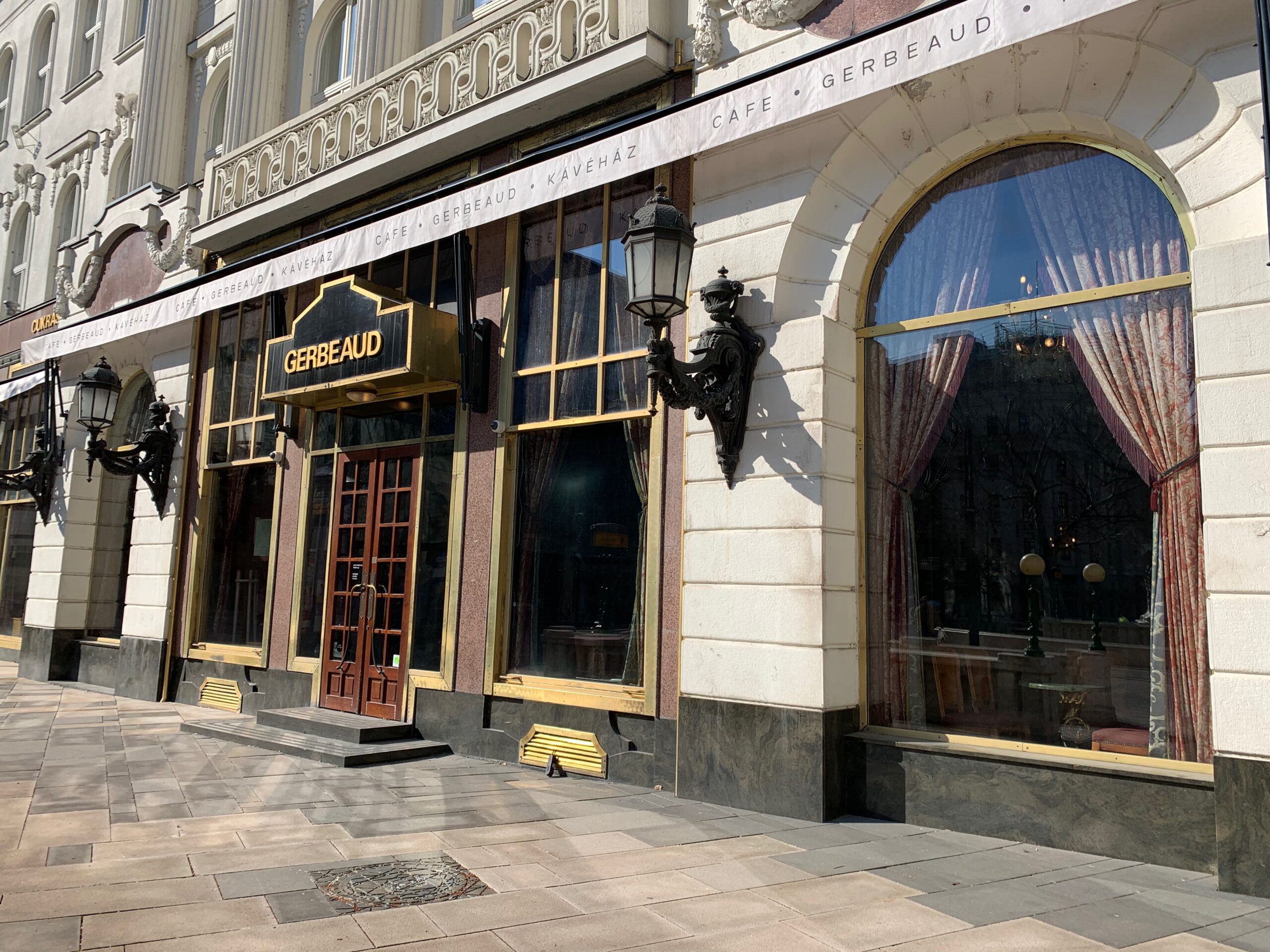
Among all Budapest cafés, Gerbeaud Café is probably the most famous — and with good reason. Although I have already written about Central Café and the Book Café, Gerbeaud truly deserves to be introduced first, as it has been a symbol of elegance and quality for over a century.

The Men Behind the Budapest Gerbeaud Café

The story of the café is closely linked to Emile Gerbeaud, a talented French bonbonnier who was invited to Budapest by Henrik Kugler, the owner of a very popular cake shop and coffeehouse on Vörösmarty Square. Emile Gerbeaud’s creativity transformed the business: he developed an exceptional range of bonbons that were produced and sold in the millions every year. When he eventually took over the café, the Gerbeaud name became a highly respected trademark — not only in Budapest, but throughout Europe.

At the end of the 19th and beginning of the 20th century, Gerbeaud was known as the ladies’ coffeehouse. Young women visited the café hoping to meet a wealthy and suitable husband. Even today, charming urban legends circulate about secret signs a lady could give if she was open to romance. These little stories add to the unique atmosphere of the place and are some of my favorite details to share on foodie tours.

Today, Gerbeaud Café is one of the most iconic historic cafés in Budapest, famous for its refined interior, elegant service, and outstanding selection of Hungarian cakes. Located on Vörösmarty Square, it is an ideal stop for anyone interested in classic coffeehouse culture and sweet Hungarian specialties.

Visiting the Café on a Food Tour

If you would like to experience Gerbeaud — and other historic cafés — in context, you might enjoy joining one of my Budapest Foodie Tours, where coffee, cake, history, and local stories come together in a relaxed and authentic way.


The golden age of Budapest’s famous coffeehouses was at the end of the 19th and the beginning of the 20th century. Today, we are once again experiencing a true renaissance of coffeehouse culture — and Budapest remains a wonderful city for anyone who enjoys coffee, cake, and history.

Hungarians have always loved their coffee, and visitors quickly discover that cafés here are much more than simple places to drink an espresso. I wrote more about this deep-rooted tradition in my main key article, We Love Our Coffee – And Our Coffeehouses, Too, where I explore why coffeehouses have played such an important role in Budapest life for generations.

On my Budapest Foodie Tour, we always try to include different cafés, so travelers can taste excellent Hungarian coffee and cakes while learning about the fascinating stories behind these historic places.

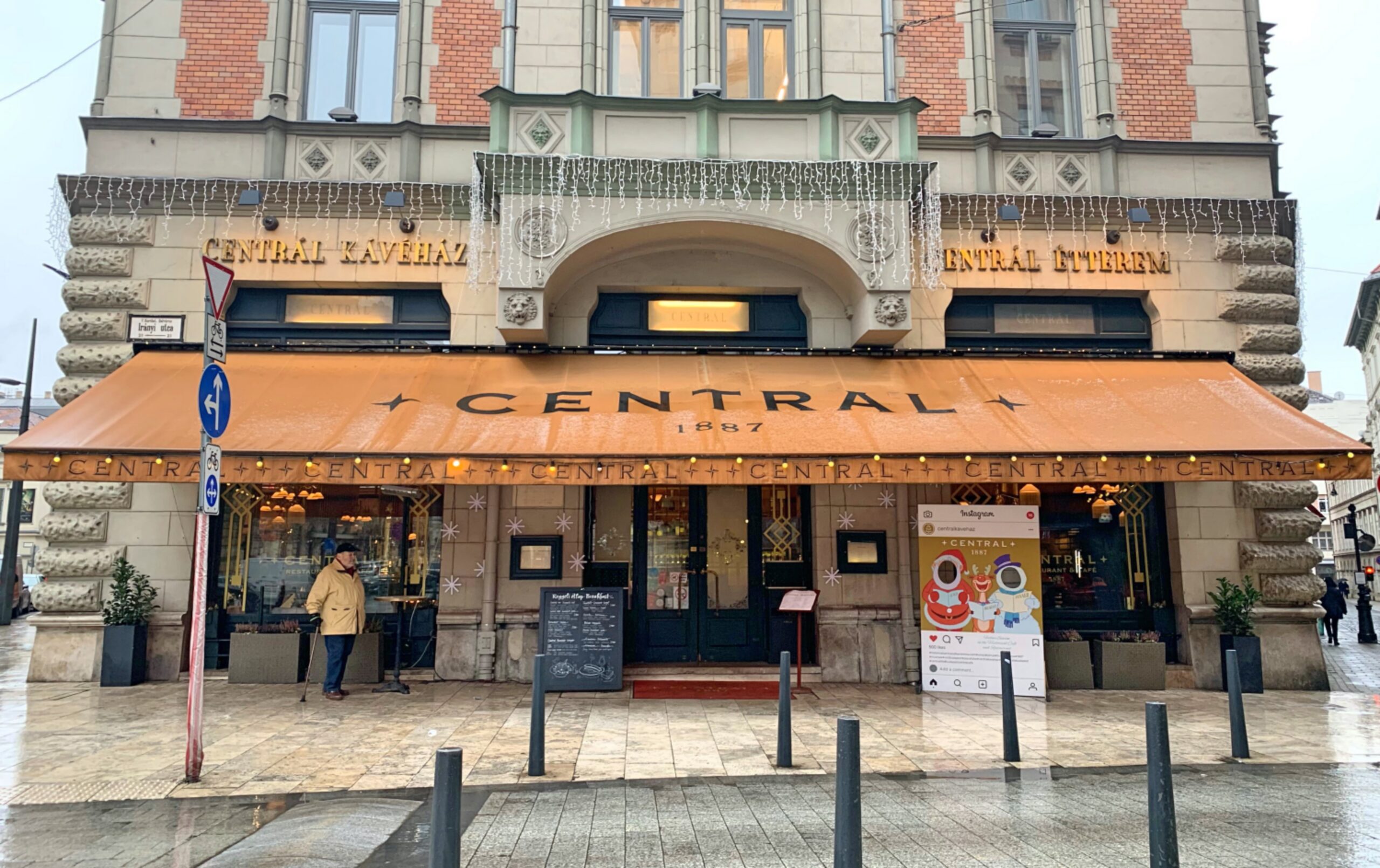
Central Café Budapest

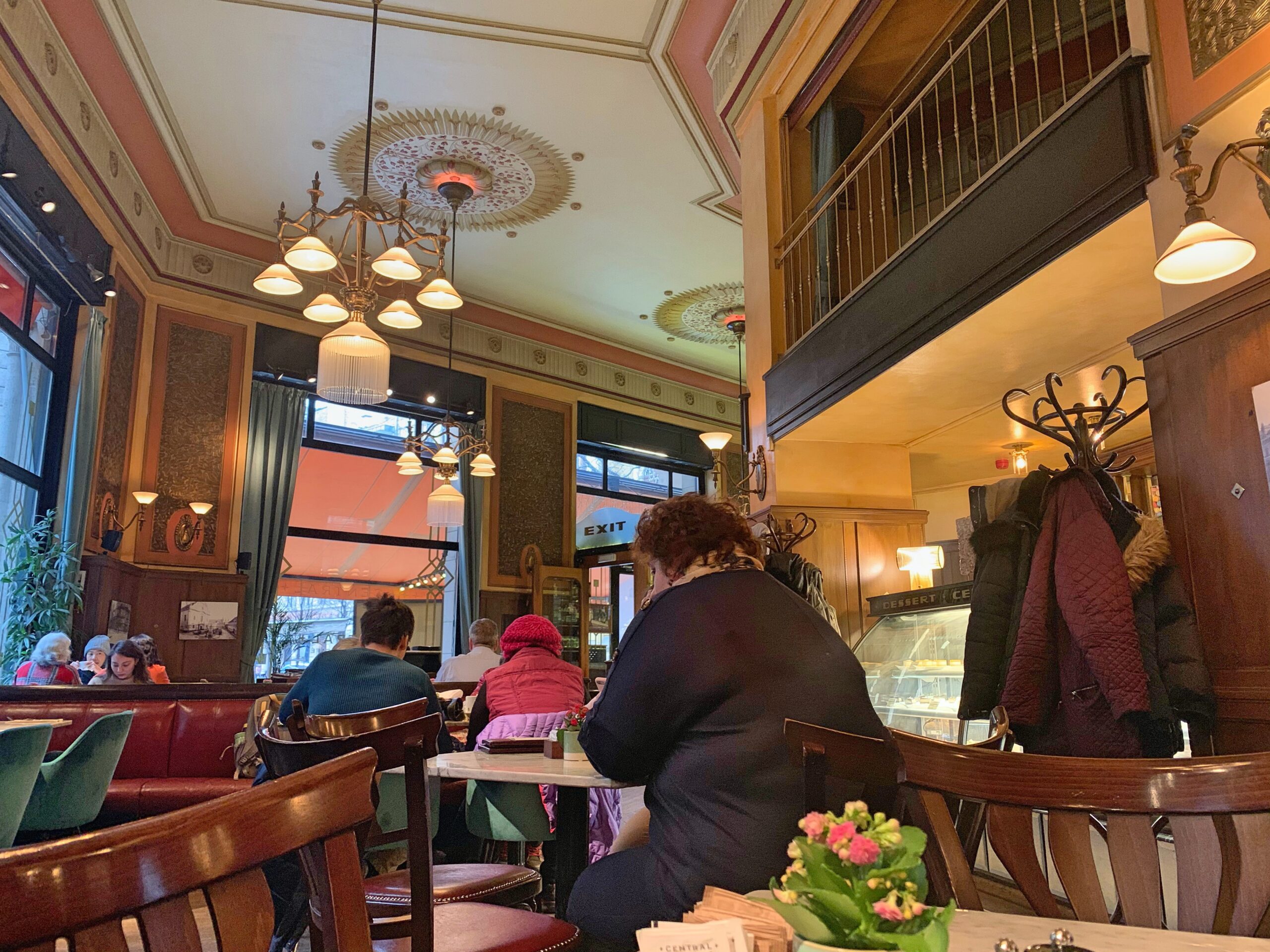
Central Café is located in the heart of downtown Pest, close to the Elizabeth Bridge, and was once considered the coffeehouse of writers and journalists. At the turn of the 19th and 20th centuries, the surrounding neighbourhood was filled with newspaper offices and editorial rooms, making Central a natural meeting point for intellectuals.

Writers spent long days — and often nights — in the café, writing articles, debating politics and economics, and exchanging the latest gossip. One of the most famous local legends tells the story of a writer who treated Central as his second home, keeping personal belongings there, including a bathrobe and his medicine.

Today, Central Café remains one of the best historic cafés in Budapest for those interested in literary history and classic coffeehouse atmosphere. When you visit, there is one thing you absolutely should not miss: Rákóczi Túrós, a traditional Hungarian cake made with cottage cheese and topped with a light meringue. It pairs beautifully with an espresso or cappuccino and is always one of my favourite recommendations on foodie tours.

Exploring Budapest Cafés on a Food Tour

If you would like to experience Central Café — along with other historic coffeehouses — in a wider context, you might enjoy joining one of my Budapest Foodie Tours, where coffee, cakes, and local stories come together in a relaxed and authentic way.