Today we celebrate the Budapest 152nd birthday. On November 17, 1873, three historic towns — Buda, Pest, and Óbuda — united to form one magnificent city: Budapest. I can’t help but reflect on why this place continues to capture my heart — and the hearts of travellers from all over the world.

It’s incredible to think how much history, resilience, and beauty fit into these 152 years. Budapest isn’t just Hungary’s capital — it’s a city that tells stories at every turn, from its majestic bridges to its cozy cafés.

A City of Timeless Beauty

If you’re looking for things to do in Budapest, you don’t have to go far. Start with the Hungarian Parliament, one of Europe’s most stunning government buildings, glowing golden at night on the banks of the Danube. Cross over the Chain Bridge, admire the Fisherman’s Bastion at sunrise, and don’t miss a ride on Tram 2, often called one of the most scenic tram routes in the world.

Whether you explore Buda Castle Hill for history or Andrássy Avenue for architecture, every view tells a story. So you will explore a mix of grandeur, resilience, and unmistakable charm. Need more ideas? Let me know!

Everyday Magic – Happy Birthday Beautiful Budapest!

What makes Budapest truly special is how easily beauty blends into everyday life.
You can enjoy a lazy morning at one of the city’s historic cafés, stroll along the Danube promenade, or simply watch the lights shimmer across the water as evening falls.
Even locals (like me!) still stop to take in the view — because it never gets old.

💙 My Beautiful Budapest

As a private tour guide in Budapest, I’ve had the joy of seeing visitors fall in love with the city — whether it’s their first visit or a long-awaited return. Each tour I lead feels like a love letter to this place: to its stories, flavours, and hidden corners that you won’t find in guidebooks.

Budapest is endlessly inspiring. It’s a city that makes you slow down, look up, and appreciate the details. Like the curve of a bridge, the scent of coffee, the sound of trams rolling by.

Here’s to the Next 152 Years – Happy Birthday Beautiful Budapest!

Budapest has lived through revolutions, rebuildings, and countless transformations. Yet, she always rises more beautiful, more vibrant, more alive.
So today, I raise my glass (of Tokaji, of course!) to 152 years of history, culture, and beauty.

Happy Birthday, Beautiful Budapest — and thank you for continuing to inspire all who walk your streets. 💫

Budapest is magical at any time of day, but after sunset, the city transforms into something truly unforgettable, that is Budapest at night for you. The golden domes and bridges light up, the Danube sparkles with reflections, and the streets come alive with locals and visitors enjoying food, drinks, and vibrant nightlife. Whether you’re looking for romance, culture, or just a good time, Budapest at night has it all.

Why Budapest at Night is Special

  • Golden Danube Reflections – Both riverbanks are part of a UNESCO World Heritage site, and at night the view becomes pure magic.

  • Fairy-tale Landmarks – The Parliament glows like a palace, the Chain Bridge twinkles, and Fisherman’s Bastion looks straight out of a storybook.

  • Lively Atmosphere – Cafés, ruin pubs, and wine bars buzz with energy late into the night.

  • Safe & Walkable – The historic center is compact and safe, making it perfect for evening strolls.

Top Experiences After Dark

1. The Parliament & Chain Bridge Lit Up

The most iconic postcard view of Budapest. From either side of the Danube, the glowing Parliament and illuminated Chain Bridge create a breathtaking panorama.

2. Evening Walk or Danube River Cruise

A stroll along the Danube Promenade is always a treat, but for the ultimate night experience, hop on a Danube Legend river cruise. You’ll float past the Parliament, Buda Castle, and the bridges shimmering in gold.

3. Ruin Pubs & Wine Bars in the Jewish Quarter

Budapest is famous for its ruin pubs—quirky bars built inside abandoned buildings and courtyards. For a more refined evening, try a Hungarian wine tasting at Doblo Wine Bar, my favourite in the Jewish Quarter.

4. Gellért Hill & the Citadel Views

For those who don’t mind a short climb, the reward is one of the most spectacular panoramic views of Budapest by night. The entire city glitters at your feet.

5. Night Trams & Metros (Bonus Tip)

Budapest’s public transport is not just practical—it’s scenic, too. Tram 2 along the Danube is often called one of the world’s most beautiful tram rides, and it’s especially magical after dark.

Practical Tips for Enjoying Budapest at Night

  • Best Time for Photos: Start at blue hour (just after sunset) for the perfect golden glow, then stay as the city lights come on.

  • Safety: Central Budapest is generally very safe, even at night. Just keep an eye on your belongings in crowded bars.

  • Photography: Bring a tripod or use a steady surface for night shots.

  • What to Wear: Even in summer, evenings by the Danube can be breezy, so a light jacket is handy.

Final Thoughts

Budapest truly shines after dark. Whether you’re sipping wine in the Jewish Quarter, cruising the Danube, or watching the Parliament sparkle from Fisherman’s Bastion, the city offers a unique and unforgettable nighttime experience. Reach out if you have questions or would like to learn more about Budapest or private tours!

So next time you’re here, don’t call it a night too early—that’s when Budapest is just getting started.

Most visitors cross it. Few know its story.

The Chain Bridge isn’t just a beautiful structure connecting Buda and Pest — it’s the bridge that changed Hungary. Before it existed, winter ice and ferry delays separated the two sides of the Danube. One tragic moment turned that inconvenience into a bold vision: to build a permanent connection that would unite a city — and a nation.

It all started with a funeral

In 1820, Count István Széchenyi — one of Hungary’s greatest reformers — missed his father’s funeral. The ferry couldn’t cross the river due to bad weather, and there was no bridge to take him from Pest to Buda. Heartbroken and frustrated, he made a promise: Hungary would have a bridge that connected both sides year-round. That promise became the Széchenyi Chain Bridge.

Building the Chain Bridge Budapest: A Marvel of Engineering

When construction began in the 1830s, the Chain Bridge was one of the most ambitious civil engineering projects in Europe. It was designed by English engineer William Tierney Clark and built by Adam Clark, a Scottish engineer (and namesake of Clark Ádám tér on the Buda side).

It officially opened in 1849 and became the first permanent bridge across the Danube in Hungary. Its suspension design was cutting-edge at the time — and symbolised progress, unity, and independence.

Chain Bridge Budapest: The Lion Legend & Missing Tongues

Four massive stone lions guard the entrances of the bridge. There’s a popular urban legend that the sculptor, János Marschalkó, forgot to carve tongues on them — and, in his shame, jumped into the Danube.

The truth? The lions do have tongues. They’re just not visible unless you look very closely from above.

This myth has survived for generations — and it’s one of the stories I love sharing on my tours. Budapest has a knack for hiding the truth in plain sight.

How the Chain Bridge Budapest Survived War and Reborn

In 1945, during World War II, retreating German troops destroyed the bridge along with all others in Budapest. Only the stone pillars remained. But just like the city itself, the bridge rose again. It was carefully reconstructed and reopened in 1949 — exactly 100 years after its original inauguration.

From your private tour guide

Whenever I guide a walking tour across the Chain Bridge, I pause in the middle and encourage my guests to look both ways. Behind us, Buda Castle rises like a fortress. Ahead, Parliament glows on the Pest side. This bridge isn’t just a route — it’s a symbol of resilience. Of connection. Of Budapest’s unbreakable spirit.

Local tip

Visit just before sunset to catch the golden glow on the river and buildings. And after dark, the bridge is beautifully lit — a perfect, romantic walk for couples or a quiet pause for solo travelers.

Want to explore it with me?

I include the Chain Bridge in many of my private walking tours — and always tailor the experience to your pace, interests, and curiosity. If you’d like to hear more stories like this in person, I’d love to show you the real Budapest.

  • Book a private tour with me here
  • Have questions? Reach out to me directly — I’m happy to help you plan the perfect Budapest experience.
  • And if you enjoyed this post, keep reading my blog for more hidden stories, local tips, and unforgettable sights in Budapest.

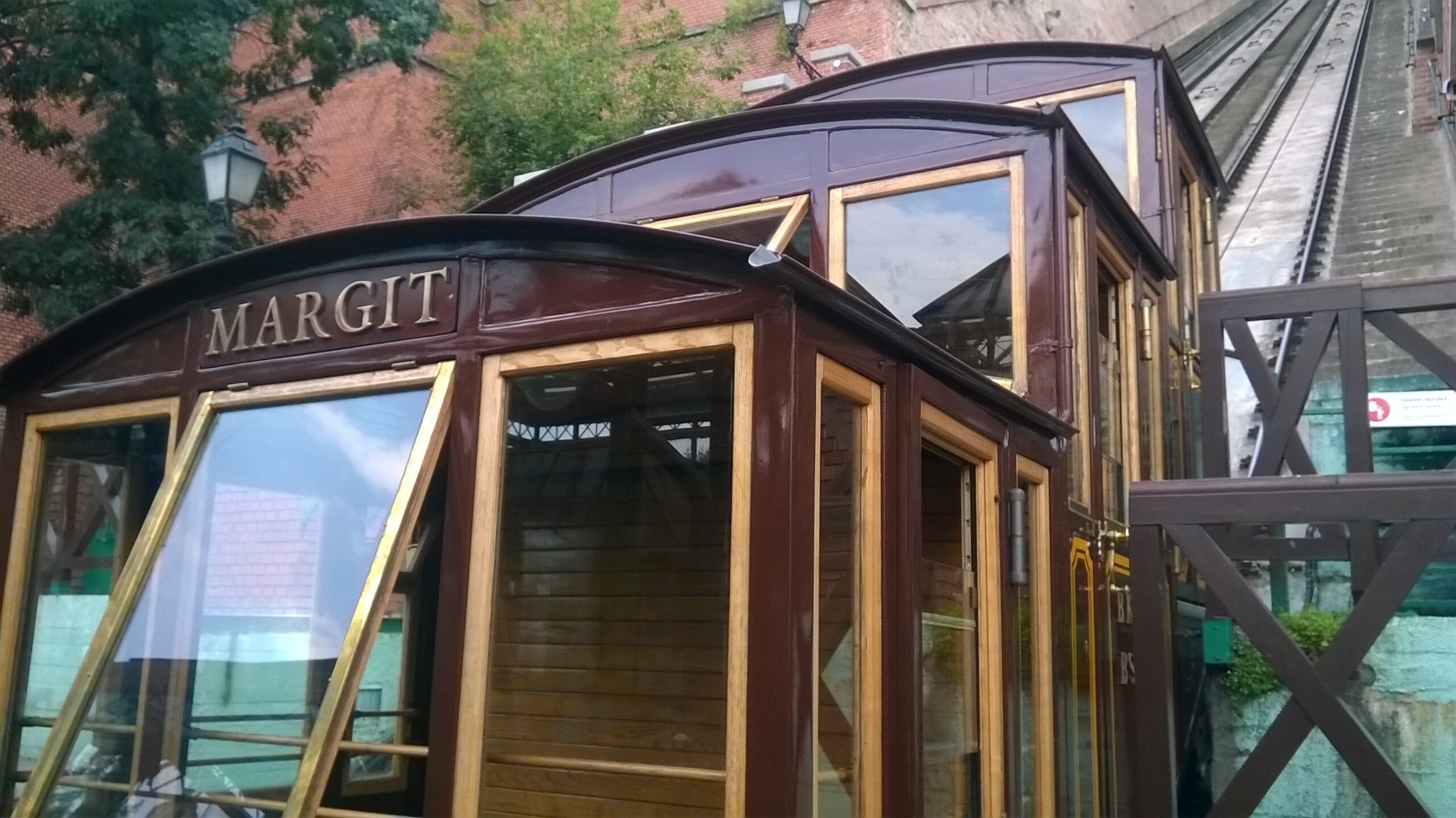
The Buda Castle Funicular is one of those Budapest experiences that is both practical and charming — a short ride that connects the banks of the Danube with the historic heights of Castle Hill.

Since its opening in 1870, this small but iconic cable car has carried millions of passengers between the Chain Bridgeand the Royal Palace above. In just a few seconds, it offers sweeping views over the Danube and Pest, making the journey itself part of the sightseeing.

A bit of history

The Funicular was originally powered by steam and played an important role in everyday city life, helping residents and workers reach Castle Hill quickly. During the Second World War, it was almost completely destroyed.

When it was rebuilt decades later, it returned as an electric cable car, carefully designed to reflect its historic appearance while meeting modern standards. Today, it’s both a nostalgic landmark and a fully functioning part of Budapest’s transport system.

Film lovers may also recognise it from The Grand Budapest Hotel, where it appears briefly — a small but delightful cinematic connection.

How to include it in your visit

The Funicular is a lovely addition to a walk around Buda Castle, whether you’re exploring on your own or joining a Buda Castle Walking Tour, where it can be included as an optional extra depending on interest and timing.

It’s also a great standalone experience if you’re short on time but still want a memorable view.

An insider tip from a local guide

If you’d like to avoid long queues, don’t take the Funicular up to Castle Hill. Instead, walk up and use it for the descent, travelling from the Royal Palace down to the Chain Bridge. Lines are usually shorter — and the view is just as beautiful.