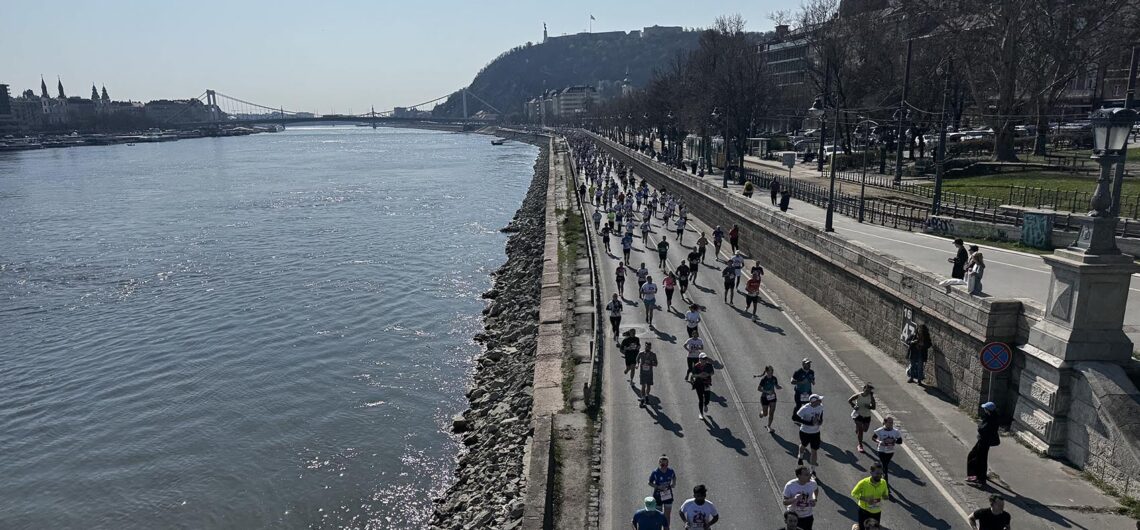
The Budapest half marathon might just be one of the most scenic races in Europe. There are many beautiful races in the world—but how many let you run past a Parliament that looks like a fairytale, along the Danube, with castles watching from above? Yesterday, Budapest showed its best side during the Vivicittá Half Marathon—and honestly, it felt less like a race and more like a moving postcard. Running Through History The route takes you through some of the most iconic UNESCO-listed sights in the city. As you run, you’re not just chasing kilometres—you’re moving through centuries. You pass: The breathtaking Hungarian Parliament Building Under the elegant Széchenyi Chain Bridge Run along the Danube with views of Buda Castle It’s one of those rare experiences where you actually forget you're running. Perfect Conditions, Perfect Energy This year, the weather couldn’t have been better—sunshine, blue skies, and just the right temperature. But what really makes this race special is the atmosphere: Locals cheering from the sidelines Music along the route Runners from all over the world There’s a feeling of connection that’s hard to describe unless you’ve experienced it. Why Budapest Is a Dream Destination for Runners If you’re a runner, Budapest is more than just a race destination—it’s a place to explore on foot. Some of my favourite running spots: Margaret Island – car-free, green, and peaceful Danube promenade – iconic views with every step Gellért Hill – for a challenge + reward More Than a Race The Vivicittá isn’t just about finishing times. It’s about: Seeing Budapest in a completely different way Feeling part of something bigger And creating memories that stay with you long after the race is over If you’re thinking about combining travel with running—Budapest should absolutely be on your list. And if you’d like to
The Budapest half marathon might just be one of the most scenic races in Europe. There are many beautiful races in the world—but how many let you run past a Parliament that looks like a fairytale, along the Danube, with castles watching from above?
Yesterday, Budapest showed its best side during the Vivicittá Half Marathon—and honestly, it felt less like a race and more like a moving postcard.
Running Through History
The route takes you through some of the most iconic UNESCO-listed sights in the city. As you run, you’re not just chasing kilometres—you’re moving through centuries.
The Vivicittá isn’t just about finishing times. It’s about:
Seeing Budapest in a completely different way
Feeling part of something bigger
And creating memories that stay with you long after the race is over
If you’re thinking about combining travel with running—Budapest should absolutely be on your list. And if you’d like to explore the city beyond the race route, I’d love to show you my favourite hidden corners.
Today we celebrate the Budapest 152nd birthday. On November 17, 1873, three historic towns — Buda, Pest, and Óbuda — united to form one magnificent city: Budapest. I can’t help but reflect on why this place continues to capture my heart — and the hearts of travellers from all over the world. It’s incredible to think how much history, resilience, and beauty fit into these 152 years. Budapest isn’t just Hungary’s capital — it’s a city that tells stories at every turn, from its majestic bridges to its cozy cafés. A City of Timeless Beauty If you’re looking for things to do in Budapest, you don’t have to go far. Start with the Hungarian Parliament, one of Europe’s most stunning government buildings, glowing golden at night on the banks of the Danube. Cross over the Chain Bridge, admire the Fisherman’s Bastion at sunrise, and don’t miss a ride on Tram 2, often called one of the most scenic tram routes in the world. Whether you explore Buda Castle Hill for history or Andrássy Avenue for architecture, every view tells a story. So you will explore a mix of grandeur, resilience, and unmistakable charm. Need more ideas? Let me know! Everyday Magic - Happy Birthday Beautiful Budapest! What makes Budapest truly special is how easily beauty blends into everyday life.You can enjoy a lazy morning at one of the city’s historic cafés, stroll along the Danube promenade, or simply watch the lights shimmer across the water as evening falls.Even locals (like me!) still stop to take in the view — because it never gets old. 💙 My Beautiful Budapest As a private tour guide in Budapest, I’ve had the joy of seeing visitors fall in love with the city — whether it’s their first visit or a long-awaited return. Each tour
Today we celebrate the Budapest 152nd birthday. OnNovember 17, 1873, three historic towns — Buda, Pest, and Óbuda — united to form one magnificent city: Budapest. I can’t help but reflect on why this place continues to capture my heart — and the hearts of travellers from all over the world.
It’s incredible to think how much history, resilience, and beauty fit into these 152 years. Budapest isn’t just Hungary’s capital — it’s a city that tells stories at every turn, from its majestic bridges to its cozy cafés.
A City of Timeless Beauty
If you’re looking for things to do in Budapest, you don’t have to go far. Start with the Hungarian Parliament, one of Europe’s most stunning government buildings, glowing golden at night on the banks of the Danube. Cross over the Chain Bridge, admire the Fisherman’s Bastion at sunrise, and don’t miss a ride on Tram 2, often called one of the most scenic tram routes in the world.
Whether you explore Buda Castle Hill for history or Andrássy Avenue for architecture, every view tells a story. So you will explore a mix of grandeur, resilience, and unmistakable charm. Need more ideas? Let me know!
What makes Budapest truly special is how easily beauty blends into everyday life. You can enjoy a lazy morning at one of the city’s historic cafés, stroll along the Danube promenade, or simply watch the lights shimmer across the water as evening falls. Even locals (like me!) still stop to take in the view — because it never gets old.
💙 My Beautiful Budapest
As a private tour guide in Budapest, I’ve had the joy of seeing visitors fall in love with the city — whether it’s their first visit or a long-awaited return. Each tour I lead feels like a love letter to this place: to its stories, flavours, and hidden corners that you won’t find in guidebooks.
Budapest is endlessly inspiring. It’s a city that makes you slow down, look up, and appreciate the details. Like the curve of a bridge, the scent of coffee, the sound of trams rolling by.
Here’s to the Next 152 Years – Happy Birthday Beautiful Budapest!
Budapest has lived through revolutions, rebuildings, and countless transformations. Yet, she always rises more beautiful, more vibrant, more alive. So today, I raise my glass (of Tokaji, of course!) to 152 years of history, culture, and beauty.
Happy Birthday, Beautiful Budapest — and thank you for continuing to inspire all who walk your streets. 💫
How many Budapest bridges can fit into 30 seconds? More than you’d think! The Danube divides the city into Buda and Pest, and its bridges each carry their own personality: historic, modern, romantic, or simply practical. Whether you’re chasing the perfect Parliament view, a quiet sunset, or even an emperor’s silver nail, there’s a bridge waiting to share its secret. Chain Bridge “Budapest’s bridge has a twin”The Chain Bridge was the first permanent crossing of the Danube, opened in 1849. But did you know it has a smaller twin in Marlow, England? Both were designed by William Tierney Clark, with the Marlow Bridge crossing the River Thames. Stroll across it and you’ll feel like you’ve stepped into a miniature Budapest, a little echo of the Danube in the English countryside. I'm happy to cross this beautiful bridge with you when you book a walking tour with me. Liberty Bridge “An emperor’s silver nail”When Liberty Bridge was inaugurated in 1896, Emperor Franz Joseph himself hammered in the last, and only silver, nail. That ceremonial gesture gave the green bridge a unique story among its siblings. Today it’s beloved by locals and students, sometimes even closed for open-air picnics. And, it still carries the emperor’s mark in its foundation. We usually stop for a few minutes to admire the bridge from the Pest side of the river when we go to the Great Market during a Foodie Tour. Also, this is my all time favourite of all Budapest bridges. Margaret Bridge “A princess on an island”Margaret Bridge doesn’t just connect Buda and Pest — it also bends gracefully toward Margaret Island. The island itself was once home to a royal convent, where young Princess Margaret, daughter of King Béla IV, was sent to live. Choosing the island meant giving up courtly life
How many Budapest bridges can fit into 30 seconds? More than you’d think! The Danube divides the city into Buda and Pest, and its bridges each carry their own personality: historic, modern, romantic, or simply practical. Whether you’re chasing the perfect Parliament view, a quiet sunset, or even an emperor’s silver nail, there’s a bridge waiting to share its secret.
Chain Bridge
“Budapest’s bridge has a twin” The Chain Bridge was the first permanent crossing of the Danube, opened in 1849. But did you know it has a smaller twin in Marlow, England? Both were designed by William Tierney Clark, with the Marlow Bridge crossing the River Thames. Stroll across it and you’ll feel like you’ve stepped into a miniature Budapest, a little echo of the Danube in the English countryside. I’m happy to cross this beautiful bridge with you when you book a walking tour with me.
Liberty Bridge
“An emperor’s silver nail” When Liberty Bridge was inaugurated in 1896, Emperor Franz Joseph himself hammered in the last, and only silver, nail. That ceremonial gesture gave the green bridge a unique story among its siblings. Today it’s beloved by locals and students, sometimes even closed for open-air picnics. And, it still carries the emperor’s mark in its foundation. We usually stop for a few minutes to admire the bridge from the Pest side of the river when we go to the Great Market during a Foodie Tour. Also, this is my all time favourite of all Budapest bridges.
Margaret Bridge
“A princess on an island” Margaret Bridge doesn’t just connect Buda and Pest — it also bends gracefully toward Margaret Island. The island itself was once home to a royal convent, where young Princess Margaret, daughter of King Béla IV, was sent to live. Choosing the island meant giving up courtly life forever, but her presence left a story of sacrifice and faith woven into the bridge’s path. I love taking travellers to the Margaret bridge and island on a customised tour.
Elizabeth Bridge
“Modern white frame of Gellért” The original Elizabeth Bridge, named after Queen Sisi, was destroyed during World War II. What stands today is a sleek, modern suspension bridge — its white lines perfectly framing Gellért Hill and the Citadel behind it. It’s the only one of the Budapest bridges that was not rebuilt to the original style. It’s a striking contrast to the ornate Budapest bridges nearby, and a favourite spot for photographers chasing symmetry. Want to learn more about the bridge and the story of Gellért? I’m happy to include those in any Budapest driving tour.
Petőfi Bridge
“The Danube’s lost blue bridge” Before World War II, the bridge that stood here gleamed in a bold shade of blue — a flash of colour across the Danube. After its destruction, the rebuilt Petőfi Bridge was painted grey, practical but subdued. It does its job, but sometimes I wonder how different Budapest’s skyline would feel today if that vibrant blue had survived.
Rákóczi Bridge
“Budapest’s bold red pylons” The newest bridge across the central Danube, Rákóczi is defined by its industrial steel and striking red pylons. It may not carry centuries of history, but it connects the city to its growing cultural quarter — the National Theatre and Palace of Arts — showing how Budapest keeps building its future across the river.
From twins in England to emperors’ nails, princesses, and lost colors, Budapest’s bridges are full of stories that go far beyond stone and steel. Next time you’re here, don’t just admire them from a tram window — walk across. Each crossing is a chance to step into the city’s history, one story at a time.