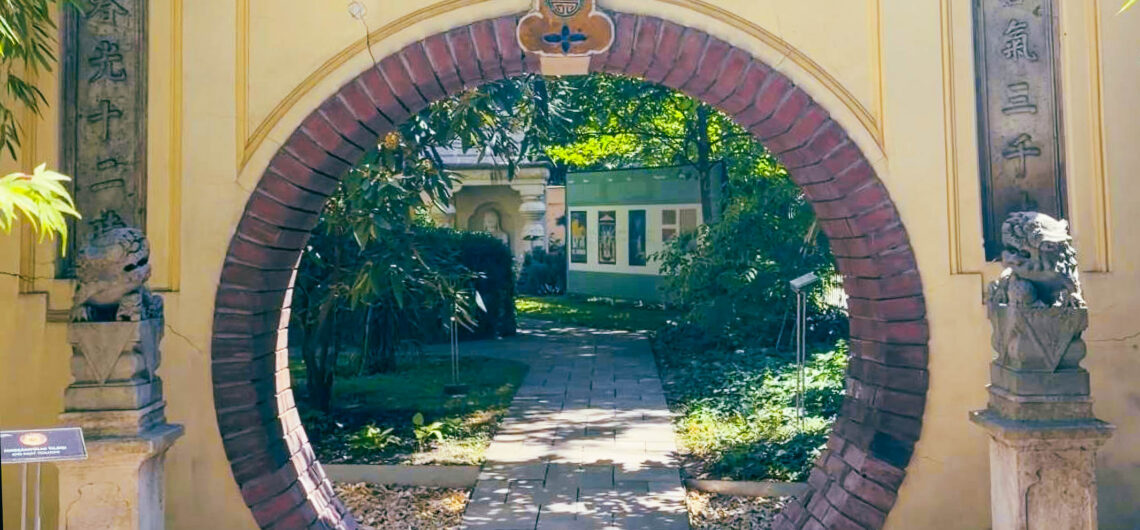
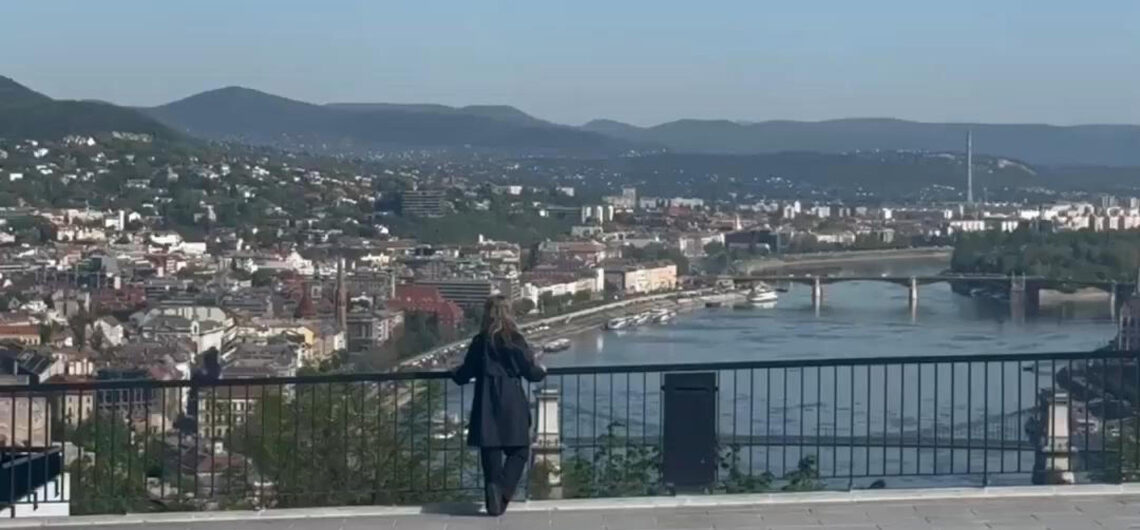
Philosophers Garden Budapest is one of those places you almost miss — but once you find it, you don’t forget it.

Beautiful Budapest is full of grand landmarks — but some of its most memorable places are the quiet ones. The ones you almost miss. The Philosophers’ Garden is one of them.

Tucked away on the slopes of Gellért Hill, this peaceful spot is part of my personal “Secret Gardens of Budapest”series — places where the city slows down, and something unexpected happens.

If you’ve already discovered the charm of Mansfeld Péter Park or the serenity of Gül Baba’s Tomb, this is another one to add to your list.

A Circle of Ideas

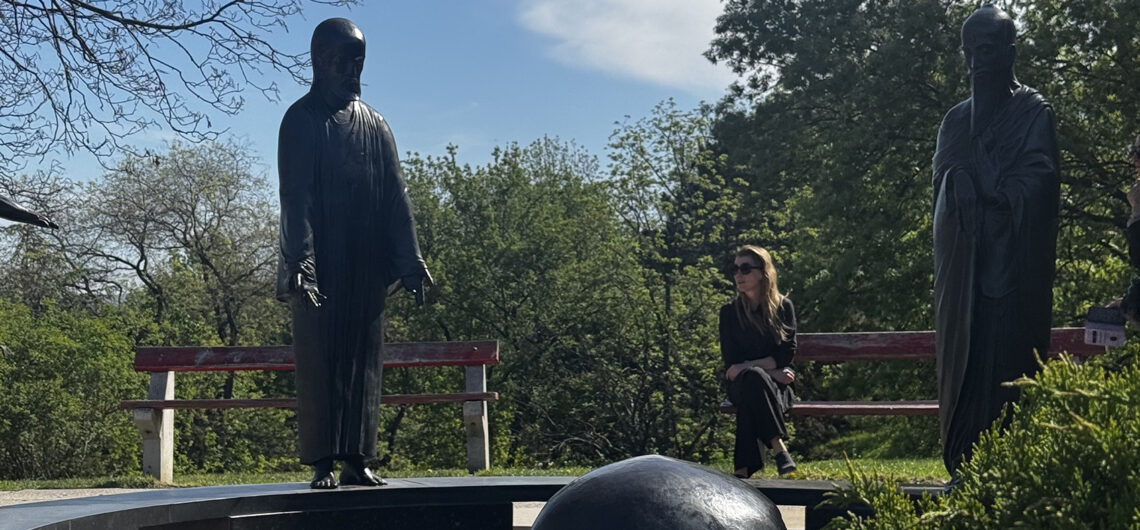
At the heart of the garden stands a quiet circle of statues — representing great spiritual and philosophical figures from different cultures.

You’ll recognize names like:

  • Buddha
  • Jesus
  • Abraham
  • Laozi
  • Akhenaten

They face each other, as if in conversation. The message is simple, but powerful: different paths, shared values. It’s not a place that overwhelms you — it’s one that gently invites you to pause.

Each statue represents a different path — different beliefs, different traditions — yet they meet here in quiet harmony. It’s a gentle reminder that, beyond our differences, there is something deeply shared in the human search for meaning, peace, and understanding.

And somehow, in this small garden above the city, you can feel exactly that.

A View Without the Crowds

Just beyond the statues, the trees open up — and suddenly, Budapest unfolds below you. The Hungarian Parliament Building, the Danube, the bridges… All there.

But without the crowds you’ll find at the Citadella. And that changes everything.

Part of a Perfect Gellért Hill Walk

One of the best things about the Philosophers’ Garden is how easily it fits into a walk around the beautiful Gellért Hill of Budapest.

You can combine it with:

If you’re planning your route, I recommend pairing this with my posts about the Citadel and the Liberty Statue — together, they create a beautiful, varied walk through one of Budapest’s most iconic hills.

Why Philosophers’ Garden Stays With You

There’s something special about places like this. They’re not the biggest sights. They’re not the most famous. But they’re the ones people remember later.

As a private guide, I often include spots like this in my tours — because they show a different side of Budapest. A quieter, more personal one.

Feel free to explore hidden places like this with stories and local insight or contact me for further details.

Save This for Later

Budapest isn’t just about what you see. It’s about the places where you stop, breathe, and feel the city. The Philosophers’ Garden is one of those places. And if you’d like to discover more hidden corners like this — I’d be happy to show you.

Philosophers Garden Budapest

If you’re looking for romantic viewpoints in Budapest, there are a few special places that combine views, atmosphere, and storytelling in a unique way. Budapest is full of grand landmarks — but some of its most beautiful stories are hidden in plain sight.

This post is the first in a new series where I’ll share romantic statues across the city — the ones that tell stories, offer a special atmosphere, and often come with a view you won’t forget. And there’s no better place to start than with the symbolic couple of the city itself: the Buda & Pest Statue.

A love story in stone

At first glance, it’s just a sculpture. But look a little closer.

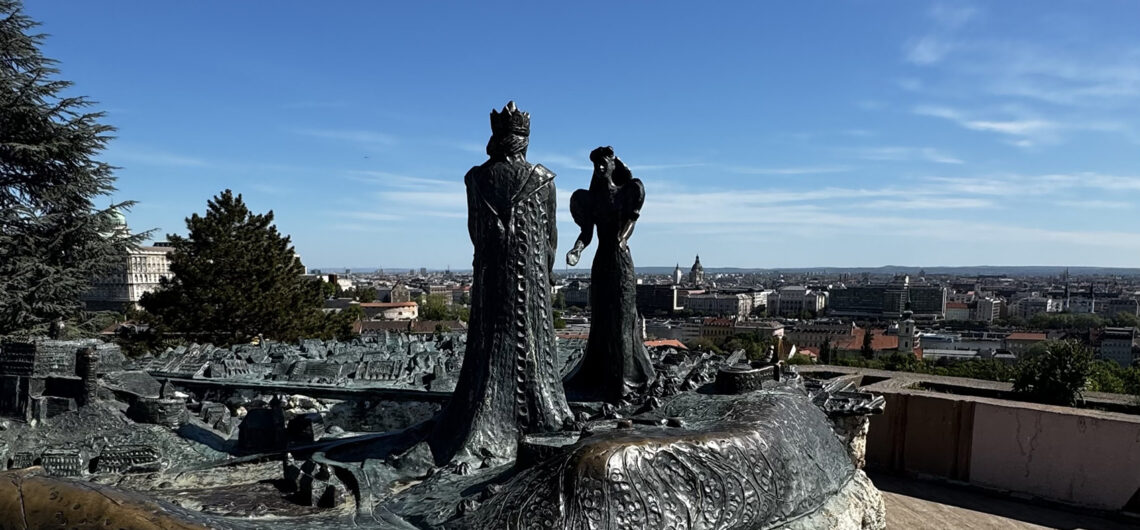
The two figures represent Buda and Pest — the historic halves of the city, united in 1873. One is calm and grounded, the other lively and full of energy. They face each other across the Danube. Close… but not quite together.

It’s easy to imagine them as lovers — always connected, yet separated by the river that defines Budapest.

A hidden gem with one of the best views

What makes this spot truly special is not just the story — it’s the setting.
This spot is part of my favourite walks around Gellért Hill, an area full of hidden paths, quiet viewpoints, and some of the most beautiful panoramas in Budapest. If you enjoy discovering places like this, you might want to explore more of my Gellért Hill stories.

From here, you get a beautiful view over the Royal Palace and the historic Buda Castle District, with the Danube flowing below and the city centre of Pest stretching out on the other side. It’s a quieter perspective — less about the postcard-perfect Parliament view, and more about feeling the layout and rhythm of the city.

This is exactly the kind of place I love including in my tours — a mix of storytelling, atmosphere, and a viewpoint that feels personal.

Why I include spots like this in my tours

Budapest is not just about ticking off landmarks. It’s about discovering places that make you feel something — a view, a story, a quiet moment above the city. This is one of those romantic viewpoints in Budapest that feels more personal. It is a quiet place where the city slowly unfolds in front of you.

That’s why my tours are always customized:

  • some guests want iconic highlights
  • others want hidden corners
  • most want a bit of both

And places like the Buda & Pest statue are where those elements come together beautifully.

Continue exploring Budapest’s romantic side

This is just the beginning. In the next posts of this series, I’ll share more romantic statues and hidden stories — perfect for walks, photos, or simply seeing Budapest from a different perspective.

Final note

If you’re planning a visit and would like to explore places like this — beyond the usual highlights — I’d be happy to design a walk that fits your interests perfectly. Because in Budapest, the most memorable moments are often the ones you don’t find on a map.

Budapest’s Romeo & Juliet

Still looking for the best views in Budapest? You’ll probably hear about rooftop bars, river cruises, or the Fisherman’s Bastion—but if you want a truly panoramic view of the city, there’s one place that stands above the rest: Gellért Hill.

Rising high above the Danube on the Buda side, this viewpoint offers one of the most iconic vistas in the Hungarian capital—and it’s not just beautiful, it’s also part of a UNESCO World Heritage Site.

Why Gellért Hill Has the Best Views in Budapest

From the top, Budapest unfolds in front of you. You’ll see:
  • The majestic Hungarian Parliament Building
  • The Danube cutting through the city
  • The elegant Chain Bridge and other historic bridges
  • Both Buda and Pest in one sweeping panorama

What makes this view special is its scale—you’re not just looking at one landmark, but the entire city layout, exactly where history and geography meet.

A UNESCO-Protected Panorama

The view from Gellért Hill is part of the “Budapest, including the Banks of the Danube, the Buda Castle Quarter and Andrássy Avenue” UNESCO listing.

That means what you’re looking at isn’t just pretty—it’s considered globally significant. Few cities in the world offer a panorama where:

  • A historic river divides two distinct city halves
  • Architectural styles span centuries
  • And the overall composition remains so beautifully intact

How to Get to Gellért Hill

Getting to the top is easier than it looks—but there is a bit of a climb. Here are your main options:

From Liberty Bridge

  • 15–20 minute walk uphill
  • Includes stairs
  • Slightly more scenic, a bit more effort

From Elizabeth Bridge

  • 15–20 minute walk
  • Fewer stairs, but still uphill
  • A more gradual climb

By bus (Bus 27)

  • Short ride uphill
  • About a 10-minute walk from the stop
  • Best option if you want to save energy

Tip: Wear comfortable shoes—the paths can be uneven in places.

Visiting Gellért Hill as Part of a Tour

Gellért Hill is a stop I almost always include when I design a custom itinerary—especially for first-time visitors.

It’s one of the few places where, within minutes, you can truly understand Budapest: the layout of the city, the Danube, and the relationship between Buda and Pest.

Because it’s easily accessible by car, it works perfectly as a short stop during a driving tour, or as part of a tailor-made experience. Even a brief visit here can add a lot of context to the rest of your time in the city.

What Is the Citadel?

At the top of Gellért Hill, you’ll find the Citadel, a fortress built in the 19th century.

Today, most visitors come here not for the history—but for the viewpoints surrounding it, which offer some of the best photo opportunities in Budapest.

Is Gellért Hill Worth It?

Absolutely.

Yes, there’s a short uphill walk.
Yes, it can get a bit busy.

But standing above the Danube, with the entire city spread out below you, you’ll understand why this view is protected—and why it’s one of the most unforgettable experiences in Budapest.

Final Tip

If you’re already on Gellért Hill, don’t rush back down.

Take a few extra minutes to explore:

  • a quieter corner away from the crowds
  • a hidden garden nearby
  • or even a small statue with a story to tell

Budapest always rewards those who slow down.

Discover Budapest with a Local Guide

If you’d like to experience places like Gellért Hill in a more personal and meaningful way, I offer private, tailor-made tours in Budapest.

Whether you’re interested in iconic views, hidden corners, or the stories behind the city, I design each tour around your interests and pace—so you can see Budapest in a way that truly feels your own.

Feel free to get in touch to start planning your experience.

Best View in Budapest? Gellért Hill

[/vc_column][/vc_row]

There are moments in Hungary when you feel like time slows down. Not in the grand, obvious places—but in the quiet ones. In workshops where hands have been repeating the same movements for generations. In patterns that have been printed again and again, unchanged for centuries.

This is where you find kékfestés—Hungarian blue dyeing.

A Craft Passed Down Through Generations

Kékfestés is not just a technique. It’s a family tradition. For centuries, workshops across Hungary were run by families who guarded their knowledge carefully. The patterns, the tools, even the recipes for the resist paste were often passed down from parent to child—sometimes for five or six generations.

In a world where everything moves fast, this kind of continuity feels almost unbelievable. And yet, it still exists.

The Human Side Behind the Patterns

When you look at these deep blue fabrics, it’s easy to focus on the beauty—the delicate white motifs, the rich indigo shades. But what makes them truly special is what you don’t immediately see.

Each pattern is applied by hand using carved wooden blocks, each piece is dipped, dried, and treated with care, each imperfection tells you: this was made by a person, not a machine.

It’s slow. It’s precise. And it’s deeply human.

A UNESCO-Protected Tradition

In 2018, kékfestés was officially recognised by UNESCO as part of the Intangible Cultural Heritage of Humanity. This recognition is not just about preserving a technique—it’s about protecting a way of life.

Because crafts like this don’t survive on efficiency. They survive on dedication, identity, and community.

My Visit to the Kékfestő Múzeum

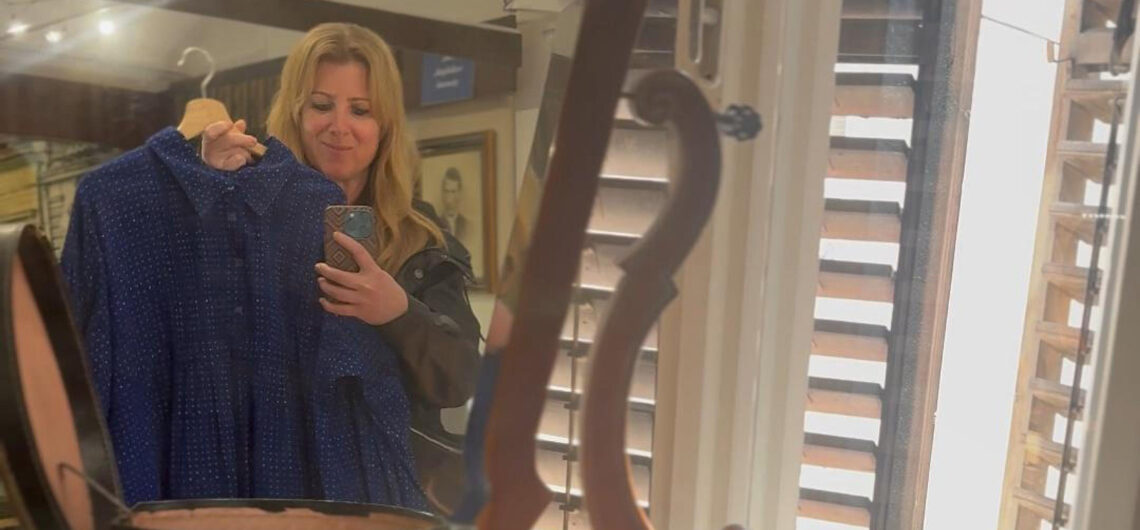
Recently, I visited the blue dyeing museum in the charming town of Pápa—and it felt like stepping into another century. What makes this place so special is that it’s not just a museum. It’s a perfectly preserved workshop.

The vats are still there.
The tools are still in place.
The fabrics still hang as if someone had just left the room.

You don’t just learn about the craft—you feel it.

Why Experiences Like This Matter

When people visit Hungary, they often focus on the big highlightsBudapest, the Parliament, the famous sights. But the real stories of a country often live elsewhere.

In small towns, local traditions and crafts like “kékfestés”.

These are the experiences I love sharing during my tours—moments that connect you not just to a place, but to its people and its history.

Curious to Explore Something Like This?

What I love most about my work is that no two tours are ever the same. This visit to Pápa and the blue dyeing workshop actually came from a traveller’s request—they were curious about local crafts and wanted to discover something beyond the usual sights. And that’s how we ended up here, surrounded by centuries-old traditions and deep indigo patterns.

If you’d like to explore Hungary in a more personal way, you can book one of my general tours directly on my website. Or… simply tell me what you’re curious about.

Whether it’s hidden gardens, local cafés, history, or traditional crafts like kékfestés, I’m always happy to create something tailored just for you.

A Tradition That Lives On

Kékfestés is not just something to admire in a museum. It’s still alive—quietly, patiently, carried forward by those who choose to continue it. And maybe that’s what makes it so special.

Not just that it survived… but that it still matters.

This Is a UNESCO Treasure from Hungary 🇭🇺💙

The Budapest mini statues by artist Mihály Kolodko are some of the city’s most delightful hidden surprises. These tiny bronze figures are scattered across Budapest, often in unexpected places, turning a walk through the city into a real-life treasure hunt.

If you’ve walked around Budapest recently, you may have noticed something tiny but very special hiding in unexpected places. They are small — sometimes only a few centimeters tall — but they have become one of Budapest’s most charming modern traditions.

Finding them has turned into a kind of urban treasure hunt for both locals and visitors.

Kolodko originally started placing these statues as a personal artistic project, but today there are dozens of them around the city, often referencing Hungarian culture, history, or pop culture in playful ways.

Some are easier to find than others. A few are right next to famous landmarks, while others are hidden in places you might easily walk past.

If you’re curious where to start, I created a map of the Kolodko mini statues in Budapest that helps you track them down.

But honestly, the fun part is spotting one unexpectedly during a walk around the city.

Once you notice your first Kolodko statue, you’ll probably start looking for them everywhere.

And trust me — after the first one, you can’t stop. Budapest is full of small details most visitors walk past.
If you enjoy discovering these hidden stories, I’d be delighted to show you some of my favourite ones on a private walk through the city.

Kolodko mini statues in Budapest

Few buildings define Budapest as instantly as Matthias Church. Rising above the Buda Castle District with its colourful tiled roof and fairy-tale silhouette, it is one of the most photographed landmarks in the Hungarian capital.

And yet, many visitors admire it from a distance without discovering what makes it truly remarkable.

Taking a closer look reveals centuries of history, architectural details often missed at first glance, and one of the most rewarding cultural experiences in Budapest.

A Church Shaped by Centuries of History

Matthias Church stands on a site where places of worship have existed since the 13th century. Over time, the building has witnessed royal ceremonies, coronations, Ottoman occupation, and major reconstructions that shaped its present appearance.

Despite its medieval origins, much of what visitors see today comes from a careful 19th-century restoration led by architect Frigyes Schulek, who created the distinctive Neo-Gothic character while preserving earlier historical elements.

This layered history is part of its charm — Matthias Church reflects the many chapters of Budapest itself rather than belonging to a single era.

Look Closer: Details Many Visitors Miss

From afar, the church almost feels unreal, but its beauty truly appears in the details.

The colourful roof, covered with decorative Zsolnay tiles, changes character depending on the light and weather throughout the day. Walking around the building reveals carved stone figures, patterned surfaces, and unexpected viewpoints that many visitors miss when remaining near the main square.

Even a slow walk around the church can feel like discovering a different monument from every angle.

Step Inside Matthias Church

While the exterior alone is impressive, stepping inside offers a completely different experience.

From the outside, Matthias Church appears bright, colourful, and almost newly restored. The interior, however, reveals an unexpected contrast — darker, more atmospheric, and deeply historic. Medieval architectural elements blend with decorative patterns influenced by the Ottoman period, reminding visitors of the many eras the building has lived through.

Standing inside, Hungarian history feels almost tangible. The richly decorated walls, painted motifs inspired by medieval designs, and filtered light from stained glass windows create a calm and contemplative atmosphere — a striking change from the lively square just outside.

Even visitors with limited time often find that a short visit inside adds depth to their understanding of Budapest’s past and cultural heritage.

Climb the Tower for One of Budapest’s Best Views

While most visitors admire Matthias Church from the square below, one of its most memorable experiences lies above the rooftops.

The tower visit offers a completely different perspective of Budapest — and remains surprisingly overlooked. Reaching the top requires climbing a series of narrow stairs, but the ascent itself becomes part of the experience. On the way up, visitors can see the church bells up close, offering a rare glimpse into the inner workings of this historic landmark.

From the very top, panoramic views open over the Buda Castle District, the Danube, and the Pest side of the city, including the Hungarian Parliament. The climb also reveals one of the church’s most remarkable features from a completely new angle: the magnificent Zsolnay roof tiles, fully visible only from above, creating a true bird’s-eye view of the building’s intricate patterns and colours.

Unlike larger viewpoints, the experience feels intimate and immersive, allowing you to see Budapest from within one of its most historic monuments rather than simply looking at it from afar.

For visitors willing to take the climb, the tower provides one of the most unique viewpoints in Budapest — and often becomes an unexpected highlight of a visit to Matthias Church.

Visiting Tips for Matthias Church

If you’re planning to visit Matthias Church, a few practical tips can make the experience much more enjoyable:

  • Visit early in the morning or later in the afternoon to avoid peak crowds in the Buda Castle District.

  • Check opening hours carefully. The church interior may be closed on Saturday afternoons due to weddings, and it is closed on Sunday mornings during church services.

  • Walk around the entire building, not just the main entrance area — some of the most beautiful architectural details appear on the quieter sides.

  • Don’t miss the interior gallery. From here, you gain a stunning elevated view over the church’s richly decorated interior. The gallery also includes a small exhibition dedicated to Hungarian coronations, reflecting the church’s important role as a coronation church in the 19th and 20th centuries.
  • Climb the tower if you can. Although there are stairs to climb, the panoramic views make it truly worth the effort.

  • Combine your visit with Fisherman’s Bastion, located directly beside the church, for iconic views over the Danube and the Hungarian Parliament.

  • Comfortable shoes are recommended, as the surrounding streets are historic cobblestones.

Beyond the Postcard View

Budapest’s most famous landmarks often reveal their beauty slowly. Matthias Church is a perfect example — instantly recognisable, yet far richer when experienced with curiosity and time.

Looking beyond the postcard view transforms a quick photo stop into a meaningful moment in the Buda Castle District.

If you’re planning your first visit to the city, you can also find Matthias Church featured in my guide to Budapest’s must-see sights.

A Local Perspective

When I guide visitors through Budapest, I often encourage them to pause here a little longer. Taking time to notice the details, stepping inside the church, or climbing the tower often turns this famous landmark into a personal highlight of the visit.

Because sometimes, truly knowing a city begins with looking closer.

Matthias Church Budapest: Look Closer at This Icon

Some places just feel right for certain cakes — and this is one of them. Rákóczi túrós at Anna Café is a perfect example of how a classic Hungarian cake and a timeless Budapest café belong together.

A classic Hungarian cake in a timeless Budapest café

Rákóczi túrós is one of the most beloved traditional Hungarian desserts, and for good reason. It’s balanced rather than sweet, familiar rather than showy, and deeply connected to Hungarian café culture. A soft pastry base, creamy túró filling, a thin layer of apricot jam, and that light, slightly crisp meringue on top — every layer has its role.

This is the kind of cake Hungarians order instinctively, without reading the menu twice.

The cake: a Hungarian classic

Rákóczi túrós isn’t about reinvention.
It’s about getting the proportions right.

When it’s well made, the filling is creamy but not heavy, the jam adds just enough brightness, and the meringue gives a gentle contrast in texture. It’s a cake that invites you to slow down — ideally with a coffee, a proper plate, and time to enjoy it without rushing.

It’s no coincidence that this dessert belongs in a classic café setting.

The café: Anna Café in Budapest

That’s exactly why Anna Café feels like such a natural match.

Anna Café is one of those places that fits effortlessly into Budapest’s historic café tradition. Elegant interiors, high ceilings, and a calm, welcoming atmosphere make it an easy choice whether you’re stopping for cake, coffee, or a longer break in the city.

The location by St. Stephen’s Basilica is a favourite of mine — central, beautiful, and ideal for a quiet café moment in the middle of the city.

More than one café, more than one mood

One of the things I love about Anna Café is that it isn’t just one place — it’s a small collection of cafés, each with its own rhythm.

In summer, I often choose the Anna Café near the Central Market Hall, where sitting outside feels relaxed and local, especially after a walk through the market or along the Danube.

In the evening, the Anna Café on Váci Street has a completely different energy. The lights, the movement of the street, and the option to switch from coffee to a glass of wine make it a lovely place to end the day.

Different locations, different moods — but the same sense of quiet elegance.

A café moment as part of the Budapest food experience

Exploring Budapest through food isn’t only about restaurants or markets — it’s also about slowing down in a local café. On my Budapest foodie tours, I always encourage visitors to experience both sides of the city’s culinary culture: hearty Hungarian dishes and the quieter pleasure of coffee and cake. A stop at a classic café, whether for Rákóczi túrós or another traditional dessert, is often what turns a good food experience into a truly memorable one.

Why this combination works

Some Budapest cafés are perfect for trends. Others are perfect for traditions.

Rákóczi túrós and Anna Café belong together because neither is trying to be more than it is. They represent the kind of Budapest café experience that has lasted for decades: well-made classics, comfortable surroundings, and moments that don’t need explaining.

Rákóczi túrós, the way I love it — at Anna Café.

Part of my Budapest Cafés series, where classic cakes, beautiful interiors, and timeless café moments come together.

Rákóczi túrós at Anna Café | Classic Hungarian Cake in Budapest

Glass House Budapest is a Holocaust memorial shaped by solidarity, Carl Lutz’s rescue efforts, and the enduring presence of loss.

There are places in Budapest I can talk about easily. Cafés, streets, viewpoints, small local stories that make people fall in love with my city.

And then there are places like the Glass House. I hesitated for a long time before writing this. Not because the story isn’t important — but because it is. And because some places resist being turned into “content.”

A quiet building with a heavy story

From the outside, the Glass House is unassuming. It doesn’t announce itself. People walk past it every day without noticing, without knowing what happened here.

During the Second World War, this building became a place of protection and rescue. Under diplomatic protection, thousands of Hungarian Jews found temporary safety within its walls. It was a space where paperwork, courage, and quick decisions meant the difference between life and death.

It is often described as a story of heroism — and it is. But it is also inseparable from an overwhelming reality: the vast majority of Hungarian Jews were not saved.

Both truths exist here at the same time.

Carl Lutz and the courage to act

The story of the Glass House cannot be told without mentioning Carl Lutz, the Swiss vice-consul in Budapest during the final years of the war.

Using diplomatic protection papers — and by deliberately stretching their intended meaning — Lutz helped save tens of thousands of Hungarian Jews. The Glass House became one of the central locations of these rescue efforts, a place where documents, quick thinking, and moral courage offered a fragile form of protection.

What makes his actions especially striking is that he did not act as a hero in the grand, cinematic sense. He acted as a civil servant who chose responsibility over obedience, and humanity over safety.

His story reminds us that heroism is often quiet, bureaucratic, and deeply risky — and that it is always shaped by the terrible context in which it exists.

Heroism does not cancel loss

This is something I think about often when standing inside the Glass House. We need stories of courage. We need examples of solidarity, of people who chose to help when helping was dangerous. These stories matter deeply.

But they don’t soften the loss. They don’t balance the numbers. They don’t turn tragedy into something easier to carry.

The Glass House doesn’t offer comfort. It offers honesty.

Why this place still matters

It would be easier to keep this story in the past — to treat it as history, finished and safely contained behind museum walls.

But the questions it raises are not historical.

What do we do when laws are unjust? What responsibility do individuals have within broken systems? What does solidarity look like when it comes at a real personal cost?

The Glass House doesn’t answer these questions. It simply insists that we ask them.

A personal note

As a guide, I am often asked for “hidden gems.” Usually that means something charming, beautiful, Instagrammable.

The Glass House is hidden in a different way. It is hidden because it asks something of us. Time. Attention. Emotional presence.

I don’t share this place to recommend it lightly, and certainly not as a checklist item. I share it because remembering matters. Because courage deserves to be named. And because loss deserves to be acknowledged without being packaged or softened.

Some places are not meant to impress us. They are meant to stay with us.

The Glass House is one of them.

For me, that memory doesn’t end at the Glass House itself. Carl Lutz is commemorated elsewhere in Budapest too — in quiet plaques, memorials, and places you might pass without noticing unless you know what you’re looking for.

I find that fitting. His legacy isn’t contained in one building. It is scattered across the city, woven into its streets, just like the lives he helped save.

The Glass House is one of those places where that legacy feels especially close — where courage and loss exist side by side, and where remembering remains an active choice.

Glass House Budapest

Snow has a way of transforming Budapest, Budapest in winter feels noticeably different. The familiar streets grow quieter, footsteps slow down, and the city reveals a softer, more intimate side. Winter in Budapest isn’t about rushing between sights — it’s about atmosphere, details, and moments that invite you to pause.

If you’re wondering whether Budapest is worth visiting in winter, the answer is a gentle but confident yes.

A Slower Side of Beautiful Budapest in Winter

When snow falls, Budapest feels more personal. Locals linger a little longer in cafés, parks feel almost private, and even the busiest areas take on a calm rhythm. This is when the city rewards those who enjoy slow travel — walking, observing, and letting places unfold naturally.

Winter light softens the architecture, and familiar landmarks feel less crowded and more contemplative. It’s a season for wandering without a strict plan, following quiet streets instead of highlights lists.

Walking Through a Snowy City

Budapest is a city made for walking, and winter emphasises this beautifully. Snow-covered paths along the Danube, peaceful parks, and residential streets offer some of the most memorable walks of the year.

Exploring on foot allows you to notice small details — the sound of trams in the snow, steam rising from café windows, and the contrast between warm interiors and the cold outside. These moments are often missed during busier seasons.

If you enjoy discovering cities at a relaxed pace, winter walks are an ideal way to experience Budapest. You can find more ideas and inspiration on my Budapest walking tours page, where I share different ways to explore the city beyond the obvious routes.

Winter Landmarks Without the Crowds

Some of Budapest’s most iconic sights feel especially atmospheric in winter. Snow highlights the lines of historic buildings, bridges feel more dramatic against a pale sky, and viewpoints offer crisp, clear perspectives.

  • The Hungarian Parliament and its surroundings in winter
  • Budapest’s bridges and how they connect the city’s two sides
  • Scenic riverside walks along the Danube

These places take on a quieter, more reflective character when the city slows down.

Winter is also an ideal time to explore Budapest’s museums, especially smaller, less crowded places that reward curiosity and attention to detail. If you enjoy discovering hidden cultural gems, you may like my visit to the Róth Miksa Memorial House, a beautifully preserved Art Nouveau museum that offers a quiet and inspiring indoor experience.

Warm Pauses Inside

One of the joys of Budapest in winter is the rhythm between outside and inside. After a walk in the cold, stepping into a café feels especially comforting. Foggy windows, warm drinks, and unhurried conversations are all part of the winter experience.

This balance — between exploration and rest — is what makes winter travel here so rewarding. It’s not about seeing everything, but about feeling connected to the city.

Is Winter the Right Time to Visit Budapest?

Winter is perfect for travellers who:

  • Prefer fewer crowds
  • Enjoy slow, mindful travel
  • Love photography and atmosphere
  • Want a more local, authentic experience

While days are shorter and colder, the city’s charm is unmistakable. Budapest doesn’t hibernate — it simply changes pace.

Discover Budapest at Your Own Rhythm

Whether you’re visiting for the first time or returning to see the city from a new perspective, winter offers a unique opportunity to connect with Budapest on a deeper level.

If you’d like help planning a personalised experience or exploring the city through thoughtful walks, feel free to visit my Contact page. I’m always happy to help you discover Beautiful Budapest — one moment at a time.

Budapest in winter

Budapest is world-famous for its grand architecture and historic cafés, but some of its most beautiful Art Nouveau treasures are much more intimate. Tucked away on a quiet street in the 7th district, the Róth Miksa Memorial House is one of those rare places that feels like a personal discovery rather than a tourist attraction.

This small museum offers a different way of experiencing Budapest: through colour, light, and craftsmanship — the very elements that define the city’s Art Nouveau heritage.

Who was Róth Miksa?

Róth Miksa was one of Hungary’s most important masters of stained glass and mosaic art at the turn of the 19th and 20th centuries. His works can still be admired across Budapest, decorating churches, public buildings, and elegant private interiors.

What makes this museum especially meaningful is that it was once his home and workshop. Visiting it feels less like walking through an exhibition and more like stepping into the personal world of an artist whose creations quietly shaped the city’s visual identity.

Many of the themes and techniques you see here reappear throughout Budapest — once you notice them, you start spotting Art Nouveau details everywhere.

What makes this museum so special?

The Róth Miksa Memorial House is small, but rich in atmosphere. Original stained glass windows fill the rooms with soft, colourful light, while mosaics and decorative details reveal the incredible level of craftsmanship behind each piece.

Unlike larger museums, this is a calm and immersive experience. You’re not rushing from room to room — instead, you’re invited to slow down and really observe. It’s one of those places where even visitors who don’t usually enjoy museums find themselves lingering.

If you’re interested in Art Nouveau architecture, design, or photography, this museum offers endless inspiration in a very compact space.

Why I recommend it as a local guide

As a Budapest-based guide, I often look for places that help visitors understand the city’s layers, not just see its highlights. This museum does exactly that.

It’s:

  • ideal on a cold, rainy, or winter day

  • perfect for travellers who appreciate beauty without crowds

  • easy to combine with a café stop or a relaxed walk

  • a wonderful introduction to Budapest’s Art Nouveau world

A visit usually takes 30–45 minutes, but what you learn here adds depth to everything you see afterwards — especially when exploring other Art Nouveau buildings around the city.

This is why stops like this naturally fit into my Art Nouveau-focused walks. That’s where details, stories, and connections bring the architecture to life.

Practical tips for visiting

  • Location: District VII, close to the city centre

  • Visit length: Around 30–45 minutes

  • Best for: Art Nouveau lovers, photographers, couples, curious travellers

  • Good to know: The museum is small and intimate with limited opening hours — part of its charm

If you enjoy discovering places that feel authentic rather than crowded, this museum is a wonderful addition to your Budapest itinerary.

Seeing Budapest through Art Nouveau details

The Róth Miksa Memorial House is proof that some of Budapest’s most memorable experiences happen behind unassuming doors. It’s quiet, refined, and deeply connected to the city’s artistic heritage.

For visitors who want more than just the main sights, exploring Budapest through its Art Nouveau details offers a completely different perspective on the city. Stained glass, mosaics, façades, and hidden interiors reveal a quieter, more refined side of Budapest.

If this way of discovering Budapest speaks to you, feel free to explore my guided walks or get in touch — I’m always happy to help you experience the city beyond the obvious.

Sometimes, the most beautiful stories in Budapest are told through glass, light, and quiet craftsmanship.

Róth Miksa Memorial House – A Hidden Art Nouveau Gem in Budapest