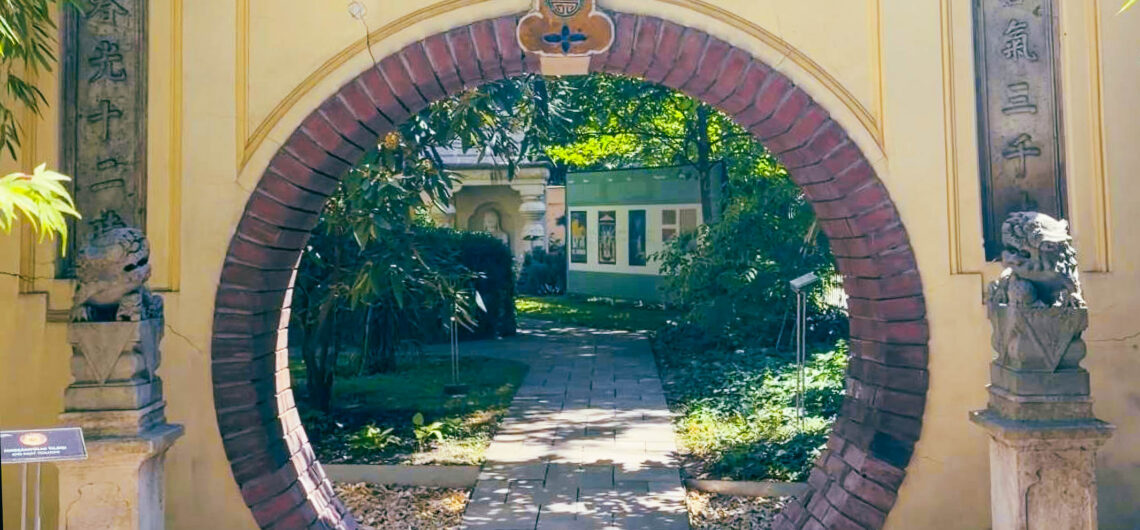
Philosophers Garden Budapest is one of those places you almost miss — but once you find it, you don’t forget it.

Beautiful Budapest is full of grand landmarks — but some of its most memorable places are the quiet ones. The ones you almost miss. The Philosophers’ Garden is one of them.

Tucked away on the slopes of Gellért Hill, this peaceful spot is part of my personal “Secret Gardens of Budapest”series — places where the city slows down, and something unexpected happens.

If you’ve already discovered the charm of Mansfeld Péter Park or the serenity of Gül Baba’s Tomb, this is another one to add to your list.

A Circle of Ideas

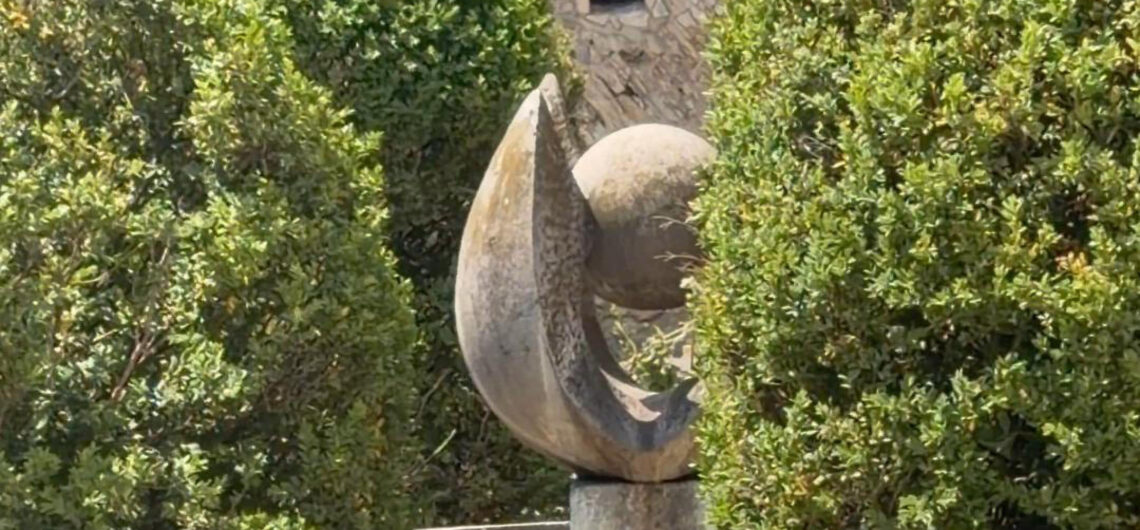
At the heart of the garden stands a quiet circle of statues — representing great spiritual and philosophical figures from different cultures.

You’ll recognize names like:

  • Buddha
  • Jesus
  • Abraham
  • Laozi
  • Akhenaten

They face each other, as if in conversation. The message is simple, but powerful: different paths, shared values. It’s not a place that overwhelms you — it’s one that gently invites you to pause.

Each statue represents a different path — different beliefs, different traditions — yet they meet here in quiet harmony. It’s a gentle reminder that, beyond our differences, there is something deeply shared in the human search for meaning, peace, and understanding.

And somehow, in this small garden above the city, you can feel exactly that.

A View Without the Crowds

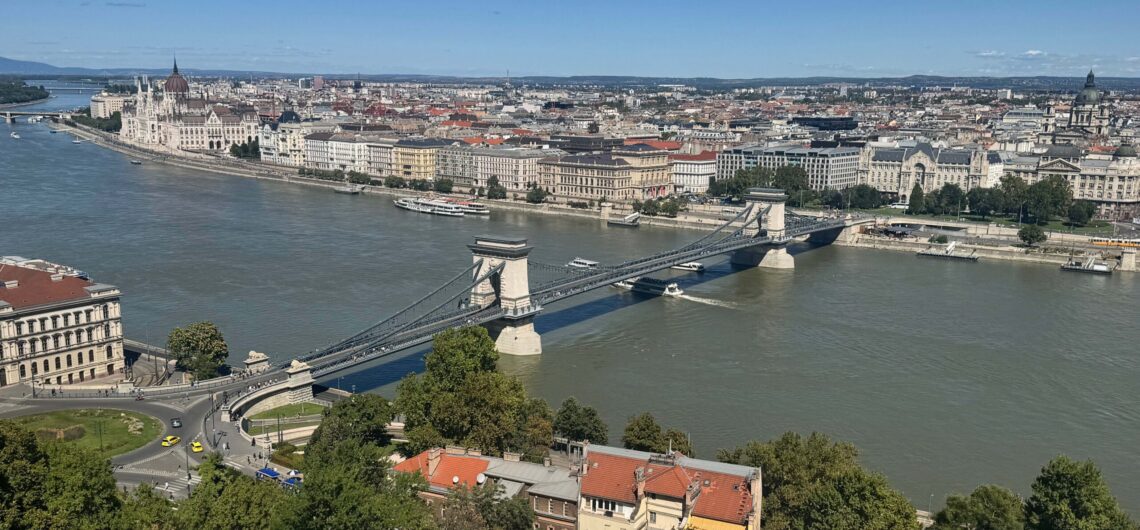
Just beyond the statues, the trees open up — and suddenly, Budapest unfolds below you. The Hungarian Parliament Building, the Danube, the bridges… All there.

But without the crowds you’ll find at the Citadella. And that changes everything.

Part of a Perfect Gellért Hill Walk

One of the best things about the Philosophers’ Garden is how easily it fits into a walk around the beautiful Gellért Hill of Budapest.

You can combine it with:

If you’re planning your route, I recommend pairing this with my posts about the Citadel and the Liberty Statue — together, they create a beautiful, varied walk through one of Budapest’s most iconic hills.

Why Philosophers’ Garden Stays With You

There’s something special about places like this. They’re not the biggest sights. They’re not the most famous. But they’re the ones people remember later.

As a private guide, I often include spots like this in my tours — because they show a different side of Budapest. A quieter, more personal one.

Feel free to explore hidden places like this with stories and local insight or contact me for further details.

Save This for Later

Budapest isn’t just about what you see. It’s about the places where you stop, breathe, and feel the city. The Philosophers’ Garden is one of those places. And if you’d like to discover more hidden corners like this — I’d be happy to show you.

Philosophers Garden Budapest

Still looking for the best views in Budapest? You’ll probably hear about rooftop bars, river cruises, or the Fisherman’s Bastion—but if you want a truly panoramic view of the city, there’s one place that stands above the rest: Gellért Hill.

Rising high above the Danube on the Buda side, this viewpoint offers one of the most iconic vistas in the Hungarian capital—and it’s not just beautiful, it’s also part of a UNESCO World Heritage Site.

Why Gellért Hill Has the Best Views in Budapest

From the top, Budapest unfolds in front of you. You’ll see:
  • The majestic Hungarian Parliament Building
  • The Danube cutting through the city
  • The elegant Chain Bridge and other historic bridges
  • Both Buda and Pest in one sweeping panorama

What makes this view special is its scale—you’re not just looking at one landmark, but the entire city layout, exactly where history and geography meet.

A UNESCO-Protected Panorama

The view from Gellért Hill is part of the “Budapest, including the Banks of the Danube, the Buda Castle Quarter and Andrássy Avenue” UNESCO listing.

That means what you’re looking at isn’t just pretty—it’s considered globally significant. Few cities in the world offer a panorama where:

  • A historic river divides two distinct city halves
  • Architectural styles span centuries
  • And the overall composition remains so beautifully intact

How to Get to Gellért Hill

Getting to the top is easier than it looks—but there is a bit of a climb. Here are your main options:

From Liberty Bridge

  • 15–20 minute walk uphill
  • Includes stairs
  • Slightly more scenic, a bit more effort

From Elizabeth Bridge

  • 15–20 minute walk
  • Fewer stairs, but still uphill
  • A more gradual climb

By bus (Bus 27)

  • Short ride uphill
  • About a 10-minute walk from the stop
  • Best option if you want to save energy

Tip: Wear comfortable shoes—the paths can be uneven in places.

Visiting Gellért Hill as Part of a Tour

Gellért Hill is a stop I almost always include when I design a custom itinerary—especially for first-time visitors.

It’s one of the few places where, within minutes, you can truly understand Budapest: the layout of the city, the Danube, and the relationship between Buda and Pest.

Because it’s easily accessible by car, it works perfectly as a short stop during a driving tour, or as part of a tailor-made experience. Even a brief visit here can add a lot of context to the rest of your time in the city.

What Is the Citadel?

At the top of Gellért Hill, you’ll find the Citadel, a fortress built in the 19th century.

Today, most visitors come here not for the history—but for the viewpoints surrounding it, which offer some of the best photo opportunities in Budapest.

Is Gellért Hill Worth It?

Absolutely.

Yes, there’s a short uphill walk.
Yes, it can get a bit busy.

But standing above the Danube, with the entire city spread out below you, you’ll understand why this view is protected—and why it’s one of the most unforgettable experiences in Budapest.

Final Tip

If you’re already on Gellért Hill, don’t rush back down.

Take a few extra minutes to explore:

  • a quieter corner away from the crowds
  • a hidden garden nearby
  • or even a small statue with a story to tell

Budapest always rewards those who slow down.

Discover Budapest with a Local Guide

If you’d like to experience places like Gellért Hill in a more personal and meaningful way, I offer private, tailor-made tours in Budapest.

Whether you’re interested in iconic views, hidden corners, or the stories behind the city, I design each tour around your interests and pace—so you can see Budapest in a way that truly feels your own.

Feel free to get in touch to start planning your experience.

Best View in Budapest? Gellért Hill

[/vc_column][/vc_row]

There are moments in Hungary when you feel like time slows down. Not in the grand, obvious places—but in the quiet ones. In workshops where hands have been repeating the same movements for generations. In patterns that have been printed again and again, unchanged for centuries.

This is where you find kékfestés—Hungarian blue dyeing.

A Craft Passed Down Through Generations

Kékfestés is not just a technique. It’s a family tradition. For centuries, workshops across Hungary were run by families who guarded their knowledge carefully. The patterns, the tools, even the recipes for the resist paste were often passed down from parent to child—sometimes for five or six generations.

In a world where everything moves fast, this kind of continuity feels almost unbelievable. And yet, it still exists.

The Human Side Behind the Patterns

When you look at these deep blue fabrics, it’s easy to focus on the beauty—the delicate white motifs, the rich indigo shades. But what makes them truly special is what you don’t immediately see.

Each pattern is applied by hand using carved wooden blocks, each piece is dipped, dried, and treated with care, each imperfection tells you: this was made by a person, not a machine.

It’s slow. It’s precise. And it’s deeply human.

A UNESCO-Protected Tradition

In 2018, kékfestés was officially recognised by UNESCO as part of the Intangible Cultural Heritage of Humanity. This recognition is not just about preserving a technique—it’s about protecting a way of life.

Because crafts like this don’t survive on efficiency. They survive on dedication, identity, and community.

My Visit to the Kékfestő Múzeum

Recently, I visited the blue dyeing museum in the charming town of Pápa—and it felt like stepping into another century. What makes this place so special is that it’s not just a museum. It’s a perfectly preserved workshop.

The vats are still there.
The tools are still in place.
The fabrics still hang as if someone had just left the room.

You don’t just learn about the craft—you feel it.

Why Experiences Like This Matter

When people visit Hungary, they often focus on the big highlightsBudapest, the Parliament, the famous sights. But the real stories of a country often live elsewhere.

In small towns, local traditions and crafts like “kékfestés”.

These are the experiences I love sharing during my tours—moments that connect you not just to a place, but to its people and its history.

Curious to Explore Something Like This?

What I love most about my work is that no two tours are ever the same. This visit to Pápa and the blue dyeing workshop actually came from a traveller’s request—they were curious about local crafts and wanted to discover something beyond the usual sights. And that’s how we ended up here, surrounded by centuries-old traditions and deep indigo patterns.

If you’d like to explore Hungary in a more personal way, you can book one of my general tours directly on my website. Or… simply tell me what you’re curious about.

Whether it’s hidden gardens, local cafés, history, or traditional crafts like kékfestés, I’m always happy to create something tailored just for you.

A Tradition That Lives On

Kékfestés is not just something to admire in a museum. It’s still alive—quietly, patiently, carried forward by those who choose to continue it. And maybe that’s what makes it so special.

Not just that it survived… but that it still matters.

This Is a UNESCO Treasure from Hungary 🇭🇺💙

If you only have a few hours in Budapest, planning is everything.

The city is full of stunning architecture, rich history, and beautiful viewpoints — but without a clear route, it’s easy to waste time going back and forth.

This guide will help you focus on the essential Budapest highlights, so you can experience the best of the city even on a tight schedule.

1. Heroes’ Square & City Park

Start your visit at one of the most important squares in Hungary: Heroes’ Square. The statues here represent Hungary’s most important historical figures, making it a perfect introduction to the country’s past.

Just behind the square, you’ll find City Park, a green oasis with hidden gems like Vajdahunyad Castle — ideal for a short, relaxed stroll before heading into the city center.

Read more:  A Must-See in Budapest: City Park

2. Andrássy Avenue & the Opera House

From Heroes’ Square, follow Andrássy Avenue, one of Budapest’s most elegant boulevards and a UNESCO World Heritage site. Lined with historic buildings, cafés, and embassies, it leads you straight toward the city center.

On the way, you’ll pass the stunning Hungarian State Opera House, a masterpiece of 19th-century architecture.

Read more: Budapest public transport tips (Metro Line 1 runs here)

3. St. Stephen’s Basilica

Next, head to St. Stephen’s Basilica, the largest Catholic church in Budapest.

The interior is impressive — but if you have time, go up to the dome. The panoramic view offers one of the best perspectives over the city.

Local tip: Visit in the late afternoon for softer light and fewer crowds.

4. The Hungarian Parliament

No visit to Budapest is complete without seeing the Hungarian Parliament Building.

Standing right on the Danube, it’s one of the most iconic buildings in Europe. For the best view, take a short walk along the river — or admire it from the Buda side for a full panoramic perspective.

Read more: A Must-See in Budapest: Houses of Parliament

5. Buda Castle District

Cross the Danube and explore the historic Buda Castle District.

This area feels completely different from Pest — quieter, more atmospheric, and full of history. Wander through cobblestone streets, discover hidden corners, and enjoy some of the best views in Budapest.

Read more: the Buda Castle District.

Can You See All This in a Few Hours?

Yes — but it’s not always as easy as it looks on the map. Distances, hills (especially on the Buda side), and the depth of history at each stop can make it difficult to truly enjoy the experience without rushing.

Want to Make the Most of Your Time?

This route is exactly what I cover in my half-day tours — designed for travelers who want to see the highlights without the stress of planning.

Whether you prefer walking or a more relaxed pace by car, you’ll experience Budapest through stories, local insights, and carefully chosen viewpoints.

Final Thoughts

Budapest is a city that rewards curiosity. Even if you only have a few hours, you can experience its beauty — especially if you focus on the right places. And if you’d like to go beyond the surface, I’d be happy to show you the Budapest I know and love.

Budapest in a Few Hours 🇭🇺 Must-See Highlights

The Budapest half marathon might just be one of the most scenic races in Europe. There are many beautiful races in the world—but how many let you run past a Parliament that looks like a fairytale, along the Danube, with castles watching from above?

Yesterday, Budapest showed its best side during the Vivicittá Half Marathon—and honestly, it felt less like a race and more like a moving postcard.

Running Through History

The route takes you through some of the most iconic UNESCO-listed sights in the city. As you run, you’re not just chasing kilometres—you’re moving through centuries.

You pass:

It’s one of those rare experiences where you actually forget you’re running.

Perfect Conditions, Perfect Energy

This year, the weather couldn’t have been better—sunshine, blue skies, and just the right temperature.

But what really makes this race special is the atmosphere:

  • Locals cheering from the sidelines
  • Music along the route
  • Runners from all over the world

There’s a feeling of connection that’s hard to describe unless you’ve experienced it.

Why Budapest Is a Dream Destination for Runners

If you’re a runner, Budapest is more than just a race destination—it’s a place to explore on foot.

Some of my favourite running spots:

  • Margaret Island – car-free, green, and peaceful
  • Danube promenade – iconic views with every step
  • Gellért Hill – for a challenge + reward

More Than a Race

The Vivicittá isn’t just about finishing times. It’s about:

  • Seeing Budapest in a completely different way
  • Feeling part of something bigger
  • And creating memories that stay with you long after the race is over

If you’re thinking about combining travel with running—Budapest should absolutely be on your list. And if you’d like to explore the city beyond the race route, I’d love to show you my favourite hidden corners.

Would You Run This? Budapest Half Marathon

Few buildings define Budapest as instantly as Matthias Church. Rising above the Buda Castle District with its colourful tiled roof and fairy-tale silhouette, it is one of the most photographed landmarks in the Hungarian capital.

And yet, many visitors admire it from a distance without discovering what makes it truly remarkable.

Taking a closer look reveals centuries of history, architectural details often missed at first glance, and one of the most rewarding cultural experiences in Budapest.

A Church Shaped by Centuries of History

Matthias Church stands on a site where places of worship have existed since the 13th century. Over time, the building has witnessed royal ceremonies, coronations, Ottoman occupation, and major reconstructions that shaped its present appearance.

Despite its medieval origins, much of what visitors see today comes from a careful 19th-century restoration led by architect Frigyes Schulek, who created the distinctive Neo-Gothic character while preserving earlier historical elements.

This layered history is part of its charm — Matthias Church reflects the many chapters of Budapest itself rather than belonging to a single era.

Look Closer: Details Many Visitors Miss

From afar, the church almost feels unreal, but its beauty truly appears in the details.

The colourful roof, covered with decorative Zsolnay tiles, changes character depending on the light and weather throughout the day. Walking around the building reveals carved stone figures, patterned surfaces, and unexpected viewpoints that many visitors miss when remaining near the main square.

Even a slow walk around the church can feel like discovering a different monument from every angle.

Step Inside Matthias Church

While the exterior alone is impressive, stepping inside offers a completely different experience.

From the outside, Matthias Church appears bright, colourful, and almost newly restored. The interior, however, reveals an unexpected contrast — darker, more atmospheric, and deeply historic. Medieval architectural elements blend with decorative patterns influenced by the Ottoman period, reminding visitors of the many eras the building has lived through.

Standing inside, Hungarian history feels almost tangible. The richly decorated walls, painted motifs inspired by medieval designs, and filtered light from stained glass windows create a calm and contemplative atmosphere — a striking change from the lively square just outside.

Even visitors with limited time often find that a short visit inside adds depth to their understanding of Budapest’s past and cultural heritage.

Climb the Tower for One of Budapest’s Best Views

While most visitors admire Matthias Church from the square below, one of its most memorable experiences lies above the rooftops.

The tower visit offers a completely different perspective of Budapest — and remains surprisingly overlooked. Reaching the top requires climbing a series of narrow stairs, but the ascent itself becomes part of the experience. On the way up, visitors can see the church bells up close, offering a rare glimpse into the inner workings of this historic landmark.

From the very top, panoramic views open over the Buda Castle District, the Danube, and the Pest side of the city, including the Hungarian Parliament. The climb also reveals one of the church’s most remarkable features from a completely new angle: the magnificent Zsolnay roof tiles, fully visible only from above, creating a true bird’s-eye view of the building’s intricate patterns and colours.

Unlike larger viewpoints, the experience feels intimate and immersive, allowing you to see Budapest from within one of its most historic monuments rather than simply looking at it from afar.

For visitors willing to take the climb, the tower provides one of the most unique viewpoints in Budapest — and often becomes an unexpected highlight of a visit to Matthias Church.

Visiting Tips for Matthias Church

If you’re planning to visit Matthias Church, a few practical tips can make the experience much more enjoyable:

  • Visit early in the morning or later in the afternoon to avoid peak crowds in the Buda Castle District.

  • Check opening hours carefully. The church interior may be closed on Saturday afternoons due to weddings, and it is closed on Sunday mornings during church services.

  • Walk around the entire building, not just the main entrance area — some of the most beautiful architectural details appear on the quieter sides.

  • Don’t miss the interior gallery. From here, you gain a stunning elevated view over the church’s richly decorated interior. The gallery also includes a small exhibition dedicated to Hungarian coronations, reflecting the church’s important role as a coronation church in the 19th and 20th centuries.
  • Climb the tower if you can. Although there are stairs to climb, the panoramic views make it truly worth the effort.

  • Combine your visit with Fisherman’s Bastion, located directly beside the church, for iconic views over the Danube and the Hungarian Parliament.

  • Comfortable shoes are recommended, as the surrounding streets are historic cobblestones.

Beyond the Postcard View

Budapest’s most famous landmarks often reveal their beauty slowly. Matthias Church is a perfect example — instantly recognisable, yet far richer when experienced with curiosity and time.

Looking beyond the postcard view transforms a quick photo stop into a meaningful moment in the Buda Castle District.

If you’re planning your first visit to the city, you can also find Matthias Church featured in my guide to Budapest’s must-see sights.

A Local Perspective

When I guide visitors through Budapest, I often encourage them to pause here a little longer. Taking time to notice the details, stepping inside the church, or climbing the tower often turns this famous landmark into a personal highlight of the visit.

Because sometimes, truly knowing a city begins with looking closer.

Matthias Church Budapest: Look Closer at This Icon

Budapest is often called the City of Baths, and this title is far more than a poetic nickname.
Thanks to its natural thermal springs, bathing has been part of daily life here for centuries – shaping the city’s culture, architecture, and rhythms of everyday living.

With historic thermal baths, mineral-rich waters, and year-round outdoor pools, Budapest is one of the world’s most important spa cities.

A city built on natural thermal springs

Budapest lies on a unique geological fault line where 123 natural thermal springs reach the surface. These waters have been used since Roman times, making Budapest a bathing destination for nearly 2,000 years.

The Romans built the first bath complexes here, followed by Ottoman-era Turkish baths in the 16th century. Later, in the 19th and early 20th centuries, elegant spa buildings transformed bathing into a social and cultural ritual.

What makes Budapest special is that this tradition never disappeared – it simply became part of modern life.

Thermal baths are part of everyday life in Budapest

Unlike many spa cities, Budapest’s thermal baths are not just tourist attractions.
Locals visit them regularly – before work, after work, or as part of their weekly routine.

You’ll often see elderly men playing chess in warm water, friends chatting in outdoor pools, or couples quietly relaxing together. For Hungarians, bathing is linked to health, stress relief, and well-being, but also to habit and community.

It’s normal life – just warmer.

Historic baths and stunning architecture

Budapest’s baths are as famous for their architecture as for their thermal water.
Each one reflects a different period of the city’s history, from Ottoman domes to grand 19th-century spa palaces.

The most famous is Széchenyi Thermal Bath, one of Europe’s largest thermal bath complexes. Its outdoor pools are open year-round and are especially atmospheric in winter, when steam rises into the cold air.

Another architectural gem is Gellért Thermal Bath, known for its Art Nouveau design, mosaics, and stained glass.
Please note: Gellért Thermal Bath is currently closed for renovations, with reopening planned in the coming years.

For a more historic experience, Rudas Thermal Bath offers an authentic Ottoman atmosphere with its 16th-century domed pool, still used much as it was centuries ago.

Locals often favour Lukács Thermal Bath, known for its strong medicinal waters and calmer, less touristy feel.

Even without bathing, these buildings alone tell the story of Budapest’s spa culture.

Bathing in Budapest in every season

One of the most iconic Budapest experiences is soaking in a steaming outdoor pool while it’s cold outside. Snow falling, warm mineral water, and historic surroundings create a scene you won’t forget.

Budapest’s thermal baths are open all year, making the city a great destination in any season. Winter offers a magical, calm atmosphere, while summer feels social and lively.

There is no bad time to visit a Budapest bath – only different experiences.

How to experience Budapest’s bath culture as a visitor

To truly enjoy Budapest’s thermal baths:

  • Slow down – bathing here is about relaxation, not rushing

  • Try thermal pools, not only swimming pools

  • Observe locals and follow their rhythm

  • Treat it as a cultural experience, not just a spa visit

Understanding the meaning behind the tradition makes the experience far more memorable.

Why Budapest truly is the City of Baths

Budapest’s bath culture is not a relic of the past – it’s alive and evolving. It connects ancient history with modern wellness, impressive architecture with everyday routines, and locals with visitors from around the world.

That’s why Budapest isn’t simply a city with baths. It’s a city defined by them.

If you’d like to understand Budapest’s thermal baths beyond just visiting one, my Budapest Baths walking tour explores the history, traditions, and everyday role of bathing in the city. We walk between historic bath buildings, talk about Ottoman and modern spa culture, and I share practical tips on how locals actually use the baths today.

It’s a relaxed, story-focused walk designed to help you experience Budapest’s bath culture with confidence and local insight.

Budapest Thermal Baths | City of Baths

Winter in Budapest can be cold — sometimes very cold. But that doesn’t mean it’s a bad time to visit. Quite the opposite.

Winter is when Budapest slows down, becomes more atmospheric, and reveals its cozy side. With the right balance of warm indoor experiences, short scenic walks, and smart planning, the city is a wonderful winter destination.

Here are my favourite things to do in Budapest when temperatures drop — all tried and tested as a local guide.

Thermal Baths: The Ultimate Winter Experience

If there’s one thing Budapest does better in winter than almost anywhere else, it’s thermal baths.

Stepping into hot, steamy water while the air around you is cold is a uniquely Budapest feeling — and winter is actually the best season for it.

Local tips:

  • Go early morning or late afternoon on weekdays

  • Outdoor pools feel warmer in winter than in summer

  • Take your time — this is not a rushed experience

Thermal baths are not just relaxing, they’re also deeply part of Budapest’s everyday life.

Beautiful Museums (Warm, Inspiring, Never Boring)

Budapest has several museums that are perfect for winter days — not only for their collections, but for their stunning interiors.

Museum of Fine Arts

Grand halls, classical architecture, and one of the best fine art collections in Central Europe. Even a short visit feels special.

Hungarian National Museum

A great place to understand Hungary’s history, with a beautiful staircase and calm atmosphere — ideal on a cold afternoon.

House of Music

A modern, interactive museum set in City Park. It’s engaging, creative, and works well even if you’re not a “museum person”.

Tip: Winter is perfect for museums because you don’t feel like you’re “missing out” on outdoor sightseeing.

Caves: The Perfect Temperature All Year Around

One of Budapest’s most underrated winter experiences is its cave system. Underground, the temperature stays pleasant and stable, making caves ideal no matter the weather outside.

Buda Hills Caves

A fascinating underground network beneath the Buda Hills, combining geology and history.

Cave Church

A unique church carved into the rock at the foot of Gellért Hill — atmospheric and memorable.

Hospital in the Rock

One of the most powerful museums in Budapest, telling the story of wartime and Cold War medicine in an underground hospital setting.

These places are not only warm — they’re also deeply connected to Budapest’s history.

Power Warm-Ups on Public Transport

Here’s a very local winter trick: use Budapest’s public transport strategically.

Trams and metro cars are well-heated and can double as short warm-up breaks between stops.

  • Take a scenic tram ride along the Danube

  • Use the metro to avoid long outdoor walks

  • Plan sightseeing in compact areas rather than crossing the city on foot

Budapest’s transport system is efficient, easy to use, and a lifesaver on freezing days.

Winter-Friendly Walking: Short, Scenic & Slow

Winter is not the season for long walks — and that’s perfectly fine.

Instead:

  • Explore one neighborhood at a time

  • Focus on streets, views, and atmosphere

  • Stop often for cafés or indoor breaks

This slower rhythm is exactly what makes winter in Budapest special.

The Best Way to Explore Budapest in Winter

Winter is the perfect time for:

  • Shorter, half-day private tours

  • Flexible routes adapted to the weather

  • Experiences that mix indoor and outdoor stops

Food-focused tours are especially enjoyable in cold weather — warm dishes, markets, and cafés make winter sightseeing both comfortable and memorable.

If you’re visiting Budapest in winter, I always recommend choosing experiences that work with the season, not against it.

You can explore my private Budapest tours, including shorter walks and foodie experiences, here.

Final Thoughts

Budapest in winter is not about rushing through sights. It’s about warmth, atmosphere, and discovering the city at a gentler pace. If you dress well, plan smartly, and embrace cozy experiences, winter might just become your favorite season in Budapest 🤍

Budapest in Winter ❄️ Cozy Things to Do When It’s Freezing

Budapest sparkles at Christmas time especially at the authentic Budapest Christmas Markets. From twinkling lights and festive music to handmade gifts and joyful traditions, the city transforms into a true winter wonderland each year.

The first Christmas markets are already open for the 2025 season, bringing locals and visitors together in celebration. Here’s a look at three of the most beautiful Budapest Christmas markets — each with its own special atmosphere and must-see experiences.

Vörösmarty Classic Xmas

📍 Vörösmarty Square, District V
🗓 14 November – 31 December 2025
🕐 Sun–Thu 11:00–21:00; Fri–Sat 11:00–22:00;
24 Dec 10:00–14:00; 25–26 Dec 12:00–18:00; 31 Dec 11:00–18:00

The heart of Budapest’s festive season beats at Vörösmarty Classic Xmas, one of the oldest and most beloved Christmas fairs in Central Europe. With its charming wooden stalls, live folk performances, and glittering decorations, it perfectly captures the spirit of the season.

Highlight: The miniature Christmas train — a delightful ride that winds around the square and fills children (and adults!) with joy.

Stroll among Hungarian artisans’ stands, admire the giant Christmas tree, and take in the atmosphere as the scent of pine and cinnamon fills the air. This market is the city’s warm, traditional heart — festive, authentic, and endlessly photogenic.

Advent Bazilika

📍 St. Stephen’s Square, District V
🗓 15 November 2025 – 1 January 2026
🕐 Mon–Thu 11:30–22:00; Fri & Sat 11:00–23:00; Sun 11:00–22:00
(Closed 24 Dec, limited opening 25–26 Dec 12:00–18:00)

For the fourth year in a row, Advent Bazilika has been voted Europe’s most beautiful Christmas market, and it truly lives up to its reputation again this year. Nearly a hundred Hungarian artisans fill the square with handmade gifts, light displays illuminate the Basilica, and festive music creates an unforgettable atmosphere.

Highlight: The 3D light show projected on the Basilica — a mesmerizing performance that brings Christmas stories to life every evening.

Visitors can browse unique crafts, enjoy concerts and some great Hungarian cuisine. Soak up the magical ambience surrounded by one of Budapest’s most iconic landmarks!

Budapest Christmas Market at Városháza Park

📍 Városháza Park (City Hall Park), District V
🗓 14 November 2025 – 4 January 2026
👉 Official page

Budapest’s newest and most dynamic Christmas experience, held right beside City Hall, blends classic market charm with modern festive attractions. It’s especially family-friendly, with plenty of activities for kids and beautiful decorations for every age to enjoy.

Highlights:

  • The Santa Claus Trolley, rolling through downtown Budapest and spreading Christmas cheer.

  • A phenomenal light show that transforms the park with vibrant colours and joyful energy.

Városháza Park also features an ice rink (actually an ice rink corridor) and creative artisan stalls. Don’t miss the interactive installations — making it one of the most exciting winter experiences in Budapest this year.

Experience Budapest at Its Most Magical

Each of these markets offers something unique: tradition at Vörösmarty Classic Xmas, elegance at Advent Bazilika, and playfulness at the Budapest Christmas Market in Városháza Park. I’m happy to include the visit of these markets in the Budapest walking or driving tours or can plan a tour around the magic of the Christmas markets.

Whether you’re coming for the sights, the crafts, or simply the holiday spirit, Budapest’s Christmas markets promise unforgettable memories — and a beautiful reason to fall in love with the city all over again.

Coming soon: I’ll dedicate a separate post to all the best food and drink options once the other Budapest Christmas markets open — from mulled wine and chimney cake to festive Hungarian street food. Stay tuned!

Budapest’s Christmas Markets Look Magical in 2025

When people ask me about my favourite museums in Budapest, Hospital in the Rock is always at the top of my list—even though it isn’t one of the big, famous institutions you see everywhere. It’s a place hidden deep under Buda Castle, carved into the natural cave system, where history feels raw, honest, and very real.

Hospital in the Rock is one of the most authentic museums in Budapest. Not because it’s pretty (it isn’t). Not because you can take great photos (you can’t). But because the stories here are told with a kind of honesty you rarely find: factual, emotional, unembellished. It’s a place where the past speaks for itself.

Hospital in the Rock: A Museum That Doesn’t Try to Impress—It Simply Tells the Truth

Walking through the entrance hall, you might wonder what’s so special about this place. But once your tour guide leads you underground, you’ll understand immediately.

During World War II and the 1956 revolution, this was a real emergency hospital—small, overcrowded, and constantly in use during the siege of Budapest. Later, during the Cold War, it was expanded into a nuclear fallout shelter, prepared for a future no one wanted to imagine.

There’s nothing staged here. No over‑the‑top dramatics. Just preserved rooms, original equipment, wax figures that quietly show what life looked like in those moments, and stories told with care.

And honestly? That’s why I love it.

The Tour Guides Make All the Difference

Every visit is guided, and the team here is exceptional. They know the museum inside out—not just the facts, but the human side of the story. They speak with warmth, precision, and respect for the people who lived and worked here.

I’ve been many times now, and every guide brings something slightly different: a personal interpretation, a surprising anecdote, or a detail I had never noticed. This museum isn’t just about looking. It’s about listening.

A Powerful Reminder of How the Past Shapes the Present

Hospital in the Rock is emotional—not in a dramatic way, but in a deeply human one. You walk through the old wards and operating rooms, see how people worked under impossible conditions, and suddenly history doesn’t feel distant anymore.

And that’s why I think this place matters today. You learn so much from the past—about resilience, humanity, conflict, and cooperation—that it becomes easier to understand the present… and even imagine the future with more clarity.

A Great Visit in Any Season

One practical advantage that I always mention to my guests: the museum is underground, with a constant temperature around 15–18°C.

That means:

  • perfect for rainy days,
  • perfect for winter,
  • perfect for Budapest’s very hot summers.

Whatever the weather is doing outside, Hospital in the Rock is a comfortable—and fascinating—escape.

Practical Information for Planning Your Visit

Tickets & Pricing

Hospital in the Rock has two different pricing structures: a standard tour ticket and a donation-based ticket. I always recommend choosing the donation option if you can—it supports preservation work, educational programs, and ongoing historical research.

How to buy tickets:

  • Tickets can be purchased at the machines right by the entrance.
  • Card payment only.
  • During high season, tours fill up quickly, so it’s highly recommended to book in advance.

Location: Beneath Buda Castle (entrance at Lovas utca 4/C)
Tours: Guided only, usually every hour (English available + audioguides)
Photography: Not allowed inside the tunnels
Duration: About 60 minutes
Type: History, WWII, Cold War, medical history, underground Budapest

It’s an especially great stop if you’re already exploring Buda Castle, I’m happy to start or finish a tour here, so that you have time to explore.

Why You Shouldn’t Miss It

If you’re looking for a museum that leaves a lasting impression, something outside the usual tourist circuit, Hospital in the Rock is for you. It’s educational, emotional, authentic—and one of the most meaningful places you can visit in Budapest.

For me, it’s a reminder that history isn’t just something in books. It happened here, underground, where you can still feel its echo.

Add Hospital in the Rock to Your Budapest Tour

If you’d like to explore Hospital in the Rock as part of a guided experience, I’d be delighted to include it in your itinerary. It’s a fantastic addition to both my Buda Castle Walking Tour and my Communist Budapest Tour, offering powerful context and a deeper understanding of the city’s past. If you’re interested, just let me know when booking and I’ll tailor the tour to include this unforgettable visit.

Hospital in the Rock is one of Budapest’s most dramatic museums