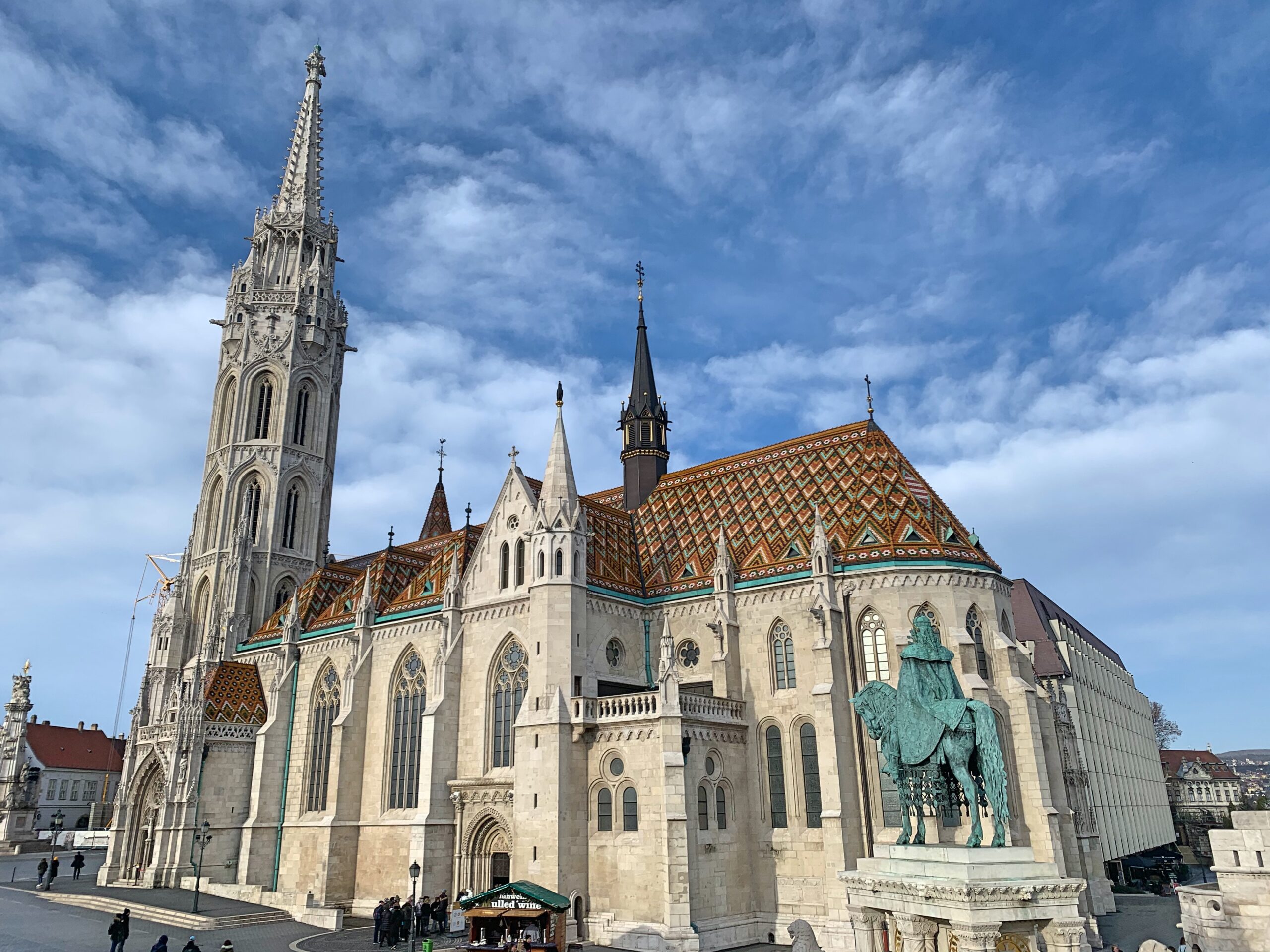
Perched high above the city in the heart of the Buda Castle District, Matthias Church is one of the most remarkable and layered monuments in Budapest. More than just one of the city’s oldest churches, it is a living witness to over a thousand years of Hungarian and European history — still functioning today as an active place of worship.
Walking through its doors is like stepping into a richly illustrated history book, where every wall, pattern, and symbol tells a story.
Where Sacred History Meets Power and Politics
The church stands on the highest point of Castle Hill, within the Buda Castle District, a location chosen deliberately. For centuries, this was the center of royal power, religious authority, and military strategy.
Although commonly called Matthias Church, its official name is the Church of Our Lady. The popular nickname comes from King Matthias Corvinus, one of Hungary’s most beloved rulers, who left a strong mark on the building’s history — including royal ceremonies and architectural additions.
A Rare Blend of Christian and Ottoman Heritage
One of the church’s most fascinating aspects is something many visitors miss at first glance:
the coexistence of Christian and Muslim decorative elements.
During the Ottoman occupation in the 16th century, the church was converted into a mosque. While later reconsecrated as a Christian church, traces of this period remain visible — a rare and tangible reminder of how cultures overlapped, clashed, and influenced one another in Central Europe.
Very few churches in Europe still preserve such visible layers of both traditions in one space.
A “New” Church with an Old Soul
At first glance, Matthias Church looks surprisingly fresh and colorful — almost too perfect to be medieval. That’s because much of what we see today dates from a major 19th-century restoration.
Rather than aiming for strict historical accuracy, the restorers created a romantic, idealized vision of the Middle Ages, rich in symbolism, patterns, and colour. The result is an interior that feels theatrical, immersive, and deeply atmospheric.
Look closely, and you’ll notice:
-
painted walls instead of bare stone
-
intricate motifs inspired by folk art and medieval manuscripts
-
a strong sense of storytelling rather than minimalism
The Roof That Became an Icon
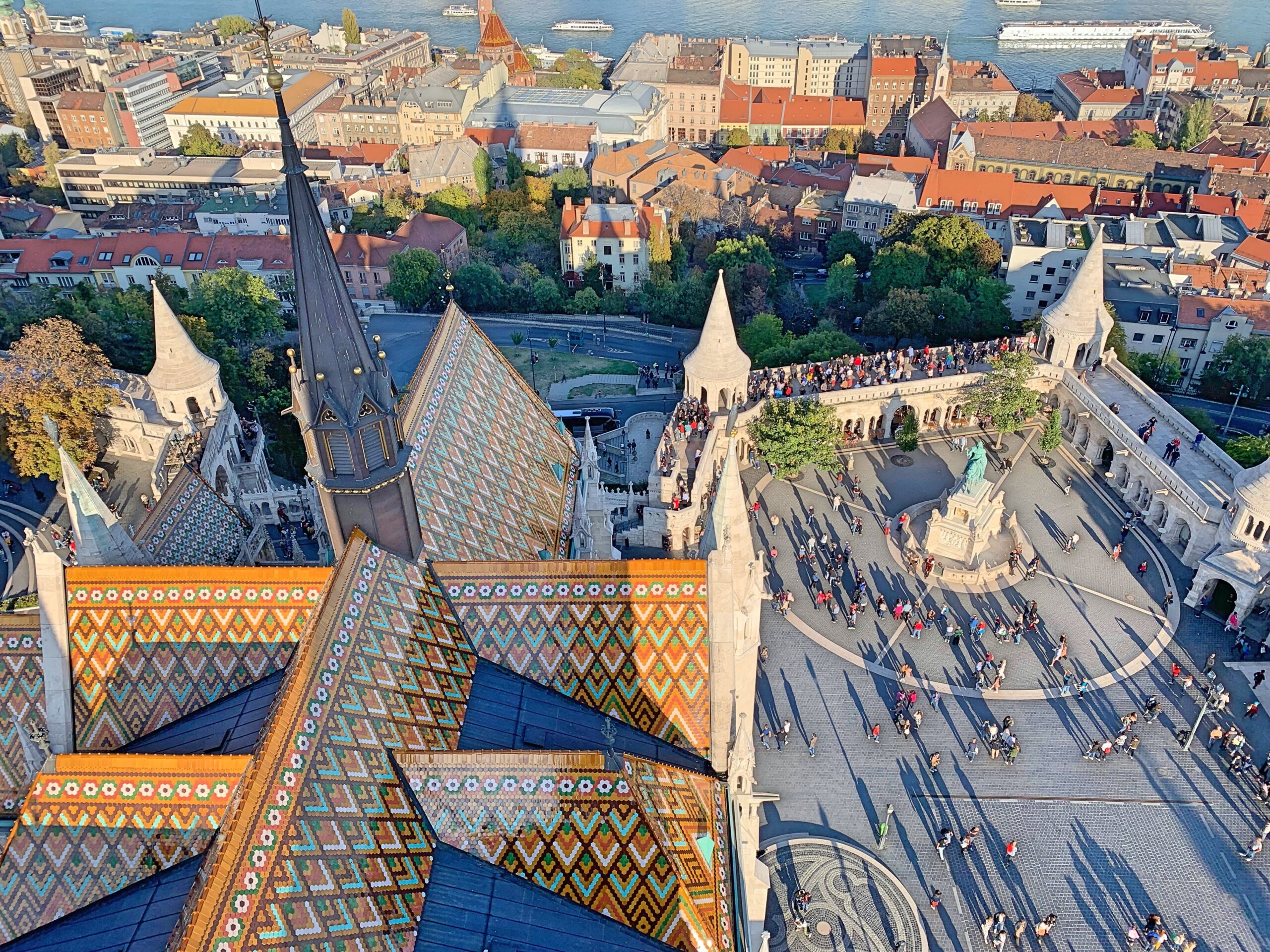
One of the most photographed features of Matthias Church is its spectacular roof, covered with around 250,000 colorful ceramic tiles produced by the famous Zsolnay factory.
The geometric patterns shimmer differently depending on the light and weather, making the church a visual highlight of the skyline in every season — from bright summer sun to snowy winter days.
Climbing the Spire: A Different Perspective
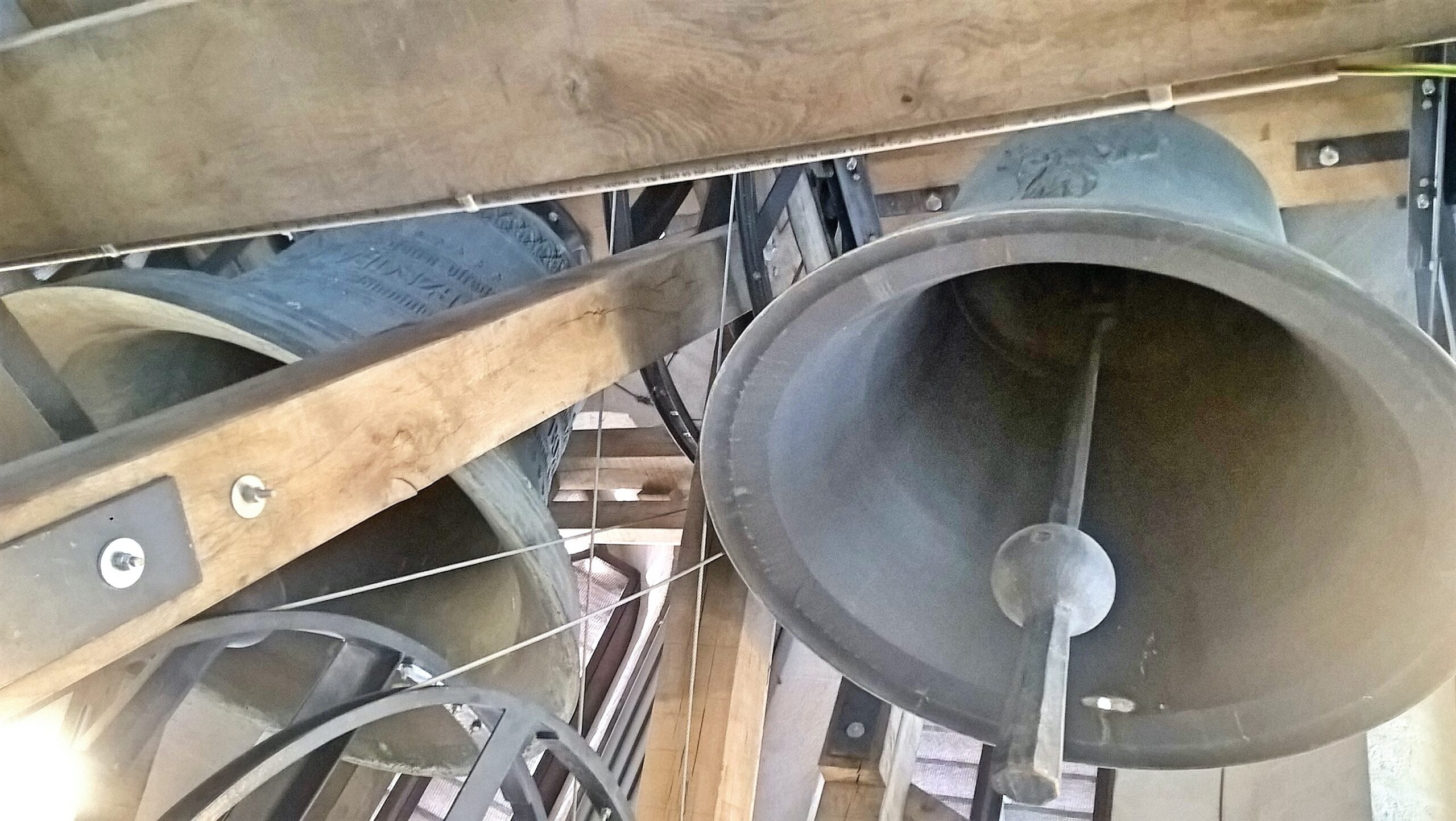
For those willing to climb higher, the church’s spire offers a rewarding experience. On the way up, you can:
-
admire the roof structure from close range
-
see the church bells
-
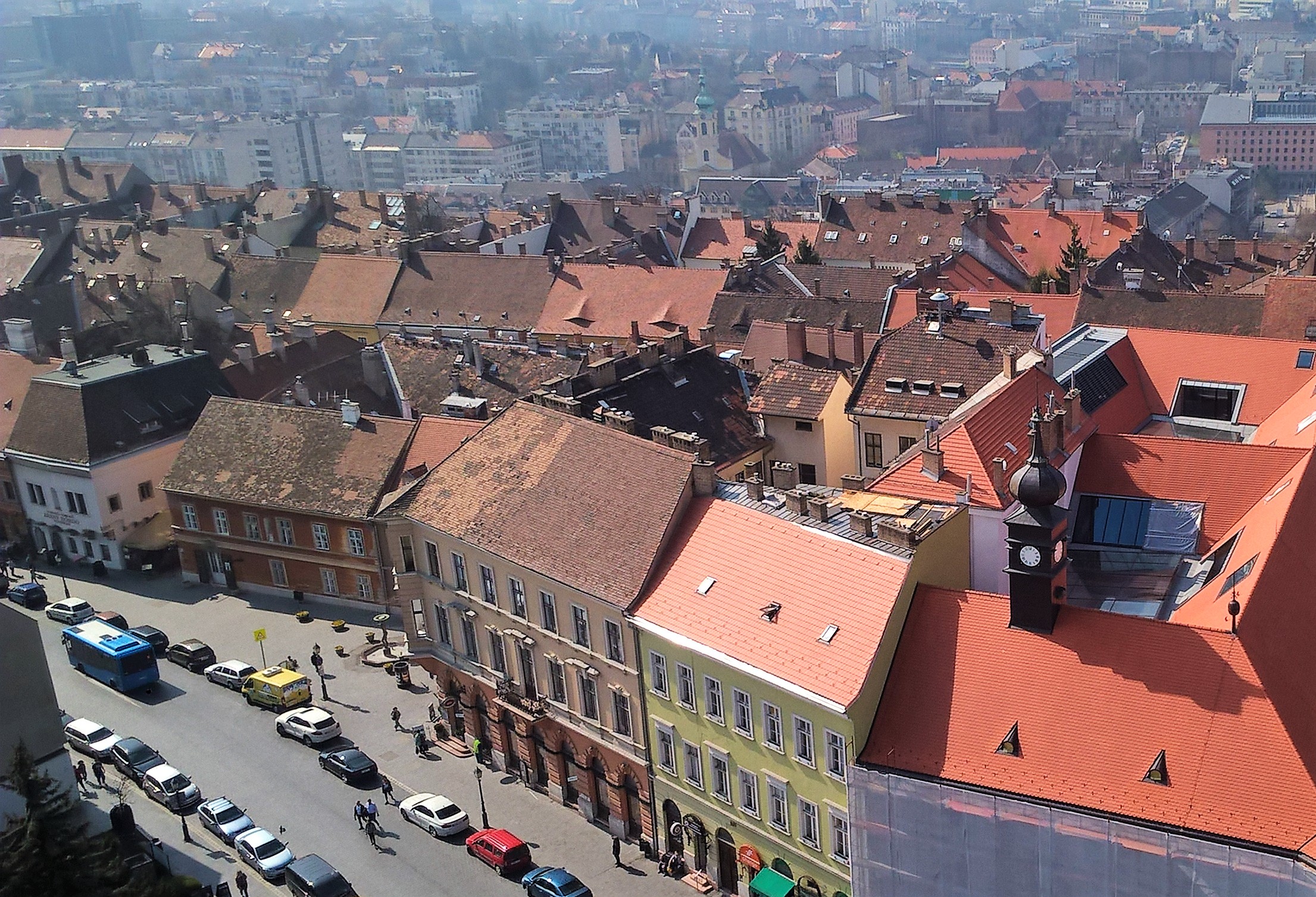
gain a rare, elevated view over the rooftops of Buda and Pest
From the top, the city feels surprisingly quiet and distant — a contrast to the crowds below and a reminder of why this hill has always been such a strategic and symbolic location.
Why Matthias Church Is Worth More Than One Visit
Matthias Church is not just something to “tick off” a sightseeing list. It’s a place that reveals more the deeper you look — whether through its symbols, its hidden historical layers, or the stories connected to kings, invasions, restorations, and everyday faith.
It’s also one of the key stops on my Buda Castle walks, where these details come to life through stories — including a few darker and more unexpected chapters that most guidebooks leave out.
Timeless Visitor Tips
-
Visit once for the exterior views, and once for the interior — they feel like two different experiences
-
Look beyond the altar: side chapels and wall details often hold the most interesting stories
-
Even if you’re not usually drawn to churches, the colours and symbolism here make it unique in Europe
Exploring the church in context — together with the Castle District, its viewpoints, and hidden details — often makes the experience much richer and more memorable.