If you’re walking along Andrássy Avenue, one of the most elegant boulevards of Budapest, you might notice a sphinx statue quietly guarding the entrance of the Hungarian State Opera House. At first glance, she looks familiar — mysterious, timeless, and watchful. But take a closer look, and you’ll realise there’s something unusual about her. This statue is part of my ongoing Statues of Budapest series, which focuses on both famous monuments and easily overlooked details hidden in plain sight. Not a typical sphinx Traditionally, a sphinx is depicted with the head of a woman and the body of a lion. The Budapest sphinx follows this classical form — almost. If you stop and observe carefully, you’ll notice an unexpected detail: she has breasts, making her far more explicitly feminine than most sphinx representations. This subtle feature sets her apart and gives the statue a distinctive presence. It’s one of those details many people walk past every day without noticing, yet once seen, it’s impossible to forget. Why is she here? The sphinx fits perfectly into the artistic world of the Opera House. She embodies mystery, guardianship, and elegance — qualities closely associated with music, performance, and the dramatic arts. Placed at the entrance, she feels less like a decoration and more like a silent gatekeeper, watching over one of Budapest’s most important cultural institutions. A reminder to look closer The sphinx of Andrássy Avenue is a perfect example of why Budapest rewards attentive visitors. You don’t need grand monuments or dramatic viewpoints — sometimes, the most interesting stories are carved into details just above eye level. All you have to do is stop, look up, and notice. Explore more: The Sphinx statue is featured in my Statues of Budapest collection, where famous monuments and easily overlooked details reveal the deeper structure
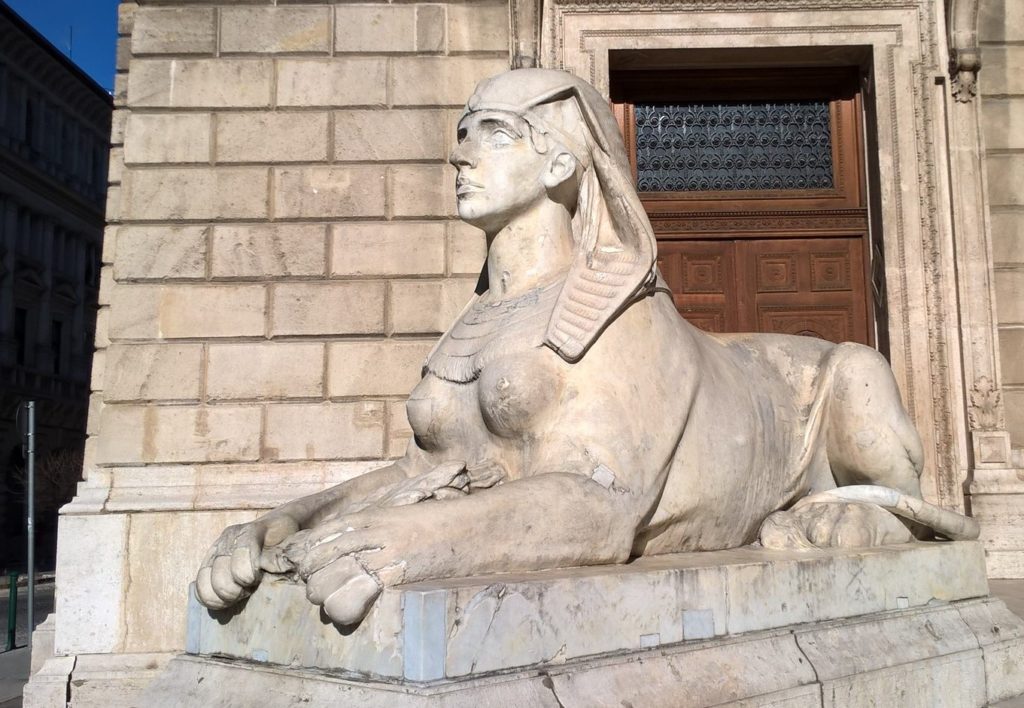
If you’re walking along Andrássy Avenue, one of the most elegant boulevards of Budapest, you might notice a sphinx statue quietly guarding the entrance of the Hungarian State Opera House. At first glance, she looks familiar — mysterious, timeless, and watchful.
But take a closer look, and you’ll realise there’s something unusual about her.
This statue is part of my ongoing Statues of Budapest series, which focuses on both famous monuments and easily overlooked details hidden in plain sight.
Not a typical sphinx
Traditionally, a sphinx is depicted with the head of a woman and the body of a lion. The Budapest sphinx follows this classical form — almost.
If you stop and observe carefully, you’ll notice an unexpected detail: she has breasts, making her far more explicitly feminine than most sphinx representations. This subtle feature sets her apart and gives the statue a distinctive presence.
It’s one of those details many people walk past every day without noticing, yet once seen, it’s impossible to forget.
Why is she here?
The sphinx fits perfectly into the artistic world of the Opera House. She embodies mystery, guardianship, and elegance — qualities closely associated with music, performance, and the dramatic arts.
Placed at the entrance, she feels less like a decoration and more like a silent gatekeeper, watching over one of Budapest’s most important cultural institutions.
A reminder to look closer
The sphinx of Andrássy Avenue is a perfect example of why Budapest rewards attentive visitors. You don’t need grand monuments or dramatic viewpoints — sometimes, the most interesting stories are carved into details just above eye level.
Explore more: The Sphinx statue is featured in my Statues of Budapest collection, where famous monuments and easily overlooked details reveal the deeper structure of the city.
Sphinx statue guarding the entrance of the Hungarian State Opera House on Andrássy Avenue
The Buda Castle Funicular is one of those Budapest experiences that is both practical and charming — a short ride that connects the banks of the Danube with the historic heights of Castle Hill. Since its opening in 1870, this small but iconic cable car has carried millions of passengers between the Chain Bridgeand the Royal Palace above. In just a few seconds, it offers sweeping views over the Danube and Pest, making the journey itself part of the sightseeing. A bit of history The Funicular was originally powered by steam and played an important role in everyday city life, helping residents and workers reach Castle Hill quickly. During the Second World War, it was almost completely destroyed. When it was rebuilt decades later, it returned as an electric cable car, carefully designed to reflect its historic appearance while meeting modern standards. Today, it’s both a nostalgic landmark and a fully functioning part of Budapest’s transport system. Film lovers may also recognise it from The Grand Budapest Hotel, where it appears briefly — a small but delightful cinematic connection. How to include it in your visit The Funicular is a lovely addition to a walk around Buda Castle, whether you’re exploring on your own or joining a Buda Castle Walking Tour, where it can be included as an optional extra depending on interest and timing. It’s also a great standalone experience if you’re short on time but still want a memorable view. An insider tip from a local guide If you’d like to avoid long queues, don’t take the Funicular up to Castle Hill. Instead, walk up and use it for the descent, travelling from the Royal Palace down to the Chain Bridge. Lines are usually shorter — and the view is just as beautiful.
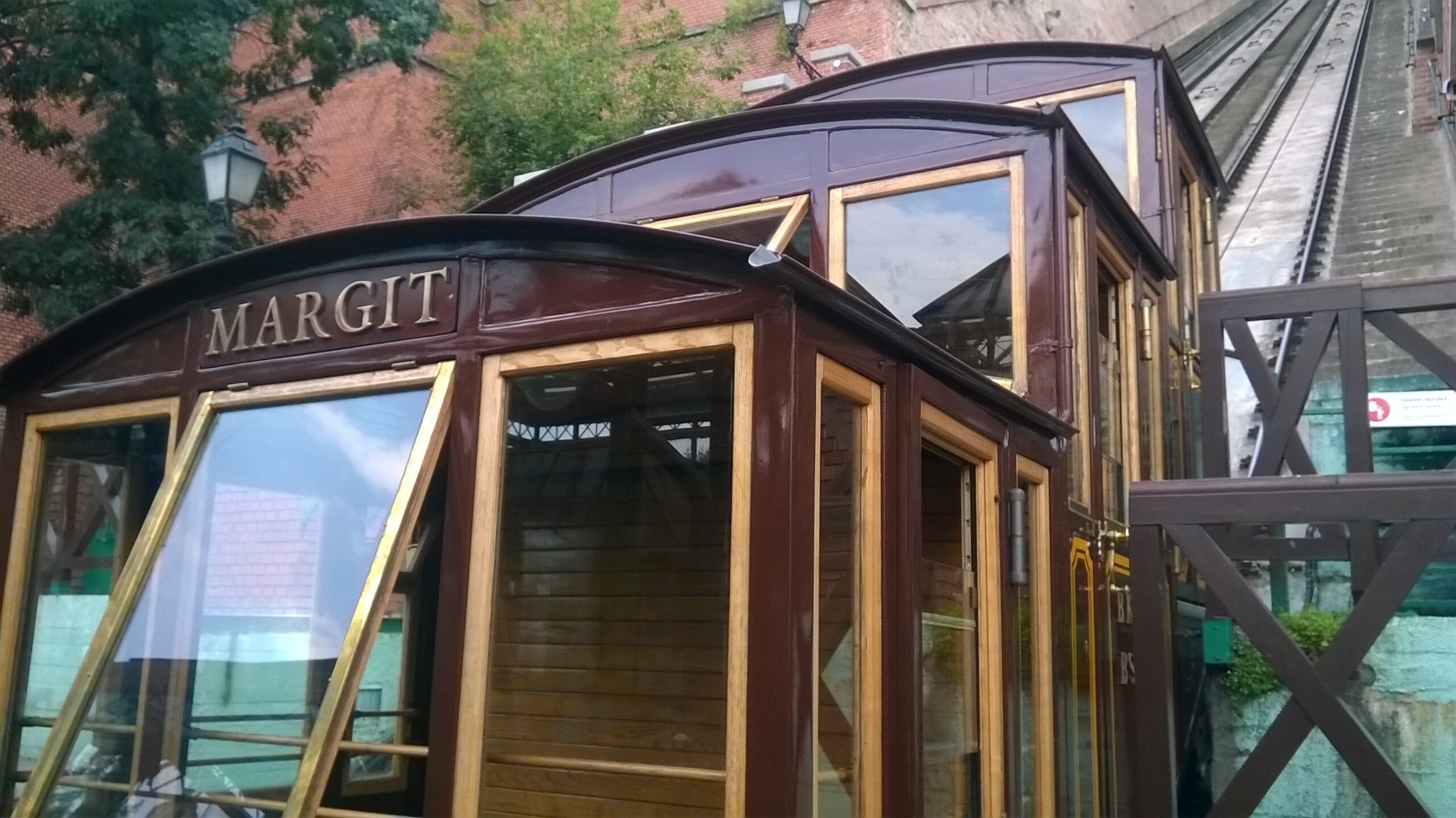
The Buda Castle Funicular is one of those Budapest experiences that is both practical and charming — a short ride that connects the banks of the Danube with the historic heights of Castle Hill.
Since its opening in 1870, this small but iconic cable car has carried millions of passengers between the Chain Bridgeand the Royal Palace above. In just a few seconds, it offers sweeping views over the Danube and Pest, making the journey itself part of the sightseeing.
A bit of history
The Funicular was originally powered by steam and played an important role in everyday city life, helping residents and workers reach Castle Hill quickly. During the Second World War, it was almost completely destroyed.
When it was rebuilt decades later, it returned as an electric cable car, carefully designed to reflect its historic appearance while meeting modern standards. Today, it’s both a nostalgic landmark and a fully functioning part of Budapest’s transport system.
Film lovers may also recognise it from The Grand Budapest Hotel, where it appears briefly — a small but delightful cinematic connection.
How to include it in your visit
The Funicular is a lovely addition to a walk around Buda Castle, whether you’re exploring on your own or joining a Buda Castle Walking Tour, where it can be included as an optional extra depending on interest and timing.
It’s also a great standalone experience if you’re short on time but still want a memorable view.
An insider tip from a local guide
If you’d like to avoid long queues, don’t take the Funicular up to Castle Hill. Instead, walk up and use it for the descent, travelling from the Royal Palace down to the Chain Bridge. Lines are usually shorter — and the view is just as beautiful.