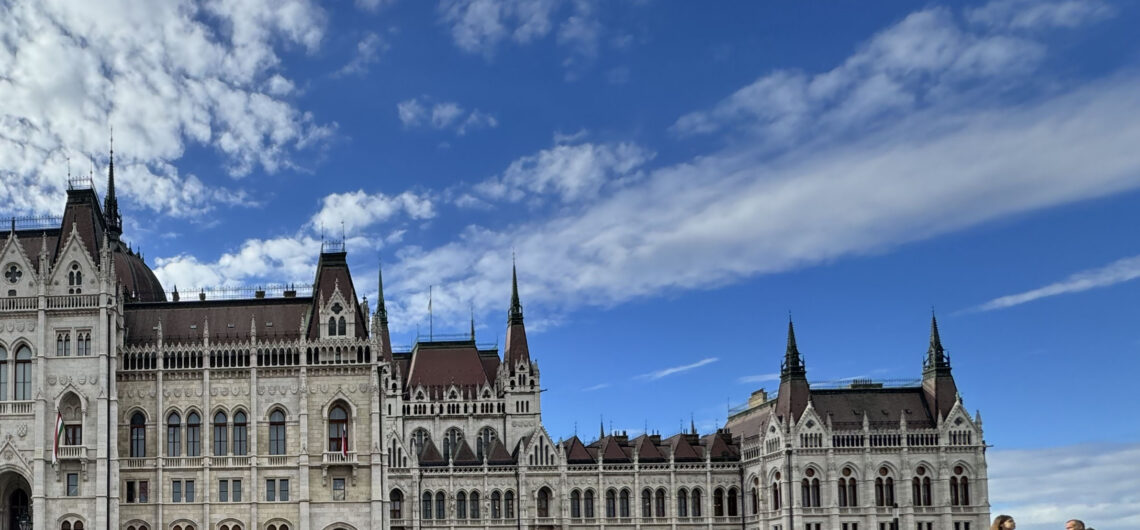
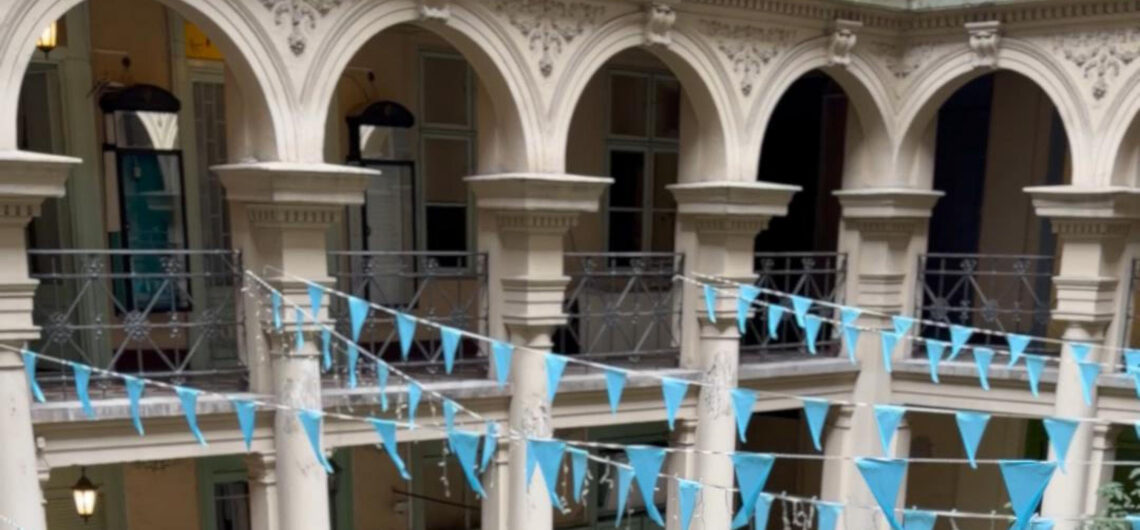
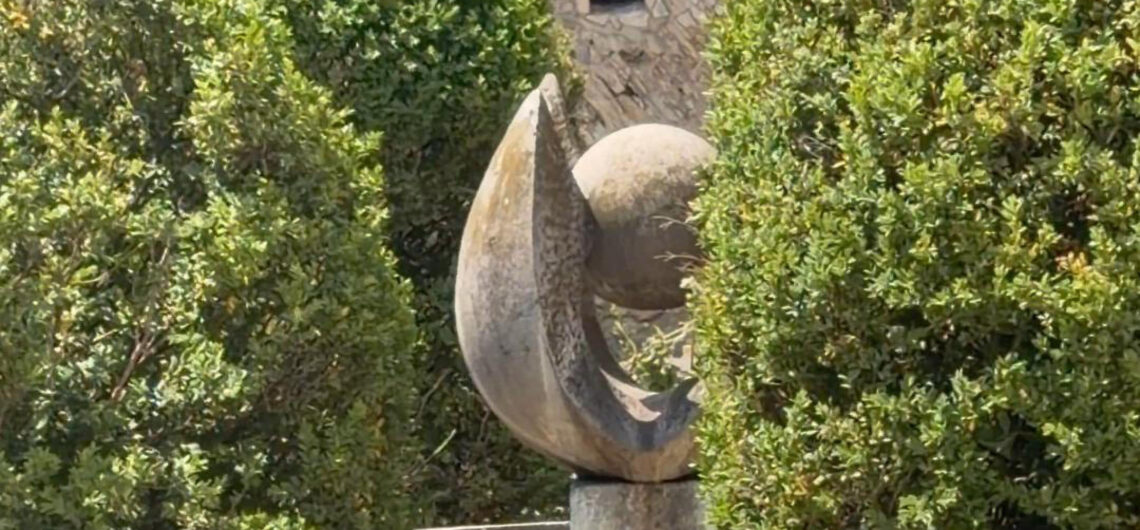
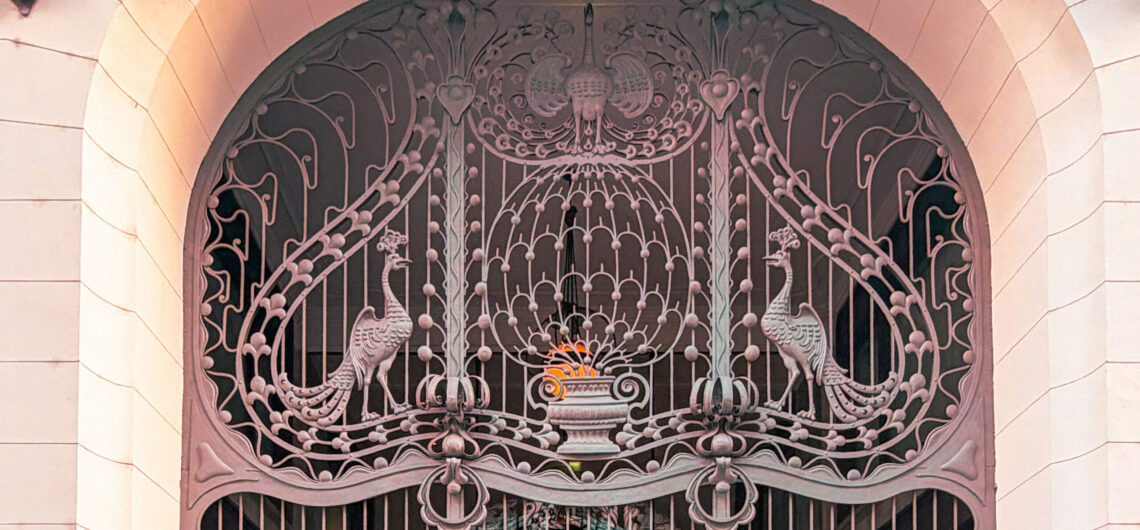
If you asked me to choose my favourite places in Budapest to show a friend, I probably wouldn’t begin with a list of the city’s most famous sights. Of course I’d want you to see Parliament, Buda Castle and the Danube. They’re extraordinary for a reason. But if we had a little more time together, I’d also want to show you my Budapest.

The places where I still slow down after hundreds of tours. Somewhere beautiful to linger. Something delicious to taste. A garden where the city suddenly becomes quiet. An architectural detail you might easily walk past.

Not because you have to see them. Because I’d want to show them to you.

Exploring Budapest by Tram

Budapest is a city I love exploring on foot, but sometimes the journey itself is part of the experience.

I’d probably put you on a tram. Not because it’s the quickest way to get somewhere, but because Budapest looks different when you watch it moving past the window. The Danube appears between buildings, a familiar landmark suddenly comes into view, and for a few minutes you get to experience the city as locals do every day.

Public transport often becomes part of my private walking tours in Budapest, especially when it helps us connect neighbourhoods without losing that feeling of actually being in the city.

And if the Chain Bridge happens to appear between the trees as we go?

Even better.

Párisi Passage: Somewhere Beautiful to Linger

Then I might take you somewhere that makes you stop almost immediately after walking through the door.

One of those places is Párisi Passage. Its spectacular glass roof, mosaics, carved details and mixture of architectural influences make it one of Budapest’s most remarkable interiors. Yet what I like most is that you don’t necessarily have to do anything here.

You can simply look.

Budapest rewards this kind of curiosity. Some of its greatest architectural treasures aren’t monuments at all. They are hotel lobbies, cafés, passageways, courtyards and buildings that reveal very little from the street.

It’s one of the reasons I love introducing visitors to the city through its architecture — not simply pointing out buildings, but noticing the details that tell their stories and showing my favourite places in Budapest.

And sometimes, the correct response to a beautiful Budapest interior is simply to sit down and order a coffee. I am completely comfortable with that.

A Taste of Budapest at the Market

Eventually, we would need food.

And if I were showing a friend around Budapest, I’d want them to see a market — not just to photograph paprika and strings of sausages, but to understand a little more about how Hungarians eat.

Paprika, pickles, salami, sausages, seasonal produce: these are small pieces of a much bigger story.

Food can tell you about geography, history, family traditions and even the way people preserve memories.

That is why food so often finds its way naturally into my tours. Sometimes it’s just a quick taste along the way; sometimes it becomes the whole theme of a Budapest private foodie tour.

Either way, I’d want you to try something. Preferably several somethings.

A Quiet Garden Above the City

Then I’d take you somewhere green.

Budapest has wonderful parks, but some of my favourite green spaces are much smaller: gardens and terraces hidden behind walls, tucked beside historic buildings or sitting quietly above the busiest parts of the city.

You can walk for hours through Budapest surrounded by stone façades, traffic and trams, turn a corner — and suddenly find roses, trees and silence. I love that contrast.

It is also why I keep looking for hidden gardens in Budapest. They offer a completely different way of experiencing the city.

And from some of them, you might even catch an unexpected glimpse of the Parliament or the Danube through the trees.

That’s when I’d probably suggest we stay another five minutes.

The Budapest Places You’d Never Find by Accident

This might be my favourite part. A door that doesn’t look particularly important.

A glimpse of a staircase beyond it. And then you walk inside. Suddenly, above you, the staircase curves towards a beautiful circular skylight. These are the moments I treasure most when exploring Budapest, showing my favourite places in Budapest.

Not necessarily because the place appears in a guidebook or because there is an important historical event attached to it. Sometimes it is simply the pleasure of discovering something beautiful where you weren’t expecting to find it.

Budapest is full of details like this: extraordinary staircases, stained glass, courtyards, decorated entrances, old signs, mosaics and architectural surprises hiding behind perfectly ordinary façades.

You just have to know where to look.

The Budapest I’d Want You to Remember

And eventually, we would find our way back towards the Danube.

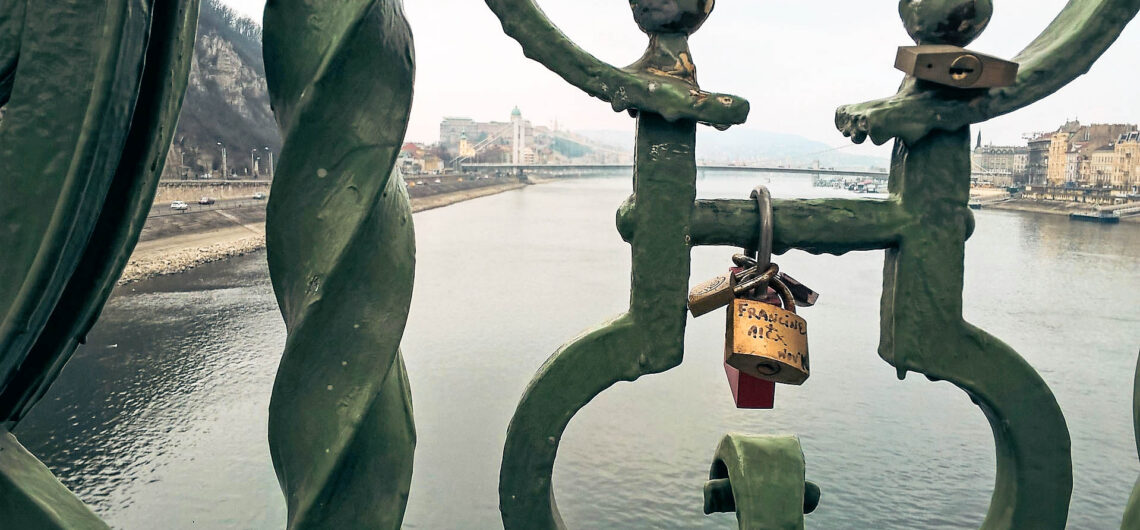
Perhaps we’d stop somewhere where you can watch the boats moving along the river through an old decorative railing.

And I hope that by then, Budapest would feel a little different. Because seeing a city isn’t only about collecting its famous landmarks.

It’s about the coffee we stopped for because the room was too beautiful to leave. The strange little architectural detail we noticed above a doorway. The food you tasted at the market. The garden where we stayed longer than planned. The door we almost walked past.

Those are often the moments that stay with us.

That is also how I approach my fully customisable private tours of Budapest. There is no single perfect Budapest itinerary, because there is no single way to experience the city. History, architecture, food, hidden places, grand monuments and tiny details can all become part of the story.

If you were visiting me in Budapest, of course I’d show you the city’s great sights. But I’d save some time for places like these, too.

Not because you have to see them. Because I’d want to show them to you.
Budapest Places I’d Show a Friend

Once you start looking closely, you’ll discover animals in Budapest architecture almost everywhere. Lions guard bridges and palace gates, birds spread their wings above rooftops, while owls, bees, peacocks and strange mythical creatures hide among the decorations of buildings most people pass without a second glance.

Some are famous symbols of Budapest and Hungary. Others are so small that you could walk beneath them every day without noticing them. But once you’ve spotted a few, you’ll start seeing them everywhere.

Budapest Is Watching You

Look up while walking through Budapest and you might suddenly find a stone face staring back at you.

Architects of the late nineteenth and early twentieth centuries loved incorporating animals, plants and mythical creatures into their buildings. They weren’t always simply decorative. Animals could symbolise strength, wisdom, freedom, prosperity or protection, while others reflected the personality or purpose of the building itself.

This is one of the reasons I love exploring Budapest on foot. A building you may have passed dozens of times can suddenly reveal an entirely new story simply because you stopped and looked a little closer.

The Lions Guarding the Chain Bridge

Some of Budapest’s animals are impossible to miss. The four enormous stone lions guarding the Chain Bridge are among the most recognisable. Created by sculptor János Marschalkó, they have watched over the bridge since the nineteenth century and have become almost as iconic as the bridge itself. And yes, they do have tongues.

One of Budapest’s favourite urban legends claims that the sculptor forgot to give his lions tongues and was so humiliated when someone pointed out the mistake that he jumped into the Danube.

It’s a wonderful story. It just isn’t true. The tongues are there—you simply can’t see them easily when standing below the lions.

The Turul Above Budapest

Then there are creatures that tell a much bigger story. The Turul, a mythical bird of prey deeply connected with Hungarian legends and national identity, appears in monuments throughout the country.

One of Budapest’s most dramatic examples spreads its wings above the Danube from the Buda Castle District, a sword held in its claws.

Its elevated position makes it impossible to overlook once you know where to look, yet understanding why the Turul appears so often in Hungary opens the door to centuries of legends, history and symbolism. It’s exactly the kind of detail that turns sightseeing into storytelling.

Tiny Bees Hiding on Budapest Buildings

The smaller animals are perhaps even more fun to discover. Look closely at some of Budapest’s historic façades and you may find tiny bees incorporated into the decoration.

Why bees? They have long represented qualities such as diligence, cooperation and prosperity, making them particularly appropriate symbols for certain commercial and financial buildings. They’re also a perfect example of why Budapest rewards people who slow down. From across the street, you see an impressive façade. Move closer, and suddenly an entire world of decorative details begins to appear.

And we’ll come back to those bees another day—they deserve a story of their own.

Peacocks, Owls and Animals in Budapest Architecture

The arrival of Art Nouveau brought an extraordinary natural world to Budapest’s architecture.

Flowers curled across façades. Leaves climbed around windows. Birds appeared above entrances and colourful ceramic decoration transformed ordinary buildings into something much more imaginative.

Peacocks were particularly suited to this new architectural language. Their flowing feathers, symmetry and rich colours made them perfect decorative motifs. Elsewhere, owls peer down from buildings, while birds and other creatures emerge from stone, metal, wood and colourful ceramics.

And Then There Are the Creatures You Can’t Quite Identify…

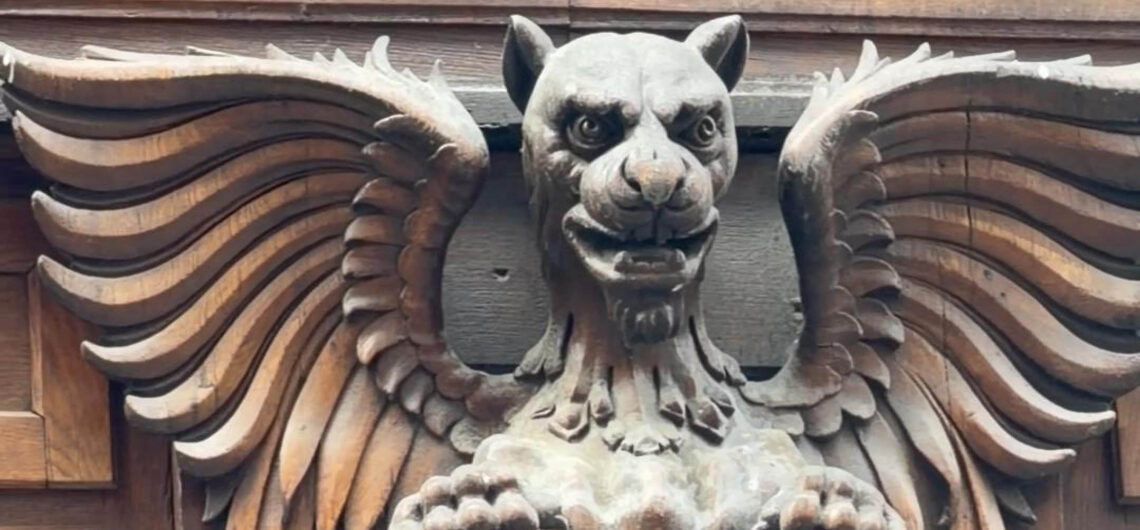
Not every animal hiding in Budapest is easy to name. Look closely at historic doorways, carved wooden panels and stone façades and you’ll encounter winged beasts, fantastic birds, strange faces and creatures that seem to belong somewhere between mythology and imagination.

Sometimes identifying them is less important than simply noticing them.

They’re reminders that the architects and craftsmen who created Budapest’s buildings weren’t only designing functional spaces. They were creating places full of personality, symbolism and sometimes even humour.

Look Up When You Walk Through Budapest

It’s easy to visit Budapest while concentrating entirely on the famous sights.

Parliament. St. Stephen’s Basilica. Buda Castle. The Chain Bridge.

They’re magnificent, and of course they’re worth seeing. But the Budapest I love showing people exists in the spaces between those landmarks too. It’s in a tiny bee above your head. A peacock decorating an entrance. An owl almost hidden behind leaves. A strange stone creature staring down from a building.

Once you begin noticing these details, walking through Budapest becomes something of a treasure hunt.

And perhaps that’s one of the things I enjoy most about being a private guide: helping people see not only what they’re looking at, but the details and stories they might otherwise have walked straight past.

Discover Budapest One Detail at a Time

Every private tour I create is different because every guest notices different things.

Some people are fascinated by architecture. Others love history, Art Nouveau, Jewish heritage, food, photography or simply discovering beautiful places away from the busiest tourist routes.

That’s why my Budapest private tours are fully customisable. We can visit the city’s essential landmarks, but we can also slow down, wander into quieter streets and look for the small details that make Budapest unforgettable.

Because sometimes the most memorable story of the day isn’t waiting inside a museum. Sometimes it’s been watching you from above the whole time.

Budapest Is Watching You 👀

After hundreds of Budapest walking tour, people sometimes ask me whether I ever get tired of walking the same streets. The answer is always the same: not this walk.

It changes with the seasons, the light, the weather and the people I’m exploring Budapest with, but it still reminds me why I fell in love with this city in the first place.

It’s not about seeing every landmark or following the shortest route. It’s about slowing down, noticing the details and enjoying the feeling of walking through one of Europe’s most beautiful capitals. Budapest rewards people who look a little closer, and this walk always gives me something new to discover.

Why This Budapest Walking Tour Is Special

If I had to introduce Budapest to someone for the very first time, this is where I would begin.

Not because it covers every famous sight, but because it captures the atmosphere of the city so beautifully. Grand architecture sits beside quiet streets, elegant cafés open onto leafy squares and the Danube is never far away.

Many of my Budapest Private Walking Tours follow parts of this route because it offers the perfect balance between iconic landmarks and hidden details. Every private tour is fully customised, but this neighbourhood always feels like a wonderful place to start discovering the city.

Every Budapest Walking Tour Should Begin by the Danube

One of my favourite moments comes as Parliament suddenly appears beside the river.

Even after seeing it hundreds of times, I still slow down.

Just a short walk away, the Shoes on the Danube Bank remind visitors of one of the darkest chapters in Budapest’s history. It’s a place that encourages reflection and often becomes one of the most meaningful stops during a tour.

From here, the river opens up towards Buda, with the Castle District rising above the opposite bank and Chain Bridge connecting the two halves of the city.

Liberty Square: One of Budapest’s Most Elegant Neighbourhoods

A few minutes later, the atmosphere changes completely.

Liberty Square is one of those places where visitors often slow down without even realising it. The wide open space, impressive architecture and relaxed cafés make it feel surprisingly peaceful despite being in the heart of the city.

It’s also one of my favourite places for showing guests how Budapest blends history with everyday life. Around almost every corner there’s another architectural detail waiting to be noticed.

This area is often included in my Best Pest Private Walking Tour, especially for travellers who enjoy architecture and learning the stories behind the buildings.

St. Stephen’s Basilica

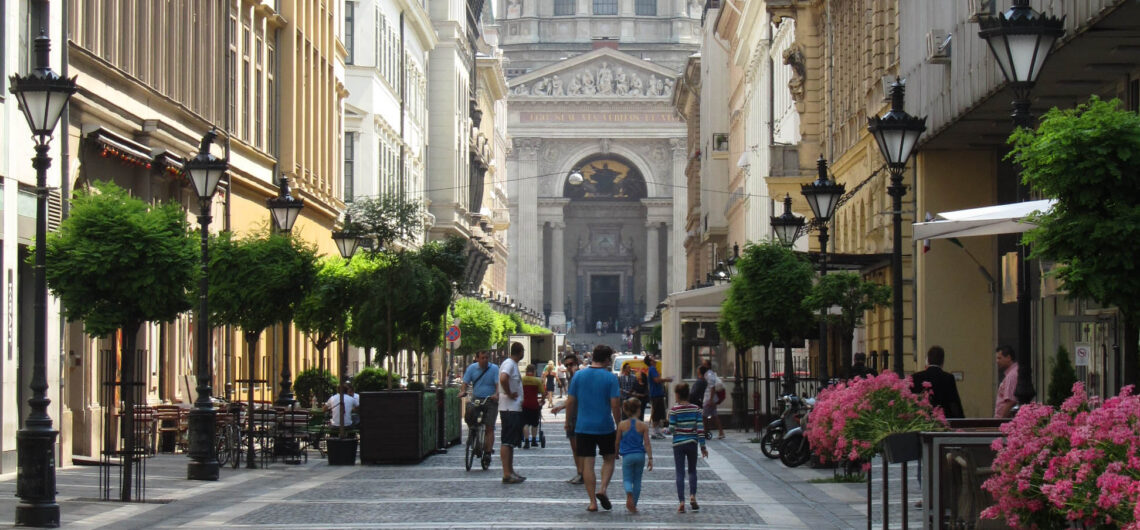
As the walk continues, the streets gradually lead towards St. Stephen’s Basilica.

Rather than approaching it directly, I enjoy taking the quieter surrounding streets first. They allow the Basilica to reveal itself slowly before suddenly opening onto the square.

Standing beneath its enormous bronze doors never really loses its magic.

Even after hundreds of visits, I still find myself looking up at the sculptures, the stonework and the changing light across the façade.

If you’d like to admire some of the city’s most beautiful architectural details, you might also enjoy reading about the beautiful entrances in Budapest that many visitors simply walk past.

Crossing the Chain Bridge

Whenever time allows, I love continuing across the Chain Bridge.

Walking between Buda and Pest is one of those simple experiences that perfectly explains why Budapest feels so unique. The views constantly change, with Parliament, the Castle, Gellért Hill and the river creating a panorama that looks different every season.

For guests joining me on a full-day tour, this is often where the second half of the day begins.

Ending the Budapest Walking Tour in Buda Castle

The Castle District is never just about Matthias Church or Fisherman’s Bastion.

Some of my favourite moments happen in the quieter corners: hidden courtyards, peaceful gardens, beautiful entrances and streets that many visitors never discover on their own.

It’s here that I often find myself saying, “Before we continue… let me show you something.”

Sometimes it’s an Art Nouveau detail, sometimes a hidden garden, sometimes simply a doorway that tells a story. These small discoveries are often the moments people remember most.

Every Walk Is Different

Although this is the walk I never get tired of, no two private tours are ever the same. Every Budapest walking tour I design is different.

Some guests are fascinated by Art Nouveau architecture. Others are interested in Jewish heritage, local food, thermal baths or hidden neighbourhoods away from the crowds.

That’s why every itinerary is fully customised. The route changes. The stories change. The pace changes.

But the goal is always the same: to help visitors experience Budapest in a way that feels personal rather than rushed.

Discover Budapest at Your Own Pace

This walk reminds me that Budapest isn’t simply a collection of famous attractions. It’s a city of quiet moments, beautiful details and unexpected discoveries. The more slowly you explore it, the more it reveals.

If you’re planning a visit and would like to experience Budapest beyond the usual sightseeing route, I’d be delighted to create a fully customised private walking tour based entirely on your interests.

Whether you’re passionate about history, architecture, food, hidden gems or simply enjoying the city at a relaxed pace, we’ll create a day that feels uniquely yours.

The Budapest Walk I Never Get Tired Of

When people search for beautiful entrances Budapest has to offer, they often expect grand churches or famous palaces. Yet one of the city’s greatest pleasures lies in the entrances many visitors simply walk past. Some are monumental, others almost hidden in quiet streets, but each one offers a glimpse into the craftsmanship, history and personality of the building beyond. Once you begin noticing them, you’ll never look at Budapest in quite the same way again.

Why Beautiful Entrances in Budapest Matter

An entrance is more than a door. It is the first impression a building wants to make.

Architects carefully designed these spaces to create anticipation before anyone stepped inside. Sculptures, stained glass, wrought iron, mosaics and carved stone all became part of the experience of arrival.

Some of the most beautiful entrances in Budapest were designed during the late nineteenth and early twentieth centuries and have survived with their original craftsmanship still intact.

The Art Nouveau Birds in Síp Street

One of my favourite examples is tucked away in Síp Street, where two elegant birds decorate an Art Nouveau entrance that many people walk past without a second glance.

The doorway itself is beautiful, but what makes it memorable is the combination of sculpted metalwork, delicate ornamentation and colourful Zsolnay ceramic decoration above. It’s the kind of detail that rewards slowing down and looking closely.

The Grandeur of St. Stephen’s Basilica

Some entrances are designed to make you pause.

Standing beneath the enormous bronze doors of St. Stephen’s Basilica, surrounded by classical columns and rich architectural decoration, you immediately sense the importance of the building before stepping inside.

The entrance prepares you for the scale and beauty that await beyond the doors.

Elegant Details at Gresham Palace

While many visitors admire the famous façade of Gresham Palace, fewer stop to appreciate the elegant side entrance.

The flowing Art Nouveau ironwork, graceful peacock motifs and perfectly balanced design are wonderful examples of Budapest’s Secession style, proving that some of the city’s finest details are found away from the main entrance.

A Quiet Corner of the Castle Garden Bazaar

The Castle Garden Bazaar offers another completely different atmosphere.

Instead of overwhelming decoration, its entrance combines carved wood, stained glass and soft colours to create a calm, welcoming space that feels almost intimate compared with the grand buildings of central Pest.

It’s an easy detail to miss while walking towards the castle, yet one of my personal favourites.

The Timeless Portal of Matthias Church

In Buda Castle, the entrance of Matthias Church reminds visitors that not every beautiful doorway belongs to the Art Nouveau period.

Its Gothic stone portal, carved arches and heavy wooden doors have welcomed generations of kings, pilgrims and travellers for centuries, creating one of Budapest’s most atmospheric entrances.

Looking Up, Slowing Down

These are just a few of my favourite beautiful entrances in Budapest, each with its own architectural personality. One of the greatest joys of exploring Budapest is learning to notice the details that many people simply walk past.

A doorway, an iron gate, a mosaic or a piece of stained glass can completely change the way you experience the city. These small discoveries often become the moments visitors remember long after the famous landmarks.

That’s one of the things I enjoy most on my private tours—helping guests see Budapest not only through its major attractions, but through the craftsmanship and hidden details that give the city its unique character.

If you’d like to discover the stories hidden behind Budapest’s architecture, I’d be delighted to create a private tour designed around your interests.

Beautiful Entrances in Budapest You Shouldn't Miss

When most people think of a hidden garden Budapest has to offer, they imagine a quiet corner somewhere far from the city centre. Yet one of Budapest’s most peaceful green spaces is hiding just a few steps from elegant Andrássy Avenue, behind the walls of the Hopp Ferenc Museum of Asiatic Arts.

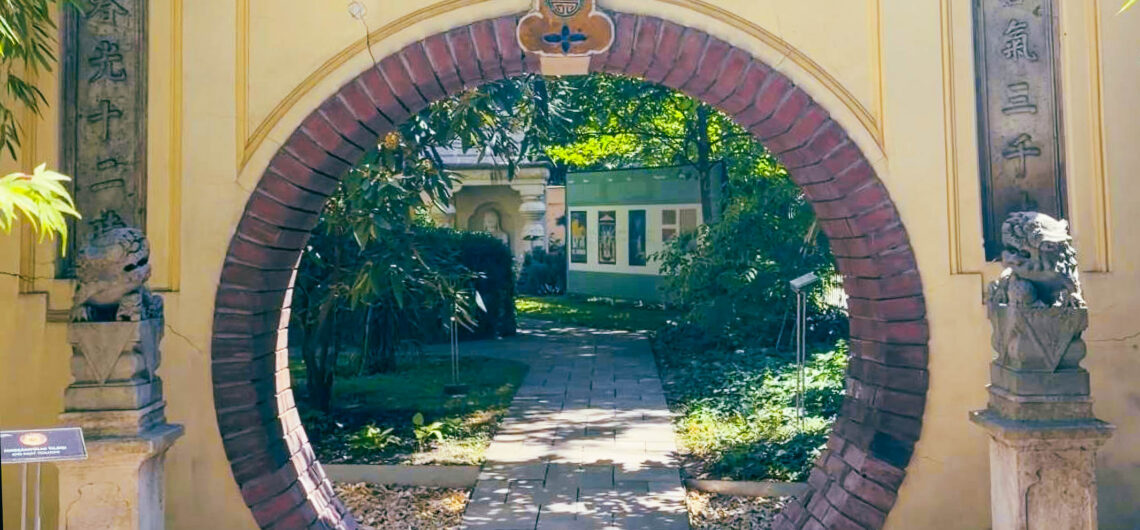
Pass through its distinctive moon gate and the noise of the boulevard seems to disappear. Instead, you’ll find winding paths, exotic plants, stone sculptures and a tranquil atmosphere that feels worlds away from the bustling city outside.

A Different Side of Budapest

Budapest is famous for its grand architecture, thermal baths and lively cafés, but some of its greatest treasures are the places that many visitors simply walk past.

The garden of the Hopp Ferenc Museum is one of those rare places that rewards curiosity. Hidden behind an elegant villa, it invites visitors to slow down and discover a quieter side of the city.

Whether you’re exploring Andrássy Avenue, visiting Heroes’ Square or spending time in nearby City Park, this peaceful garden is an easy detour that feels like stepping into another world.

Who Was Ferenc Hopp?

Ferenc Hopp (1833–1919) was a Hungarian traveller, collector and philanthropist who dedicated much of his life to exploring Asia. During his extensive journeys, he collected thousands of works of art and everyday objects from countries including Japan, China, India and Southeast Asia.

In his will, he donated both his remarkable collection and his villa to the Hungarian state. Today, they form the Hopp Ferenc Museum of Asiatic Arts. It’s one of Europe’s oldest museums devoted entirely to Asian art and culture.

The garden surrounding the villa reflects the same spirit of curiosity and cultural appreciation that inspired Hopp throughout his travels.

A Hidden Garden in Budapest Full of Eastern Inspiration

Although relatively small, every corner of the garden offers something worth noticing.

Traditional stone lanterns, Buddhist-inspired sculptures, carved architectural elements and carefully chosen plants create an atmosphere unlike anywhere else in Budapest. The circular moon gate is perhaps its most recognisable feature, framing the garden like the opening scene of a story waiting to unfold.

Depending on the season, bamboo, flowering shrubs and mature trees provide shade and colour, making the garden feel intimate despite its central location.

It isn’t designed as a formal botanical garden. Instead, it feels personal—a peaceful extension of the museum itself.

When to Visit

The garden is particularly beautiful in late spring and summer, when the greenery is at its fullest, but it remains a lovely place to pause throughout the year.

If you’re planning to visit the museum, allow a little extra time to wander through the garden before or after exploring the exhibitions. Even if you’re simply walking along Andrássy Avenue, it’s one of Budapest’s most rewarding hidden stops.

Good to Know

At the moment, the Hopp Ferenc Museum is temporarily closed for renovation, but there’s good news for anyone exploring Budapest: the museum garden remains open to visitors and can be visited free of charge.

That means you can still step through the iconic moon gate, enjoy the peaceful atmosphere and admire the Asian-inspired sculptures and lush greenery, even while the museum itself is being restored. If you’re looking for a quiet escape from the busy streets of central Budapest, this hidden garden is well worth a short detour.

Discover Budapest Beyond the Famous Landmarks

This hidden garden is a reminder that some of Budapest’s most memorable places aren’t the ones that appear on every postcard.

If you enjoy discovering hidden gardens, quiet courtyards and lesser-known corners of the city, you’ll find many more waiting to be explored. One of my favourite examples is the collection of hidden gardens in Buda Castle, where historic courtyards and peaceful green spaces reveal another side of Budapest’s rich past.

Many of these hidden gems are included in my private Budapest tours, where we combine the city’s famous landmarks with the quieter places that make visitors fall in love with Budapest.

Every traveller discovers a different Budapest. If you’d like to explore the city’s famous landmarks as well as its hidden gems, I’d love to help you create a private tour designed around your interests, pace and curiosity. Get in touch, and let’s plan your perfect Budapest experience.

This Secret Garden Is Hiding in Budapest

Summer evenings in Budapest have a magic all their own. As the daytime crowds begin to disappear, the city slows down and takes on a completely different atmosphere. Golden sunsets reflect on the Danube, music fills historic squares, and unforgettable experiences unfold beneath the evening sky. If you’re visiting Budapest during the warmer months, these are some of the summer evenings you’ll never forget.

If you’re visiting the Hungarian capital during the warmer months, here are a few summer evenings you won’t soon forget.

Candlelake Concert at Vajdahunyad Castle

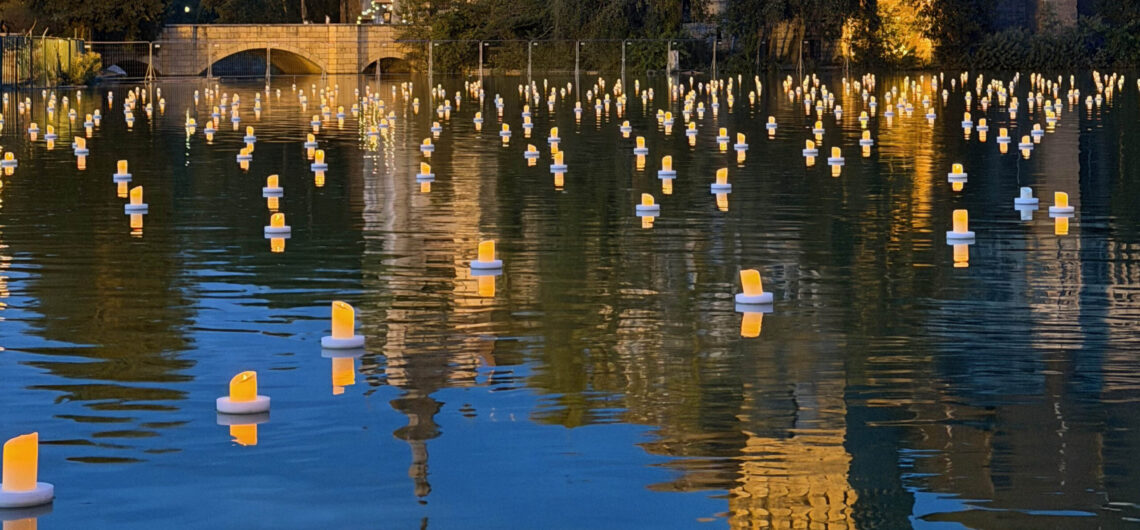
One of Budapest’s most enchanting summer events takes place in the heart of City Park, where the lake surrounding Vajdahunyad Castle is illuminated by hundreds of floating candles.

Combined with live music and the castle’s fairytale silhouette, the atmosphere feels almost dreamlike. It’s a peaceful experience that invites you to slow down and simply enjoy the moment—a refreshing change from the city’s busier attractions.

If you’re lucky enough to be in Budapest when a Candlelake Concert is taking place, it’s well worth adding to your evening plans.

Margaret Island Musical Fountain 

The Musical Fountain on Margaret Island is one of the city’s favourite summer traditions. Water, lights and music come together in a free outdoor show that attracts both locals and visitors.

Sunset from Fisherman’s Bastion or Citadel

Few places capture the magic of Budapest quite like Fisherman’s Bastion or Citadel as the city begins to glow at sunset.

Rooftop Bars Above the City 

Watching the lights appear across Budapest from a rooftop terrace is one of the simplest pleasures of a summer evening.

Evening Organ Concert

If you enjoy classical music, an evening concert inside one of Budapest’s beautiful churches offers a completely different perspective on the city.

More Magical Summer Evenings

Budapest is full of unforgettable moments after sunset—from riverside walks and open-air cinemas to seasonal festivals and hidden courtyards that come alive on warm evenings.

I’ll continue adding my favourite experiences here, so this guide grows over time.

Discover Budapest Like a Local

One of the things I love most about Budapest is that its magic doesn’t disappear when the day ends—it simply changes.

Whether it’s music echoing across a candlelit lake, a quiet walk along the Danube or watching the city lights appear from a rooftop, these are the moments that many visitors remember long after they return home.

If you’d like to discover even more of Budapest’s hidden corners and favourite local spots, I’d be delighted to show you the city on one of my private Budapest tours, where every itinerary is tailored to your interests and pace.

One of Budapest's Most Magical Summer Experiences

Budapest is blue—not just because of the Danube, but also because of its skies, thermal waters and beautiful Art Nouveau details. After more than a decade of guiding visitors through the city, I’ve realised that this colour quietly connects many of Budapest’s most memorable places.

When visitors describe Budapest, they often talk about its grand architecture, historic cafés or magnificent views over the Danube. But after spending more than a decade guiding travellers through the city, I’ve noticed something much quieter.

Budapest has a colour.

And that colour is blue.

Once you begin looking for it, you’ll find it almost everywhere. Not because someone planned it that way, but because nature, history and architecture have quietly combined to give the city its own distinctive palette.

The Danube: Budapest’s Blue Heart

The first place you’ll notice it is, of course, the Danube.

Flowing between Buda and Pest, the river has shaped the city’s history for centuries. Whether you’re standing on the Chain Bridge, enjoying the view from the Buda Castle District or watching the Parliament reflected in the water, the river provides a constant ribbon of blue running through Budapest.

It’s one of the reasons so many of my private Budapest tours include several viewpoints overlooking the Danube—the perspective changes throughout the day, but the river always remains the city’s defining feature.

Looking Up

Most visitors spend their time looking straight ahead.

Try looking up instead.

Many of Budapest’s beautiful Art Nouveau buildings are decorated with colourful ceramic tiles produced by the famous Zsolnay factory. Soft turquoise, cobalt and deep blue details appear on rooftops, façades and decorative ornaments, rewarding those who slow down and pay attention.

If you enjoy discovering these architectural details, you might also like my article about Budapest’s hidden Art Nouveau treasures.

The Colour of Water

Blue appears again in Budapest’s famous thermal baths.

Whether it’s the outdoor pools beneath the summer sky or the elegant indoor baths reflecting through historic windows, water has always been part of Budapest’s identity. It isn’t just a place to relax—it tells the story of a city built on more than one hundred thermal springs.

Every bath has its own atmosphere, but they all share the same connection between history and water.

Hidden Details

Sometimes the most memorable discoveries are also the smallest.

Blue mosaic tiles, ceramic decorations, painted doorways and unexpected architectural details appear throughout the city. They’re easy to miss if you’re rushing from one famous attraction to another, but they add another layer to Budapest’s character.

They’re also a reminder that the best way to explore the city is slowly.

Experience Budapest Beyond the Landmarks

One of my favourite parts of being a private tour guide is helping visitors notice the details they might otherwise walk straight past.

Whether it’s a hidden courtyard, an Art Nouveau façade or simply the changing colours of the Danube, these small discoveries often become the memories people talk about long after returning home.

If you’d like to experience Budapest at a relaxed pace and discover both its famous landmarks and its hidden stories, I’d be delighted to welcome you on one of my private Budapest tours.

Sometimes, all it takes is looking at the city a little differently.

And perhaps you’ll start seeing Budapest in blue too.

Budapest is blue

Some of the most memorable places in Budapest aren’t marked by grand entrances or famous landmarks. In fact, you could walk past them dozens of times without ever realising what lies behind an ordinary gateway. If you’re looking for a hidden courtyard Budapest visitors often miss, one of my favourite discoveries is Paloma Art Space, just a short walk from Váci Street and Ferenciek tere. Step inside and you’ll discover a colourful collection of independent studios where talented Hungarian designers create handmade jewellery, ceramics, fashion, leather goods and artwork in a peaceful setting far removed from the city’s busy streets.

It’s exactly the kind of place I love sharing with my guests because it reveals a different side of Budapest—creative, authentic and wonderfully unexpected.

A Hidden Courtyard Full of Creativity

At first glance, there’s nothing particularly remarkable about the entrance. But once you walk into the courtyard, the atmosphere changes completely.

Historic buildings surround a charming open courtyard where small studios invite visitors to browse unique handmade creations. Unlike large souvenir shops, Paloma Art Space is home to independent Hungarian artists and designers, many of whom are happy to chat about their work, inspiration and creative process.

Whether you’re looking for a meaningful souvenir or simply enjoy discovering local craftsmanship, this hidden courtyard offers a refreshing alternative to the city’s busy shopping streets.

Why Visit Paloma Art Space?

One of the things I appreciate most about Paloma Art Space is that it feels genuinely local. Rather than international brands or mass-produced souvenirs, you’ll find carefully crafted pieces made by people who are passionate about their work.

Even if shopping isn’t on your itinerary, the courtyard itself is worth visiting. Colourful shopfronts, historic architecture and a relaxed atmosphere make it one of those hidden places in Budapest where it’s easy to slow down for a few minutes and simply enjoy the surroundings.

One of My Favourite Hidden Places in Budapest

Whenever time allows, I enjoy bringing guests here during my private tours. It’s a wonderful surprise, especially for visitors who think they’ve already seen everything Budapest has to offer.

I love watching people’s reactions as they step into the courtyard. Moments earlier, they were walking through one of the city’s busiest areas. Suddenly, they’re surrounded by local creativity, colourful studios and a peaceful atmosphere that feels like a secret shared only with those willing to wander a little further.

For me, this is what Budapest is all about. Beyond the famous landmarks and panoramic viewpoints, the city is full of small discoveries waiting behind ordinary doors and hidden courtyards.

Practical Information

Location: Just a few minutes from Ferenciek tere and Váci Street.

Entrance: Free.

What you’ll find: Independent Hungarian designers, handmade jewellery, ceramics, fashion, leather goods, artwork and creative gifts.

Good to know: Opening hours vary between individual studios, so it’s always worth checking before your visit.

Discover the Budapest Beyond the Obvious

If you’re looking for hidden gems in Budapest, Paloma Art Space deserves a place on your itinerary. It’s proof that some of the city’s most memorable experiences aren’t found in guidebooks—they’re discovered by stepping through an ordinary gateway and allowing yourself to explore.

After all, Budapest rewards those who look a little closer.

One of Budapest's Best Hidden Courtyards

Most visitors come to Buda Castle for the famous landmarks, but the hidden gardens in Buda Castle reveal a completely different side of the district. Every day, thousands of people walk its cobbled streets, admire the views, and never notice the peaceful corners tucked away behind historic walls.

But hidden behind historic walls and tucked away in quiet courtyards are a few peaceful corners that many visitors never discover. If you’re looking for a different side of the Castle District, here are three secret gardens worth seeking out.

1. Hidden Castle Garden – For History Lovers

Just a short walk from the main tourist routes, this small garden feels like a forgotten piece of old Buda.

Surrounded by historic buildings and quiet pathways, it’s the kind of place where you can pause for a moment and imagine what life might have looked like centuries ago. While most visitors head straight for Fisherman’s Bastion, this peaceful corner offers something different: silence, shade, and a glimpse into the district’s layered history.

It’s not a major attraction, and that’s exactly why it’s special.

2. Alabárdos Café Garden – For a Quiet Escape

Finding a peaceful café in the Castle District, especially near Matthias Church can be surprisingly difficult, especially during the busy summer months.

Hidden behind historic walls, the garden of Alabárdos Café offers a welcome break from the crowds. With its elegant surroundings, mature trees, and relaxed atmosphere, it’s the perfect place to slow down with a coffee or a glass of wine and a book.

You don’t need to be in a hurry here. In fact, that’s the whole point.

3. Koller Gallery Garden – For Art Lovers

One of Budapest’s oldest private galleries is also home to one of the Castle District’s most charming hidden gardens.

The small sculpture garden behind Koller Gallery combines art, greenery, and beautiful views over the rooftops of Buda. It’s peaceful, intimate, and often surprisingly quiet despite its central location.

Even if you’re not planning to visit the gallery itself, the garden is worth discovering.

A Different Side of Buda Castle

The Castle District will always be famous for its panoramic views, historic churches, and grand architecture. But sometimes the most memorable places are the ones hidden just around the corner.

The next time you visit Buda Castle, leave the main streets behind for a few minutes. You might discover a secret garden of your own. These hidden gardens in Buda Castle offer a peaceful escape from the crowds and a chance to experience a quieter, more personal side of Budapest.

Budapest’s hidden gardens each have their own character. While the peaceful corners of Buda Castle are steeped in history, the garden of the Hopp Ferenc Museum on the Pest side transports visitors into a world inspired by Asian art and culture. Together, they reveal just how many tranquil escapes are waiting to be discovered beyond the city’s famous landmarks.

You've Probably Never Seen This Side of Buda Castle

Every year on the 10th of June, architecture lovers around the world celebrate International Art Nouveau Day. It’s a wonderful opportunity to discover Budapest Art Nouveau, one of the city’s most beautiful and fascinating architectural treasures.

For me, however, Art Nouveau is much more than a single day on the calendar. It is one of the reasons I fell in love with Budapest.

Some people visit Budapest for the Parliament, others for the thermal baths or the famous cafés. While I love all of those, I have always been fascinated by the city’s Art Nouveau treasures. The colours, the flowing lines, the stained glass, the symbolism hidden in every detail – they transform ordinary buildings into works of art.

More importantly, they invite us to slow down and look closer.

What Is Art Nouveau?

Art Nouveau emerged across Europe around the turn of the 20th century as a reaction against the rigid styles that had dominated architecture and design for centuries.

Instead of straight lines and strict symmetry, Art Nouveau embraced nature.

Flowers, leaves, peacocks, butterflies, vines, and flowing curves became the defining elements of a new artistic language. Architects, artists, and craftsmen wanted beauty to be part of everyday life, not something reserved for museums. In Budapest, this movement found a particularly unique expression.

The Hungarian Secession

While Art Nouveau appeared across Europe under different names, Hungary developed its own distinctive version known as the Secession style.

Hungarian architects combined the international Art Nouveau movement with local traditions, folk art motifs, and innovative materials. Colourful Zsolnay ceramics, floral decorations inspired by Hungarian embroidery, and rich symbolism became hallmarks of the style.

The result is something that feels both international and unmistakably Hungarian.

When visitors explore Budapest, they often recognise the grand buildings. What they don’t always realise is that some of the city’s most beautiful stories are hidden in the details.

The Details Most Visitors Miss

One of the things I enjoy most as a guide is watching people discover Art Nouveau for the first time.

At first, they notice the building. Then they notice the details.

  • A flower carved into stone.
  • A peacock decorating an entrance gate.
  • A stained-glass window glowing in the afternoon light.
  • A wrought-iron balcony that resembles a living plant.

Once you start looking, you begin to see these details everywhere. Art Nouveau rewards curiosity. The more closely you look, the more you discover.

Many visitors walk past these treasures without ever noticing them, which makes finding them feel even more special.

My Favourite Art Nouveau Places in Budapest

Over the years, I’ve collected a long list of favourite Art Nouveau locations in Budapest. Some are famous, while others remain hidden gems.

Róth Miksa Memorial House

One of the most intimate Art Nouveau experiences in Budapest. The former home and workshop of stained-glass master Róth Miksa offers a fascinating glimpse into the craftsmanship behind many of the city’s most beautiful decorative elements.

Bedő House

Former home to the Hungarian Art Nouveau Museum, this remarkable building showcases elegant floral motifs, decorative balconies, and beautiful architectural details both inside and out.

Párisi Udvar

Many visitors admire this spectacular building without realising how many decorative details cover its façade. Looking up reveals a fascinating combination of Art Nouveau, Gothic Revival, and Moorish influences.

Gresham Palace

Perhaps Budapest’s most famous Art Nouveau building, the former apartment palace features beautiful ironwork, mosaics, stained glass, and the famous peacock motifs that have become symbols of Hungarian Art Nouveau.

Ráth György Villa

A hidden treasure for anyone interested in decorative arts. The villa offers beautifully preserved interiors and an excellent introduction to the artistic world of the period.

Sonnenberg House

One of Budapest’s lesser-known Art Nouveau masterpieces. Its ongoing restoration highlights the importance of preserving these architectural treasures for future generations.

Why International Art Nouveau Day Matters

International Art Nouveau Day is celebrated every year on the 10th of June, encouraging people to discover and appreciate this extraordinary artistic movement. For me, it serves as a reminder that beauty is often found in the smallest details.

In a world that moves increasingly fast, Art Nouveau encourages us to pause, observe, and appreciate craftsmanship. It reminds us that architecture can be practical and beautiful at the same time.

Perhaps that is why I never grow tired of exploring Budapest’s Art Nouveau buildings. No matter how many times I walk past them, I always notice something new.

Budapest Rewards Curiosity

More than a century after these buildings were created, they continue to inspire visitors from around the world.

  • Their flowers still bloom in stone.
  • Their stained glass still catches the sunlight.
  • Their peacocks still watch over busy city streets.
  • And their stories are still waiting to be discovered.

If you’re planning a visit to Budapest, I encourage you to look beyond the famous landmarks and take a closer look at the details. You might be surprised by what you find.

Because in Budapest, curiosity is almost always rewarded.

Budapest Is Hiding Secrets in Plain Sight