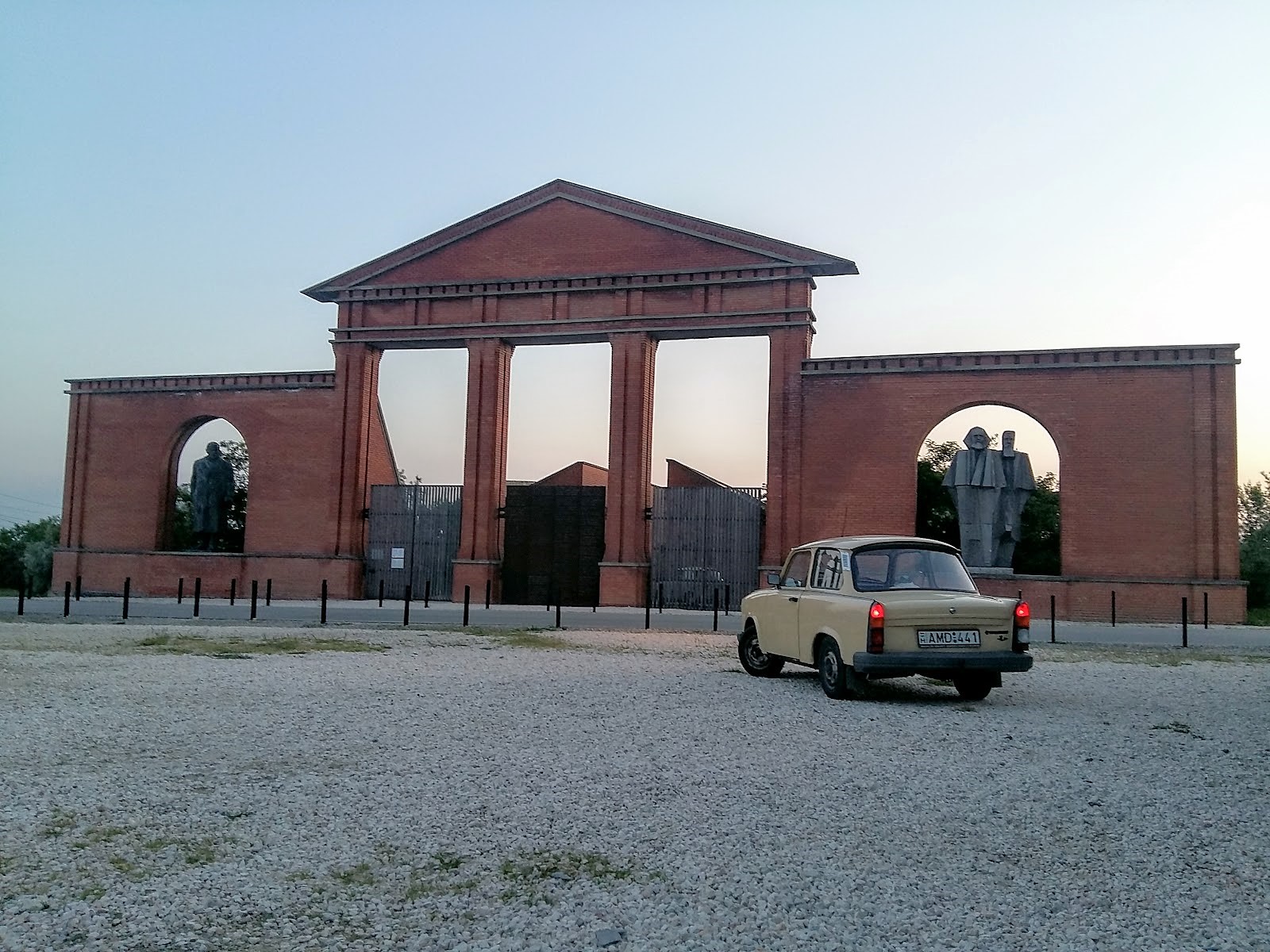
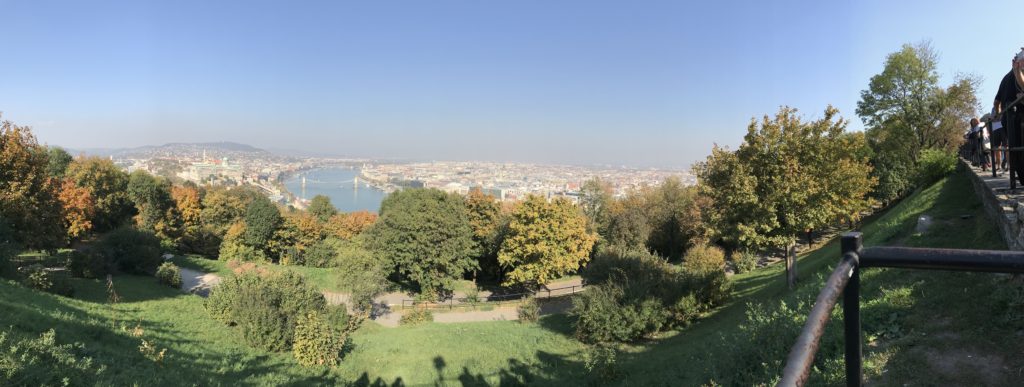
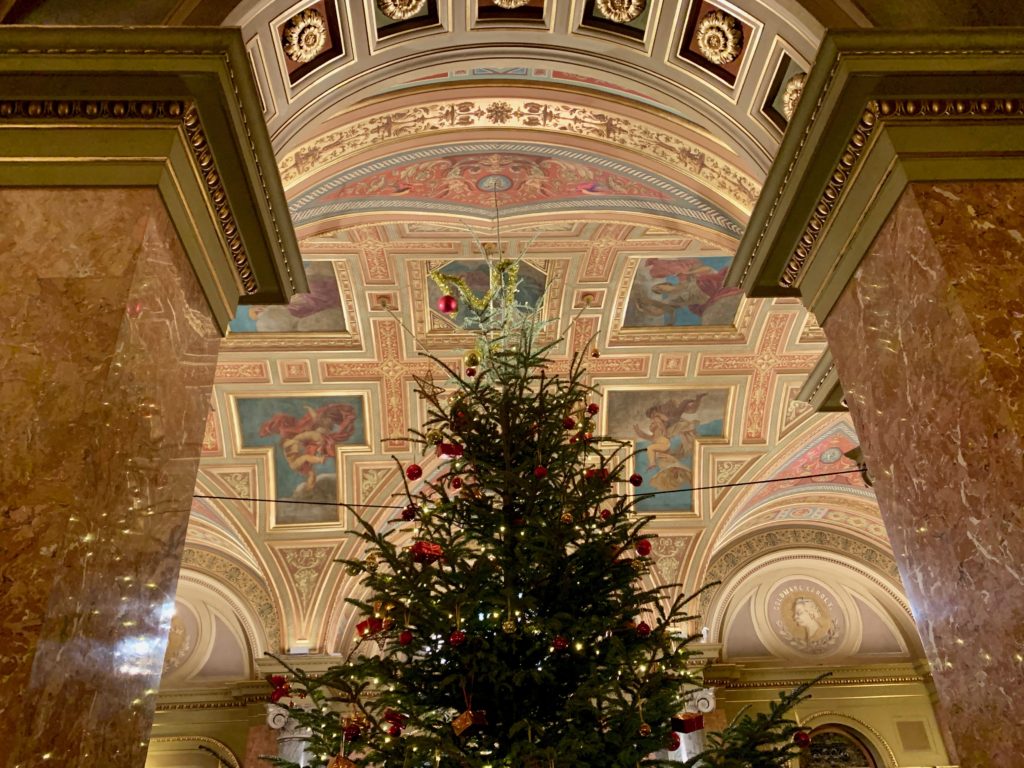
I’m wishing you all Merry Christmas and Happy Holidays from Beautiful Budapest.

Hungarian strudel is one of those pastries that quietly wins everyone over — and it’s always a favourite on my Foodie tours in Budapest.
Many visitors arrive already knowing Apfelstrudel from Austria or Germany, but the Hungarian version has its own character. The dough is stretched paper-thin, the fillings are generous but never heavy, and the result is not too sweet, just perfectly balanced.
Whether filled with apples, cherries, poppy seeds, or cottage cheese, strudel is a wonderful example of our home-style baking. You can taste it in traditional pastry shops — or, if you’re curious, even try making it yourself and experience the magic of stretching the dough until it’s almost transparent.
Budapest in the winter is rather grey and foggy. Also, it’s very cold, so there are only a few outdoor programs locals enjoy doing from early December to the end of February. One of those programs is ice skating in the City Park, it’s great fun and the ice skating rink is usually very busy on weekends.

The Buda Castle Funicular is one of those Budapest experiences that is both practical and charming — a short ride that connects the banks of the Danube with the historic heights of Castle Hill.
Since its opening in 1870, this small but iconic cable car has carried millions of passengers between the Chain Bridgeand the Royal Palace above. In just a few seconds, it offers sweeping views over the Danube and Pest, making the journey itself part of the sightseeing.
The Funicular was originally powered by steam and played an important role in everyday city life, helping residents and workers reach Castle Hill quickly. During the Second World War, it was almost completely destroyed.
When it was rebuilt decades later, it returned as an electric cable car, carefully designed to reflect its historic appearance while meeting modern standards. Today, it’s both a nostalgic landmark and a fully functioning part of Budapest’s transport system.
Film lovers may also recognise it from The Grand Budapest Hotel, where it appears briefly — a small but delightful cinematic connection.
The Funicular is a lovely addition to a walk around Buda Castle, whether you’re exploring on your own or joining a Buda Castle Walking Tour, where it can be included as an optional extra depending on interest and timing.
It’s also a great standalone experience if you’re short on time but still want a memorable view.
If you’d like to avoid long queues, don’t take the Funicular up to Castle Hill. Instead, walk up and use it for the descent, travelling from the Royal Palace down to the Chain Bridge. Lines are usually shorter — and the view is just as beautiful.
St Stephen’s mummified hand hides one of the most unusual and powerful Budapest stories, preserved for over a thousand years inside St Stephen’s Basilica.
Hidden inside St. Stephen’s Basilica, behind gilded doors and soft candlelight, you’ll find one of Hungary’s most extraordinary and deeply symbolic treasures: the mummified right hand of St. Stephen, Hungary’s first Christian king.
St. Stephen (István király) was crowned in the year 1000 and became the founder of the Hungarian state and its Christian identity. His reign marked a turning point: Hungary officially joined Christian Europe, laying the foundations of the country we know today.
After his death, Stephen was revered as a saint — but the story of his right hand is anything but ordinary.
Legend has it that when St. Stephen’s body was exhumed prior to his canonisation, his right hand and forearm were found miraculously preserved, while the rest of his body had decayed. This was interpreted as a divine sign.
The relic became known as the “Holy Right” (Szent Jobb) and, over the centuries, it travelled far beyond Hungary’s borders — hidden, stolen, rediscovered, and finally returned home.
Today, it rests in a dedicated chapel inside the Basilica, displayed in a richly decorated reliquary and illuminated like a jewel.
Visitors to St. Stephen’s Basilica can still see the mummified hand up close. It’s not just a religious relic — it’s a powerful symbol of Hungarian history, identity, and continuity.
Even for non-religious visitors, the experience is striking. The silence, the atmosphere, and the sheer unexpectedness of seeing a thousand-year-old hand preserved in such detail often leave a lasting impression.
The Basilica is included in many of my Budapest walking and driving tours, and the interior visit — including the Holy Right — is also possible. When you see the relic with a guide, the story behind it comes alive: the legends, the politics, and the very human history behind the saint.
If you’d like to include St. Stephen’s Basilica and the Holy Right in your Budapest experience — whether on foot or by car — feel free to get in touch. I’m always happy to tailor a tour that matches your interests and pace.
The reason why I love family researches a lot, is because it’s always a great experience to do the research and to find out more about my travellers’ relatives and family who were originally from Hungary. The other reason is that we usually go to beautiful Hungarian villages and towns to see where and how the family members lived 100 or 200 years ago.
Last week we visited the town of Kalocsa which isn’t just another cute little Hungarian town but it’s also famous for the local paprika. We went to see the local Paprika Museum to find out more about the most popular Hungarian spice.
Tucked away on a quiet stretch of Dob utca in Budapest, near the lively Gozsdu Courtyard, stands a moving and quietly powerful monument: the Carl Lutz Memorial. It commemorates one of the most extraordinary humanitarian efforts in Budapest during the Second World War.
This statue is part of my ongoing Statues of Budapest series, which explores how public monuments reflect the city’s most difficult — and most meaningful — chapters.
Carl Lutz served as Vice-Consul of the Swiss Embassy in Budapest during the German occupation. Between 1942 and 1945, he used his diplomatic position, ingenuity, and moral courage to save tens of thousands of Hungarian Jewsfrom deportation and death.
By issuing protective documents, establishing safe houses, and repeatedly defying Nazi and Arrow Cross authorities, Lutz became one of the most effective rescuers in Holocaust history.
The Carl Lutz Memorial does not overwhelm with size or drama. Instead, it invites reflection. Placed in the heart of what was once the Jewish ghetto, its location is as important as the statue itself.
Here, remembrance is woven directly into everyday life — a reminder that courage and humanity existed even in the darkest moments of the city’s past.
In a neighborhood now known for cafés, bars, and cultural life, the Carl Lutz Memorial anchors the Jewish Quarter in its historical reality. It asks visitors to pause, remember, and understand that the stories of survival here are real, personal, and recent.
This memorial often becomes one of the most meaningful stops on my Jewish Quarter walk, where we explore not only architecture and everyday life, but also the human stories behind the streets.
Explore more: The Carl Lutz Memorial is part of my Statues of Budapest collection, featuring monuments that reveal the city’s layered and often complex history.

Szentendre is a little postcard village, one of the three villages we visit on the Danube Bend tour. It’s a very short drive from Budapest and is equally popular among tourists and locals.
This weekend was very special, the entire village was beautifully lit up for the Light Festival. A truly amazing end-of-the-summer wonderland.
Standing quietly in the heart of the Buda Castle District, near Matthias Church, the Holy Trinity Monument is one of Budapest’s most meaningful historical memorials. Rich in symbolism and emotion, it tells a story of survival, faith, and gratitude.
This monument is part of my ongoing Statues of Budapest series, which explores how public sculptures reflect the city’s deepest historical experiences.
The Holy Trinity Monument was erected in the early 18th century by survivors of the Black Plague, one of the most devastating epidemics in European history. After enduring unimaginable loss, those who lived wanted to give thanks — and to commemorate both survival and remembrance in a lasting form.
Plague columns like this one can be found across Central Europe, but the Budapest monument stands out for its location and artistic richness.
At the center of the monument rises the Holy Trinity, surrounded by saints traditionally associated with protection against plague. Every figure and detail reflects fear, hope, and faith — emotions deeply felt by those who commissioned it.
Rather than celebrating victory or power, the monument speaks quietly of vulnerability and gratitude, reminding visitors how fragile life once was, and how deeply survival was valued.
Today, the monument blends almost seamlessly into the postcard-perfect surroundings of Buda Castle. Yet behind its beauty lies a powerful reminder of a time when faith and community were often the only sources of comfort.
It invites reflection — not only on Budapest’s past, but on resilience, memory, and the human need to give thanks after hardship.
Explore more: The Holy Trinity Monument is part of my Statues of Budapest collection, featuring monuments that reveal the city’s layered history, from playful street sculptures to deeply symbolic memorials.

If you are planning a day trip from Budapest, the Danube Bend is one of the most rewarding regions to explore — and the Upper Castle of Visegrád (Citadel) is without question one of its highlights.
The Danube Bend tour is one of my most popular private tours, as it combines three very different villages along the Danube River, each with its own character, history, and atmosphere. Among them, Visegrád stands out for its dramatic hilltop fortress and breathtaking panoramic views.
Visegrád is best known for two historic sites: the Royal Palace and the Upper Castle, both part of a vast system of fortifications built in the 13th century. These defenses were constructed after the devastating Mongol invasion, when Hungary began reinforcing strategically important locations throughout the kingdom.
Perched high above the river, the Upper Castle was designed not only for defense, but also as a safe refuge. According to historical sources, its construction was financed by the wife of King Béla IV, and the site originally served as a place of protection and seclusion.
Today, visitors can walk among the impressive remains of the thick stone walls and towers, gaining a real sense of medieval military architecture. The climb up to the citadel is rewarded generously: from the top, the view over the Danube Bend is one of the most iconic panoramas in Hungary.
On a clear day, you can see the river making its dramatic curve between forested hills, with small towns and villages dotting the landscape below. It is an ideal spot for photography — and one of my favorite places to pause during a private tour.
One of the best panoramic viewpoints in Hungary
A key site for understanding medieval Hungarian history
Perfectly combined with nearby towns on a Danube Bend day trip
Easily accessible from Budapest, yet surrounded by nature
The Upper Castle of Visegrád fits beautifully into a full-day Danube Bend itinerary. Visiting with a private guide allows you to move at your own pace, avoid unnecessary crowds, and understand the historical context behind what you are seeing — not just admire the view.
If you are interested in exploring Visegrád together with other highlights of the Danube Bend, this stop is an essential and unforgettable part of the journey.