Szentendre is a little postcard village, one of the three villages we visit on the Danube Bend tour. It’s a very short drive from Budapest and is equally popular among tourists and locals.

This weekend was very special, the entire village was beautifully lit up for the Light Festival. A truly amazing end-of-the-summer wonderland.

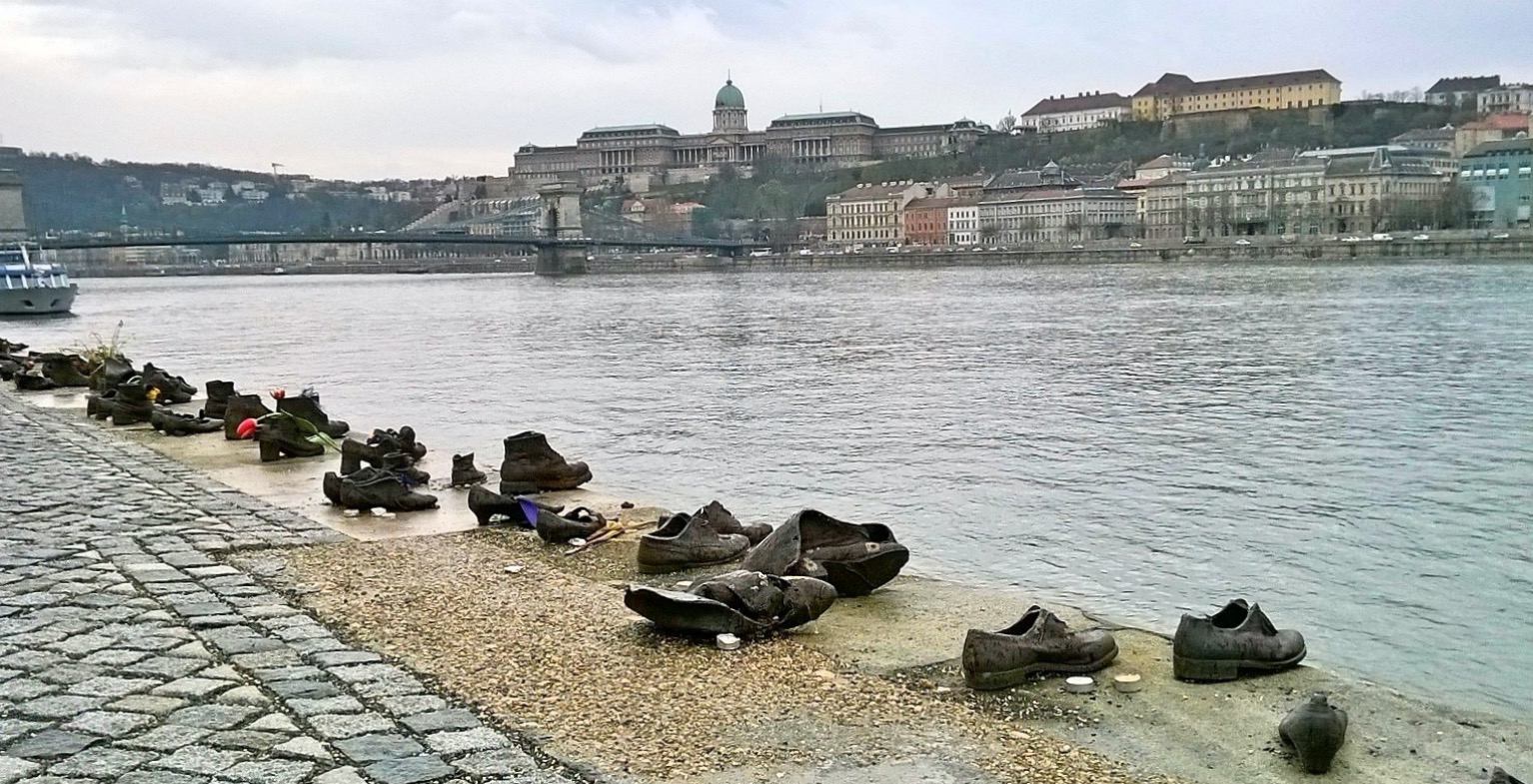
Walking along the Pest side of the Danube, just a few minutes from the Hungarian Parliament, you’ll come across one of the most powerful and moving memorials of Budapest: Shoes on the Danube Bank.

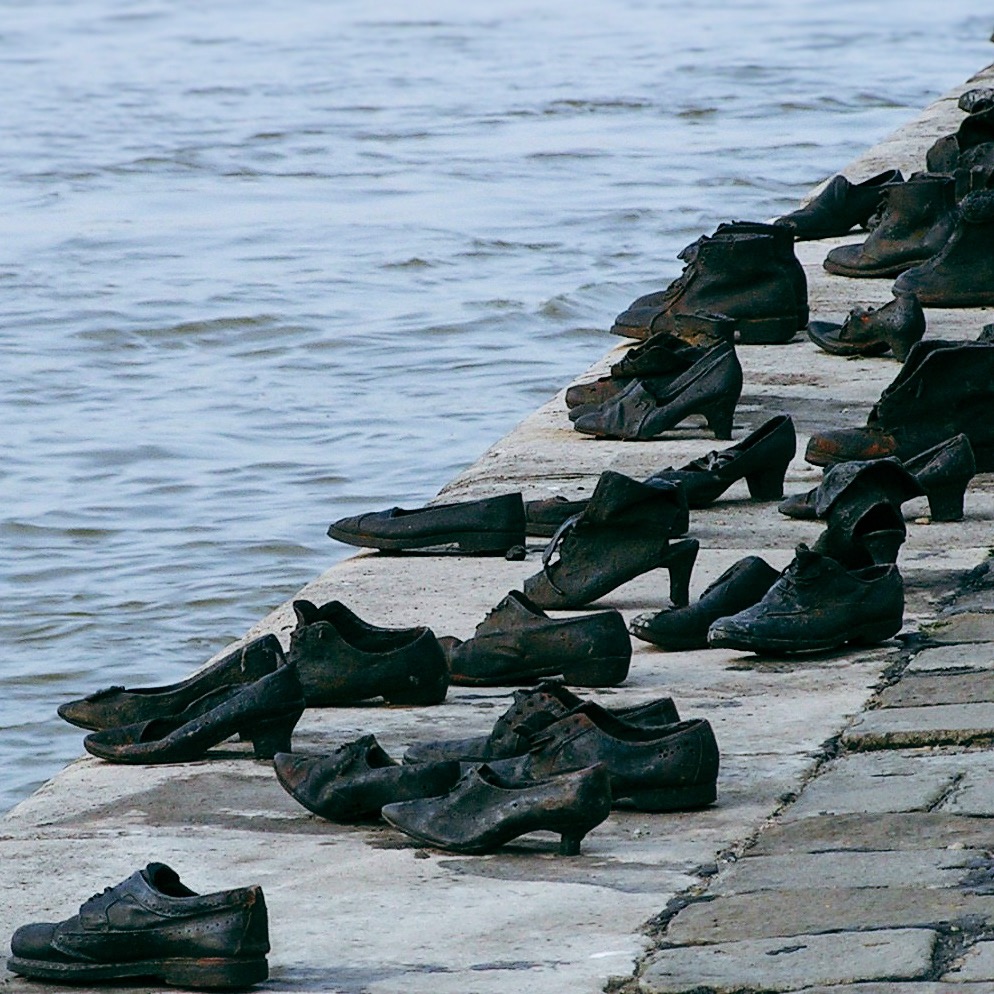
At first glance, the bronze shoes lining the riverbank may seem quiet, almost understated. But their silence speaks volumes.

A place of unimaginable loss

During the winter of 1944–1945, thousands of Hungarian Jews were murdered on this very spot by members of the Arrow Cross Party, the Nazi-aligned regime that ruled Hungary toward the end of World War II.

Victims were marched to the edge of the river, ordered to remove their shoes—valuable items at the time—and then shot. Their bodies fell into the icy Danube and were carried away by the current.

The memorial, created by film director Can Togay and sculptor Gyula Pauer, consists of 60 pairs of bronze shoes: men’s, women’s, and children’s. Each pair represents a life cut short, a family torn apart, a future that never came.

Why this memorial matters

What makes the Shoes on the Danube Bank so striking is its simplicity. There are no towering statues or dramatic inscriptions—just everyday shoes left behind, as if their owners might return at any moment.

Standing here, with the Danube flowing quietly beside you and the Hungarian Parliament Building in the background, history feels painfully close. It’s a place that invites reflection, remembrance, and empathy.

Visitors often leave flowers, stones, or candles in the shoes—small gestures of respect in a place where words often feel insufficient.

Visiting as part of a Jewish Quarter walk

I always recommend visiting this memorial as part of a broader exploration of Budapest’s Jewish history. On my Jewish Quarter walking tour, we place this site into context—connecting it with nearby locations, personal stories, and the wider history of the Jewish community in Budapest before, during, and after the Holocaust.

It’s not an easy stop, but it is an essential one.

If you want to understand Budapest beyond its beauty—its resilience, its scars, and its responsibility to remember—the Shoes on the Danube Bank is truly a must-see.

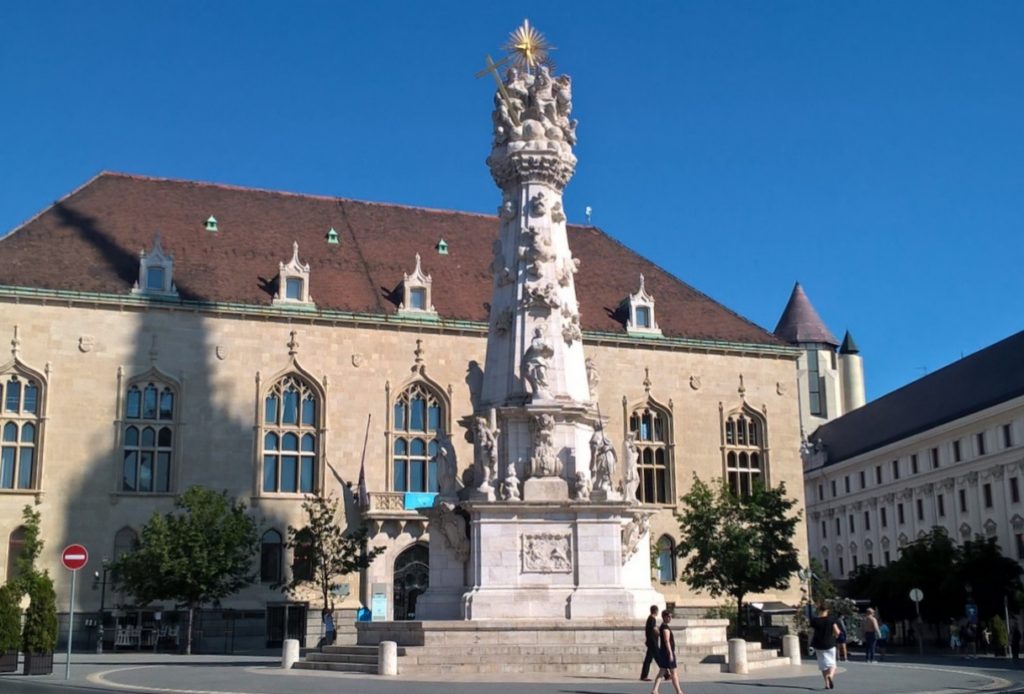
Standing quietly in the heart of the Buda Castle District, near Matthias Church, the Holy Trinity Monument is one of Budapest’s most meaningful historical memorials. Rich in symbolism and emotion, it tells a story of survival, faith, and gratitude.

This monument is part of my ongoing Statues of Budapest series, which explores how public sculptures reflect the city’s deepest historical experiences.

A monument born from survival

The Holy Trinity Monument was erected in the early 18th century by survivors of the Black Plague, one of the most devastating epidemics in European history. After enduring unimaginable loss, those who lived wanted to give thanks — and to commemorate both survival and remembrance in a lasting form.

Plague columns like this one can be found across Central Europe, but the Budapest monument stands out for its location and artistic richness.

Symbolism carved in stone

At the center of the monument rises the Holy Trinity, surrounded by saints traditionally associated with protection against plague. Every figure and detail reflects fear, hope, and faith — emotions deeply felt by those who commissioned it.

Rather than celebrating victory or power, the monument speaks quietly of vulnerability and gratitude, reminding visitors how fragile life once was, and how deeply survival was valued.

Why the Holy Trinity Monument matters

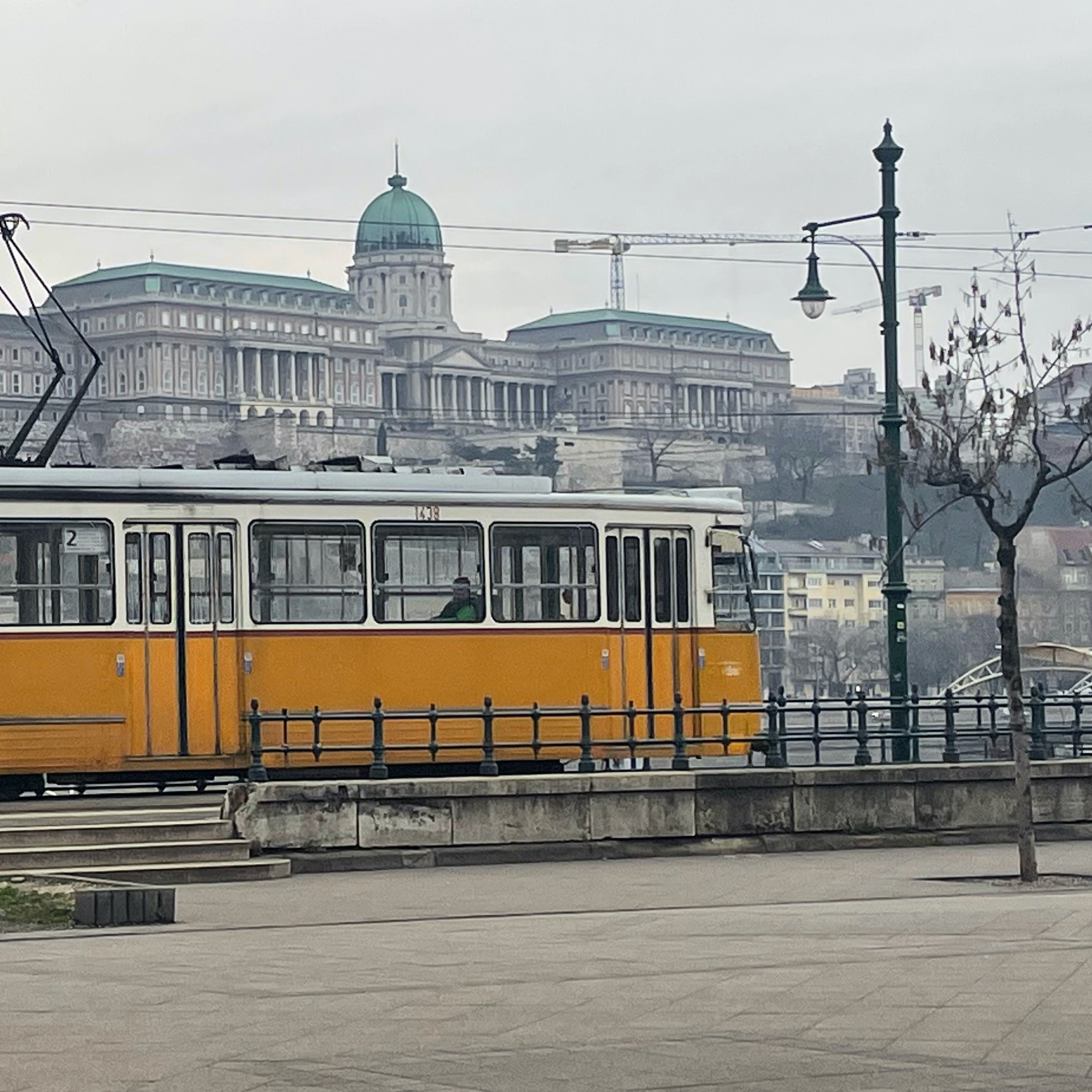
Today, the monument blends almost seamlessly into the postcard-perfect surroundings of Buda Castle. Yet behind its beauty lies a powerful reminder of a time when faith and community were often the only sources of comfort.

It invites reflection — not only on Budapest’s past, but on resilience, memory, and the human need to give thanks after hardship.

Explore more: The Holy Trinity Monument is part of my Statues of Budapest collection, featuring monuments that reveal the city’s layered history, from playful street sculptures to deeply symbolic memorials.

Holy Trinity Column commemorating plague survivors in Budapest


Budapest is full of statues. Some dominate grand squares and riverbanks, while others quietly occupy street corners, stairways, and promenades, waiting to be noticed. Together, they form an open-air museum that reflects Hungary’s history, myths, political turning points, and sense of humor.

Over the years, I’ve started paying closer attention to these sculptures while walking through the city — not as isolated sights, but as storytellers. Some are impossible to miss, others easy to overlook, yet all of them add depth to understanding Budapest beyond its famous landmarks.

This ongoing collection brings together some of the most interesting statues of Budapest: well-known monuments, playful surprises, and symbolic figures that reveal layers of the city many visitors never see.

Playful & Hidden City Statues

Not all statues in Budapest are solemn or monumental. Some of the city’s most beloved sculptures are informal, approachable, and often discovered by accident. These figures invite interaction, photographs, and sometimes a smile — offering a lighter side of Budapest’s urban landscape.

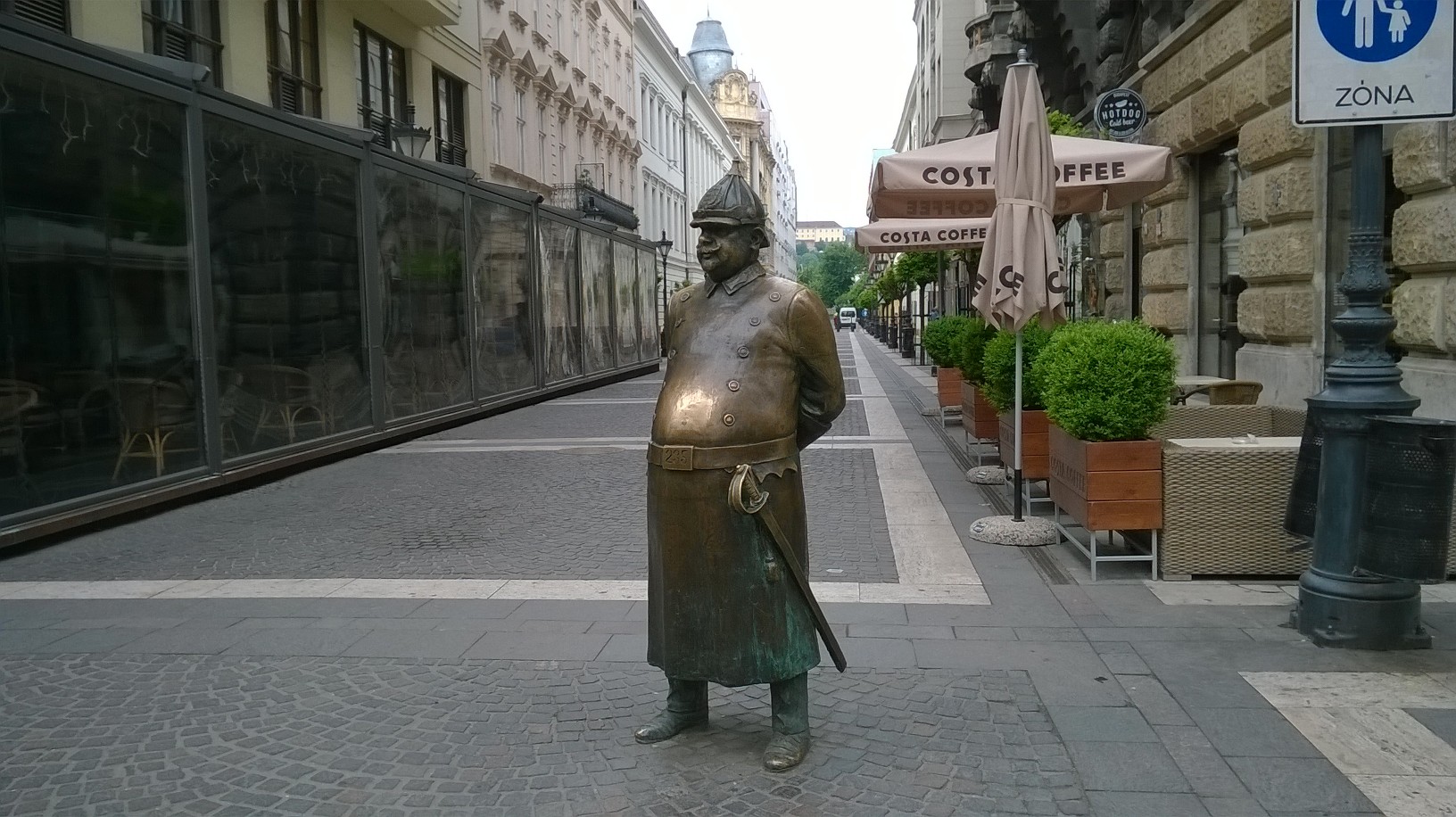
The Fat Policeman

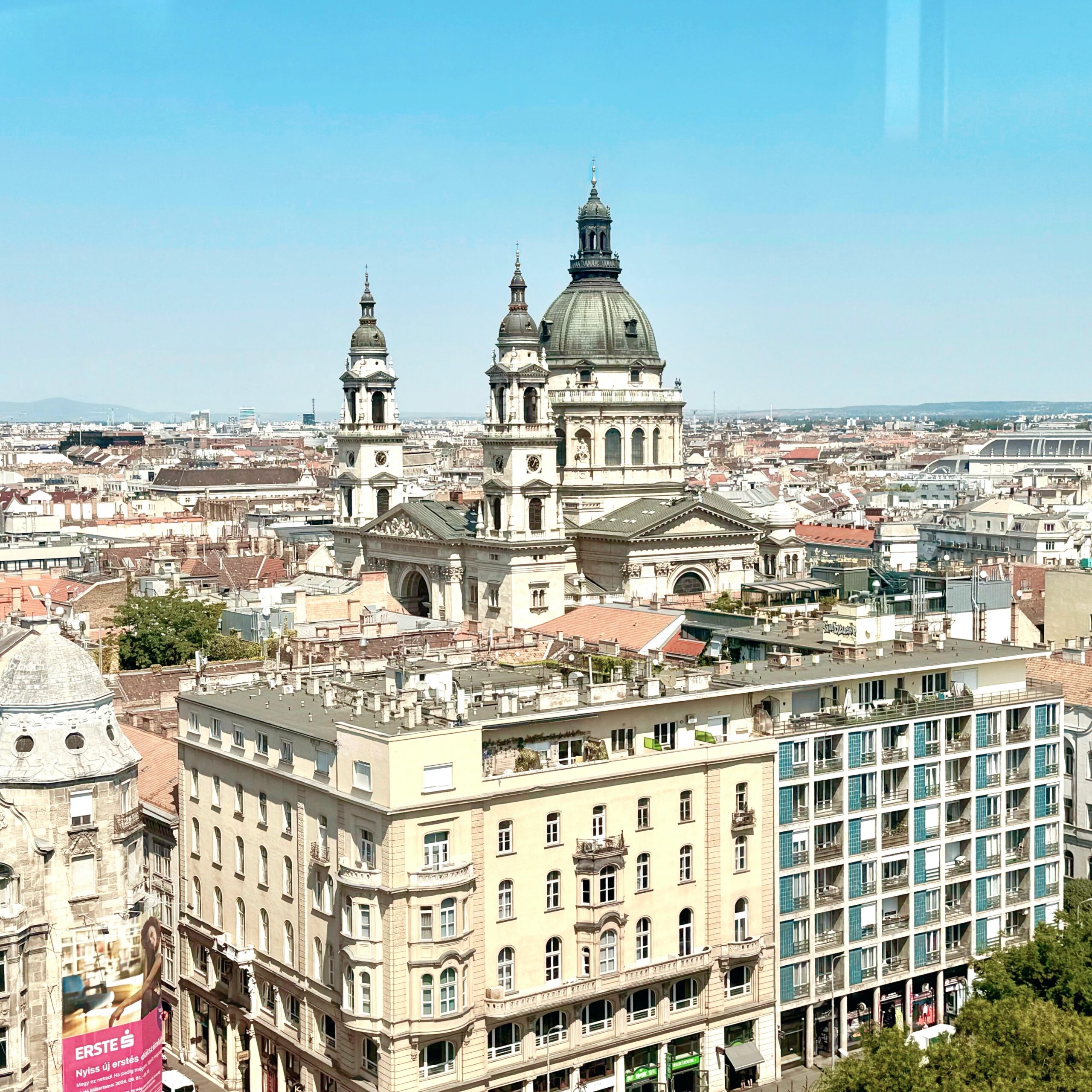
A humorous bronze figure standing near St. Stephen’s Basilica, the Fat Policeman has become one of Budapest’s most photographed statues. Its relaxed posture and exaggerated form make it instantly recognizable, and it perfectly captures the city’s ability to mix history with irony.

Little Princess

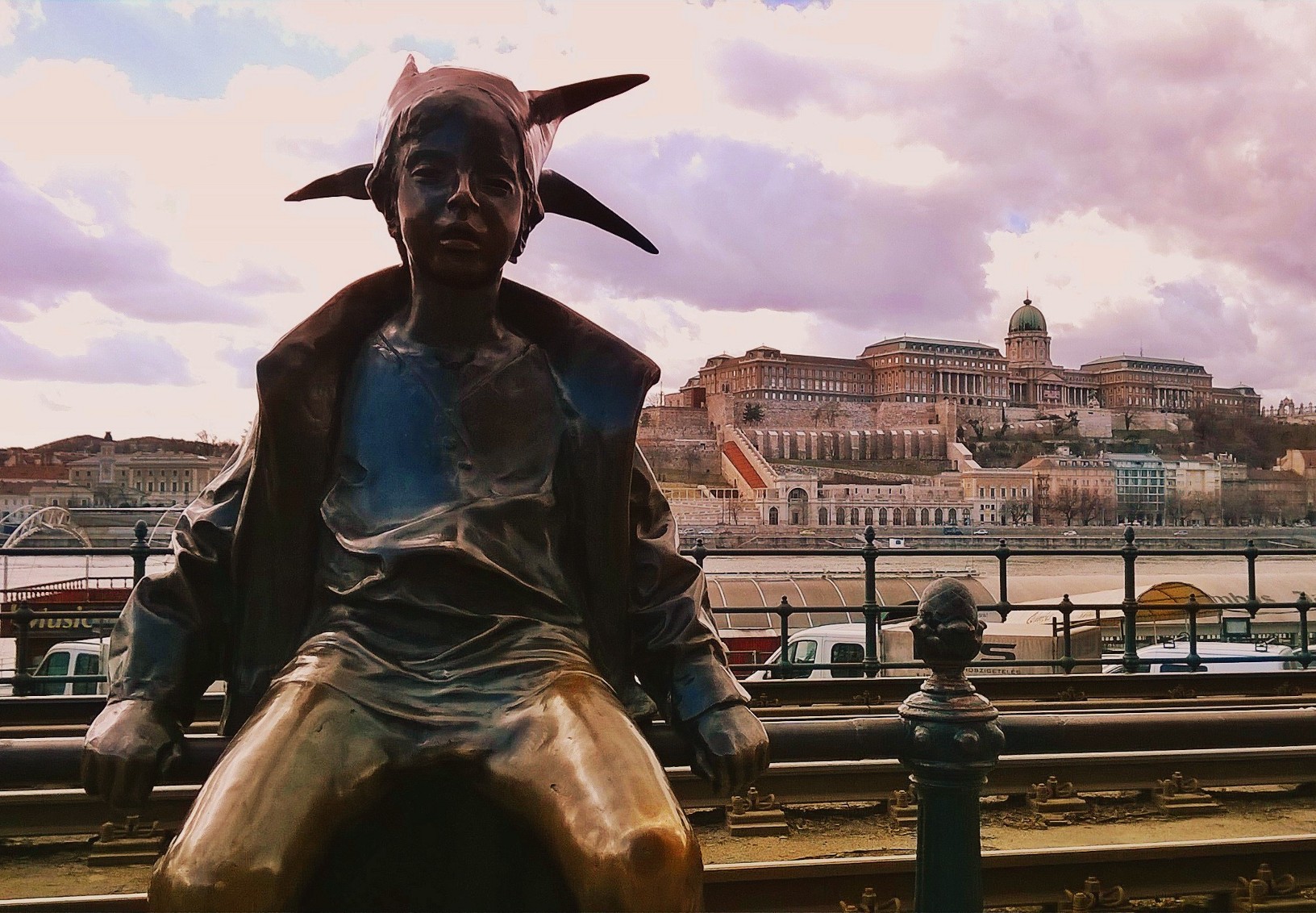
Small in size but big in popularity, the Little Princess sits along the Danube promenade. Inspired by childhood imagination, this statue has become a favorite stop for walkers along the river.

Prince Buda and Princess Pest

This symbolic pair represents the two sides of the city before their unification. Often overlooked, the statue offers a charming reminder of how Budapest came to be.

Historical & Political Monuments

Many statues in Budapest carry much heavier stories. These monuments reflect key historical figures, political eras, and collective memories — sometimes celebratory, sometimes painful.

King Matthias

One of Hungary’s most revered rulers, King Matthias appears in several statues across Budapest. His legacy is closely tied to the country’s golden age and remains deeply embedded in national identity.

Count Gyula Andrássy

A central figure in 19th-century Hungarian politics, Andrássy’s statue reflects the era of reform, modernization, and the Austro-Hungarian Compromise.

Holy Trinity Monument

Found in Buda Castle, this richly decorated column commemorates survival and renewal after devastating plague epidemics. It is both a religious symbol and a historical document carved in stone.

Carl Lutz Memorial

This understated but powerful memorial honors the Swiss diplomat who saved thousands of Hungarian Jews during World War II. It stands as a reminder of moral courage during one of Budapest’s darkest periods.

Stalin’s Boots

All that remains of a once-colossal statue, Stalin’s Boots are among the most symbolic remnants of Hungary’s communist past. Their absence speaks louder than the monument ever did.

Mythical & Symbolic Figures

Some statues draw from legend, mythology, and abstract symbolism rather than specific historical events. These sculptures often blend pagan roots, national identity, and artistic interpretation.

Turul Bird

A mythical creature central to Hungarian origin legends, the Turul appears in multiple locations around the city. It represents strength, protection, and national mythology.

Sphinx

Unusual and unexpected, the Sphinx statue adds a touch of mystery to Budapest’s sculptural landscape. Its presence raises more questions than answers — part of its charm.

0 km Stone

Marking the point from which all road distances in Hungary are measured, the 0 km Stone is both symbolic and practical, quietly anchoring the country’s geography.

Lesser-Known Curiosities

Some statues remain largely unnoticed even by frequent visitors, yet they add richness to the city’s visual and cultural fabric.

Julianus and Gerhardus

This sculpture commemorates medieval monks whose journeys connected Hungary to distant lands. It is a reminder of the country’s early links to the wider European world.

Seeing Budapest Through Its Statues

Taken together, these statues reveal Budapest as a city shaped not only by kings and empires, but also by humor, memory, and symbolism. They reward those who slow down, look closer, and ask questions.

I often point out these sculptures while walking through the city, not as checklist sights, but as conversation starters — details that help make sense of Budapest’s layered past and vibrant present.

This page will continue to grow as more statues and stories are added, forming an evolving portrait of Budapest told through bronze, stone, and imagination.

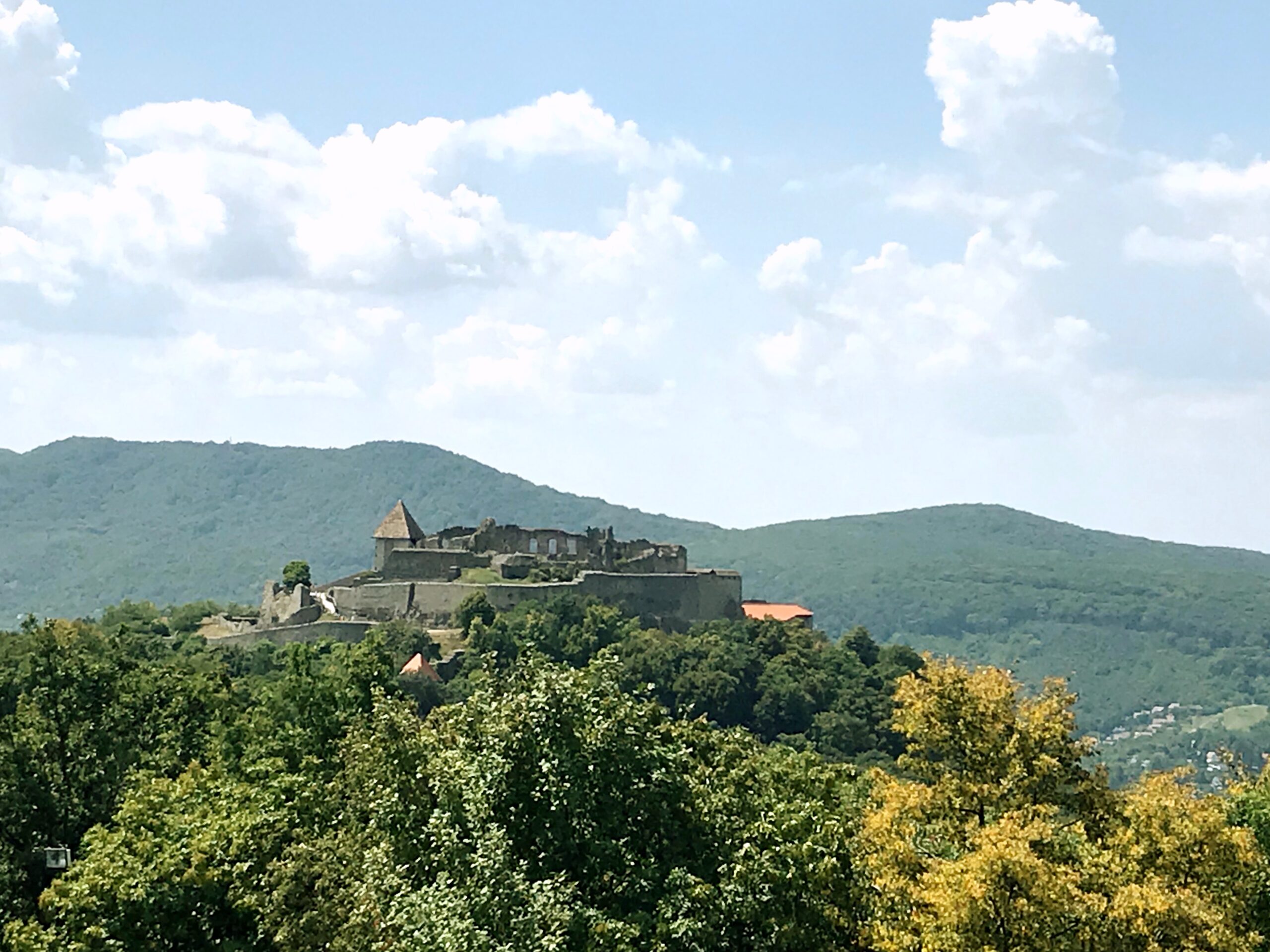
If you are planning a day trip from Budapest, the Danube Bend is one of the most rewarding regions to explore — and the Upper Castle of Visegrád (Citadel) is without question one of its highlights.

The Danube Bend tour is one of my most popular private tours, as it combines three very different villages along the Danube River, each with its own character, history, and atmosphere. Among them, Visegrád stands out for its dramatic hilltop fortress and breathtaking panoramic views.

A Fortress Born After Invasion

Visegrád is best known for two historic sites: the Royal Palace and the Upper Castle, both part of a vast system of fortifications built in the 13th century. These defenses were constructed after the devastating Mongol invasion, when Hungary began reinforcing strategically important locations throughout the kingdom.

Perched high above the river, the Upper Castle was designed not only for defense, but also as a safe refuge. According to historical sources, its construction was financed by the wife of King Béla IV, and the site originally served as a place of protection and seclusion.

What You Can See Today

Today, visitors can walk among the impressive remains of the thick stone walls and towers, gaining a real sense of medieval military architecture. The climb up to the citadel is rewarded generously: from the top, the view over the Danube Bend is one of the most iconic panoramas in Hungary.

On a clear day, you can see the river making its dramatic curve between forested hills, with small towns and villages dotting the landscape below. It is an ideal spot for photography — and one of my favorite places to pause during a private tour.

Why Visit the Upper Castle of Visegrád?

  • One of the best panoramic viewpoints in Hungary

  • A key site for understanding medieval Hungarian history

  • Perfectly combined with nearby towns on a Danube Bend day trip

  • Easily accessible from Budapest, yet surrounded by nature

Visiting Visegrád on a Private Tour

The Upper Castle of Visegrád fits beautifully into a full-day Danube Bend itinerary. Visiting with a private guide allows you to move at your own pace, avoid unnecessary crowds, and understand the historical context behind what you are seeing — not just admire the view.

If you are interested in exploring Visegrád together with other highlights of the Danube Bend, this stop is an essential and unforgettable part of the journey.

I’m ever so grateful for all your kind words and reviews. This one is even more special because this is the 100th review I’ve had on TripAdvisor. Thank you very much for all the kind words and comments!!

What a treat! Just like VIP

We booked an 8 hour tour of Budapest. This turned out to be one of the best moments in our lives. We were greeted by Julia in the lobby of our hotel. She was already waiting for us. She took us to a huge black limo, which was at our discretion for the whole day. This car could even access blocked streets! Just like magic, the blocking posts just opened for us only. We felt like real VIPs. She took us to so many places. Her English is perfect. I do speak Hungarian, but my spouse speaks only English. We’re had absolutely no problem understanding everything. Julia gave us a lot of information about the past, present and a little future about the city, also about the country. Budapest is really a magical city, Julia made it even more attractive. We can’t wait to do it again. Oh, and let’s not forget the secret places she took us to. On our own we would’ve missed so much! She recommended some excellent restaurants, which we really enjoyed. 
We ended the day in the evening, tired but happy. It was a perfect getaway. We loved it. I recommend it to anyone who wants to have fun and at the same time learn about Budapest. 
Thank you Júlia! This will stay with us for ever. Can’t wait for the next time!

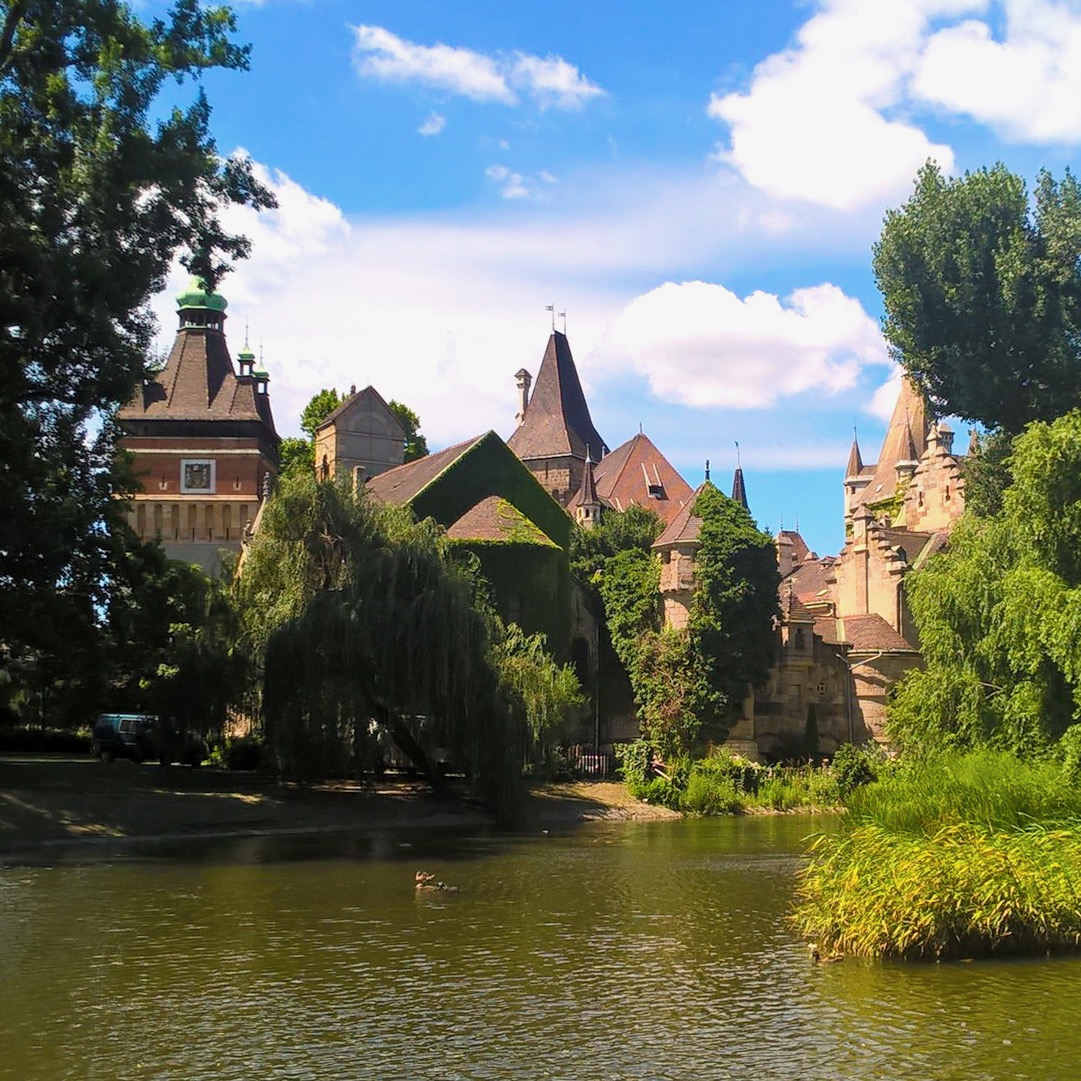
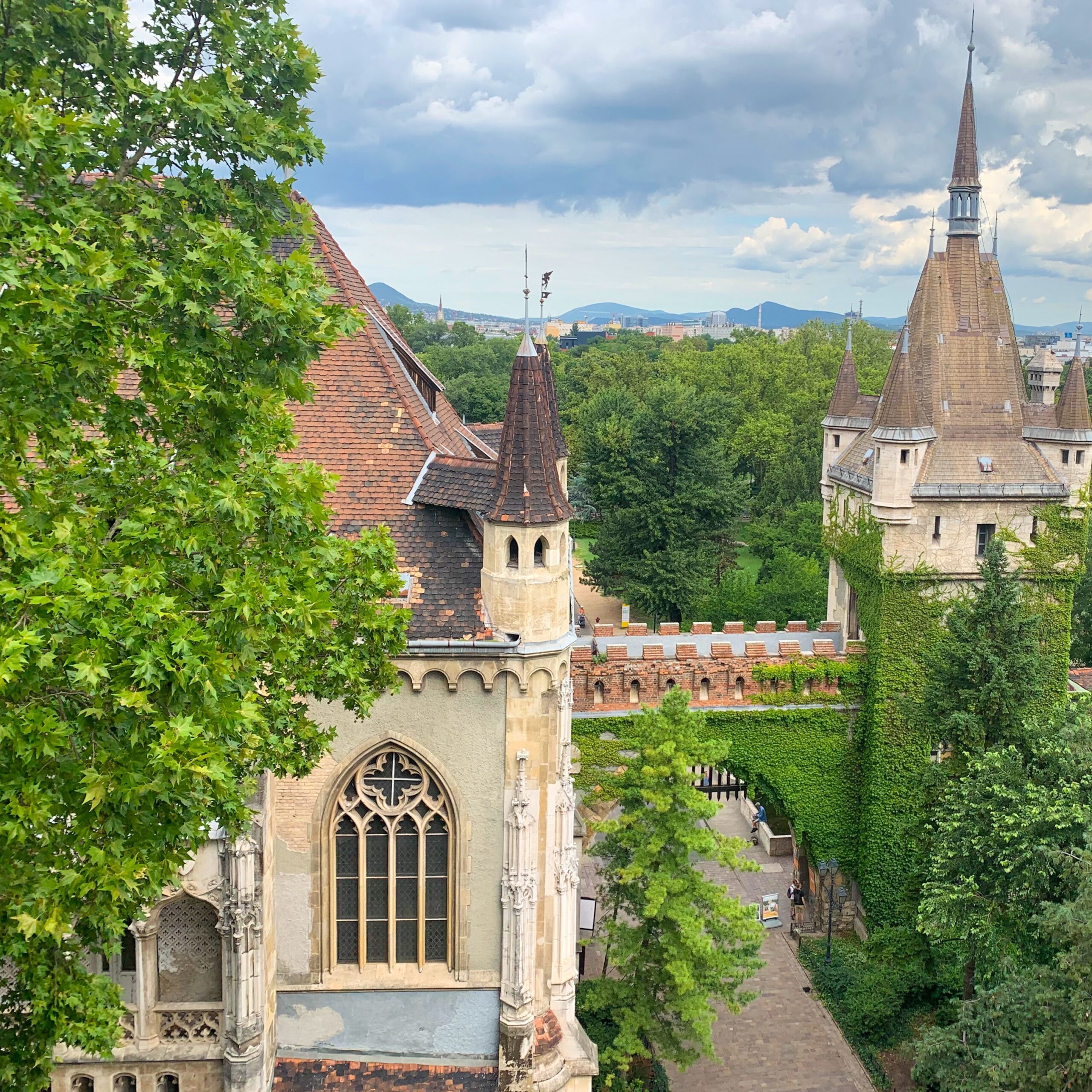
Vajdahunyad Castle in Budapest is one of city’s most distinctive and beloved landmarks, beautifully tucked away in City Park. A visit here feels like stepping into a storybook — yet the castle’s origins are firmly rooted in Hungarian history.

The castle was originally built as a temporary structure for the 1896 Millennium Exhibition, created to showcase Hungary’s rich architectural heritage in a single complex. Its success exceeded all expectations, and after the exhibition ended, the decision was made to rebuild Vajdahunyad Castle in a permanent form — allowing future generations to enjoy it.

What makes Vajdahunyad Castle truly special is its unique blend of architectural styles. Romanesque, Gothic, Renaissance, and Baroque elements appear side by side, representing famous buildings from across the historic Kingdom of Hungary. As you walk through the courtyards, over the bridge, and along the lake, each section reveals a different mood — and endless photo opportunities.

Today, Vajdahunyad Castle is one of the most visited attractions in Budapest. It also frequently appears as a filming location, so keen-eyed visitors may recognise it from international films and series. Inside, the castle houses the Museum of Hungarian Agriculture, while the surrounding grounds invite relaxed walks in every season.

Vajdahunyad Castle is included in many of my Budapest walking and driving tours, often paired with Heroes’ Square, Andrássy Avenue, and other highlights of City Park. It’s a place where architecture, history, and everyday local life meet — and one I’m always happy to introduce to visitors.

If you’d like to explore Vajdahunyad Castle as part of a customised private tour, feel free to get in touch.

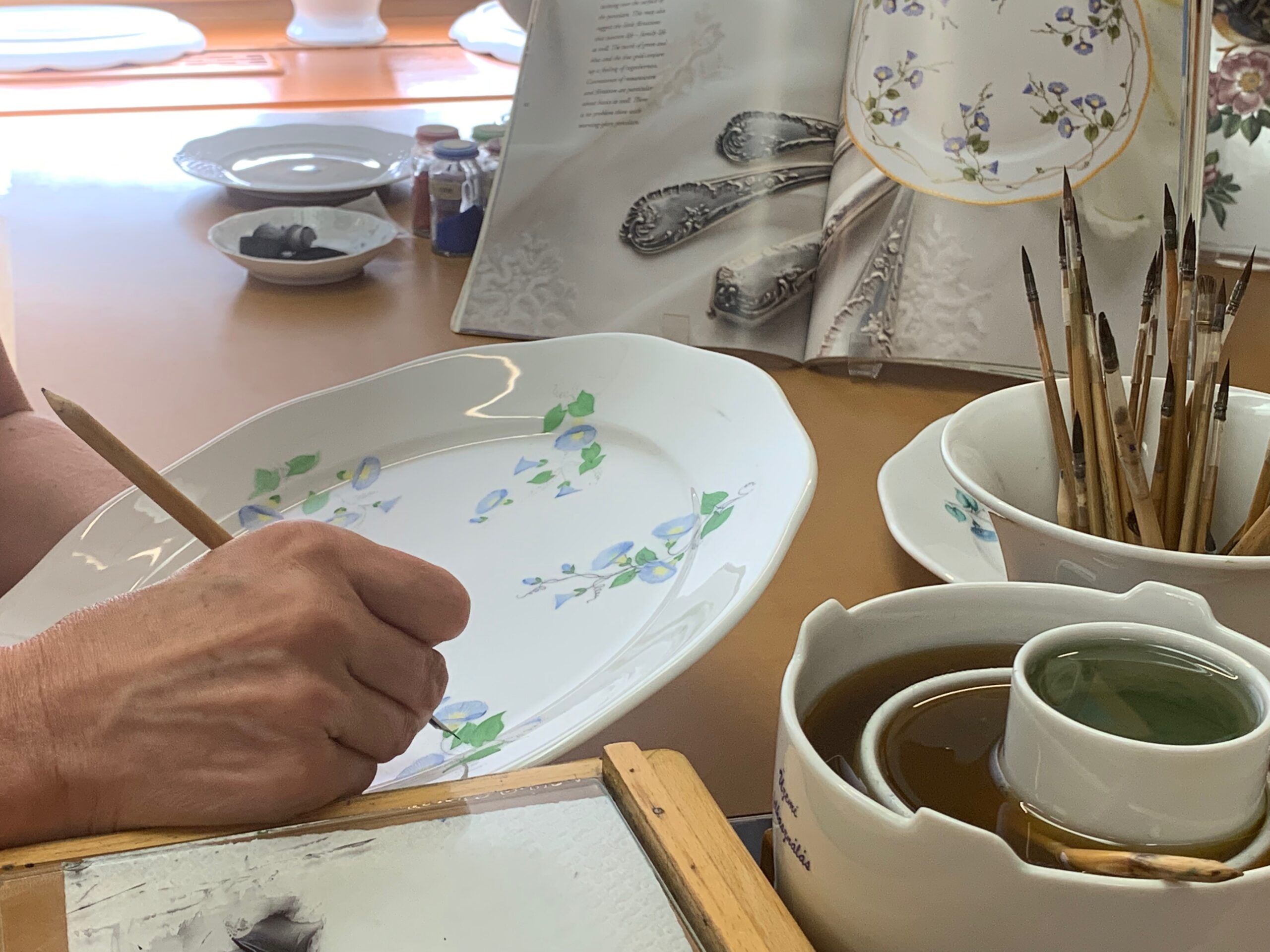
Herend porcelain patterns are more than decorative motifs — they reflect centuries of aristocratic taste, royal patronage, and a deep understanding of colour, function, and craftsmanship.

Visiting the Herend Porcelain Factory is not only about seeing how porcelain is made — it’s also about discovering a fascinating visual language shaped by aristocracy, royal taste, colour symbolism, and function.

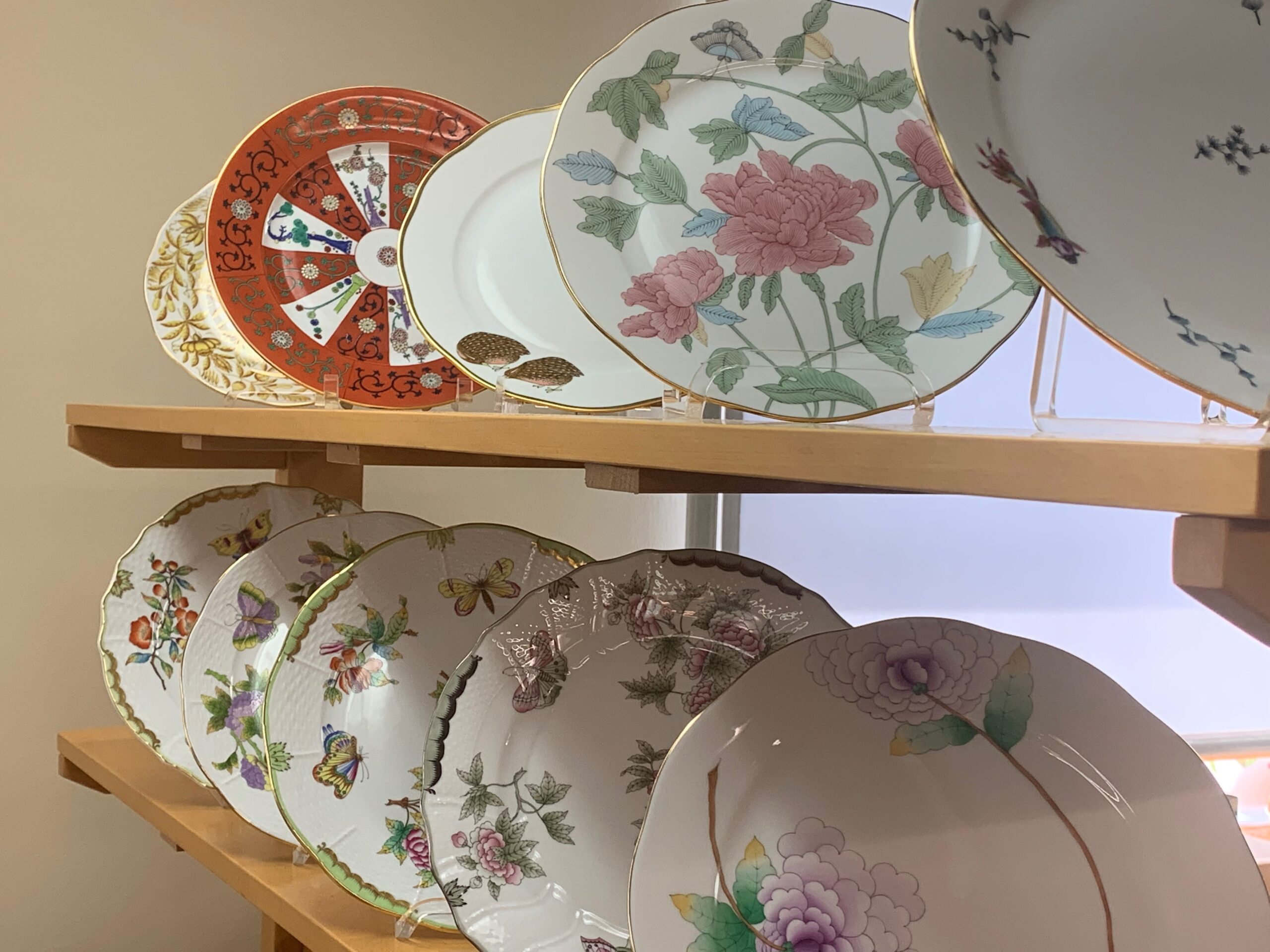
Over the years, Herend has created hundreds of patterns, each with its own story. Some were designed for royal courts, others for noble families, and many were adapted to different uses, from grand dining rooms to intimate tea rituals.

Porcelain for Royalty and Aristocracy

One of the most famous Herend designs is the Viktória pattern, created in the 19th century after Queen Victoria admired a richly decorated dinner service at an international exhibition. She ordered a full set for herself, and the pattern was named in her honour.

The design is elaborate and colourful, featuring butterflies and floral motifs inspired by the Far East — a style that perfectly matched aristocratic taste at the time. These pieces were meant to impress: large dining tables, formal occasions, and prestigious interiors.

Similarly, many early Herend patterns were created with noble households in mind, where porcelain was not only functional but also a symbol of status and refinement.

Colour as Identity

Colour plays a key role in Herend porcelain. Certain patterns are immediately recognisable by their palette:

  • Rich greens and golds often reflect classical elegance

  • Deep blues suggest formality and tradition

  • Softer pastel tones create a lighter, more intimate feeling

These colour choices weren’t random — they were carefully selected to suit interiors, table settings, and the expectations of high-society clients. Even today, visitors are often surprised by how modern some of these historic colour combinations feel.

Patterns Designed for Function

Not all Herend designs were created for grand banquets. Some patterns were developed specifically for tea and coffee sets, where smaller motifs and lighter decoration feel more appropriate.

A wonderful example is the Apponyi pattern, originally created as a simplified version of a more elaborate design. Its central floral motif makes it perfect for smaller items like cups, saucers, and dessert plates — elegant without being overwhelming.

This thoughtful relationship between decoration and function is one of the reasons Herend porcelain feels so timeless.

A Living Tradition

What makes Herend truly special is that these patterns are still hand-painted today, using techniques passed down through generations. While fashions change, the balance between beauty, symbolism, and usability remains the same.

Each piece tells a story — not only about craftsmanship, but also about the people and traditions that shaped it.

If you’re interested in Hungarian applied arts, design history, or simply beautiful objects with meaning, discovering Herend patterns adds a whole new layer to a factory visit. I often include Herend as part of a Lake Balaton or countryside private tour, where it fits beautifully alongside historic towns, landscapes, and regional gastronomy.


Sustainable tourism in Budapest is about finding a balance between welcoming visitors and preserving the city as a liveable home for those who call it their own.

I spend most of my days walking through Budapest and travelling around Hungary. It’s wonderful to see how many people are curious about my country and eager to experience its culture, history, and everyday life. Tourism brings energy, jobs, and opportunities—and for that, I’m truly grateful.

At the same time, the growing number of visitors can feel overwhelming. Some parts of the city are under constant pressure, and local life is slowly being pushed aside. Sustainable tourism is about finding a balance: creating meaningful experiences for travellers while preserving the city as a liveable place for those who call it home.

Small choices make a big difference

If you’d like your visit to Budapest to be enjoyable, authentic, and respectful, here are a few ideas worth considering:

  • Support local businesses. Choose locally owned cafés and restaurants, buy from small artisans, and consider hiring a local guide who truly knows the city.

  • Walk and use public transportation. Budapest is a walkable city, and its public transport system is excellent. Exploring on foot helps you slow down and notice everyday details you would otherwise miss.

  • Look beyond guidebooks. Instead of ticking off “must-see” lists, allow space for spontaneous discoveries and quieter neighbourhoods.

  • Avoid overcrowded places at peak times. When certain baths, museums, bars, or restaurants become overwhelmed, locals are often pushed out of their own favourite spots.

  • Travel with consideration. Simply put, don’t do anything here that you wouldn’t do at home.

Why private tours can be a sustainable choice

Private, customised tours naturally support sustainable tourism. They move at a human pace, avoid unnecessary crowds, and adapt to your interests rather than forcing you through a rigid itinerary. They also support local professionals directly and encourage a deeper connection with the city beyond its most famous landmarks.

For me, guiding is not just about showing highlights—it’s about sharing Budapest in a way that respects its rhythm, its people, and its everyday life. When travel is thoughtful, everyone benefits: visitors, locals, and the city itself.

That’s a Hungarian saying, that’s probably how Hungarians try to find some comfort when they can’t see the sun for weeks. Budapest really is beautiful all year around but it shows most of its splendor in the sun.