I’m delighted to see how many people explore my beautiful Budapest as part of their river cruise. I know that while on a cruise travellers have very limited time to discover each place.
That’s the reason why I offer Shore Excursions, fully customisable driving and walking tours, so that each and every visitor can make the most of their time in Budapest. I know what the cruise companies offer on their tours, and I’ll make sure I see you much more when you decide to book a private tour with me. The tours include driving and walking tours in both Budapest and the beautiful Hungarian countryside.
Don’t hesitate to get in touch with me for further details or to book a tailor-made tour!
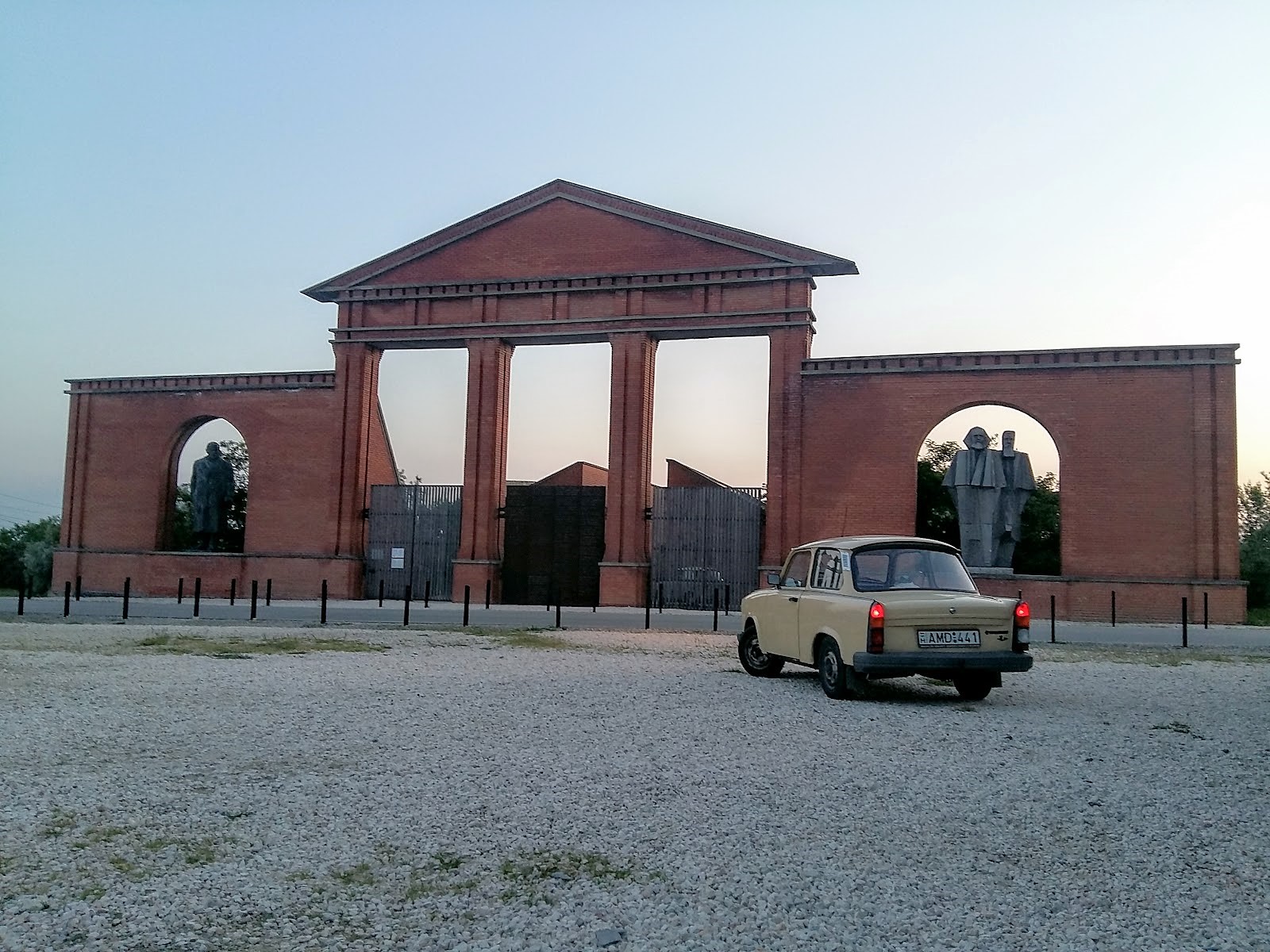
This really was a very popular tour but unfortunately the Trabant car is so terribly polluting that I decided to stop it. Now the same tour is available by car, I’m happy to offer the same experience with less impact on the environment.
This was not an easy decision for me, especially after my tour was featured in a French travel TV show but our planet’s and our kids’ future is more important than some business opportunities.
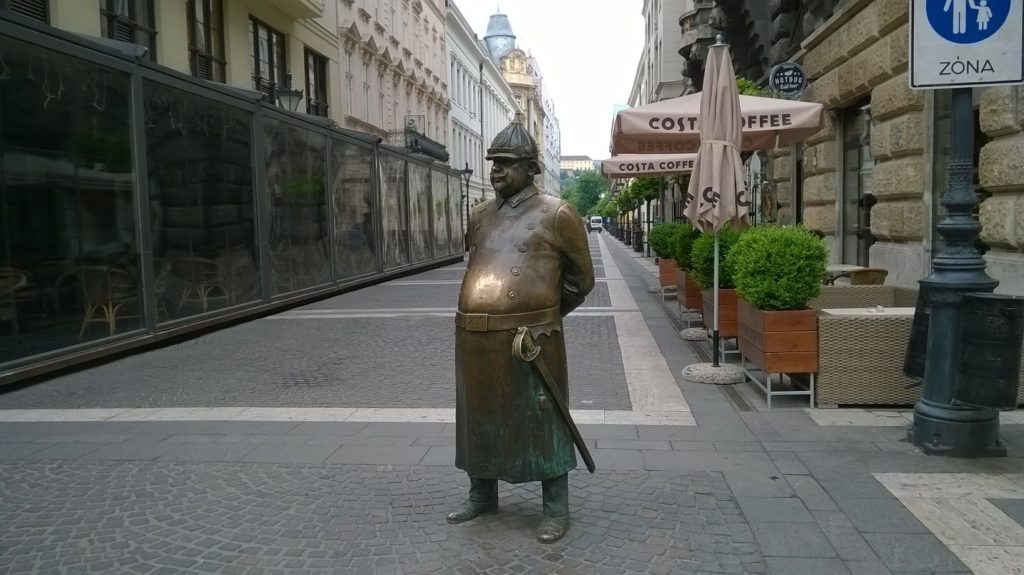
Nestled just a stone’s throw from St. Stephen’s Basilica on Zrínyi Street, the whimsical Fat Policeman statue—affectionately known as Uncle Karl—stands guard over the cobblestones of the bustling city centre of Budapest. Cast in bronze by sculptor Illyés András and unveiled in 2008, he’s dressed in a nostalgic early‑20th‑century uniform complete with a jaunty helmet and a twirly moustache. His rotund, friendly figure instantly catches the eye, and true to local superstition, his belly has become gloriously polished from the countless tourists who rub it for good luck and loosing weight—and perhaps the gift of guilt-free indulgence in Hungarian cuisine.
This monument is part of my ongoing Statues of Budapest series, which explores how meaning in this city is often hidden in plain sight.
Those seeking romance often reach up to stroke his moustache, a gesture believed to bring good fortune in love. Over the years, his well-worn features have become a testament to thousands of hopeful wishes.
Though officially titled the “Guardian of Order,” the statue’s more playful nickname speaks to its charm and the warm-hearted humor woven into Budapest’s cultural tapestry. Anecdotal measurements suggest he stands about 1.7 m tall—just over five and a half feet—making him approachable and almost lifelike in scale. He’s become a selfie magnet and a lighthearted must-see for visitors wanting to balance architectural grandeur with a bit of street‑art whimsy
By blending nostalgia, folklore, and everyday joy, the Fat Policeman encapsulates the spirit of Budapest: historical depth with a side of light-heartedness. Whether you’re capturing him in a snapshot, giving his belly a good rub, or simply pausing to admire his cheery posture, Uncle Karl offers a delightful pause in the rhythm of urban exploration—and perhaps a sprinkle of good fortune to boot.
Explore more: The 0 km Stone is featured in my Statues of Budapest collection, where famous monuments and easily overlooked details reveal the deeper structure of the city.

With over 250 tours I delivered last year I can’t tell how fortunate I am to show my travellers around the city and the country I love the most. This is my home, my birthplace and I’m looking forward to introducing it to even more people in 2020!
I’ve just had a look at which my most popular tours were last year:
- “THE GRAND BUDAPEST” WALK: a great introduction of Budapest to first time visitors or travellers who only have one day to see the main highlights and some of the hidden gems.
- JEWISH QUARTER WALK: including the visit of the world’s second largest synagogue and a walk in the ghetto which is today the Soho of Budapest with great cultural and creative vibes.
- BUDAPEST FOODIE TOUR: as I also work for a Hungarian food magazin, I’m really happy to take you to local markets and little artisan food shops and to make sure you taste all the great Hungarian treats.
- EGER AND WINE TOUR BY CAR: we love our wines and we love our wine countries, Eger, the postcard-like Baroque little town is famous for the Bull’s Blood, the great Hungarian red wine.
- A DAY IN TOKAJ WINE COUNTRY: another day trip, another tour to a beautiful wine region. I love Tokaj and the Tokaj wines and I hope that my travellers who picked this tour in 2019 loved it just as much as I did.
I’m wishing you all Merry Christmas and Happy Holidays from Beautiful Budapest.
Hungarian strudel is one of those pastries that quietly wins everyone over — and it’s always a favourite on my Foodie tours in Budapest.
Many visitors arrive already knowing Apfelstrudel from Austria or Germany, but the Hungarian version has its own character. The dough is stretched paper-thin, the fillings are generous but never heavy, and the result is not too sweet, just perfectly balanced.
Whether filled with apples, cherries, poppy seeds, or cottage cheese, strudel is a wonderful example of our home-style baking. You can taste it in traditional pastry shops — or, if you’re curious, even try making it yourself and experience the magic of stretching the dough until it’s almost transparent.
If you’re walking along Andrássy Avenue, one of the most elegant boulevards of Budapest, you might notice a sphinx statue quietly guarding the entrance of the Hungarian State Opera House. At first glance, she looks familiar — mysterious, timeless, and watchful.
But take a closer look, and you’ll realise there’s something unusual about her.
This statue is part of my ongoing Statues of Budapest series, which focuses on both famous monuments and easily overlooked details hidden in plain sight.
Not a typical sphinx
Traditionally, a sphinx is depicted with the head of a woman and the body of a lion. The Budapest sphinx follows this classical form — almost.
If you stop and observe carefully, you’ll notice an unexpected detail: she has breasts, making her far more explicitly feminine than most sphinx representations. This subtle feature sets her apart and gives the statue a distinctive presence.
It’s one of those details many people walk past every day without noticing, yet once seen, it’s impossible to forget.
Why is she here?
The sphinx fits perfectly into the artistic world of the Opera House. She embodies mystery, guardianship, and elegance — qualities closely associated with music, performance, and the dramatic arts.
Placed at the entrance, she feels less like a decoration and more like a silent gatekeeper, watching over one of Budapest’s most important cultural institutions.
A reminder to look closer
The sphinx of Andrássy Avenue is a perfect example of why Budapest rewards attentive visitors. You don’t need grand monuments or dramatic viewpoints — sometimes, the most interesting stories are carved into details just above eye level.
All you have to do is stop, look up, and notice.
Explore more: The Sphinx statue is featured in my Statues of Budapest collection, where famous monuments and easily overlooked details reveal the deeper structure of the city.

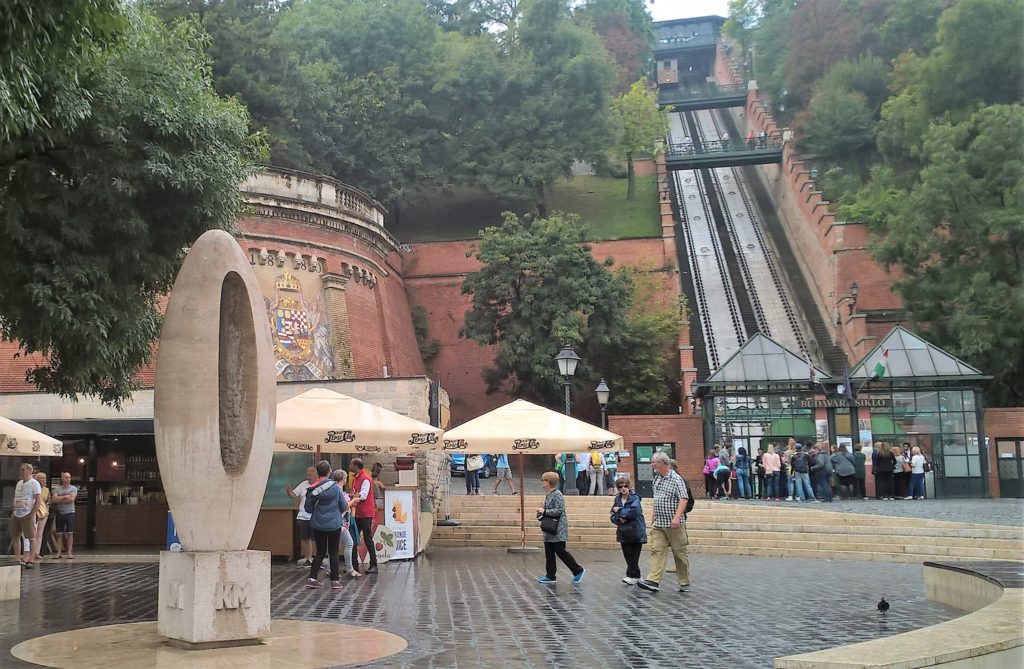
The Buda Castle Funicular is one of those Budapest experiences that is both practical and charming — a short ride that connects the banks of the Danube with the historic heights of Castle Hill.
Since its opening in 1870, this small but iconic cable car has carried millions of passengers between the Chain Bridgeand the Royal Palace above. In just a few seconds, it offers sweeping views over the Danube and Pest, making the journey itself part of the sightseeing.
A bit of history
The Funicular was originally powered by steam and played an important role in everyday city life, helping residents and workers reach Castle Hill quickly. During the Second World War, it was almost completely destroyed.
When it was rebuilt decades later, it returned as an electric cable car, carefully designed to reflect its historic appearance while meeting modern standards. Today, it’s both a nostalgic landmark and a fully functioning part of Budapest’s transport system.
Film lovers may also recognise it from The Grand Budapest Hotel, where it appears briefly — a small but delightful cinematic connection.
How to include it in your visit
The Funicular is a lovely addition to a walk around Buda Castle, whether you’re exploring on your own or joining a Buda Castle Walking Tour, where it can be included as an optional extra depending on interest and timing.
It’s also a great standalone experience if you’re short on time but still want a memorable view.
An insider tip from a local guide
If you’d like to avoid long queues, don’t take the Funicular up to Castle Hill. Instead, walk up and use it for the descent, travelling from the Royal Palace down to the Chain Bridge. Lines are usually shorter — and the view is just as beautiful.
Among Budapest’s lesser-known statues, the monument to Julianus and Gerhardus stands out not for its size, but for the remarkable story it represents.
This sculpture is part of my ongoing Statues of Budapest series, which looks beyond famous monuments to uncover the ideas and journeys that shaped Hungarian identity.
Who were Julianus and Gerhardus?
Julianus and Gerhardus were Hungarian Dominican monks who, in the 13th century, set out on an extraordinary journey eastward. Their mission was to find Magna Hungaria — the ancestral territories where Hungarians were believed to have lived before beginning their long migration toward Europe.
Travelling thousands of kilometers, they reached regions near the Ural Mountains, documenting encounters with people believed to be related to the early Hungarians. At a time when travel was slow, dangerous, and uncertain, their journey was an astonishing feat of endurance and curiosity.
Why does this statue matter?
Unlike statues commemorating kings or battles, this monument celebrates knowledge, exploration, and cultural memory. Julianus and Gerhardus represent a desire to understand origins — to look backward in order to understand the present.
Their story reminds us that Hungarian history is not confined to the Carpathian Basin alone, but stretches far beyond it, across continents and centuries.
A quiet monument with a wide horizon
This statue is easy to overlook, yet it commemorates one of the most ambitious intellectual journeys of medieval Hungary. It invites reflection rather than admiration — and rewards those who pause to read its story.
In a city filled with grand architecture and dramatic monuments, Julianus and Gerhardus quietly point our attention outward, toward distant lands and deep historical roots.
Explore more: Julianus and Gerhardus are part of my Statues of Budapest collection, featuring famous monuments and overlooked sculptures that reveal the city’s layered identity.