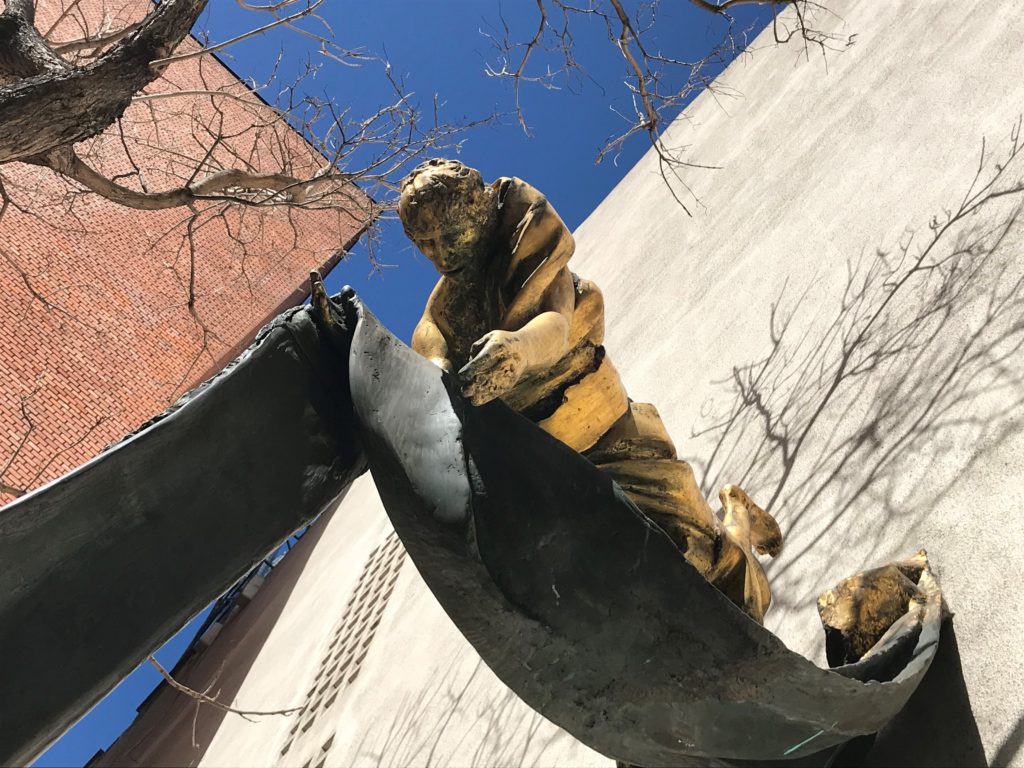
Tucked away on a quiet stretch of Dob utca in Budapest, near the lively Gozsdu Courtyard, stands a moving and quietly powerful monument: the Carl Lutz Memorial. It commemorates one of the most extraordinary humanitarian efforts in Budapest during the Second World War.

This statue is part of my ongoing Statues of Budapest series, which explores how public monuments reflect the city’s most difficult — and most meaningful — chapters.

Who was Carl Lutz?

Carl Lutz served as Vice-Consul of the Swiss Embassy in Budapest during the German occupation. Between 1942 and 1945, he used his diplomatic position, ingenuity, and moral courage to save tens of thousands of Hungarian Jewsfrom deportation and death.

By issuing protective documents, establishing safe houses, and repeatedly defying Nazi and Arrow Cross authorities, Lutz became one of the most effective rescuers in Holocaust history.

The meaning of the memorial

The Carl Lutz Memorial does not overwhelm with size or drama. Instead, it invites reflection. Placed in the heart of what was once the Jewish ghetto, its location is as important as the statue itself.

Here, remembrance is woven directly into everyday life — a reminder that courage and humanity existed even in the darkest moments of the city’s past.

Why this statue matters today

In a neighborhood now known for cafés, bars, and cultural life, the Carl Lutz Memorial anchors the Jewish Quarter in its historical reality. It asks visitors to pause, remember, and understand that the stories of survival here are real, personal, and recent.

This memorial often becomes one of the most meaningful stops on my Jewish Quarter walk, where we explore not only architecture and everyday life, but also the human stories behind the streets.

Explore more: The Carl Lutz Memorial is part of my Statues of Budapest collection, featuring monuments that reveal the city’s layered and often complex history.

Statue commemorating Carl Lutz, Swiss diplomat and Holocaust rescuer, in Budapest


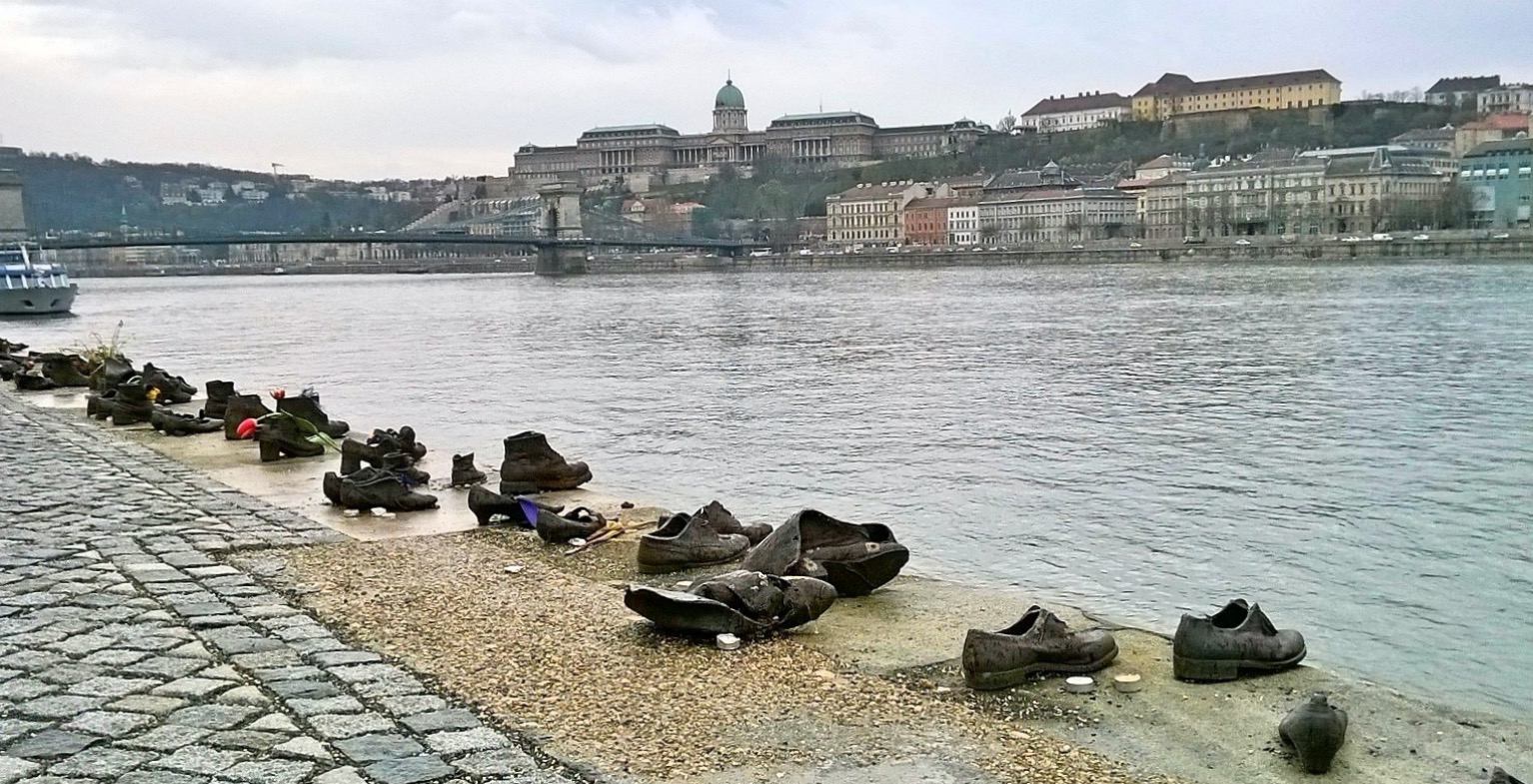
Walking along the Pest side of the Danube, just a few minutes from the Hungarian Parliament, you’ll come across one of the most powerful and moving memorials of Budapest: Shoes on the Danube Bank.

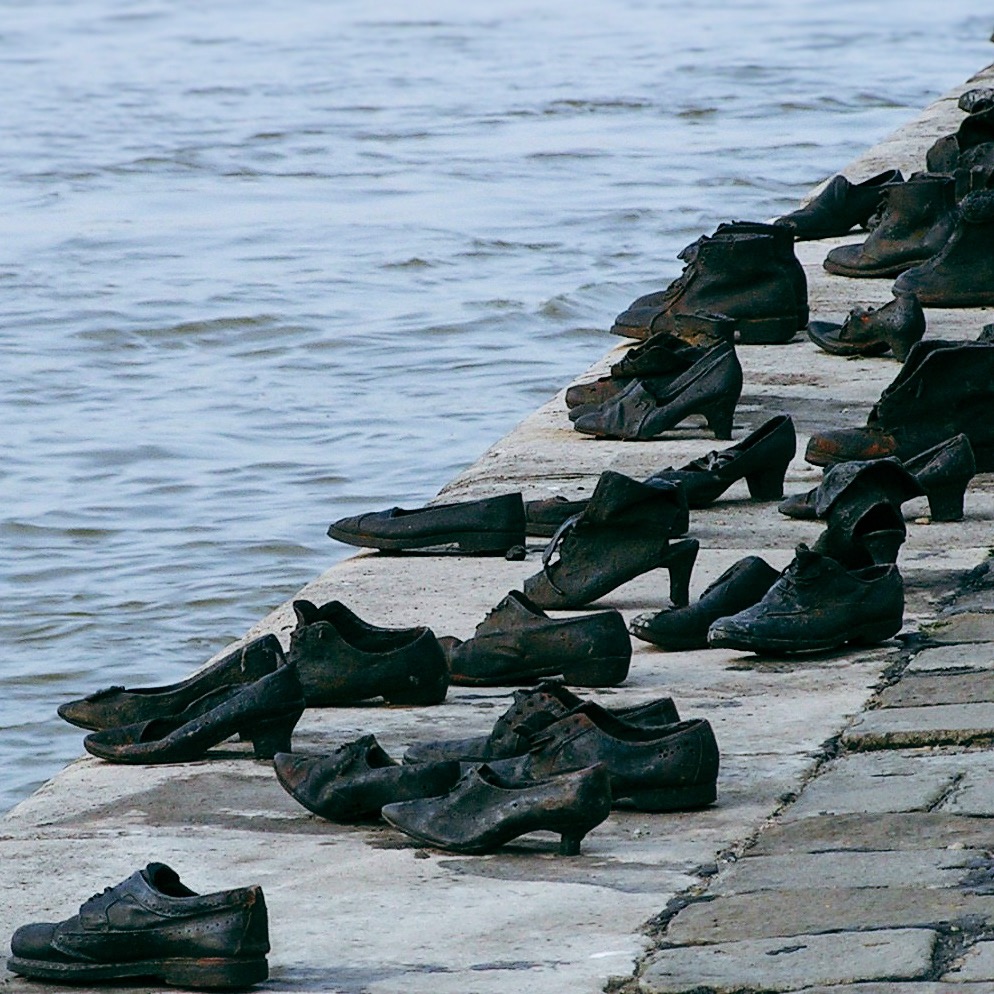
At first glance, the bronze shoes lining the riverbank may seem quiet, almost understated. But their silence speaks volumes.

A place of unimaginable loss

During the winter of 1944–1945, thousands of Hungarian Jews were murdered on this very spot by members of the Arrow Cross Party, the Nazi-aligned regime that ruled Hungary toward the end of World War II.

Victims were marched to the edge of the river, ordered to remove their shoes—valuable items at the time—and then shot. Their bodies fell into the icy Danube and were carried away by the current.

The memorial, created by film director Can Togay and sculptor Gyula Pauer, consists of 60 pairs of bronze shoes: men’s, women’s, and children’s. Each pair represents a life cut short, a family torn apart, a future that never came.

Why this memorial matters

What makes the Shoes on the Danube Bank so striking is its simplicity. There are no towering statues or dramatic inscriptions—just everyday shoes left behind, as if their owners might return at any moment.

Standing here, with the Danube flowing quietly beside you and the Hungarian Parliament Building in the background, history feels painfully close. It’s a place that invites reflection, remembrance, and empathy.

Visitors often leave flowers, stones, or candles in the shoes—small gestures of respect in a place where words often feel insufficient.

Visiting as part of a Jewish Quarter walk

I always recommend visiting this memorial as part of a broader exploration of Budapest’s Jewish history. On my Jewish Quarter walking tour, we place this site into context—connecting it with nearby locations, personal stories, and the wider history of the Jewish community in Budapest before, during, and after the Holocaust.

It’s not an easy stop, but it is an essential one.

If you want to understand Budapest beyond its beauty—its resilience, its scars, and its responsibility to remember—the Shoes on the Danube Bank is truly a must-see.

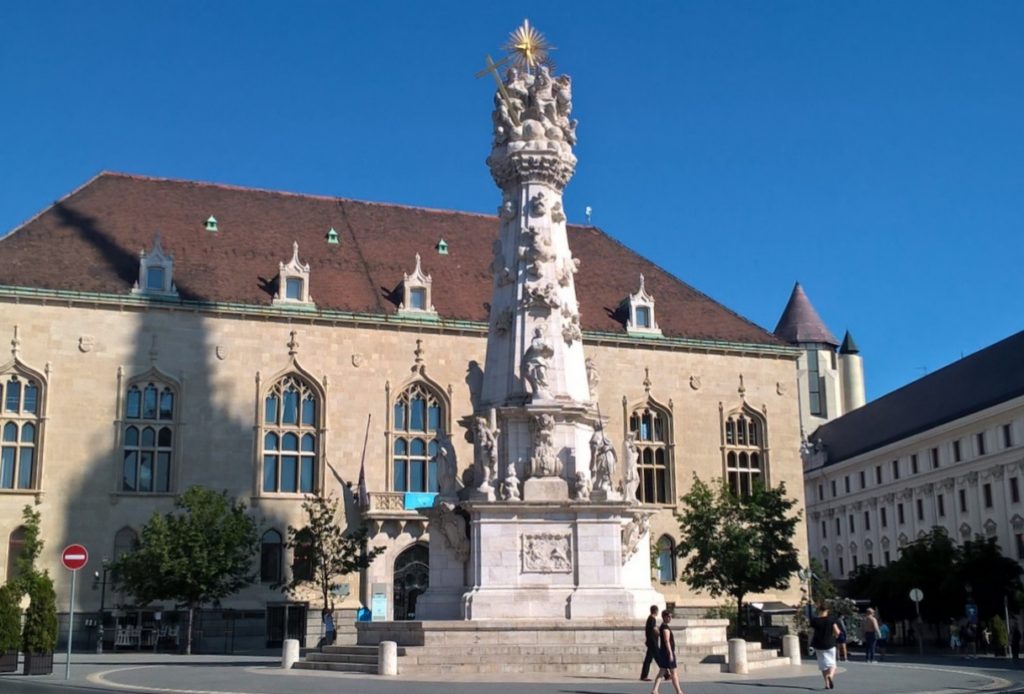
Standing quietly in the heart of the Buda Castle District, near Matthias Church, the Holy Trinity Monument is one of Budapest’s most meaningful historical memorials. Rich in symbolism and emotion, it tells a story of survival, faith, and gratitude.

This monument is part of my ongoing Statues of Budapest series, which explores how public sculptures reflect the city’s deepest historical experiences.

A monument born from survival

The Holy Trinity Monument was erected in the early 18th century by survivors of the Black Plague, one of the most devastating epidemics in European history. After enduring unimaginable loss, those who lived wanted to give thanks — and to commemorate both survival and remembrance in a lasting form.

Plague columns like this one can be found across Central Europe, but the Budapest monument stands out for its location and artistic richness.

Symbolism carved in stone

At the center of the monument rises the Holy Trinity, surrounded by saints traditionally associated with protection against plague. Every figure and detail reflects fear, hope, and faith — emotions deeply felt by those who commissioned it.

Rather than celebrating victory or power, the monument speaks quietly of vulnerability and gratitude, reminding visitors how fragile life once was, and how deeply survival was valued.

Why the Holy Trinity Monument matters

Today, the monument blends almost seamlessly into the postcard-perfect surroundings of Buda Castle. Yet behind its beauty lies a powerful reminder of a time when faith and community were often the only sources of comfort.

It invites reflection — not only on Budapest’s past, but on resilience, memory, and the human need to give thanks after hardship.

Explore more: The Holy Trinity Monument is part of my Statues of Budapest collection, featuring monuments that reveal the city’s layered history, from playful street sculptures to deeply symbolic memorials.

Holy Trinity Column commemorating plague survivors in Budapest


I’m ever so grateful for all your kind words and reviews. This one is even more special because this is the 100th review I’ve had on TripAdvisor. Thank you very much for all the kind words and comments!!

What a treat! Just like VIP

We booked an 8 hour tour of Budapest. This turned out to be one of the best moments in our lives. We were greeted by Julia in the lobby of our hotel. She was already waiting for us. She took us to a huge black limo, which was at our discretion for the whole day. This car could even access blocked streets! Just like magic, the blocking posts just opened for us only. We felt like real VIPs. She took us to so many places. Her English is perfect. I do speak Hungarian, but my spouse speaks only English. We’re had absolutely no problem understanding everything. Julia gave us a lot of information about the past, present and a little future about the city, also about the country. Budapest is really a magical city, Julia made it even more attractive. We can’t wait to do it again. Oh, and let’s not forget the secret places she took us to. On our own we would’ve missed so much! She recommended some excellent restaurants, which we really enjoyed. 
We ended the day in the evening, tired but happy. It was a perfect getaway. We loved it. I recommend it to anyone who wants to have fun and at the same time learn about Budapest. 
Thank you Júlia! This will stay with us for ever. Can’t wait for the next time!

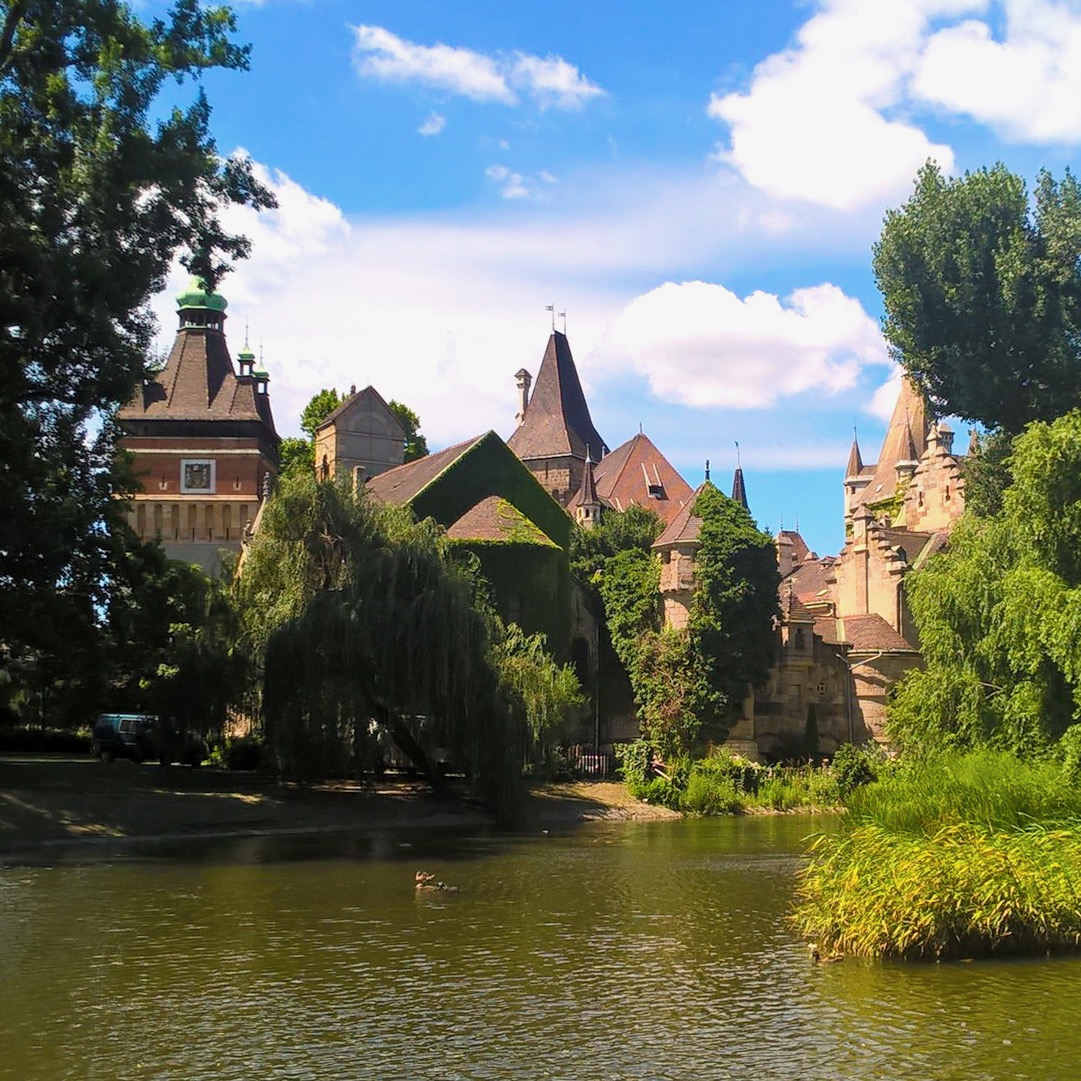
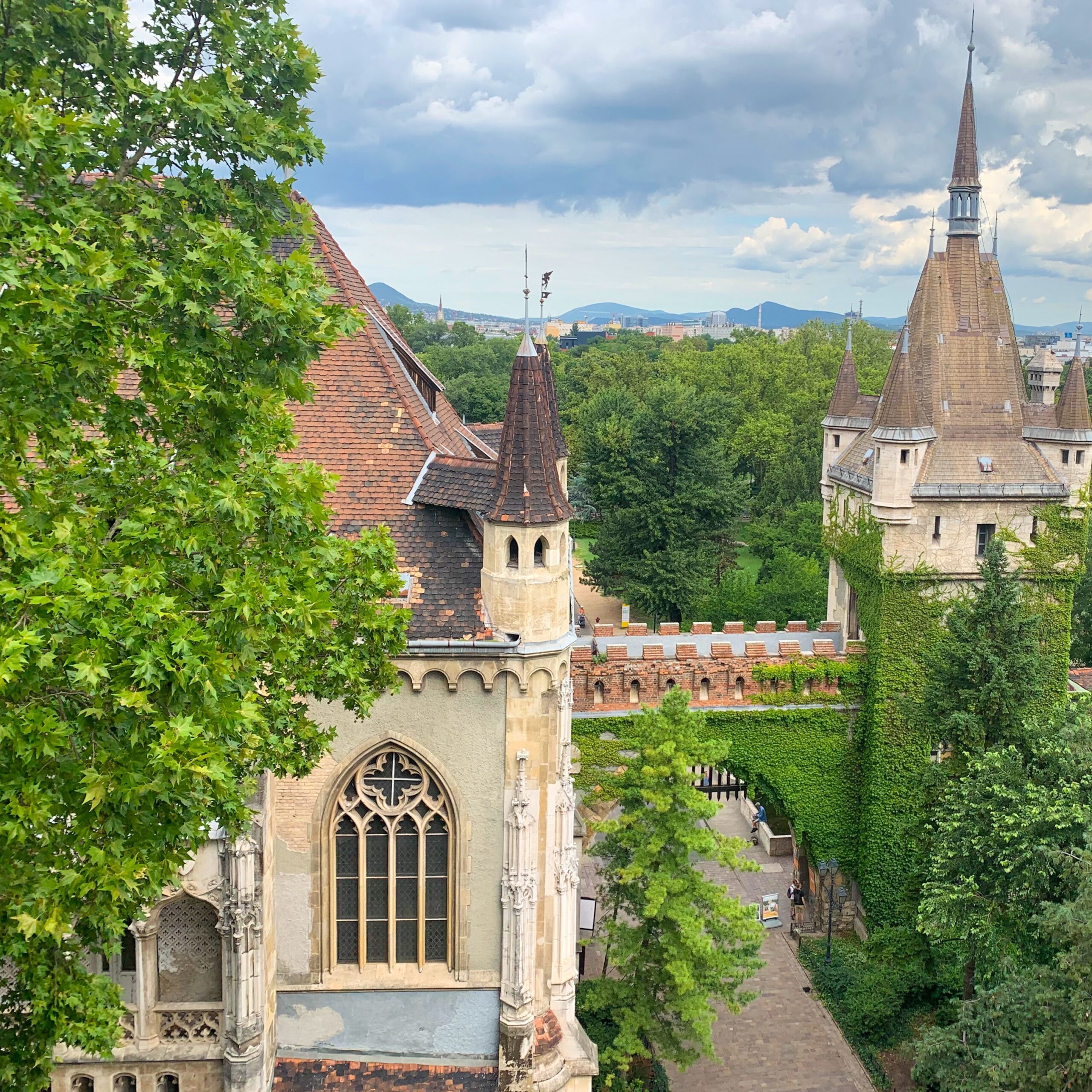
Vajdahunyad Castle in Budapest is one of city’s most distinctive and beloved landmarks, beautifully tucked away in City Park. A visit here feels like stepping into a storybook — yet the castle’s origins are firmly rooted in Hungarian history.

The castle was originally built as a temporary structure for the 1896 Millennium Exhibition, created to showcase Hungary’s rich architectural heritage in a single complex. Its success exceeded all expectations, and after the exhibition ended, the decision was made to rebuild Vajdahunyad Castle in a permanent form — allowing future generations to enjoy it.

What makes Vajdahunyad Castle truly special is its unique blend of architectural styles. Romanesque, Gothic, Renaissance, and Baroque elements appear side by side, representing famous buildings from across the historic Kingdom of Hungary. As you walk through the courtyards, over the bridge, and along the lake, each section reveals a different mood — and endless photo opportunities.

Today, Vajdahunyad Castle is one of the most visited attractions in Budapest. It also frequently appears as a filming location, so keen-eyed visitors may recognise it from international films and series. Inside, the castle houses the Museum of Hungarian Agriculture, while the surrounding grounds invite relaxed walks in every season.

Vajdahunyad Castle is included in many of my Budapest walking and driving tours, often paired with Heroes’ Square, Andrássy Avenue, and other highlights of City Park. It’s a place where architecture, history, and everyday local life meet — and one I’m always happy to introduce to visitors.

If you’d like to explore Vajdahunyad Castle as part of a customised private tour, feel free to get in touch.

Walking along Andrássy Avenue feels like stepping back into the golden age of Budapest. Lined with elegant 19th-century villas and grand palaces, this iconic boulevard tells the story of a city at the height of its confidence, wealth, and ambition.

Originally, these buildings were constructed as single-family homes for aristocrats, industrialists, and influential figures of the Austro-Hungarian Empire. Many of them were designed by the same architects, which gives Andrássy Avenue its remarkably harmonious appearance. Behind the ornate façades lie stories of old wealth, social life, and a refined urban lifestyle that shaped modern Budapest.

Today, Andrássy Avenue is not only one of the city’s most beautiful streets but also a key part of any Budapest sightseeing experience. As a UNESCO World Heritage Site, it connects the city centre with Heroes’ Square and showcases some of Budapest’s finest architecture, cultural institutions, and historic residences along the way.

Exploring Andrássy Avenue is about more than admiring façades—it’s about understanding the people who lived here and the era they represented. I’m always happy to include this walk in my private, customised Budapest tours, sharing the hidden details and personal stories that bring these elegant buildings to life.

Working as a tour guide I often get the question whether I find my job boring, doing the same thing every day. Well, no. First of all, I spend all my time in Budapest, my favorite city, the place I lived all my life and I’m the most proud of. And of course I meet so many different people, you, my travellers make sure that every tour, every moment is unique and special.

Have a look at some of my favorite Instagram pictures from last year to see how many different shapes of Budapest I’m fortunate to see every single day.


A day trip to Bratislava from Budapest is one of the easiest and most rewarding ways to explore another European capital while staying in Hungary. Located just two hours away by car, Bratislava is compact, walkable, and full of history. It is also the only capital city in Europe that borders two countries — Hungary and Austria — making it a perfect addition to a Central European itinerary.

We started our day at Slavín Memorial, a powerful monument dedicated to the liberation of Slovakia in April 1945. From there, we enjoyed a relaxed walk up to Bratislava Castle, often described as looking like an upside-down table — its four towers resembling sturdy table legs.

Although the castle was largely destroyed by fire over 200 years ago, the panoramic views from the hilltop over the city and the Danube are absolutely worth it.

Next came the joy of wandering through Bratislava Old Town — full of narrow streets, pastel façades, and lively squares. We visited St. Martin’s Cathedral, once the coronation church of Hungarian kings, and admired the elegant Primatial Palace, famously topped with a giant cardinal’s hat.

Bratislava’s playful side reveals itself through its quirky street statues:

  • Čumil (the Man at Work)
  • the sneaky Paparazzo
  • and even Napoleon Bonaparte’s soldier resting casually on a bench

We wrapped up the day with a traditional Slovak lunch on the main square, soaking in the easygoing atmosphere before heading back to Budapest.

Bratislava is compact, elegant, and full of surprises — an ideal addition to a Vienna–Bratislava itinerary or a memorable standalone day trip.


The Buda Castle District is the oldest part of Buda and one of the most atmospheric areas of Budapest. Built high on Castle Hill, it has been the political, religious, and strategic heart of the city since the Middle Ages. Long before Budapest became a unified capital, Buda was already an important royal center. By the mid-13th century, the hilltop was crowned with fortifications, a medieval town, and a royal residence — setting the foundations for the historic district we explore today.

Not a “Real” Castle — and That’s the Story

One small but important clarification often surprises visitors: the Buda Castle District is not a single intact medieval castle.

The original Gothic and Renaissance royal palace — once home to Hungarian kings — was largely destroyed during the wars of the 17th century. What survives today are fragments, foundations, and stories. Some of these remains can be seen in the Budapest History Museum, while much of the medieval castle still lies hidden beneath the ground.

What you see above ground today is mostly the result of later rebuilding — especially the grand 18th-century Baroque palace, which now dominates the hilltop.

Walking Through Centuries

One of the best ways to experience the district is simply on foot. As you walk uphill along former ramparts and quiet lanes, the layers of history gradually reveal themselves.

The Baroque palace complex today houses major cultural institutions, including the Hungarian National Gallery, while the surrounding streets form the historic old town of Buda.

Cobblestoned streets, pastel façades, and hidden courtyards lead naturally toward one of the district’s most iconic landmarks: Matthias Church.

For those willing to climb higher, the church tower rewards you with one of the finest panoramic views over Budapest — a perspective that makes the city’s geography instantly clear.

Views That Define Budapest

Just a few steps away, the Fisherman’s Bastion offers one of the most famous panoramas in Hungary.

From its terraces, the view opens across the Danube to the Pest side, with the Hungarian Parliament building perfectly framed below. It’s a moment that connects medieval Buda with 19th-century Pest — and helps explain why this hill has always been so important.

The Civilian Town and Forgotten Quarters

Beyond the postcard views, the district also tells quieter stories. Walking through the former civilian town, you encounter elegant residences, the striking architecture of the Hungarian National Archives, and traces of communities that once lived side by side here — including the old Jewish quarter of Buda.

These streets feel calmer, more residential, and often reveal details that are easy to miss without context.

A City Beneath the City

Perhaps the most surprising fact about the Buda Castle District lies underground.

Beneath the streets stretches a 12-kilometer-long network of caves and cellars, used over centuries for storage, shelter, and survival. Today, parts of this underground world can be explored through two very different museums.

The Hospital in the Rock served as a military hospital during World War II and later as a nuclear bunker during the Cold War.
The Labyrinth of Buda Castle offers a more theatrical experience — with legends, shadows, and even a brush with Dracula.

The Buda Castle District reveals its true character when explored slowly and with context — beyond just the highlights.

I’d be happy to show you both the famous landmarks and the quieter corners during one of my Budapest walking tours, always adapting the walk to your interests and pace. If you’d like to discover the district through stories, viewpoints, and hidden details, feel free to get in touch.