Set in the City Park of Budapest, the House of Hungarian Music is one of the city’s most exciting contemporary cultural spaces. Both the building and the exhibitions inside are designed to surprise, inspire, and invite visitors to experience music in a completely new way. The House of Hungarian Music is also one of my favourite Budapest museums, especially for visitors who enjoy music, contemporary architecture and imaginative exhibition design. From the moment you approach it through the trees, it’s clear that this is not a traditional museum. A futuristic landmark in the park The building was designed by Japanese architect Sou Fujimoto, and its appearance is as bold as its concept. With its flowing forms and unusual silhouette, it almost feels like an ornate spaceship that has gently landed among the trees of City Park. One of its most striking features is the series of 12-metre-high glass walls, which blur the boundary between inside and outside. Hundreds of golden, stylised leaf motifs decorate both the exterior and interior, creating the impression of a shimmering golden forest. On sunny days, the light reflects beautifully on each leaf, making the entire structure feel alive. A building growing out of the park What I love most about the House of Hungarian Music is how organic it feels. Despite its contemporary design, the building doesn’t dominate its surroundings — instead, it seems to grow out of the park itself. The main architectural concept was to integrate the building into the natural environment of City Park, and this idea is present everywhere. The sweeping roofline echoes the movement of tree canopies, while the vast glass surfaces reflect the greenery around them. Trees, plants, and landscaped paths flow naturally around the structure, blurring the line between architecture and nature. Even the everyday elements — paths,
Set in the City Park of Budapest, the House of Hungarian Music is one of the city’s most exciting contemporary cultural spaces. Both the building and the exhibitions inside are designed to surprise, inspire, and invite visitors to experience music in a completely new way. The House of Hungarian Music is also one of my favourite Budapest museums, especially for visitors who enjoy music, contemporary architecture and imaginative exhibition design.
From the moment you approach it through the trees, it’s clear that this is not a traditional museum.
A futuristic landmark in the park
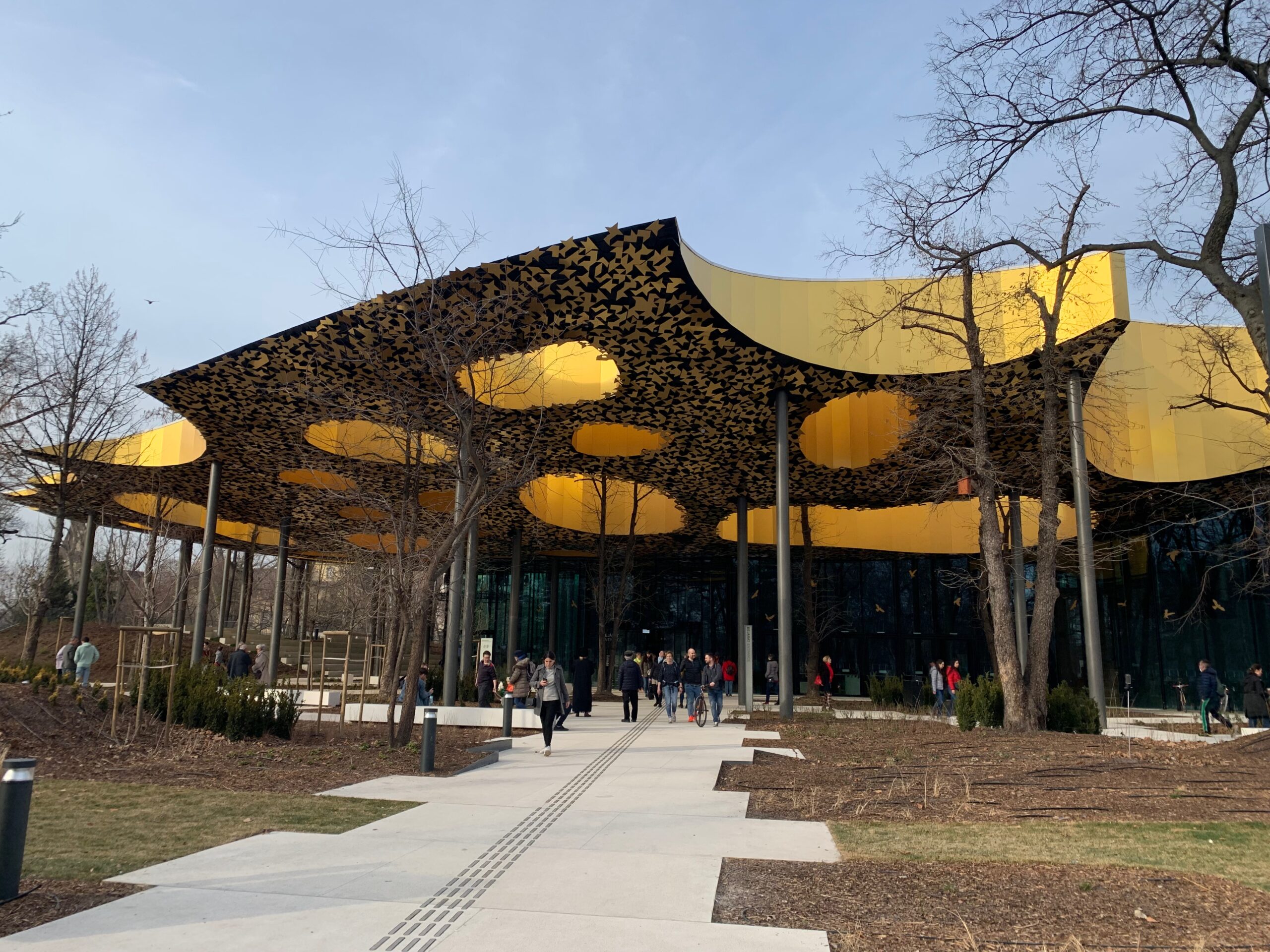
The building was designed by Japanese architect Sou Fujimoto, and its appearance is as bold as its concept. With its flowing forms and unusual silhouette, it almost feels like an ornate spaceship that has gently landed among the trees of City Park.
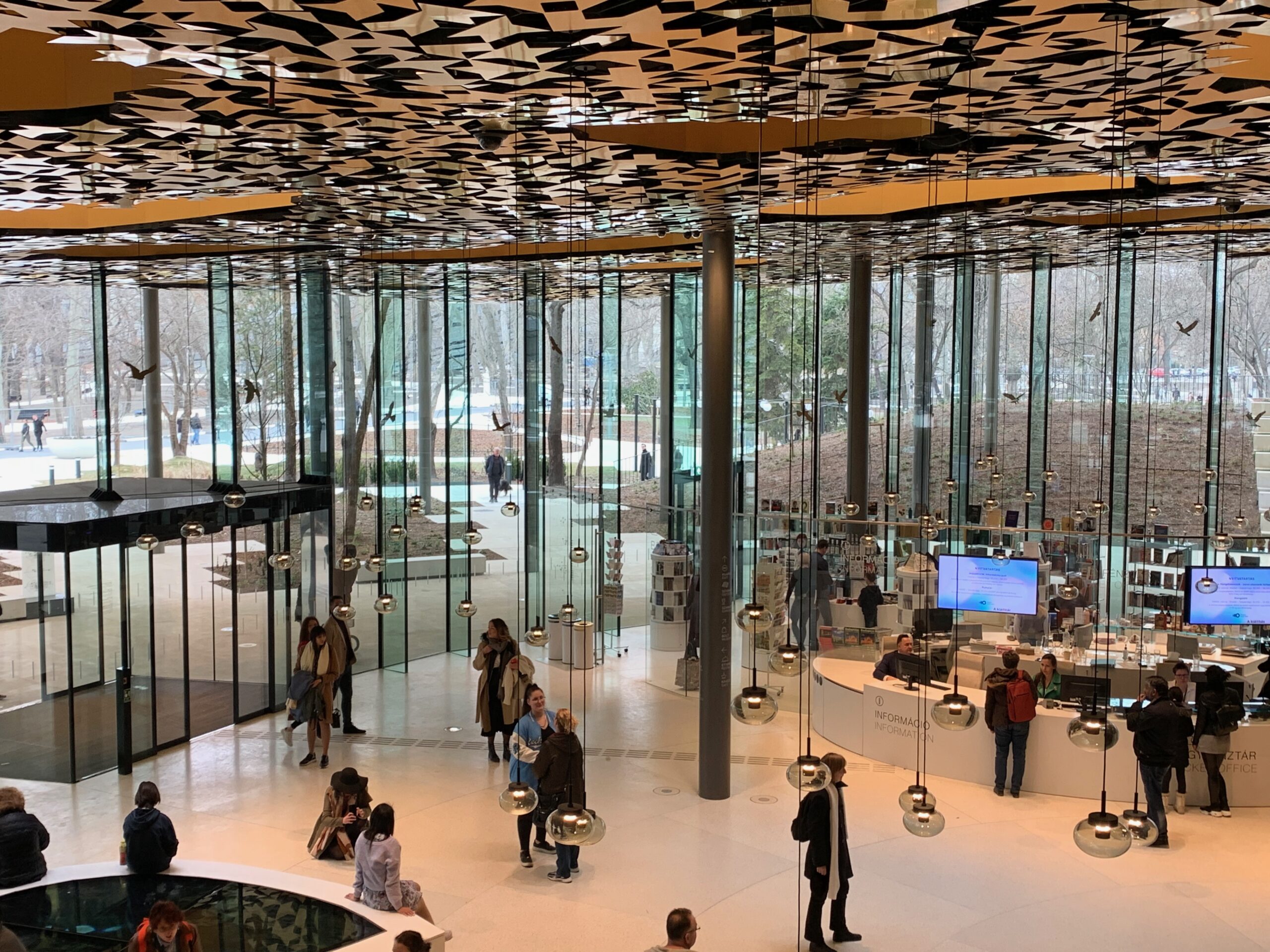
One of its most striking features is the series of 12-metre-high glass walls, which blur the boundary between inside and outside. Hundreds of golden, stylised leaf motifs decorate both the exterior and interior, creating the impression of a shimmering golden forest. On sunny days, the light reflects beautifully on each leaf, making the entire structure feel alive.
A building growing out of the park
What I love most about the House of Hungarian Music is how organic it feels. Despite its contemporary design, the building doesn’t dominate its surroundings — instead, it seems to grow out of the park itself.
The main architectural concept was to integrate the building into the natural environment of City Park, and this idea is present everywhere. The sweeping roofline echoes the movement of tree canopies, while the vast glass surfaces reflect the greenery around them. Trees, plants, and landscaped paths flow naturally around the structure, blurring the line between architecture and nature.
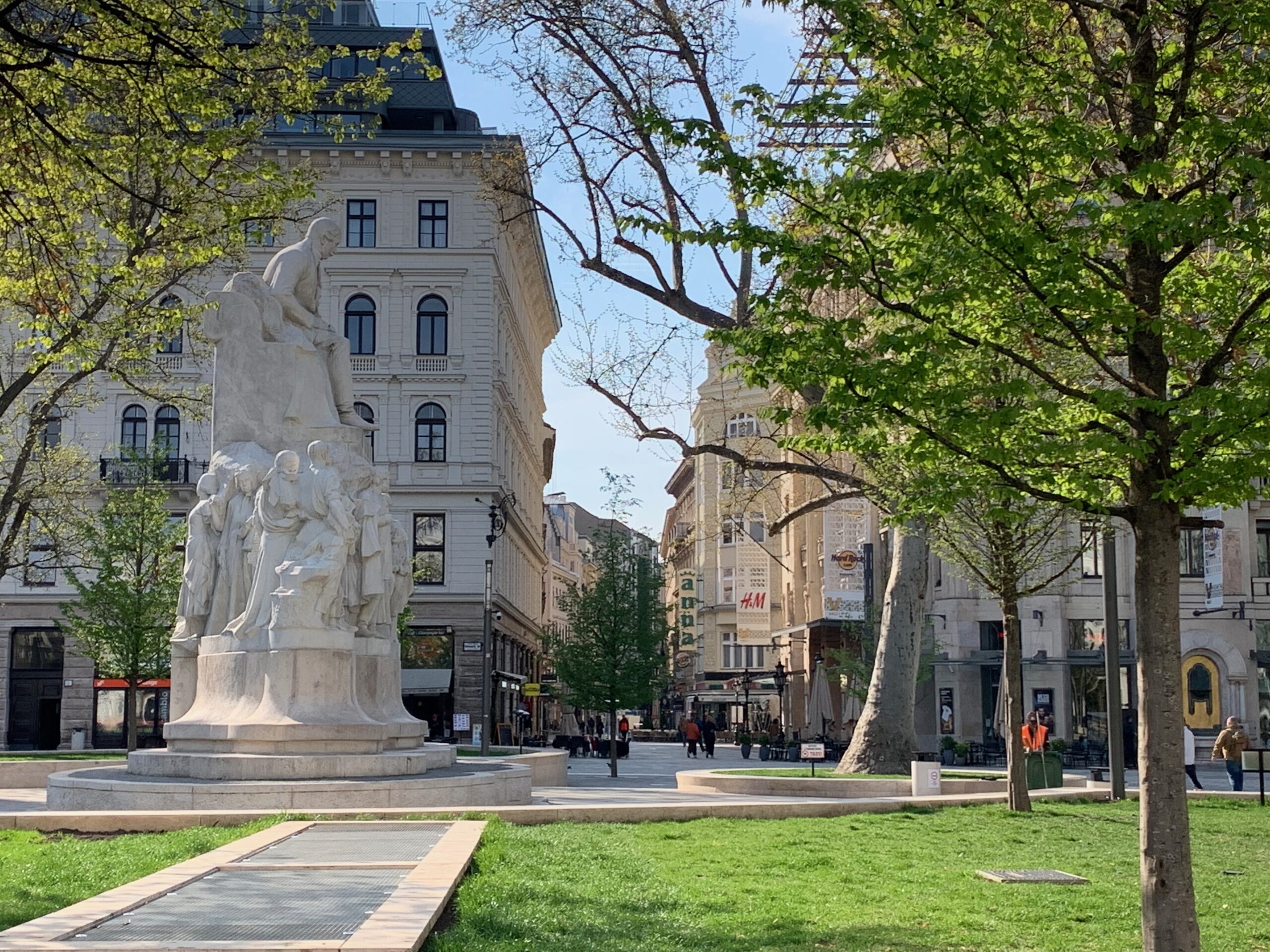
Even the everyday elements — paths, benches, and nearby walkways — feel intentionally woven into the setting. Walking around the building, it never feels isolated or imposing; rather, it becomes part of the park’s rhythm, changing character with the light, the seasons, and the movement of people around it.
This harmony between nature, movement, and music is what makes the House of Hungarian Music truly special — and it’s the detail that stays with me the longest.
An immersive musical experience
Inside, the museum invites visitors to experience music with all their senses.
One of the highlights is the Sound Dome, where a unique audio-visual show surrounds you with music and sound coming from all directions. As the layers gradually come together, the experience feels almost experimental — like witnessing a carefully crafted musical reaction unfolding in real time.
Beyond the dome, the permanent exhibition takes visitors on a journey through Hungarian music across different periods and styles. This is not a museum you rush through: interactive elements, listening stations, and thematic spaces easily keep visitors engaged for hours.
Music lovers should plan to spend 2–3 hours exploring the exhibitions and installations.
Visiting the House of Hungarian Music
The House of Hungarian Music can be visited independently, and guided visits are sometimes available. As it is a very popular attraction, opening hours and ticket availability can vary, especially during weekends or school holidays.
If you’d like to include it in your Budapest itinerary, I recommend planning ahead. I’m happy to advise on timing and how best to combine it with nearby sights in City Park.
Part of a customised Budapest itinerary
The House of Hungarian Music fits beautifully into:
-
Cultural and contemporary architecture tours
-
Music-focused itineraries
-
Customised private tours that combine historic Budapest with modern highlights
It also pairs well with other City Park landmarks, making it an easy and rewarding stop during a relaxed day in this part of the city.
A modern must-see in Budapest
Innovative, immersive, and visually striking, the House of Hungarian Music offers a fresh perspective on Hungary’s rich musical heritage. Whether you are deeply passionate about music or simply curious to experience something different, this museum is one of Budapest’s most memorable modern attractions.
If you’d like help planning a visit or building a personalised itinerary that includes the House of Hungarian Music, feel free to get in touch.