Every private tour is different, the tour itinerary is fully customisable according to your interests and preferences. Watch this video to get a general idea of what you can expect when you book a full-day walking or driving tour with me. Don’t hesitate to get in touch with me may you need further information. See you soon in Beautiful Budapest!


This Private Herend Porcelain Factory Tour from Budapest offers a refined half-day experience into one of Hungary’s most elegant and iconic crafts. If you love craftsmanship, design, and stories hidden behind beautiful objects, this private tour to the Herend Porcelain Factory is a truly special experience.

Although I’ve been offering this visit for several years as part of custom itineraries, it felt like the right moment to make it a standalone tour — because Herend deserves it.

I’ll be honest: I’m genuinely in love with Herend porcelain. It’s unique, elegant, timeless, and unmistakably Hungarian. And every single traveller I’ve taken here so far has been fascinated by what they see.

What makes this tour special?

Herend is not a factory in the modern, industrial sense. It’s a living manufactory, where everything is still made by hand using techniques passed down through generations.

During the visit, you’ll discover:

  • the different stages of porcelain production

  • the delicate work of hand-painting and gilding

  • the incredible precision behind even the smallest details

Seeing the artisans at work makes it clear why Herend porcelain is considered luxury craftsmanship rather than mass production.

Tour details at a glance

  • Duration: approx. 6 hours

  • Departure: from Budapest (private transportation)

  • Includes:

    • private transportation

    • visit to the Herend Porcelain Factory and Museum

    • free time in the shop

  • Style: private, relaxed, unhurried

This tour can also be combined with other countryside stops on request.

Availability – important to know

Available from April to October only

The Mini-Manufactory is closed during the winter months, which is why this tour is seasonal. I always recommend booking well in advance for spring and summer dates.

Is this tour right for you?

This experience is perfect if you:

  • enjoy design, decorative arts, and craftsmanship

  • are curious about Hungarian cultural heritage

  • prefer meaningful, behind-the-scenes experiences

  • value quality over rushing from sight to sight

No prior knowledge of porcelain is needed — just curiosity.

Booking & questions

If you’d like to book the Private Herend Porcelain Factory Tour from Budapest, or if you’d like to customise it (for example, combining it with Lake Balaton or Veszprém), feel free to get in touch.

I’m always happy to help you plan a tour that fits your interests and travel style.

👉 Book the tour here
👉 Contact me with questions


The National Museum is one of the oldest museums of Budapest, founded by Ferenc Széchényi in 1802. It’s one of my favourite museums in the city, not only because it’s beautiful (both the outside and the interiors) but also because there is a beautiful garden around it which serves as a public park. The museum is a special place for Hungarian people, our entire history is on display in an easily digestible manner.

The building is a special place for national pride and heritage, the 1848-49 Hungarian war of independence against the Habsburgs started here, poet Sándor Petőfi read his famous poem on the stairs of the museum.

There are permanent and temporary exhibitions, the coronation robe of the Hungarian kings is on display here, too. A great place to spend a few hours in Budapest in the cold month of January.

My most popular day trip from Budapest is the full-day Eger and Wine tour, including the visit of the charming Baroque town of Eger and the visit of local wineries and vineyards. This is how Eger looks like in the winter. And, believe me, the wine is just as great in November as it is in the spring or summer. Book the tour and see it for yourself!


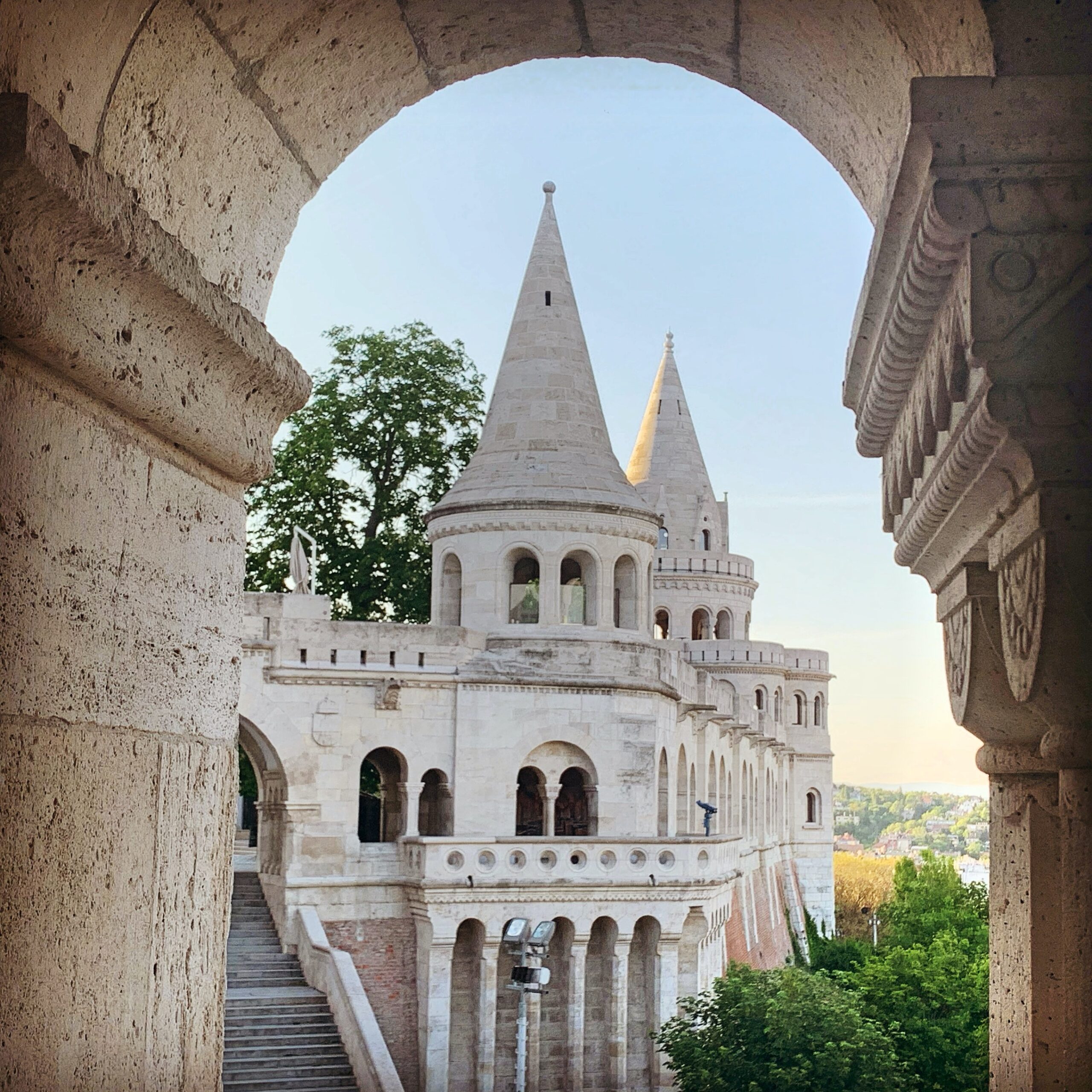
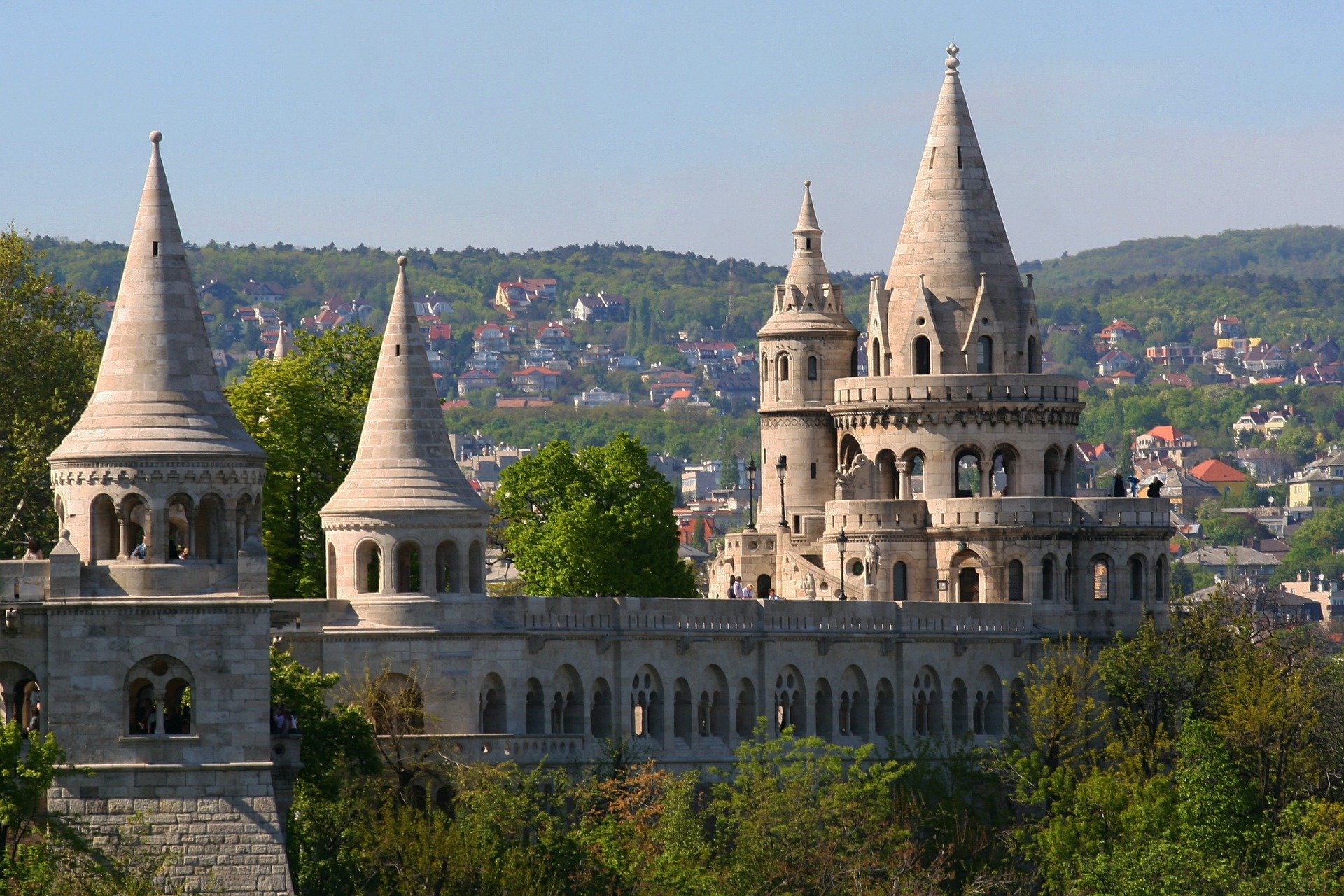
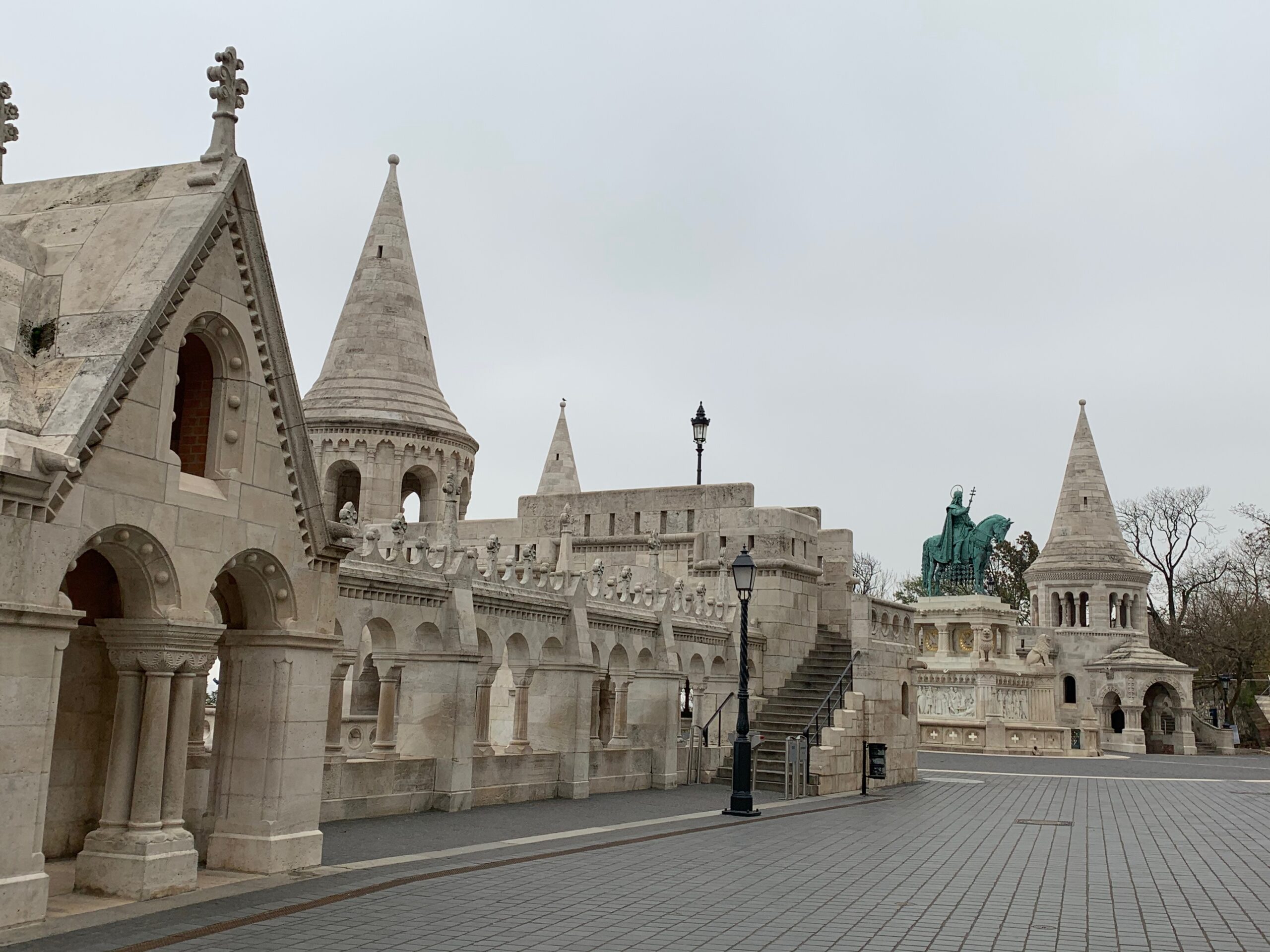
Seeing Fisherman’s Bastion empty is one of the rarest experiences in Budapest, a quiet moment when this iconic landmark reveals its most peaceful side. I often say that Fisherman’s Bastion is the most popular tourist attraction in Budapest — and it’s true. Thousands of visitors pass through here every single day, cameras in hand, chasing the same iconic view.

That’s why moments like this are so special.

A rare experience – Fisherman’s Bastion without crowds

Seeing Fisherman’s Bastion almost completely empty is incredibly rare. No lines. No crowds. Just the city waking up below, the Danube flowing quietly, and the silhouette of the Hungarian Parliament Building in the distance.

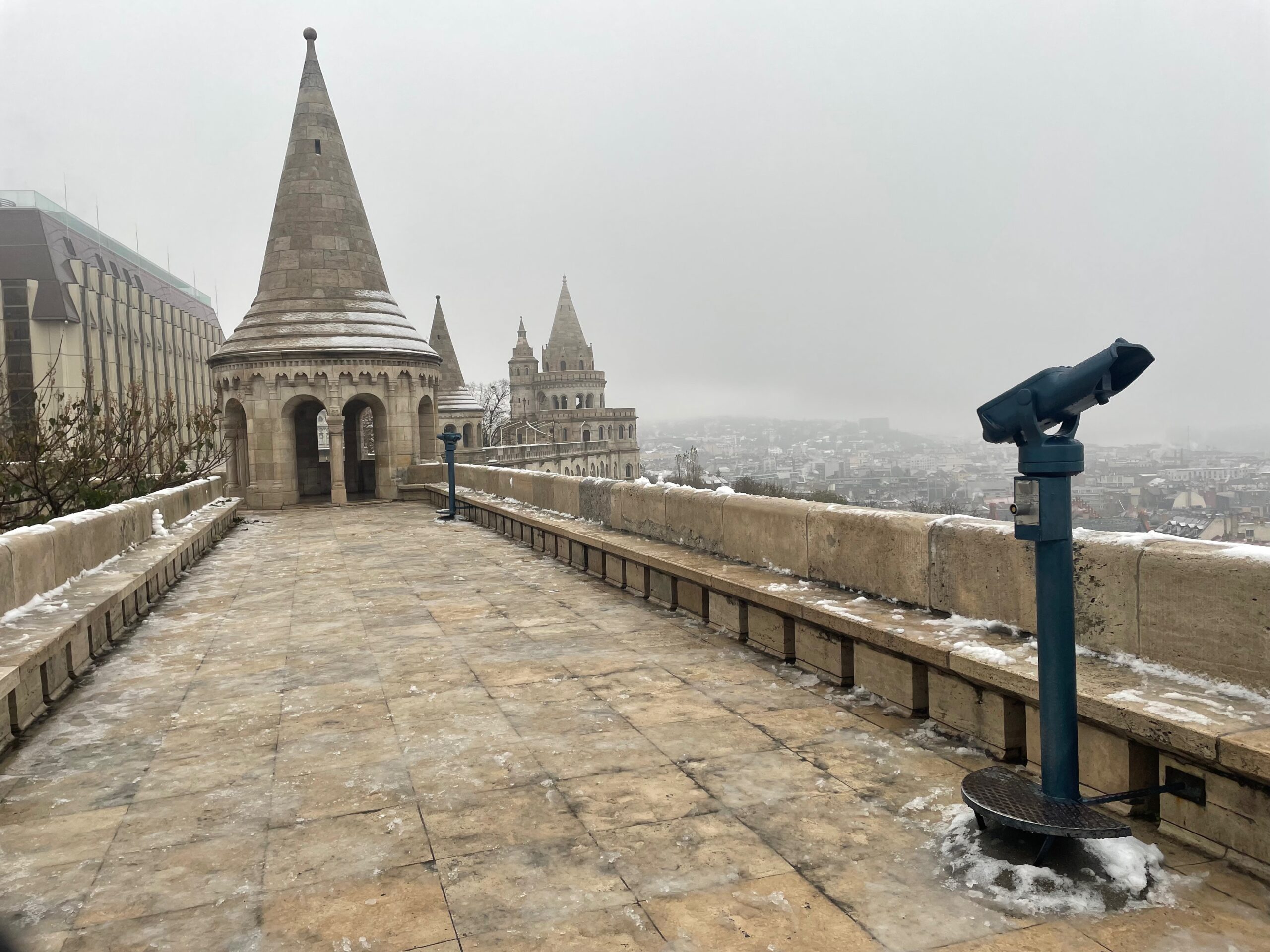
On this particular morning, I was lucky enough to have the upper terrace almost entirely to myself — something even locals rarely experience.

Why the upper level is worth it

Many visitors don’t realise that part of the Bastion is ticketed during the day. I always recommend going up when possible:

  • the view is higher and more open

  • the crowds thin out

  • the atmosphere is calmer and more intimate

You can skip the on-site queue by buying tickets online, and when time allows, I love taking my guests to the very top during my private tours.

Quiet Fisherman’s Bastion – More than a photo spot

Moments like this remind me why I return here again and again — not just as a guide, but as someone who genuinely loves Budapest. When the crowds disappear, Fisherman’s Bastion feels timeless, peaceful, and deeply moving.

If you’d like to understand why this place is so important — and why it’s a must-see for first-time visitors — start with my main guide:
A Must-See: Fisherman’s Bastion

This truly magnificent Neo-Renaissance building is on Andrássy street, right across from the State Opera House. I keep telling stories about the building, home of Drechsler Café, that was originally built for the pensioners of the National Rail Services. For many many long years the building was hiding behind scaffolding and recently it reopened as the W hotel. I hope you agree with me when I say that the renovators made a wonderful job and filled the palace with elegance and charm.


Thank you for all your great reviews and comments, it’s always a pleasure to read your kind words. And, I’m very proud to announce that I just got this very special award from Tripadvisor – Travelers’ Choice 2023.

I’m truly happy and promise to do my best to help you collect the nicest memories while I’m showing you around my Beautiful Budapest. And please keep sharing your comments!

Tucked away in the heart of the Jewish Quarter of Budapest, the recently renovated Rumbach Street Synagogue is one of the city’s most striking and meaningful landmarks. Together with the Dohány Street and Kazinczy Street synagogues, it forms the famous synagogue triangle — a unique concentration of Jewish heritage within just a few streets.

After decades of neglect, Rumbach has finally reclaimed its place as one of Budapest’s architectural and cultural treasures.

A masterpiece by Otto Wagner

The synagogue was designed by the renowned Austrian architect Otto Wagner and built in the early 1870s. At the time, Wagner was already known for pushing architectural boundaries, and Rumbach is a perfect example of his bold vision.

The building follows the Moorish Revival style, instantly recognisable through its vibrant colours, geometric patterns, and richly decorated details. Inside, shades of red, blue, purple, and gold create an almost otherworldly atmosphere. The craftsmanship is extraordinary, and every corner invites you to stop and look closer.

One of the synagogue’s most distinctive features is its octagonal interior, with eight equal sides. This unusual design was inspired by the Dome of the Rock in Jerusalem, giving the space both architectural balance and symbolic depth.

From thriving community to silence

Before the Second World War, Rumbach Street Synagogue served a smaller local Jewish community. Like so many Jewish institutions in Hungary, its story was tragically interrupted by the Holocaust. Most members of the congregation were murdered, and after the war the building lost its original function.

For decades, the synagogue stood abandoned and deteriorating — a silent witness to the destruction of a once-vibrant community. Its slow decay mirrored the painful absence left behind in the neighbourhood.

A long-awaited rebirth

After many years of planning and careful restoration, Rumbach Street Synagogue finally reopened in 2021. The renovation respected the original design while giving the building a new role as a cultural and historical space.

Today, it is once again open to the public — not only as a synagogue, but also as a venue for exhibitions, concerts, and remembrance. Walking inside feels both uplifting and deeply moving: beauty and loss exist side by side here.

Visiting Rumbach Street Synagogue

The synagogue can be visited, but it’s important to know that opening hours are very limited and irregular. Unlike larger attractions, Rumbach is not always open to visitors, and access often depends on events, services, or guided visits.

If you’re planning a trip to Budapest and would like to include Rumbach Street Synagogue in your itinerary, I strongly recommend contacting me in advance. I’m happy to check whether the synagogue will be open during your stay and advise on the best way to visit.

Rumbach and the Jewish Quarter Walk

Rumbach Street Synagogue is an essential stop — or at least a key reference point — on my Jewish Quarter walk, where we explore not only the major synagogues but also the stories of everyday life, survival, and renewal in this historic neighbourhood.

Seeing Rumbach in context, surrounded by former Jewish homes, courtyards, and memorials, adds layers of meaning that go far beyond architecture alone.

If you’re interested in discovering the Jewish Quarter with a licensed private guide, at a relaxed pace and with personal stories woven into the walk, this tour might be a perfect fit for you.

A place that stays with you

Rumbach Street Synagogue is not just beautiful — it’s unforgettable. Its colours, its silence, and its history linger long after you leave. Whether you’re interested in architecture, Jewish heritage, or Budapest’s complex past, this is a place that truly deserves a spot on your list.

If you’d like help planning your visit or booking a Jewish Quarter walk, feel free to get in touch — I’ll be happy to help you make the most of your time in Budapest.

The Orthodox synagogue in Kazinczy street was bulit in Art Nouveau architecture in the early 1900’s. The Art Nouveau characteristics are truly magnificent: the rose window on top of the facade, the various building materials including raw brick and colourful stone pieces, the floral ornaments, the stained-glass windows. The building is a masterpiece of the architects, Sándor and Béla Löffler.

The synagogue was badly damaged during WW2 and the building was restored after the war. It’s part of a complex where there are apartments, two kosher restaurants, a little design shop, a kosher grocery store and offices of the Orthodox community. The visit of the synagogue can be included in the Budapest Jewish district tour.

The ruin pubs in the Jewish quarter of Budapest are very popular, I encourage my travellers to visit one or two during their stay in Budapest, it’s always a special experience. The biggest ruin pub is Szimpla in Kazinczy street, it isn’t just a bar, it’s also a great community. There is a farmers’ market every Sunday with some live music, great food and great drinks. Szimpla is open  from 3.00 PM on weekdays, 12.00 PM on Saturday and 9.00 AM on Sunday.

Szimpla Ruin Pub Budapest