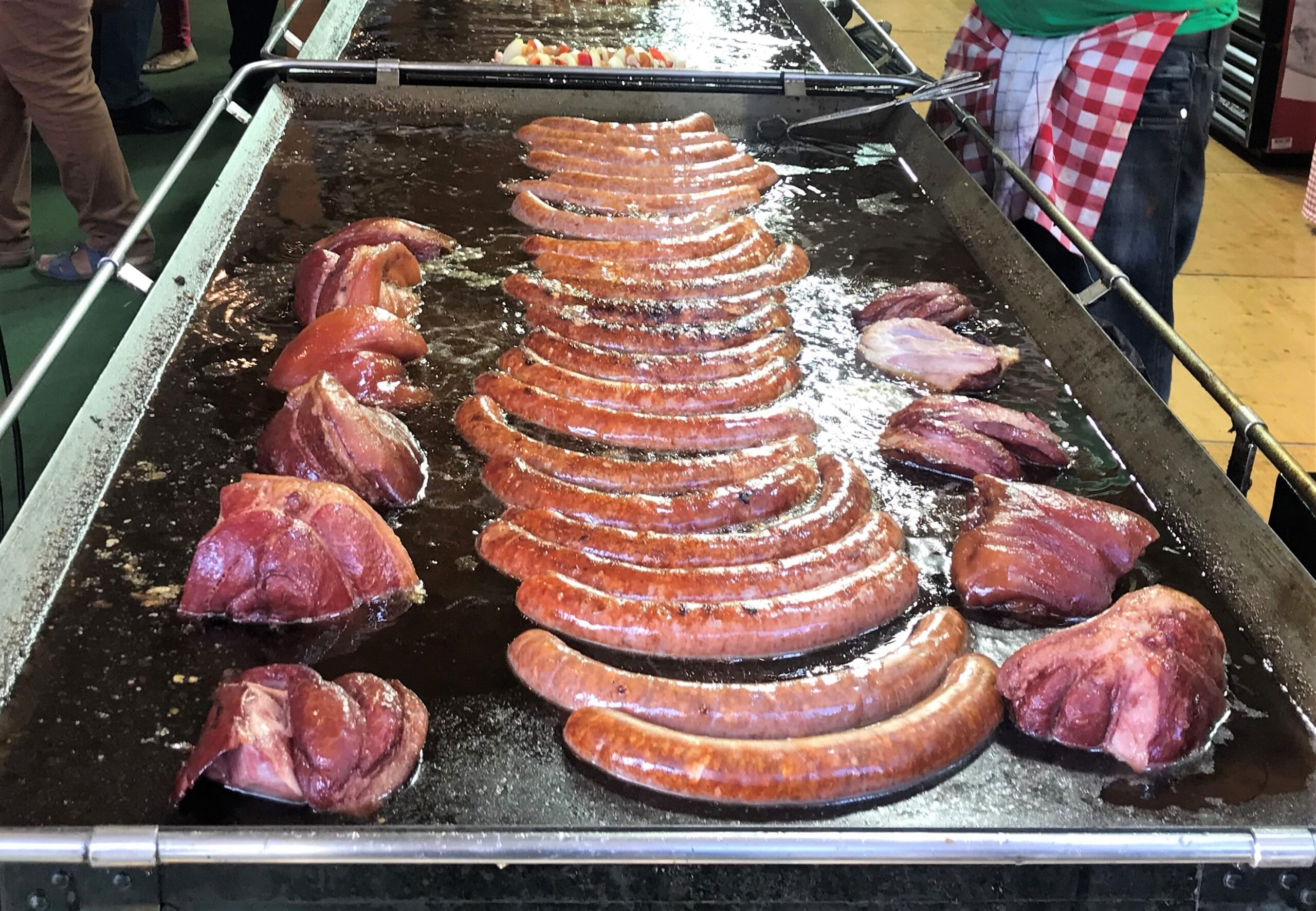
This weekend’s Foodie Tour turned out to be a little unusual — and very memorable. Instead of moving between markets and small food shops across the city, we dedicated the day to one single event: a Pig Slaughtering Festival in Budapest, held on a bright, sunny autumn weekend.

It was intense in the best possible way.

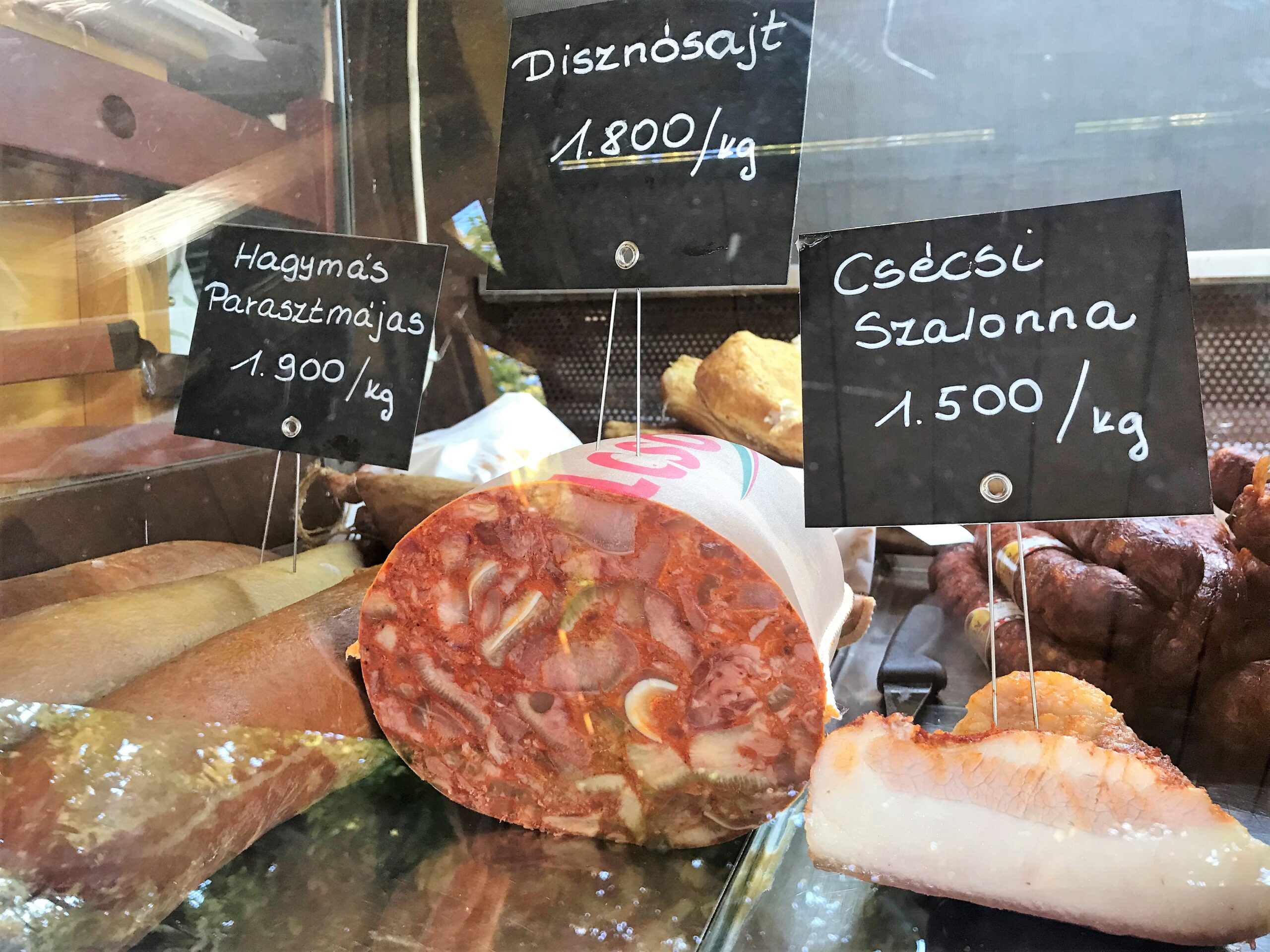
From the moment we arrived, we were surrounded by the unmistakable aromas of grilled meats, freshly made sausages, and slow-cooked Hungarian classics. Stalls lined up one after another, each offering its own version of traditional pork dishes, prepared with pride and confidence.

A true celebration of Hungarian meat traditions

Hungarian cuisine is deeply rooted in pork — and this festival was a perfect snapshot of that tradition. Over the course of just a few hours, we tasted an astonishing variety of sausages, cuts of meat, and rich, comforting flavours. By the end of the tour, I realised I had probably eaten as much in four hours as I normally would in an entire week.

And honestly? I had no regrets.

If there’s one thing I always recommend to visitors, it’s to try mangalica sausage. Made from Hungary’s famous curly-haired mangalica pig, it’s rich, flavourful, and truly in a league of its own — for me, it’s the absolute best of Hungarian sausage-making.

A different kind of Foodie Tour

Experiences like this are exactly why I love customising my Foodie Tours. Sometimes it’s about discovering hidden bakeries or wine bars; other times, it’s about diving headfirst into a local festival and embracing Hungarian food culture at its most authentic and unapologetic.

Food events like pig slaughtering festivals are not staged for tourists — they’re for locals, families, and producers who care deeply about tradition. Sharing this kind of experience with my travellers is always a highlight.

If you’re curious about Hungarian cuisine and want to explore it beyond restaurant menus, I’m always happy to tailor a custom Foodie Tour around seasonal events, markets, or local specialities.
The Hungarian “Székelykáposzta” is a great dish combining sauerkraut and pork stew, a nice meal to warm your body and soul on a cool day.

Drain 2.2 pound sauerkraut in a colander, rinse it gently under cold water and let it sit in the colander for a few minutes. Put half of the cabbage in a large saucepan, put in 1.3 pound diced pork rib and cover with the other half of the cabbage. Add 4 bay leafs and water to cover it and cook gently for 2 hours on low.

Heat 5.25 oz lard in a large saucepan on medium heat. Toss in 2 large chopped onions, cook them with a pinch of salt until they soften up. Remove saucepan from heat, stir in 3 teaspoon paprika powder with the onions until they’re fully coated. Put the saucepan back on the heat, turn it up to medium-high, and add 1.3 pound diced pork shoulder or leg. Cook until all the meat has browned. Once the meat is browned, add 1 tablespoon paprika paste or cream, 1 large chopped tomato and 1 diced bell pepper. Pour in water until it covers the meat, bring it up to a simmer, then reduce heat to low and cook slightly uncovered stirring occasionally for about 90 minutes.

Pour the pork stew in the cabbage stew, cook on medium low for 15 minutes, stirring occasionally.

Heat 1 tablespoon lard in a small saucepan on medium high. Add 2 tablespoon flour, stir until it’s browned, add 1 teaspoon paprika powder. Add 1 cup cold water, mix it and add the flour mixture to the cabbage. Add half of the sour cream, bring it up to a simmer.

You can serve the cabbage dish with the other half of the sour cream.

The most known Hungarian dish is probably the Goulash soup, it’s served with fresh white bread and is a real treat. Find below the recipe, and let me know if you need recommendations about where you can get the best Goulash in Budapest or in Hungary.

In a large soup pot over medium heat saute 2, finely chopped onions in 2 tablespoons lard (or vegetable oil), stirring frequently until lightly browned, don’t let them brown. Add salt and 2 tablespoons of paprika (you can avoid getting the paprika burnt by adding the paprika while the pot is not over heat, stirring it for a few seconds).

Turn the heat high and add beef cubes (2,2 pounds beef chuck roast, tenderloin or sirloin, chopped into 1 inch * 1 inch cubes), stir for 3 minutes until the meat is seared on all sides. Let the meat simmer in its own juice while adding ½ teaspoon caraway seeds, some salt, ground black pepper and 1 bay leaf, pour enough water to cover the content of the pan and let it simmer on low heat, until the meat is almost tender (1,5 – 2 hours), add water if necessary to keep it 1 inch above the level of the meat.

Add 1 bunch parsley, 1 tablespoon tomato paste and vegetables (peeled and cut into ½ inch pieces): 4 carrots, 2 parsley roots, 4 medium potatoes. Add 2 or 3 cups of water (or beef broth) to keep a soup consistency. Add salt if desired. Reduce heat, cover and simmer for 30-40 minutes until the meat is tender.

Serve with freshly made spatzle/spatzel.