Danube Bend Day Trip from Budapest: Esztergom, Visegrád & Szentendre
- Destinations, Reviews
- Budapest day trips, Budapest Private Tours, Danube Bend, Danube Bend day trip, Dobogókő, Esztergom, Hungary private tours, Hungary Travel, Szentendre, Visegrád
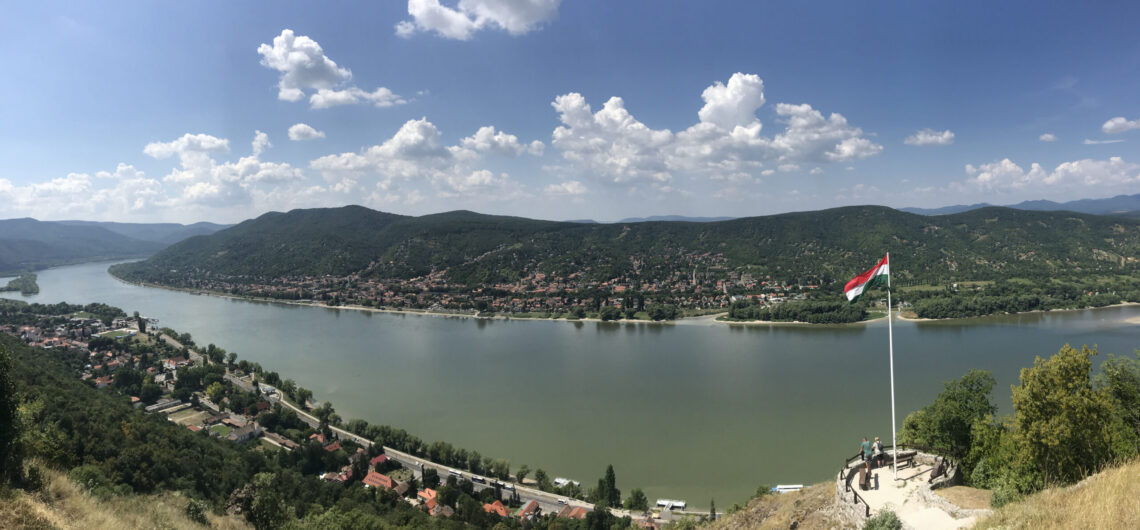
Just north of Budapest, the Danube makes one of its most beautiful turns, winding between forested hills, medieval castles and historic towns. This is the Danube Bend, one of Hungary’s most spectacular landscapes and a wonderful destination for a day trip from Budapest.
One river. Endless stories.
Imagine admiring breathtaking views from a mountain lookout, standing beneath the enormous dome of Hungary’s largest church, exploring a medieval royal fortress and wandering through colourful cobbled streets lined with art galleries and inviting cafés. All in one day.
A Danube Bend day trip from Budapest brings together three fascinating historic towns — Esztergom, Visegrád and Szentendre — with the spectacular mountain scenery of Dobogókő.
Each destination has its own character, its own history and its own reasons to fall in love with Hungary. And the best part? They’re all within easy reach of the capital.
Where Is the Danube Bend?
The Danube Bend, known in Hungarian as Dunakanyar, lies north of Budapest, where the river curves dramatically around the Visegrád Mountains before continuing south towards the capital. It’s a landscape of wooded hills, riverside villages, historic churches and breathtaking viewpoints. For centuries, the Danube has connected settlements, carried merchants and armies, and witnessed some of the most important events in Hungarian history.
Today, the region is a favourite escape for Hungarians looking for fresh air, beautiful scenery and a little time away from the city. For visitors, it offers something equally special: the chance to discover a different side of Hungary, beyond the famous landmarks of Budapest.
Dobogókő: A Breathtaking Introduction to the Danube Bend
A Danube Bend day trip from Budapest can begin with a scenic drive into the mountains, where Dobogókő offers a spectacular introduction to the region. At approximately 700 metres above sea level, Dobogókő is one of the region’s best-known viewpoints. From here, forested hills stretch towards the Danube, creating a wonderful panorama of the countryside we’re about to explore.
It’s a lovely place to stop for photographs, enjoy the fresh mountain air and admire the scenery before continuing towards Esztergom. For nature lovers, Dobogókő is also a popular starting point for hiking trails through the surrounding forests.
And if you’re visiting in autumn, the colourful hills make the views particularly beautiful.
Esztergom: Where Hungary’s Story Began
Our journey continues to Esztergom, one of Hungary’s oldest and most historically important towns. Long before Budapest became the capital, Esztergom was a centre of royal and religious power. It was closely associated with Hungary’s first king, Stephen I, who established the Christian Hungarian kingdom at the beginning of the 11th century.
Esztergom remains one of the most important centres of the Hungarian Catholic Church, as the historic seat of the Archbishop of Esztergom, who also holds the title of Primate of Hungary.
Until the Treaty of Trianon in 1920, Esztergom was also the administrative centre of a historic county extending across both banks of the Danube. The new international border divided the county, leaving much of its former territory in what is now Slovakia.
The town’s extraordinary history is still visible today, particularly on Castle Hill, where the magnificent Esztergom Basilica dominates the skyline.
Esztergom Basilica: Hungary’s Largest Church
The Basilica is impossible to miss. Its enormous dome rises above the Danube and can be seen from miles away, including from the opposite bank of the river in Slovakia. Inside, the monumental architecture, impressive artworks and peaceful atmosphere make it one of Hungary’s most remarkable religious buildings.
For visitors who enjoy panoramic views, the Basilica’s dome offers another memorable experience. The climb involves plenty of stairs, but the reward is a wonderful view over Esztergom, the Danube and the surrounding countryside.
And here’s something I particularly love about Esztergom: some of the most beautiful views of its magnificent Basilica are actually from another country! Across the Mária Valéria Bridge, the Slovak town of Štúrovo offers a wonderful panorama of the Basilica rising above the Danube. It’s a fascinating reminder of how closely the histories of these two riverbanks are connected.
My local tip: Don’t rush through Esztergom. The Basilica may be the main attraction, but the surrounding Castle Hill and views towards the river are equally worth enjoying.
Visegrád: Medieval Kings and the Most Beautiful Danube Views
From Esztergom, the journey continues through the scenic Danube Bend towards Visegrád. This small riverside town played an extraordinary role in medieval Hungarian history. During the 14th century, King Charles I established his royal residence here, and Visegrád became one of the kingdom’s most important political centres.
Later, King Matthias Corvinus transformed the Royal Palace into a magnificent Renaissance residence. Today, two remarkable historic sites help bring this royal past to life.
The Upper Castle of Visegrád: A View Worth Remembering
High above the Danube stands the Upper Castle, also known as the Citadel or Fellegvár. Its medieval walls, towers and exhibitions offer a fascinating introduction to Hungary’s history. But for many visitors, the greatest attraction is the view.
From the castle, the Danube stretches out below, making its famous curve between the surrounding hills. On a clear day, the panorama is simply unforgettable. It’s one of my favourite places to show visitors because the landscape tells its own story. Standing above the river, it’s easy to understand why this location was so strategically important to medieval rulers.
Read more: Must-See: The Upper Castle of Visegrád
The Royal Palace of Visegrád: A Glimpse into Royal Life
While the Citadel impresses with its dramatic setting, the Royal Palace reveals a different side of medieval Hungary. Once a splendid royal residence, the palace was particularly famous during the reign of Matthias Corvinus, whose court embraced Renaissance art and culture.
Today, visitors can explore reconstructed architectural details, courtyards and exhibitions that offer an insight into the lives of Hungarian kings and their households. It’s a wonderful place to discover that medieval history was about more than battles and fortifications. There were celebrations, diplomatic meetings, elaborate banquets and remarkable artistic achievements, too.
Read more: Royal Palace of Visegrád: A Journey into Hungary’s Medieval Royal Life
Would you like to explore these beautiful places with a local guide? Explore my fully customisable private countryside tour.
Szentendre: Colourful Streets, Art and Riverside Charm
Our final destination is Szentendre, a delightful little town just north of Budapest. With its colourful houses, narrow cobbled lanes, church towers and charming squares, Szentendre feels quite different from Esztergom and Visegrád.
Its distinctive atmosphere owes much to the Serbian and other Balkan communities who settled here, particularly during the late 17th century. Their cultural and religious traditions helped shape the town’s architecture and character. Later, Szentendre became an important centre for Hungarian artists, and its creative spirit remains very much alive.
A Town Made for Wandering
One of the greatest pleasures of visiting Szentendre is simply exploring its streets. Around almost every corner, you’ll discover something interesting: a colourful doorway, an unexpected courtyard, a tiny gallery or a picturesque staircase.
The main square, Fő tér, is a lovely starting point, surrounded by historic buildings and inviting cafés. But some of Szentendre’s most memorable corners are found away from the busiest streets.
My local tip: Allow yourself time to wander without a strict itinerary. Szentendre rewards curiosity, and some of its prettiest corners are easy to miss if you’re rushing.
Read more: Szentendre – The Postcard Village Full of Charm
The Marzipan Museum: A Sweet Surprise
Szentendre also has a wonderfully unusual attraction: the Marzipan Museum. Here, marzipan becomes an art form, transformed into intricate figures, decorative creations and extraordinary edible sculptures. It’s a particularly enjoyable stop for families, although you certainly don’t need to be a child to appreciate the creativity involved.
Read more: The Sweetest Stop in Szentendre: The Marzipan Museum
Your Danube Bend Day Trip, Your Way
One of the greatest advantages of a private Danube Bend day trip from Budapest is the freedom to shape the experience around your interests. Esztergom, Visegrád and Szentendre each offer something completely different, and the itinerary can be adapted to your personal interests.
If you’re passionate about history, we can spend more time exploring the medieval Royal Palace and Citadel of Visegrád. If religious heritage and architecture fascinate you, Esztergom deserves a longer visit. Nature lovers may prefer extra time enjoying the spectacular views at Dobogókő, while art enthusiasts can discover Szentendre’s galleries, museums and charming streets. And if you simply enjoy browsing little shops, finding beautiful handmade souvenirs, taking photographs or relaxing over coffee, there’s plenty of time for that, too. We can spend longer in one town and less time in another, depending on what interests you most.
After all, it’s your day, and the Danube Bend has something wonderful for everyone.
How to Plan a Danube Bend Day Trip from Budapest
There are several ways to explore the Danube Bend, and the best option depends on how much time you have and which destinations you’d like to visit.
By Public Transport
Szentendre is easy to reach independently using the H5 suburban railway from Budapest. Esztergom also has a direct train connection from Budapest’s Nyugati railway station. Visegrád requires a little more planning, as there is no railway station in the town itself. You can reach it by bus or travel by train to Nagymaros and cross the Danube by ferry when services are operating.
Public transport is an excellent choice if you want to concentrate on one destination. Visiting Esztergom, Visegrád and Szentendre in a single day is possible with careful planning, but connections can make the journey rather rushed.
By Boat
Travelling along the Danube by boat offers a completely different perspective on the landscape. Seasonal services operate on selected routes in the Danube Bend, although schedules and destinations vary throughout the year. A boat excursion can be a lovely experience, particularly during the warmer months, but it’s important to check the timetable before planning your journey.
By Private Car and Guide
For travellers who would like to visit the region’s main highlights in one day, a private driving tour is one of the most comfortable and flexible options. There’s no need to coordinate trains, buses and ferries, and you can spend more time enjoying the places that interest you most. A private tour also allows you to combine the famous highlights with local stories, scenic viewpoints and stops tailored to your interests.
How Much Time Do You Need for the Danube Bend?
If you’re planning to explore the Danube Bend on a day trip from Budapest, I recommend allowing approximately seven to eight hours for the journey. This gives you time to enjoy a selection of the main attractions, take photographs, stop for lunch and experience the different atmospheres of the historic towns.
With Dobogókő and three towns on the itinerary, it’s important to choose your priorities rather than try to visit every museum, castle and viewpoint in depth. History enthusiasts may prefer to spend longer exploring Visegrád’s medieval monuments. Art lovers might enjoy extra time in Szentendre, while visitors who love architecture and religious history may want a more detailed visit to Esztergom.
There’s no single perfect itinerary. That’s part of the beauty of the Danube Bend.
When Is the Best Time to Visit the Danube Bend?
The Danube Bend is beautiful throughout the year, and each season brings something different.
Spring brings fresh greenery, flowering trees and pleasant temperatures for exploring the historic towns.
Summer is wonderful for long days, riverside cafés and enjoying the landscape, although popular attractions can become busy.
Autumn is particularly spectacular when the forested hills turn shades of gold, orange and red. The views from Visegrád are especially memorable at this time of year.
Winter offers a quieter, sometimes wonderfully atmospheric experience. Snow-covered hills and historic buildings can transform the landscape into something almost magical, although opening hours and weather conditions require more careful planning.
For a glimpse of the region in winter, enjoy my earlier story: Mother Winter Visited the Danube Bend with Us.
Practical Tips for Your Danube Bend Day Trip
- Wear comfortable shoes. Historic streets can be cobbled, and some attractions involve slopes, steps or uneven surfaces.
- Check opening hours. Museums, castles and certain Basilica attractions may have seasonal schedules.
- Allow time for photographs. The Danube Bend has some of Hungary’s most beautiful viewpoints.
- Consider your walking preferences. A private itinerary can be adjusted to include fewer stairs and gentler walks.
Frequently Asked Questions
Is the Danube Bend worth visiting?
Absolutely. The Danube Bend combines beautiful landscapes, fascinating Hungarian history, medieval castles, impressive architecture and charming historic towns. It’s one of the most rewarding day trips from Budapest.
Can you visit Esztergom, Visegrád and Szentendre in one day?
Yes. All three destinations can be visited in a day, particularly when travelling by car or on a private guided tour. Including Dobogókő is also possible, although the time spent at each stop will need to be carefully balanced. Public transport requires more planning.
Which is the most beautiful town in the Danube Bend?
That depends on what you enjoy. Esztergom is famous for its magnificent Basilica, Visegrád for its spectacular river views and medieval heritage, and Szentendre for its colourful streets and artistic atmosphere.
Is the Danube Bend suitable for older travellers or families?
Yes, especially with a flexible itinerary. Some attractions involve steep paths or stairs, but there are plenty of beautiful places to enjoy without strenuous walking.
Do you need a guide to visit the Danube Bend?
You can certainly explore independently. However, a knowledgeable local guide can add historical context, fascinating stories and practical insight while helping you make the most of your time.
Discover the Danube Bend with a Private Local Guide
The Danube Bend is one of my favourite places to introduce visitors to the history, landscapes and traditions of Hungary.
As a licensed Hungarian tour guide, I love sharing the stories behind these extraordinary places, from the beginnings of the Hungarian kingdom in Esztergom to the royal splendour of Visegrád and the artistic heritage of Szentendre.
My private Danube Bend tour from Budapest includes comfortable transport with a professional driver, hotel pickup and drop-off in central Budapest, and a fully customisable itinerary.
Whether you’re fascinated by history, searching for beautiful views, travelling with your family or simply looking for a wonderful day beyond the capital, I’ll be delighted to help you discover this remarkable part of Hungary.
Explore and book my Private Danube Bend Tour from Budapest
One river. Endless stories. Come and discover yours.