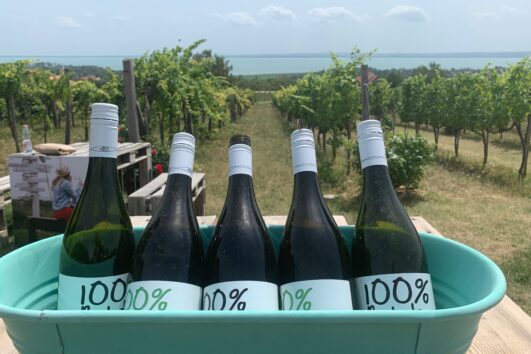
The lake Balaton is the number one destination of Hungarians in the summer months. It’s the greatest freshwater lake in Central Europe and is famous for its wine regions, cute little villages, beautiful castles and of course the magnificent views over the lake.

You can book the tour or contact me for further details. I’ll make sure to include in the itinerary all the sights you would like to see.

I was lucky today to perform a real, in-person tour, I can’t even describe how delightful it was. After months of delivering virtual tours and not being able to connect with my travellers in person I was starving for the real personal touch.

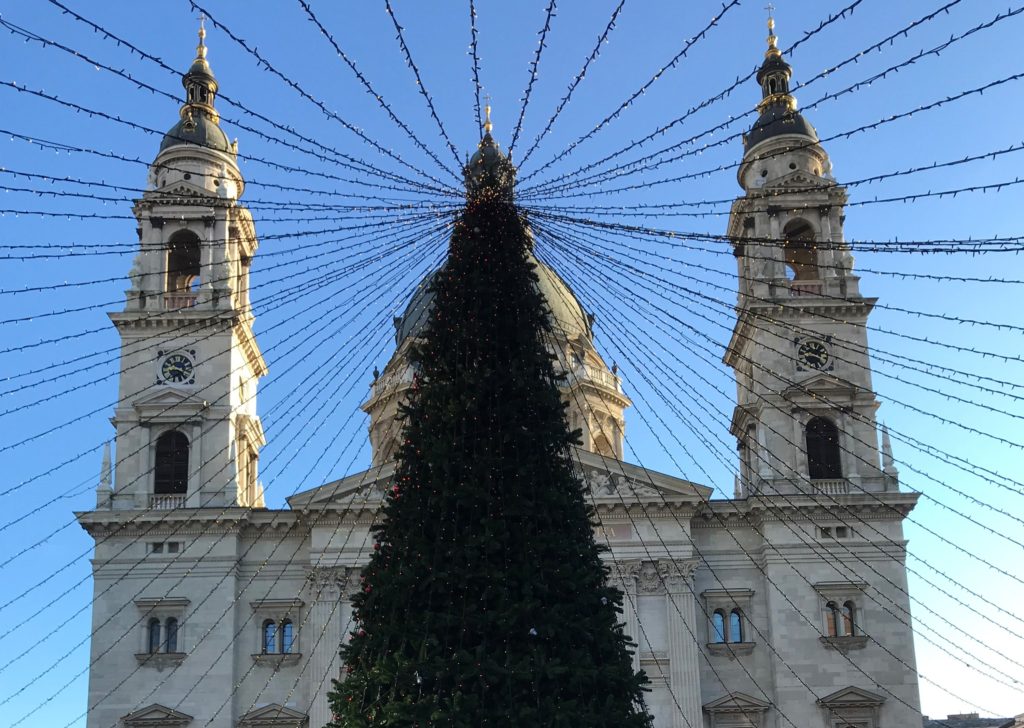
Walking around the city is always magical, but it’s even more magical now as there are only very few people around that visitors might feel they are the only tourists in Beautiful Budapest. We were the only ones in Matthias Church and St. Stephen’s Basilica and really felt like being part of a very exclusive club 🙂

Unfortunately our borders are still closed for tourists (except if they come from a few selected countries) so I can’t encourage you to come and visit now but if you happen to be in Budapest for any reason, contact me for a tour, you won’t regret it!

Vác is a cute little town on the left bank of the Danube, it’s some 25 minutes drive from Budapest. The visit of Vác can be included in a customised Danube Bend day trip. It’s such a beautiful Baroque jewellery box, I strongly recommend a short visit. We had been fortunate to tour Vác with my travellers before the borders of Hungary got closed again on the 1st of September.

The mummified remains of 265 people were found in 1994 in the crypt of the Dominican church, they had been laid to rest in hand painted, wooden coffins in the 18th and 19th centuries. The bodies didn’t decompose but were mummified naturally because of the favourable air conditions and dry settings.

The findings were extraordinary and not only because it’s a veritable gold mine for ethnographers about 18th century Hungarian everyday life and funeral traditions. It’s also a fantastic source for medical researches, a large number of tests have been performed by scientists on the mummified remains related to tuberculosis, HIV researches and they could also confirm C section had been performed as early as in the 18th century in Hungary.

The coffins are simply beautiful, all colourful, all hand-painted, all prepared with a lot of care, it’s very much like the fascinating celebration of life and death in a small Vác museum.


Ok, the timing might not be ideal. But. I originally created a Facebook profile for my tour guiding services some 5 years ago but I never really had time to take care of it and to publish enough interesting content. Now that I only deliver virtual tours obviously I have more time to work on my tours and profiles and uploaded some pictures and information.

I’ll try to post as often as I can so that you can learn more on my beautiful city and country:

Please like, share, comment, send me messages, so that I can see that you’re checking back on what’s new in Beautiful Budapest!

Herend porcelain patterns are more than decorative motifs — they reflect centuries of aristocratic taste, royal patronage, and a deep understanding of colour, function, and craftsmanship.

Visiting the Herend Porcelain Factory is not only about seeing how porcelain is made — it’s also about discovering a fascinating visual language shaped by aristocracy, royal taste, colour symbolism, and function.

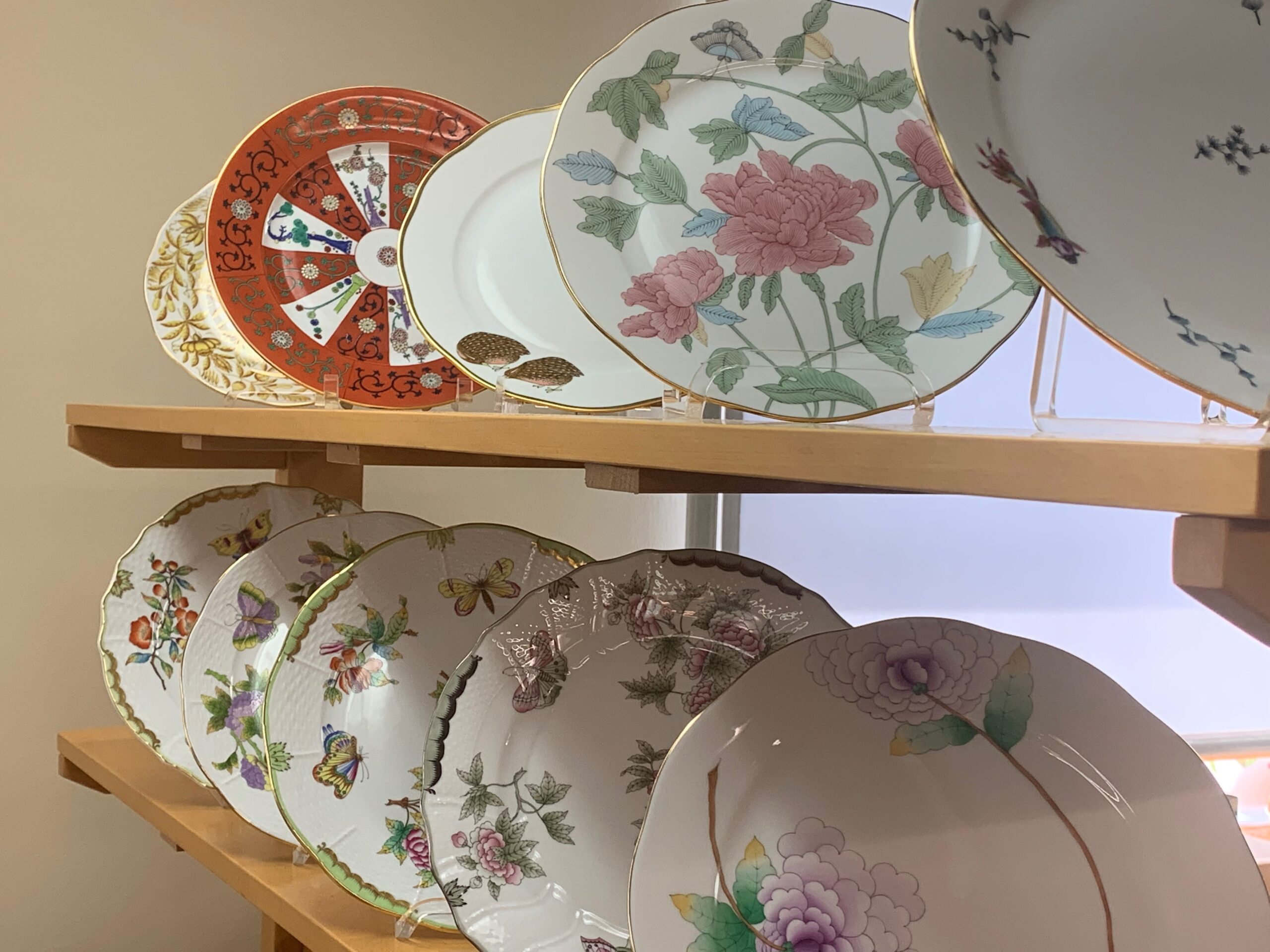
Over the years, Herend has created hundreds of patterns, each with its own story. Some were designed for royal courts, others for noble families, and many were adapted to different uses, from grand dining rooms to intimate tea rituals.

Porcelain for Royalty and Aristocracy

One of the most famous Herend designs is the Viktória pattern, created in the 19th century after Queen Victoria admired a richly decorated dinner service at an international exhibition. She ordered a full set for herself, and the pattern was named in her honour.

The design is elaborate and colourful, featuring butterflies and floral motifs inspired by the Far East — a style that perfectly matched aristocratic taste at the time. These pieces were meant to impress: large dining tables, formal occasions, and prestigious interiors.

Similarly, many early Herend patterns were created with noble households in mind, where porcelain was not only functional but also a symbol of status and refinement.

Colour as Identity

Colour plays a key role in Herend porcelain. Certain patterns are immediately recognisable by their palette:

  • Rich greens and golds often reflect classical elegance

  • Deep blues suggest formality and tradition

  • Softer pastel tones create a lighter, more intimate feeling

These colour choices weren’t random — they were carefully selected to suit interiors, table settings, and the expectations of high-society clients. Even today, visitors are often surprised by how modern some of these historic colour combinations feel.

Patterns Designed for Function

Not all Herend designs were created for grand banquets. Some patterns were developed specifically for tea and coffee sets, where smaller motifs and lighter decoration feel more appropriate.

A wonderful example is the Apponyi pattern, originally created as a simplified version of a more elaborate design. Its central floral motif makes it perfect for smaller items like cups, saucers, and dessert plates — elegant without being overwhelming.

This thoughtful relationship between decoration and function is one of the reasons Herend porcelain feels so timeless.

A Living Tradition

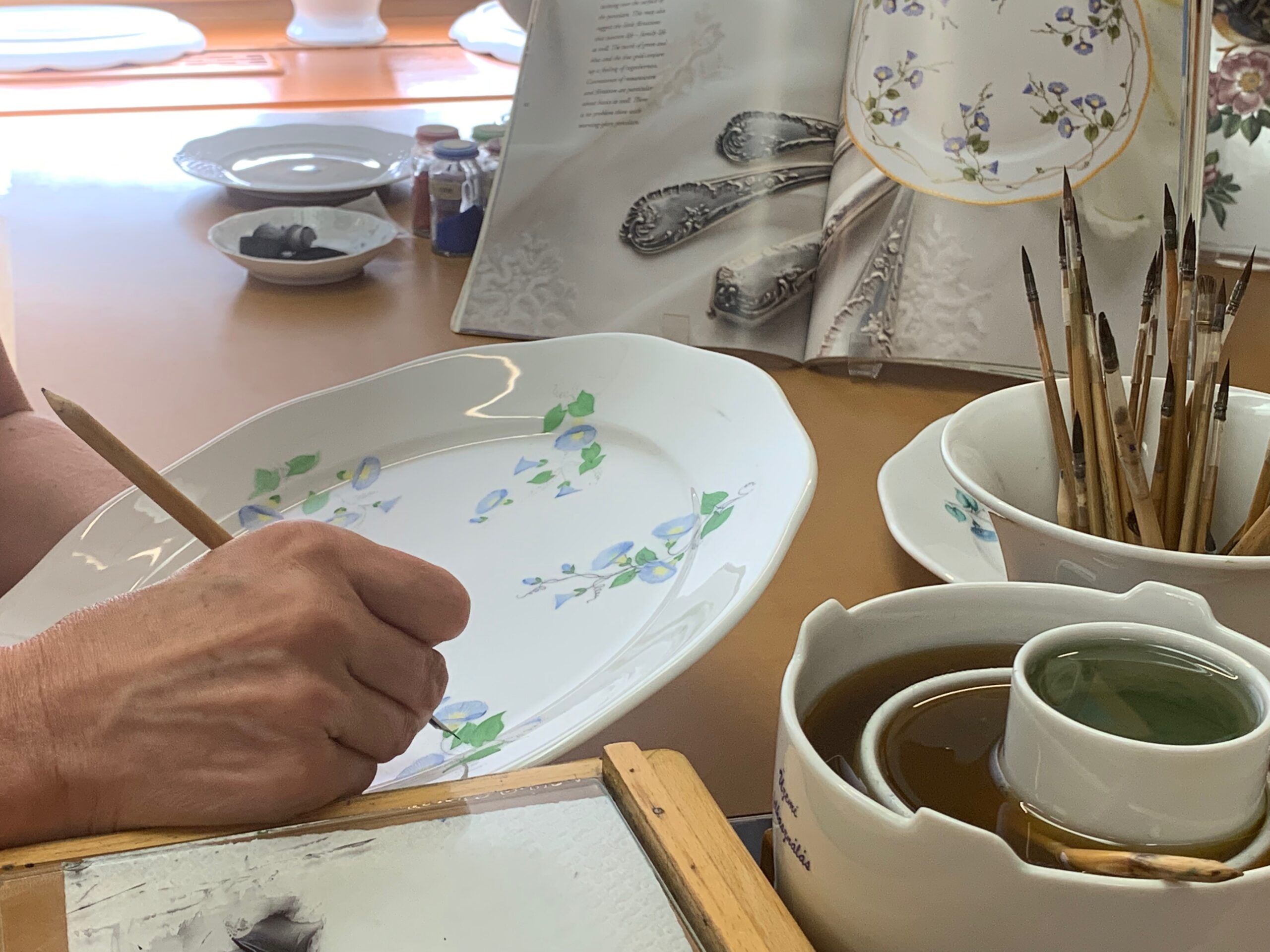
What makes Herend truly special is that these patterns are still hand-painted today, using techniques passed down through generations. While fashions change, the balance between beauty, symbolism, and usability remains the same.

Each piece tells a story — not only about craftsmanship, but also about the people and traditions that shaped it.

If you’re interested in Hungarian applied arts, design history, or simply beautiful objects with meaning, discovering Herend patterns adds a whole new layer to a factory visit. I often include Herend as part of a Lake Balaton or countryside private tour, where it fits beautifully alongside historic towns, landscapes, and regional gastronomy.
 

That’s a Hungarian saying, that’s probably how Hungarians try to find some comfort when they can’t see the sun for weeks. Budapest really is beautiful all year around but it shows most of its splendor in the sun.

Take a look at how Budapest looks like now, all white and snowy. It’s such a special period of the year, as unfortunately we’re getting less and less snow every year. Come and see for yourself!


Few visitors realise that the Buda caves in Budapest form an extensive underground labyrinth, revealing a hidden, quieter side of the city beneath the hills.

One of the things I love most about guiding in Budapest is when travellers ask for something different—experiences that go beyond the classic sightseeing routes. On one such occasion, our curiosity led us underground, into the fascinating cave system hidden beneath the Buda Hills.

We visited Pálvölgyi Cave, the longest cave in Budapest and one of its most surprising natural treasures. The guided visit lasts around 60 minutes and takes you through a labyrinth of passages filled with spectacular stone formations. Along the way, you’ll see delicate dripstones, dramatic shapes sculpted over thousands of years, and even the fossilized imprints of ancient seashells—silent reminders that this area was once underwater.

Beyond its geological wonders, the caves have another very practical appeal: the temperature remains a constant 11°C (52°F) all year round. That makes it a wonderfully cool escape during Budapest’s hot summers and a surprisingly comfortable option in winter, when the caves feel almost warm compared to the chilly streets above.

Exploring the Buda caves is not part of standard city tours—but it can be a memorable addition to a custom-designed Budapest experience. For travellers who enjoy nature, light adventure, or simply seeing a lesser-known side of the city, going underground offers a completely different perspective on Budapest.


The Royal Palace of Visegrád is one of the most fascinating stops in the Danube Bend and a highlight I always try to include when touring the area. Together with the Upper Castle, the palace forms a remarkable castle complex that offers insight into how Hungarian royalty lived at the height of their power.

Located above the Danube, in the historic town of Visegrád, this palace allows visitors to step directly into the world of 15th-century royal life.

From ruins to royal splendour

The fact that we can admire the palace today is thanks to the work of a passionate Hungarian archaeologist, who discovered the ruins hidden beneath an orchard. Thanks to decades of archaeological research and careful reconstruction, the palace has been brought back to life as a stunning example of Gothic and Renaissance architecture.

We owe a great deal to the archaeologists and historians who recreated the lavish interiors, gardens, and fountains that once impressed visiting dignitaries from across Europe.

A royal residence fit for King Matthias

The original stone residence, built in the 14th century, was relatively modest — just under 5,000 square feet. However, under the reign of Matthias Corvinus, the palace was transformed into a spectacular royal residence with around 350 rooms.

According to legend, during grand celebrations in the 15th century, marble fountains flowed with red wine — a detail that perfectly captures the wealth and prestige of the Hungarian royal court at the time.

What to see in the Royal Palace of Visegrád

Today, visitors can explore:

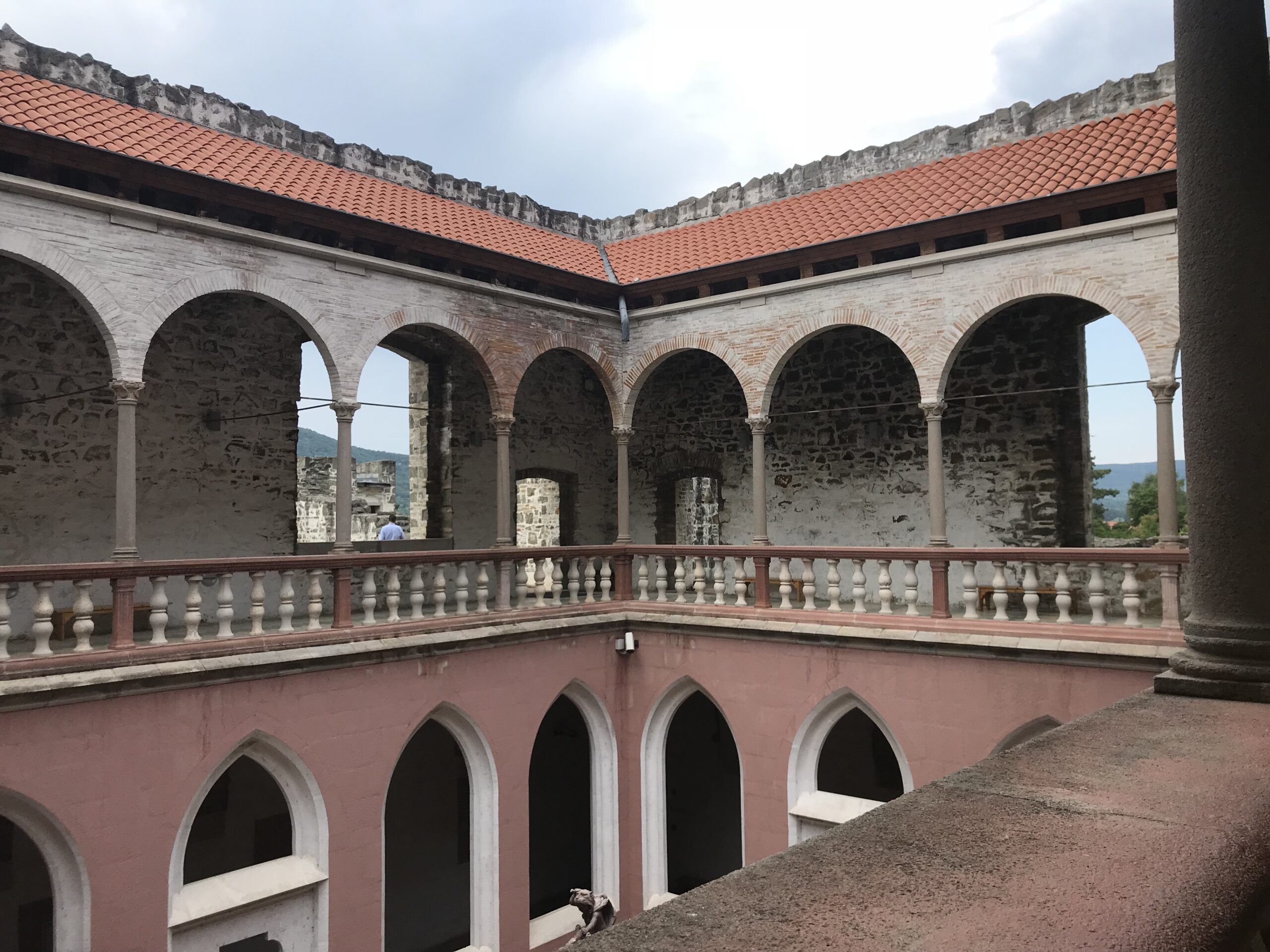
  • elegant Gothic cloisters

  • a refined Renaissance loggia

  • reconstructed living quarters of Hungarian kings and queens

  • decorative fountains and palace gardens

  • original artefacts and relics from the Middle Ages

The palace is beautifully laid out and easy to explore, making it both educational and visually impressive.

Visiting the Royal Palace on a Danube Bend tour

The Royal Palace of Visegrád is an essential stop on many Danube Bend day trips and works especially well as part of a private countryside tour from Budapest. Combined with the Upper Castle and views over the Danube, it offers a perfect balance of history, architecture, and scenery.