City Park Budapest (Városliget) is much more than a green escape from the city centre. At the end of Andrássy Avenue, you'll find some of Budapest's best-known museums, Széchenyi Thermal Bath, Vajdahunyad Castle, the Zoo and one of the city's favourite places for walking, picnics and simply spending time outdoors. I often include City Park in my Budapest tours because it brings together several different sides of the city in a relatively small area: grand architecture, Hungarian history, contemporary design and everyday local life. Whether you're visiting Budapest for the first time or returning for a longer stay, you can spend an hour here — or easily half a day. Why I Like City Park City Park has been part of my Budapest for as long as I can remember. As a child, I came here to visit the Zoo and the old Vidámpark amusement park, to go ice skating — something I've been doing since I was about five — and, occasionally, to the Circus. My memories of the Circus are slightly mixed. Once, a clown invited me onto the stage and apparently pretended to spank me behind my back while the entire audience laughed. I couldn't understand what was so funny. Years later, my mother told me that perhaps the clown had actually been trying to impress her. It didn't improve my opinion of clowns. What I love most about City Park, though, is its familiarity. Budapest has changed enormously, and Városliget has changed with it, but I can still come here and recognise the same old trees, the same benches and places I've known all my life. There's something deeply comforting and peaceful about that. Széchenyi Thermal Bath is part of those memories too. It has always been a Budapest institution, and although today it's one of
City Park Budapest (Városliget) is much more than a green escape from the city centre. At the end of Andrássy Avenue, you’ll find some of Budapest’s best-known museums, Széchenyi Thermal Bath, Vajdahunyad Castle, the Zoo and one of the city’s favourite places for walking, picnics and simply spending time outdoors.
I often include City Park in my Budapest tours because it brings together several different sides of the city in a relatively small area: grand architecture, Hungarian history, contemporary design and everyday local life. Whether you’re visiting Budapest for the first time or returning for a longer stay, you can spend an hour here — or easily half a day.
Why I Like City Park
City Park has been part of my Budapest for as long as I can remember. As a child, I came here to visit the Zoo and the old Vidámpark amusement park, to go ice skating — something I’ve been doing since I was about five — and, occasionally, to the Circus.
My memories of the Circus are slightly mixed. Once, a clown invited me onto the stage and apparently pretended to spank me behind my back while the entire audience laughed. I couldn’t understand what was so funny. Years later, my mother told me that perhaps the clown had actually been trying to impress her. It didn’t improve my opinion of clowns.
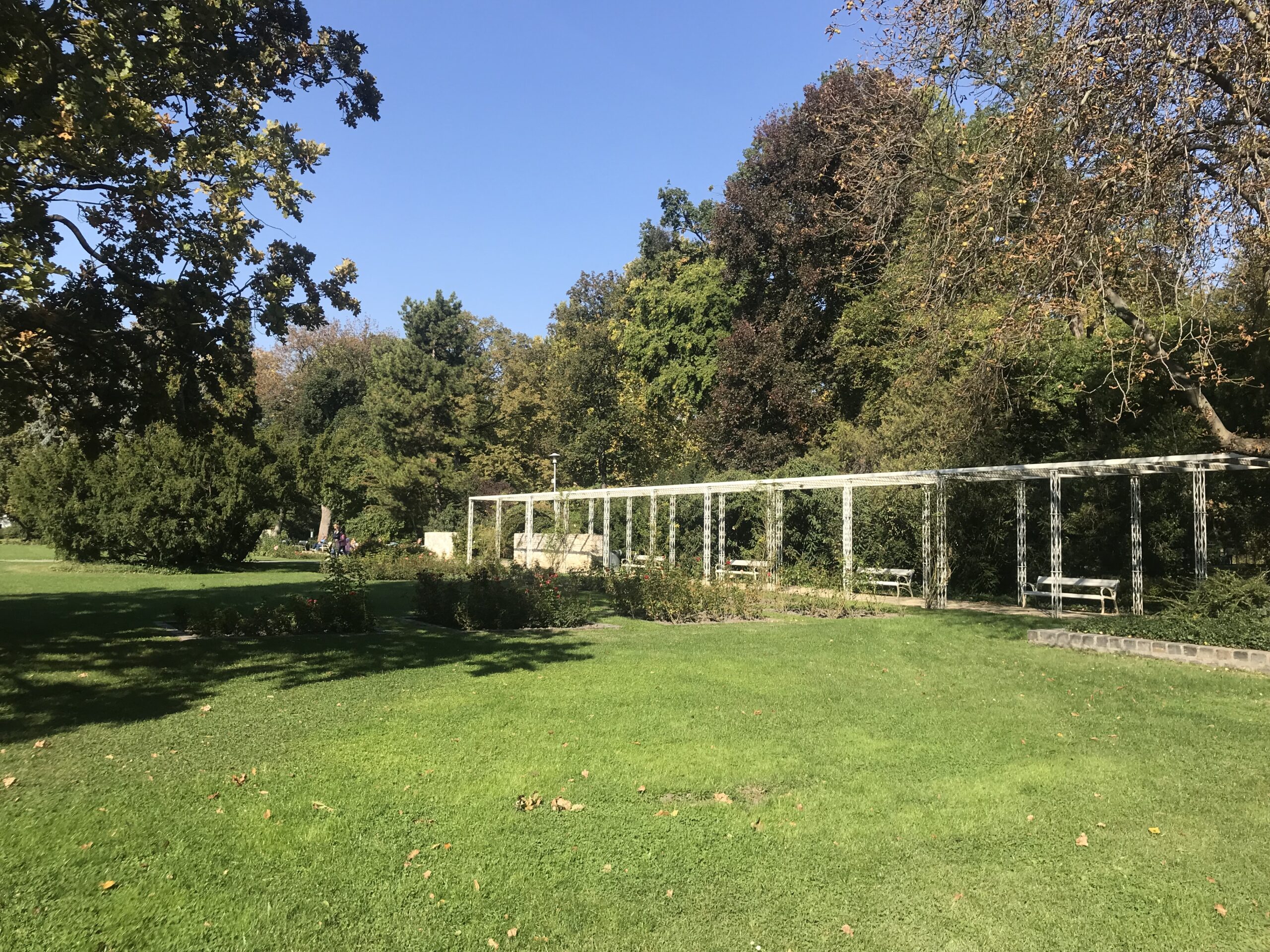
What I love most about City Park, though, is its familiarity. Budapest has changed enormously, and Városliget has changed with it, but I can still come here and recognise the same old trees, the same benches and places I’ve known all my life. There’s something deeply comforting and peaceful about that.
Széchenyi Thermal Bath is part of those memories too. It has always been a Budapest institution, and although today it’s one of the city’s most popular attractions, there’s still another Széchenyi if you come early enough. I love watching the regular local crowd arrive in the morning, before most visitors appear. That, to me, is still a very real Budapest experience.
And I like some of the changes too. Some of the new architecture in City Park is genuinely exciting. But on a warm summer evening, I’d probably still rather sit outside at Kertem with friends, drinking a fröccs under the trees.
What to See and Do in City Park
There are so many things to see and do in Városliget that the park can easily fill several hours. These are the places I’d particularly consider including.
Heroes’ Square
At the end of Andrássy Avenue, Heroes’ Square forms the monumental entrance to City Park. The Millennium Monument and its semicircular colonnades introduce some of the major figures and events of Hungarian history.
It’s an obvious starting point for exploring the park — but don’t stop here. City Park becomes much more interesting once you cross the little bridge and leave the grand monuments behind.
Vajdahunyad Castle
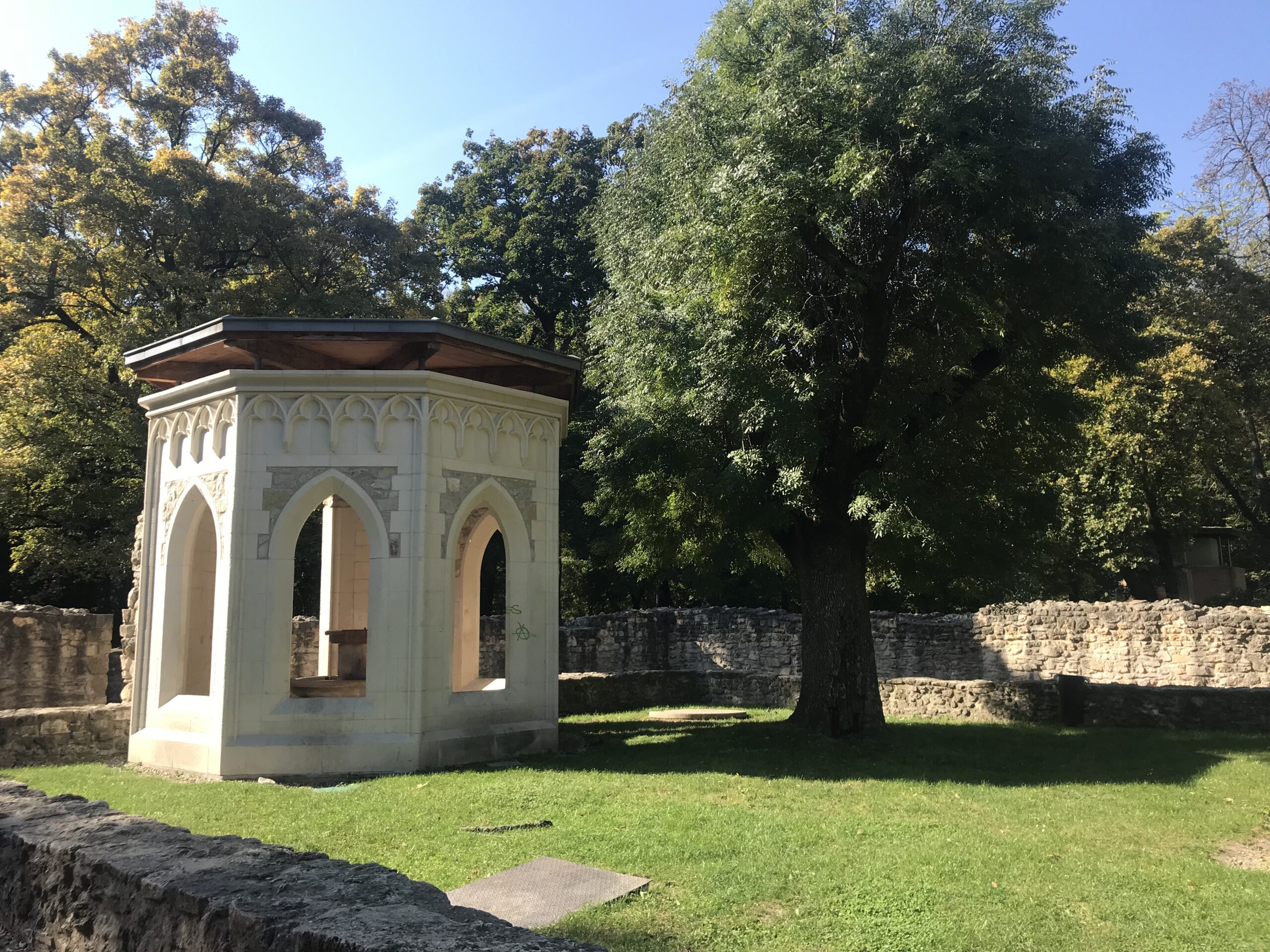
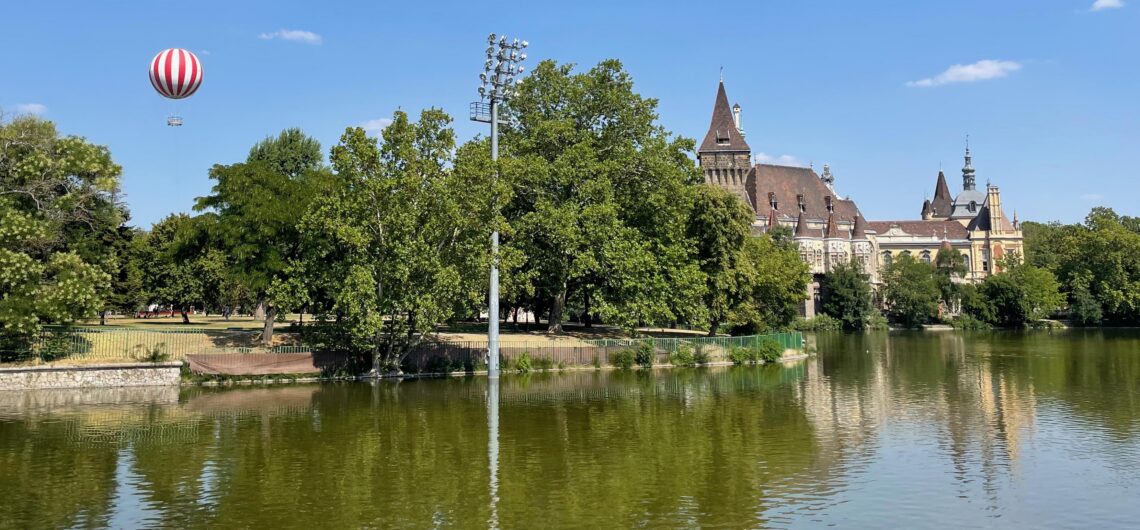
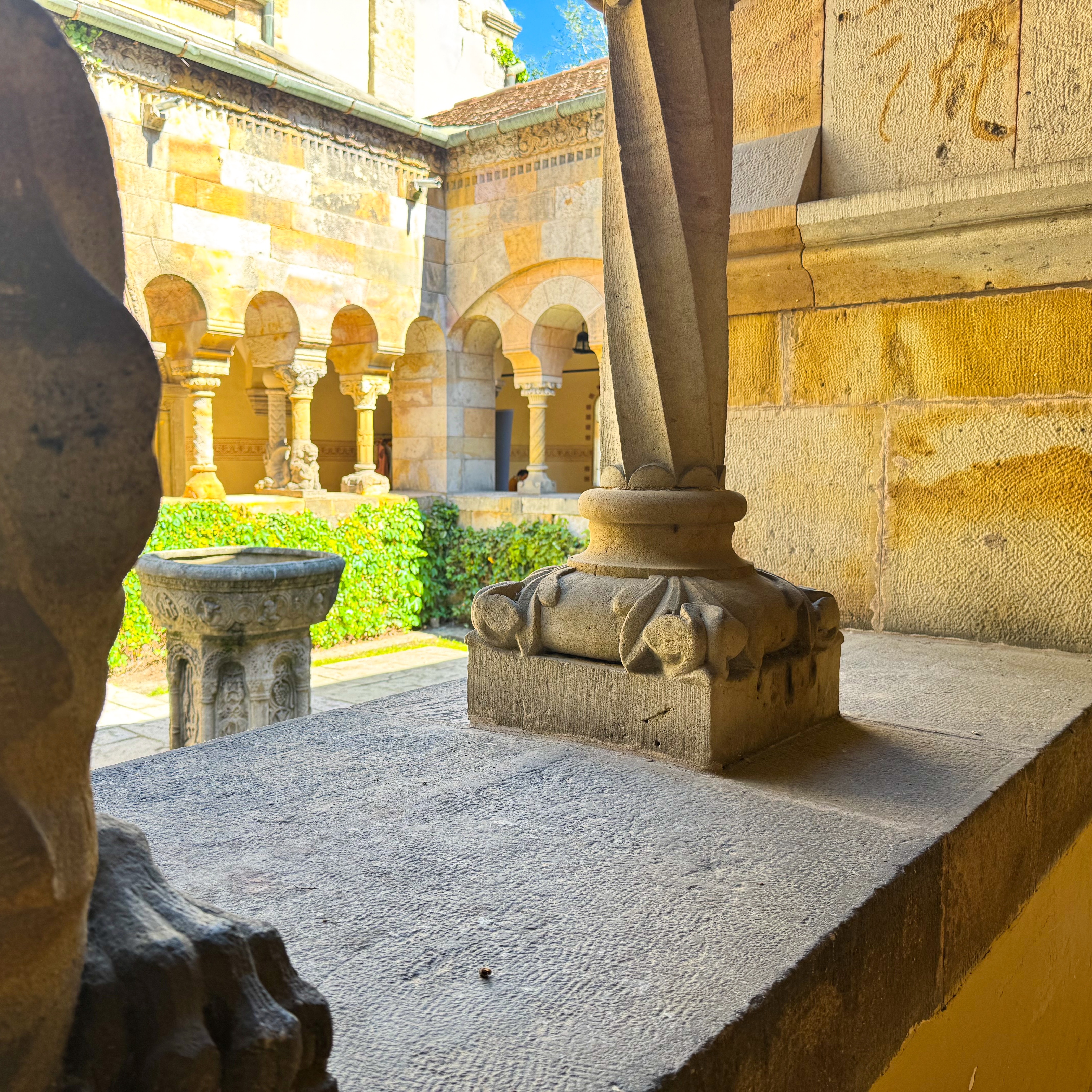
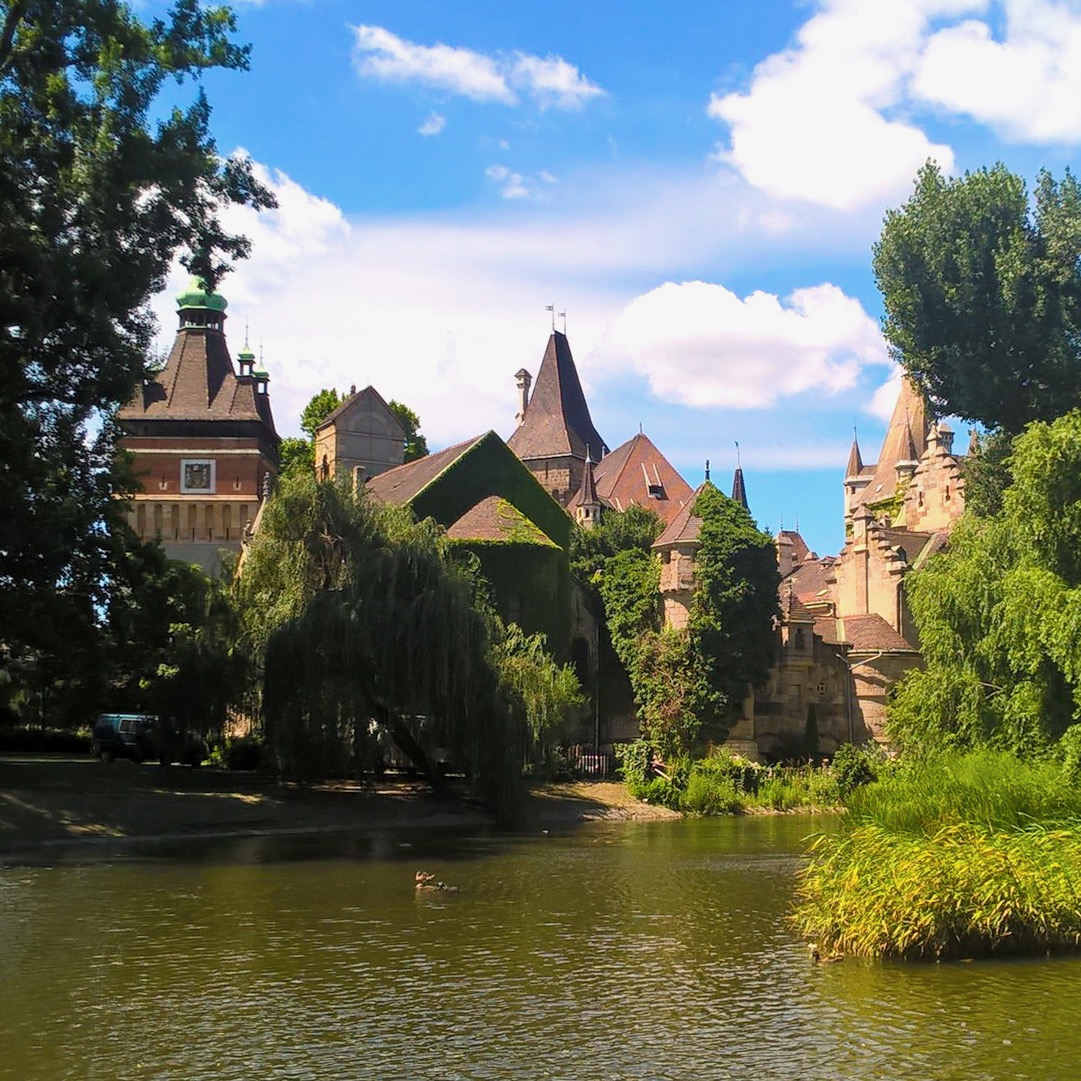
One of the most surprising buildings in City Park, Vajdahunyad Castle looks centuries older than it actually is. Originally created for Hungary’s Millennium celebrations in 1896, its different sections showcase architectural styles from various periods of Hungarian history.
Most visitors see the courtyard, but I particularly like walking around the moat to see the castle from the other side.
Széchenyi Thermal Bath
With its grand Neo-Baroque architecture and steaming outdoor pools, Széchenyi Thermal Bath is one of Budapest’s most recognisable sights and an important part of the city’s bathing culture. Even if you’re not planning to spend several hours in the pools, the building itself is worth noticing as you explore this part of the park.
House of Hungarian Music
One of the newest additions to City Park, the House of Hungarian Music brings a completely different architectural language to Városliget.
Its contemporary design, interactive exhibitions and unusual relationship between the building and surrounding trees make it much more than simply a museum for music lovers.
Museum of Fine Arts
Facing Heroes’ Square, the Museum of Fine Arts is one of Budapest’s great cultural institutions. Its permanent collection and temporary exhibitions are excellent, but I think the magnificent building itself is almost enough reason to visit. If museums are an important part of your Budapest plans, allow enough time rather than trying to squeeze a major collection into an already busy sightseeing day.
Museum of Ethnography
The Museum of Ethnography is another striking contemporary addition to City Park. Its sweeping curved form and landscaped roof have dramatically changed this part of Városliget and create an interesting contrast with the historic buildings around the park.
Budapest Zoo
Budapest Zoo has been part of City Park since the 19th century and is one of the places I associate most strongly with my own childhood. Even if you’re not visiting the Zoo itself, look at the beautiful historic entrance and the wonderful Elephant House nearby — reminders that some of the park’s most interesting architecture isn’t found among its major monuments.
The Lake, Ice Rink – and Simply Being in the Park
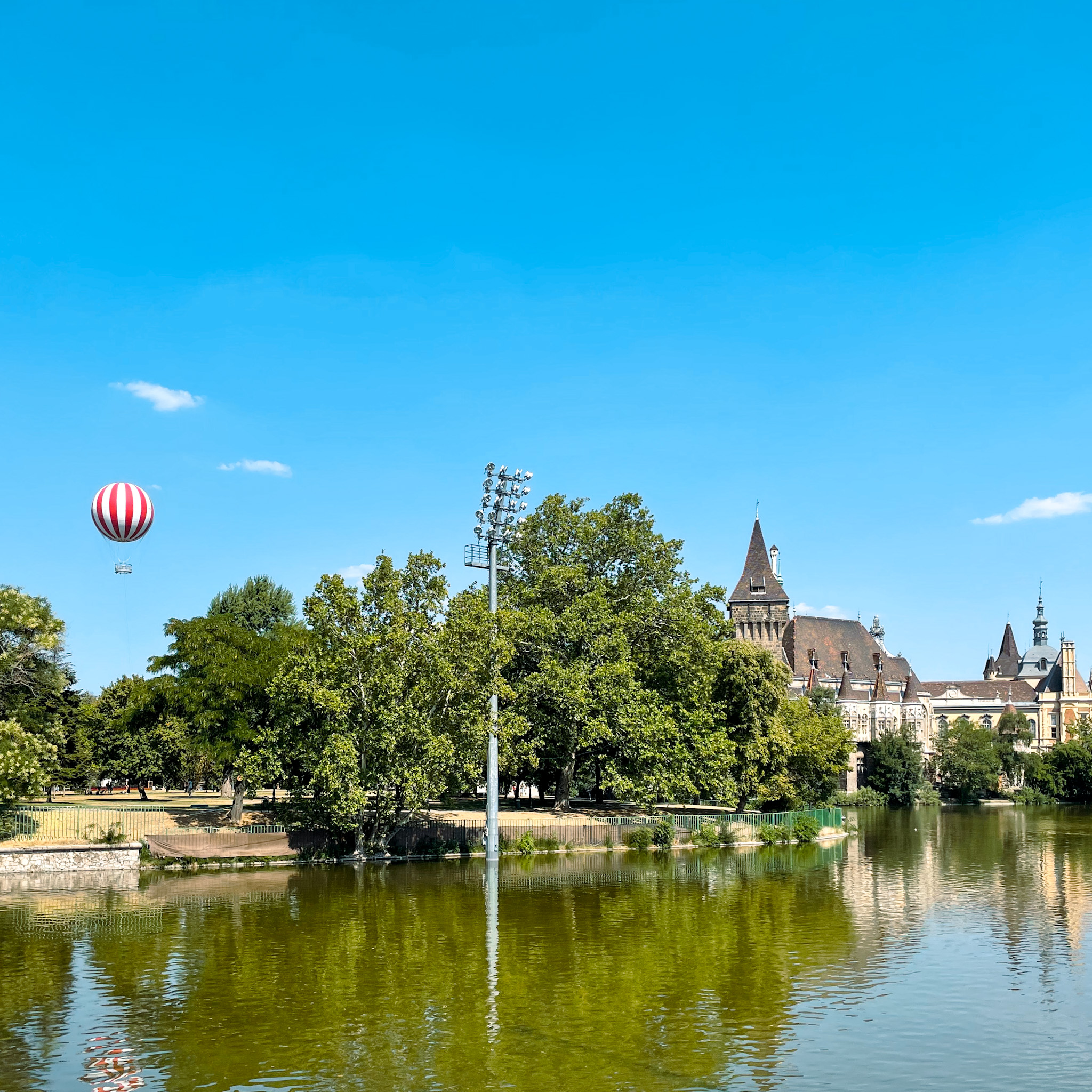
Not everything in City Park needs an entrance ticket. The lake changes character with the seasons: in warmer months it’s surrounded by people walking and relaxing, while in winter part of the area becomes Budapest’s famous outdoor ice rink.
I’ve been skating here since I was a child, and it’s still one of those places where City Park feels less like a tourist attraction and more like part of everyday Budapest. And sometimes the best thing to do is simply walk under the trees, sit on a bench — or feed the ducks.
Museums in City Park
City Park is also one of Budapest’s most interesting cultural areas, with several excellent museums in and around the park. The Museum of Fine Arts, House of Hungarian Music and Museum of Ethnography can all turn a walk through Városliget into a much longer cultural day. And just beyond the park, the wonderful little György Ráth Villa is one of my personal favourites for Art Nouveau and decorative arts.
If you’re deciding which ones are worth adding to your itinerary, I’ve put together a curated guide to my favourite Budapest museums.
How Much Time Do You Need in City Park?
How long to spend in City Park depends very much on what you’d like to see.
- About one hour is enough for an introduction: start at Heroes’ Square, cross into the park and walk around Vajdahunyad Castle.
- Two to three hours gives you time to explore at a much more relaxed pace, see more of the architecture and perhaps stop for a coffee or drink.
- Half a day or longer makes sense if you’d like to combine the park with a museum, Széchenyi Thermal Bath or the Zoo.
I wouldn’t try to fit everything into one visit. City Park is much more enjoyable when there’s time to wander a little rather than moving quickly between attractions.
My Favourite Way to Explore City Park
My favourite way to explore City Park is to start at Heroes’ Square and then cross the little bridge into the park.
From there, I like to wander through Vajdahunyad Castle, but rather than only seeing it from the main courtyard, I always walk around to the other side of the moat. It’s one of my favourite views of the castle and somehow feels much quieter and more romantic from there.
From Vajdahunyad, I continue towards Széchenyi Thermal Bath. Even if you’re not planning to spend several hours bathing, it’s worth seeing the grand entrance and foyer. I also love the little drinking hall where you can taste Széchenyi’s thermal water — a small reminder that Budapest’s bathing culture has always been about much more than simply soaking in a hot pool.
Then I like to continue towards the old amusement park area. The Vidámpark I knew as a child has disappeared, but its beautiful historic carousel survives and is now part of the Zoo. Nearby are the wonderful Elephant House and the Art Nouveau entrance to Budapest Zoo — two details I would never hurry past.
And somewhere along the way, there should always be time to stop by the lake and feed the ducks.
That’s probably my favourite thing about this walk. It includes some of City Park’s major sights, but it doesn’t feel like moving through a checklist. There are grand monuments and beautiful buildings, but also little bridges, old memories, ducks and places where you simply stop for a while.
City Park Through the Seasons
City Park changes enormously through the year, and I don’t think there’s really a bad season to visit.
Spring and summer are when Városliget feels most like Budapest’s garden. The trees are green, people linger outdoors, and long summer evenings are perfect for simply sitting somewhere with a drink.
Autumn brings beautiful colours and a quieter atmosphere once the busiest visitor season begins to fade.
And winter gives the park an entirely different character. The ice rink becomes one of its great attractions, while the steam rising from the outdoor pools at Széchenyi makes the baths particularly atmospheric on cold days.
The monuments don’t change, of course. But the experience of the park certainly does.
City Park as Part of Your Budapest Experience
City Park works particularly well as part of a longer Budapest itinerary because the time spent here can easily be adapted to your interests. Some travellers want to focus on architecture and history, others on museums or thermal baths, while others simply enjoy seeing a greener and more relaxed side of Budapest.
My Budapest private tours are fully customisable, so City Park can be included as a short introduction or explored in much greater depth depending on what you’d most like to see.