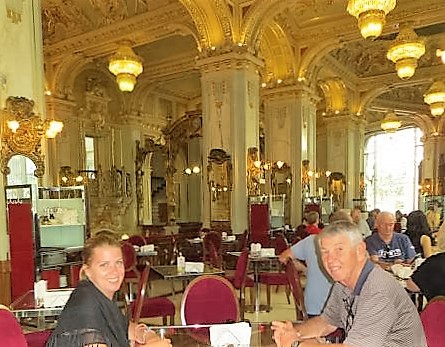
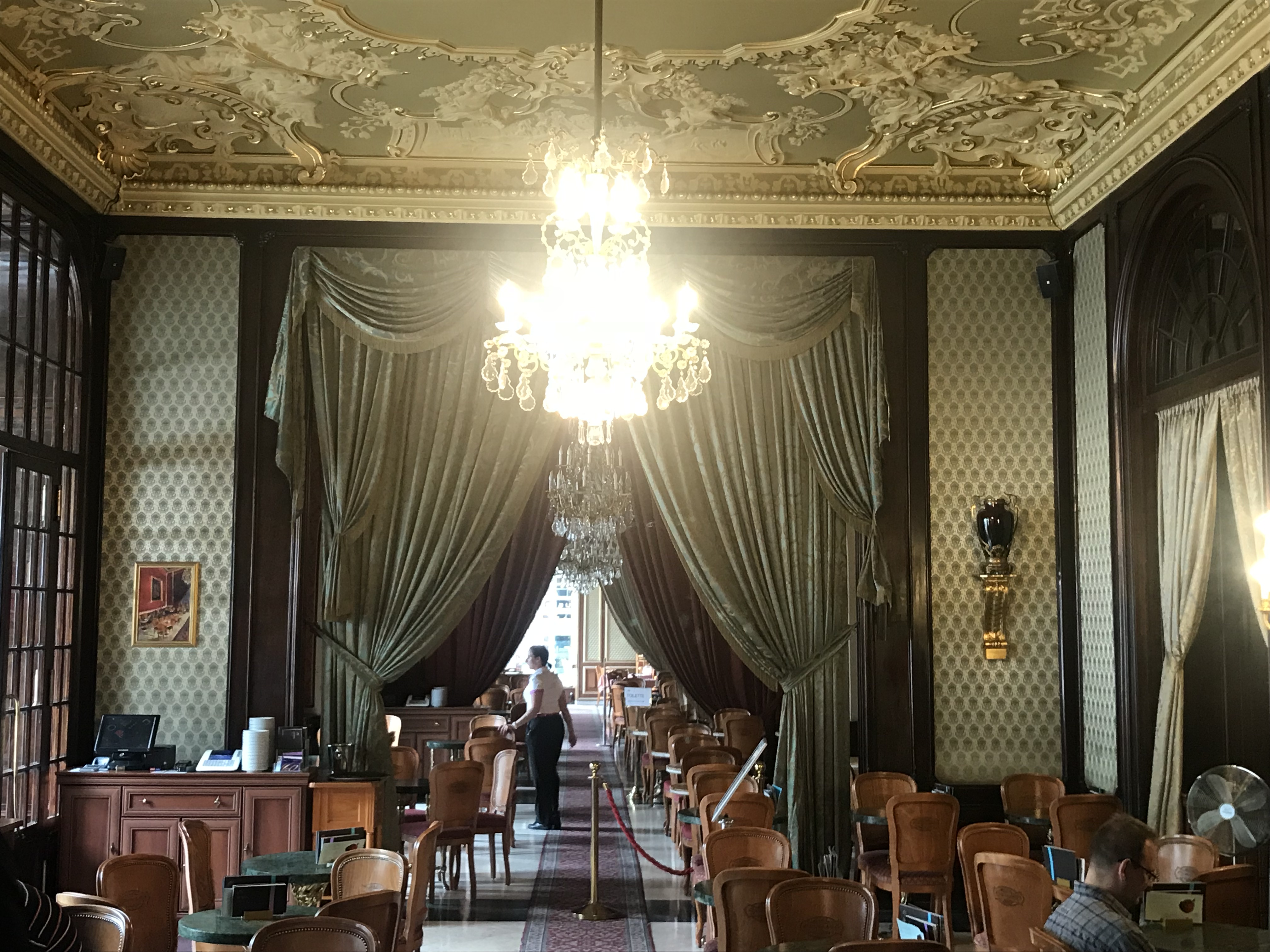
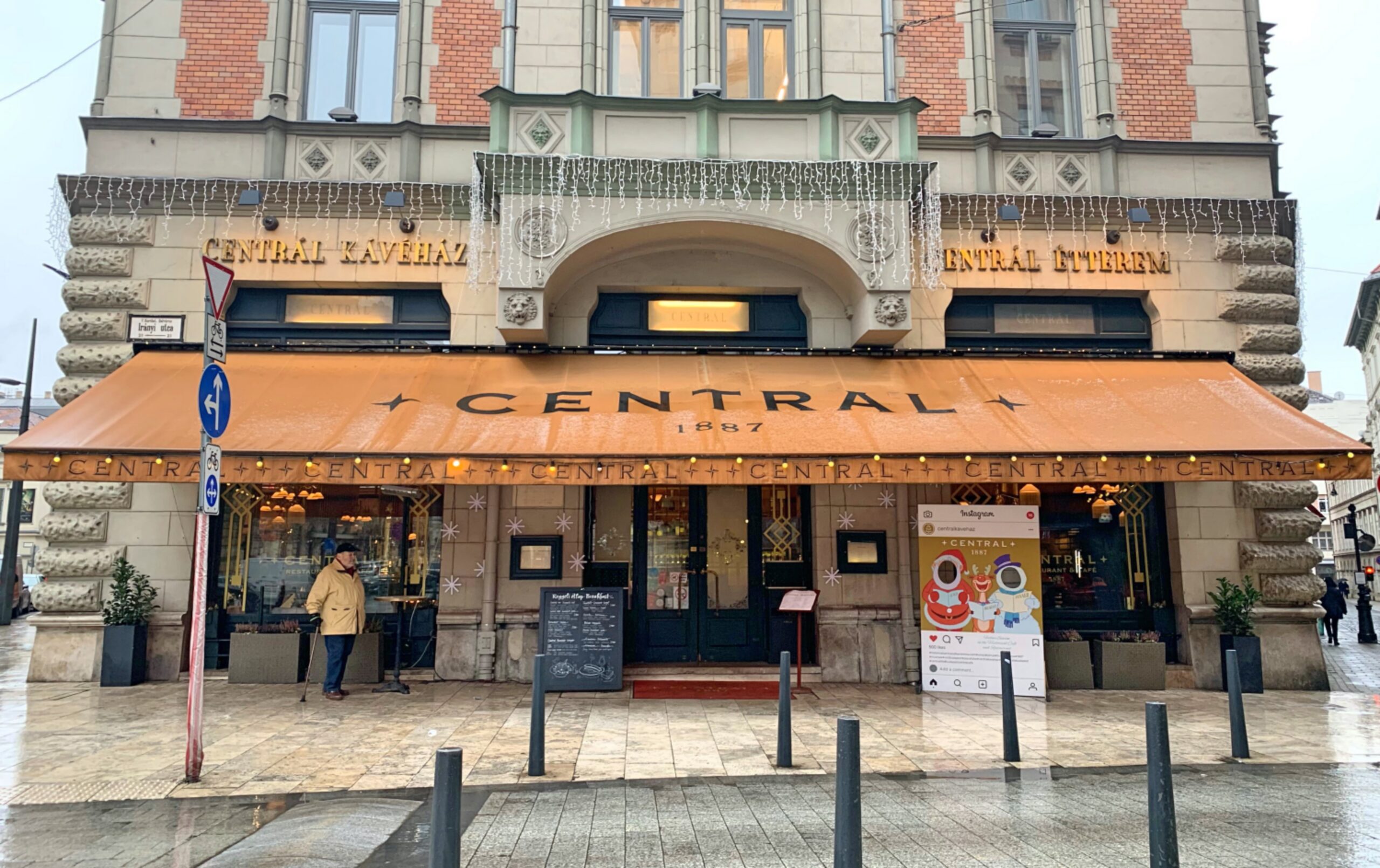
The golden age of the famous coffeehouses of Budapest was at the end of the 19th and beginning of the 20th century. However, we see now the renaissance of the coffeehouse and coffee culture. We try to see different coffeehouses on our foodie tours so that travellers can sample the best Hungarian coffee and cakes.

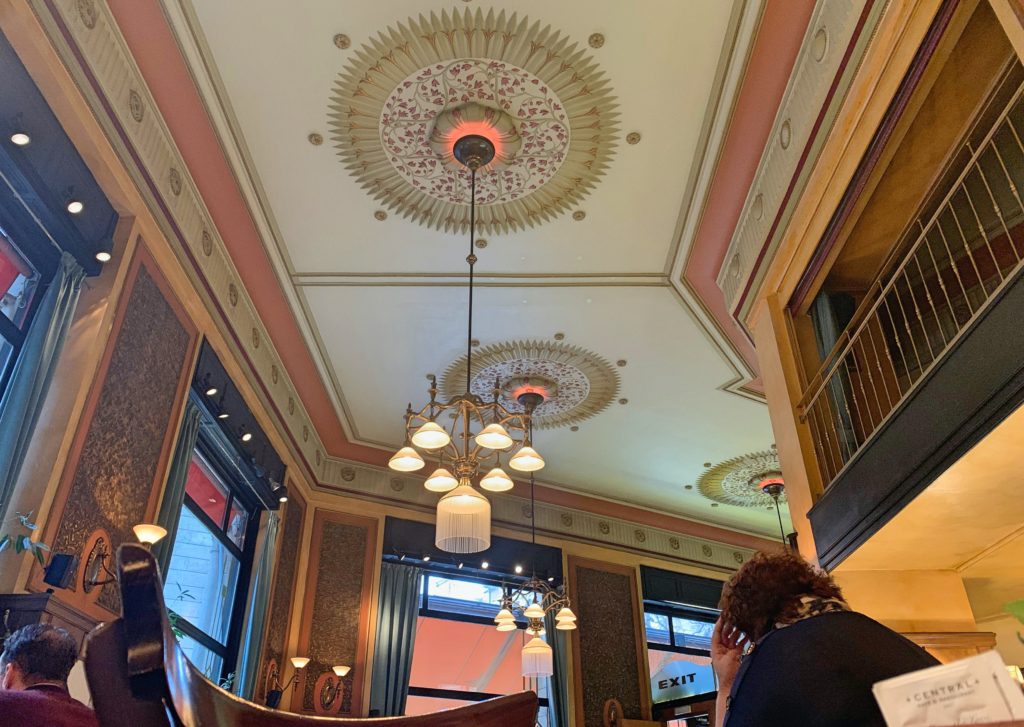
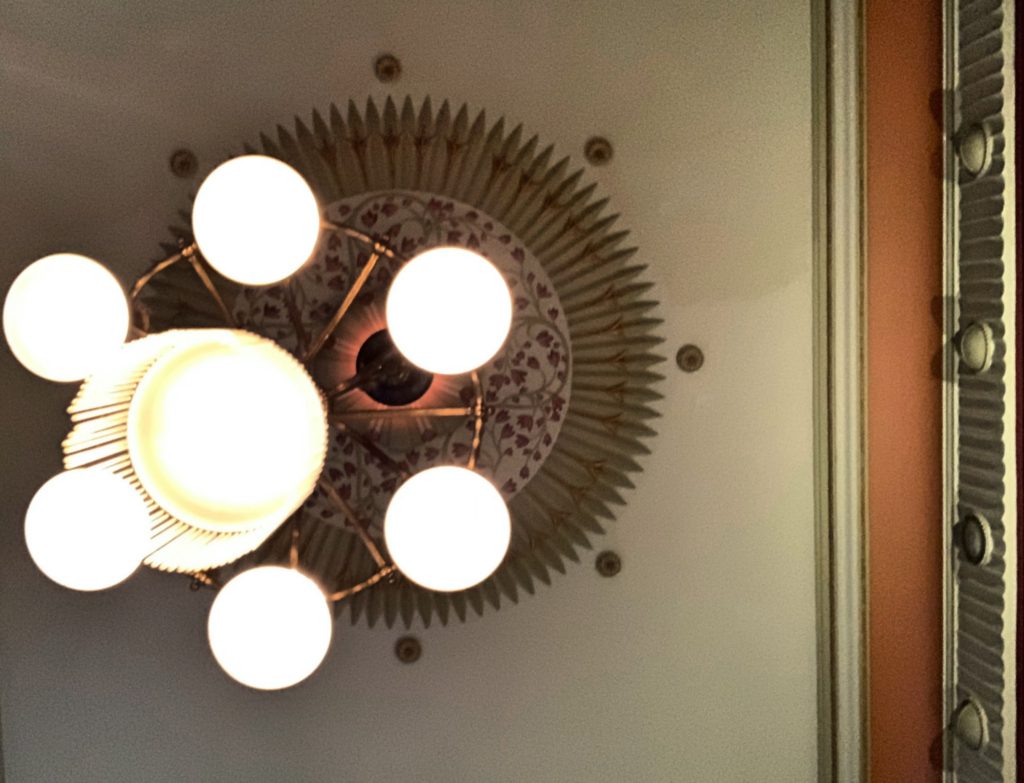
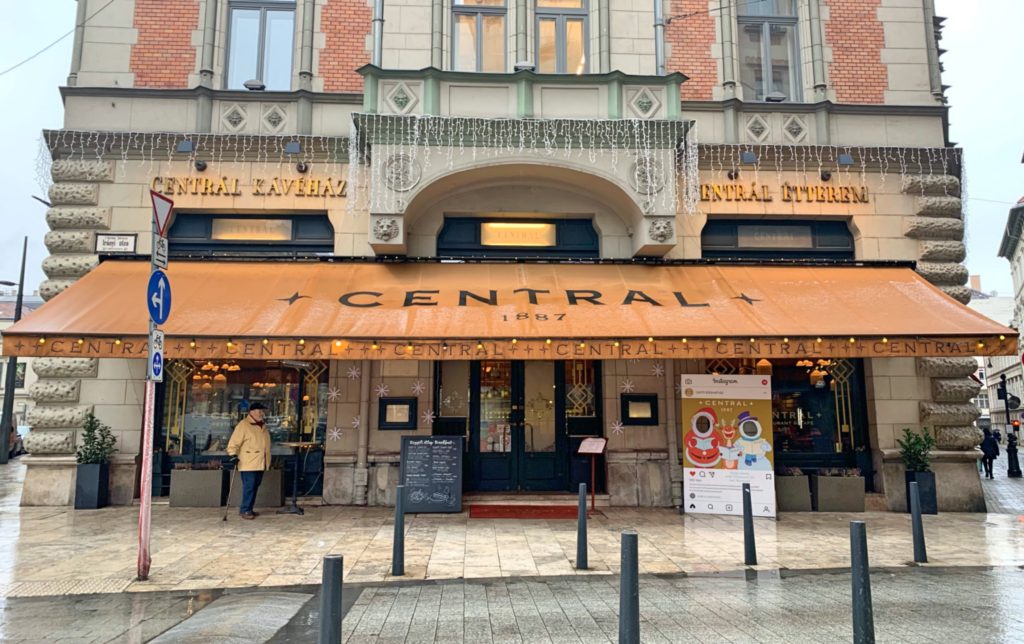
Central is situated in the heart of Downtown Pest near the Elizabeth bridge. By the end of the 19th and the beginning of the 20th century it was considered as the coffeehouse of the writers and journalists, as it was mostly frequented by those working in the neighbourhood. Writers spent days and nights in the coffeehouse writing their columns and discussing politics, economics and gossips. There is a legend of a local writer who considered Central to be his second home where he kept a bathrobe and many of his personal belongings and his pills.

When you go to Central must try the Rákóczi Túrós, a great Hungarian cake with cottage cheese and meringue that goes very well with an espresso or cappuccino.

Yes, I agree — the Central Market of Budapest has become a major tourist attraction over the years. And yet, it may come as a surprise that it is still one of the favourite shopping places of locals.

Despite the crowds, the market remains a living, breathing part of everyday Budapest life — and that’s exactly why it’s such a fascinating place to visit.

A Personal Memory of the Central Market

I first visited the market with my grandmother when I was around five years old. At that age, I couldn’t tell the difference between the “aisle of the rich” and the “aisle of the poor” — but I was completely captivated by the smells, colours, and endless variety of products.

That sensory overload is still very much part of the experience today.

The Great Market Hall: 120 Years of History

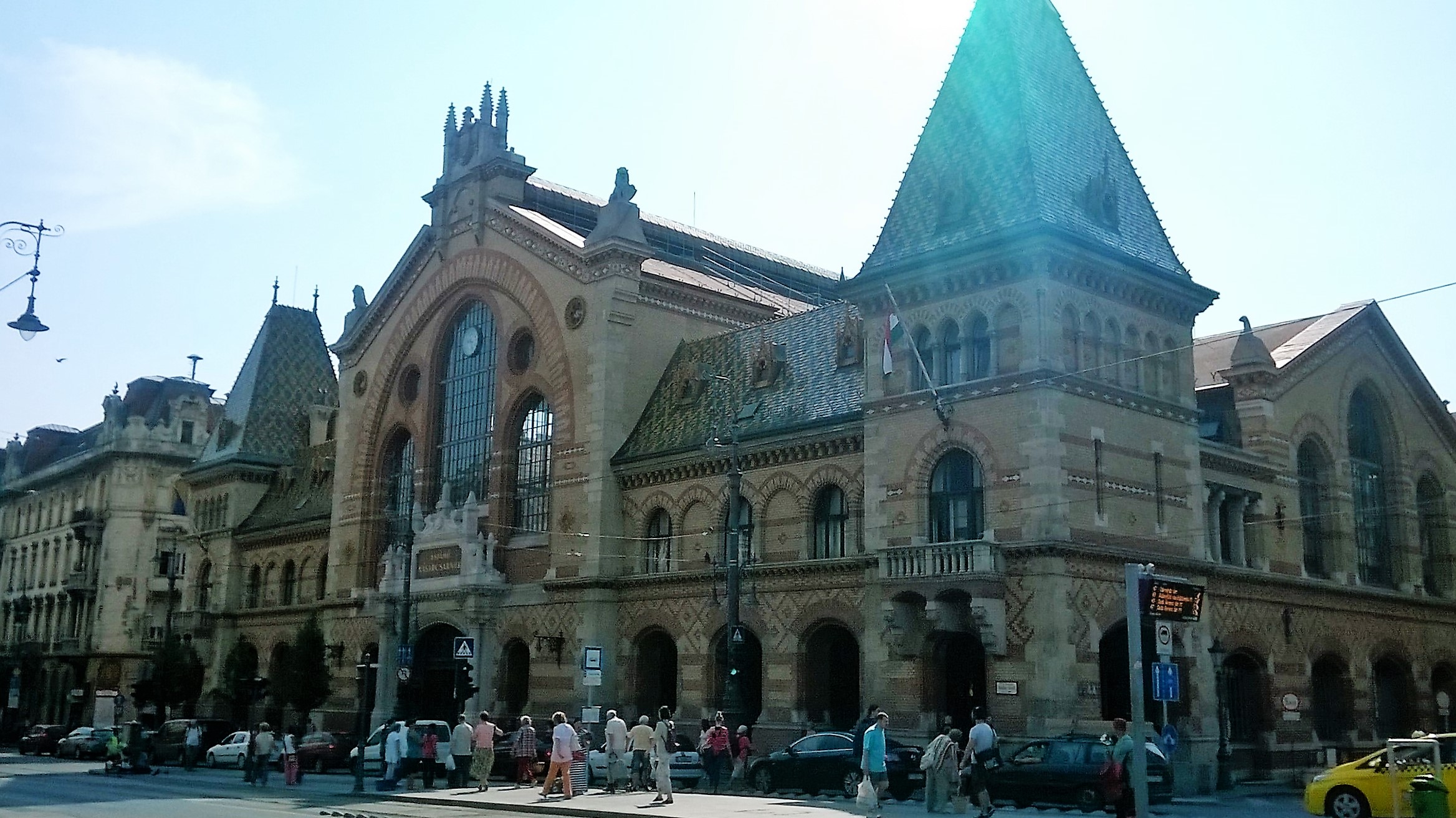
The Central Market, officially known as the Great Market Hall, opened more than 120 years ago and quickly became the heart of Budapest’s food trade.

The iron structure and glass roof often remind visitors of a 19th-century train station, while the colorful Zsolnay roof tiles make the building unmistakable from the outside.

Inside, you’ll find:

  • Fresh fruits and vegetables from across Hungary

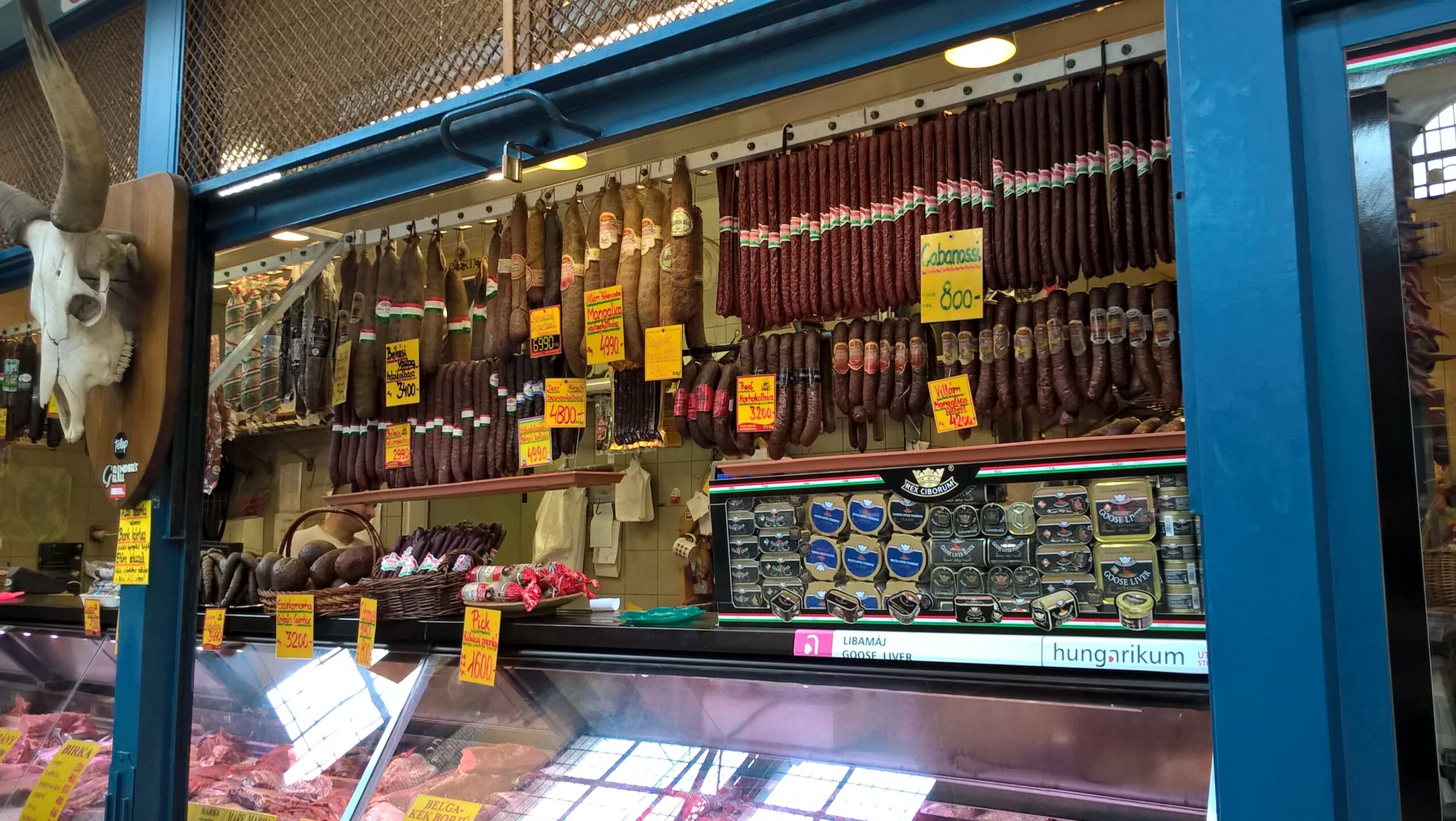
  • Hungarian sausages, salami, and cured meats

  • Paprika in every form imaginable

  • Local cheeses, honey, and preserves

  • Traditional Hungarian pastries and street food

Why the Central Market Is a Foodie Must-See

If you’re curious about Hungarian gastronomy, this market is one of the best places to understand it.

The Central Market showcases:

  • Seasonal Hungarian ingredients

  • Regional food traditions

  • Everyday eating habits of locals

  • The contrast between traditional stalls and modern food counters

It’s lively, noisy, sometimes chaotic — and absolutely authentic.

Visiting the Central Market on a Budapest Food Tour

A visit to the Central Market is part of my Budapest Food Tour (except on Sundays, when the market is closed).

During the tour, I’ll:

  • Help you navigate the market beyond the obvious tourist stalls

  • Explain what locals really buy and why

  • Introduce Hungarian food traditions and shopping habits

  • Make sure you taste one of the best sausages and a proper Hungarian strudel

The market is not just about food — it’s about culture, history, and everyday life.

Combine Market Visit with Wine Tasting

Many guests choose to combine their market experience with a food and wine-focused day, pairing the Budapest food tour with a countryside escape such as the Etyek Wine Tour, Hungary’s closest wine region to the capital.

It’s a wonderful way to connect Budapest’s culinary scene with local wines and rural traditions.

Planning Your Visit to the Central Market of Budapest

If you’d like to explore the Central Market of Budapest with a local guide and truly understand what you’re seeing — and tasting — I’d be happy to show you around as part of one of my private food tours.

The Budapest coffeehouse culture is more than 150 years old, and for generations cafés have been the beating heart of intellectual life, creativity, and social connection. These were not places for a quick espresso and takeaway cup, but living rooms of the city—spaces where people met to talk, debate, dream, write, and sometimes even change history.

Coffee in Budapest is never just about coffee.

Coffeehouses as the Soul of Budapest

In the late 19th and early 20th centuries, Budapest coffeehouses were places where writers, poets, journalists, and artists spent hours every day. Many of them practically lived there. Coffeehouses provided warmth, light, newspapers, ink, conversation, and inspiration—often all night long.

Legend has it that one Hungarian writer famously stole the keys of his favourite café and threw them into the Danube, ensuring the coffeehouse would stay open 24 hours a day. Whether entirely true or slightly exaggerated, the story perfectly captures how essential these places were to everyday life.

Even politics found its way into cafés. One of the most important moments of the Hungarian War of Independence began not on a battlefield, but with young revolutionaries gathering in a Pest coffeehouse, fuelled by coffee, ideas, and enthusiasm.

Grand Cafés and Everyday Rituals

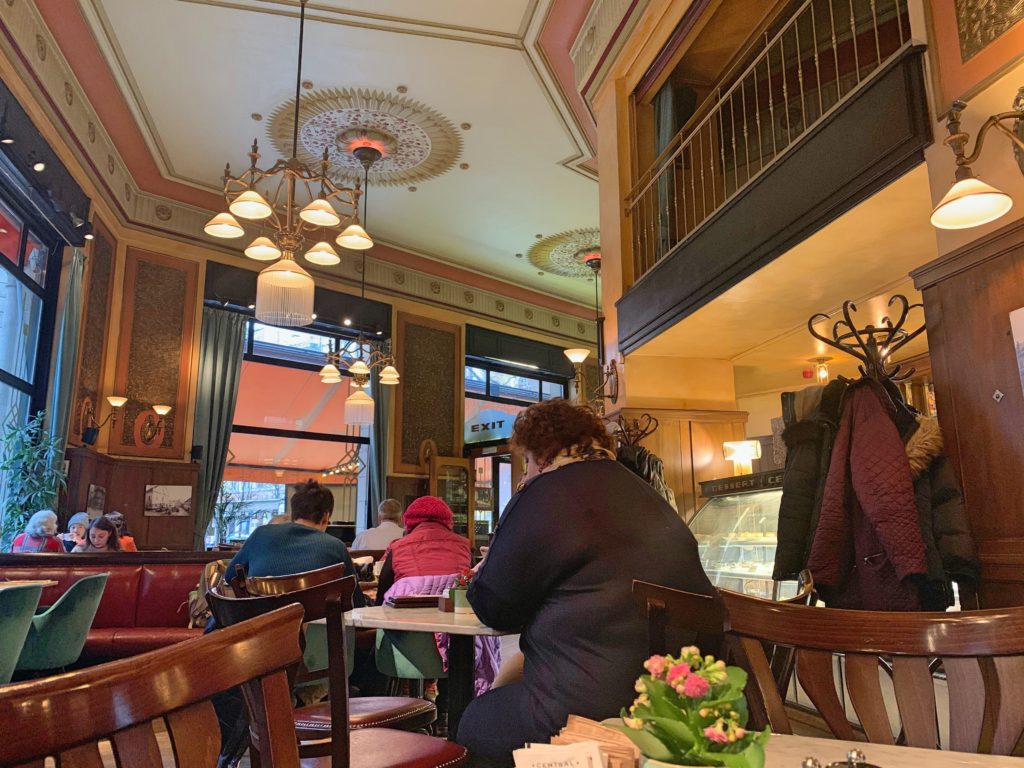
Budapest’s historic coffeehouses are famous for their elegant interiors: chandeliers, marble tables, mirrors, plush seating, and a sense of faded grandeur that still feels alive today. Some cafés became symbols of luxury and refinement, others of literary life or bohemian freedom—but all shared the same role as social spaces.

If you’d like to explore individual cafés in more detail, you can read more about some of the city’s most iconic places:

Each of these cafés tells a slightly different story—but together, they form the unique coffeehouse culture that still defines Budapest today.

Experiencing Coffeehouse Culture Today

What makes Budapest cafés special is that they are not just museums of the past. Locals still meet here to talk, read, work, and linger. Sitting down for coffee is an experience meant to be enjoyed slowly, ideally with a slice of cake and no rush to leave.

This is why coffeehouses fit so naturally into my Budapest Foodie Tour. Exploring the city through its cafés allows you to understand Budapest not only through sights, but through tastes, stories, and everyday rituals.

A Taste of Budapest Beyond Sightseeing

Whether you’re visiting for the first time or returning to the city, taking time for a café stop is one of the best ways to connect with Budapest’s atmosphere. Coffeehouses reveal how the city thinks, remembers, and relaxes.

So enjoy our coffee.
Enjoy the special atmosphere of Budapest cafés.
And if you’d like to discover the best places—historic and contemporary alike—I’d be delighted to show them to you on a Foodie Tour designed around your interests.


This is of course a very subjective lists and is based on my own experiences and on my guests’ feedback. There are hundreds of great restaurants in Budapest and it’s very hard to pick only 5 as I keep discovering new places all the time and show them to my guests on my Foodie tours.. These are the places I’d recommend to my guests and where I would go with my family, too. I only selected places with Hungarian meals, so that you can taste the best dishes of our cuisine.

Aszu restaurant: great food, great wines and cozy atmosphere with live cimbalom music. My favourite is the Chicken Paprikás.

Budapest Bistro: such a nice place near the Parliament with very special and modern Hungarian dishes and live piano music. My favourite is the Hungarian Bistro plate.

Pest-Buda Restaurant: is in the heart of the Buda Castle District, a classy little place with red and white checkered tablecloth. My favourite is the Goulash soup.

Rézkakas Bistro: an amazing mix of the authentic Hungarian dishes and international flavours topped with great wines. This is one of the very few places where vegeterians can have a fantastic selection, too. My favourite is the Lajosmizse “terrine de foie gras”.

WineKitchen: yes, it’s a Michelin-star restaurant, still the prices are reasonable, the staff is friendly and they offer fresh and creative daily menus every day. My favourite is the Fresh fish from the market.

+1: Strudel House: a place where you can actually see the strudel making and you can try the best sweet and salted Hungarian strudels. My favourite is the sweet cottage cheese strudel.

Every year, Hungary’s Cake of the Country is officially announced: a “birthday cake” created to reflect both traditional flavours and modern creativity.

In Hungary, the 20th of August is more than a national holiday. It marks the founding of the Hungarian state by Saint Stephen — and it’s also the day when the country celebrates its love of pastry in a very special way.

A Sweet National Tradition

The Cake of the Country is selected by a professional jury of master confectioners. Each year, pastry chefs from across Hungary are invited to submit creations that:

  • reinterpret classic Hungarian tastes

  • use high-quality, often regional ingredients

  • connect symbolically to the national holiday

The result is not just a dessert, but a snapshot of how Hungarian pastry culture evolves over time.

Cake of the Country 2016: Green Gold of Őrség

In 2016, the winning cake was called Green Gold of Őrség — a name inspired by both colour and region.

Created in a small pastry shop in Salgótarján, the cake subtly echoed the red, white, and green of the Hungarian flag, while highlighting one of the region’s most characteristic ingredients: pumpkin seed oil.

The cake’s layers combined:

  • pumpkin seed oil and almond flour sponge

  • white chocolate ganache

  • crunchy pumpkin seed praline

  • raspberry jelly

  • pumpkin seed jelly

The result was rich yet balanced, with nutty depth softened by fruit and chocolate — a modern composition rooted in local flavors.

Tasting the Cake of the Country in a Historic Setting

One of the joys of this tradition is that the Cake of the Country doesn’t remain a concept — it’s meant to be tasted.

In 2016, I had the pleasure of trying Green Gold of Őrség with my guests at Ruszwurm Confectionery (closed in 2025), one of Budapest’s oldest cake shops, tucked away near Matthias Church in the Buda Castle District.

Enjoying a contemporary award-winning cake in such a historic café perfectly captures what Hungarian pastry culture does best: blending past and present on the same plate.

Why These Cakes Matter

The Cake of the Country is not about trends or spectacle. It’s about:

  • craftsmanship

  • regional identity

  • and the quiet pride Hungarians take in their culinary traditions

Each year’s cake becomes part of a larger story — one that connects national history, local ingredients, and everyday pleasures.

Hungarian cakes and cafés are often part of the stories I share on my Budapest Foodie Tours, especially when exploring historic neighbourhoods like the Buda Castle District. If you enjoy discovering a city through its sweets, traditions, and everyday rituals, I’d be happy to show you some of Budapest’s most characterful cafés — past and present.

Slice of the Green Gold of Őrség cake, the 2016 Cake of the Country, featuring layered Hungarian pastry and pumpkin seed flavours

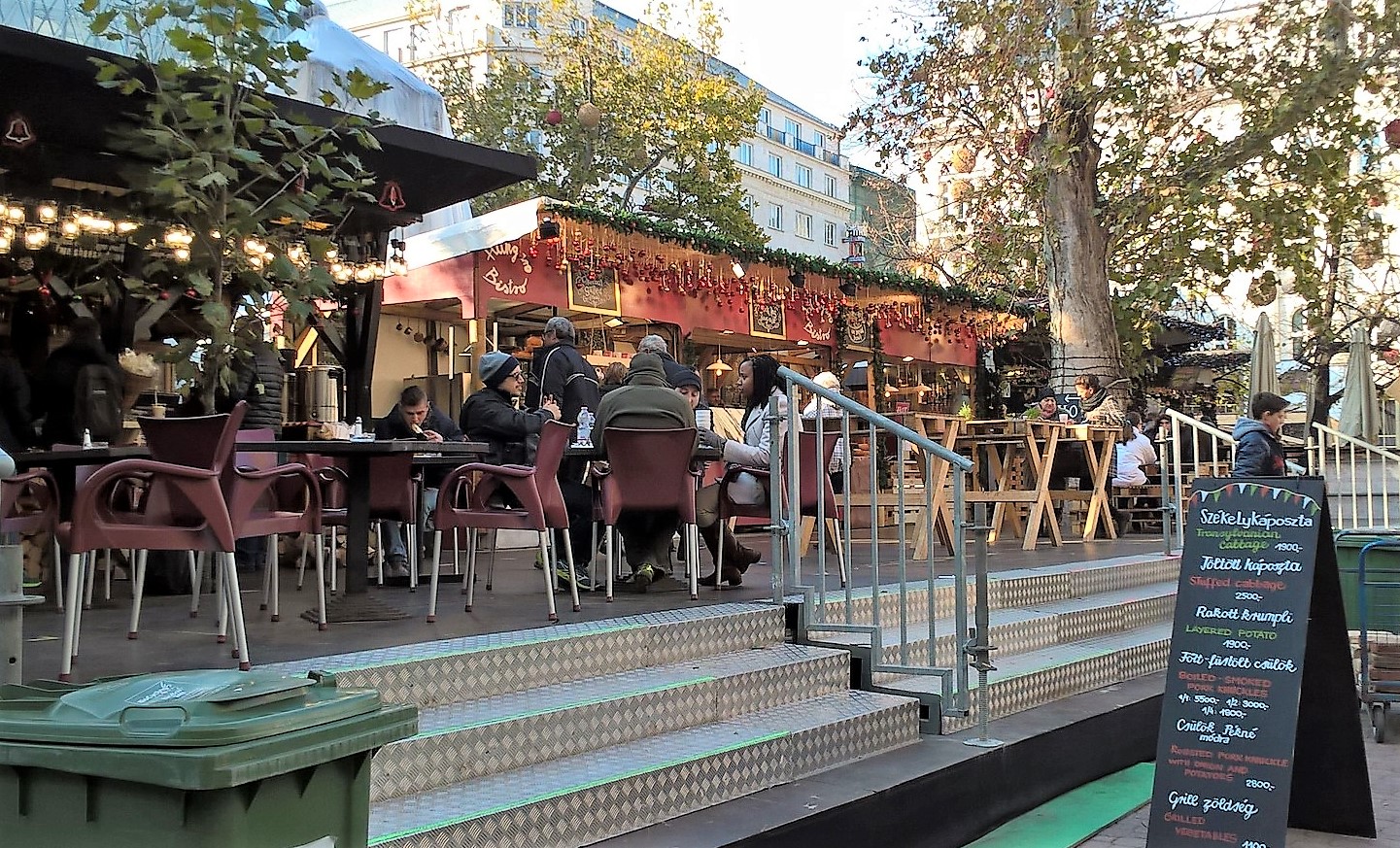
During the four weeks of Advent, several Budapest Christmas Markets bring warmth and light to the city’s historic squares.

Strolling through the markets is as much about atmosphere as it is about food. Wooden stalls glow after dark, the air smells of spices and roasted treats, and locals and visitors gather around steaming mugs to keep warm.

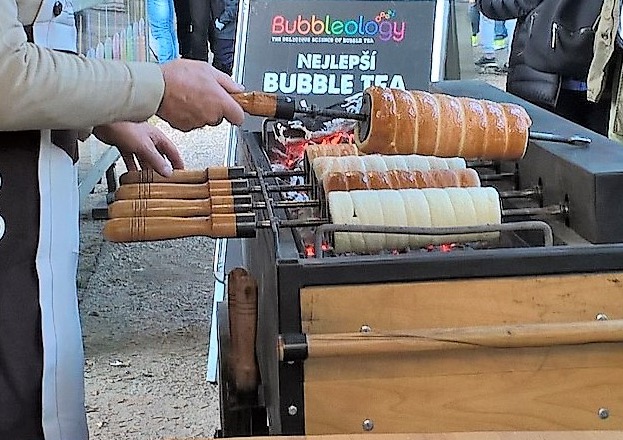
Traditional Hungarian dishes are a highlight, along with mulled wine, rich hot chocolate, and seasonal sweets. One treat you shouldn’t miss is kürtőskalács, or chimney cake — freshly baked, golden, and best enjoyed straight from the stall.

In the city center, the Christmas market in front of St. Stephen’s Basilica is especially atmospheric. In the evenings, a festive light and video projection transforms the façade of the basilica, adding a magical backdrop to the market below.

Budapest’s Christmas markets are not about rushing from stall to stall, but about slowing down, warming up, and enjoying the city in its most festive season.


For many visitors, Hungarian food comes with a single, vivid image: red, hearty, and fiery hot.
There’s some truth in that — but it’s only a small part of the story.

Hungarian cuisine is deeply shaped by history, geography, and everyday life, and once you look beyond stereotypes, it reveals an unexpectedly rich and varied food culture.

Paprika: More Than Just Heat

Paprika is, without question, the defining spice of Hungarian cooking. Sweet, smoked, mild, or hot, it brings colour and depth rather than just heat — and it’s used with far more nuance than most people expect.

Interestingly, this essential ingredient only became central to Hungarian cuisine after the Ottoman period. What began as an imported spice gradually turned into a national symbol, shaping flavors that today feel inseparable from Hungarian identity.

A Cuisine Best Discovered Bite by Bite

Eating Hungarian isn’t about one iconic dish — it’s about many small, memorable tastes.

When visiting Hungary, some of the most authentic food experiences happen in everyday places:

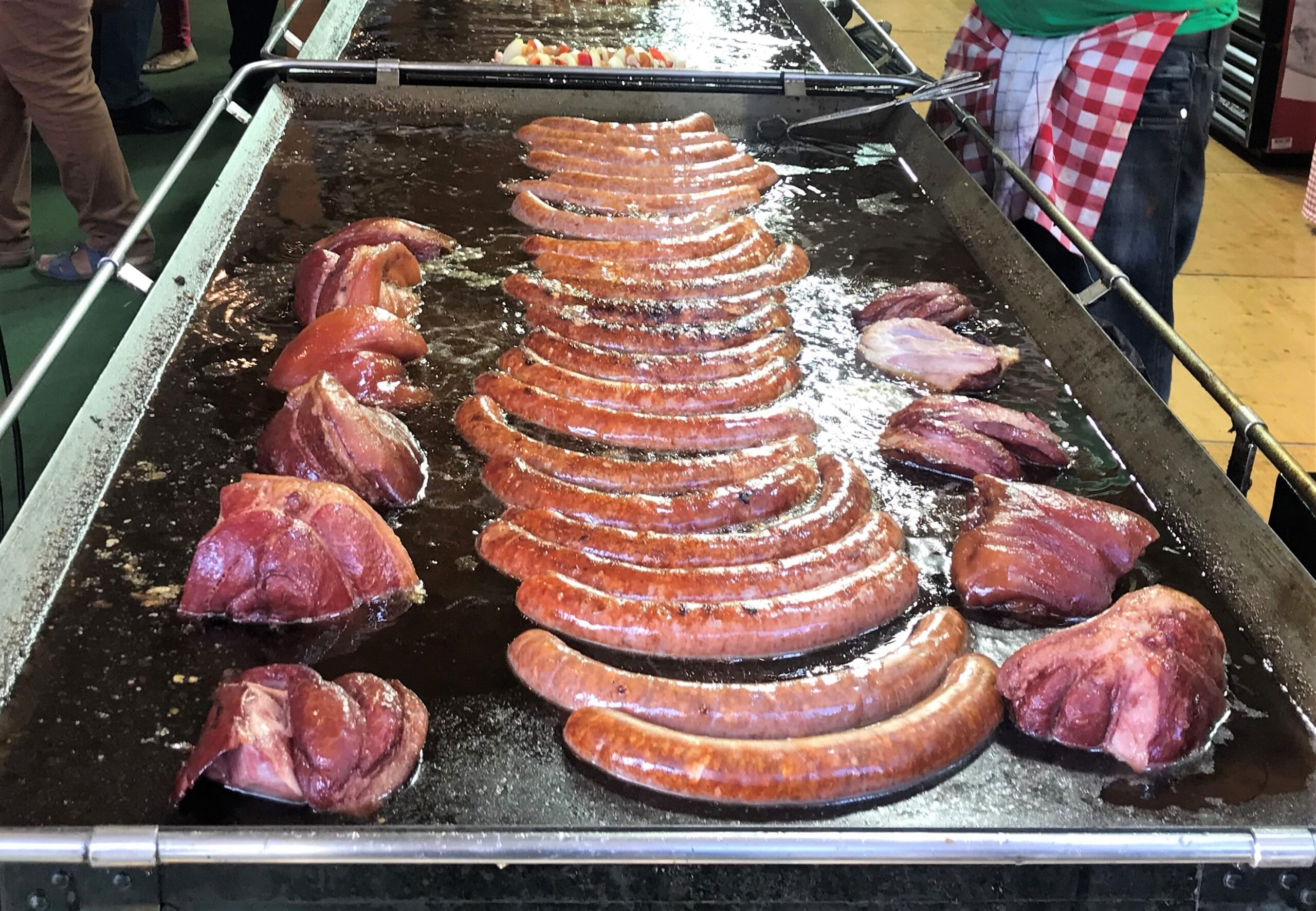
  • Butcher shops, where fresh sausages and simple hot dogs are enjoyed standing at the counter

  • Traditional cafés, some over a century old, where cakes and pastries are as important as conversation

  • Bakeries, filled with the smell of warm dough early in the morning

  • Open-air cooking, where goulash simmers slowly in a cauldron over an open fire

  • Street food favorites, like lángos — golden, deep-fried, and endlessly customizable

  • Sweet stops, from artisan ice cream to handcrafted chocolate and strudel

  • Pickled vegetables, which balance rich dishes with acidity and crunch

Each bite reflects a mix of rural traditions, urban habits, and seasonal rhythms.

Eating Also Means Drinking

There’s an old Hungarian saying: those who eat must also drink — and food here is rarely separated from wine.

Hungary’s wine culture is as old as its cuisine, with styles ranging from light and refreshing to deep and complex. Sharing food without a glass of wine nearby would feel incomplete, whether at a festive table or a simple neighbourhood spot.

Why Hungarian Food Is Best Experienced with Context

What makes Hungarian cuisine truly memorable isn’t just flavour — it’s the stories behind the dishes, the traditions, and the places where locals actually eat.

Understanding why something is cooked a certain way, when it’s traditionally eaten, and how it fits into daily life transforms food from something you consume into something you experience.

If you’re curious to explore Hungarian food beyond the obvious dishes, I always enjoy introducing guests to local flavours during my Budapest Foodie Tour.

It’s not about rushing from one stop to the next, but about tasting, understanding, and enjoying Hungarian cuisine in a relaxed, authentic way. If that sounds like your kind of experience, feel free to get in touch — I’d be happy to help you discover Budapest through its food.