Standing quietly in the heart of the Buda Castle District, near Matthias Church, the Holy Trinity Monument is one of Budapest’s most meaningful historical memorials. Rich in symbolism and emotion, it tells a story of survival, faith, and gratitude. This monument is part of my ongoing Statues of Budapest series, which explores how public sculptures reflect the city’s deepest historical experiences. A monument born from survival The Holy Trinity Monument was erected in the early 18th century by survivors of the Black Plague, one of the most devastating epidemics in European history. After enduring unimaginable loss, those who lived wanted to give thanks — and to commemorate both survival and remembrance in a lasting form. Plague columns like this one can be found across Central Europe, but the Budapest monument stands out for its location and artistic richness. Symbolism carved in stone At the center of the monument rises the Holy Trinity, surrounded by saints traditionally associated with protection against plague. Every figure and detail reflects fear, hope, and faith — emotions deeply felt by those who commissioned it. Rather than celebrating victory or power, the monument speaks quietly of vulnerability and gratitude, reminding visitors how fragile life once was, and how deeply survival was valued. Why the Holy Trinity Monument matters Today, the monument blends almost seamlessly into the postcard-perfect surroundings of Buda Castle. Yet behind its beauty lies a powerful reminder of a time when faith and community were often the only sources of comfort. It invites reflection — not only on Budapest’s past, but on resilience, memory, and the human need to give thanks after hardship. Explore more: The Holy Trinity Monument is part of my Statues of Budapest collection, featuring monuments that reveal the city’s layered history, from playful street sculptures to deeply symbolic memorials.
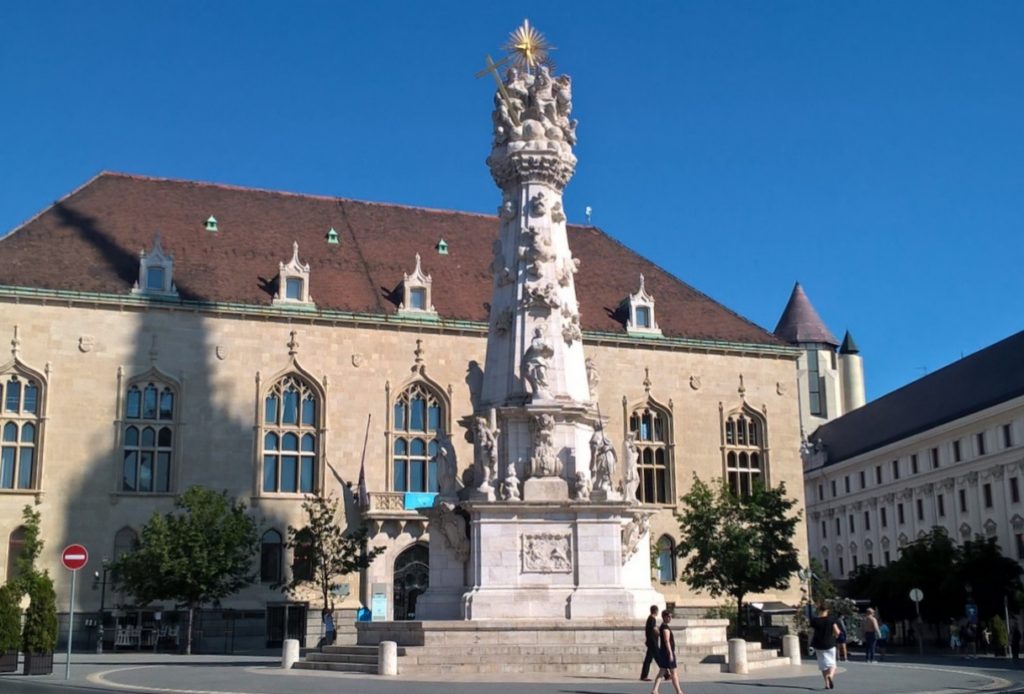
Standing quietly in the heart of the Buda Castle District, near Matthias Church, the Holy Trinity Monument is one of Budapest’s most meaningful historical memorials. Rich in symbolism and emotion, it tells a story of survival, faith, and gratitude.
This monument is part of my ongoing Statues of Budapest series, which explores how public sculptures reflect the city’s deepest historical experiences.
A monument born from survival
The Holy Trinity Monument was erected in the early 18th century by survivors of the Black Plague, one of the most devastating epidemics in European history. After enduring unimaginable loss, those who lived wanted to give thanks — and to commemorate both survival and remembrance in a lasting form.
Plague columns like this one can be found across Central Europe, but the Budapest monument stands out for its location and artistic richness.
Symbolism carved in stone
At the center of the monument rises the Holy Trinity, surrounded by saints traditionally associated with protection against plague. Every figure and detail reflects fear, hope, and faith — emotions deeply felt by those who commissioned it.
Rather than celebrating victory or power, the monument speaks quietly of vulnerability and gratitude, reminding visitors how fragile life once was, and how deeply survival was valued.
Why the Holy Trinity Monument matters
Today, the monument blends almost seamlessly into the postcard-perfect surroundings of Buda Castle. Yet behind its beauty lies a powerful reminder of a time when faith and community were often the only sources of comfort.
It invites reflection — not only on Budapest’s past, but on resilience, memory, and the human need to give thanks after hardship.
Explore more: The Holy Trinity Monument is part of my Statues of Budapest collection, featuring monuments that reveal the city’s layered history, from playful street sculptures to deeply symbolic memorials.
Holy Trinity Column commemorating plague survivors in Budapest