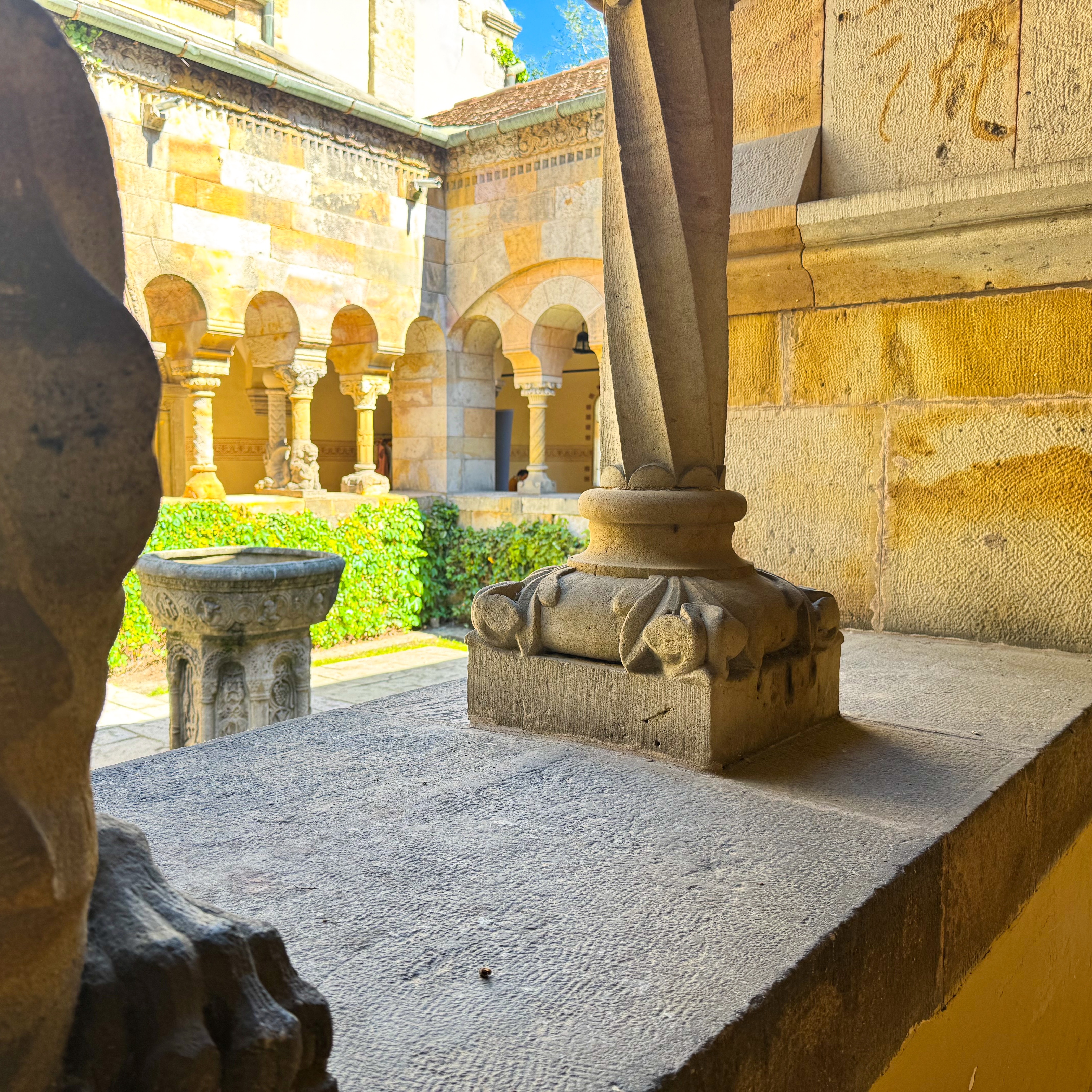
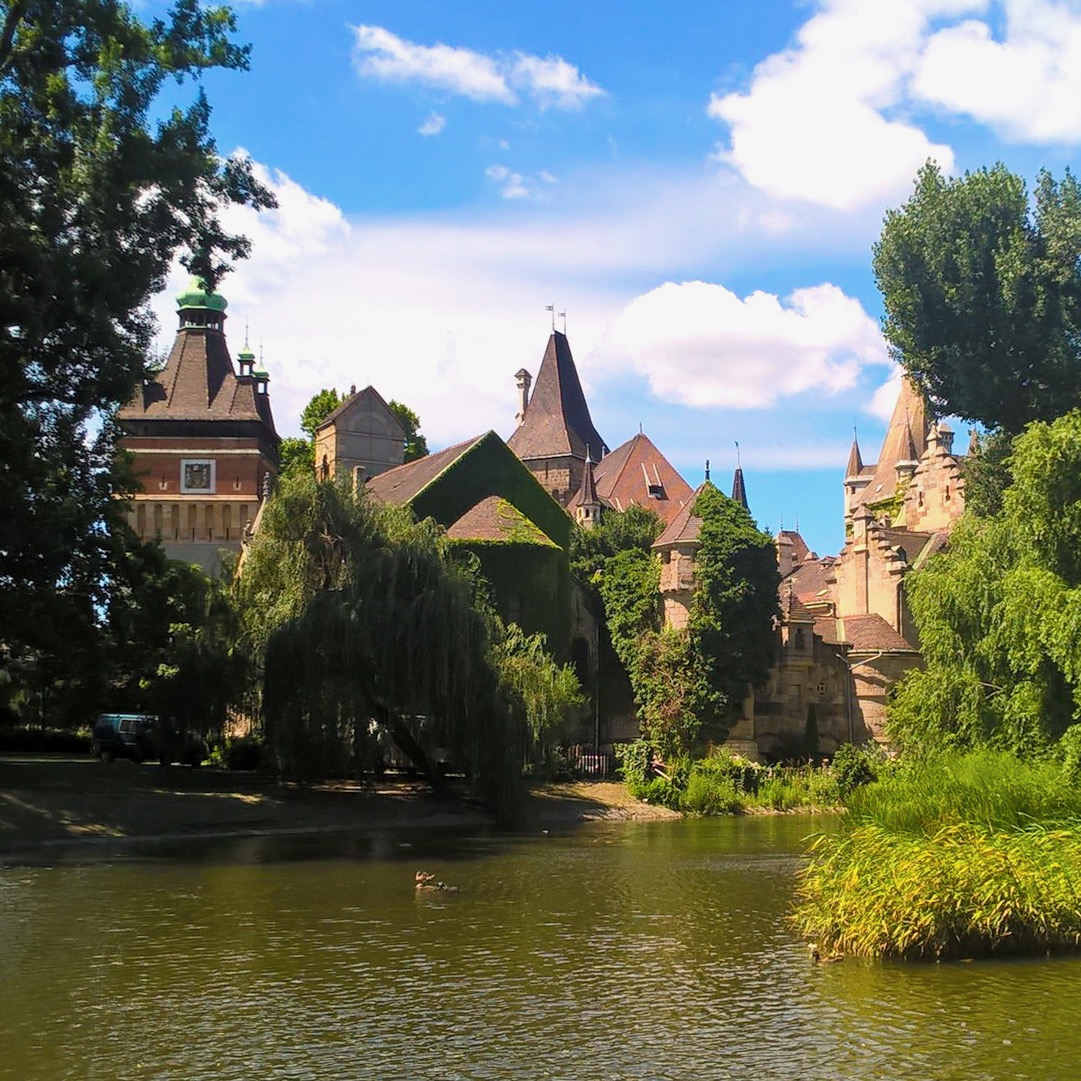
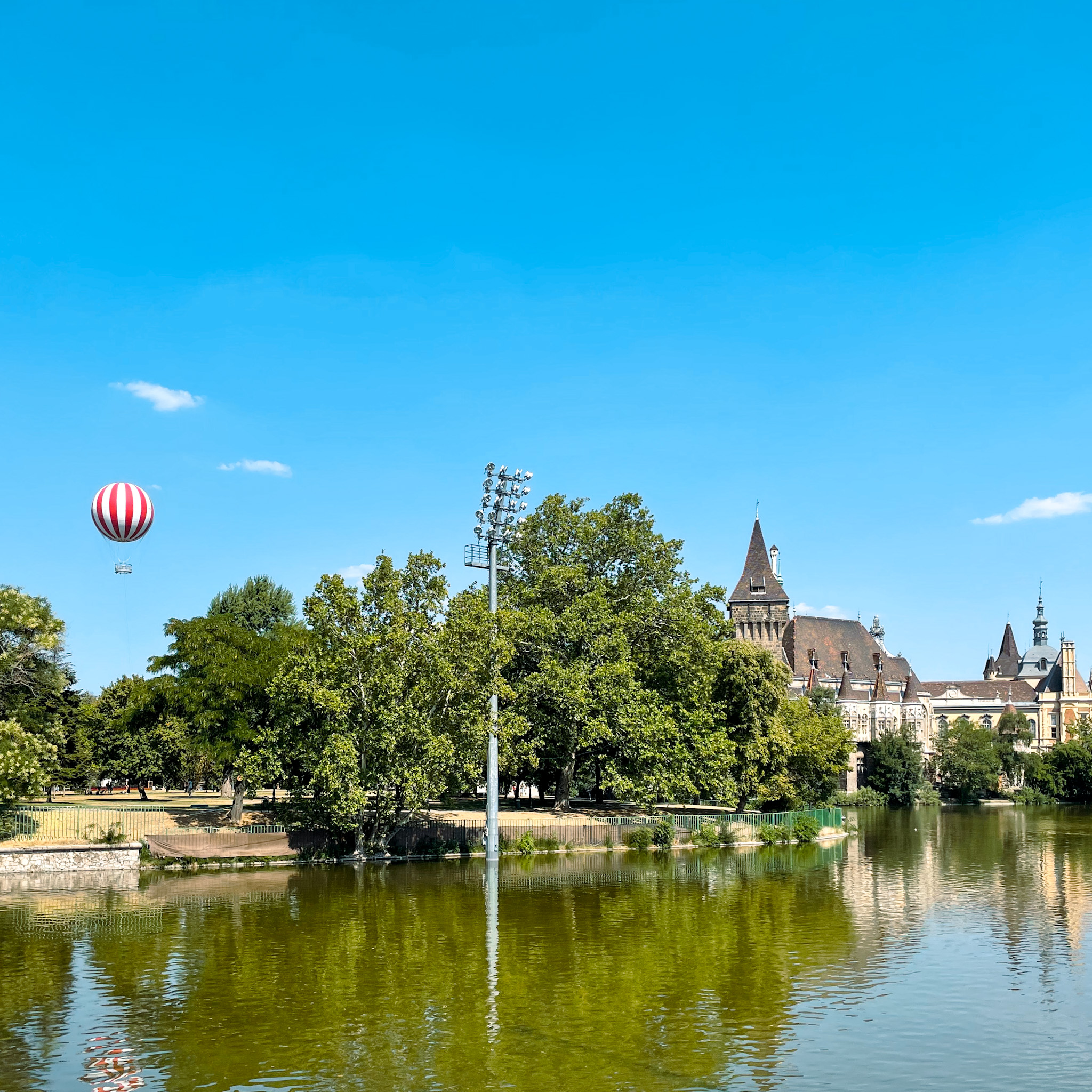
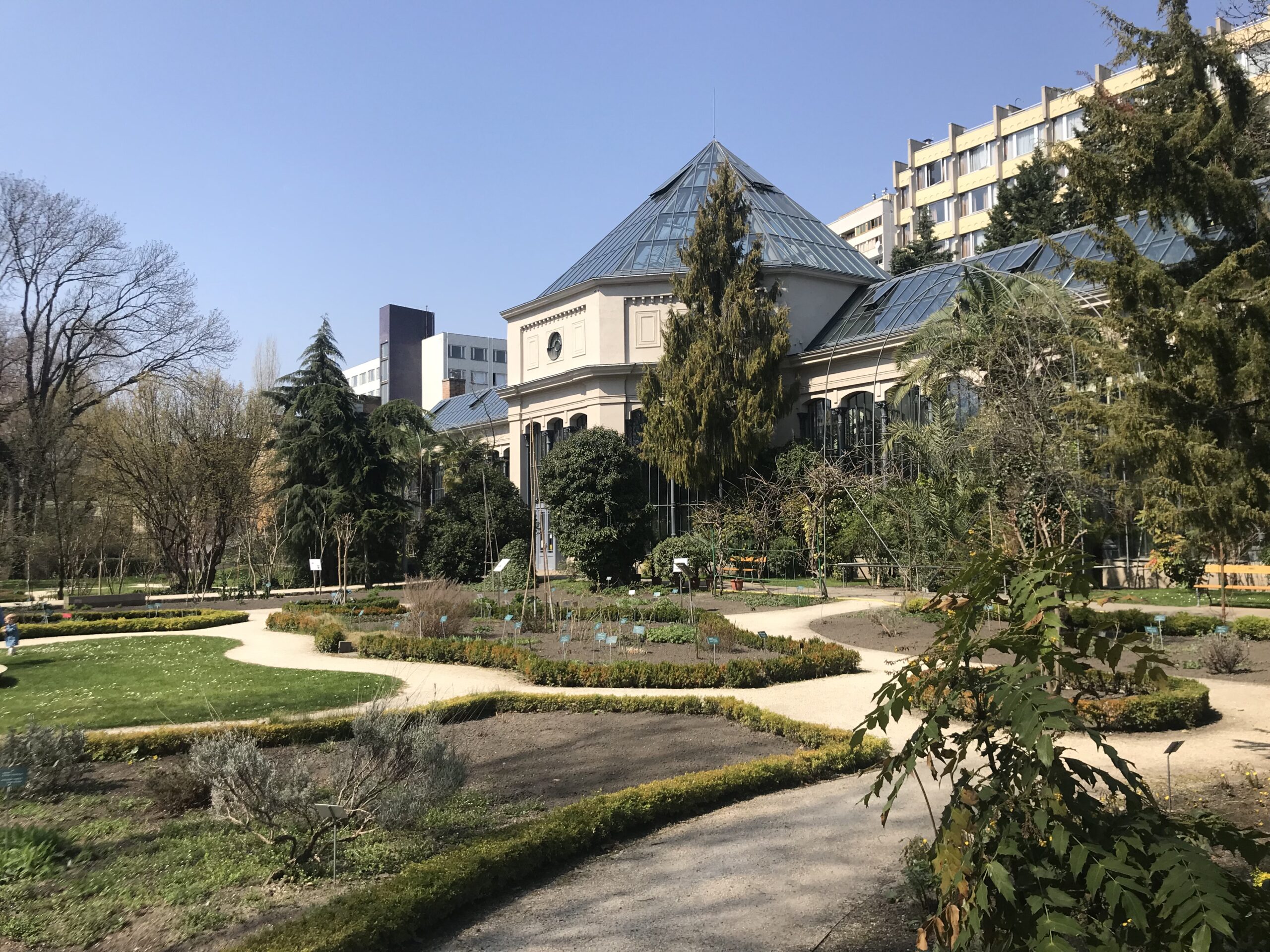
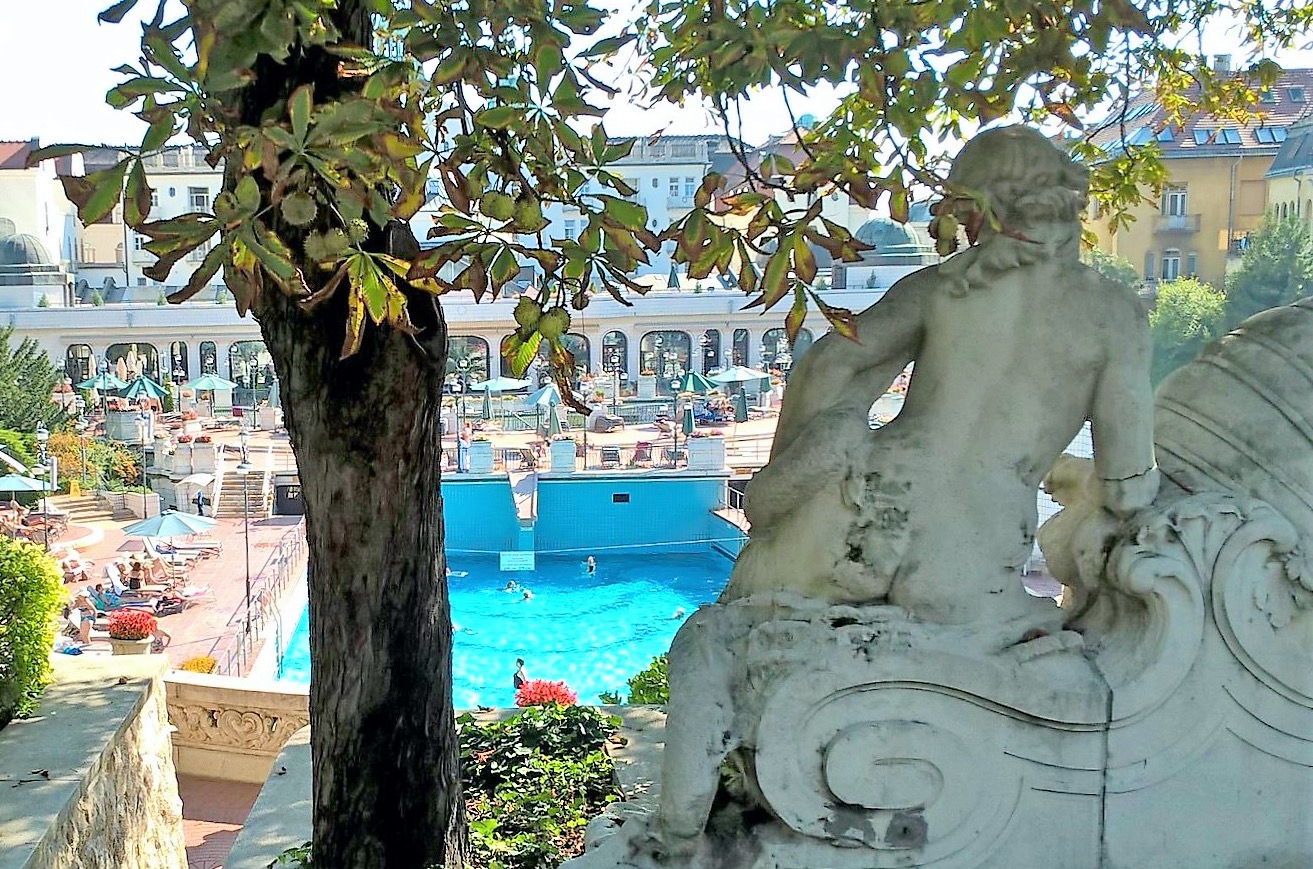
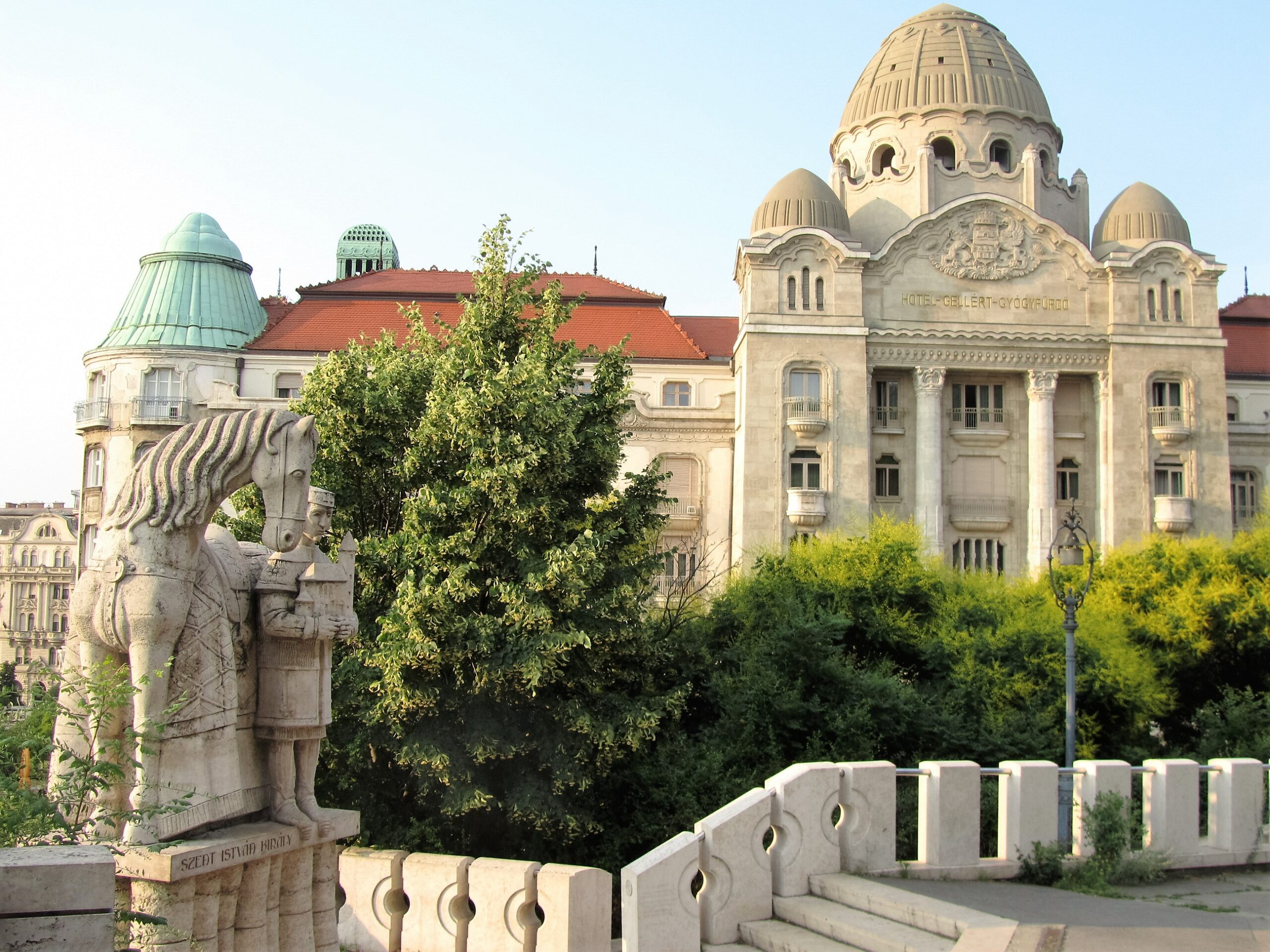
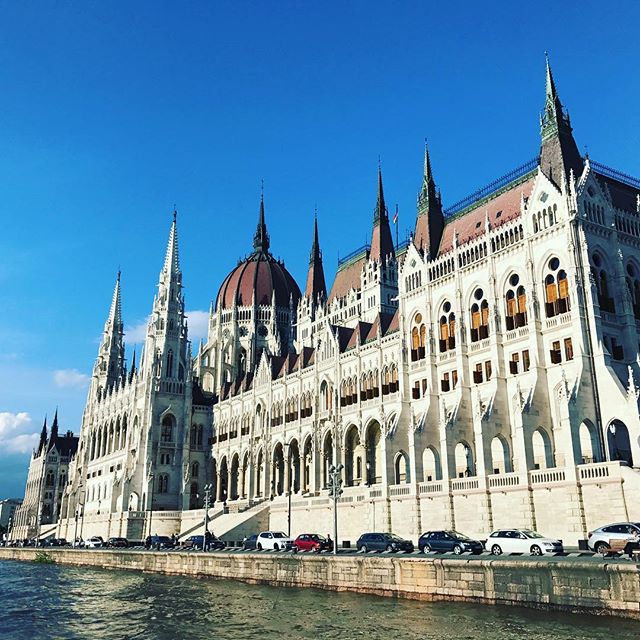
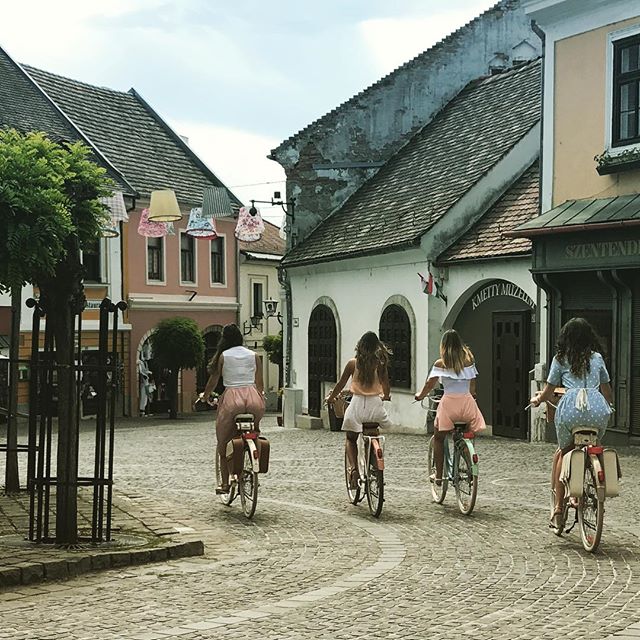
My two greatest passions are tour guiding and photography. I've been involved in photography in a way or another my entire adult life and I always try to catch the beauty I see walking around Budapest every day. Some of my pictures are on Instagram, too.
My two greatest passions are tour guiding and photography. I’ve been involved in photography in a way or another my entire adult life and I always try to catch the beauty I see walking around Budapest every day. Some of my pictures are on Instagram, too.
I'm the extremely proud winner of Travel and Hospitality Awards' Private Tour Company - of the Year 2018 in Hungary. This is an award I appreciate a lot and it's also a great feedback showing that my guests are happy with my services as their private Budapest tour guide. It's time to celebrate!
I’m the extremely proud winner of Travel and Hospitality Awards’ Private Tour Company – of the Year 2018 in Hungary. This is an award I appreciate a lot and it’s also a great feedback showing that my guests are happy with my services as their private Budapest tour guide. It’s time to celebrate!
Budapest is beautiful day and night, surprisingly it's like a totally different town when darkness falls. I enjoy very much walking around Beautiful Budapest when one can enjoy its amazing lights especially looking at them from the Buda hills or from near the Danube River.
Budapest is beautiful day and night, surprisingly it’s like a totally different town when darkness falls. I enjoy very much walking around Beautiful Budapest when one can enjoy its amazing lights especially looking at them from the Buda hills or from near the Danube River.
We decided to celebrate the National Day by hiking around the beautiful Buda hills. We hoped to enjoy some splendid view over Budapest from the top of the Elisabeth tower but couldn't wait until the fog eventually lifted. It was a beautiful day shared with many other hikers who visited the area despite the sad weather.
We decided to celebrate the National Day by hiking around the beautiful Buda hills. We hoped to enjoy some splendid view over Budapest from the top of the Elisabeth tower but couldn’t wait until the fog eventually lifted. It was a beautiful day shared with many other hikers who visited the area despite the sad weather.
Located in the heart of the Buda Castle District, Sándor Palace is one of Budapest’s most elegant yet often overlooked landmarks. Standing just steps away from Buda Castle, the palace serves as the offices of the President of Hungary, combining political importance with refined architectural beauty. From Aristocratic Home to Presidential Palace Sándor Palace was built in the early 19th century as a noble residence and soon became one of the most prestigious addresses in Buda. Over the decades, it served various purposes, including government offices and ministerial residences. The building suffered heavy damage during World War II and remained neglected for decades during the Communist era. Its careful restoration after the political changes restored the palace to its former elegance, and today it once again plays a central role in Hungarian public life. Architecture and Atmosphere The palace is a fine example of Neo-Classical architecture, with a restrained yet harmonious façade that fits perfectly into the Castle District’s historic surroundings. While the interior is not generally open to the public, the exterior alone makes it a worthwhile stop during a Castle Hill walk. One of the highlights for visitors is the changing of the guards, which takes place regularly in front of the palace and adds a ceremonial touch to the quiet square. Sándor Palace on a Guided Tour During a guided walk through the Castle District, Sándor Palace offers an excellent opportunity to talk about: Hungary’s modern political system the transition from monarchy to republic life in the Castle District past and present the contrast between royal, aristocratic, and presidential power Its location makes it an easy and natural stop on a Budapest city tour or a thematic history walk. Why Include Sándor Palace in Your Itinerary? Sándor Palace is ideal for travelers who enjoy: elegant architecture without crowds
Located in the heart of the Buda Castle District, Sándor Palace is one of Budapest’s most elegant yet often overlooked landmarks. Standing just steps away from Buda Castle, the palace serves as the offices of the President of Hungary, combining political importance with refined architectural beauty.
From Aristocratic Home to Presidential Palace
Sándor Palace was built in the early 19th century as a noble residence and soon became one of the most prestigious addresses in Buda. Over the decades, it served various purposes, including government offices and ministerial residences.
The building suffered heavy damage during World War II and remained neglected for decades during the Communist era. Its careful restoration after the political changes restored the palace to its former elegance, and today it once again plays a central role in Hungarian public life.
Architecture and Atmosphere
The palace is a fine example of Neo-Classical architecture, with a restrained yet harmonious façade that fits perfectly into the Castle District’s historic surroundings. While the interior is not generally open to the public, the exterior alone makes it a worthwhile stop during a Castle Hill walk.
One of the highlights for visitors is the changing of the guards, which takes place regularly in front of the palace and adds a ceremonial touch to the quiet square.
Sándor Palace on a Guided Tour
During a guided walk through the Castle District, Sándor Palace offers an excellent opportunity to talk about:
Hungary’s modern political system
the transition from monarchy to republic
life in the Castle District past and present
the contrast between royal, aristocratic, and presidential power
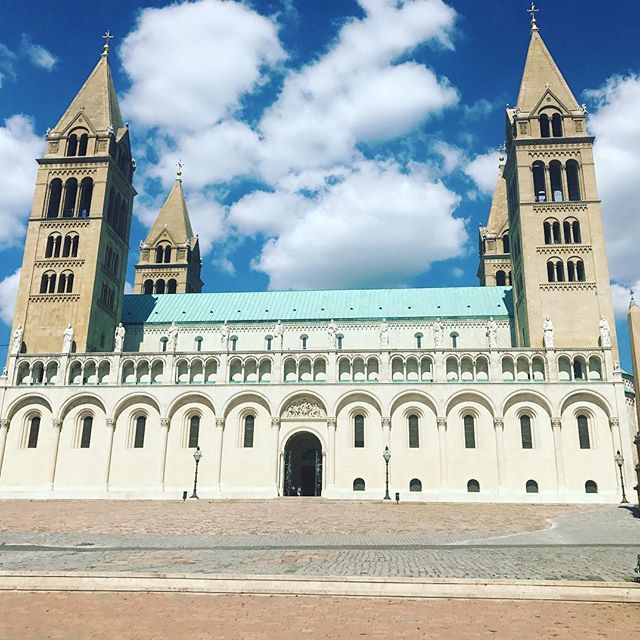
Yes, Pécs is one of my favorite destinations so I'd like to encourage you to book a tour at your earliest convenience. Once you have a look at the pictures below I'm sure you'll fall in love with the city, too. Pécs is very unique because the entire Hungarian history is on display in the city's architecture, spirit and charm. You can learn so much while just walking around the cobblestoned streets. We start the tour discovering the 1700-year-old Early Christian Necropolis, the well preserved burial chambers of the Romans fron the 4th century. We continue in the 11th century Basilica on Dóm square, an important symbol of the continuous fight of the Hungarians for Christianity. We tour the ruins of the Turkish baths, the only Turkish age mosque in Hungary that has remained intact together with its minaret and the 13th century Catholic church converted into a mosque in the 1540's and reconverted into a Catholic church in the 1680's. I'm sure you'll be surprised to notice the special combination of the Muslim crescent moon and the Christian cross topping the church, reminding us of the peaceful coexistence of different religions. We admire the harmonious Baroque architecture and also have a look at the Vasarely museum. After the city tour I take you to the Zsolnay quarter, the completely renovated and restored Zsolnay factory buildings where the most beautiful Hungarian porcelain and ceramic products have been manufactured since 1853.
Yes, Pécs is one of my favorite destinations so I’d like to encourage you to book a tour at your earliest convenience. Once you have a look at the pictures below I’m sure you’ll fall in love with the city, too.
Pécs is very unique because the entire Hungarian history is on display in the city’s architecture, spirit and charm. You can learn so much while just walking around the cobblestoned streets.
We start the tour discovering the 1700-year-old Early Christian Necropolis, the well preserved burial chambers of the Romans fron the 4th century. We continue in the 11th century Basilica on Dóm square, an important symbol of the continuous fight of the Hungarians for Christianity. We tour the ruins of the Turkish baths, the only Turkish age mosque in Hungary that has remained intact together with its minaret and the 13th century Catholic church converted into a mosque in the 1540’s and reconverted into a Catholic church in the 1680’s. I’m sure you’ll be surprised to notice the special combination of the Muslim crescent moon and the Christian cross topping the church, reminding us of the peaceful coexistence of different religions. We admire the harmonious Baroque architecture and also have a look at the Vasarely museum.
After the city tour I take you to the Zsolnay quarter, the completely renovated and restored Zsolnay factory buildings where the most beautiful Hungarian porcelain and ceramic products have been manufactured since 1853.
We visited this cute little village last week as it was part of a family research I was working on for my guests arriving from Australia. I've never been to Szentkút before but I'm very much impressed by this enormous pilgrimage site, it's just too bad it was deserted this part of the year. I understand it's much more crowded in August when open air masses are held for hundreds of thousands of people. The fountains have been famous for their healing power for some 700 years now and is declared a National Shrine since 2006.
We visited this cute little village last week as it was part of a family research I was working on for my guests arriving from Australia. I’ve never been to Szentkút before but I’m very much impressed by this enormous pilgrimage site, it’s just too bad it was deserted this part of the year. I understand it’s much more crowded in August when open air masses are held for hundreds of thousands of people.
The fountains have been famous for their healing power for some 700 years now and is declared a National Shrine since 2006.
The Hungarian "Székelykáposzta" is a great dish combining sauerkraut and pork stew, a nice meal to warm your body and soul on a cool day. Drain 2.2 pound sauerkraut in a colander, rinse it gently under cold water and let it sit in the colander for a few minutes. Put half of the cabbage in a large saucepan, put in 1.3 pound diced pork rib and cover with the other half of the cabbage. Add 4 bay leafs and water to cover it and cook gently for 2 hours on low. Heat 5.25 oz lard in a large saucepan on medium heat. Toss in 2 large chopped onions, cook them with a pinch of salt until they soften up. Remove saucepan from heat, stir in 3 teaspoon paprika powder with the onions until they’re fully coated. Put the saucepan back on the heat, turn it up to medium-high, and add 1.3 pound diced pork shoulder or leg. Cook until all the meat has browned. Once the meat is browned, add 1 tablespoon paprika paste or cream, 1 large chopped tomato and 1 diced bell pepper. Pour in water until it covers the meat, bring it up to a simmer, then reduce heat to low and cook slightly uncovered stirring occasionally for about 90 minutes. Pour the pork stew in the cabbage stew, cook on medium low for 15 minutes, stirring occasionally. Heat 1 tablespoon lard in a small saucepan on medium high. Add 2 tablespoon flour, stir until it's browned, add 1 teaspoon paprika powder. Add 1 cup cold water, mix it and add the flour mixture to the cabbage. Add half of the sour cream, bring it up to a simmer. You can serve the cabbage dish with the other half of the sour cream.
The Hungarian “Székelykáposzta” is a great dish combining sauerkraut and pork stew, a nice meal to warm your body and soul on a cool day.
Drain 2.2 pound sauerkraut in a colander, rinse it gently under cold water and let it sit in the colander for a few minutes. Put half of the cabbage in a large saucepan, put in 1.3 pound diced pork rib and cover with the other half of the cabbage. Add 4 bay leafs and water to cover it and cook gently for 2 hours on low.
Heat 5.25 oz lard in a large saucepan on medium heat. Toss in 2 large chopped onions, cook them with a pinch of salt until they soften up. Remove saucepan from heat, stir in 3 teaspoon paprika powder with the onions until they’re fully coated. Put the saucepan back on the heat, turn it up to medium-high, and add 1.3 pound diced pork shoulder or leg. Cook until all the meat has browned. Once the meat is browned, add 1 tablespoon paprika paste or cream, 1 large chopped tomato and 1 diced bell pepper. Pour in water until it covers the meat, bring it up to a simmer, then reduce heat to low and cook slightly uncovered stirring occasionally for about 90 minutes.
Pour the pork stew in the cabbage stew, cook on medium low for 15 minutes, stirring occasionally.
Heat 1 tablespoon lard in a small saucepan on medium high. Add 2 tablespoon flour, stir until it’s browned, add 1 teaspoon paprika powder. Add 1 cup cold water, mix it and add the flour mixture to the cabbage. Add half of the sour cream, bring it up to a simmer.
You can serve the cabbage dish with the other half of the sour cream.
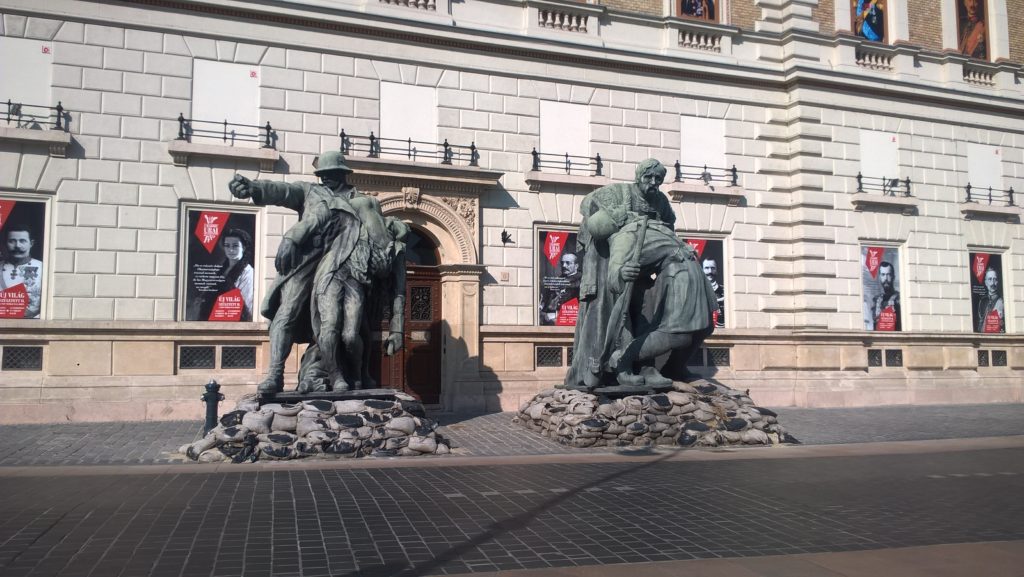
I'm starting a new series to introduce you the most famous statues of Budapest and some of the hidden gems, too. These are the beautiful monuments of Budapest we usually see on our walking or driving tours in Buda and Pest. The statues and the WW1 exhibit are near the Royal Garden Bazaar at the Danube River. I very often say that we know so much about WW2 but very little about WW1, this exhibit shows everything you need to know about the Great War which also defined the rest of the 20th century.
I’m starting a new series to introduce you the most famous statues of Budapest and some of the hidden gems, too. These are the beautiful monuments of Budapest we usually see on our walking or driving tours in Buda and Pest.
The statues and the WW1 exhibit are near the Royal Garden Bazaar at the Danube River. I very often say that we know so much about WW2 but very little about WW1, this exhibit shows everything you need to know about the Great War which also defined the rest of the 20th century.
With over 250 tours I delivered last year I can't tell how fortunate I am to show my travellers around the city and the country I love the most. This is my home, my birthplace and I'm looking forward to introducing it to even more people in 2019! I've just had a look at which my most popular tours were last year: "THE GRAND BUDAPEST" WALK: a great introduction of Budapest to first time visitors or travellers who only have one day to see the main highlights and some of the hidden gems. BUDAPEST FOODIE TOUR: as I also work for a Hungarian food magazin, I'm really happy to take you to local markets and little artisan food shops and to make sure you taste all the great Hungarian treats. JEWISH QUARTER WALK: including the visit of the world's second largest synagogue and a walk in the ghetto which is today the Soho of Budapest with great cultural and creative vibes. DANUBE BEND TOUR BY CAR: it's a relatively short drive from Budapest and in only one day I can show you three very different little Hungarian villages and the stunning view over the bend of the Danube river. EGER AND WINE TOUR BY CAR: we love our wines and we love our wine countries, Eger, the postcard-like Baroque little town is famous for the Bull's Blood, the great Hungarian red wine.
With over 250 tours I delivered last year I can’t tell how fortunate I am to show my travellers around the city and the country I love the most. This is my home, my birthplace and I’m looking forward to introducing it to even more people in 2019!
I’ve just had a look at which my most popular tours were last year:
“THE GRAND BUDAPEST” WALK: a great introduction of Budapest to first time visitors or travellers who only have one day to see the main highlights and some of the hidden gems.
BUDAPEST FOODIE TOUR: as I also work for a Hungarian food magazin, I’m really happy to take you to local markets and little artisan food shops and to make sure you taste all the great Hungarian treats.
JEWISH QUARTER WALK: including the visit of the world’s second largest synagogue and a walk in the ghetto which is today the Soho of Budapest with great cultural and creative vibes.
DANUBE BEND TOUR BY CAR: it’s a relatively short drive from Budapest and in only one day I can show you three very different little Hungarian villages and the stunning view over the bend of the Danube river.
EGER AND WINE TOUR BY CAR: we love our wines and we love our wine countries, Eger, the postcard-like Baroque little town is famous for the Bull’s Blood, the great Hungarian red wine.
Take a look at how Budapest looks like now, all white and snowy. It's such a special period of the year, as unfortunately we're getting less and less snow every year. Come and see for yourself!
Take a look at how Budapest looks like now, all white and snowy. It’s such a special period of the year, as unfortunately we’re getting less and less snow every year. Come and see for yourself!
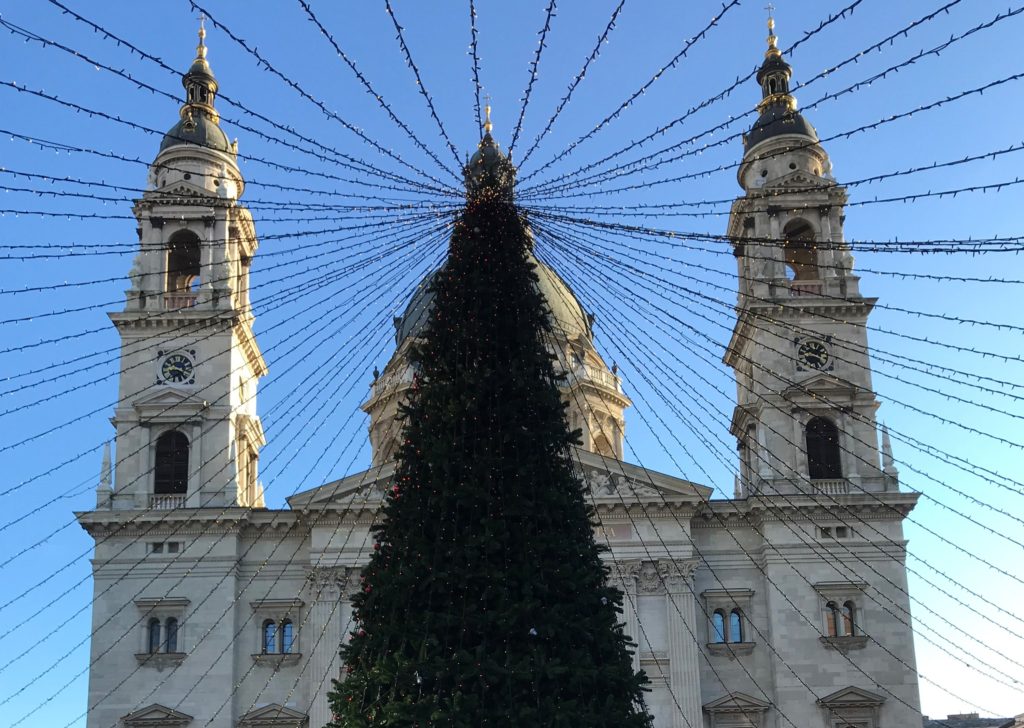
Budapest Christmas markets transform the city each winter into a festive wonderland filled with lights, seasonal flavours, and local traditions. Every year, hundreds of thousands of travellers vote for their favourite Christmas markets across Europe. In 2018, one of Budapest’s most beloved festive spots received an exceptional honour: the Advent Feast at St. Stephen’s Basilica was voted the second best Christmas market in Europe by European Best Destinations. Anyone who has visited this market will immediately understand why it ranked so highly. Set against the stunning backdrop of the Basilica, the atmosphere is unmistakably festive. The market focuses on what Budapest does best at Christmas: comforting seasonal food and drinks, beautifully crafted local handicrafts, and a warm, welcoming ambiance in the heart of the city. One of the highlights is the spectacular video mapping show projected onto the main façade of St. Stephen’s Basilica after dark. The illuminated visuals transform the square into a magical winter scene and make this market especially memorable in the evening hours. And of course, no visit would be complete without sampling traditional treats. Be sure to try a cup of local hot wine and freshly baked chimney cake (kürtőskalács)—arguably the most irresistible flavours of Budapest’s Christmas markets.
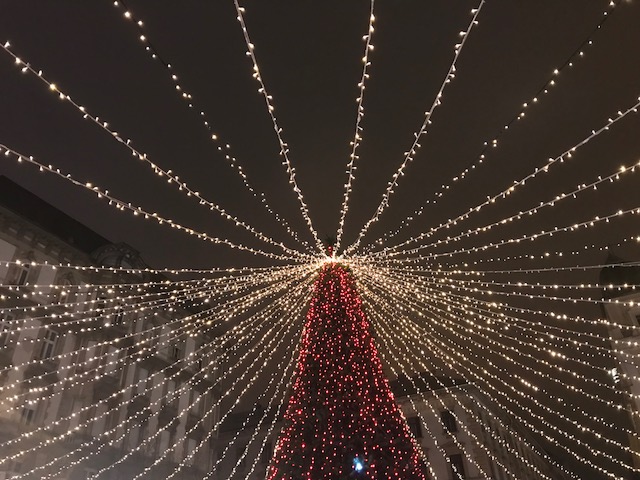
Budapest Christmas markets transform the city each winter into a festive wonderland filled with lights, seasonal flavours, and local traditions.
Every year, hundreds of thousands of travellers vote for their favourite Christmas markets across Europe. In 2018, one of Budapest’s most beloved festive spots received an exceptional honour: the Advent Feast at St. Stephen’s Basilica was voted the second best Christmas market in Europe by European Best Destinations.
Anyone who has visited this market will immediately understand why it ranked so highly. Set against the stunning backdrop of the Basilica, the atmosphere is unmistakably festive. The market focuses on what Budapest does best at Christmas: comforting seasonal food and drinks, beautifully crafted local handicrafts, and a warm, welcoming ambiance in the heart of the city.
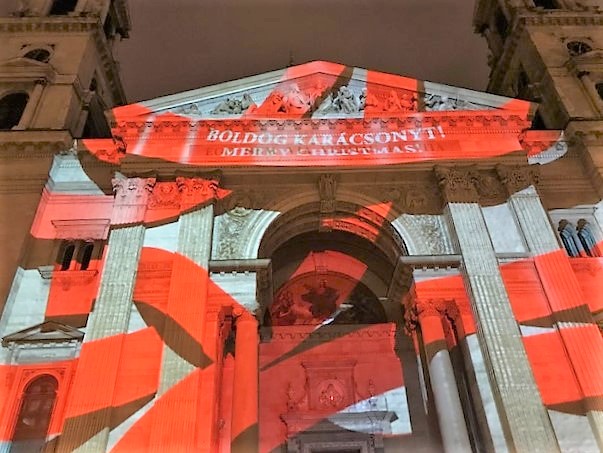
One of the highlights is the spectacular video mapping show projected onto the main façade of St. Stephen’s Basilica after dark. The illuminated visuals transform the square into a magical winter scene and make this market especially memorable in the evening hours.
And of course, no visit would be complete without sampling traditional treats. Be sure to try a cup of local hot wine and freshly baked chimney cake (kürtőskalács)—arguably the most irresistible flavours of Budapest’s Christmas markets.
Few visitors realise that the Buda caves in Budapest form an extensive underground labyrinth, revealing a hidden, quieter side of the city beneath the hills. One of the things I love most about guiding in Budapest is when travellers ask for something different—experiences that go beyond the classic sightseeing routes. On one such occasion, our curiosity led us underground, into the fascinating cave system hidden beneath the Buda Hills. We visited Pálvölgyi Cave, the longest cave in Budapest and one of its most surprising natural treasures. The guided visit lasts around 60 minutes and takes you through a labyrinth of passages filled with spectacular stone formations. Along the way, you’ll see delicate dripstones, dramatic shapes sculpted over thousands of years, and even the fossilized imprints of ancient seashells—silent reminders that this area was once underwater. Beyond its geological wonders, the caves have another very practical appeal: the temperature remains a constant 11°C (52°F) all year round. That makes it a wonderfully cool escape during Budapest’s hot summers and a surprisingly comfortable option in winter, when the caves feel almost warm compared to the chilly streets above. Exploring the Buda caves is not part of standard city tours—but it can be a memorable addition to a custom-designed Budapest experience. For travellers who enjoy nature, light adventure, or simply seeing a lesser-known side of the city, going underground offers a completely different perspective on Budapest.
Few visitors realise that the Buda caves in Budapest form an extensive underground labyrinth, revealing a hidden, quieter side of the city beneath the hills.
One of the things I love most about guiding in Budapest is when travellers ask for something different—experiences that go beyond the classic sightseeing routes. On one such occasion, our curiosity led us underground, into the fascinating cave system hidden beneath the Buda Hills.
We visited Pálvölgyi Cave, the longest cave in Budapest and one of its most surprising natural treasures. The guided visit lasts around 60 minutes and takes you through a labyrinth of passages filled with spectacular stone formations. Along the way, you’ll see delicate dripstones, dramatic shapes sculpted over thousands of years, and even the fossilized imprints of ancient seashells—silent reminders that this area was once underwater.
Beyond its geological wonders, the caves have another very practical appeal: the temperature remains a constant 11°C (52°F) all year round. That makes it a wonderfully cool escape during Budapest’s hot summers and a surprisingly comfortable option in winter, when the caves feel almost warm compared to the chilly streets above.
Exploring the Buda caves is not part of standard city tours—but it can be a memorable addition to a custom-designed Budapest experience. For travellers who enjoy nature, light adventure, or simply seeing a lesser-known side of the city, going underground offers a completely different perspective on Budapest.
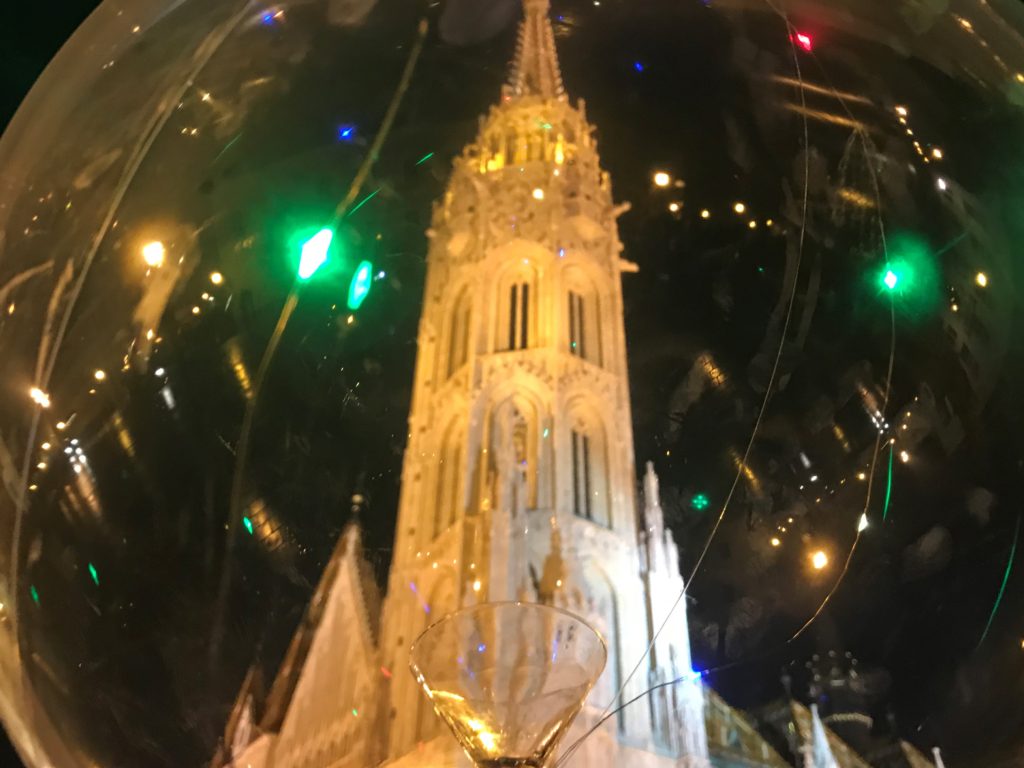
Perched high above the Danube on Castle Hill, Fisherman’s Bastion is one of Budapest’s most iconic and enchanting landmarks. With its fairytale-like towers, sweeping terraces, and breathtaking views over the Pest side of the city, it’s a place that leaves a lasting impression on first-time visitors and returning travellers alike. What is Fisherman’s Bastion? Despite its castle-like appearance, Fisherman’s Bastion was never built for defense. Constructed between 1895 and 1902, it replaced part of the medieval town walls of Buda and was designed as a panoramic lookout terrace. Its Neo-Romanesque style was chosen to complement the neighbouring Matthias Church, creating one of the most beautiful architectural ensembles in the city. The Bastion features seven ornate towers, symbolizing the seven Hungarian tribes who settled in the Carpathian Basin in 896 — a key moment in Hungarian history. Why is it called Fisherman’s Bastion? The name comes from the guild of fishermen who, in the Middle Ages, were responsible for defending this section of the city walls. Today, instead of guarding Budapest, the Bastion offers one of the best viewpoints in the city — especially towards the Hungarian Parliament Building across the river. The views From the terraces, you’ll enjoy a stunning panorama of: the Danube River the Pest skyline Margaret Island the Parliament building bridges stretching across the city It’s beautiful at any time of day, but the atmosphere changes constantly with the light, weather, and seasons — which is why I never get tired of visiting it. Visiting tips from a local guide Upper terrace: Part of the Bastion requires a small entrance fee, and I highly recommend going up — the view is worth it. Tickets can be bought on-site or online. Best time to visit: Early morning is the quietest and most magical, especially if you love photography.
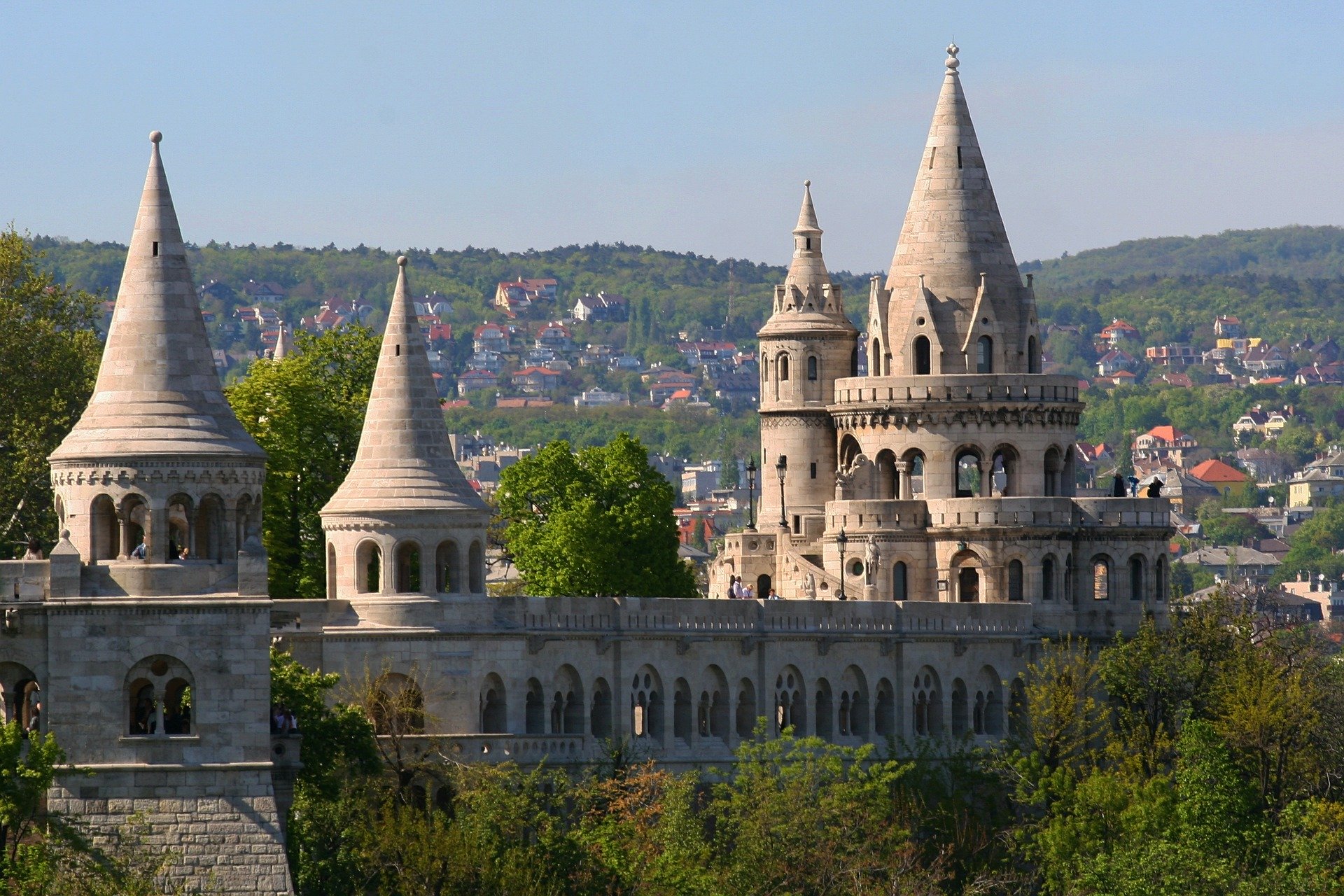
Perched high above the Danube on Castle Hill, Fisherman’s Bastion is one of Budapest’s most iconic and enchanting landmarks. With its fairytale-like towers, sweeping terraces, and breathtaking views over the Pest side of the city, it’s a place that leaves a lasting impression on first-time visitors and returning travellers alike.
What is Fisherman’s Bastion?
Despite its castle-like appearance, Fisherman’s Bastion was never built for defense. Constructed between 1895 and 1902, it replaced part of the medieval town walls of Buda and was designed as a panoramic lookout terrace. Its Neo-Romanesque style was chosen to complement the neighbouring Matthias Church, creating one of the most beautiful architectural ensembles in the city.
The Bastion features seven ornate towers, symbolizing the seven Hungarian tribes who settled in the Carpathian Basin in 896 — a key moment in Hungarian history.
Why is it called Fisherman’s Bastion?
The name comes from the guild of fishermen who, in the Middle Ages, were responsible for defending this section of the city walls. Today, instead of guarding Budapest, the Bastion offers one of the best viewpoints in the city — especially towards the Hungarian Parliament Building across the river.
The views
From the terraces, you’ll enjoy a stunning panorama of:
the Danube River
the Pest skyline
Margaret Island
the Parliament building
bridges stretching across the city
It’s beautiful at any time of day, but the atmosphere changes constantly with the light, weather, and seasons — which is why I never get tired of visiting it.
Visiting tips from a local guide
Upper terrace: Part of the Bastion requires a small entrance fee, and I highly recommend going up — the view is worth it. Tickets can be bought on-site or online.
Best time to visit:Early morning is the quietest and most magical, especially if you love photography.
Accessibility: Easy to reach on foot within the Buda Castle District, or as part of a guided walk or driving tour.
How to experience it with me
Fisherman’s Bastion is a highlight of my Buda Castle Walk, where I share not only the history, but also the hidden details, legends, and best photo angles. It can also be included in my private Budapest city tours by car, making it an effortless and memorable stop.
If you’re visiting Budapest for the first time, Fisherman’s Bastion is truly a must-see — not just for the views, but for the atmosphere, history, and sense of timeless beauty it offers.
Budapest chairlift autumn experiences are at their most beautiful when the forests of the Buda Hills glow with warm seasonal colours. Autumn is one of my favourite seasons in Budapest, especially when a custom tour takes us slightly away from the city centre and closer to nature. Chairlifting to the Elizabeth Lookout Tower on top of St. John’s Hill is always a memorable experience — but in fall, it becomes truly magical. As the chairlift gently carries you above the forest of Budapest, the city slowly fades away and is replaced by layers of gold, rust, and deep green. The ride itself is calm and almost meditative, making it ideal for travellers who enjoy slower moments and unique perspectives. At the top, the reward is more than worth it. From the lookout tower, you can enjoy panoramic views over Budapest, stretching across Buda, Pest, and the winding Danube. On clear autumn days, the light is softer, the air is crisp, and the city feels wonderfully peaceful from above. This experience is especially popular with nature lovers, photographers, and guests looking for something a little different from classic sightseeing. It fits beautifully into a customised Budapest tour, combining fresh air, gentle walking, and one of the best viewpoints in the city. Sometimes, the most memorable moments in Budapest happen when we slow down, rise above the city, and simply enjoy the view.
Budapest chairlift autumn experiences are at their most beautiful when the forests of the Buda Hills glow with warm seasonal colours.
Autumn is one of my favourite seasons in Budapest, especially when a custom tour takes us slightly away from the city centre and closer to nature. Chairlifting to the Elizabeth Lookout Tower on top of St. John’s Hill is always a memorable experience — but in fall, it becomes truly magical.
As the chairlift gently carries you above the forest of Budapest, the city slowly fades away and is replaced by layers of gold, rust, and deep green. The ride itself is calm and almost meditative, making it ideal for travellers who enjoy slower moments and unique perspectives.
At the top, the reward is more than worth it. From the lookout tower, you can enjoy panoramic views over Budapest, stretching across Buda, Pest, and the winding Danube. On clear autumn days, the light is softer, the air is crisp, and the city feels wonderfully peaceful from above.
This experience is especially popular with nature lovers, photographers, and guests looking for something a little different from classic sightseeing. It fits beautifully into a customised Budapest tour, combining fresh air, gentle walking, and one of the best viewpoints in the city.