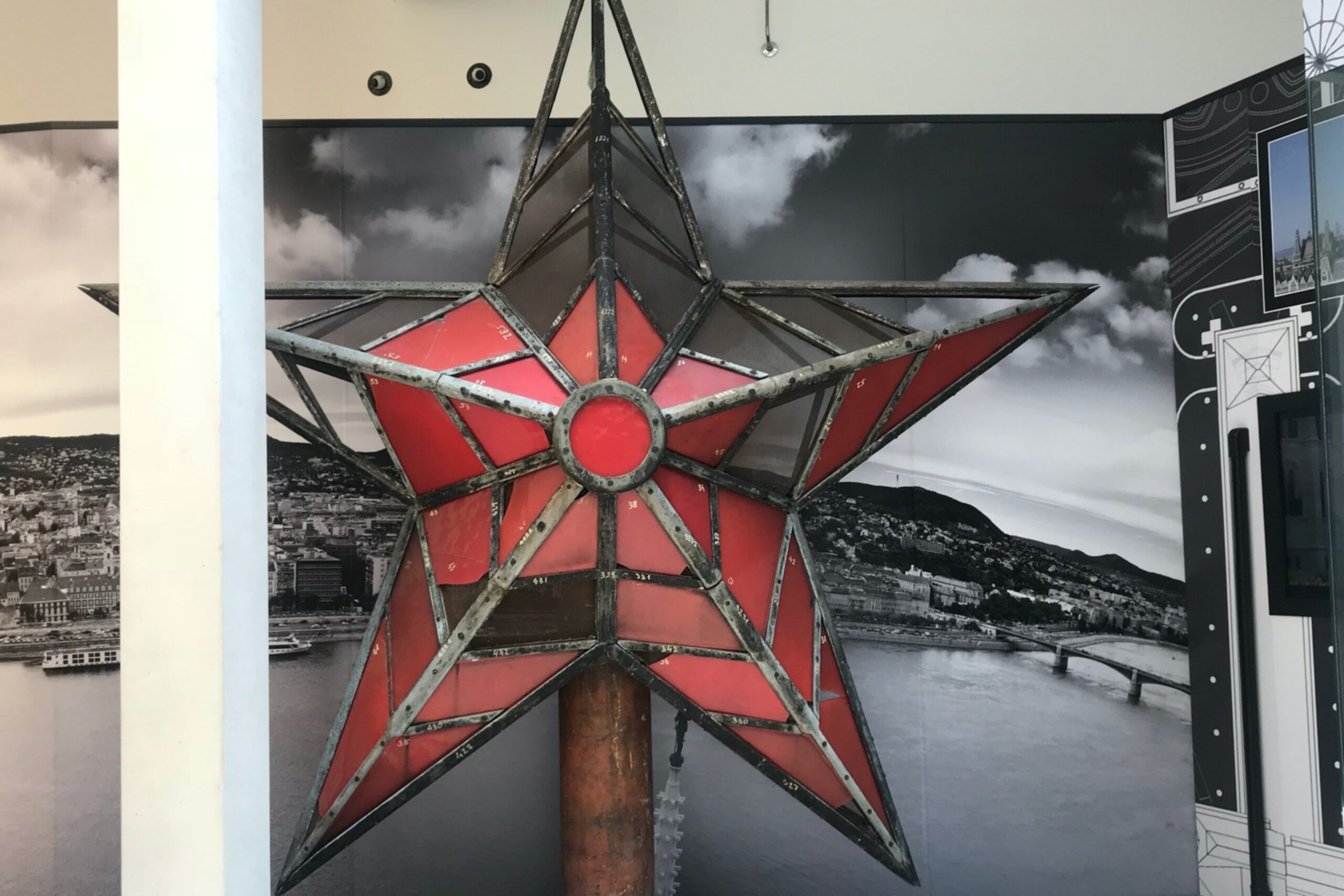
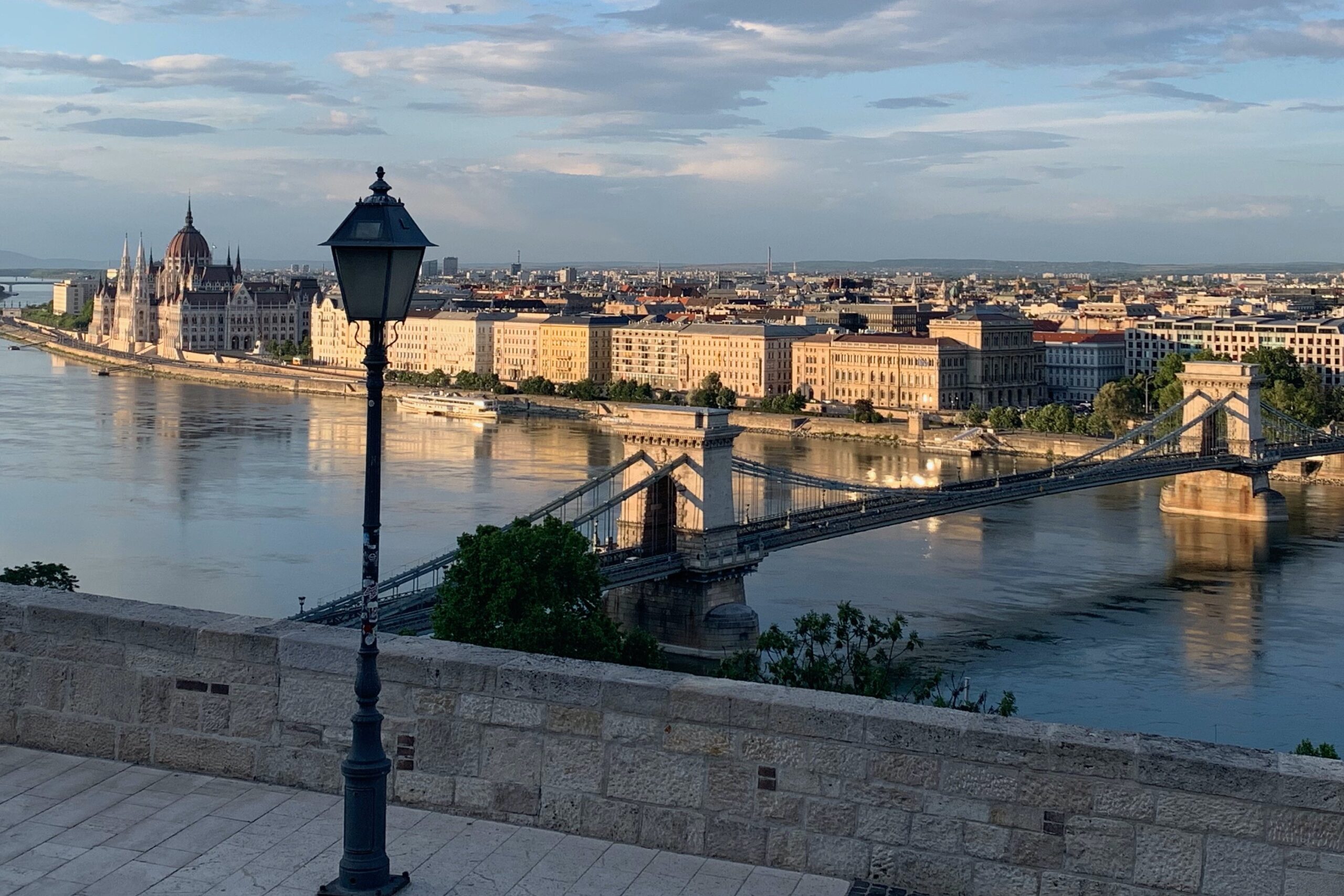
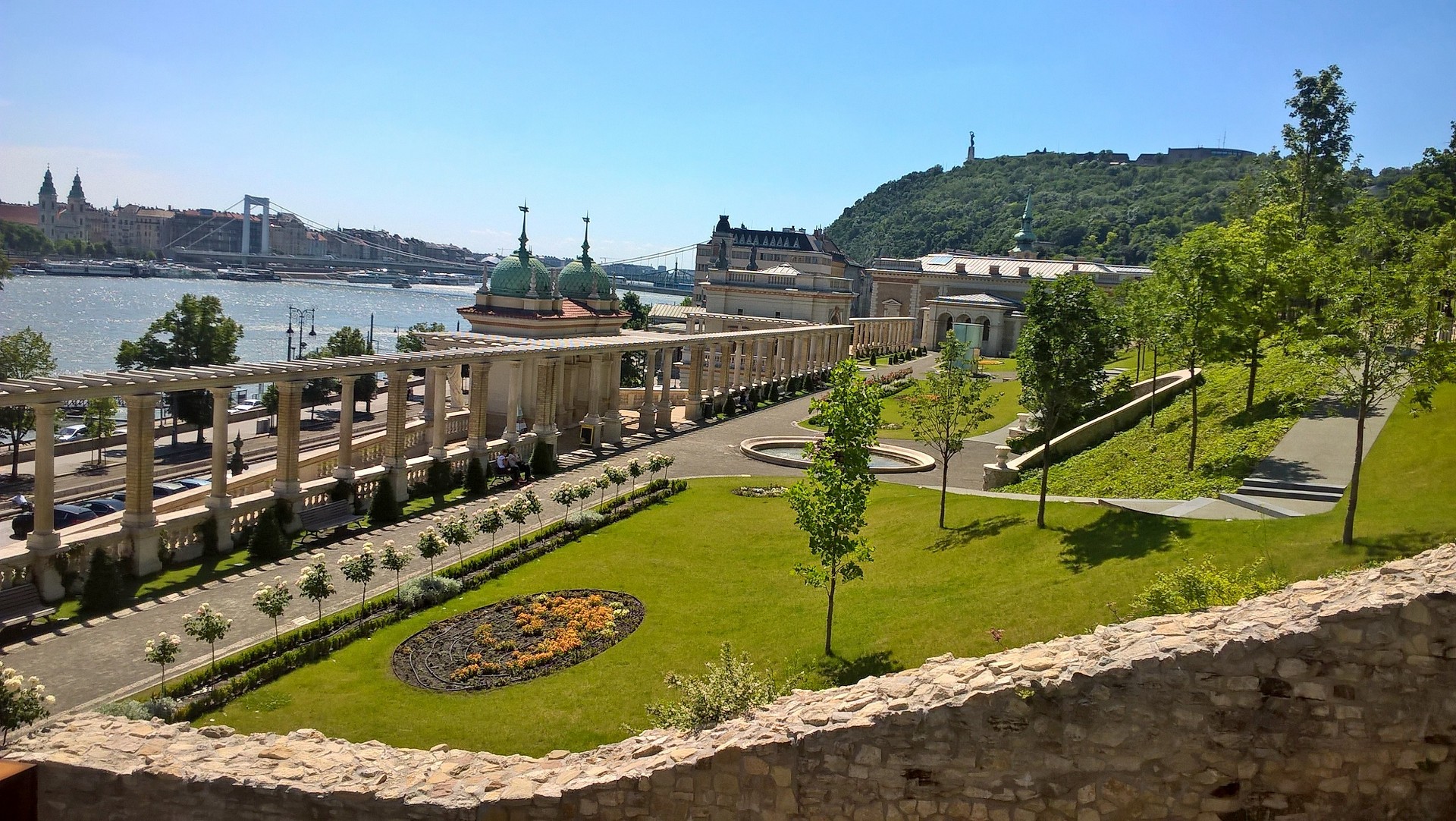
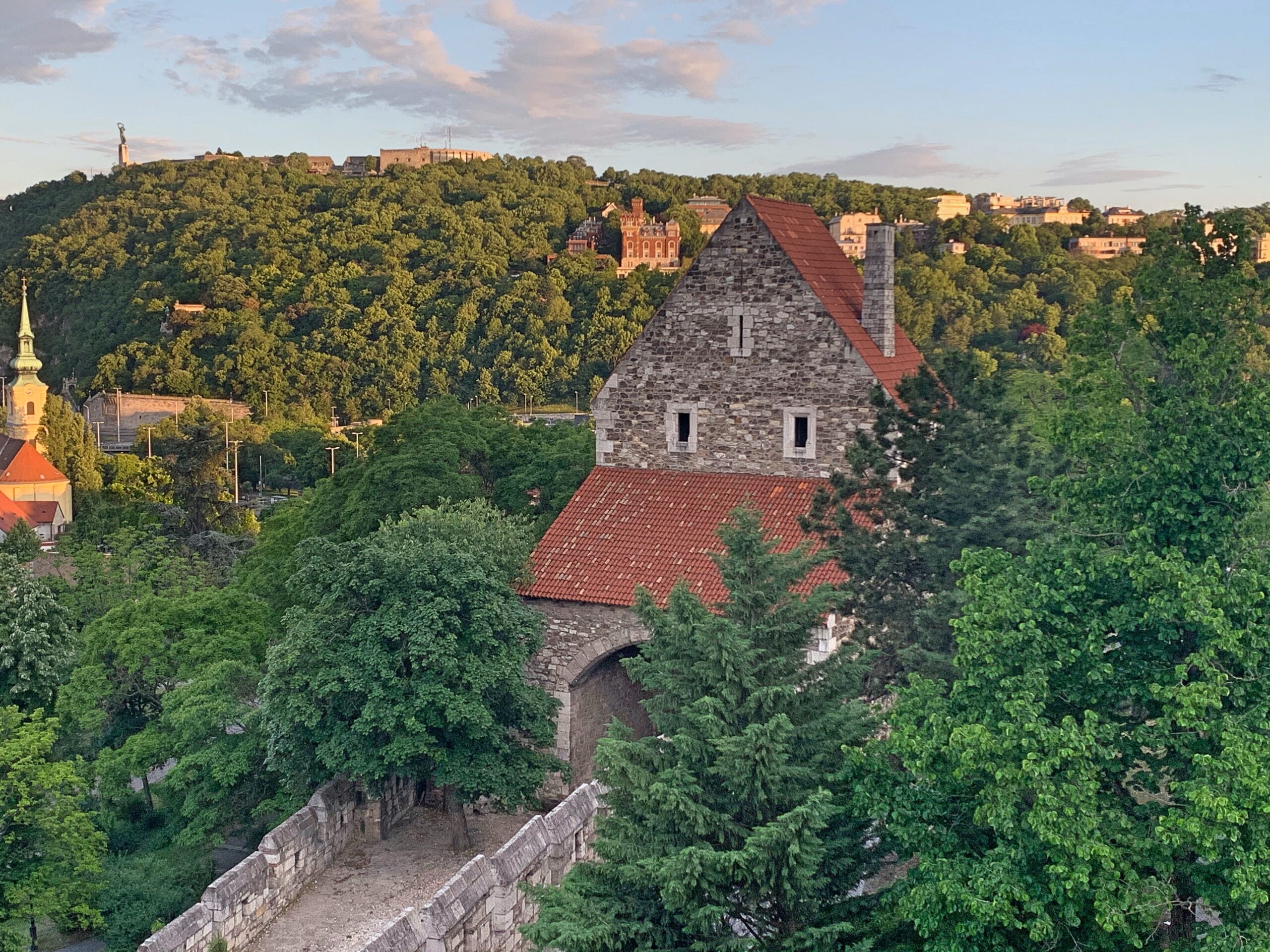
The Buda Castle District is the oldest part of Buda and one of the most atmospheric areas of Budapest. Built high on Castle Hill, it has been the political, religious, and strategic heart of the city since the Middle Ages. Long before Budapest became a unified capital, Buda was already an important royal center. By the mid-13th century, the hilltop was crowned with fortifications, a medieval town, and a royal residence — setting the foundations for the historic district we explore today.

Not a “Real” Castle — and That’s the Story

One small but important clarification often surprises visitors: the Buda Castle District is not a single intact medieval castle.

The original Gothic and Renaissance royal palace — once home to Hungarian kings — was largely destroyed during the wars of the 17th century. What survives today are fragments, foundations, and stories. Some of these remains can be seen in the Budapest History Museum, while much of the medieval castle still lies hidden beneath the ground.

What you see above ground today is mostly the result of later rebuilding — especially the grand 18th-century Baroque palace, which now dominates the hilltop.

Walking Through Centuries

One of the best ways to experience the district is simply on foot. As you walk uphill along former ramparts and quiet lanes, the layers of history gradually reveal themselves.

The Baroque palace complex today houses major cultural institutions, including the Hungarian National Gallery, while the surrounding streets form the historic old town of Buda.

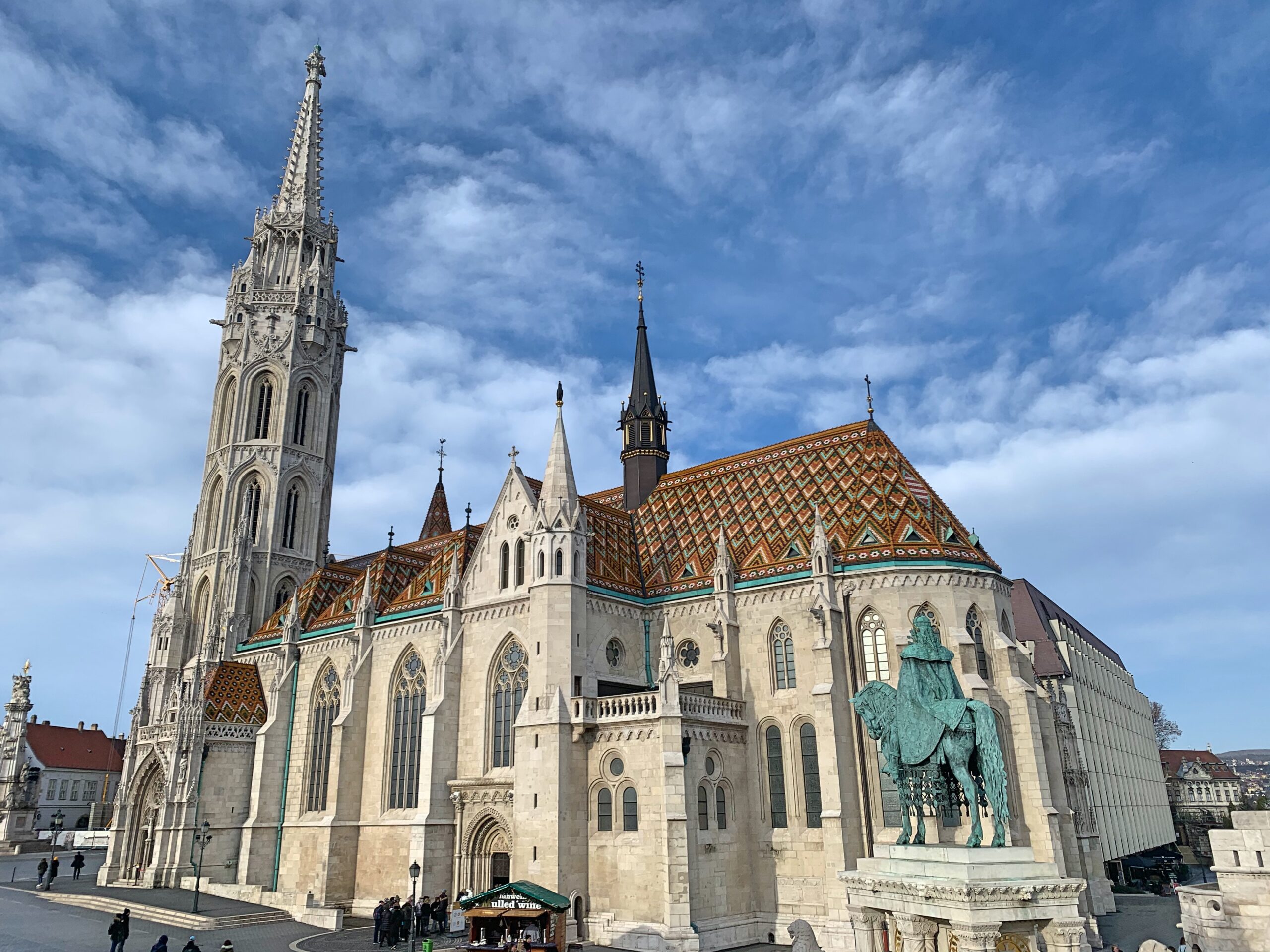
Cobblestoned streets, pastel façades, and hidden courtyards lead naturally toward one of the district’s most iconic landmarks: Matthias Church.

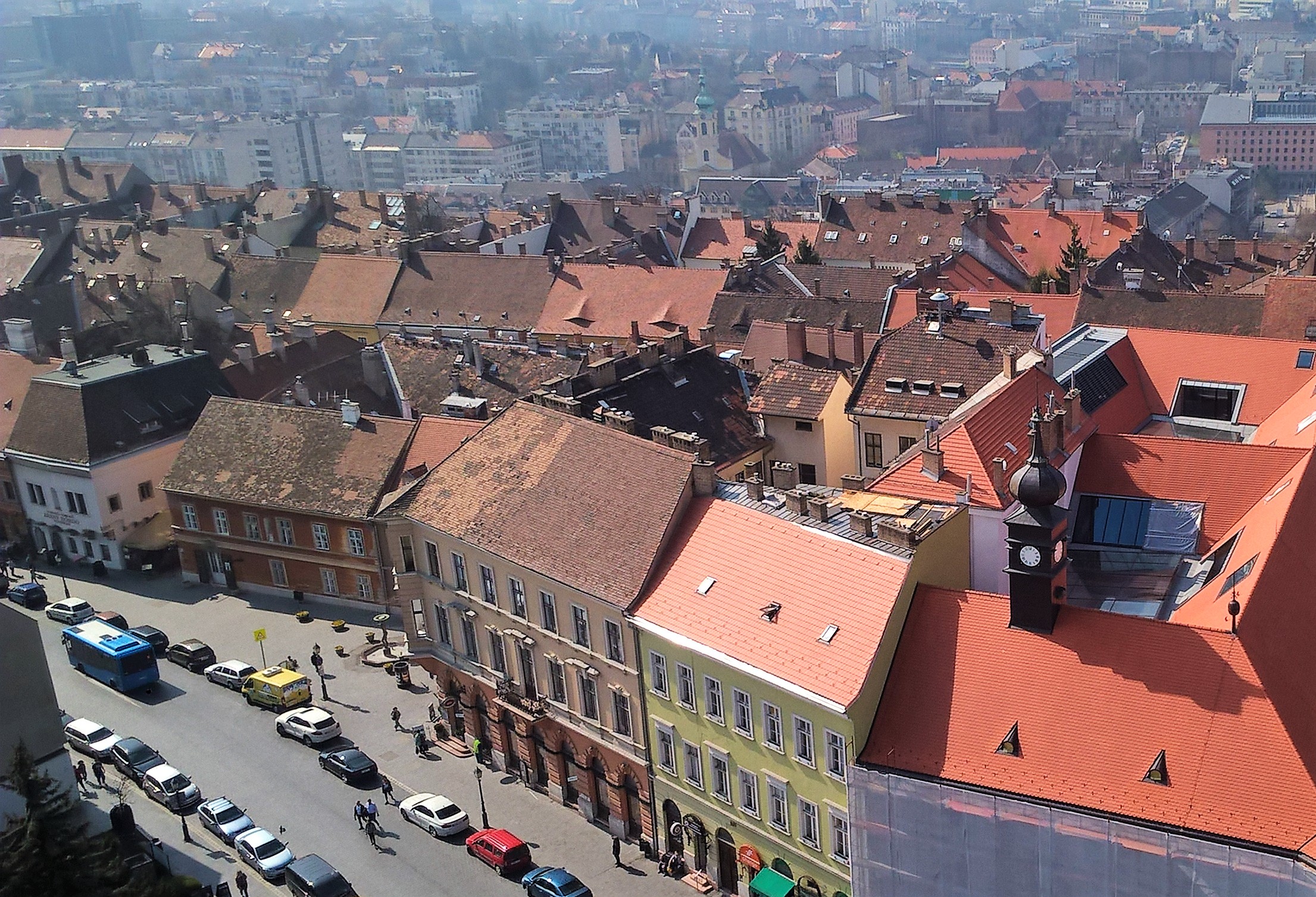
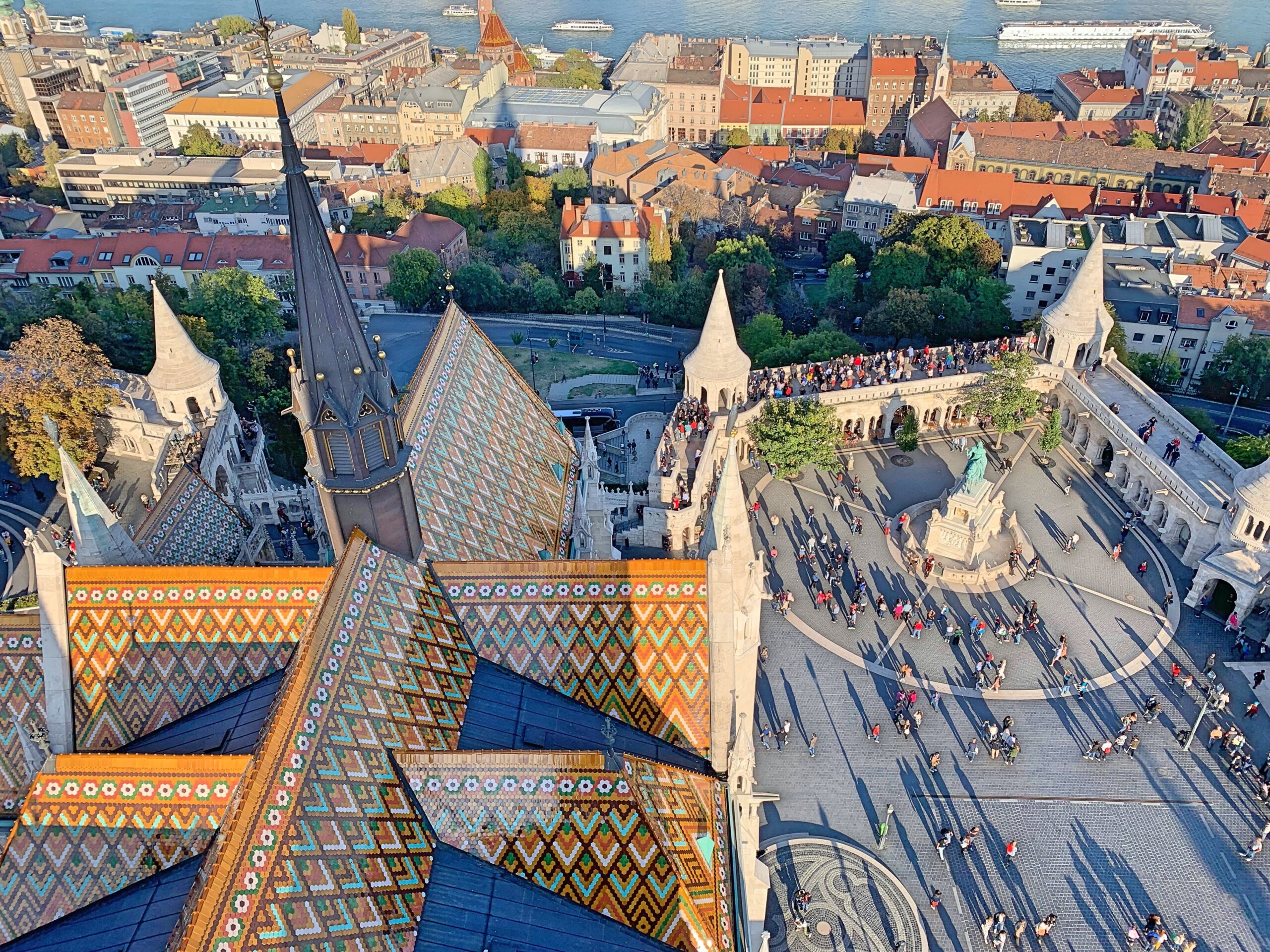
For those willing to climb higher, the church tower rewards you with one of the finest panoramic views over Budapest — a perspective that makes the city’s geography instantly clear.

Views That Define Budapest

Just a few steps away, the Fisherman’s Bastion offers one of the most famous panoramas in Hungary.

From its terraces, the view opens across the Danube to the Pest side, with the Hungarian Parliament building perfectly framed below. It’s a moment that connects medieval Buda with 19th-century Pest — and helps explain why this hill has always been so important.

The Civilian Town and Forgotten Quarters

Beyond the postcard views, the district also tells quieter stories. Walking through the former civilian town, you encounter elegant residences, the striking architecture of the Hungarian National Archives, and traces of communities that once lived side by side here — including the old Jewish quarter of Buda.

These streets feel calmer, more residential, and often reveal details that are easy to miss without context.

A City Beneath the City

Perhaps the most surprising fact about the Buda Castle District lies underground.

Beneath the streets stretches a 12-kilometer-long network of caves and cellars, used over centuries for storage, shelter, and survival. Today, parts of this underground world can be explored through two very different museums.

The Hospital in the Rock served as a military hospital during World War II and later as a nuclear bunker during the Cold War.
The Labyrinth of Buda Castle offers a more theatrical experience — with legends, shadows, and even a brush with Dracula.

The Buda Castle District reveals its true character when explored slowly and with context — beyond just the highlights.

I’d be happy to show you both the famous landmarks and the quieter corners during one of my Budapest walking tours, always adapting the walk to your interests and pace. If you’d like to discover the district through stories, viewpoints, and hidden details, feel free to get in touch.
 

Hungarians have a well-known sweet tooth, and among the many beloved treats, marzipan holds a special place. This smooth almond paste appears not only in cakes and pastries, but also in something far more unexpected: tiny — and sometimes life-size — works of art. In Hungary, marzipan is not just something you eat. It’s something you admire.

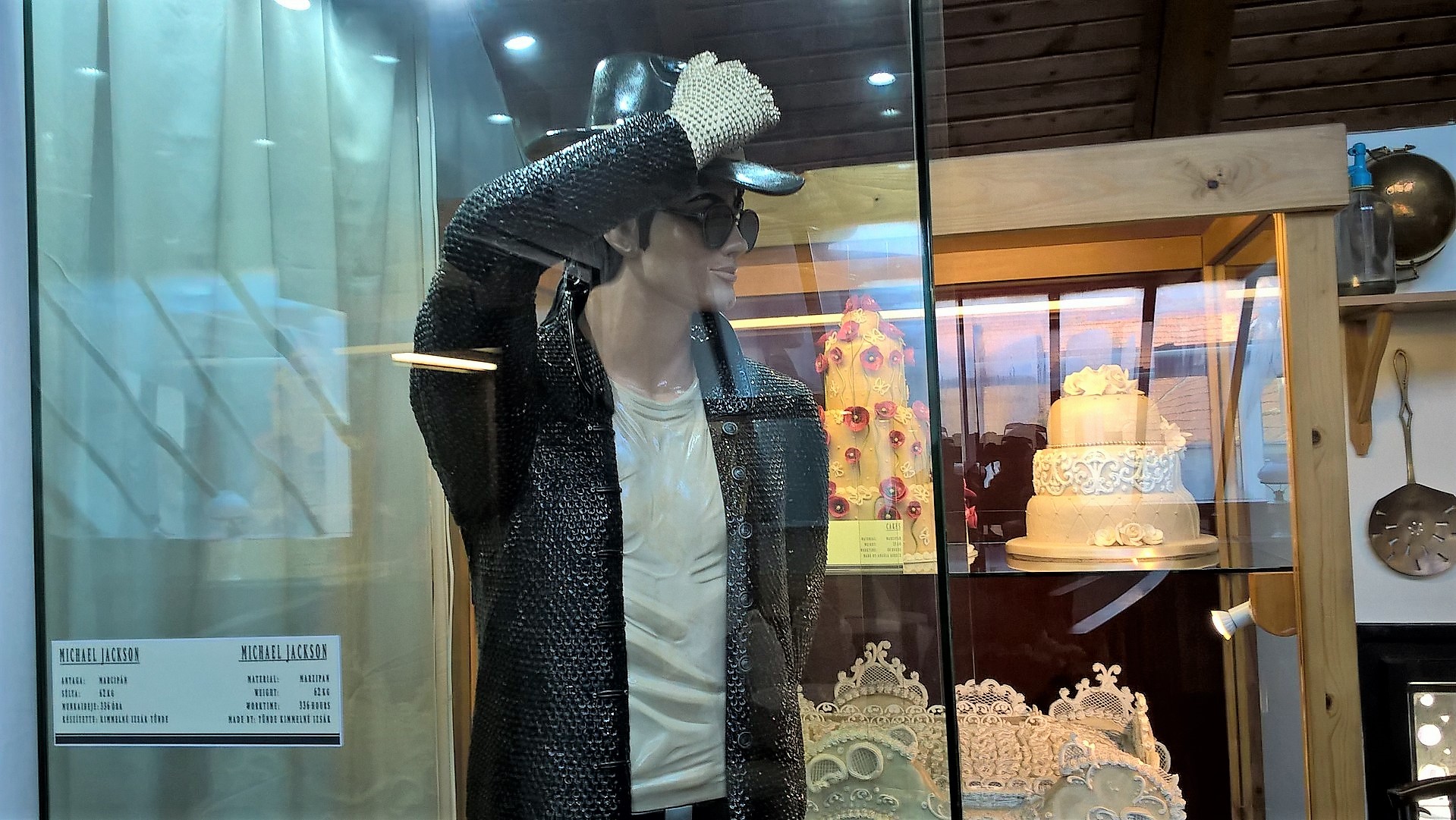
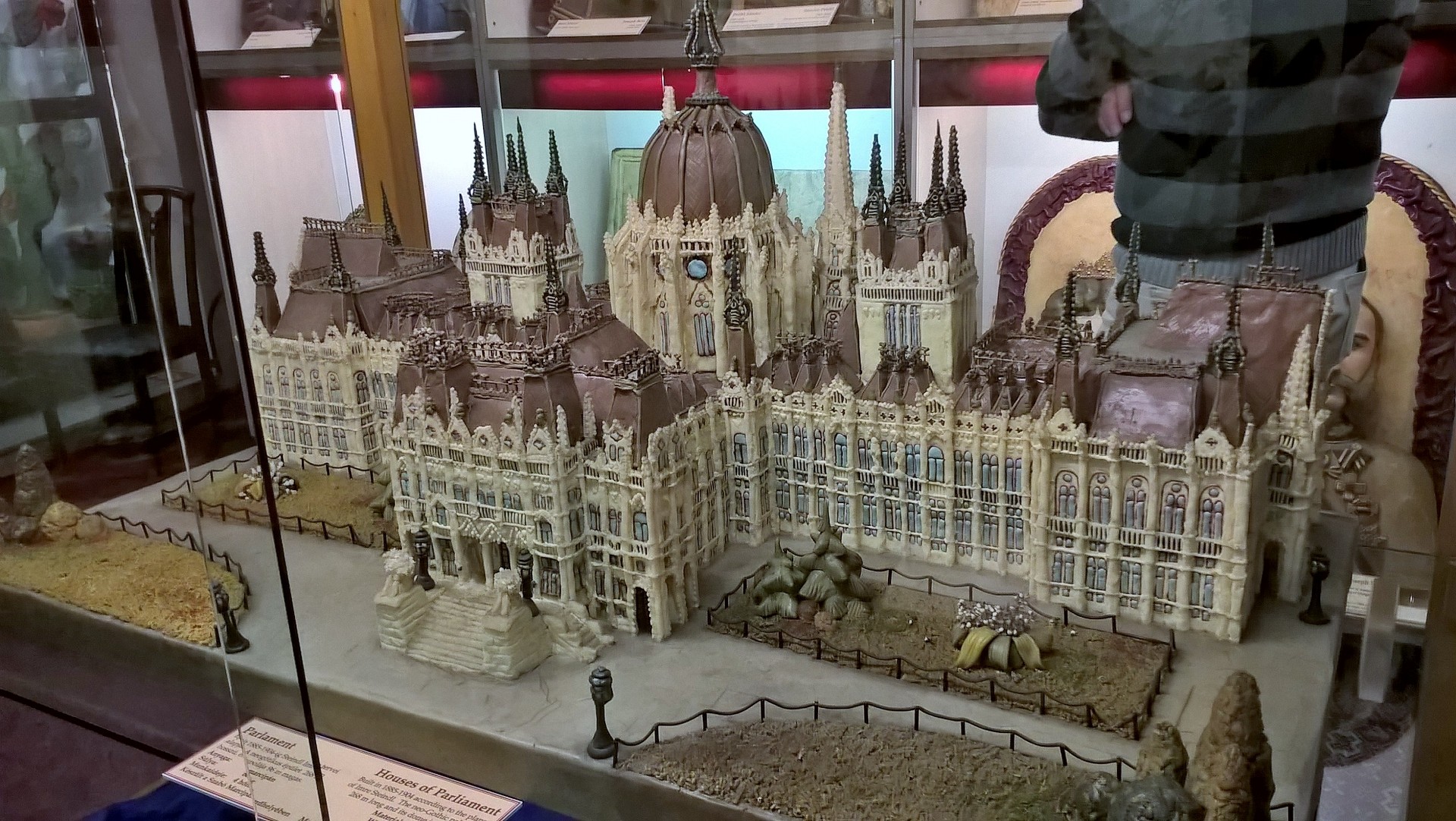
When Michael Jackson Meets the Hungarian Parliament

So, what do Michael Jackson and the Hungarian Parliament building have in common? In Szentendre, the answer is simple: they can both be made of marzipan.

The Szentendre Marzipan Museum is one of the most unusual — and sweetest — museums in Hungary. Located in the heart of Szentendre, it displays dozens of marzipan sculptures ranging from famous Hungarian historical figures to international celebrities and iconic buildings.

Some of the figures are small and intricate, others surprisingly large — all made with astonishing detail and patience.

More Than a Museum: A Working Atelier

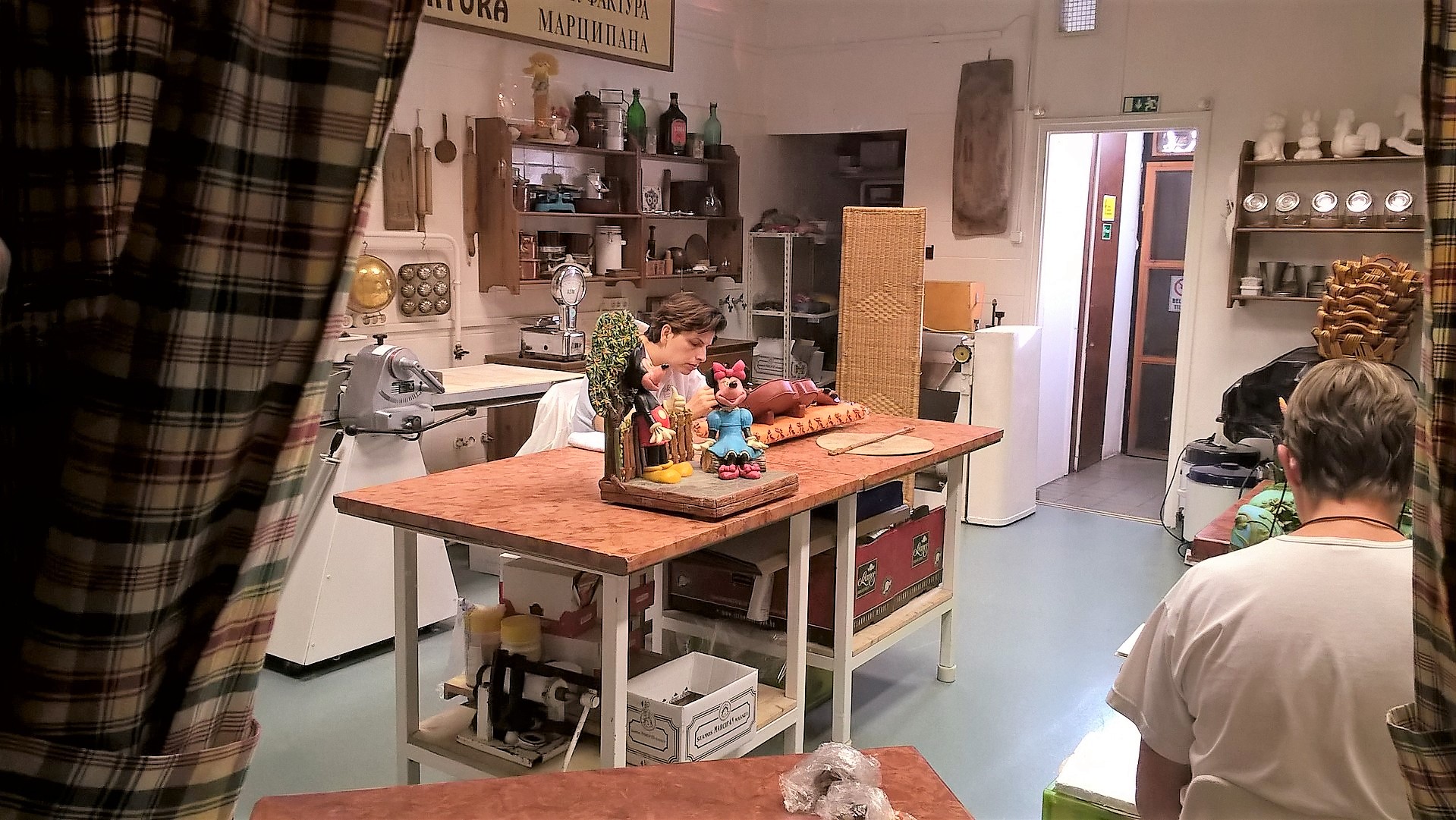
What makes the Szentendre Marzipan Museum especially engaging is that it’s not just a static exhibition. Visitors can also peek into the atelier, where new marzipan figures are still being created by hand.

Watching the process gives a new appreciation for the craft behind these playful sculptures — and for the amount of time and skill required to turn sugar and almonds into recognizable faces, buildings, and scenes.

A Small Museum with Big Personality

The Marzipan Museum is not large, but that’s part of its charm. It fits perfectly into a relaxed stroll through Szentendre, adding a lighthearted and slightly quirky stop between galleries, cafés, and cobblestoned streets.

And of course, no visit is complete without stepping into the small shop at the end, where you can buy beautifully made marzipan sweets — far too pretty to eat… at least at first.

The Marzipan Museum is one of those small surprises I’m always happy to include when showing guests around Szentendre. It’s also a delightful stop on my Danube Bend  and Szentendre tours, especially for travellers who enjoy local traditions with a playful twist.

If you’d like to explore Szentendre — from its art scene to its sweetest corners — feel free to get in touch, and we can shape a day that suits your interests and pace.


For many visitors, Hungarian food comes with a single, vivid image: red, hearty, and fiery hot.
There’s some truth in that — but it’s only a small part of the story.

Hungarian cuisine is deeply shaped by history, geography, and everyday life, and once you look beyond stereotypes, it reveals an unexpectedly rich and varied food culture.

Paprika: More Than Just Heat

Paprika is, without question, the defining spice of Hungarian cooking. Sweet, smoked, mild, or hot, it brings colour and depth rather than just heat — and it’s used with far more nuance than most people expect.

Interestingly, this essential ingredient only became central to Hungarian cuisine after the Ottoman period. What began as an imported spice gradually turned into a national symbol, shaping flavors that today feel inseparable from Hungarian identity.

A Cuisine Best Discovered Bite by Bite

Eating Hungarian isn’t about one iconic dish — it’s about many small, memorable tastes.

When visiting Hungary, some of the most authentic food experiences happen in everyday places:

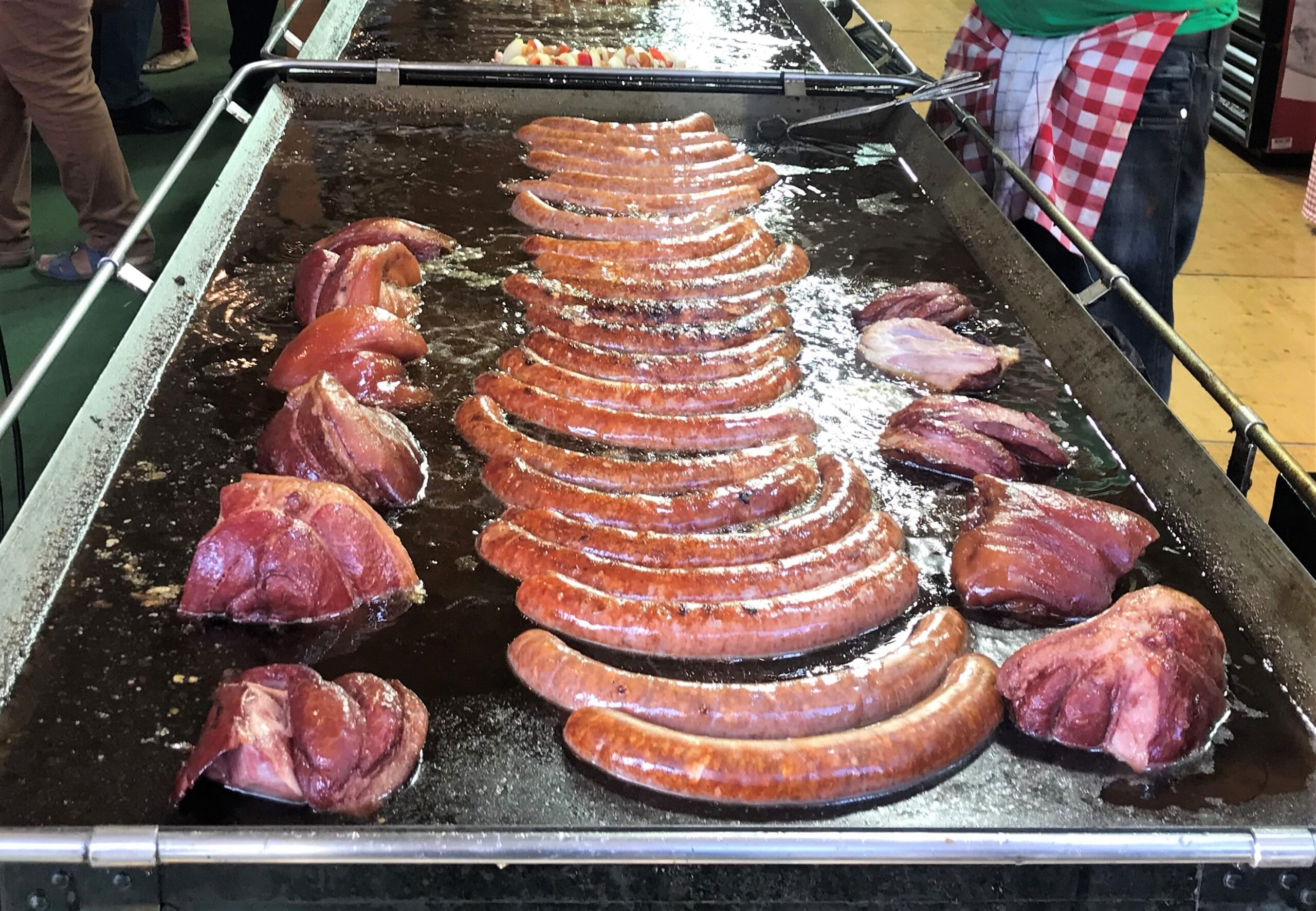
  • Butcher shops, where fresh sausages and simple hot dogs are enjoyed standing at the counter

  • Traditional cafés, some over a century old, where cakes and pastries are as important as conversation

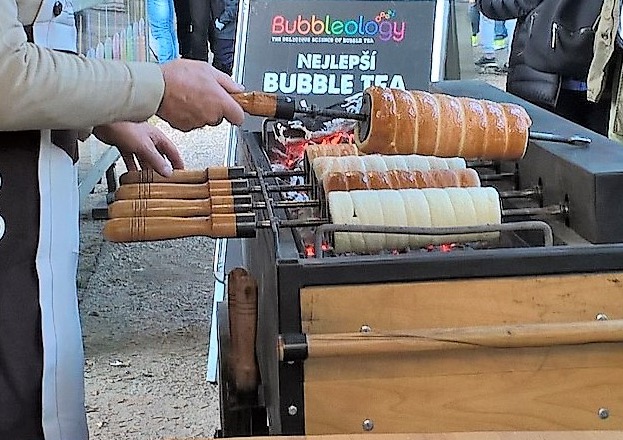
  • Bakeries, filled with the smell of warm dough early in the morning

  • Open-air cooking, where goulash simmers slowly in a cauldron over an open fire

  • Street food favorites, like lángos — golden, deep-fried, and endlessly customizable

  • Sweet stops, from artisan ice cream to handcrafted chocolate and strudel

  • Pickled vegetables, which balance rich dishes with acidity and crunch

Each bite reflects a mix of rural traditions, urban habits, and seasonal rhythms.

Eating Also Means Drinking

There’s an old Hungarian saying: those who eat must also drink — and food here is rarely separated from wine.

Hungary’s wine culture is as old as its cuisine, with styles ranging from light and refreshing to deep and complex. Sharing food without a glass of wine nearby would feel incomplete, whether at a festive table or a simple neighbourhood spot.

Why Hungarian Food Is Best Experienced with Context

What makes Hungarian cuisine truly memorable isn’t just flavour — it’s the stories behind the dishes, the traditions, and the places where locals actually eat.

Understanding why something is cooked a certain way, when it’s traditionally eaten, and how it fits into daily life transforms food from something you consume into something you experience.

If you’re curious to explore Hungarian food beyond the obvious dishes, I always enjoy introducing guests to local flavours during my Budapest Foodie Tour.

It’s not about rushing from one stop to the next, but about tasting, understanding, and enjoying Hungarian cuisine in a relaxed, authentic way. If that sounds like your kind of experience, feel free to get in touch — I’d be happy to help you discover Budapest through its food.


Perched high above the city in the heart of the Buda Castle District, Matthias Church is one of the most remarkable and layered monuments in Budapest. More than just one of the city’s oldest churches, it is a living witness to over a thousand years of Hungarian and European history — still functioning today as an active place of worship.

Walking through its doors is like stepping into a richly illustrated history book, where every wall, pattern, and symbol tells a story.

Where Sacred History Meets Power and Politics

The church stands on the highest point of Castle Hill, within the Buda Castle District, a location chosen deliberately. For centuries, this was the center of royal power, religious authority, and military strategy.

Although commonly called Matthias Church, its official name is the Church of Our Lady. The popular nickname comes from King Matthias Corvinus, one of Hungary’s most beloved rulers, who left a strong mark on the building’s history — including royal ceremonies and architectural additions.

A Rare Blend of Christian and Ottoman Heritage

One of the church’s most fascinating aspects is something many visitors miss at first glance:
the coexistence of Christian and Muslim decorative elements.

During the Ottoman occupation in the 16th century, the church was converted into a mosque. While later reconsecrated as a Christian church, traces of this period remain visible — a rare and tangible reminder of how cultures overlapped, clashed, and influenced one another in Central Europe.

Very few churches in Europe still preserve such visible layers of both traditions in one space.

A “New” Church with an Old Soul

At first glance, Matthias Church looks surprisingly fresh and colorful — almost too perfect to be medieval. That’s because much of what we see today dates from a major 19th-century restoration.

Rather than aiming for strict historical accuracy, the restorers created a romantic, idealized vision of the Middle Ages, rich in symbolism, patterns, and colour. The result is an interior that feels theatrical, immersive, and deeply atmospheric.

Look closely, and you’ll notice:

  • painted walls instead of bare stone

  • intricate motifs inspired by folk art and medieval manuscripts

  • a strong sense of storytelling rather than minimalism

The Roof That Became an Icon

One of the most photographed features of Matthias Church is its spectacular roof, covered with around 250,000 colorful ceramic tiles produced by the famous Zsolnay factory.

The geometric patterns shimmer differently depending on the light and weather, making the church a visual highlight of the skyline in every season — from bright summer sun to snowy winter days.

Climbing the Spire: A Different Perspective

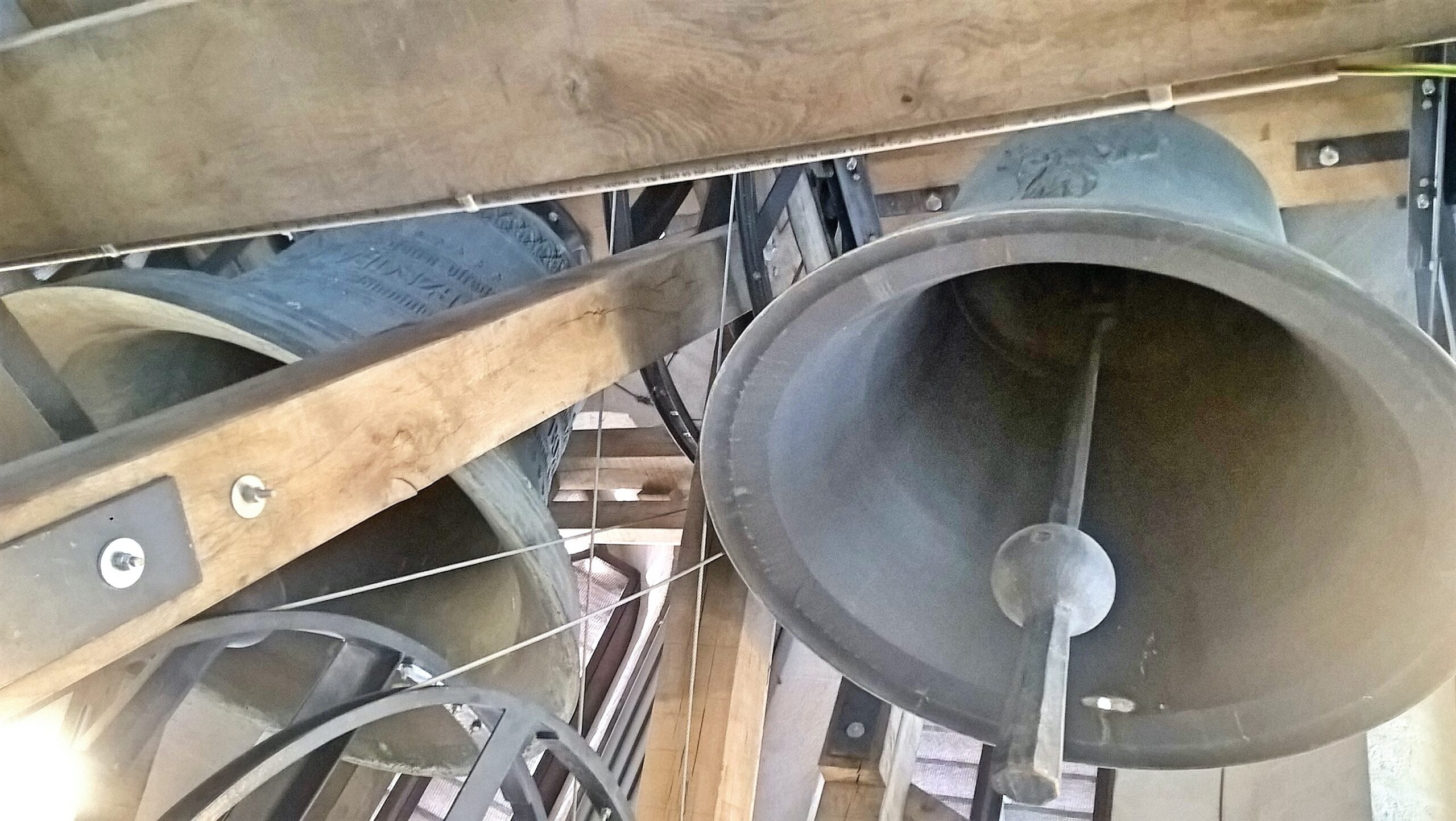
For those willing to climb higher, the church’s spire offers a rewarding experience. On the way up, you can:

  • admire the roof structure from close range

  • see the church bells

  • gain a rare, elevated view over the rooftops of Buda and Pest

From the top, the city feels surprisingly quiet and distant — a contrast to the crowds below and a reminder of why this hill has always been such a strategic and symbolic location.

Why Matthias Church Is Worth More Than One Visit

Matthias Church is not just something to “tick off” a sightseeing list. It’s a place that reveals more the deeper you look — whether through its symbols, its hidden historical layers, or the stories connected to kings, invasions, restorations, and everyday faith.

It’s also one of the key stops on my Buda Castle walks, where these details come to life through stories — including a few darker and more unexpected chapters that most guidebooks leave out.

Timeless Visitor Tips

  • Visit once for the exterior views, and once for the interior — they feel like two different experiences

  • Look beyond the altar: side chapels and wall details often hold the most interesting stories

  • Even if you’re not usually drawn to churches, the colours and symbolism here make it unique in Europe

If you’d like to experience Matthias Church as part of a broader story rather than a rushed visit, I’m always happy to stop here during one of my Budapest walking tours.

Exploring the church in context — together with the Castle District, its viewpoints, and hidden details — often makes the experience much richer and more memorable.

If this sounds like your kind of travel, feel free to get in touch and we can shape a walk that suits your interests and pace.

Halloween stands for ‘All Hallows’ Evening’ , the night before the Christian ‘All Saints’ Day’. Although Halloween with all the pumpking carving and trick-or-treating is getting more and more popular in Hungary, still, we celebrate traditionally the two following days; All Saints’ Day and All Souls’ Day.

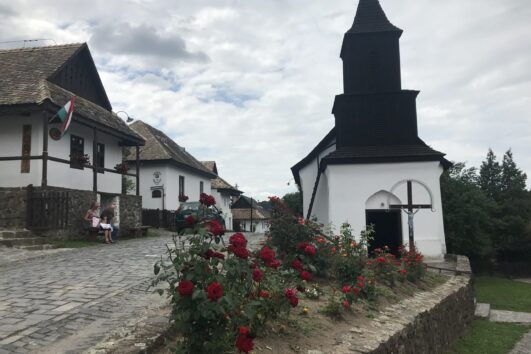
All Saints’ Day is the day of all of the saint souls, who are not mentioned in the calendar by name. It’s a National Holiday in Hungary, probably because all work has been forbidden on this day for centuries, because of the respect for the dead. According to folk tradition, during the night between All Saints’ Day, and All Souls’ Day deceased go to the house of their loved ones. That’s why in the villages an extra plate was placed on the table, with bread, salt and water on it.

All Souls’ Day is to commemorate and remember one’s beloved ones who had passed away. Local cemeteries are usually crowded and beautiful with tons of fresh flowers, candles and lampions.

Yesterday we celebrated the 60th anniversary of Hungary’s revolution against the Communist dictartorship, the presence of the Soviet troops and the Stalinist totalitarianism.

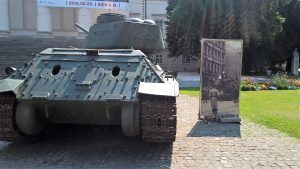
My father was 5 years old in 1956. This is his story. He was abbout to accompany his uncle to bring a radio to some friends. There were fights all over the streets, all around the city. My father and his uncle tried to get from the city center to another district of Pest. When they reached the Liberty bridge my father spotted a huge tank at the Pest side of the bridge. He was frightened. But then, he saw that there was a piece of cloth stuffed in the muzzle of the tank. He was relieved. He said to himself that he wasn’t going to die that day.

Let me tell you more, book the Communist Budapest Walk!

Private Budapest tours are a wonderful way to experience the city in a truly personal and meaningful way and offer an exclusive and intimate way to explore Budapest . Unlike large group tours, these are designed exclusively for you and your partner, family, or friends — no strangers, no rushing, and no fixed routes.

You tell me what you’re interested in — whether it’s history, food, architecture, or just soaking in the atmosphere of local neighbourhoods — and I tailor the entire experience around your preferences. It’s a flexible, fully customisable way to see the best of Budapest.

Personal, Flexible, and Just for You

With private Budapest tours, you set the pace. Want to stop for a coffee? Prefer to linger at a hidden gem or explore a lesser-known museum? No problem at all. I’ll be your personal guide, sharing stories, answering your questions, and showing you not just the sights, but how locals truly live.

There’s no waiting for a group or following a rigid schedule. Whether you’re travelling as a couple, with young children, or with older family members, I adapt the tour to your comfort and energy level. That’s the beauty of private guiding — it’s all about you.

See Budapest Like a Local!

As someone who was born and raised in Budapest, I love showing people the city I call home. My tours go beyond landmarks — I include local stories, personal memories, and hidden places that don’t appear in typical guidebooks. Whether you want to discover iconic landmarks or hidden gems off the beaten path, I’m here to guide you through an authentic and enriching journey.

Many of my guests have told me they felt like they were exploring with a friend rather than a guide. And truthfully, I’ve made many wonderful friendships through these tours — that’s what makes this work so special to me.

Ready to Plan Your Custom Tour in Budapest?

If you’re looking for a relaxed, personal, and authentic way to explore Hungary’s capital, private Budapest tours are the perfect choice. Contact me to start planning your customised experience today. Let’s create your perfect Budapest adventure together!

For inspiration, check out my Budapest travel blog or visit Budapest Info for more about what the city has to offer.


Welcome — I’m Julia, a licensed private tour guide born and raised in Budapest. I offer personalised private walking tours in English and French for travellers who wish to experience Budapest in a relaxed, meaningful, and authentic way. My goal is to help you discover not only the city’s most important landmarks, but also the hidden details, local stories, and everyday atmosphere that make Budapest truly special.

Whether this is your first visit or a long-awaited return, this blog is here to help you plan your stay with confidence and inspiration.

Planning Your Visit to Budapest

If you are preparing for your trip, these practical tips will help you feel comfortable from the moment you arrive.

Essential Travel Tips for Visiting Budapest
Money, transportation, safety, tipping culture, and useful local advice before your visit.

Experience Budapest Like a Local

Private guiding offers a flexible and personal way to explore Budapest — without crowds, fixed schedules, or rushing from one attraction to another.

Why Choose a Private Tour in Budapest?
Learn how personalised tours work and what makes discovering the city with a local guide such a memorable experience.

Discover Budapest Through Local Insights

Here on the blog you’ll find inspiration for your stay, including:

• hidden viewpoints and peaceful walks
• café culture and culinary discoveries
• neighbourhood stories
• transportation tips
• authentic local experiences

Browse the latest articles or explore by category to start planning your perfect Budapest visit.

Private Tours in Budapest

If you would like to explore Budapest through a personalised experience tailored entirely to your interests, I would be delighted to guide you.

Explore Private Tours & Custom Experiences

I hope to welcome you soon in beautiful Budapest.

EXCURSIONS À LA CAMPAGNE
PROMENADES À BUDAPEST
PROMENADES THÉMATIQUES À BUDAPEST
VISITES DE BUDAPEST EN VOITURE

A few general and helpful information before you arrive to my beautiful city.

Money Exchange: the local currency is HUF (Hungarian Forint), you can pay with credit card in almost every shop and restaurant and in taxis, too. Don’t exchange money at the airport, there are dozens of small exchange offices in the city center (don’t forget to check the exchange rates first) and you can also use the hundreds of ATM machines.

Transportation: don’t be afraid of using public transportation, it’s simple, convenient and cheap. You’ll feel like a local. You can buy tickets at the metro stations, don’t forget to validate your ticket when you start your journey.

Cabs: all the local cabs are registered, they’re yellow. Taking a cab is safe, make sure that the driver puts the meter on at the beginning of the ride, don’t negotiate the price. Feel free to get off the cab if the driver refuses to put the meter on.

Tipping: tip is generally 10-15%, it might be included in the price, always check the receipt to see if the service fee is included.

Safety and security: Budapest is a very safe city, you can walk around during the night without experiencing any problem. There might be pickpockets in crowded places, take care of your belongings!

Tap water: drinking tap water is safe, the water is of great quality and delicious at the same time.