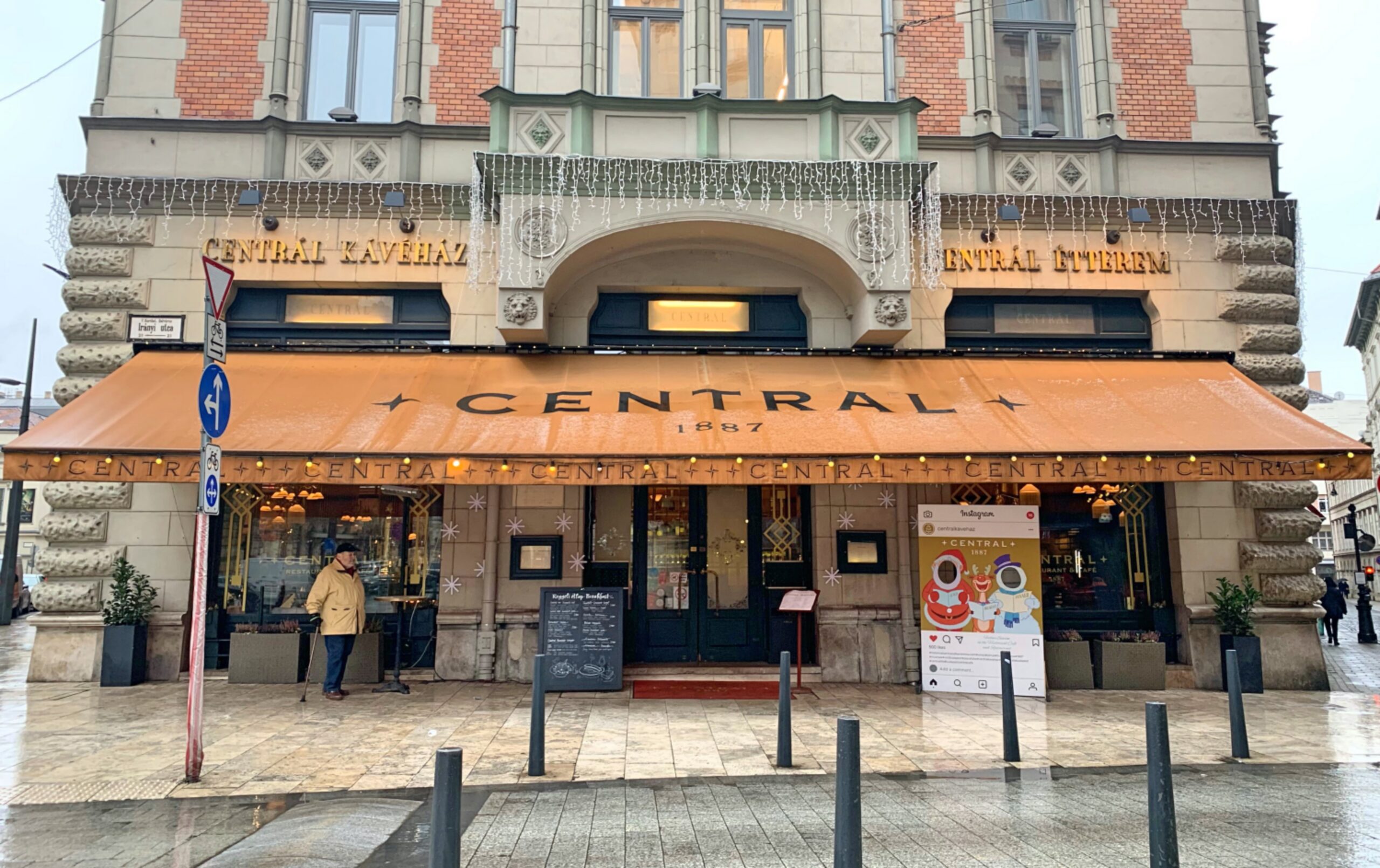
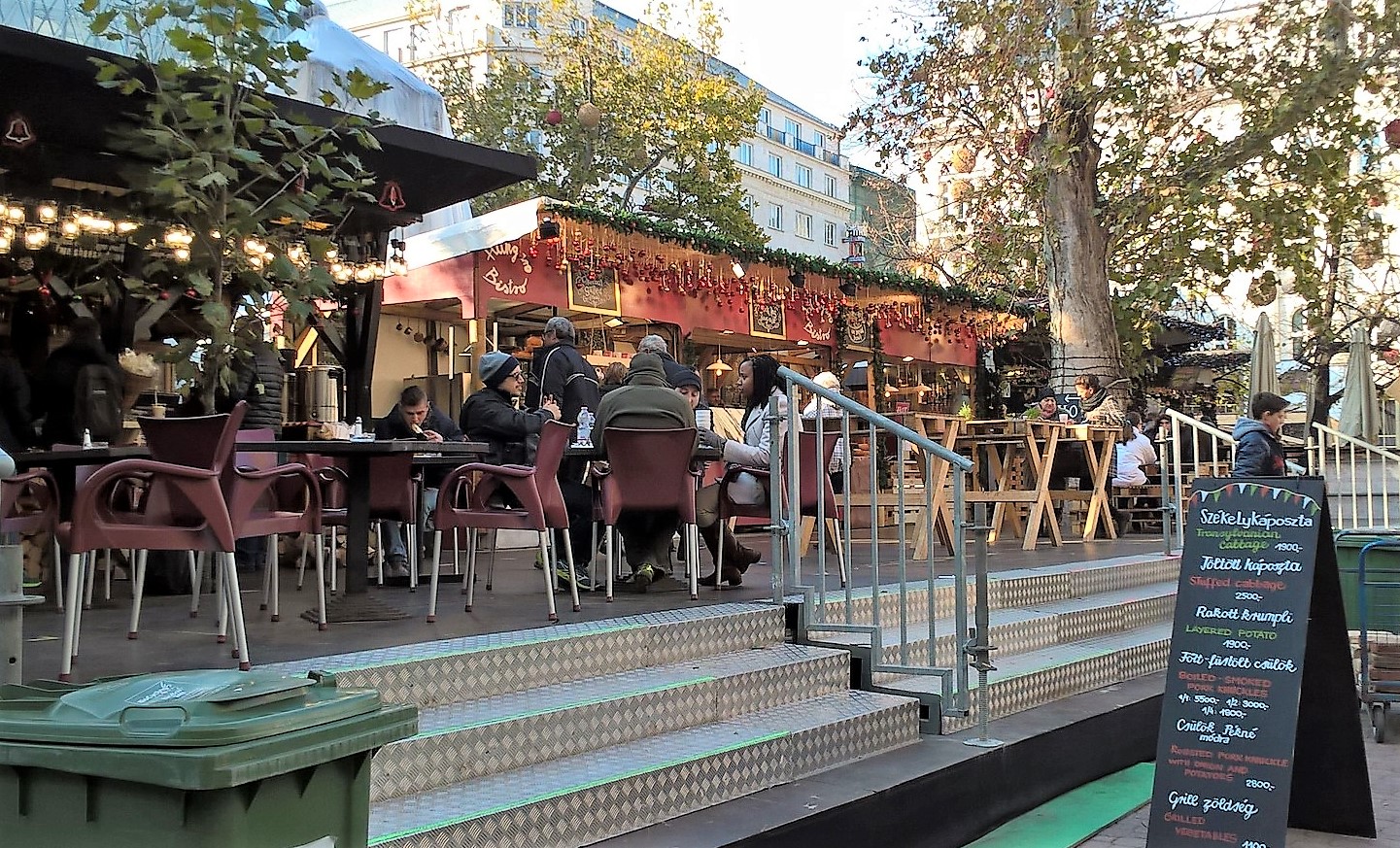
The Budapest coffeehouse culture is more than 150 years old, and for generations cafés have been the beating heart of intellectual life, creativity, and social connection. These were not places for a quick espresso and takeaway cup, but living rooms of the city—spaces where people met to talk, debate, dream, write, and sometimes even change history.

Coffee in Budapest is never just about coffee.

Coffeehouses as the Soul of Budapest

In the late 19th and early 20th centuries, Budapest coffeehouses were places where writers, poets, journalists, and artists spent hours every day. Many of them practically lived there. Coffeehouses provided warmth, light, newspapers, ink, conversation, and inspiration—often all night long.

Legend has it that one Hungarian writer famously stole the keys of his favourite café and threw them into the Danube, ensuring the coffeehouse would stay open 24 hours a day. Whether entirely true or slightly exaggerated, the story perfectly captures how essential these places were to everyday life.

Even politics found its way into cafés. One of the most important moments of the Hungarian War of Independence began not on a battlefield, but with young revolutionaries gathering in a Pest coffeehouse, fuelled by coffee, ideas, and enthusiasm.

Grand Cafés and Everyday Rituals

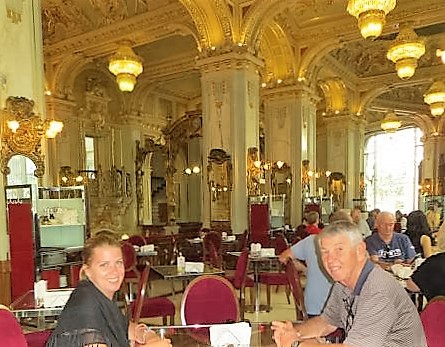
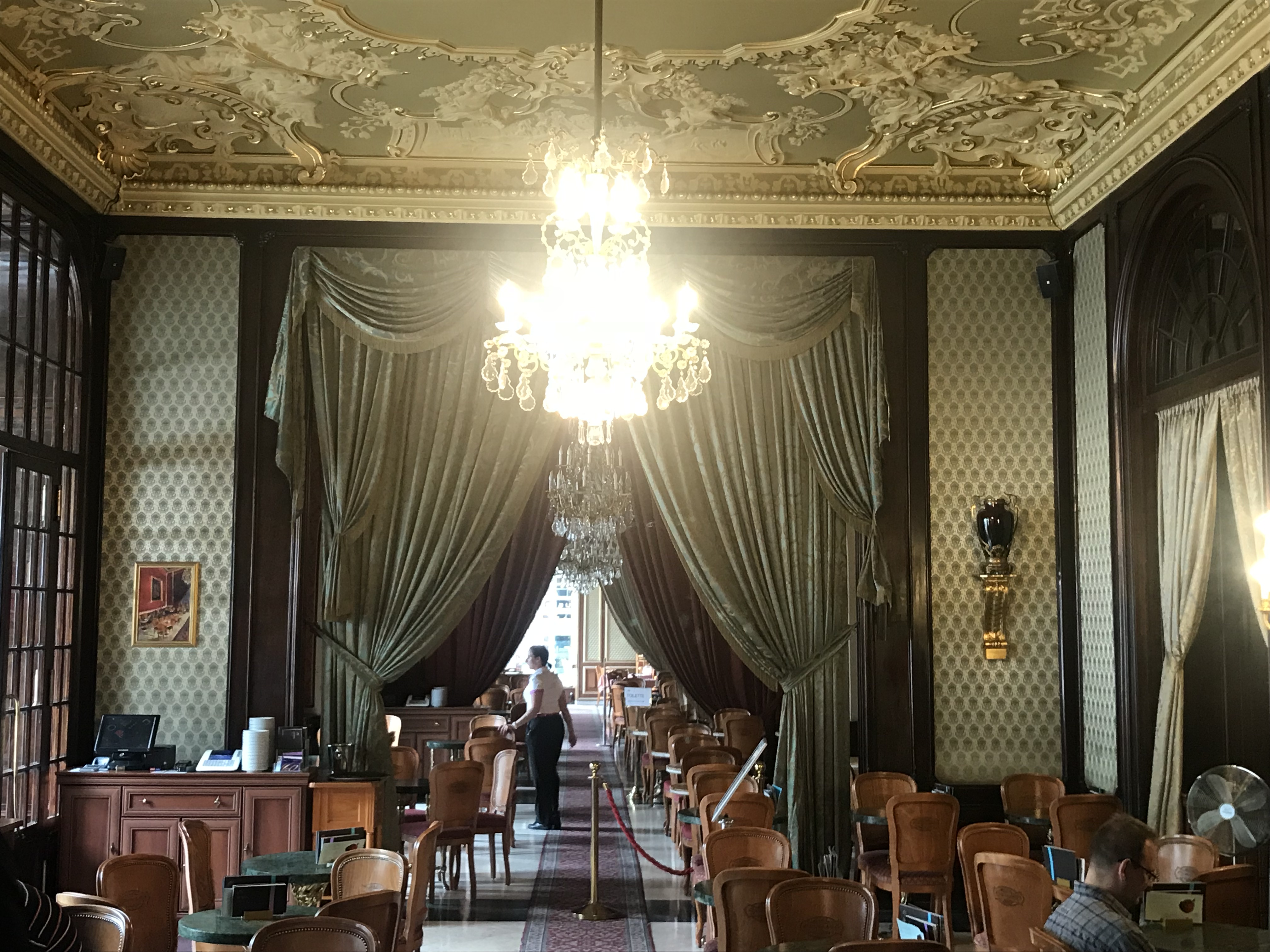
Budapest’s historic coffeehouses are famous for their elegant interiors: chandeliers, marble tables, mirrors, plush seating, and a sense of faded grandeur that still feels alive today. Some cafés became symbols of luxury and refinement, others of literary life or bohemian freedom—but all shared the same role as social spaces.

If you’d like to explore individual cafés in more detail, you can read more about some of the city’s most iconic places:

Each of these cafés tells a slightly different story—but together, they form the unique coffeehouse culture that still defines Budapest today.

Experiencing Coffeehouse Culture Today

What makes Budapest cafés special is that they are not just museums of the past. Locals still meet here to talk, read, work, and linger. Sitting down for coffee is an experience meant to be enjoyed slowly, ideally with a slice of cake and no rush to leave.

This is why coffeehouses fit so naturally into my Budapest Foodie Tour. Exploring the city through its cafés allows you to understand Budapest not only through sights, but through tastes, stories, and everyday rituals.

A Taste of Budapest Beyond Sightseeing

Whether you’re visiting for the first time or returning to the city, taking time for a café stop is one of the best ways to connect with Budapest’s atmosphere. Coffeehouses reveal how the city thinks, remembers, and relaxes.

So enjoy our coffee.
Enjoy the special atmosphere of Budapest cafés.
And if you’d like to discover the best places—historic and contemporary alike—I’d be delighted to show them to you on a Foodie Tour designed around your interests.


The Jewish Quarter Budapest is where past and present meet: vibrant cafés and street art beside synagogues and memorials. It’s hip, busy and full of surprises—but also a place of remembrance. Here’s what to see on a thoughtful walk—and how to explore with a private guide.

Highlights at a glance

The synagogue “triangle”

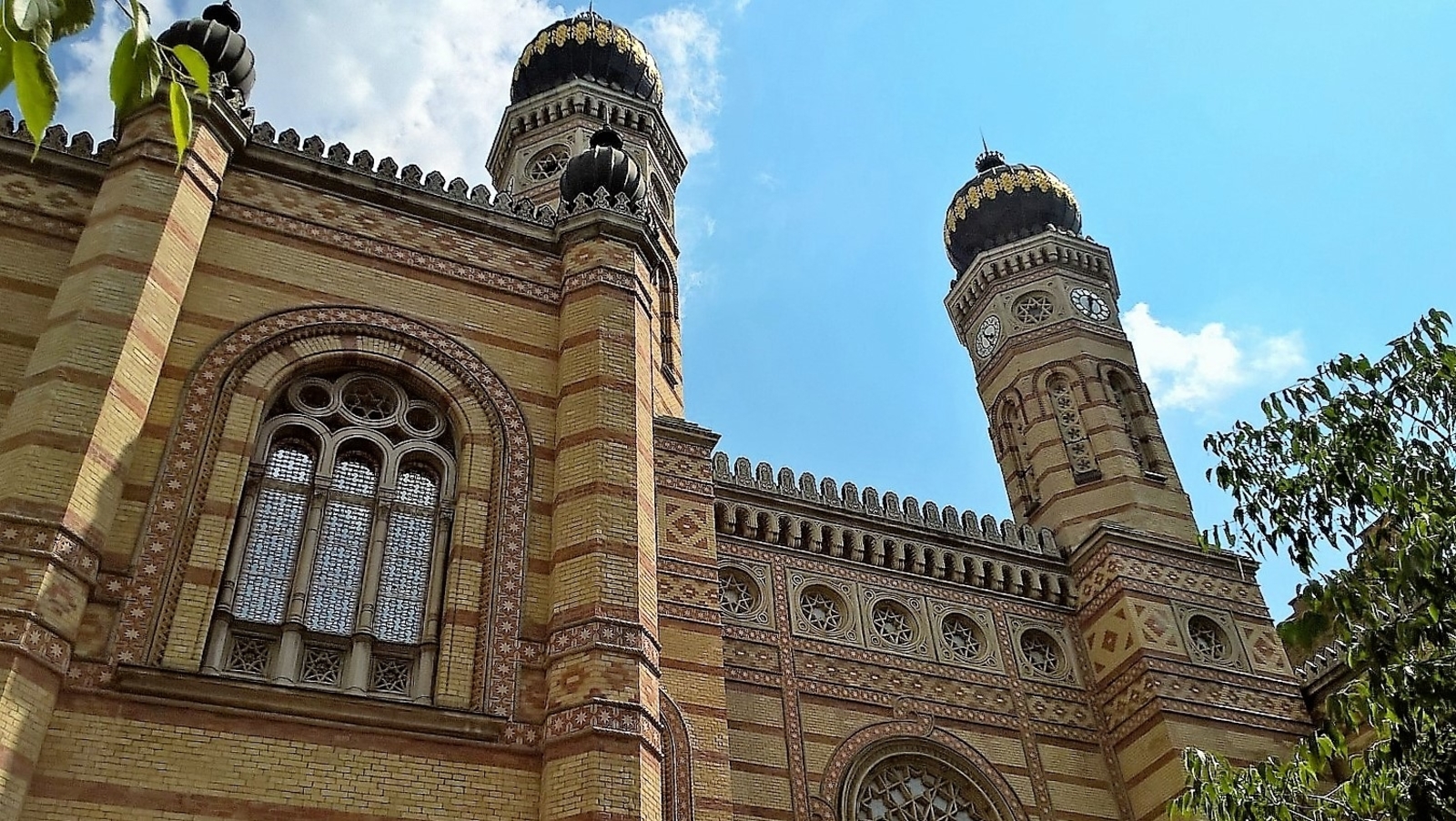
Start at the Great (Dohány Street) Synagogue, one of the largest in the world, with its Moorish Revival façade and peaceful courtyard. Continue to the beautifully restored Rumbach Street Synagogue and the colourful, Art Nouveau-inspired Kazinczy Street Synagogue (limited opening hours). Interior visits are possible—just check opening times or join a private Jewish Quarter tour for a smoother experience.

Remembrance in the neighborhood

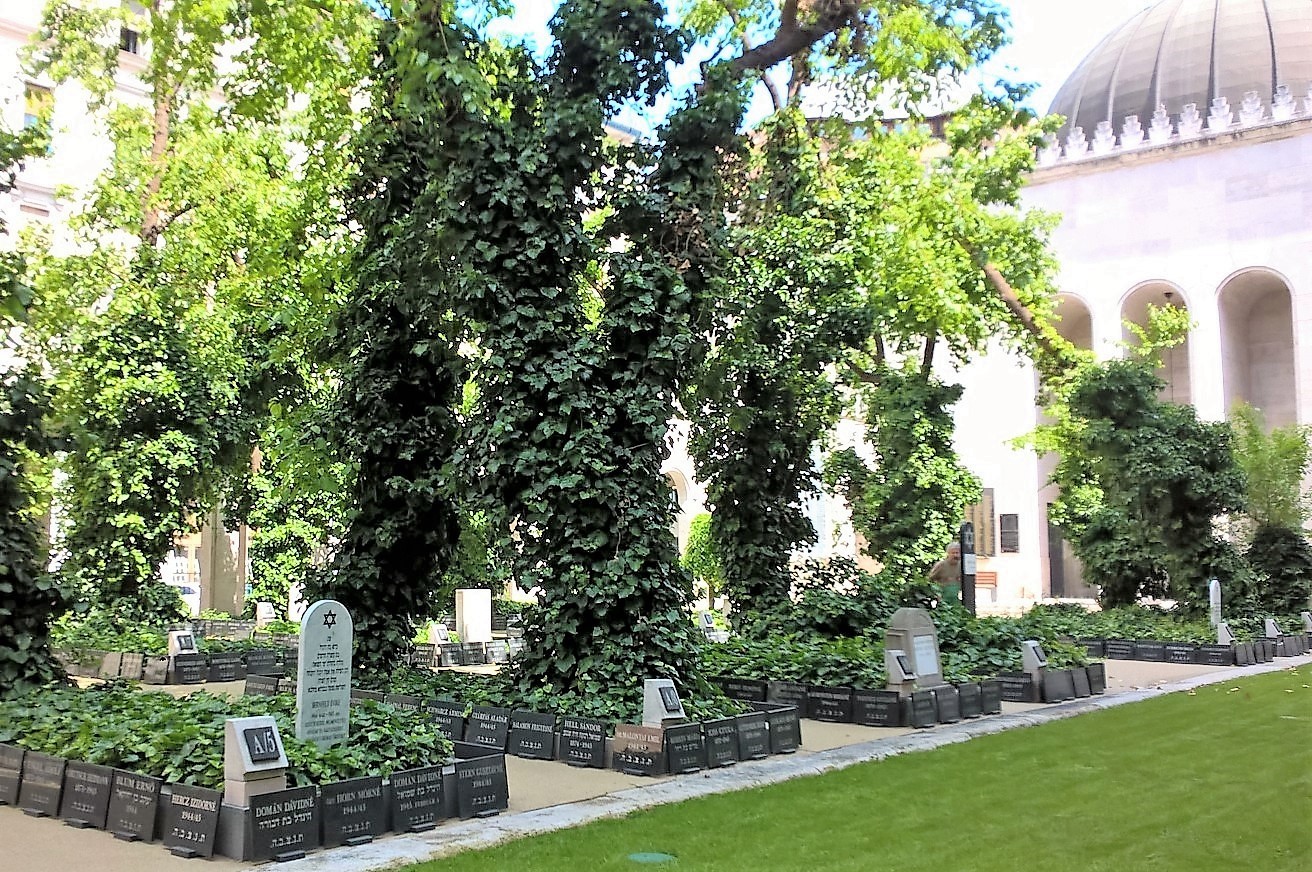
During WWII, the area became the Budapest ghetto. You can still find a short section of the former ghetto wall and several memorials that honour victims and rescuers. I approach these sites with care, sharing context and personal stories that make history easier to grasp without overwhelming younger visitors.

Ruin pubs, cafés and street art

Today’s Quarter is also a creative hub. Ruin pubs and courtyard cafés bring life to once-empty buildings; murals and small galleries pop up on side streets. Between stops, I like to detour for a coffee or a slice of flódni and point out small architectural details many miss.

A reflective ending by the river

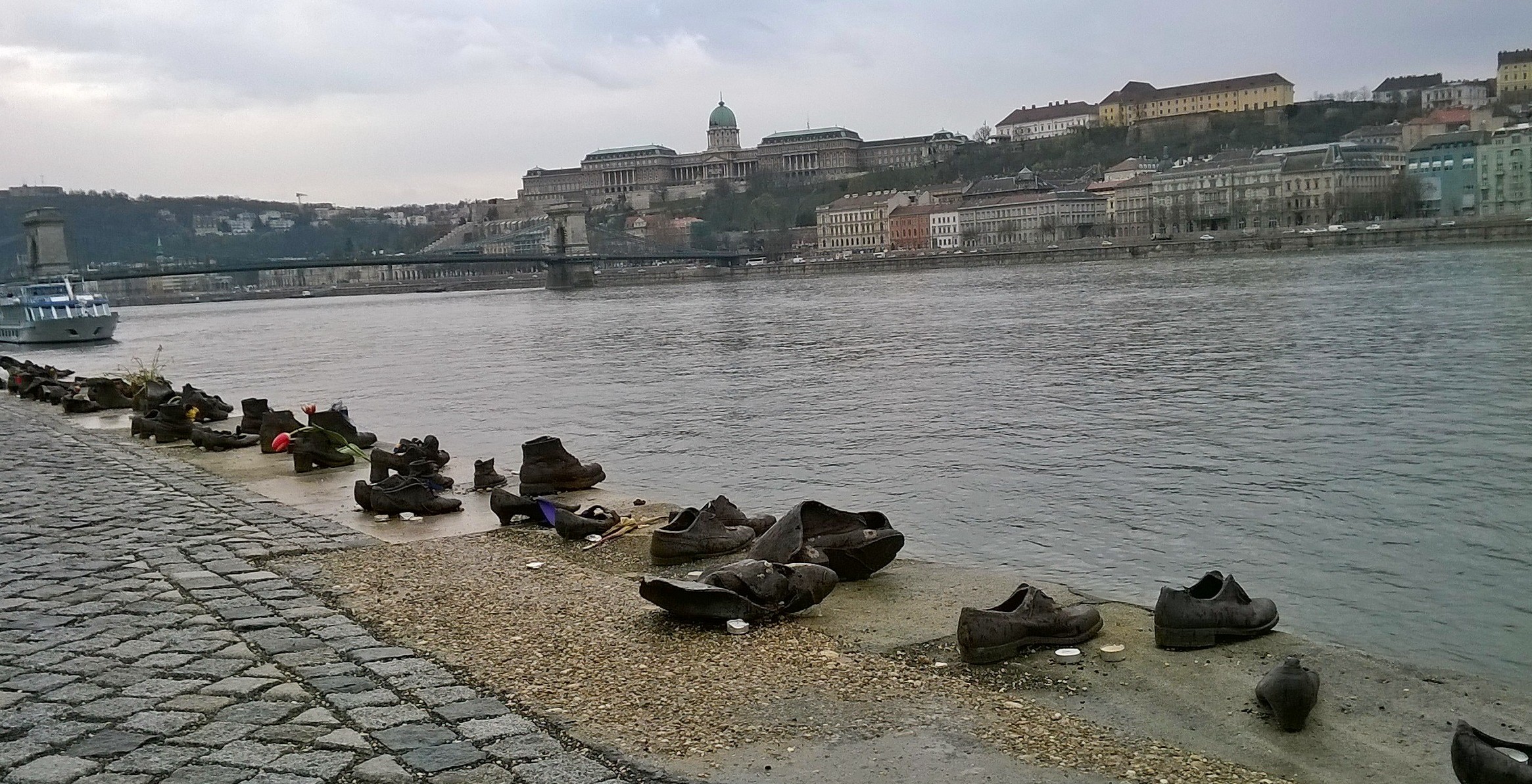
I often end this walk at the Shoes on the Danube Bank memorial. Simple and powerful, it’s a moment to pause after a day filled with stories.

Practical tips

  • Timing: Mornings are quieter; evenings are lively. Synagogues are closed on Saturday!

  • Pace & access: Flat route with frequent stops; easy to adapt for most visitors.

  • Inside visits: Synagogue interiors on request; entry tickets are separate (see the Great Synagogue’s opening hours).

  • Dress & respect: Synagogues are active places of worship—modest attire helps.

  • Private option: Prefer a tailored route at your pace? Book a private Jewish Quarter tour in English or French.

Explore the Jewish Quarter of Budapest with a private guide

Want deeper stories and stress-free logistics? I guide private tours for your group only (prices cover up to 4 people; ask for larger groups). If booking looks unavailable—or if you run into any issues—please contact me and I’ll try to accommodate.

👉 Book your private Jewish Quarter tour (4 hours; flexible start)


This is of course a very subjective lists and is based on my own experiences and on my guests’ feedback. There are hundreds of great restaurants in Budapest and it’s very hard to pick only 5 as I keep discovering new places all the time and show them to my guests on my Foodie tours.. These are the places I’d recommend to my guests and where I would go with my family, too. I only selected places with Hungarian meals, so that you can taste the best dishes of our cuisine.

Aszu restaurant: great food, great wines and cozy atmosphere with live cimbalom music. My favourite is the Chicken Paprikás.

Budapest Bistro: such a nice place near the Parliament with very special and modern Hungarian dishes and live piano music. My favourite is the Hungarian Bistro plate.

Pest-Buda Restaurant: is in the heart of the Buda Castle District, a classy little place with red and white checkered tablecloth. My favourite is the Goulash soup.

Rézkakas Bistro: an amazing mix of the authentic Hungarian dishes and international flavours topped with great wines. This is one of the very few places where vegeterians can have a fantastic selection, too. My favourite is the Lajosmizse “terrine de foie gras”.

WineKitchen: yes, it’s a Michelin-star restaurant, still the prices are reasonable, the staff is friendly and they offer fresh and creative daily menus every day. My favourite is the Fresh fish from the market.

+1: Strudel House: a place where you can actually see the strudel making and you can try the best sweet and salted Hungarian strudels. My favourite is the sweet cottage cheese strudel.

Pre-cruise post-cruise Budapest experience is something many river cruise travellers look for when their journey starts or ends in Budapest. Budapest is one of the highlights of any Danube itinerary, and for good reason—but time spent in the city during a cruise is often limited.

River cruise companies usually include a general sightseeing tour, designed to give a broad overview of Budapest in a short amount of time. While this is a great introduction, many travellers soon realise that they’ve only scratched the surface.

That’s when they start asking a very common question:
“Can we see more—without repeating what we’ve already done?”

Seeing Beyond the Standard Cruise Tour

The answer is a definite yes. Budapest has layers of history, culture, and everyday life that simply don’t fit into a standard cruise excursion. Having guided many of these official sightseeing tours myself, I know exactly what they include—and, just as importantly, what they leave out.

This makes it easy to design pre-cruise or post-cruise experiences that feel fresh, personal, and genuinely different.

Tailored Experiences Before or After Your Cruise

Depending on how much time you have and what interests you most, I can recommend:

Whether you arrive a day early or stay on after your cruise ends, these experiences are designed to complement—not compete with—your river cruise.

Ideal Shore Excursions for Curious Travelers

Pre-cruise and post-cruise experiences are especially popular with travellers who enjoy:

  • Slower-paced, in-depth exploration

  • Context and storytelling rather than checklist sightseeing

  • Flexibility and personal attention

  • Seeing places most cruise groups don’t reach

Instead of repeating highlights, you’ll discover the Budapest that locals know—through stories, neighborhoods, and carefully chosen routes.

A Seamless Addition to Your Cruise Itinerary

If you’re planning a river cruise that starts or ends in Budapest and would like to make the most of your time here, I’d be happy to help you plan a private pre- or post-cruise experience that fits seamlessly into your journey.

Budapest deserves more than just a few hours—and with a little extra time, it can easily become one of the most memorable stops of your entire cruise.

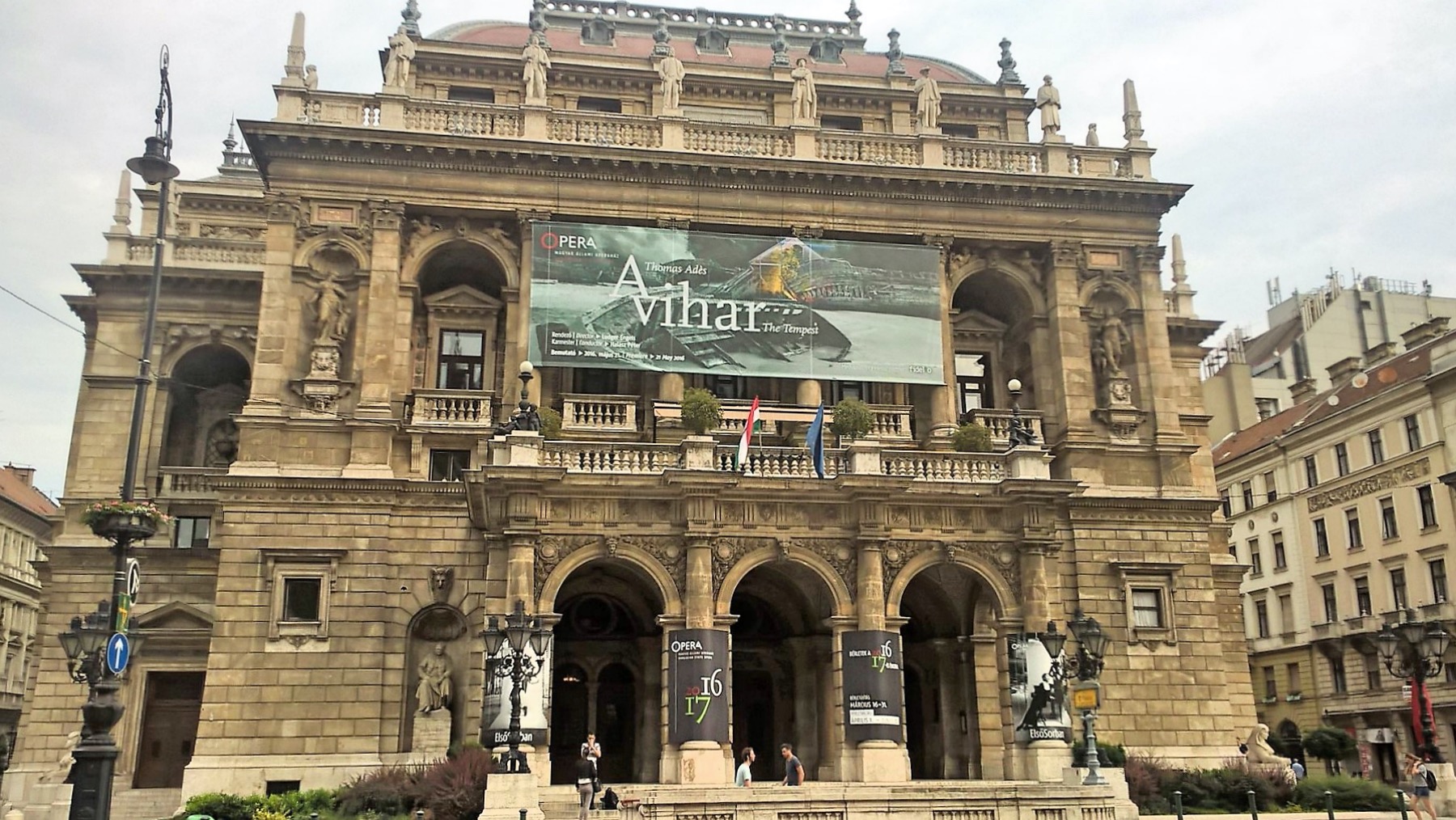
Few buildings capture the spirit of Budapest as perfectly as the Hungarian State Opera House. Elegant, richly decorated, and steeped in history, it is one of the most impressive landmarks along Andrássy Avenue—Budapest’s grand boulevard, often compared to the Champs-Élysées.

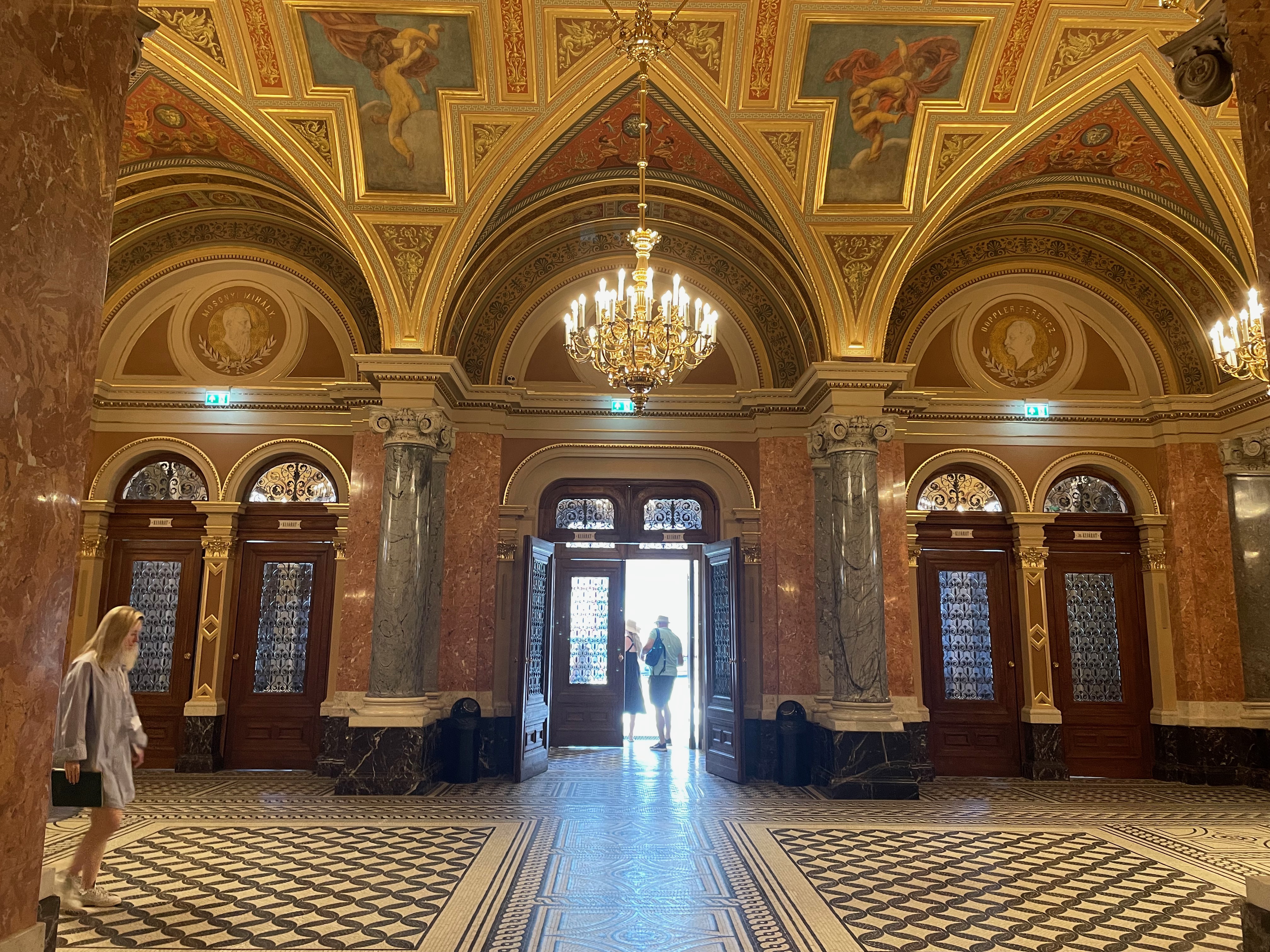
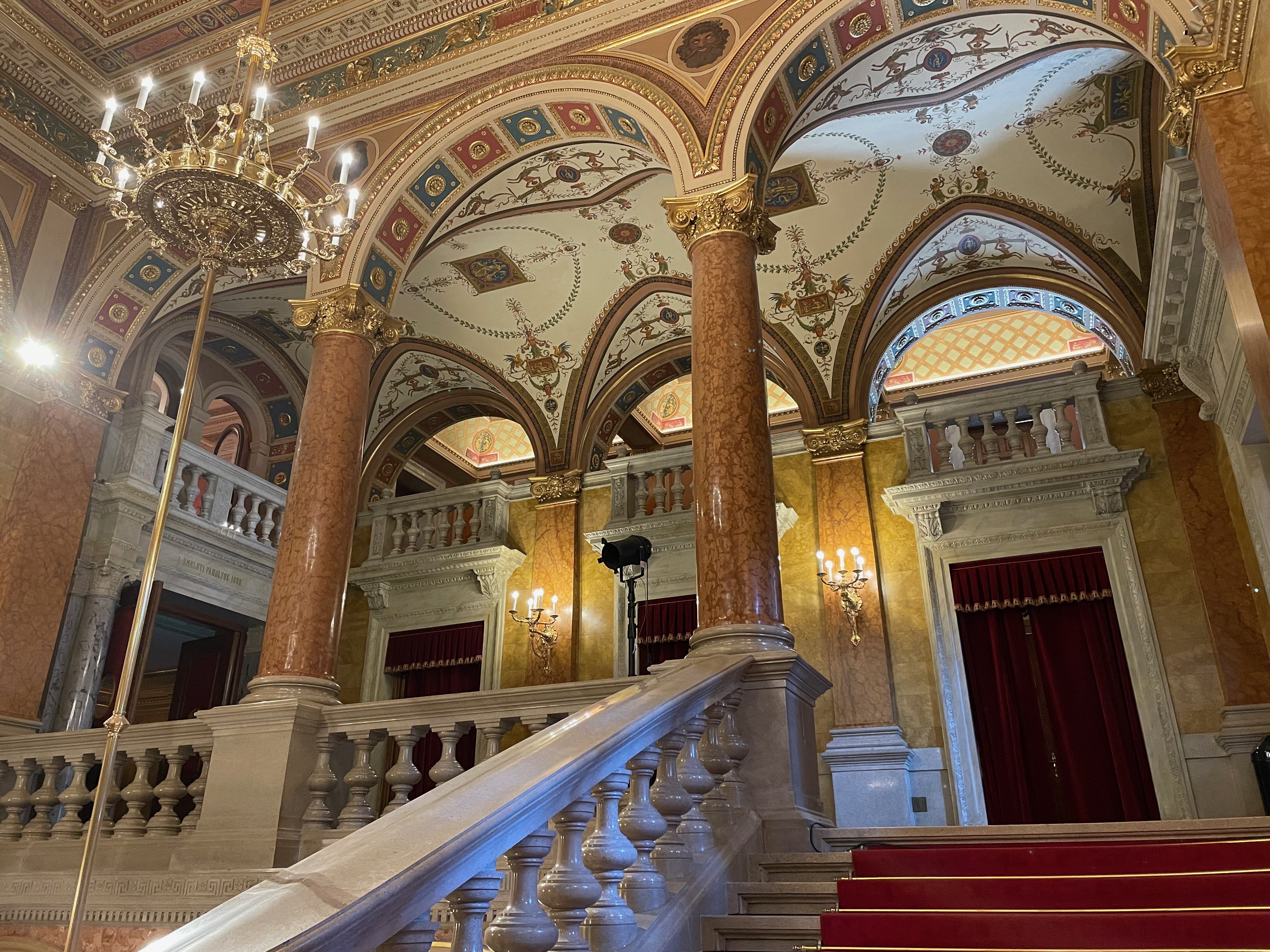
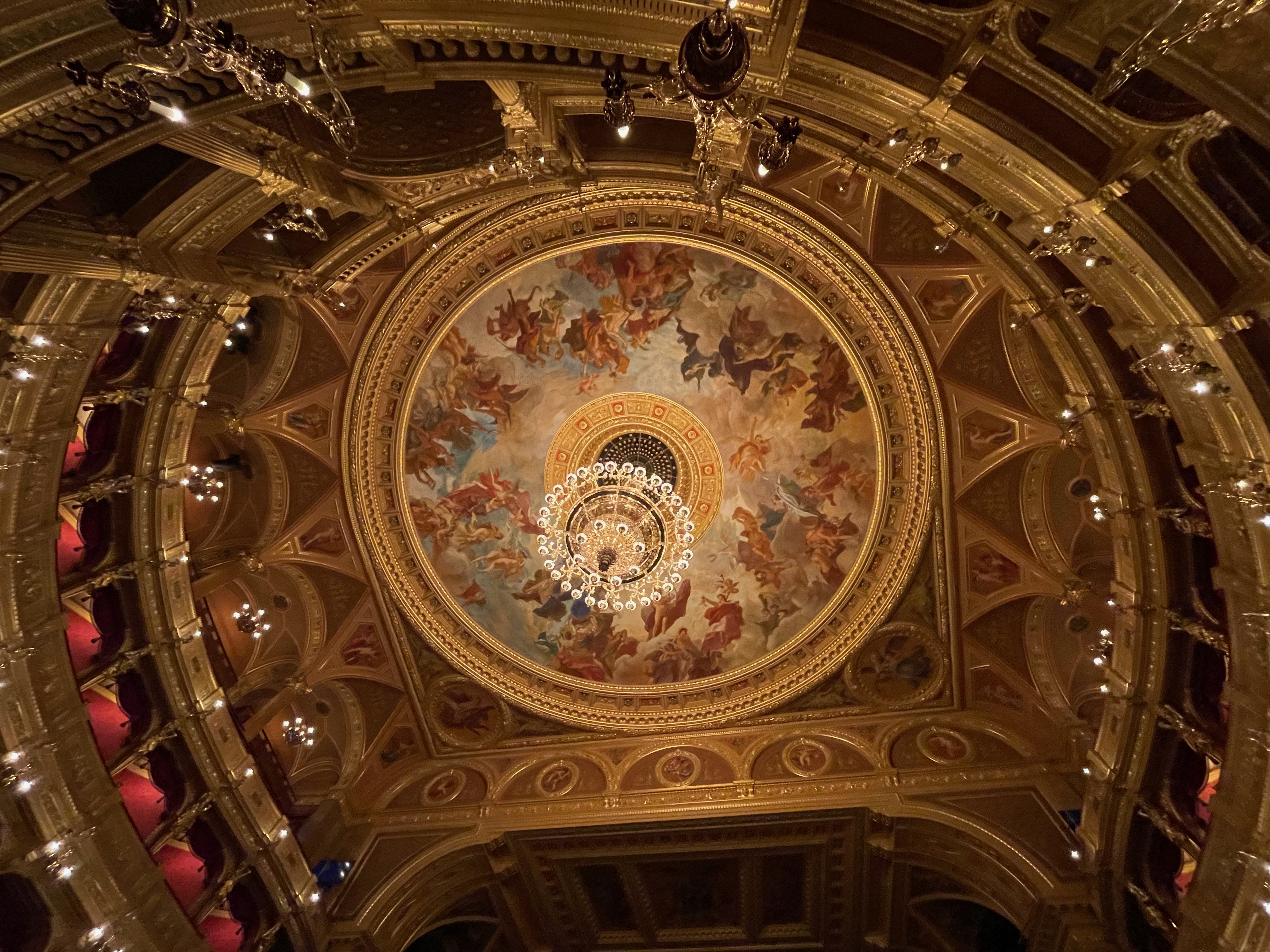
At first glance, the Opera House impresses with its Neo-Renaissance façade, ornate statues, and monumental arched entrance. But as with many things in Budapest, the real magic begins once you step inside. Gilded staircases, frescoed ceilings, velvet-lined boxes, and glittering chandeliers create an atmosphere of old-world elegance that instantly transports you back to the golden age of the Austro-Hungarian Empire.

A Symbol of Budapest’s Cultural Ambition

The Opera House was designed by Miklós Ybl, one of Hungary’s most celebrated architects, and opened its doors in 1884. At the time, Budapest was eager to establish itself as a cultural capital equal to Vienna—and the Opera House was a bold statement of that ambition.

Legend has it that Franz Joseph I, the Austro-Hungarian Emperor himself, was both impressed and slightly irritated by the building. While he had light-heartedly supported its construction, he reportedly did not appreciate the fact that Budapest’s Opera House turned out to be even more richly decorated than the Vienna State Opera. True or not, the story perfectly captures the competitive spirit of the era—and the pride Budapest took in its cultural achievements.

More Than Just an Opera House

Today, the Hungarian State Opera House is not only a venue for world-class opera and ballet performances, but also a living museum of architecture, music, and history. Guided tours run regularly and are an excellent way to admire the interior while learning about the building’s design, symbolism, and everyday life behind the scenes.

If you have the chance, attending an evening performance is a truly unforgettable experience. Even for visitors who are not regular opera-goers, the setting alone makes it special—and it offers a rare opportunity to experience Budapest much like locals do.

Hidden Details, Stories & Urban Legends

One of the things I love most about the Opera House is that it rewards those who look closely. Statues, frescoes, and decorative elements are all carefully chosen, often carrying political messages, artistic ideals, or subtle jokes that reflect the mindset of 19th-century Hungary.

These are exactly the kinds of details that tend to go unnoticed without local context—and they come to life when you explore the city on foot. During my Pest walking tour, the Opera House is not just a beautiful stop, but part of a larger story about Budapest’s development, identity, and cultural self-confidence.

A Natural Stop on a Custom Budapest Tour

Because of its location on Andrássy Avenue, the Opera House fits seamlessly into many fully customisable Budapest tours. It pairs beautifully with nearby cafés, historic palaces, and other iconic sights of Pest, making it easy to adapt the visit to your interests—whether you love architecture, music, history, or simply want to understand the city beyond the surface.

Every private tour I offer is tailored to my guests, and the Opera House often becomes a highlight: sometimes as a short architectural stop, sometimes as a deeper historical discussion, and sometimes as the starting point for an evening of culture in Budapest.

Why the Opera House Belongs on Every First Visit

Whether you admire it from the outside, explore it on a guided tour, or attend a performance, the Hungarian State Opera House is one of those places that encapsulates Budapest in a single building: elegant but slightly dramatic, proud of its past, and full of stories waiting to be told.

If you’re planning your visit and would like to explore the Opera House as part of a custom private tour or a Pest walk designed around your interests, I’d be delighted to show you this iconic landmark—and the city around it—through a local’s eyes.

I’d like to wish you happiness, peace, love and harmony, I hope all your dreams will come true in 2017.

I’m looking forward to seeing you and to showing you around my beautiful Budapest!


Christmas in Hungary is shaped by traditions that feel familiar across Central Europe, yet retain a few deeply local touches — especially when it comes to family, ritual, and food. Rather than being loud or extravagant, Hungarian Christmas is intimate, reflective, and centered around time spent together.

Advent: Waiting and Preparation

The Christmas season begins with Advent, the four weeks of quiet preparation before Christmas. Each Sunday, one candle is lit on the Advent wreath — a small ritual that gently marks the passing of time and builds anticipation for the holiday.

Advent is less about rushing and more about slowing down, an idea that carries through the entire Christmas period.

Christmas Eve: Family and Belief

In Hungary, Christmas Eve (24th of December) is the most important moment of the holiday — and it is traditionally a private family celebration.

The Christmas tree is decorated together, but with a charming twist: children usually wait outside the room. According to tradition, the tree and the presents are brought by the Baby Jesus, and children may only enter once the bells ring three times.

That moment — the sound of bells, the lights of the tree, and the reveal — is often remembered for a lifetime.

Christmas Days: Calm and Connection

The 25th and 26th of December are slower, quieter days. The city softens, shops close, and people focus on visiting relatives and friends.

It’s also the perfect time to enjoy Hungarian Christmas food, with special seasonal dishes and sweets that appear only once a year — familiar flavours tied closely to memory and family tradition.

A Season Meant to Be Felt

Hungarian Christmas isn’t about spectacle. It’s about small rituals, shared meals, and moments that repeat themselves year after year — quietly shaping how people experience winter, family, and home.

Boldog Karácsonyt — Merry Christmas.

Christmas tree decorated with hand-painted Herend porcelain ornaments, reflecting Hungarian holiday traditions

Every year, Hungary’s Cake of the Country is officially announced: a “birthday cake” created to reflect both traditional flavours and modern creativity.

In Hungary, the 20th of August is more than a national holiday. It marks the founding of the Hungarian state by Saint Stephen — and it’s also the day when the country celebrates its love of pastry in a very special way.

A Sweet National Tradition

The Cake of the Country is selected by a professional jury of master confectioners. Each year, pastry chefs from across Hungary are invited to submit creations that:

  • reinterpret classic Hungarian tastes

  • use high-quality, often regional ingredients

  • connect symbolically to the national holiday

The result is not just a dessert, but a snapshot of how Hungarian pastry culture evolves over time.

Cake of the Country 2016: Green Gold of Őrség

In 2016, the winning cake was called Green Gold of Őrség — a name inspired by both colour and region.

Created in a small pastry shop in Salgótarján, the cake subtly echoed the red, white, and green of the Hungarian flag, while highlighting one of the region’s most characteristic ingredients: pumpkin seed oil.

The cake’s layers combined:

  • pumpkin seed oil and almond flour sponge

  • white chocolate ganache

  • crunchy pumpkin seed praline

  • raspberry jelly

  • pumpkin seed jelly

The result was rich yet balanced, with nutty depth softened by fruit and chocolate — a modern composition rooted in local flavors.

Tasting the Cake of the Country in a Historic Setting

One of the joys of this tradition is that the Cake of the Country doesn’t remain a concept — it’s meant to be tasted.

In 2016, I had the pleasure of trying Green Gold of Őrség with my guests at Ruszwurm Confectionery (closed in 2025), one of Budapest’s oldest cake shops, tucked away near Matthias Church in the Buda Castle District.

Enjoying a contemporary award-winning cake in such a historic café perfectly captures what Hungarian pastry culture does best: blending past and present on the same plate.

Why These Cakes Matter

The Cake of the Country is not about trends or spectacle. It’s about:

  • craftsmanship

  • regional identity

  • and the quiet pride Hungarians take in their culinary traditions

Each year’s cake becomes part of a larger story — one that connects national history, local ingredients, and everyday pleasures.

Hungarian cakes and cafés are often part of the stories I share on my Budapest Foodie Tours, especially when exploring historic neighbourhoods like the Buda Castle District. If you enjoy discovering a city through its sweets, traditions, and everyday rituals, I’d be happy to show you some of Budapest’s most characterful cafés — past and present.

Slice of the Green Gold of Őrség cake, the 2016 Cake of the Country, featuring layered Hungarian pastry and pumpkin seed flavours

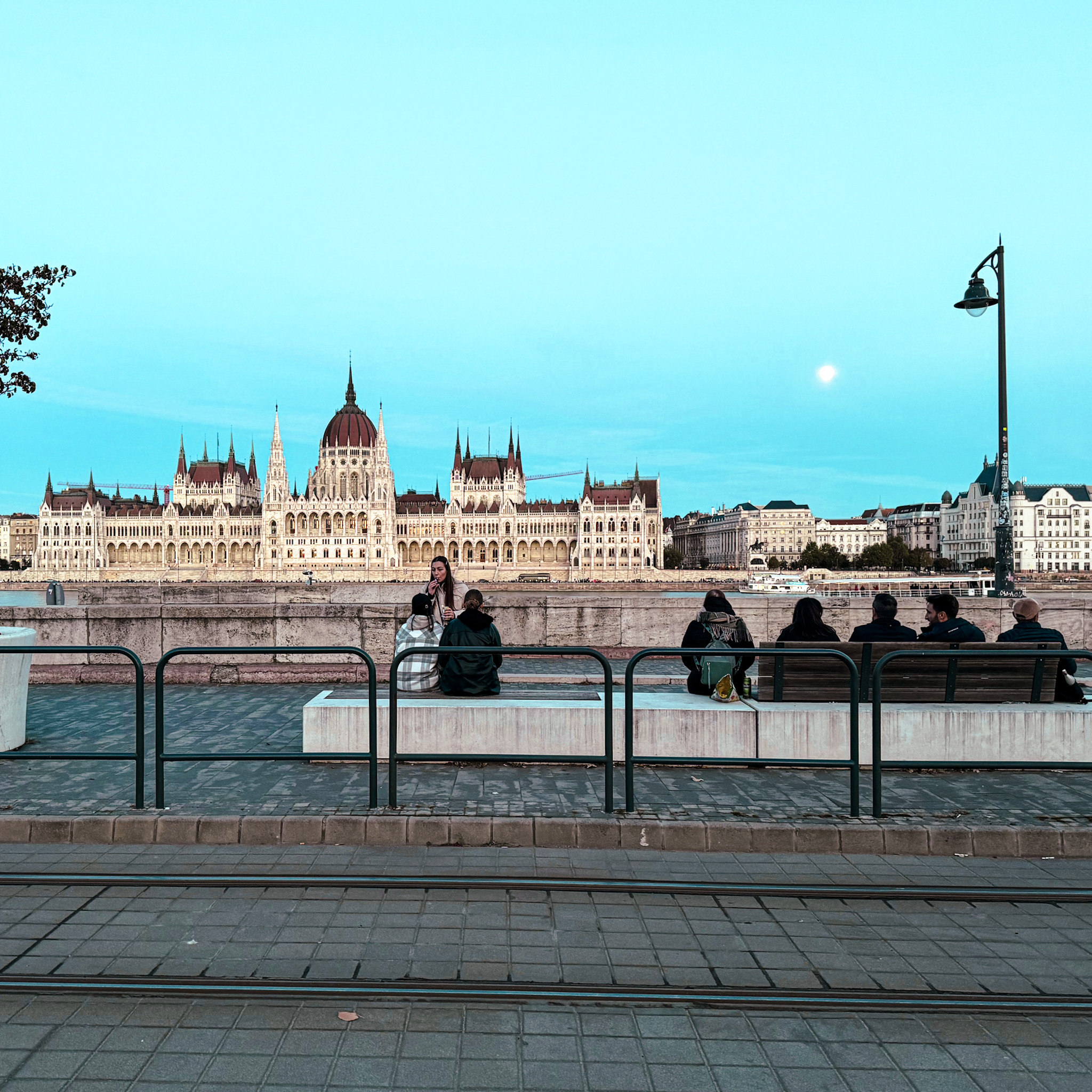
 It’s hard to imagine Budapest without the silhouette of the Hungarian Parliament Building. Whenever you see a photograph of the city — especially from across the Danube — chances are high that this magnificent building takes centre stage.

Rising proudly on the Pest side of the river, the Parliament is not only one of Budapest’s most iconic landmarks, but also a powerful symbol of Hungary’s history and identity.

Why Is Hungary’s Parliament So Grand?

At first glance, visitors often wonder why a relatively small country built one of the largest parliament buildings in Europe. The answer lies in history.

When construction began at the end of the 19th century, Hungary was part of a much larger kingdom, stretching far beyond today’s borders. This was also a period when monumental public buildings were designed to express confidence, strength, and national pride. The Parliament was meant to say something — about Hungary’s place in Europe, its political ambitions, and its cultural importance. And more than a century later, it still does.

Architecture That Tells a Story

The building’s neo-Gothic style was inspired by great European traditions, yet its scale and ornamentation make it uniquely Hungarian.

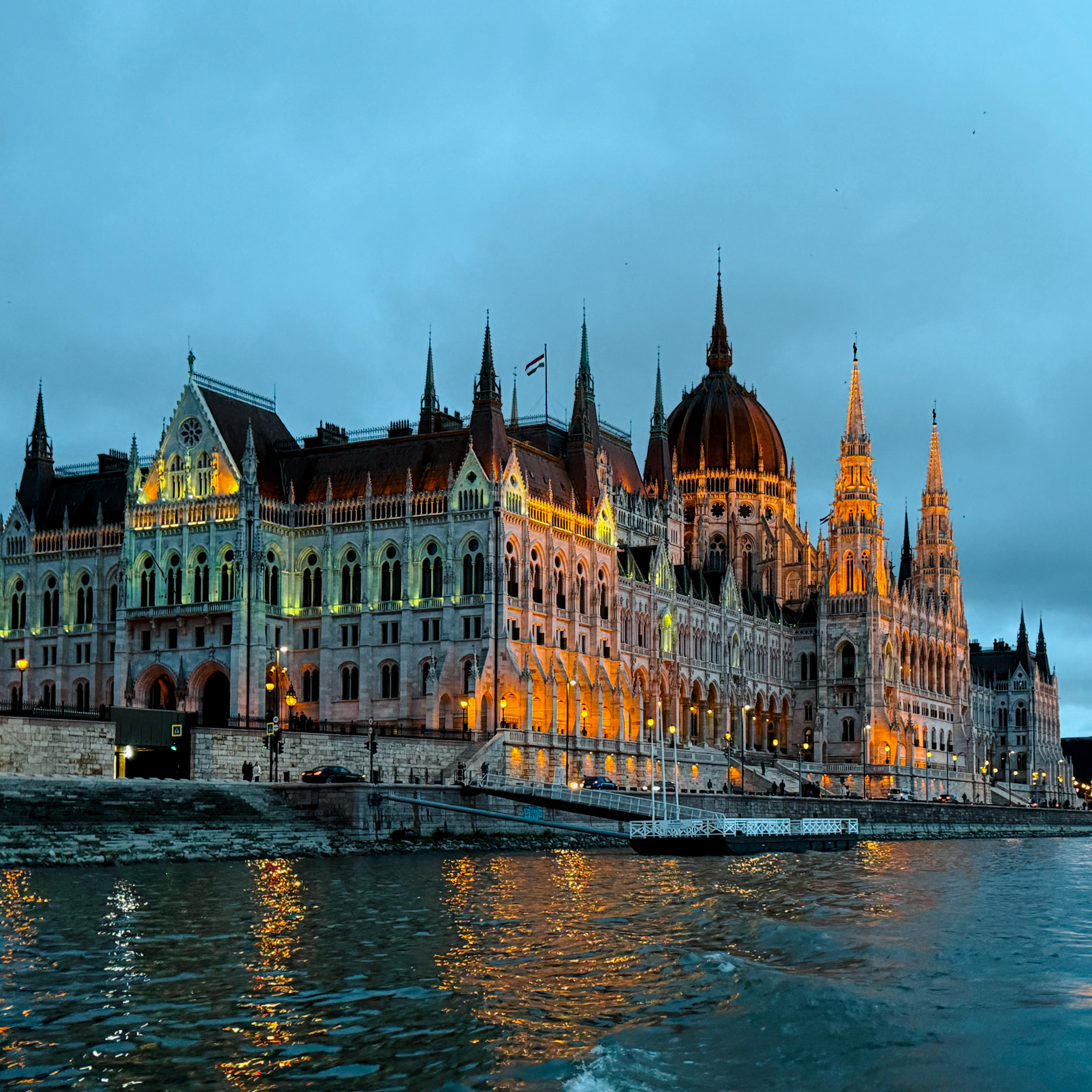
From the outside, countless spires, arches, and statues create a sense of rhythm and symmetry. From the river, the Parliament appears almost theatrical — especially at sunset or after dark, when it’s illuminated and reflected in the Danube.

Every detail was carefully designed to impress, not just foreign visitors, but citizens themselves.

What Makes the Interior So Special

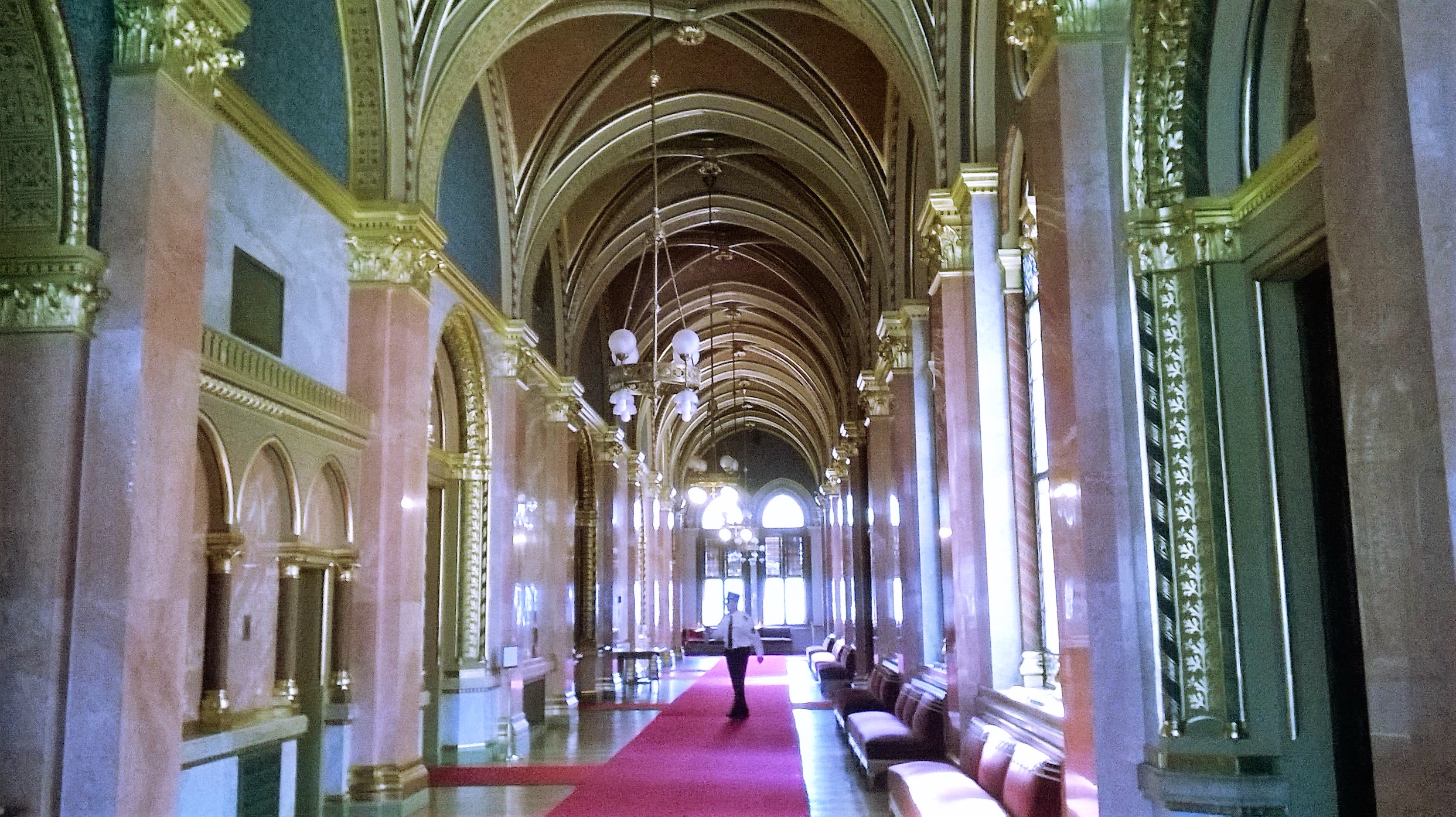
Stepping inside the Parliament reveals a world of ceremonial spaces, rich materials, and symbolism. Ornate staircases, gilded details, and stained glass windows all serve a purpose: to underline the importance of the institution housed within.

One of the most significant elements kept inside is the Holy Crown of Hungary, a powerful national symbol representing more than a thousand years of statehood. Its presence adds a deep historical layer to the building beyond its architectural beauty.

The Parliament and the City

More than just a government building, the Parliament shapes the rhythm of Budapest’s riverfront. It anchors the Pest side of the Danube and forms part of one of the city’s most celebrated panoramas.

Whether seen from a bridge, a river cruise, or from the hills of Buda, it’s a constant point of reference — elegant, imposing, and unmistakably Budapest.

The Parliament is one of the highlights I always enjoy discussing while exploring the Pest side of the city. Seeing it from the outside — with its history, symbolism, and urban context — often adds a new layer of understanding.

If you’d like to discover the stories behind Budapest’s landmarks during a relaxed walking tour, feel free to get in touch. I’d be happy to show you the city through its most iconic — and sometimes overlooked — details.

During the four weeks of Advent, several Budapest Christmas Markets bring warmth and light to the city’s historic squares.

Strolling through the markets is as much about atmosphere as it is about food. Wooden stalls glow after dark, the air smells of spices and roasted treats, and locals and visitors gather around steaming mugs to keep warm.

Traditional Hungarian dishes are a highlight, along with mulled wine, rich hot chocolate, and seasonal sweets. One treat you shouldn’t miss is kürtőskalács, or chimney cake — freshly baked, golden, and best enjoyed straight from the stall.

In the city center, the Christmas market in front of St. Stephen’s Basilica is especially atmospheric. In the evenings, a festive light and video projection transforms the façade of the basilica, adding a magical backdrop to the market below.

Budapest’s Christmas markets are not about rushing from stall to stall, but about slowing down, warming up, and enjoying the city in its most festive season.