Happy New Year! My wish for the new year is to show around my beautiful Budapest as many happy travellers as in the previous years.
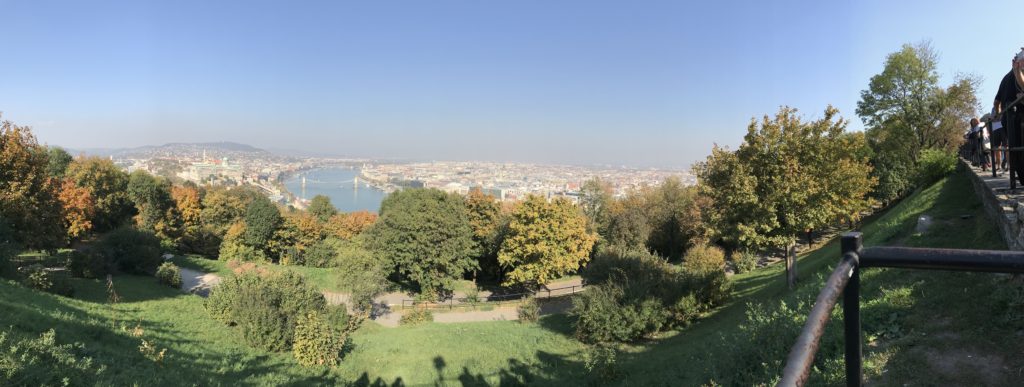
I’m wishing you all Merry Christmas and Happy Holidays from Beautiful Budapest.

Hungarian strudel is one of those pastries that quietly wins everyone over — and it’s always a favourite on my Foodie tours in Budapest.
Many visitors arrive already knowing Apfelstrudel from Austria or Germany, but the Hungarian version has its own character. The dough is stretched paper-thin, the fillings are generous but never heavy, and the result is not too sweet, just perfectly balanced.
Whether filled with apples, cherries, poppy seeds, or cottage cheese, strudel is a wonderful example of our home-style baking. You can taste it in traditional pastry shops — or, if you’re curious, even try making it yourself and experience the magic of stretching the dough until it’s almost transparent.


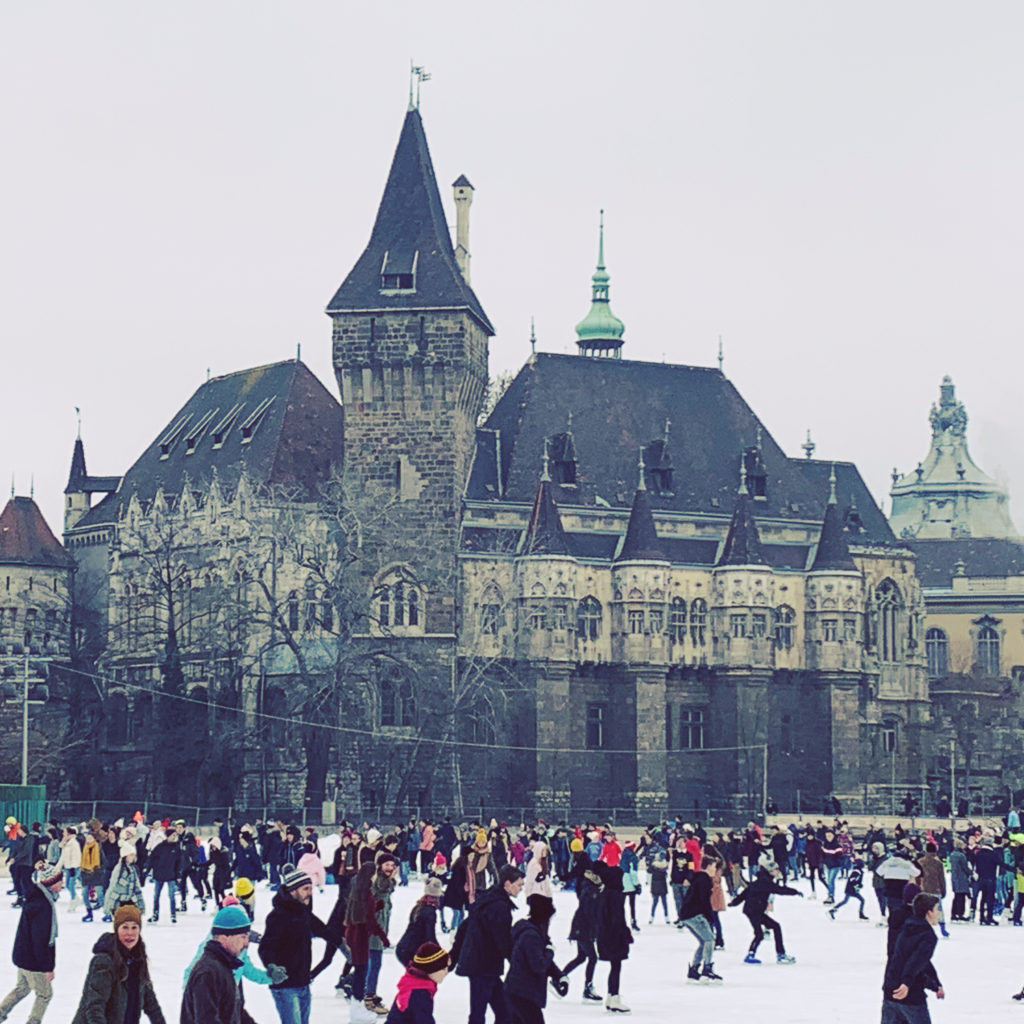
Budapest in the winter is rather grey and foggy. Also, it’s very cold, so there are only a few outdoor programs locals enjoy doing from early December to the end of February. One of those programs is ice skating in the City Park, it’s great fun and the ice skating rink is usually very busy on weekends.
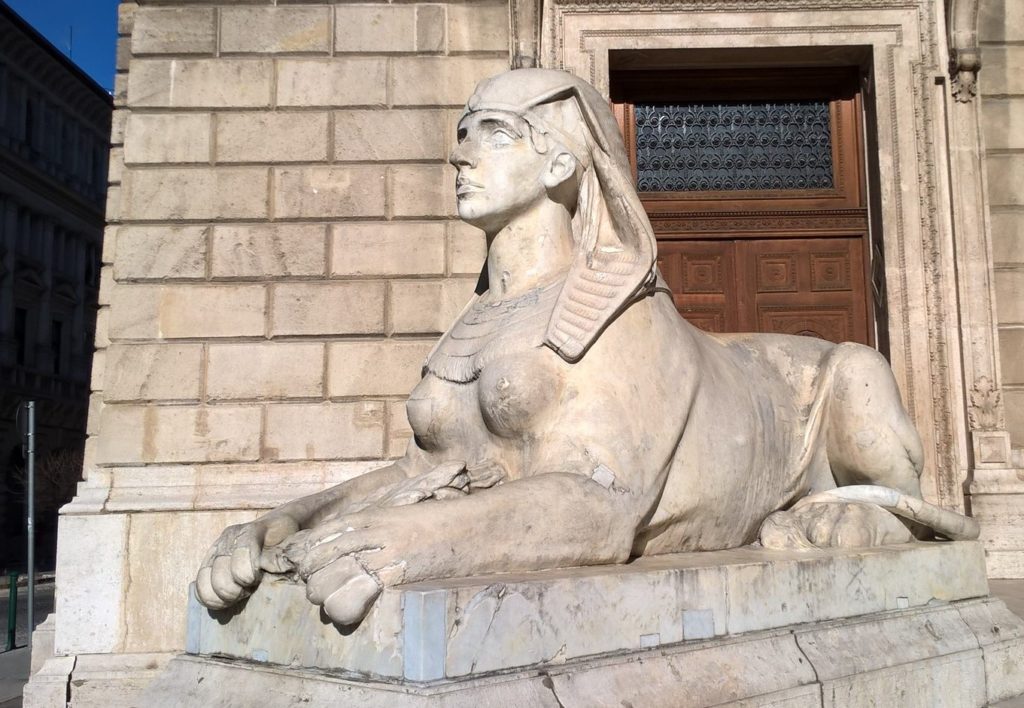
If you’re walking along Andrássy Avenue, one of the most elegant boulevards of Budapest, you might notice a sphinx statue quietly guarding the entrance of the Hungarian State Opera House. At first glance, she looks familiar — mysterious, timeless, and watchful.
But take a closer look, and you’ll realise there’s something unusual about her.
This statue is part of my ongoing Statues of Budapest series, which focuses on both famous monuments and easily overlooked details hidden in plain sight.
Not a typical sphinx
Traditionally, a sphinx is depicted with the head of a woman and the body of a lion. The Budapest sphinx follows this classical form — almost.
If you stop and observe carefully, you’ll notice an unexpected detail: she has breasts, making her far more explicitly feminine than most sphinx representations. This subtle feature sets her apart and gives the statue a distinctive presence.
It’s one of those details many people walk past every day without noticing, yet once seen, it’s impossible to forget.
Why is she here?
The sphinx fits perfectly into the artistic world of the Opera House. She embodies mystery, guardianship, and elegance — qualities closely associated with music, performance, and the dramatic arts.
Placed at the entrance, she feels less like a decoration and more like a silent gatekeeper, watching over one of Budapest’s most important cultural institutions.
A reminder to look closer
The sphinx of Andrássy Avenue is a perfect example of why Budapest rewards attentive visitors. You don’t need grand monuments or dramatic viewpoints — sometimes, the most interesting stories are carved into details just above eye level.
All you have to do is stop, look up, and notice.
Explore more: The Sphinx statue is featured in my Statues of Budapest collection, where famous monuments and easily overlooked details reveal the deeper structure of the city.
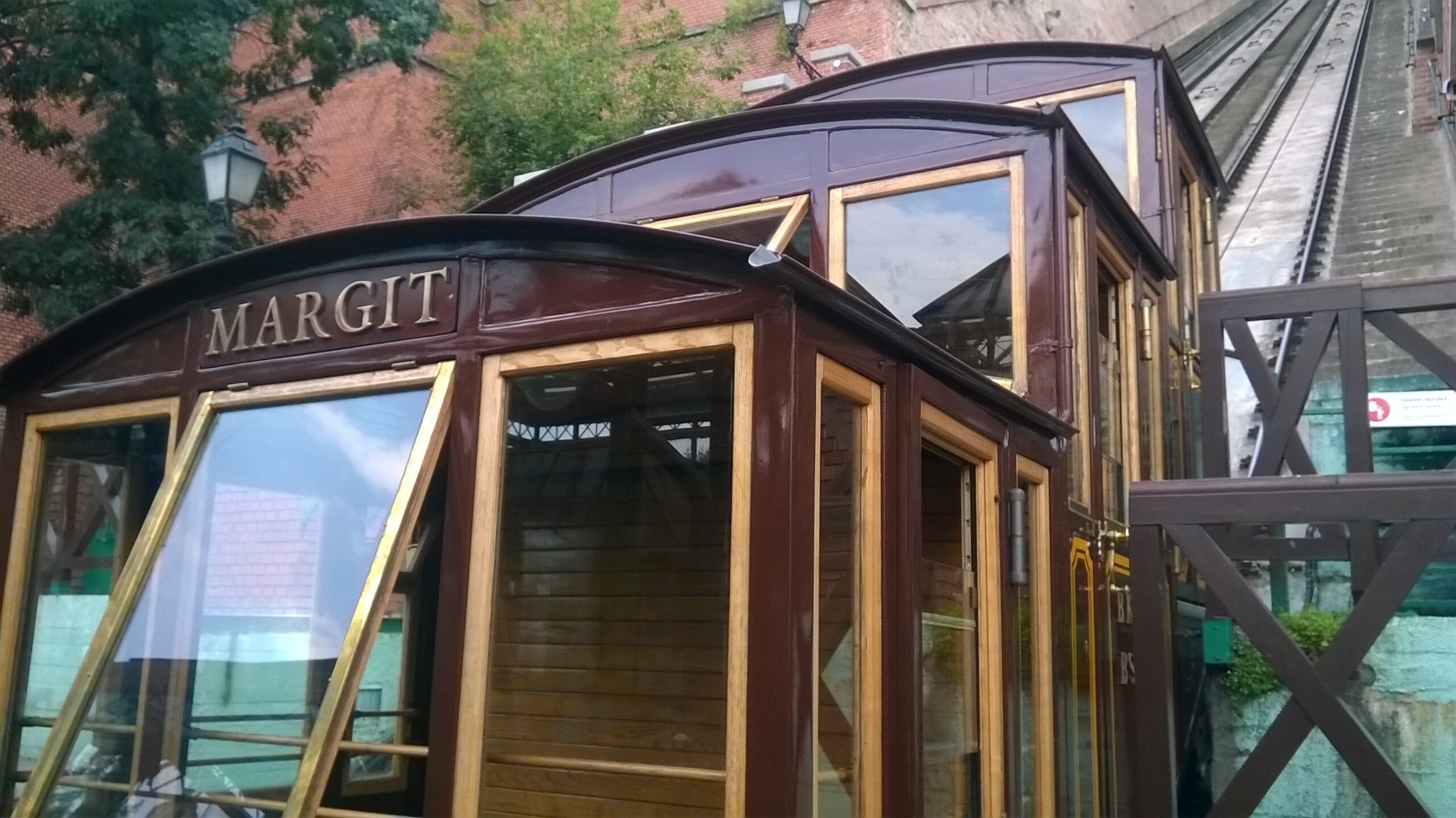
The Buda Castle Funicular is one of those Budapest experiences that is both practical and charming — a short ride that connects the banks of the Danube with the historic heights of Castle Hill.
Since its opening in 1870, this small but iconic cable car has carried millions of passengers between the Chain Bridgeand the Royal Palace above. In just a few seconds, it offers sweeping views over the Danube and Pest, making the journey itself part of the sightseeing.
A bit of history
The Funicular was originally powered by steam and played an important role in everyday city life, helping residents and workers reach Castle Hill quickly. During the Second World War, it was almost completely destroyed.
When it was rebuilt decades later, it returned as an electric cable car, carefully designed to reflect its historic appearance while meeting modern standards. Today, it’s both a nostalgic landmark and a fully functioning part of Budapest’s transport system.
Film lovers may also recognise it from The Grand Budapest Hotel, where it appears briefly — a small but delightful cinematic connection.
How to include it in your visit
The Funicular is a lovely addition to a walk around Buda Castle, whether you’re exploring on your own or joining a Buda Castle Walking Tour, where it can be included as an optional extra depending on interest and timing.
It’s also a great standalone experience if you’re short on time but still want a memorable view.
An insider tip from a local guide
If you’d like to avoid long queues, don’t take the Funicular up to Castle Hill. Instead, walk up and use it for the descent, travelling from the Royal Palace down to the Chain Bridge. Lines are usually shorter — and the view is just as beautiful.

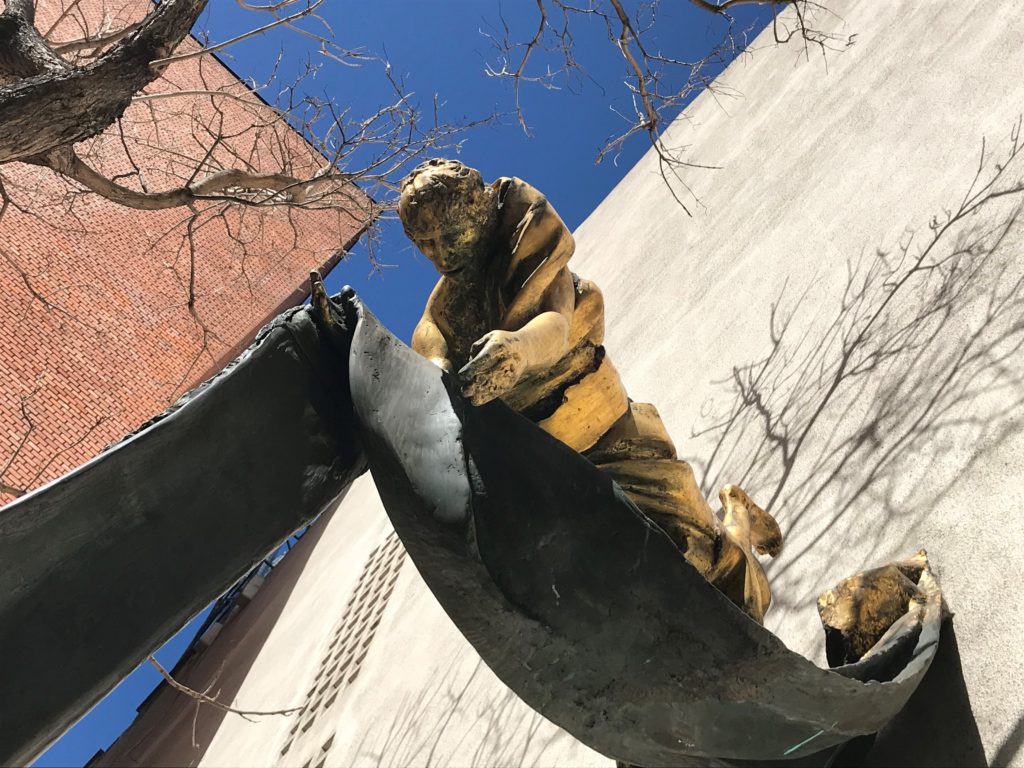
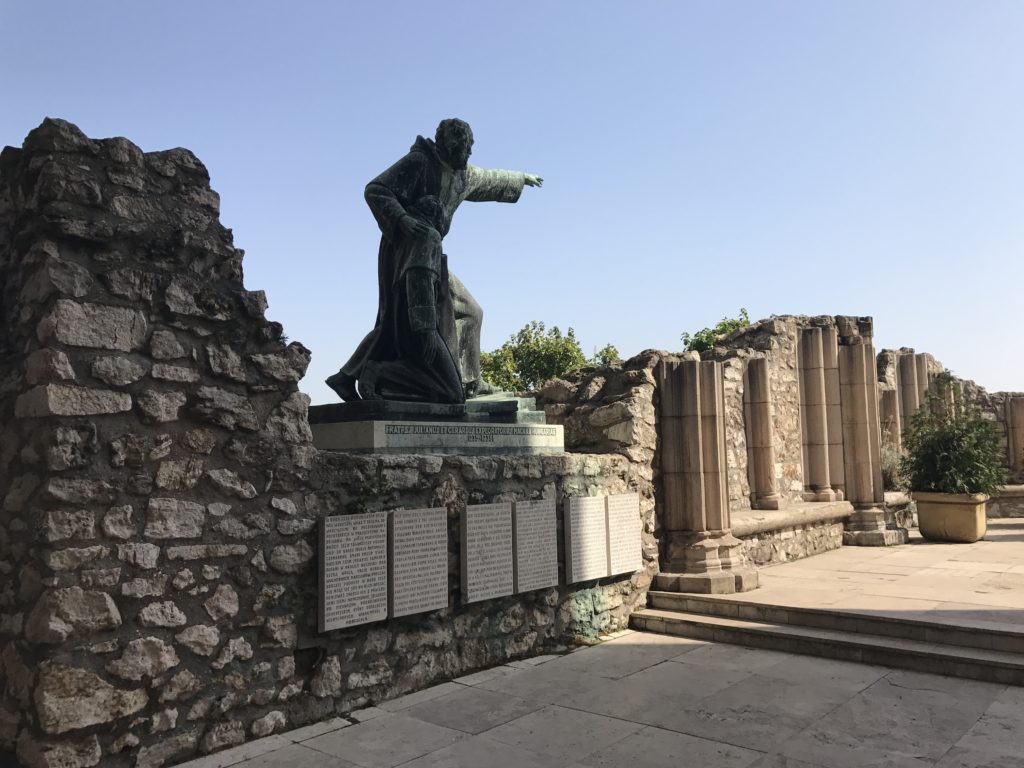
Among Budapest’s lesser-known statues, the monument to Julianus and Gerhardus stands out not for its size, but for the remarkable story it represents.
This sculpture is part of my ongoing Statues of Budapest series, which looks beyond famous monuments to uncover the ideas and journeys that shaped Hungarian identity.
Who were Julianus and Gerhardus?
Julianus and Gerhardus were Hungarian Dominican monks who, in the 13th century, set out on an extraordinary journey eastward. Their mission was to find Magna Hungaria — the ancestral territories where Hungarians were believed to have lived before beginning their long migration toward Europe.
Travelling thousands of kilometers, they reached regions near the Ural Mountains, documenting encounters with people believed to be related to the early Hungarians. At a time when travel was slow, dangerous, and uncertain, their journey was an astonishing feat of endurance and curiosity.
Why does this statue matter?
Unlike statues commemorating kings or battles, this monument celebrates knowledge, exploration, and cultural memory. Julianus and Gerhardus represent a desire to understand origins — to look backward in order to understand the present.
Their story reminds us that Hungarian history is not confined to the Carpathian Basin alone, but stretches far beyond it, across continents and centuries.
A quiet monument with a wide horizon
This statue is easy to overlook, yet it commemorates one of the most ambitious intellectual journeys of medieval Hungary. It invites reflection rather than admiration — and rewards those who pause to read its story.
In a city filled with grand architecture and dramatic monuments, Julianus and Gerhardus quietly point our attention outward, toward distant lands and deep historical roots.
Explore more: Julianus and Gerhardus are part of my Statues of Budapest collection, featuring famous monuments and overlooked sculptures that reveal the city’s layered identity.
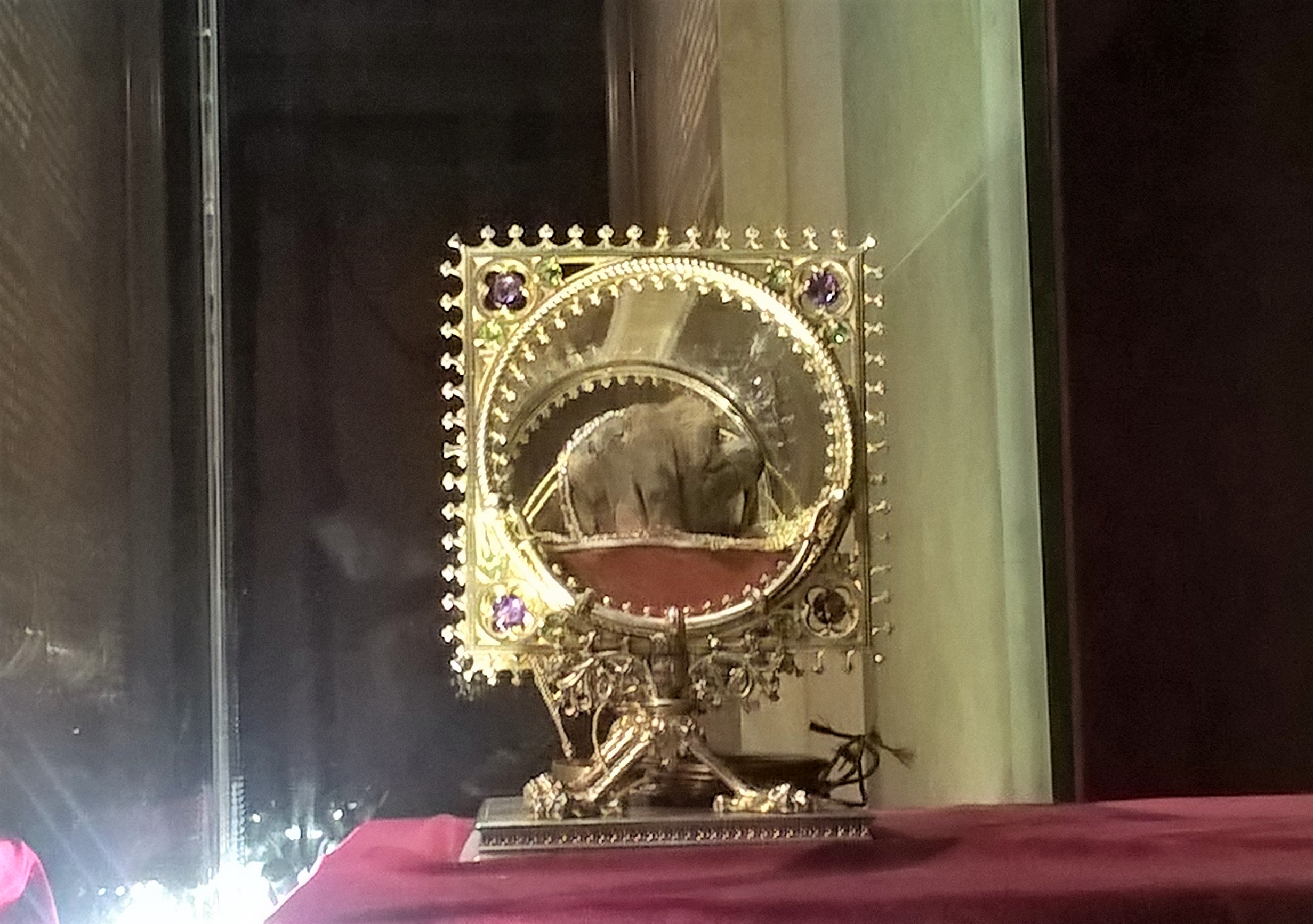
St Stephen’s mummified hand hides one of the most unusual and powerful Budapest stories, preserved for over a thousand years inside St Stephen’s Basilica.
Hidden inside St. Stephen’s Basilica, behind gilded doors and soft candlelight, you’ll find one of Hungary’s most extraordinary and deeply symbolic treasures: the mummified right hand of St. Stephen, Hungary’s first Christian king.
Who was St. Stephen?
St. Stephen (István király) was crowned in the year 1000 and became the founder of the Hungarian state and its Christian identity. His reign marked a turning point: Hungary officially joined Christian Europe, laying the foundations of the country we know today.
After his death, Stephen was revered as a saint — but the story of his right hand is anything but ordinary.
How did the mummified hand survive in Budapest?
Legend has it that when St. Stephen’s body was exhumed prior to his canonisation, his right hand and forearm were found miraculously preserved, while the rest of his body had decayed. This was interpreted as a divine sign.
The relic became known as the “Holy Right” (Szent Jobb) and, over the centuries, it travelled far beyond Hungary’s borders — hidden, stolen, rediscovered, and finally returned home.
Today, it rests in a dedicated chapel inside the Basilica, displayed in a richly decorated reliquary and illuminated like a jewel.
Seeing the Holy Right Hand of St Stephen today
Visitors to St. Stephen’s Basilica can still see the mummified hand up close. It’s not just a religious relic — it’s a powerful symbol of Hungarian history, identity, and continuity.
Even for non-religious visitors, the experience is striking. The silence, the atmosphere, and the sheer unexpectedness of seeing a thousand-year-old hand preserved in such detail often leave a lasting impression.
Visiting with a guide makes all the difference
The Basilica is included in many of my Budapest walking and driving tours, and the interior visit — including the Holy Right — is also possible. When you see the relic with a guide, the story behind it comes alive: the legends, the politics, and the very human history behind the saint.
Want to see it in person?
If you’d like to include St. Stephen’s Basilica and the Holy Right in your Budapest experience — whether on foot or by car — feel free to get in touch. I’m always happy to tailor a tour that matches your interests and pace.


The reason why I love family researches a lot, is because it’s always a great experience to do the research and to find out more about my travellers’ relatives and family who were originally from Hungary. The other reason is that we usually go to beautiful Hungarian villages and towns to see where and how the family members lived 100 or 200 years ago.
Last week we visited the town of Kalocsa which isn’t just another cute little Hungarian town but it’s also famous for the local paprika. We went to see the local Paprika Museum to find out more about the most popular Hungarian spice.


Tucked away on a quiet stretch of Dob utca in Budapest, near the lively Gozsdu Courtyard, stands a moving and quietly powerful monument: the Carl Lutz Memorial. It commemorates one of the most extraordinary humanitarian efforts in Budapest during the Second World War.
This statue is part of my ongoing Statues of Budapest series, which explores how public monuments reflect the city’s most difficult — and most meaningful — chapters.
Who was Carl Lutz?
Carl Lutz served as Vice-Consul of the Swiss Embassy in Budapest during the German occupation. Between 1942 and 1945, he used his diplomatic position, ingenuity, and moral courage to save tens of thousands of Hungarian Jewsfrom deportation and death.
By issuing protective documents, establishing safe houses, and repeatedly defying Nazi and Arrow Cross authorities, Lutz became one of the most effective rescuers in Holocaust history.
The meaning of the memorial
The Carl Lutz Memorial does not overwhelm with size or drama. Instead, it invites reflection. Placed in the heart of what was once the Jewish ghetto, its location is as important as the statue itself.
Here, remembrance is woven directly into everyday life — a reminder that courage and humanity existed even in the darkest moments of the city’s past.
Why this statue matters today
In a neighborhood now known for cafés, bars, and cultural life, the Carl Lutz Memorial anchors the Jewish Quarter in its historical reality. It asks visitors to pause, remember, and understand that the stories of survival here are real, personal, and recent.
This memorial often becomes one of the most meaningful stops on my Jewish Quarter walk, where we explore not only architecture and everyday life, but also the human stories behind the streets.
Explore more: The Carl Lutz Memorial is part of my Statues of Budapest collection, featuring monuments that reveal the city’s layered and often complex history.