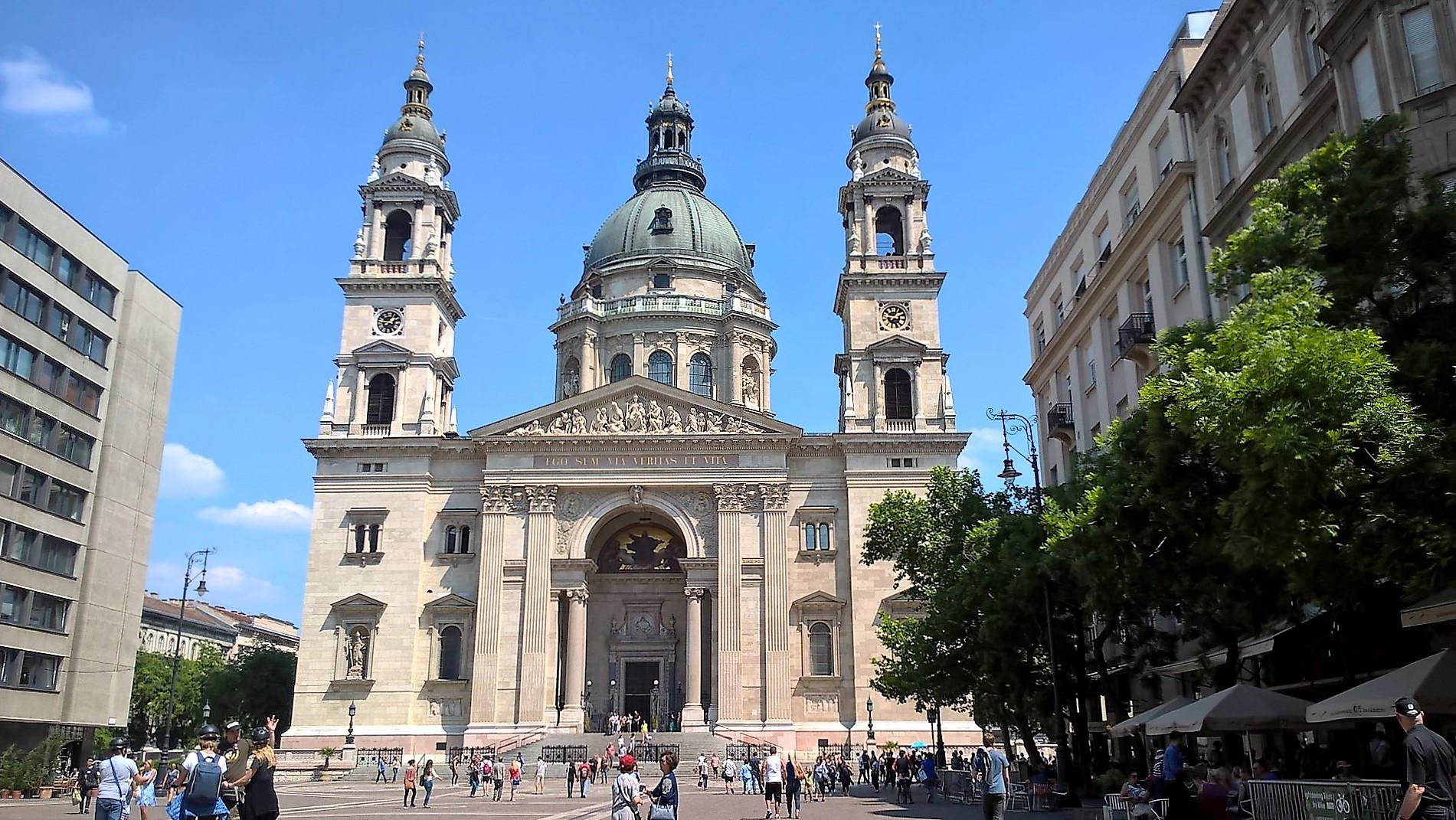
Dominating the skyline of Budapest, St. Stephen’s Basilica is one of the city’s most important landmarks—and a building that reveals something new every time you visit.
It is the largest church in Budapest and the third largest in Hungary, both a spiritual center and a powerful symbol of Hungarian history. Whether admired from the outside, explored inside, or viewed from above, the Basilica is an essential stop on any walk through the heart of the city.
A Church Built Over Generations
Construction of St. Stephen’s Basilica took more than 54 years, and the long building process is reflected in its architectural richness. The final result combines elements of Baroque, Neo-Renaissance, and Classicism, shaped by the visions of three different architects.
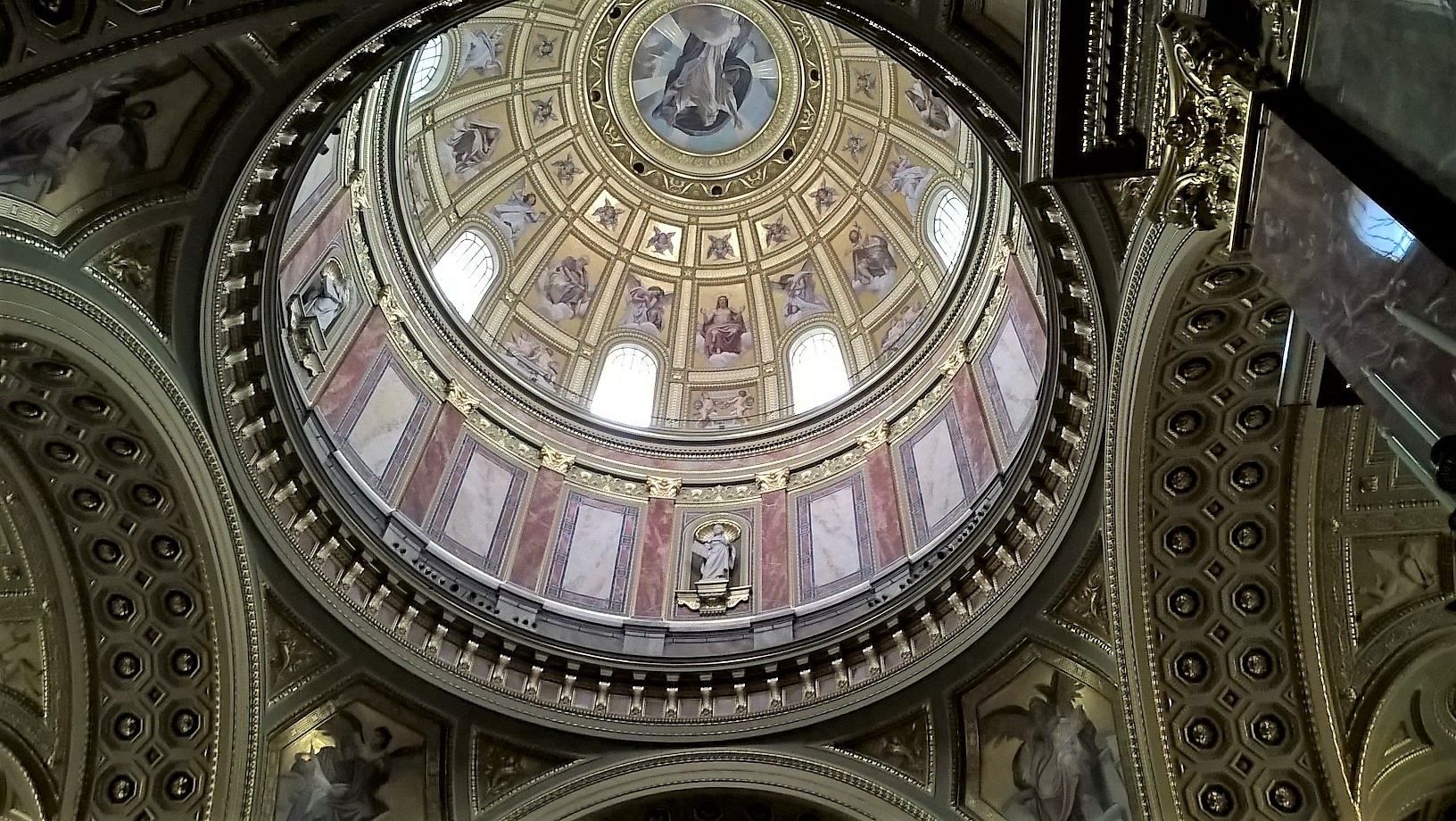
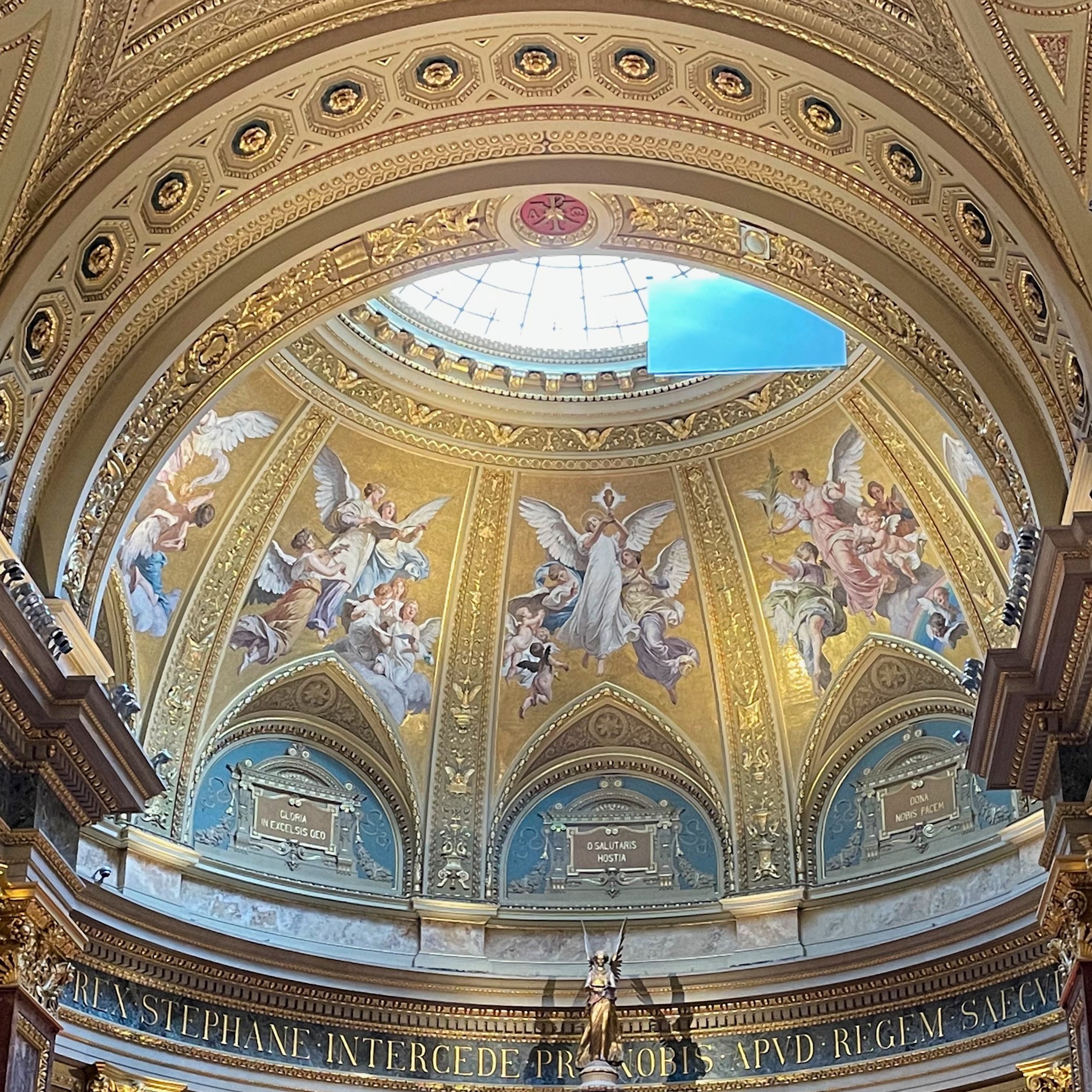
From the outside, the symmetrical façade and towering dome create a sense of balance and grandeur. Inside, the atmosphere shifts to one of quiet opulence: red marble columns, richly decorated chapels, mosaics, and ornaments highlighted with 22-carat gold make this the most lavishly decorated church in Budapest.
A Living Part of the City
Despite its monumental appearance, the Basilica is very much a working church. Regular services, wedding ceremonies, and organ concerts take place here, and the building plays an active role in both religious and cultural life.
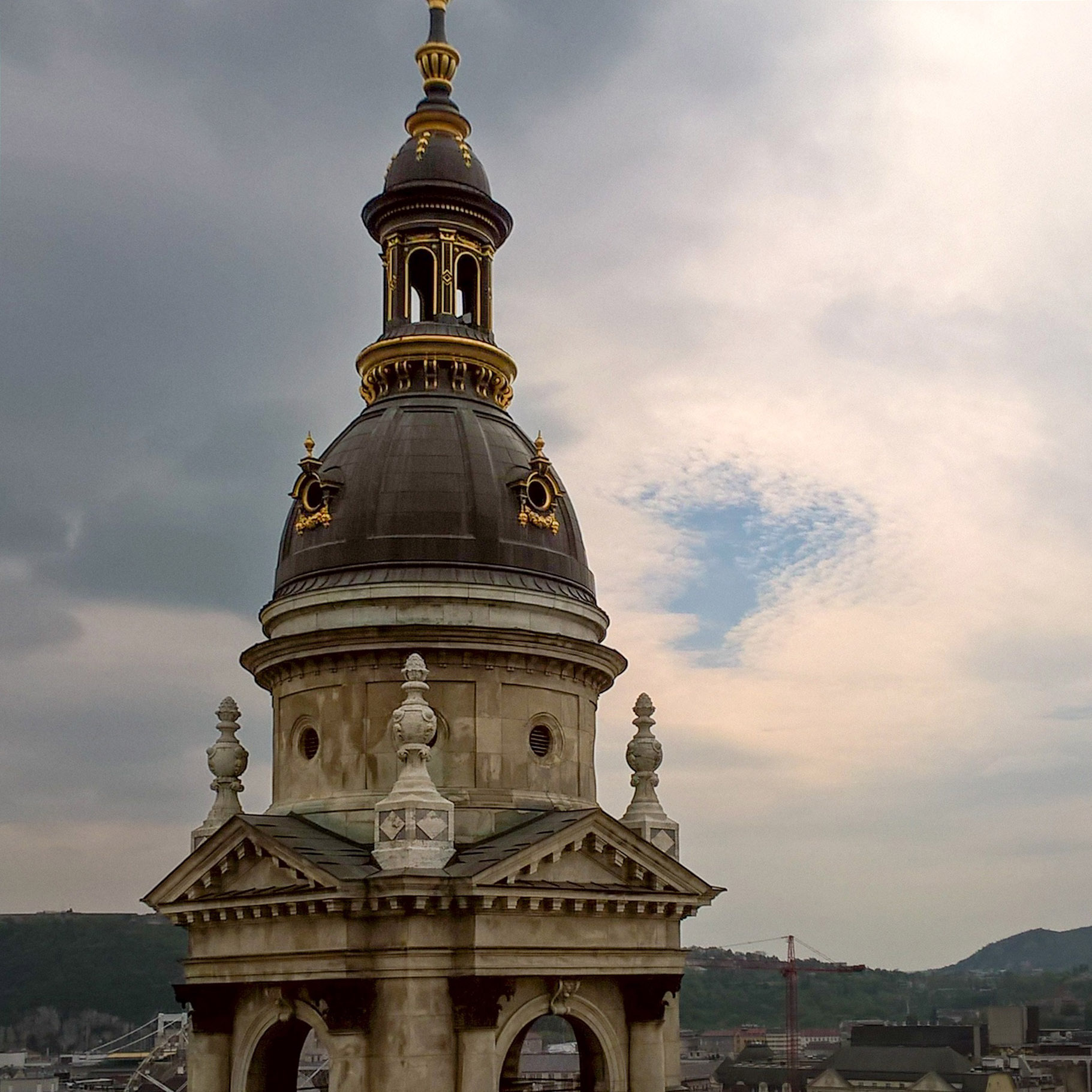
One of the most memorable experiences is ascending to the dome—either by climbing the steps or using the elevator. From the top, you’re rewarded with one of the finest panoramic views over the Pest side of Budapest, with rooftops, boulevards, and landmarks unfolding beneath you.
Hungary’s Most Important Relic
St. Stephen’s Basilica is not only architecturally impressive; it also houses one of Hungary’s most treasured national relics: the Holy Right—the mummified right hand of Saint Stephen of Hungary, the country’s first king and founder of the Hungarian state.
This nearly 1,000-year-old relic is deeply symbolic and plays a central role in national celebrations, especially on St. Stephen’s Day in August. Even for visitors without a religious background, understanding its significance offers valuable insight into Hungarian history and identity. If you’d like to see the Basilica from a different angle, I’ve also collected some of my favourite views and architectural perspectives of St Stephen’s Basilica.
A Key Stop on a Pest Walk
Because of its central location, St. Stephen’s Basilica fits naturally into many Budapest walking tours. But the building is best appreciated in context — through the surrounding streets, squares and stories that explain how this part of the city developed.
The Basilica is also one of the highlights of my favourite walk in Budapest, where I like to approach it through the quieter surrounding streets and let the building gradually reveal itself before reaching the square.
On my private tours, the Basilica is more than just a photo stop. It becomes a gateway to conversations about architecture, religion, everyday life, and the layers of history that shaped modern Budapest. Each visit is adapted to the interests and pace of my guests, whether they’re drawn to history, culture, or simply the beauty of the city.
Why St. Stephen’s Basilica Belongs on Every Visit
Few places in Budapest combine grandeur, history, spirituality, and everyday life as seamlessly as St. Stephen’s Basilica. It’s a landmark you can admire from afar—but one that truly comes alive when you step inside and explore its surroundings.
If you’d like to discover the Basilica and its neighbourhood as part of a Budapest private walking tour, I’d be delighted to show you this iconic building through local stories and personal insights. And because all my Budapest private tours are fully customisable, we can shape the experience around the history, architecture and places that interest you most.